I was in fourth grade. This morning is one of my first real memories, and the prologue to Skylights is pure autobiography.
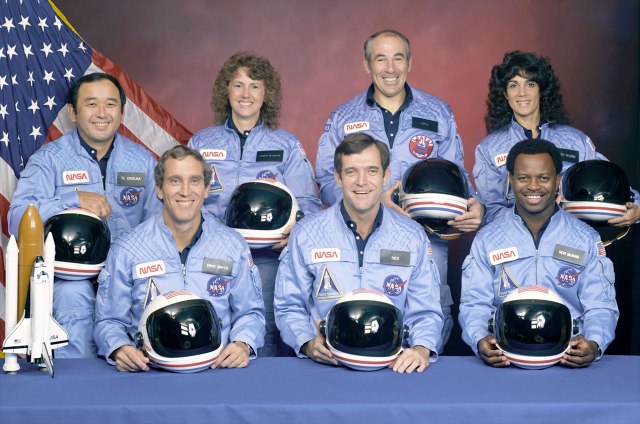
Rest in Peace: Ellison Onizuka, Christa McAuliffe, Greg Jarvis, Judy Resnick, Mike Smith, Cmdr. Dick Scobee, and Ron McNair.
The blog of Luther M. Siler, teacher, author and local curmudgeon

I was in fourth grade. This morning is one of my first real memories, and the prologue to Skylights is pure autobiography.
Rest in Peace: Ellison Onizuka, Christa McAuliffe, Greg Jarvis, Judy Resnick, Mike Smith, Cmdr. Dick Scobee, and Ron McNair.
 Saw the doctor today. The people in the office are starting to recognize me; that’s how often I’ve been there lately. The receptionist just waved me off without formally checking me in today. That many times.
Everything’s fine! Except that my brain is still screwing with me. So we’re trying Clonazepam for a little while, because all the test results from last week have pretty definitively ruled out my adrenal glands as the culprit. I’m out another week of work, too, because she’s expecting the drug to hit me kinda hard. Seeing as how I stopped taking the last one because of side effects, I’m not super excited about this. But the Lexapro is definitely out of my system– I can tell, because I’ve been nervous and twitchy all day today. So we’ll hope that Clonazepam helps where Lexapro didn’t. If not? Well, whatever the next thing is, I guess.
It’s still not lupus.
Anyway.
I keep almost writing a short story about the Dyson Sphere thing, only the only thing I can come up with is basically a dialogue between two characters about it. Which… okay, I can do that, but it’s kinda boring without any actual meat on the bones. I’m just nervous that if I don’t get it out of my system now it’s going to end up as an infodump in Starlight or Sunlight or whatever that book is called now. Which I need to start working on again soon. Just as soon as I finish the three other things I’m working on right now, which… well, soon. That’s all I’m saying.
I will be here in June. Get your tickets now! Meanwhile, you’re running out of time– less than a week!– to pre-order Searching for Malumba. The print edition looks fantastic, if I do say so myself; I’m never not using their creme-colored paper again, because it looks so much better than the white. That’ll be available on the 27th if you prefer your books on paper.
Okay, I think that’s all I’ve got.
The article doesn’t say “Dyson sphere,” and the whole idea is ridiculous, but holy shit they found a Dyson sphere.
Because I don’t seem to have blogs in me again today. Enjoy some music.
This p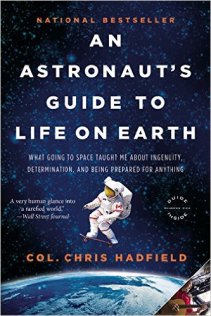 robably doesn’t need to be a terribly long review, as if you’ve been around for a while you can probably easily guess what I think of Chris Hadfield. If not, be aware that I believe him to be among the awesomest of humans, so there was really no chance at all that I wasn’t going to enjoy the hell out of his book. You should read this. That’s the tl;dr version.
The slightly longer version: An Astronaut’s Guide to Life on Earth is part self-help/motivation book, part autobiography, and part reference manual for all things NASA. Reading it should have depressed me a bit, as the main effect of the book was to convince me that nearly every detail in Skylights is wrong, even the ones I deliberately got wrong for story purposes, but oddly it didn’t. I live for focused astronomical nerdery, and while Hadfield never goes too crazy on the detail it’s very clear that the actual life of a working astronaut is roughly 10000 times as complicated as I thought it was and I have thought about it a lot more than most people have. The specifically science-focused part of the book certainly doesn’t overwhelm the rest of it– this is a less sciencey book than, say, The Martian was, even though The Martian was a novel and this is not, so you’d think it had more room to get into details. I talked about it a lot in class this week, and had a few of my girls ask me if they could read it. It’s probably a bit too high-level for even a bright fifth-grader, but I suspect an eighth-grader who enjoyed reading would be able to handle it easily.
And this book needs to be in the hands of young people, beyond a doubt. One of the things Cmdr. Hadfield hammers on repeatedly is how he needed to stay focused on his dream to become an astronaut from a very early age. Dreams are like that, sometimes; you can cheat yourself out of them before you even know it if you’re not focused and careful. (I remember thinking once as a very little kid that I was already behind in life, because Michael Jackson was famous at nine and I was ten and couldn’t even sing. I suspect what I actually did in that case was dodge a bullet, but you get the idea.) I don’t know that he wrote it with young people in mind, but I’d try hard to get this into the hands of math- and science-inclined high school students in particular.
Highly, highly recommended, guys. This one will end up on my top 10 list at the end of the year for sure, and I suspect it’ll be very close to the top.
3:43 am and I’m looking at my phone instead of the sky because ow, my neck.
C’mon, Perseids. Represent.
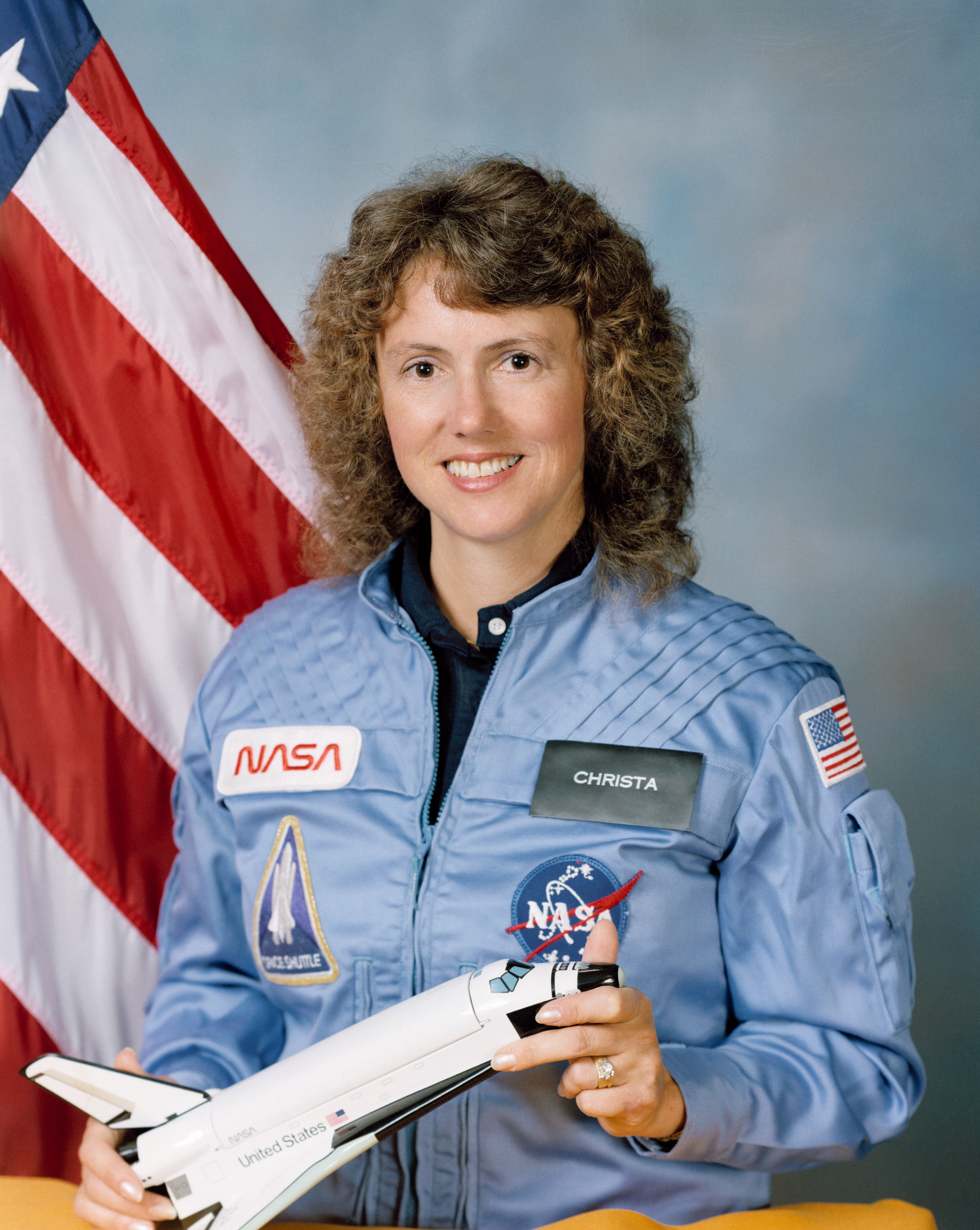
“You’re teaching an all-girls’ class? I’m not sure I feel like that’s right.”
I heard that for the first time… wow, was it four years ago? Probably. My homeroom was all girls, and my afternoon class was a mixed group. I did not reply the number of girls in my classroom doesn’t actually make me more likely to be a sex criminal, ma’am, which was probably the right answer– I am either too much of a degenerate to teach middle school students or I am not, and the composition of my classes doesn’t actually have much of an effect on that– but I don’t remember what I actually said to that mom. Probably something along the lines of We’ll be fine, and then an abrupt ending of the conversation, because I don’t really like wasting my time with people who blithely suggest that I might be a sex offender as if that’s an okay thing to say to someone.
Hi. I’m Luther Siler. And this year, I’m only teaching girls. Roughly sixty of them, as it currently appears, although with transfers in and transfers out I’ll probably have had seventy to eighty different girls in my room by the end of the school year. Fifth grade, math and science, meaning that the majority of them will be 10- and 11-year-olds.
I’m a proponent of single-sex education, although probably not for the reasons that you think. I’ve found most of the Mars vs. Venus, boys-and-girls-learn-differently brain science stuff to be bunk. Are there better ways to educate a group of boys and better ways to educate a group of girls? Yeah. But you’re identifying a trend, there, and single-sex education is not any more one-size-fits-all than anything else in education is. I’d have been completely miserable as a boy in an all-boys’ class. And I hate teaching all-boys’ classes. I get along with girls better. I get along with women better than men, too, and all my closest friends have always been women. So, yeah. I’m a straight cis dude, external genitalia to prove it, and your daughter will learn from me better than your son will, because that’s how I’m wired.
She will not learn from my genitalia. Those will not be involved. Just so I’m clear. The learning will mostly be from, like, talking and gestures and stuff like that, like normal teaching.

Anyway.
Teaching girls at the middle school level puts me in an interesting position. Fifth and sixth grade is typically where girls start disengaging from subjects like math and science, because those subjects are perceived (and, too often, presented) as being For the Boys. Nobody ever hears about a Boy Scientist, because the boy part is assumed. Girl Scientist is practically a job description. And fifth grade is when puberty starts hitting, and suddenly the world doesn’t make any sense anymore anyway. It’s a hell of a transition year. Social drama starts ramping up something fierce. They start fighting over boys– boys who, at that age, generally can’t be bothered to give a damn about the girls fighting over them. And navigating friendships is the scariest and most complicated thing imaginable.

My job, as their teacher, is to help them work their way through all of that. My job, as their male teacher.
Don’t worry. I’m actually pretty good at it! But it’s complicated. Because here’s the thing: my main job isn’t actually math or science. My main job is confidence. My most important job is that these sixty or seventy young girls walk out of my classroom feeling like they are unstoppable. What does that mean? It means teaching as a feminist. It means being a white cis het guy and creating a comfortable and safe multicultural feminist space for my students to learn in anyway.
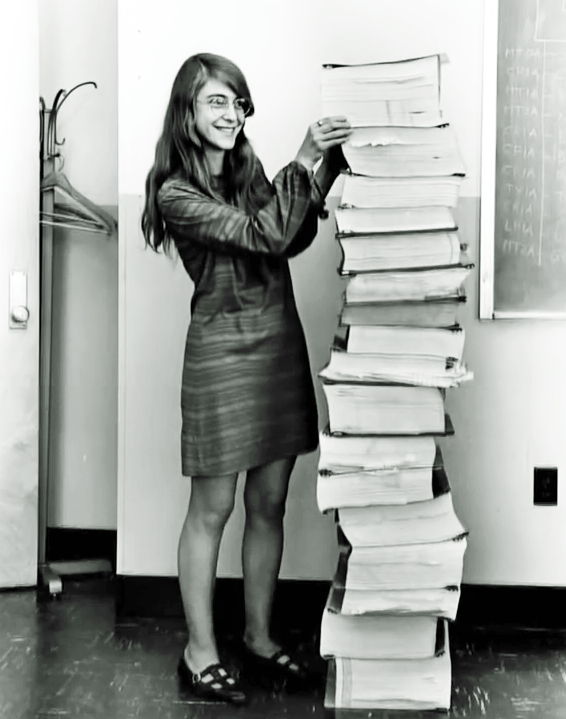
And it frequently means having to hide that I’m doing it, which is part of what brought me to this topic today. I teach, again, math and science to fifth grade girls. I have discovered a fascinating thing over my years as an educator: if I say the word feminist in class, whatever I’m trying to do is instantly derailed. The girls often don’t like the label, even though they’ll agree that any individual tenet of feminism that I might name is a true and/or correct thing. Then they go home and tell their parents about it and all the sudden I’ve got to have a conversation with the principal. So I’ve got to be sneaky about it. At ten, I’m not sure they really need to have conversations about intersectionality in math class anyway, y’know? But subtlety works. I try and use the word she whenever I’m talking about a mathematician or a scientist. I use pictures like this one rather than a typical white guy in a lab coat. And I try to teach them, as much as I can, to stand up for each other rather than tear each other down. That’s teaching feminism, even if I don’t call it that.
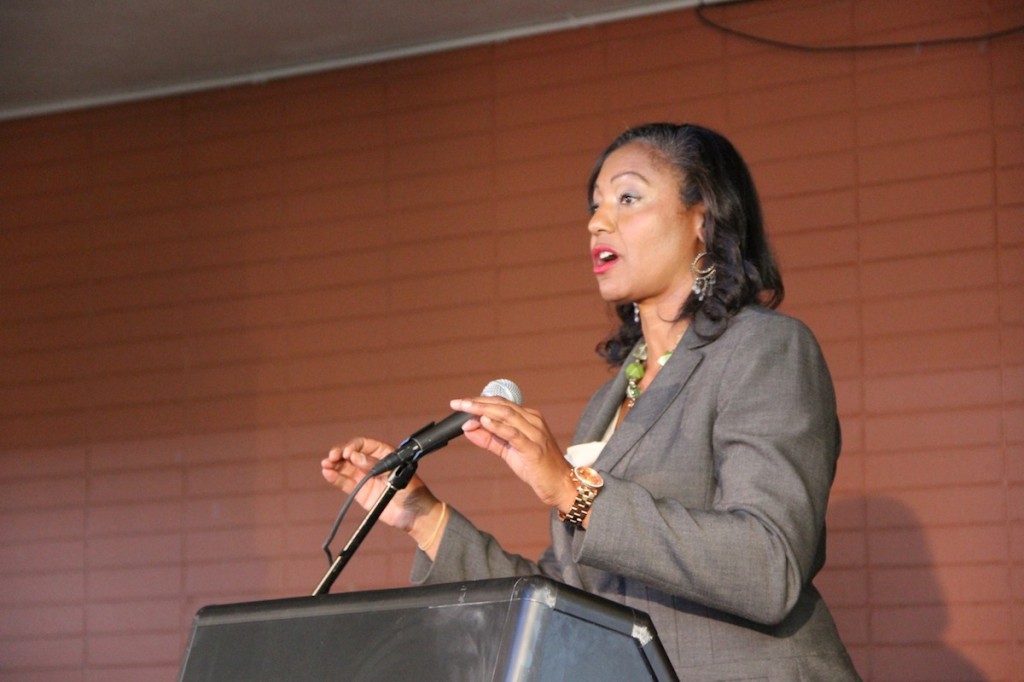
Should I, though? Should I make a point of naming feminism in my classroom? I don’t know. It does run the risk, of course, of pissing off parents– either because they have a poor opinion of feminism or the somewhat more personally acceptable feeling that maybe their kid’s math teacher should be focusing on math and not politics. And they are, again, eleven. I don’t know that they need the word so long as they’re getting the concept.
Then again, I don’t have the kind of principal who is going to get mad at me because I call myself a feminist in class and some yahoo has an issue with it, so maybe I do need the word. I don’t know. That might be a question for smarter people to answer for me.
Quick note: I’ll be at school all day, so if I don’t respond to comments until, say, early evening, please don’t take it personally. Phone reception in my building is terrible.
 Statistically speaking, it almost has to be happening somewhere: despite the fact that the rest of the world is slowly roasting, the temperature trend in the Great Lakes region has been distinctly cooler than usual for the last several years. Our last two summers have been unusually mild, rarely even getting into the 90s, and our last two or three winters have been brutally cold. It is July 18; to my knowledge we have not had a day even hit the upper 80s as a high yet, and the words “heat index” have not found reason to escape my lips thus far. There haven’t even been that many days yet that have escaped the seventies. I haven’t worn shorts more than once all summer.
It’s been glorious.
It will be over 100 degrees today between 1:00 and 7:00, and I have to work at OtherJob, which means I’ll be outside for at least two or three of those hours. And it’s not like 98 degrees is gonna be much better; it’ll probably be 10:00 before the temperature descends into remotely livable territory. And that’s not “Man, it’s been a hot summer” 100 degrees, it’s a twenty degree jump from what we’ve been used to.
Give my wife like a week to get used to the idea after I die, and then y’all can come over and divvy up my books.
 Welcome to infinitefreetime dot com
