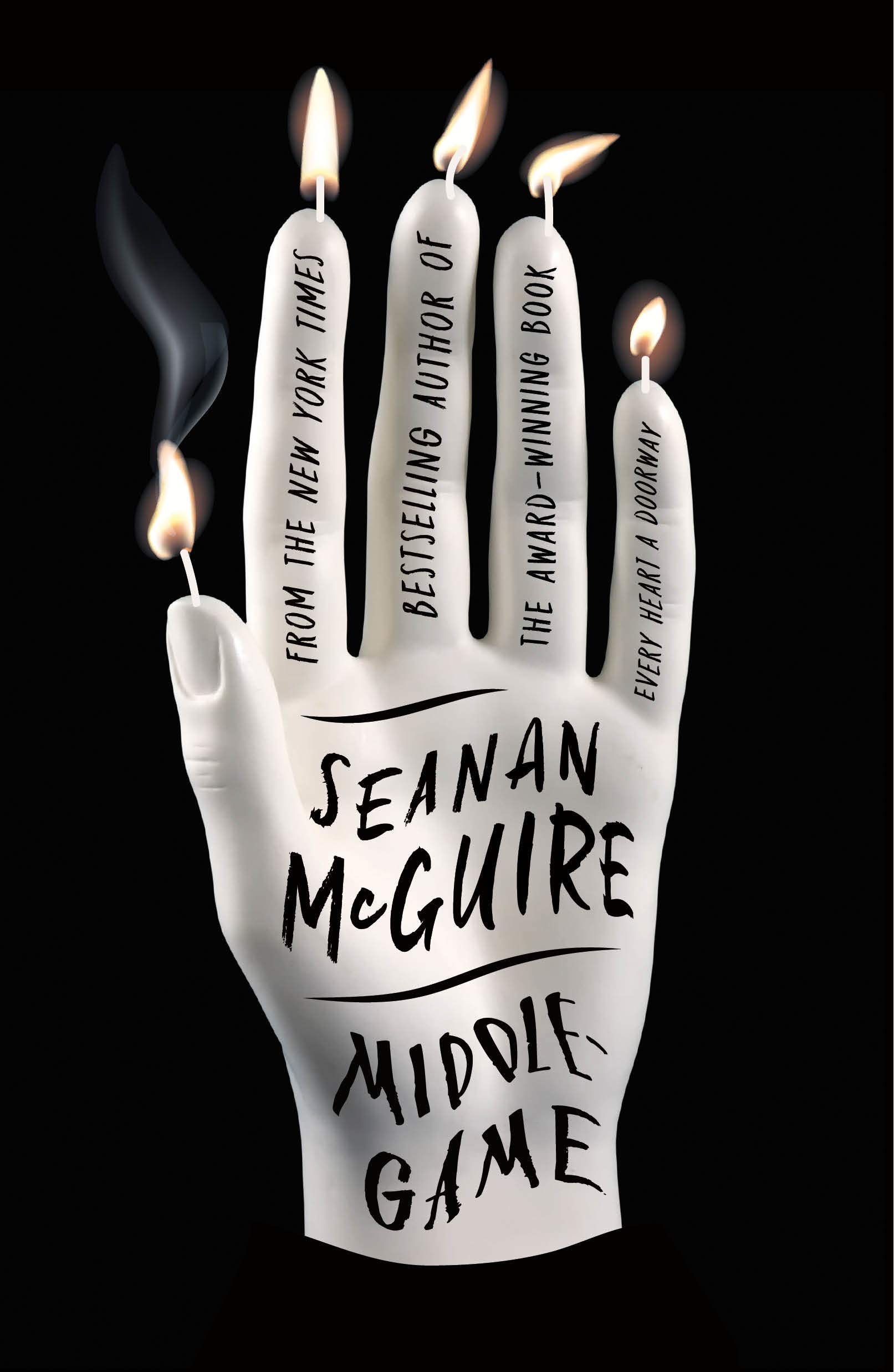
I am probably going to read at least seven new-to-me Seanan McGuire books in 2019(*); she is, I think, probably the most prolific author I am aware of, and gets mentioned fairly frequently around here. The last book of hers that I talked about a lot was Into the Drowning Deep, written as Mira Grant, a book that at the time I called her best book and which made it into #4 on my end-of-2018 Best Of list.
SO, yeah. ‘Bout that.
Drowning Deep is still my favorite of her books, I think, as personal preferences go, but it’s no longer her best book. Middlegame now takes that honor, as it’s a nearly-as-entertaining story with a frankly much more complicated theme and structure than any of her previous work; McGuire is, and this is not a criticism, a fairly straightforward author, which is one of the things that makes me so partial to her work, and Middlegame is anything but a completely straightforward book. It is, frankly, the second book I’ve read this year that I would describe as a level-up by the author, and in fact she talks about how it took her forever to decide she was good enough to write this book in the afterword.
So why am I calling this a “reviewlet” and not a review, since we’ve made it perfectly clear over the years that I don’t really feel compelled to adhere to any particular sort of template when reviewing books? Because I feel like going into this book as blind as possible is a good idea, which makes me not want to talk about the story all that much. Now, you will have to be patient for a bit at the beginning, as you sort of start off at the end of the story– well, one end, anyway– before rolling around to a prequel and then the beginning, but like I said, the book’s structure is kinda complicated. It’ll pay off, I promise, but there will probably be some confusion at first. It’s worth it.
What’s the book about, though? Alchemy. And twins. And math. And quantum entanglement. And language. And Frankenstein. And The Wizard of Oz, and a neat little fictional book-within-a-book that I kind of hope to find out that McGuire wrote in its entirety and released somewhere, and another actual book called The Midwich Cuckoos that I might actually have to check out. And graduate school. And horror. And murder. And … well, other stuff that I’m not going to spoil.
Y’all know if you can trust me by now on these things. Be it known that I’m highly recommending this, and my end-of-year list for 2019 is going to be bananas, and go check it out.
(*) Which would be more impressive were it not for the at least nine Sarah J. Maas books that I’m going to have read by the end of the year. But more on that in a couple of weeks.
 I spent a lot of time reading this weekend, which is the best way to spend a weekend; I managed to read two complete books cover to cover basically before even getting into the shower yesterday, and knocked out another one this afternoon. I know I keep saying it, but it’s nice not working weekends. I didn’t even put my watch on today! That’s how awesome this weekend has been.
 My love for Tor.com’s novella line continues to grow with every book they release. I have damn near an entire shelf of them by now, and I’m at the point where I’m putting them on my Amazon wish list the second I find out about them regardless of who the author is or the subject matter. That said, P. Djèli Clark’s The Black God’s Drums is a perfect exemplar of what I love about the line: an author I’ve never heard of (I have found so many good authors through these novellas!) writing an alt-history featuring characters that are generally underrepresented in genre literature. In this case, the book is set in an antebellum, independent New Orleans, in an America that is split into at least three or four different factions, with airships and steampunk and, oh, right, orisha magic. The main character, a young girl named Creeper, is possessed by Oya, an African god of wind and storms, and occasionally is able to manifest magic powers.
 I have actually already read most of Walter Mosley’s Easy Rawlins mysteries, but it’s been a really long time and I’ve been slowly working my way through his books over the course of this year. This is the third one I’ve read and the second of the Rawlins mysteries. It’s weird; the last time I read a lot of Mosley was in college, and for years I’ve been telling people that he was an author where I was really fond of his sentences and paragraphs but that I didn’t necessarily love his books.
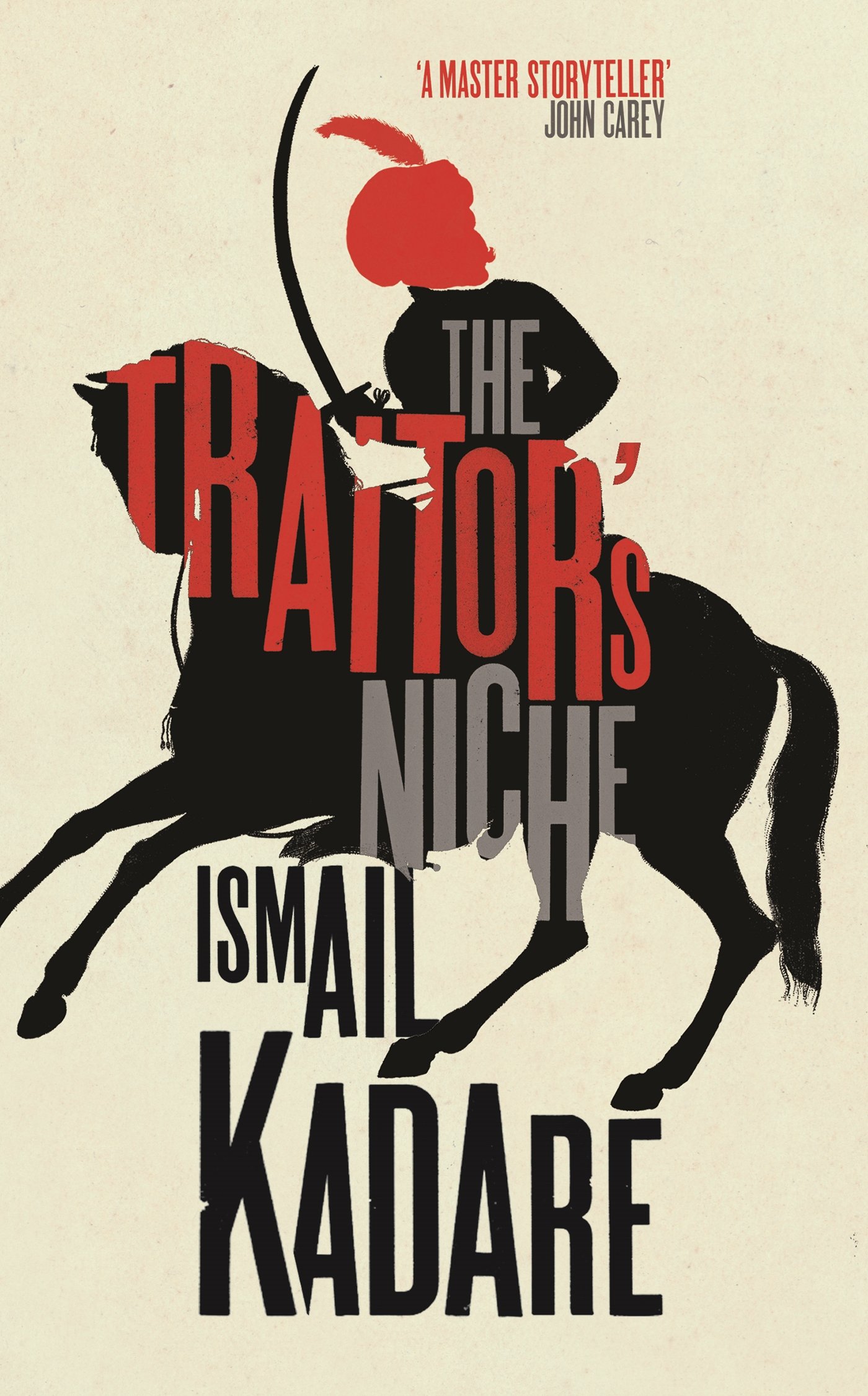 I encountered Ismail Kadare’s The Traitor’s Niche through Twitter, and specifically through my friend




 Welcome to infinitefreetime dot com