I should probably wait until the year’s actually over, because of course you never know– and the book I’m reading right now is fantastic— but I figure this list is probably going to be pretty stable by now, and I have nothing else to write about today. So: the top 10 new(*) books I read in 2013, where “new” is defined as “new to me,” which means that it’s totally fine that two of these came out while I was in middle school. Most of the rest are pretty recent, though. I am not in any way claiming that these are the arbitrary “BEST” books of 2013 or any other year; they’re the 10 books that I liked the most and have been most likely to evangelize to others. In reverse order, then:
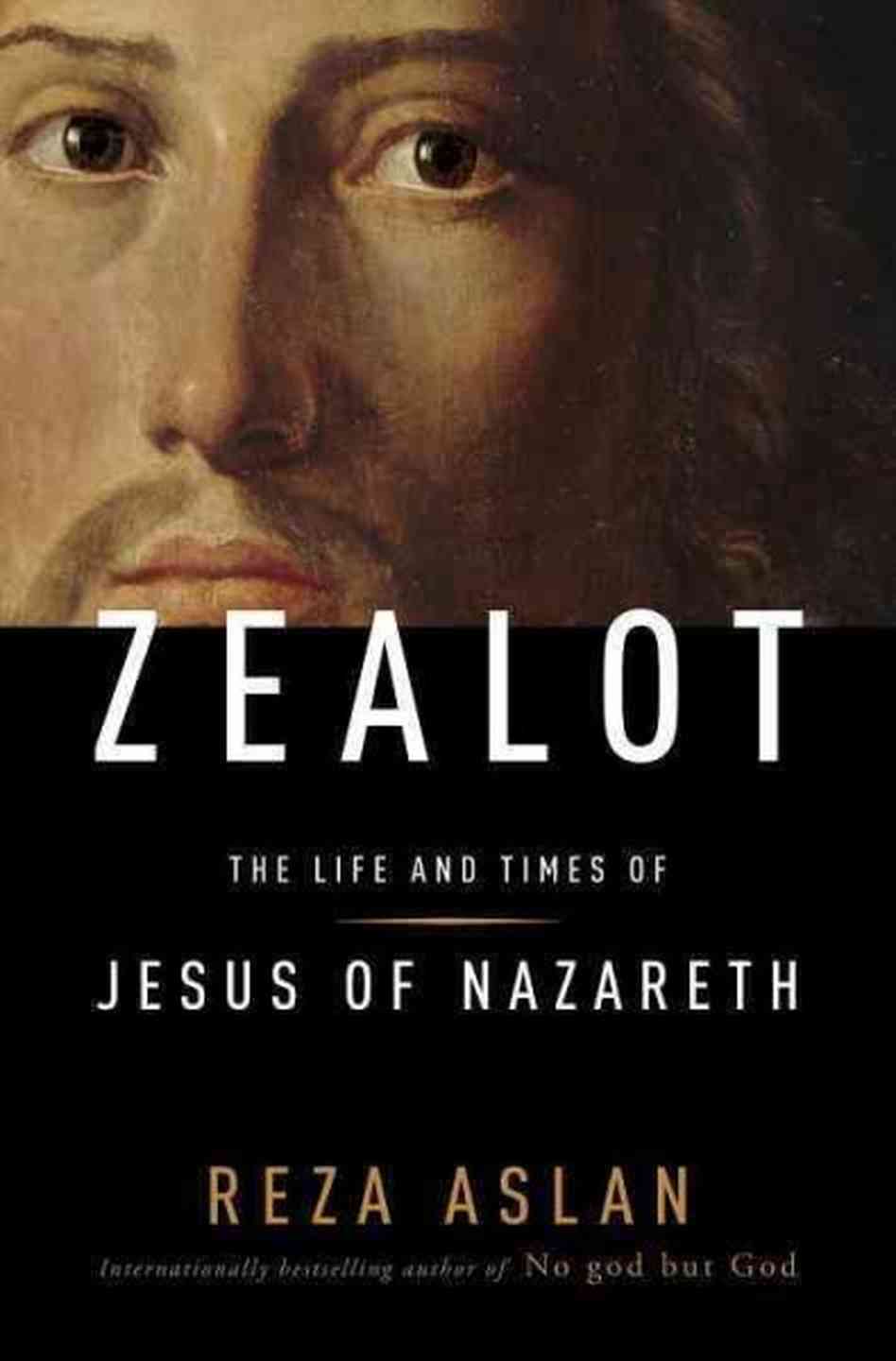
 Zealot: The Life and Times of Jesus of Nazareth, by Reza Aslan. In a former life, I was planning on pursuing a career as a college professor. I majored in Religious Studies, Jewish Studies and Psychology as an undergrad, with dual minors in Near Eastern Languages and Cultures and Anthropology. That’s not a joke. I actually did that. Then I got a Master’s Degree in Hebrew Bible from the University of Chicago and figured out that while I really liked reading and learning and occasionally telling other people about all this stuff, as soon as you framed any of it as “research” it made me want to kill myself. So away with that. I haven’t done much reading in religious studies since leaving school, but all the press about this one (OMG A MOOZLIM WROTE ABOUT TEH JEEZUS) made me pick it up and read it. And it was well worth the read; I don’t know that it’s cutting-edge scholarship and there was little in there that was new to me, but it’s a great primer on how religious studies in the academy actually works for those who are interested. Aslan’s book on Islam is on my unread shelf right now, waiting for me to get to it.
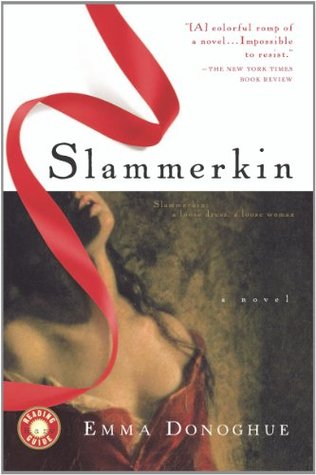
 Slammerkin, by Emma Donoghue. I read a bunch of Emma Donoghue this year, and this was the best of the bunch: a tale about a Victorian teenaged prostitute (a “slammerkin” is a loose gown and is also slang for a hooker) that turned out on literally the last page to actually be based on the life of a real person. It is at turns shocking, funny, exciting, depressing, and occasionally at least a little inspiring here and there; Mary Saunders’ life is not one that I would ever want to have, obviously, but she’s a believable and interesting character and Donoghue has obviously researched the hell out of her setting. Not for the faint of heart, I don’t think– you saw the “teenaged prostitute” bit up there, right? I hope so– but well worth the read.
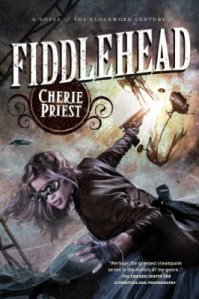 Fiddlehead, by Cherie Priest. This is the fifth– and, unfortunately, I believe the final– installment of Priest’s Clockwork Century series of novels, and for my money it was the best one. I got off on the wrong foot with Boneshaker, the first book– the series is set during a steampunk extended alternate-history of the Civil War and the main character of the first book is a Confederate, which got under my skin in a way that I wasn’t able to shake– but every book since then has gotten better. There is a sequence in Fiddlehead where a crippled, wheelchair-bound Abraham Lincoln (he survived the assassination attempt, but only barely) and current President Ulysses S. Grant are involved in an ongoing and pitched gun battle that is ended by a deus ex machina crazy man piloting a blimp. Meanwhile, Pinkerton agents of Lincoln’s are trying to save Atlanta from being wiped off the map by a… wait for it… zombie bomb. As in a bomb that creates zombies. This book, uh, may not be for everyone. But oh my god was it for me, and it should be for you too if you want to be my friend.
 Parasite, by Mira Grant. Speaking of zombies, Mira Grant’s recent Newsflesh trilogy put her on the map for me, and Parasite is the first book of her follow-up series, about better living through genetically modified intestinal fauna. It hits a couple of similar notes to the zombie series (turns out, spoiler alert, putting genetically modified tapeworms in everyone to alternately secrete medicine and screw with their genomes to make them healthier might not be the best idea) but ends up standing on its own by the end of the book. Grant is a pen name– under her real name, Seanan McGuire, she writes mostly urban fantasy, which this definitely isn’t, even though I’ve enjoyed her InCryptid novels more than I probably ought to. In fact, forget I wrote that; I hate urban fantasy so I either didn’t like InCryptid or I have to find some way for InCryptid to not be urban fantasy. Point is: Read Parasite. Then go read Newsflesh. That’s good too.
 The Lies of Locke Lamora, by Scott Lynch, along with its sequel Red Seas under Red Skies. I am a sucker for heist novels. I am a sucker for fantasy literature. I am a sucker for fantasy literature set in big cities (which is not the same as “urban fantasy,” which is basically ten thousand ways to rip off Buffy the Vampire Slayer.) I am a sucker for books about thieves. This series is all of these things, and I am so Scott Lynch’s bitch. The third novel in this series, charmingly known as the Gentlemen Bastards books, is already out, but in hardcover, which triggers my OCD because I bought the first two in paperback and they won’t match. Which is wrong. My OCD may have to go to hell, though, because I want the third book now now now. Entertainingly, I discovered this series through an article– on i09, I think– about great fantasy series with terrible covers. They were absolutely right about this one. See “The worst books I read in 2013” for one that they got wrong.
 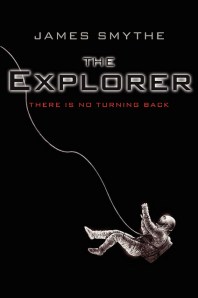 The Explorer, by James Smythe. Have you noticed how I’ve been trying to write a little bit more than I need to write to get past the picture, but not much more than that? I’m filibustering already, because I don’t want you to know anything about The Explorer, I just want you to take my goddamn word on it and read it. I mean, look at the cover, there. Getting, like, a 2001 vibe? Or Gravity, to pick something newer? Okay, roll with that. Or, y’know, don’t, because this book isn’t really anything like either of those things except for the bit where it’s set in space and some shit goes wrong. And I absolutely cannot tell you anything else that happens after that because spoilers can fuck this book up with a quickness and you deserve to have to figure out what’s going on on your own while you’re reading like I did. Go, dammit. It’s short, probably the shortest book on this list; you can go finish it and then come back and read the rest of the entries.
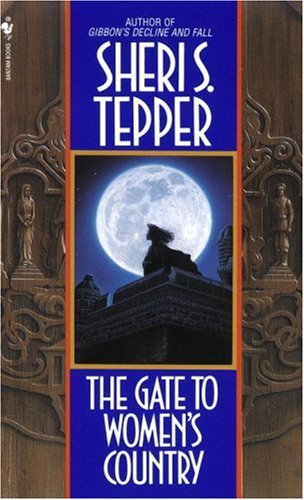
 The Gate to Women’s Country, by Sheri S. Tepper. This is the oldest book on the list; it came out in 1988, when I was in seventh grade. I’d never even heard of Sheri Tepper before this year, and read two of her books (and have at least one more on deck); Women’s Country was the superior of the two. This is another one where I sorta want to filibuster and not tell you a lot about it; it’s set in the future, but society has mostly regressed to a state where there are loosely aligned (but occasionally not) city-states rather than overarching national governments; some of them are more or less benign than others, and the particular culture this book revolves around has a particularly Greek/Roman-inflected, very gender-segregated flavor to it. Tepper spends the first 80% of her book making you think she’s setting everything up in a certain way and then the last 20% of the book manically giggling while she kicks the legs out from under you; it’s got the best ending of anything I’ve read this year– which is what elevated it over Gibbon’s Decline and Fall, the other book of hers I read in 2013, which ends… poorly.
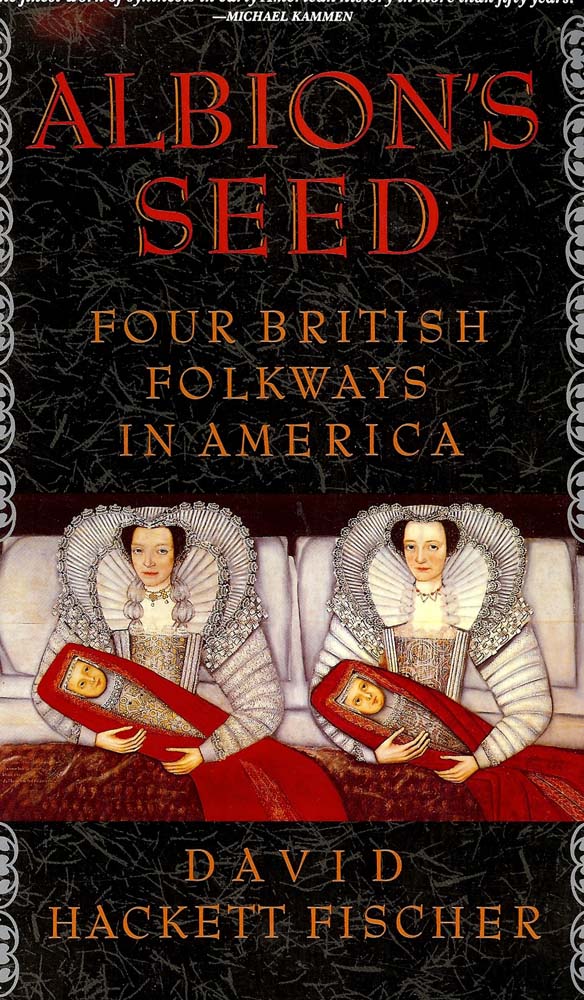
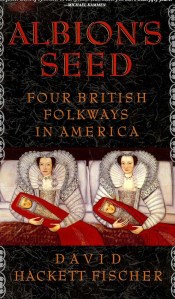 Albion’s Seed: Four British Folkways in America, by David Hackett Fischer. The second-oldest (1989) and best nonfiction book I read this year. Albion’s Seed could be used to humanely kill small animals, if you’re into that; it’s nearly a thousand pages long in paperback and something like three or four inches thick. It’s an insanely detailed look at how four different British cultures– the Puritans, the Cavaliers, the Scotch-Irish, and the Quakers, basically– influenced American culture and how they are responsible for what we think of as regional differences within the United States. I know I just said insanely detailed, but let me say it again: it’s insanely detailed, but in a way that is totally fascinating and kept me endlessly pointing out factoids to my wife. I also kept taking pictures of individual pages and posting them to this Facebook reading group I’m in whenever neat stuff would come up. I have a good friend from ed school who spent years talking this book up to me before I finally read it; it took me too long and I should have read it much earlier. Fascinating, amazing work.
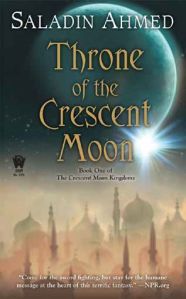 Throne of the Crescent Moon, by Saladin Ahmed. The top two books on the list are both debut novels and both by people riiiight about my age– Saladin Ahmed is a year older than me and the author of the #1 book is a year younger– which means I hate both of them, because I will never, ever be this good. Throne is Islamic/Arabian Nights-infused sword-and-sorcery fantasy at its goddamn utter best; I plan to reread it very early in January once I’m done with this stupid keep-track-of-everything project I’m doing right now, and I damn near reread it immediately after finishing it the first time. The book is creative, refreshing, new, well-written, with characters and cultures that are sorely lacking in fantasy literature right now, and when they do show up tend to show up as hackneyed stereotypes. It’s a goddamn breath of fresh air, is what it is, and you should not read the next sentence of this article until you’ve downloaded Ahmed’s short story collection Engraved on the Eye (it’s free!) and read every bit of it, then ordered Crescent Moon so that you can read that. Brilliant brilliant brilliant.
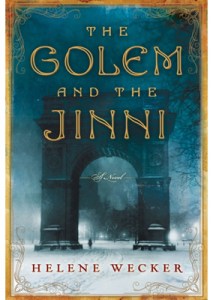 The Golem and the Jinni, by Helene Wecker. Remember when I talked about how I used to be a Jewish Studies major in a former life, like, 1800 words ago? Remember how in the very last article I revealed a not-terribly-surprising like for Arabian-themed fantasy? This book is about a Golem and a Jinni. And it’s historical fiction, so it’s got that going for it, too. Every single time, all year long, anyone has asked me what they should read, I’ve told them The Golem and the Jinni. I know at least three or four people who have bought copies on my recommendation and loved it. It was terribly tight choosing between this and Crescent Moon; the only thing pushing Wecker’s book over Ahmed’s is the slightly more literary quality of her writing, which means it’s an easier recommend for most of the people I know, who might turn away from a book about a magician and a sword-wielding dervish hunting ghuls. It’s also a one-shot and Ahmed’s is book one of a series, which is awesome for me– I get to read more!– but turns off non-genre people a little bit. I don’t know if that actually makes it a better book or not; it may not, but either way goddammit I loved the hell out of this book and you should be reading it now. Go. Go right now. You have ten books to buy.





Honorable mentions: Snow Crash, by Neal Stephenson, which is probably only not on the list by virtue of the fact that I’m reading it now and thus haven’t finished it yet; Kabu Kabu, by Nnedi Okorafor; The Fault in Our Stars, by John Green; The Thousand Names, by Django Wexler; Kill Anything that Moves: The Real American War in Vietnam, by Nick Turse; Joseph Anton: A Memoir, by Salman Rushdie; The Shining Girls, by Lauren Beukes; The Signal and the Noise: Why So Many Predictions Fail– but Some Don’t, by Nate Silver; The Book Thief, by Markus Zusak; and Gun Machine, by Warren Ellis.
Worst Books of the Year: The Walking Dead: Rise of the Governor, by Robert Kirkman and Jay Bonansinga, and I’m pretty sure I know which of the two is the shameful hack, and The Warded Man, by Peter V. Brett. Here’s why.
Did I miss anything?
 Welcome to infinitefreetime dot com