GUEST POST: No One Can Tell You How to be a Writer, by Katherine Lampe

Somewhere out there in the world I’m running a wedding rehearsal right now.  Hopefully I’m doing it at least moderately competently.


Hi, there.

I’m Katherine Lampe. In the unlikely event that you’ve heard of me, you probably know me as the author of the Caitlin Ross Urban Fantasy series. Or as a loudmouth with no censor, who doesn’t balk at sharing her bathroom habits on social media. But you might not know I have Bipolar Disorder (Type II).

Oh, who am I kidding? I don’t balk at sharing the details of my mental health, either.

Bipolar II isn’t the “fun” kind of Bipolar, where you do things like blow your savings on fantastic money-making inventions or tell random strangers you’re a movie star incognito. That is, it isn’t characterized by extreme mania. When those of us with Bipolar II experience mania, it’s generally of a milder sort. The kind that lets you clean your entire house in a couple hours, which is useful, but not particularly exciting. The main feature of Bipolar II is debilitating depression, sometimes lasting years. The depression has its own rhythm. There are days or weeks when you can’t get out of bed. Then there are periods when you’re kind of functional. You can accomplish stuff that needs done, but all of it is drained of emotional content. Nothing’s particularly worrisome, but nothing is particularly enjoyable, either. Sometimes duty and expectation are the only things keeping you going, because you don’t want much. Nothing appeals and nothing matters. And when you accomplish something, you don’t feel any internal sense of reward.

About ten years ago, give or take, a bunch of stressors fell on my head all at once. I’ve been in a Bipolar depression ever since. And before you ask, yes, I’m in treatment. Without it, I wouldn’t be alive to write this. Medication alleviates some of the distress. It doesn’t make me normal, whatever that means. I have about as many good days as bad days now. Of course, on the bad days the good days seem nonexistent. And even on the good days, good feelings are distant. More an intellectual recognition of “Oh, I don’t want to die today,” than true wellbeing.

At the same time as I’ve been experiencing this extended depressive period, I’ve written seven novels, six of which I’ve published (the seventh is due out in August). I’ve also written and published a book of fairy tales and another of short stories, and I’m piddling around with a trio of related novellas. All without any motivation or feeling of gratification from the process.

Okay, there were those twelve weeks when I was manic and I completed two novels. That was pretty cool.

Until now, I’ve never really thought much about how I wrote seven novels in the state I’m in. The first one, I’d been plodding along at for some time. When the depression got bad, I abandoned it for years on end. Then a new medication started working, and one day I went back to it. Rewrote most of it. That’s when the manic period hit, and I wrote the next two books in the series. The mania left, and I didn’t write for another couple years. After that, I found reasons. Sometimes reasons within the series itself: an event that needed to happen, an issue that needed to be addressed. Sometimes it seemed like writing was the only thing I could do, the only thing I’m good at. When all else fails, I can still put words together, whether or not they matter to me. Maybe sometimes I was just telling myself stories as a kind of distraction from the dreariness of life. This last novel has been an absolute nightmare, by the way. It took me two years, and in the process I tried and abandoned half a dozen different plots and tossed tens of thousands of words.

The thing is, it doesn’t matter how I did it. I found a way that worked for me. If my way doesn’t look like anyone else’s, who cares?

Well, sometimes I care. I care when I see people post writing tips or blog about How to Do It. I have a bad habit of comparing my process to other people’s process, and when mine isn’t the same, I wonder if I’ve Done It Wrong. When a writer I follow on Instagram or Twitter mentions in May they’ve completed three manuscripts since January, I wonder what’s wrong with me. What essential quality am I lacking?

I know the answer. What’s “wrong” with me is, I have a mental illness. What I’m lacking is the normative distribution of chemicals in my brain.

Most of the lists of writing tips you see, most of the posts about “how to be a writer,” are written from a neurotypical perspective. An ableist perspective. (They’re often classist and sexist as well, and probably racist, but I’m white so I can’t speak to that.) When you’re struggling with a chronic illness, be it mental or physical, advice like “write every day” isn’t just worthless, it’s actively damaging. Well-meaning saws like “it’s not always going to be fun” or “don’t wait around for inspiration or the right moment” are meaningless when you never experience “fun” or “inspiration” and every moment is wrong. Saying “push through and get it done,” without considering whether your audience has the physical and mental stamina to push anything is insensitive at best. It really drags down those of us who write but are unable to follow the directive. It contributes to an already frustrating experience, and sometimes provokes us to overextend the few resources at our disposal. I don’t know how many times I’ve heard a friend struggling with the balance of illness and writing say “I just have to knuckle down and do it,” knowing they can’t do any such thing, knowing they’re going to judge themselves later when they don’t “measure up.”

A lot of that advice comes from a capitalist standard where output at any cost is considered more inherently valuable than a person’s wellbeing, and where failure to make quota is taken as a sign of laziness or not trying hard enough. It relegates words to the category of product rather than art or expression, and it’s bullshit. If you perpetuate that standard (or suspect you do), I ask you, pleas, to check yourself and knock it the hell off. If you suffer from that standard, I’m here to tell you it’s okay to ignore it. The most anyone giving advice can do is tell you what works for them. Being a bestselling novelist does not make anyone an authority on you and your process. No one else can define “what works” for you. No one else can tell you how to do you, and you don’t have to feel guilty or beat yourself up for not listening.

Maybe you write every day for three months and then not at all for two years. Maybe you think for a week before every word. Maybe you don’t think about writing at all for weeks on end. It’s all fine. It’s fine if you finish things, and it’s fine if you don’t. It’s fine if you’re published and if you’re not, and it’s fine if you don’t care one way or the other. It’s fine if you want to write but health limitations mean you can’t right now, and it’s fine if you need to spend quality time with your cat. It’s fine if the stories go away. And you know what? If they never come back, that’s fine too. It’s a loss and a grief, maybe. Maybe it’s a relief. Whatever your feeling about it, it doesn’t make you, the essential you, worthless or invalid.

You have the moment in front of you. Nothing else. Do it your own way and screw the haters.
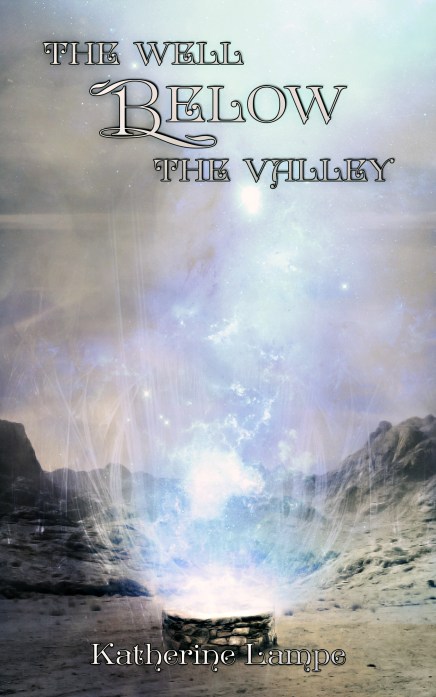
COVER REVEAL: The Well Below the Valley, by Katherine Lampe

Katherine Lampe is a Twitter buddy and fellow independent author.  I reviewed the first book in her Caitlyn Ross miniseries last year and enjoyed it a lot; this is book seven.  This will be a big week for her around here, because she’s doing a guest post for me later this week too.  

The cover is by the most excellent Matt Davis, who I plan on working with myself just as soon as I find the right project.

well002

Six months after the birth of her daughter, Caitlin Ross’s life is in a tailspin. Still suffering from what he endured at the hands of his former lover, her husband, Timber MacDuff, has drawn away. The gods have stopped speaking, except for vague hints in bad dreams. Unwilling to face reality, Caitlin goes about her daily routine as if nothing has changed while deep inside she longs for distraction.

When the county sheriff asks for help with a puzzling situation, Caitlin believes her prayers have been answered. A rancher has drowned in the middle of a desert, and the means appear supernatural. The case is right up Caitlin’s alley, but her interest pits her against Timber, who insists getting involved is too dangerous now that she’s a mother. Neither he nor Caitlin realizes a greater danger awaits. Strange events in Gordarosa have brought the area to the attention of a group known as Shade Tracers. Mundane mortals, they’ve taken it upon themselves to protect humanity from magic—with deadly force, if necessary. One holds Caitlin responsible for a personal tragedy, and will stop at nothing to see justice done..

Past and present converge in Caitlin’s darkest adventure yet. With her own life at stake, she must journey through time to uncover the truth behind the Shade Tracer’s obsession. Success could provide the key to solving the local mystery. Failure will doom her to a life on the run, forever hunted.

The Well Below the Valley will be released in print and electronic editions August 2, 2016.

EXCERPT

Just then, some odd flickers from the BLM land adjacent our property caught my eyes. Shading them with my hand, I squinted into the distance. A flash. A beat, and then another. No regular rhythm. They seemed to originate from the low hill from which we often watched the moonrise.

Some kids dicking around with a mirror. BLM land was public property, and this section lay convenient to town. Bored local teens partied there. Timber and I combed the ground a couple of times a month, picking up the trash they left behind.

I bent to retrieve my basket. As I straightened, the light flashed again, this time with a distinctive quality hard to define. Less like a mirror. More like a flame. I’d just settled on the difference when something whizzed past my left ear, and a cluster of berries fell off the rowan tree at the center of the garden. A split second later, a sharp CRACK! rang through the air.

My jaw dropped. What the hell? I lifted my eyes from the rowan berries to the hilltop in time to see the light flash again. At the same time, panicked voice shouted not three feet behind me.

“Jesus Christ, Caitlin! Get DOWN!”

A heavy object struck my back, knocking me to the ground. My basket flew from my hand, spilling my harvest. I hit the earth with a shock that drove the wind from my lungs. AS I lay there, cheek in damp soil, the intense, green scent of bruised tomato vines clogged my nose. A foot from my head, a pepper plant exploded. CRACK! Understanding washed over me, and I began to shake.

Someone was shooting at me.

About the Series

Rural Gordarosa looks like any small mountain town, with stunning scenery and locals who enjoy gossip. Witch Caitlin Ross knows, however, that there’s more to her hometown than meets the mundane eye. The caretaker at the local theater isn’t human, for example. And her best friend’s uncle is a demon. Sometimes Otherworldly forces get out of control, and Caitlin has to step in to put things right.

Walking the line between Urban Fantasy and Magical Realism, the Caitlin Ross series is unique in being written with a polytheistic Pagan world view, in which the gods are often as flawed as humans and the other is not necessarily monstrous. The books give readers access to a world where magic is an ordinary part of life, but, for all that, never commonplace. By presenting enchantment as a given, they highlight the wonder in the every day.

About the Author

Musician, DJ, and unrepentant Iconoclast, Katherine Lampe studied at the University of Michigan with Ken Mikolowski, and at Naropa University with Allen Ginsberg and William S. Burroughs. The daughter of an English teacher and a self-professed heretic masquerading as a Presbyterian minister, she is interested in the individual’s relationship with the divine. Her work explores the interaction of the supernatural and the mundane in the lives of real people.

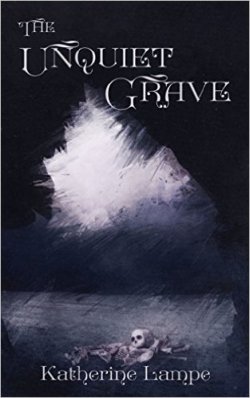
REVIEW: THE UNQUIET GRAVE, by Katherine Lampe

41-X1K0SW+L._SX311_BO1,204,203,200_I’ve said this before, many times: I read books in print.  I have a Kindle Paperwhite, and the iBooks app on all of my various iDevices, but I read every single day and 95% of my reading is on paper.  This wouldn’t be terribly notable except for the part where I’m an independent author, and the vast majority of us make our money pushing ebooks.  In other words, I sell something that I don’t regularly use, and worse, when one of My People writes a book, frequently the sad truth is that I’ll happily purchase and download your book but it’s entirely possible that it’s gonna spend a long time languishing on my Kindle before I have an excuse to get to it.
Not that I’m always super prompt about paper books, mind you, because I have a backlog like every avid reader.  But at least with my print books they’re sitting on my Unread Shelf in my bedroom and they’re glaring at me, and I remember they’re there.  Ebooks are on my Kindle; sometimes I don’t even know where my Kindle is, much less remember a specific book that I ought to get to.

What this means is that when I tell you that once I got started on Unquiet Grave I barely put it down, you probably ought to take it pretty seriously, because “barely put it down” is not something I say about ebooks very often.  Even more amazingly, it’s urban fantasy, hardly my favorite genre– in fact, one I have been complaining about regularly for almost its entire existence.

So.  Right.  The book.  Unquiet Grave is the first of Lampe’s Caitlin Ross series, which is currently at a fairly astonishing six books.  Caitlin is a musician, and in fact drama with her band is one of the main elements of the plot of the book.  She’s also a witch.  However, she doesn’t want to be, and when a supernatural encounter at a gig drags her into the role of protector of her town and Investigator of Strange Doings, she has to make a choice about whether to embrace her nature or continue to suppress it.

Here’s what’s interesting about this book, or at least part of it: it’s the first book in the series, but it feels like it could be book two or three.  The characters have backstory and history that makes the world feel established, and Caitlin herself has been through some shit in her past that I want to know more about.  I don’t know if subsequent books in the series march forward in chronological order or what, but I’d love to see something set before this book at some point.  The Celtic-infused magic system feels like it has rules and boundaries without a lot of time spent explaining them, and Caitlin’s relationships with her husband, bandmates and friends feel real.  The central mystery of the book, which drops back a generation or two into her fictional Colorado town’s history, is a great, interesting story.

The point: you should check this book out.  You’ll like it.  Promise.

Blech.

My knees declared war on the rest of me last night as I was trying to grout the floor in the bathroom.  I had actually bought knee pads for the occasion but apparently my legs are bigger than I thought they were and even the XL size were just big enough to technically fit, if by “fit” I mean “be incredibly painful, and not solve that glass-marble-pressing-into-the-side-of-my-kneecap thing that’s been happening lately.”

I took enough ibuprofen to kill a horse before I went to bed last night, and then refused to even entertain the idea of getting out of bed today before four digits were visible on the clock next to me.  Then the power went out in my neighborhood, rendering me unable to do basically anything I’d wanted to do with my day at all, since the bathroom lacks windows and external light.

So I sat around and read on my Kindle, finishing Katherine Lampe’s The Unquiet Grave in the process, a book that I five-starred on Goodreads upon finishing it and which I’ll talk more about later.

Bathroom will be finished soon.  You’ll get pictures then.  No more until it’s done, or at least this phase is done.  This phase doesn’t include lighting, though, so the bathroom’s still gonna look a bit weird until we get that fixed.

Other than that, I’m taking a mulligan on today.  Hopefully tomorrow will be less filled with pain and more productive.

REVIEWS: Katherine Lampe’s DRAGONS OF THE MIND & Robert Bevan’s CRITICAL FAILURES

5902269I took my Kindle with me on the trip, and actually got some reading done from my backlog.  Considering how much of my writing income is made up from ebooks, I really ought to find a way to integrate this thing into my regular reading life, but at least I leave town every now and again.

Katherine Lampe’s Dragons of the Mind: Seven Fairy Tales is interesting.  It’s a side project from her Caitlin Ross urban fantasy series– a series I haven’t read yet but the first book is on my Kindle waiting for me.  The first story in Dragons is a modern retelling of Puss in Boots, and is the closest to the urban fantasy genre the rest of her books fit into.  The remainder are more traditional fairy tales, and unless my Grimm calibrator is off the rest of the stories aren’t necessarily retellings of older tales.  Interestingly, Cat, Sack, Boots was my least favorite of the stories in the book; I found Lampe’s writing to be much stronger in the quasi-formal, repetitive tone of the more traditional stories that followed, and the second story, entitled The Harper on the Hill, was strong enough that I read it twice through before moving on to the third.  Another strong effort was the sixth story, Whiskers and Fur, which is about cats.  Lots of cats.  It has a fascinating hallucinatory quality to it that I liked a lot and was one of the highlights of the collection.

Dragons of the Mind can be had at the scant price of $2.99 from the Amazon, and is also available in print.  You can also follow Katherine on Twitter if you like; she is reliably interesting and entertaining, so you should.

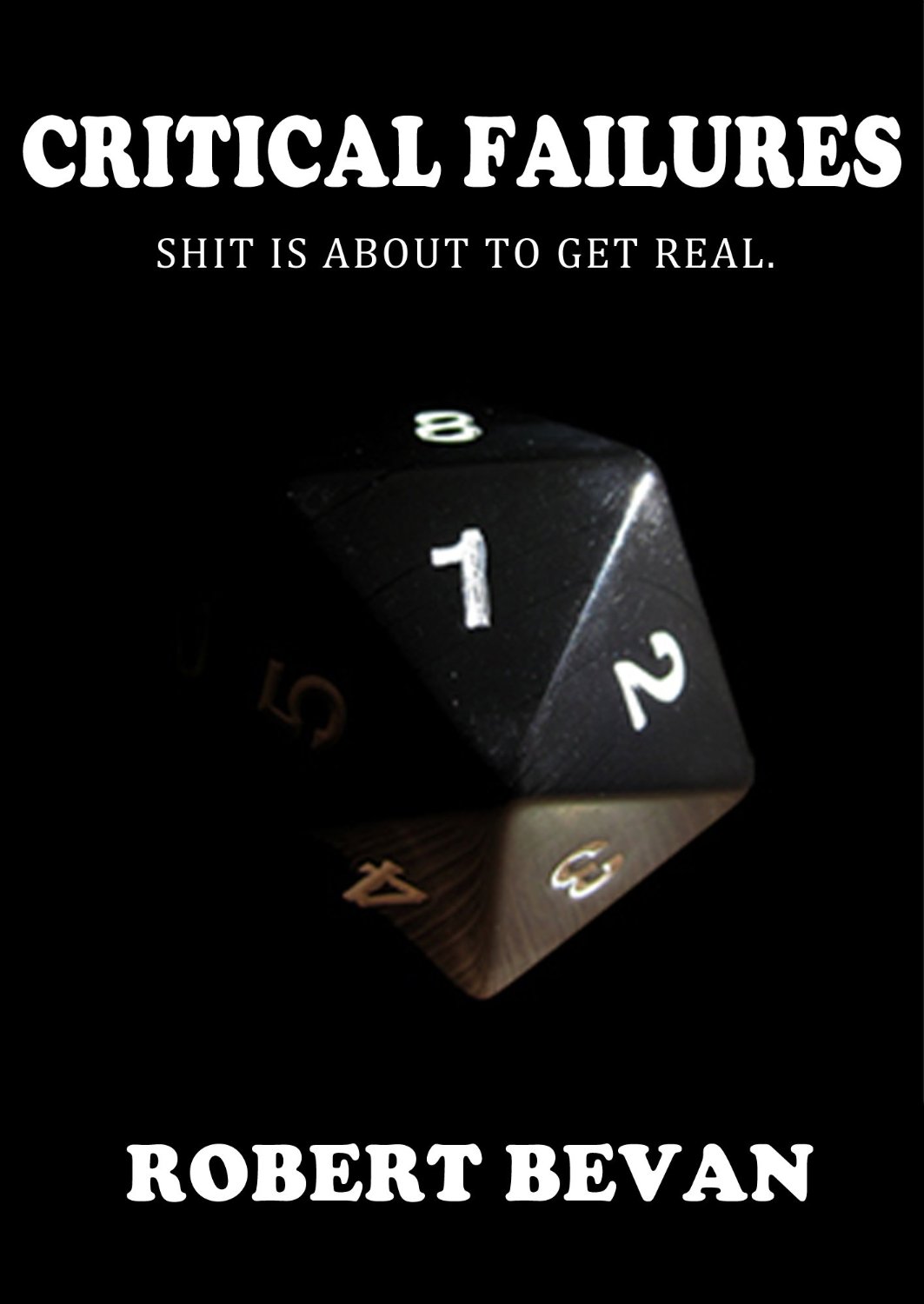
71Wjru0HgAL._SL1500_I four-starred both of these books on Goodreads, but you should understand that the first is a full four-star and the second is more three and a half.  I had downloaded Critical Failures long enough ago that I had honestly forgotten about it, and opened it on the flight from Atlanta to Raleigh just to see what it was.  I ended up finishing it before I landed, and that isn’t a terribly long flight.  (Note that this is a compliment.) You’ll get a good idea of what the book is about from the (rather striking, if I’m being honest) cover; it involves some D&D players (yeah, he calls it “Caverns and Creatures,” but it’s D&D, and nothing else is altered but the name of the game) being forcibly transported into the game and having to live their lives as their characters–which works out well for them when their characters are atheistic clerics and less so when their characters are half-orc barbarians with Charisma scores of 4.

It’s entertaining, but calling it “juvenile” doesn’t quite do it justice.  See how he uses the word “shit” right there on the cover?  I have a rule about profanity in my books: I use it, but on my second pass through the manuscript I try to eliminate half of it.

Robert Bevan does not have that rule.

There are so, so many swear words in this book.  So many “your mom” jokes, although some of them are genuinely hilarious.  And dear lord you could put together any five or six other books from my shelves and not have half the number of instances of vomiting and pants-befouling as happen in this book.  But the story itself is fun, and the ending clever enough that it pulled the book up to three and a half stars from the somewhat less than that it was before, and got me to order the second book.

You can order Critical Failures from Amazon for $4.99.