I am supposed to be home today. I hope to God I didn’t call the bride by the wrong name yesterday.
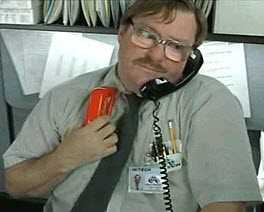
Raise your hand if you’ve ever had a problem with your insurance company, cable company or bank.
Now, raise your hand if you’ve ever resolved a problem with your insurance company, cable company or your bank.
Me neither.
I start out cautiously optimistic when I make the first customer service call and Phyllis from Blue Cross sounds completely competent. She assures me that my policy has been reinstated. Yeah right.
“Phyllis, are you sure? Because I have a doctor’s appointment tomorrow,” I said.
Phyllis chuckles in response to my anxiety.
“Have you ever known an insurance company to run as anything less than a well-oiled machine?” she asked (in my head).
“Oh Phyllis, you’re such a card,” I retort (in my head).
But the next time I go to my doctor’s office and they won’t see me because my insurance was cancelled, I realize Phyllis is like all the rest. Making promises she can’t keep, knowing I will never ever ever ever get ahold of her again. Customer service agents are like burner phones. Their slogan is ‘One call and that’s all!’.
No accountability.
I reassure myself that everyone’s doing their best as I psych myself up for the next call. After all, growing toward the sun = assuming the best about people.
So the next time I call, I get a brand new person to tell my life story to. I always ask them if they can “look in the notes” to play catch up because I think that’s a thing, but they never act like it’s a thing. That’s fine, I tell myself, clean slate! This will be good.
I remind myself that:
1) this person is innocent (at least until you hang up and they screw you over, too) and
2) you need this person to help you and if you’re a jerk, they’re probably less inclined to do so
So I patiently explain to Travis that my policy has been canceled even though I paid my premium. Travis says he’s going to research the problem and call me back.
“Are you really going to call me back?” I ask, trust issues abound.
“Yes ma’am,” Travis answers.
WHATEVER TRAVIS.
“Can I get your extension in case I don’t hear from you?” I sounded like a thirsty first date trying to wrangle a second.
“No ma’am, unfortunately we don’t have extensions,” he replied.
Travis didn’t sound like he thought it was unfortunate. In fact, I’m willing to bet that this no extensions ruse is the only thing that keeps him showing up to the job each day. He hangs up and I’m some other chump’s problem.
Dudes the wedding still isn’t for FOUR HOURS. This day is too damn long.
One of the ongoing series of posts on my blog, Comparative Geeks, we call Science Fiction Today – where we take a current real-world issue, largely ignore its current real-world situation, and consider it from the future. From the perspective of science fiction. Some problems have some iconic Science Fiction solutions, some are more obscure, and sometimes we’re left asking if readers have some suggestions. Still, it rarely fails that an issue has been considered through the lens of the future: usually with both a positive outcome, and a negative.
In planning blog posts, at some point I left myself a note with the idea for “Science Fiction Today – Publishing.” I’m sure it made sense to me at the time, but looking back, I’m not sure I can think of a lot of examples that really change how we think about publishing. Why is that, you think?
Well, for one thing, most science fiction is printed, in books or in magazines (or for most of the classics, first in magazines and then books). In anthologies. In comic books. They’re printed, published, physical things. A lot of science fiction in other media is adaptations of these printed works, and the universes that aren’t – like your Star Wars and Star Trek – have huge book collections backing them up as well.
So for the writer, imagining the future, I could see how it would be hard to imagine their own role in a wildly different format or style. Because it also changes the role of your reader. Changes what the activity they might be doing is. It changes how they found or purchased or are consuming your book.
Still, there were examples – such as the tablet-looking pads that they read from in Star Trek. Not really far-off as a concept from e-readers of today, with the Cloud Library of today being the ship’s database of materials. Of course, Picard being old-fashioned and archaeology minded, he still read physical books too…
But counter-point to an example of a different format like that, there are plenty of examples where there are still physical books. Maybe the most vivid in my mind is Fahrenheit 451, and the “firemen” who burn books – something that would be incredibly difficult to do today. Or there’s the modern classic Doctor Who two-parter set in The Library, a whole planet that is a library. It has a database of all the books ever written, it’s true – but it also has physical copies.
When I was looking through post ideas, trying to think of what I could write to guest post here for Luther, I came across this post prompt and thought that this was a perfect one. Because self-published authors like Luther are changing the face, changing the future, of what publishing looks like – in ways that I think science fiction has still not caught up to.
On the one hand, you have this whole new world of digital books, many of which have never seen a print edition. You have digital copies of print books, competing with themselves in some respects. You have digital comics, with subscription services letting you read older comics as they get digitized. Amazon has a digital library too, of books that Prime subscribers can read for free. And plenty of self-published books are available for free – joining a great deal of writing going on for free online as well, like webcomics and fan fiction.
Other media are changing their output as well. Take movies – very few bigger-name movies are skipping their traditional home, movie theaters (one of the best examples being Luther’s beloved Snowpiercer). And increasingly, when we buy something on disc, we find ourselves getting Blu-Ray/DVD/Digital Copy packs – they’re covering all their bases. Rather than compete between the formats, charging to give you all of them. And things keep changing on the subscription availability model for movies and TV – the studios don’t want things to always be available to people.
Not really a lot of innovation and change there, and still not easy for just anyone to break into. No, if you want to see that in the video arts, something like YouTube is the place for that – a format that has completely left any idea of “publishing” behind, and has done away with a lot of the middle-men.
So really, not a good comparison to book publishing. No, that’s still its own thing, and the idea that everyone has a story inside of them seems not only to be true, but to be something that now anyone could potentially tap into. That their story could be written, be self-published, and even be read! And if not a full story, well, blogs and other sites have been taking a big chunk out of newspaper and magazine publishing.
Consumerism itself is changing through all of this, and so too might our science fiction ideas about consumerism. Maybe we might actually be moving in the direction of Star Trek, with its society without want – after all, they read books on a Kindle like we do. Or maybe we’ll just end up amassing more stuff than we know what to do with – like my growing collection of e-books I haven’t read. Either way, I’m having trouble thinking of what the final outcome might truly look like in a science-fiction story.
So with that, I open up the comments to you: what do you think the future of publishing looks like? How are we going to be reading – and being read – in the future? How will people find and find out about things to read? Let me know your thoughts in the comments below!
Somewhere out there in the world I’m running a wedding rehearsal right now. Hopefully I’m doing it at least moderately competently.
Hi, there.
I’m Katherine Lampe. In the unlikely event that you’ve heard of me, you probably know me as the author of the Caitlin Ross Urban Fantasy series. Or as a loudmouth with no censor, who doesn’t balk at sharing her bathroom habits on social media. But you might not know I have Bipolar Disorder (Type II).
Oh, who am I kidding? I don’t balk at sharing the details of my mental health, either.
Bipolar II isn’t the “fun” kind of Bipolar, where you do things like blow your savings on fantastic money-making inventions or tell random strangers you’re a movie star incognito. That is, it isn’t characterized by extreme mania. When those of us with Bipolar II experience mania, it’s generally of a milder sort. The kind that lets you clean your entire house in a couple hours, which is useful, but not particularly exciting. The main feature of Bipolar II is debilitating depression, sometimes lasting years. The depression has its own rhythm. There are days or weeks when you can’t get out of bed. Then there are periods when you’re kind of functional. You can accomplish stuff that needs done, but all of it is drained of emotional content. Nothing’s particularly worrisome, but nothing is particularly enjoyable, either. Sometimes duty and expectation are the only things keeping you going, because you don’t want much. Nothing appeals and nothing matters. And when you accomplish something, you don’t feel any internal sense of reward.
About ten years ago, give or take, a bunch of stressors fell on my head all at once. I’ve been in a Bipolar depression ever since. And before you ask, yes, I’m in treatment. Without it, I wouldn’t be alive to write this. Medication alleviates some of the distress. It doesn’t make me normal, whatever that means. I have about as many good days as bad days now. Of course, on the bad days the good days seem nonexistent. And even on the good days, good feelings are distant. More an intellectual recognition of “Oh, I don’t want to die today,” than true wellbeing.
At the same time as I’ve been experiencing this extended depressive period, I’ve written seven novels, six of which I’ve published (the seventh is due out in August). I’ve also written and published a book of fairy tales and another of short stories, and I’m piddling around with a trio of related novellas. All without any motivation or feeling of gratification from the process.
Okay, there were those twelve weeks when I was manic and I completed two novels. That was pretty cool.
Until now, I’ve never really thought much about how I wrote seven novels in the state I’m in. The first one, I’d been plodding along at for some time. When the depression got bad, I abandoned it for years on end. Then a new medication started working, and one day I went back to it. Rewrote most of it. That’s when the manic period hit, and I wrote the next two books in the series. The mania left, and I didn’t write for another couple years. After that, I found reasons. Sometimes reasons within the series itself: an event that needed to happen, an issue that needed to be addressed. Sometimes it seemed like writing was the only thing I could do, the only thing I’m good at. When all else fails, I can still put words together, whether or not they matter to me. Maybe sometimes I was just telling myself stories as a kind of distraction from the dreariness of life. This last novel has been an absolute nightmare, by the way. It took me two years, and in the process I tried and abandoned half a dozen different plots and tossed tens of thousands of words.
The thing is, it doesn’t matter how I did it. I found a way that worked for me. If my way doesn’t look like anyone else’s, who cares?
Well, sometimes I care. I care when I see people post writing tips or blog about How to Do It. I have a bad habit of comparing my process to other people’s process, and when mine isn’t the same, I wonder if I’ve Done It Wrong. When a writer I follow on Instagram or Twitter mentions in May they’ve completed three manuscripts since January, I wonder what’s wrong with me. What essential quality am I lacking?
I know the answer. What’s “wrong” with me is, I have a mental illness. What I’m lacking is the normative distribution of chemicals in my brain.
Most of the lists of writing tips you see, most of the posts about “how to be a writer,” are written from a neurotypical perspective. An ableist perspective. (They’re often classist and sexist as well, and probably racist, but I’m white so I can’t speak to that.) When you’re struggling with a chronic illness, be it mental or physical, advice like “write every day” isn’t just worthless, it’s actively damaging. Well-meaning saws like “it’s not always going to be fun” or “don’t wait around for inspiration or the right moment” are meaningless when you never experience “fun” or “inspiration” and every moment is wrong. Saying “push through and get it done,” without considering whether your audience has the physical and mental stamina to push anything is insensitive at best. It really drags down those of us who write but are unable to follow the directive. It contributes to an already frustrating experience, and sometimes provokes us to overextend the few resources at our disposal. I don’t know how many times I’ve heard a friend struggling with the balance of illness and writing say “I just have to knuckle down and do it,” knowing they can’t do any such thing, knowing they’re going to judge themselves later when they don’t “measure up.”
A lot of that advice comes from a capitalist standard where output at any cost is considered more inherently valuable than a person’s wellbeing, and where failure to make quota is taken as a sign of laziness or not trying hard enough. It relegates words to the category of product rather than art or expression, and it’s bullshit. If you perpetuate that standard (or suspect you do), I ask you, pleas, to check yourself and knock it the hell off. If you suffer from that standard, I’m here to tell you it’s okay to ignore it. The most anyone giving advice can do is tell you what works for them. Being a bestselling novelist does not make anyone an authority on you and your process. No one else can define “what works” for you. No one else can tell you how to do you, and you don’t have to feel guilty or beat yourself up for not listening.
Maybe you write every day for three months and then not at all for two years. Maybe you think for a week before every word. Maybe you don’t think about writing at all for weeks on end. It’s all fine. It’s fine if you finish things, and it’s fine if you don’t. It’s fine if you’re published and if you’re not, and it’s fine if you don’t care one way or the other. It’s fine if you want to write but health limitations mean you can’t right now, and it’s fine if you need to spend quality time with your cat. It’s fine if the stories go away. And you know what? If they never come back, that’s fine too. It’s a loss and a grief, maybe. Maybe it’s a relief. Whatever your feeling about it, it doesn’t make you, the essential you, worthless or invalid.
You have the moment in front of you. Nothing else. Do it your own way and screw the haters.
Our first “I’m at a wedding!” guest post is by Desiree B. of Inky Tavern. I probably haven’t even left yet, so look forward to a hotel room post later.
Also, “criticism” is the word that knocked me out of the city spelling bee in fourth grade. I’ve always hated that word.
Criticism is like zits: inevitable and difficult to ignore.
Criticism can influence the way a person behaves or thinks. This is great when the piece of criticism you receive is meant to help you improve. However, it’s not-so-great when it’s meant to put you down.
Whenever I face criticism, I keep a few things in mind so that I don’t take them too personal.
(Before I start playing psychologist, I think it’s important to note that I am not one! These are just a few things that I’ve learned from my personal experiences.)
Don’t try to please everyone because criticism is subjective.
Do you like escargot? Classical music? Yodeling? Strawberry ice cream?
I guarantee there’s another person in the world that dislikes some (if not, everything) you like. Our individuality makes us unique and influences the things that we like or dislike.
Same goes for criticism.
I wrote a gleaming review on my blog for Mark Dawson’s The Cleaner a year or two ago. I then got a comment from someone who not only disliked the book, but also felt that I was an idiot for giving it any praise (don’t you just love the internet?).
If it has merit, take note. If not, don’t let it keep you up at night.
Trying to find worth in a piece of criticism is like a prospector trying to find diamonds in a clump of dirt. You have to separate the “filth” (things you took negatively) from what could be beneficial. This means putting your emotions on standby and engaging your intellectual self.
During my freshman year in college, my history professor criticized me for using too many lengthy quotes in my midterm paper. I took a deep breath and decided to see if he was right. Guess what? He was (there was one quote that took up a third of the paper—yikes!). Lesson learned.
Not all criticisms are like this. There are those that are the worthless ramblings of a bored and conceited person. So worthless that it’s not even worth stringing sentences together to explain or your precious mental energy to decipher.
Just wave them off as you would an annoying fly (remember that comment I told you about? I moved it into the trash bin).
What you mentally do with a piece of criticism is YOUR responsibility.
You can’t control what someone says or writes to you, but you can control how you process and respond to it. If you decide to get upset or cry over a piece of criticism—guess what? That was your decision. The person who criticized you can’t make you do or feel anything (unless they’re telepathic). You’re in control of those things whether you realize it or not.
Take my history midterm paper for example, I chose to approach my professor’s criticism in an analytical manner. I didn’t cry over it or secretly kill him in my novel (lol!).
So there you have it! The three truths (and lessons) that I’ve learned about criticism. While I can’t say that the way I deal with criticism will work for you, I can say that they may be worth keeping in mind. Who knows, maybe they’ll change your life.
Short notice, I know, but: I’m out of town for my brother’s wedding Thursday through Sunday of next week. If anybody has anything laying around (or stuck in their brains) that could make a good guest post, either hit me up in comments or drop me an email.
It’s Monday! And I’m home. At least I hope I’m home. And sleeping. And hopefully not suffering from con crud after spending the weekend in the company of 70,000 unwashed nerds dedicated fans.
I suspect today may be the day where I need a guest poster the MOST, really. And looky! David from Comparative Geeks is here to save me!
(And watch, this will be the post where I have to make sure people behave in the comments. Do not make me smite you while I am crabby and tired.)
(Also, thanks to all of my guest bloggers for saving my butt while I was in Chicago!)
I started blogging back in the last presidential election cycle. And I started out with a crazy thought: what if the candidates presented their positions in the form of a science fiction story? A short tale of what they think the world will look like in 4 – or 8 – years, if they are president. Their stances are great and all, but between the balance of power between the branches, local versus federal, and the fact that they don’t want to fix everything or they’re not going to have anything to run on next time… well, their stances don’t necessarily tell us anything.
Of course, by starting blogging with something like this – without actually having followers – you end up sitting by yourself pondering. And I couldn’t figure out myself what it would all look like. The easier one was actually doing the reverse: thinking of how the parties would write a story of what the country would look like in 4 years if their opponents won… The usual sort of negative politics were sadly easier to consider than a positive vision of the future.
Well, we’re in a new cycle, I’m guest-blogging on a blog where there’s been plenty of political talk, and there is a much more interesting presidential race going on… so what might the future look like if the different candidates win?
Drumpf is of course the one that makes this seem like an easy exercise. Because it’s science fiction, and if there’s something we love in science fiction, it’s dystopias. Because that’s where pretty much every non-Drumpf supporter in the world likely expects his presidency to be headed: global dystopia. Recession if we’re lucky; World War 3 if we’re not. And the most dystopian I can think is a World War 3 with the US and Russia on a side, with Europe and their ally China (maybe?) against. And nukes. Probably nukes.
Good God, ya’ll.
Unfortunately, I could also see – somewhere amidst the Drumpf followers – there being folks who might turn to assassination. I could also see, if one of the other Republicans somehow wins the nomination, that they might pick up Drumpf as a Vice-President, to bring the party together. Meaning, I could see someone “voting-in” Drumpf via assassination. So I’m not liking how things look with a GOP win at all.
Even worse, that same logic applies with a Hillary win. We’ve got people all riled up. And there’s a whole lot of anti-Hillary sentiment, built on 20 years with her in the spotlight. So it’s easy to see dystopia here, too: and the who’s-the-Vice-President here is a bit fuzzier, but important. Unless, in the same logic as above, it’s Bernie…
I’m not sure I see the same result with a Bernie win. But I also see him having a Republican Congress – and not a whole lot happening. But it would open our politics up, so that’s something… and maybe there’s an increasing relationship with Europe, with other socialists.
I think for most people right now, staring ahead at this year… the best result we can hope for might really be for nothing much to happen the next four years. But those are my thoughts. Now it’s open to you – what do you think the country looks like in four years? Whichever candidate. Let’s discuss in the comments below!
Sunday. I am likely tired and crabby by now, and it’s the last day of the con. I cannot emphasize enough how much you need to drive to Chicago and come see me RIGHT NOW. Do it. I have to drive home tonight and I need entertaining stories to keep me awake.
Today: Indie author extraordinaire Adam Dreece!
Firstly, thanks to Luther for letting me guest post today. We’ve been friends for going on two years thanks to Twitter, and I hope we get to meet in person sooner rather than later.
Now, how about some “Messing with a good thing.”
When I told a friend of mine that I was writing The Man of Cloud 9, and how it wasn’t for the same audience as my series, The Yellow Hoods, he shook his head.
Phil has written a lot of books, and a few of his books have sold over 100,000 copies. He’s traditionally published for the most part, though he has some indie things, like an anthology with a few other authors, which has sold ‘only’ about 30,000 copies or so. Compared to him, when it comes to sales, I’m still thinking about writing.
So when I told him that I was writing a science-fiction novel that didn’t have any young characters, that it was ‘classic science-fiction’, he asked me, “Why? You already have an audience. You’re at an early point in your writing career, you should build that, not divide it.”
Since April 2014, I’ve released four novels and a novelette in my steampunk-meets-fairy tale world. The layered style of writing has been a hit with kids 9-15 and adults (usually over age 28). I’ve been building up my newsletter, and sharing goodies there that give me a very high open rate. So why-why-why-why, why would I not just keep feeding that group? Well, from my perspective, I sort of am.
I don’t want to be known as only “The Steampunk Fairy Tale Guy.” I want to be known as “A Great YA author.” An author you can trust for a great read that won’t leave you feeling like an emotional train-wreck, or bring graphic violence or sex into the story. I’ll bring you right up to the border of YA, I’ll make reference to things, I’ll infer things, but there’s a line that I won’t cross. I’ll be the ‘mature adult’ author who stepped over the line to YA, rather than someone who writes children’s stories with an edge or two.
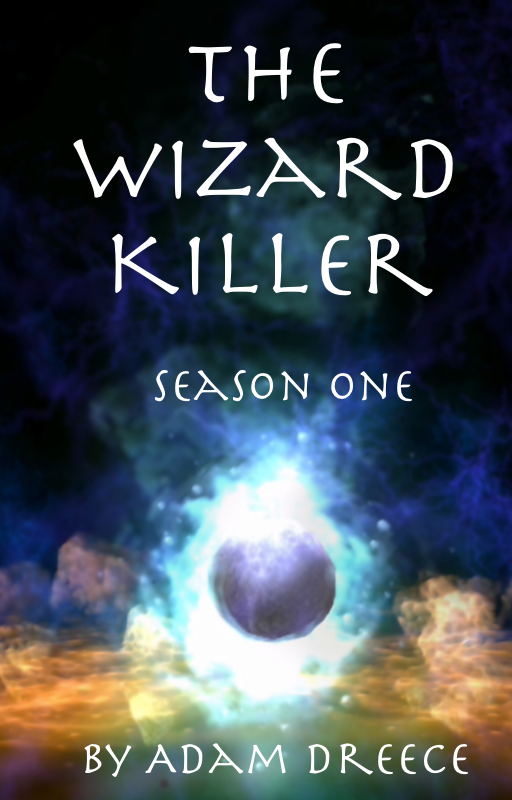
Along this line of thinking, I started writing The Wizard Killer several months ago. It’s a serial that I publish every week (while it’s in preview, i.e. unedited and unrevised). It’s gritty and intense, a very different feel from The Yellow Hoods. And when my daughter, who’s 11, read it and loved it, it reinforced the idea for me that I can tell a great tale while still within the realm of “YA.”
So when I wrote The Man of Cloud 9, I wanted to bring to the table my life in technology, my experience in Silicon Valley and with startups, I wanted to tell a tale that a fourteen-year-old me would probably love to get into, and the thirty-year-old me would have been able to connect with. As for my younger audience? Well, they have Book 5 of The Yellow Hoods that’ll be coming out at the end of the year.
This all said, my friend had a really good point. I could end up with people buying the book for their kid, without reading the back, without seeing the recommended age we put on it, and the kid hates the book and the parent never buys another Adam Dreece book again. It is a risk. Also, people could look at the back of the book, not like it and decide not to give any of my other books a passing glance. But there’s an upside I’m willing to risk it for.
Suppose for a minute that I release The Man of Cloud 9 and it is a run-away success. Suppose I discover that I wasn’t meant to be known as the “Steampunk-Fairy tale guy,” but rather as an author of science-fiction? Would that be terrible? Nope.
And what if the adult audience that I’ve already built up loves the book and feels that this was for them? Something that reinforces their support and love of my work even more, by allowing them to have a different take on it, similar to how different Wizard Killer is?
As authors, we shouldn’t just write things in all sorts of genres and leave the burden to the reader to feel like there’s a dozen different people writing under the same name. In my case, I’m being consistent with my writing style, with my view on people and humanity, and how I capture the story, it’s just a more mature story than the other series I write. And guess what? That’s what a brand is about. You have different product lines (Cloud 9, Wizard Killer, The Yellow Hoods) but they are all unified by some base characteristics: Great stories, solid female characters, no real swears (what do I look like, a flaring pargo? Yig.), etc.
Will the experiment in branching out work? Sure. How much? That’s yet to be seen.
– Adam
Adam Dreece is an indie author and speaker. He’s one of the founders of ADZO Publishing, and has 4 novels in his series The Yellow Hoods, and has been published by Sudden Insight in its anthology, Paw for a Tale. His serial, The Wizard Killer, and blog posts can be found at AdamDreece.com. He’s also very engaged on Twitter @AdamDreece and on Facebook AdamDreeceAuthor.
It’s Saturday! Hopefully I made a lot of money yesterday, because this convention was insanely expensive. Anyway, James Wylder’s our guest poster today. Have a story! You like stories, don’t you?
This is a brand new short story set in the 10,000 Dawns universe. Its a fun, and continuing, series of sci-fi tales, so if you like it you can find more of it at jameswylder.com/10kd. Thanks to Luther for letting me write this guest post! See you at C2E2 if you’re there. -James Wylder A Magic Trick by James Wylder
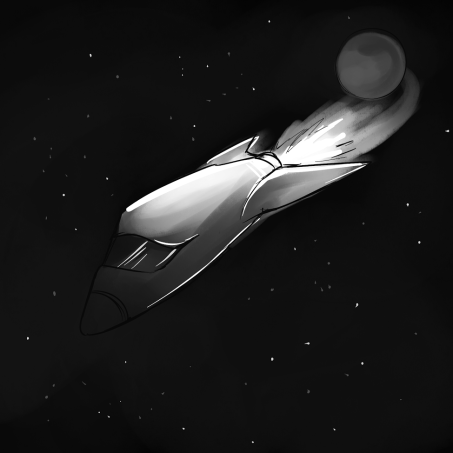
Artwork by Annie Zhu
We’d burned through seven fuel cells just trying to turn our ship off to save power, a fact which I was trying very hard not to yell at the Captain about. The captain still wore her old coat from when she was in the Centro Marines, a long blue thing with a red tech-shoulderpad, and was finally moving to inspect our cargo as the Wind Fish clung to the side of the asteroid we’d finally landed on. Captain Nichols was smoking, which made her not only a bad role model for children, but also a danger to all of us since she could cause our ship to blow up accidentally at any time. I respected her a lot.
Nichols opened the first crate, and sifted through some generic supplies before lazily throwing the lid back on, then moved to the next which was filled with gold bars. Finally she opened the third crate, which wasn’t actually the last crate, but spoilers: it’s the important one. Inside was a gray box, maybe the size of a thick copy of one of those books that’s too long for me to pay attention to like “War and Peace” or “Jane Eyre.” It had a standard data cord port on one side of it, and the letter “A” painted on a different side. Not printed, hand painted. I didn’t even know how to hand write a letter A if you paid me and put a gun to my head for maximum motivation, but Mars had been doing weird stuff since their revolution.
Desi nudged me in the shoulder, “That’s how we’re making bank this trip, you know.” I squinted at the box. It looked more boring than that French book I’d tried to read about the guy eating a piece of cake.
“What is it?” She shrugged.
“Some sort of Martian computer program, military grade. Its supposed to be worth a fortune, or at least that’s what our sources tell us. The Index is willing to pay heavily to get one of these things, the Librarian wants it for something special. Or, at least that’s what the rumors say. He might just not want other people to have it.” Either made sense, really. Captain Nichols spun the box around in her hands, puffing away.
“Don’t we like, hate the Index?” I asked.
“Well sure, but they’re offering enough money in this case the Olympian Senate agreed to let us take it on. They get a cut, of course.”
“Of course.”
“Should we plug it in, see if it works?” Jackson asked. Nichols’ cigarette flopped down in her lip.
“Are you crazy? This is a military AI system. You plug this thing in there’s no telling the havoc it will cause.” Jackson looked at the box wearily. She looked at the thing like it was a spirit trapped in a magical ward of salt and bones. From what I knew about these things, she wasn’t even that wrong. Then again I didn’t actually know that much. We were cave-women in space.
“Megan,”she said to me, “get back to the cockpit and check if we’re being tracked.” I yawned, nodded, and started walking over there. I think she still wanted me to salute, but this wasn’t the military. The Valkyries were the best pirates in the solar system, along with every other group that called themselves the best pirates in the solar system, so it was a big tie. I’d joined up at fifteen, mainly because I couldn’t stand school. Living on Titan is frankly better than 90% of the Rim, since we have a corrupt poor government as opposed to no government, but schooling there is so boring. I had to read so many big novels, just because it was the cheapest lesson plan data package our teacher could get. Now I was twenty, and whether or not ship life suited me, I was doing it. There were just the five of us on the Wind Fish, me, the Cap, Desi, Jackson, and Elodie. Elodie was just on here on loan till we got a new mechanic cause our regular one had turned a proton redirector the wrong way and blown herself up leaving only her shoes and socks up the ankles.
Jackson had taken the shoes.
I slid the door to the cockpit open, rubbing my eyes with the other hand, and slid it back shut, only to turn and see a teenage girl spinning around in the pilot’s chair, with a towering cyborg standing next to her. Naturally, this was unexpected. My first thought was “Stowaways!” But that was impossible: there wasn’t any cargo, and we’d stripped the ship down to the barest weight we could before launch. The cockpit only had one way in and out, and the door made enough noise that any of us would have heard someone sneak in regardless. They had appeared inside the ship out of nowhere. There was no way they could get have gotten in, mass simply popping into unoccupied space like a rabbit out of a hat.
“Graelyn, could you stop spinning?” The cyborg asked, “It’s giving me a headache.” The girl stopped, and glanced over at me, grinning.
“We’ve got company.” She said. The cyborg turned, and jovially waved. He had no visible skin, just an outer carapace made of what looked like video screens that curved around his form. He also wore a blue trenchcoat, and what looked like one of those old Admiral’s hats you see in Napoleonic War Dramas. The girl was wearing high top sneakers, a matching blue skirt and blazer,and a white shirt and black tie. She had a pin of a cat, and one of a half-sun, half moon on her lapel.
“What the hell.” I said.
“Shh.” Graelyn said. “I’m Graelyn Scythes, this is–”
“Archimedes Von Ahnerabe.”
“And we’re here to stop you from dying.”
“And take your stuff.”
“Well, I was going to leave that part off till later.” My jaw was loose, and I wished I had a cigarette like the Captain now just so I could let it drop out of my mouth dramatically.
“CAP!” I yelled, and the crew stormed up behind me. The door slid open, and the four of them stood with weapons drawn. The Cap had a gun, as did Jackson, Desi had a vibro-Ax, and Elodie had grabbed a large wrench. Her purple clothes were still stained with grease from the engine room. The girl in the chair sighed, and raised her hands.
“I surrender.” She said with more than a hint of boredom. Arch was just watching her, and she raised her eyebrows and tucked in her lips and he raised his hands to.
“How’d you get on my ship?” The Captain demanded.
“We cut our way in.”
“We’d get signaled if there was a hull breach.”
“Would you get signaled if there was a stealth ship coming in on an attack vector, like, presently?” The Captain leveled the gun.
“Yours?”
“Oh not at all. We just want the box. Turns out the people you stole it from aren’t too happy about it though…” The Cap gestured at us to keep our weapons on the pair, and ran to a console, she fiddled with some equipment.
“Nothing on scanners…” She adjusted a few things. “Shit. The girl’s right, the ship’s bouncing data back at us to tell us it isn’t there, but the timing’s off a fraction of a second.” Cap slammed her fist on the console, which was totally unnecessary.
“Elodie, how long till you can get us up in the air?” I tried really hard to not correct her on the ship not being able to get into “the air” in deep space. Elodie blew out a breath.
“Not before they reach us.” The girl in the chair kicked her legs.
“So let’s make a deal. I save you from the Martians, you let me keep the box.” The Captain’s eyes bulged, she was furious.
“That box is worth more than your life.”
“Is it worth more than yours? Martians aren’t exactly kind towards thieves of high grade military tech. I’ll let you decide. No rush.” The time till the Martian ship intercepted us ticked down on a monitor dramatically. They stared off. Graelyn smirked. The Captain conceded.
“Fine. What do you need to do?” Graelyn hopped up.
“You guys just stay in here, I’ll do to the rest.” She slid out of the chair, and Arch followed her. Closing the door, they covered up the window by hanging Arch’s hat on it. There was a noise, and then nothing. When we finally decided to open the door, the cargo hold was empty.
“I don’t understand.” Jackson sputtered, as the sound of the Martian ship docking with us clanged through the hull.
The Martian Captain, who corrected us into saying they were from “Geru Ghara” not Mars every time they said the word, led two squads of Martian troops into the hold. A group of troops held us at gunpoint, while the rest searched the ship, opening every panel. I’d just tidied a lot of those panels, so it was a bit frustrating, like someone dumping out your trash on the floor after they entered your house. “This is an unusual ship.” The Martian captain finally said. Her left eyebrow had a thick scar through it. She wore all black, aside from a red scarf and a red tech-shoulderpad. Her long coat also had red and yellow stenciling, but I wasn’t sure that counted. You don’t get off for wearing a shirt with tiny green frog on it on St. Patrick’s Day after all.
“Its an old Centro Sleeper Ship. They used to send them throughout the system before drives got fast enough it wasn’t necessary, you’d freeze the crew and-”
“Yes, I know how they worked. But this is a stealth model.”
“There are more of them in service still than you’d think on the Rim, they don’t break down. I heard the Van Winkle and the Red King are both still–”
“Yes, yes… That’s not what I wondered.” The Martian captain pulled up a hologram on a handheld projector. Ironically, it was still branded with a “Centro Systems” Logo.
“This ship was tracked after it assaulted a Geru Gharian cargo vessel, stealing its most valuable cargo.” Our Captain shrugged.
“Clearly, it was a different Sleeper Ship.” The Martian Captain nodded, and put the hologram away.
“Did you fight in the war for Geru Gharian Independance, Captain Nichols?”
“The giant blue coat gave it away, huh?”
“Quite. So you served Centro?”
“If you think you’re going to trump up some charges on me just because I fought for Centro Systems, you’ve got another thing coming. After how the war ended I couldn’t keep fighting for them, so I came out here on the rim making an honest living hauling cargo.” Well, that was all true aside from the honest cargo bit, and the honest living bit. The Martian Captain’s eyes looked distant.
“I can respect that. Geru Ghara had hoped we’d all be able to work together after the war ended…”
“Clearly the Rim’s idea’s of independence are different than Mars’.”
“Geru Ghara.” She said, more faintly. “The war is past us now.”
“Is it?”
“Yes. There’s no way you could have unloaded all of this cargo. Your ship has no way to drop or vent its cargo hold into vacuum without killing the crew. A terrible and massively unsafe design flaw, certainly, but it proves you’re innocent. I’d watch out Captain, someone is trying to sully your good name.”
“Captain Hara.” A man yelled from the other side of the ship. “We have Centro ships inbound, we need to take off immediately.” Hara looked down at the five of them.
“It’s been a pleasure. I wish you all the best, and I hope you find the freedom you seek.” She gestured with her hand, and her troops shuffled back into their ship as quickly as they’d barged in. I hurried up, and ran to the scanners, watching them flee from the group of much larger Centro vessels on their tail. Spoilers, they got away. Good for them. Annoyingly for us, a Centro ship split off to check us out.
I won’t bore you, it went about the same.
That wasn’t the end of it though. If it had been, I might have been able to square it all away with excuses, like only hearing half a joke and assuming it would have been funny. But, as we got the ship ready, we all headed into either the engine room or the cockpit and as I opened the door into the cargo hold after getting pre-flight ready, all the boxes but one were back. You know which one was gone. I called for the rest of the crew, and we marveled for a moment, running our hands along what felt like a magic trick.
“Look, there’s a note.” Elodie said, and we ran over.
“Have fun stealing stuff, see you in the future. Love, Dawn.”
“Who the hell is Dawn?” Jackson asked.
“More what what the hell is it.” I added. The Captain took the note and pocketed it.
“We didn’t get the prize, but we still have a small fortune in other supplies here. Let’s get it back to base.”
“We’re gunna burn a powerpack just lifting off of this rock, you’ll be spending that small fortune in powerpacks just from this trip alone.” I said, and instantly regretted it. The Captain’s face lit up red, then softened, and she laughed.
“That’s life on the Rim, Megan. Get used to it.” And walked off.
I stood stunned, “I was born here! Cap, Cap! I was actually born here you know? You’re the one who moved here!” But no one was listening. There was work to be done now, and the stars were beckoning for us once again. I got a cup of coffee, and got to work.
I began to power the ship up to lift us off, burning up a powerpack, and felt her breath on my cheek. She was leaning over the back of my chair, her tie hanging down onto my shoulder.
“It’s not like anyone will believe you,” Graelyn said, “so do you want to know how we did it?” I nodded, not turning around. I half wondered if she’d slit my throat.
“There’s another you, in another life, who did this same thing. And another one, and another one. And I can cut between the air you breathe, and step through into those worlds, through time, through space, through your existence. I’ve seen this dawn before. We’re inter-reality travellers, Dawn. We’re here and there.” The hair on the back of my neck stood up.”
“You’re being really creepy.”
“Oh, uh, sorry.” She said awkwardly, as if she hadn’t realized standing behind someone whispering in their ear after sneaking up on them was creepy. I spun around in the chair in time to catch a flash of white light, and what looked like a white disk shrinking into nothing. I wasn’t sure if I’d dreamed that, or what, but my top concern was more important than any sort of cosmological bullcrap.
 Raise your hand if you’ve ever had a problem with your insurance company, cable company or bank.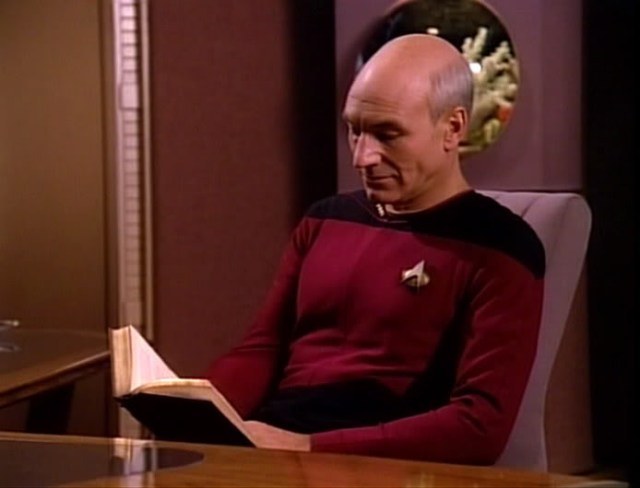

 Criticism is like zits: inevitable and difficult to ignore.
 Well, we’re in a new cycle, I’m guest-blogging on a blog where there’s been plenty of political talk, and there is a much more interesting presidential race going on… so what might the future look like if the different candidates win?
 Firstly, thanks to Luther for letting me guest post today. We’ve been friends for going on two years thanks to Twitter, and I hope we get to meet in person sooner rather than later.
 Along this line of thinking, I started writing The Wizard Killer several months ago. It’s a serial that I publish every week (while it’s in preview, i.e. unedited and unrevised). It’s gritty and intense, a very different feel from The Yellow Hoods. And when my daughter, who’s 11, read it and loved it, it reinforced the idea for me that I can tell a great tale while still within the realm of “YA.”
 Welcome to infinitefreetime dot com