
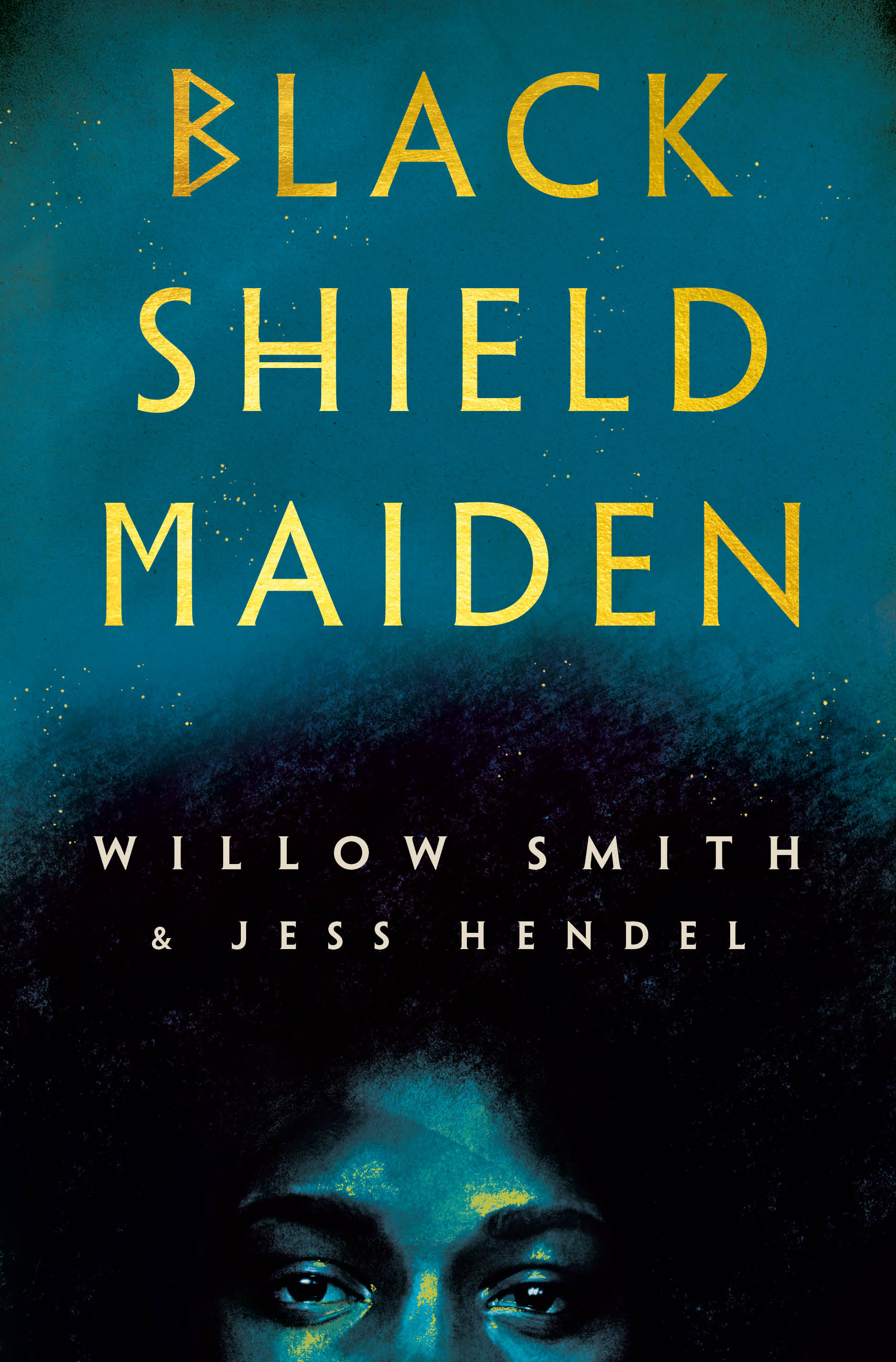
I waited too long to write this– life, getting sick, and various other dramas intervened– so I admit my ardor has cooled a bit, but my admiration for Willow Smith continues to grow with every project she releases. It’s impossible to really know how much of Black Shield Maiden is her work and how much is Jess Hendel’s, of course, although I do find it interesting that Hendel is more or less given co-author credit here. Her name’s smaller than Smith’s, as one might expect, but not that much smaller, and I can easily imagine a world where this is simply ghostwritten and only Smith’s name appears on the cover.
Also, I found it at Target, of all places, which is not somewhere I’m accustomed to discovering books. I didn’t actually buy it there, but that was where I noticed it for the first time. The cover’s striking as hell, and it took me a second to actually realize who the author was.
Anyway, Black Shield Maiden is the story of Yafeu, a Ghanaian warrior who is kidnapped and sold into slavery, then rescued during a Viking raid on the camp where she’s being held. She’s more or less still a slave in the frozen north, but the Viking concept of slavery was quite different from American chattel slavery, and she serves as a handmaiden to the princess Freydis and ultimately becomes a mentor of sorts to the girl as well. I won’t spoil the story, but I can safely tell you that she ends the story in a very different place than she starts it, both literally and figuratively, and the book doesn’t quite end on a cliffhanger but the last fifty pages or so make me really interested to see what’s coming next. This is book one of what I think is a trilogy; the final page promises a forthcoming book two but doesn’t give a name or a date yet.
I don’t have a ton of criticisms of this; it’s a really solid book the whole way through, and not only am I onboard for more collaboration between these two women but I’m probably going to look into Jess Hendel’s work as a solo author– this book was my first exposure to either of them. The way Yafeu is integrated into Viking society doesn’t quite go the way you think it’s going to; she learns the language perhaps a bit quicker than she ought but I’ll forgive it because her being unable to understand anyone would have gotten annoying quickly, and it really seems like most of the people around her just literally decide she’s a dark elf and roll with it. The cultural differences and her outsider’s view on Viking society is neat to read about, too, and Yafeu and Freydis and a handful of others are compelling characters with interesting arcs over the course of the story. I don’t know that I liked it enough that it’s going to end up on my end-of-year list or anything, but it’s a well-written, action-packed, enjoyable read with lots of interesting female characters and if the plot tickles your fancy I’d recommend picking it up.
 Welcome to infinitefreetime dot com