In which I ask the hivemind

I need some more conventions, y’all.  Right now I think the next con I’m actually signed up to attend is the next Indy Pop Con in June.  I’m registered for Kokomo-Con again.  And … I think that’s it?  I’ve had a little bit of a run of being turned down by juried cons (I tried to get into both ConFusion in Detroit this January and a February comic convention) and I’ve decided to not apply to the Fort Wayne PopCon in between Christmas and New Year’s, mostly because … well, it’s between Christmas and New Year’s, and it’s a first-year con, and that strikes me as vaguely insane.  I hope they’re successful, don’t get me wrong, and if they are I’ll be there next year, but they’re charging PopCon prices for what I’m pretty certain isn’t gonna be close to PopCon attendance and right now it’s not worth the risk.  

Plus, well, check the posts at the end of December around here for any of the last six years.  The weather tends to not lend itself to long road trips.

So.  Anyway.  If you happen to know of any science fiction conventions, comic book shows, or genre/author events in the next six months within, say, a three- or four- hour drive of northern Indiana, let me know.  I’m looking at one in Louisville over Easter weekend, too, but it’s over Easter, which has its own set of complications to it.  


I’ve finished a story over at Patreon, called The Caretaker, and I’m really fond of it.  The story is posted in five parts and in first-draft form (I literally wrote it straight into the Patreon website; it’s not copy-pasted) and it will be posted again in .mobi and .epub form once it’s cleaned up a touch, but I like it and I think you will too.  Just $1 a month gets you access to a bunch of microfictions and three or four short stories, and $2 a month gets you an entire exclusive novel.  Next Patron is #15!  That’s a great number!  Join us!


Two weeks to winter break, y’all.  There will be Christmas shopping this weekend.  I can do this.  

New short story at Patreon!

There’s a new downloadable short story, The Forgotten One’s Prayer, over at my Patreon! Those of you who are already Patrons should click here, and those of you who are not Patrons should also click here and become one!  Access to an ever-growing group of new stories, for as little as $1 a month!

On Patreon

Unknown

BEFORE WE GET STARTED: I’m taking a shot at Audible and audiobooks again at the moment; Skylights is currently open for auditions over there.  Are you an audiobook narrator?  Do you want to share revenue 50/50 with me on audio?  Go audition!

I got asked in comments a few days ago if I’d ever considered launching a Patreon.  And the answer is yeah, I have, and until really recently all such considerations were brief and unsystematic at best. I’ve been thinking about the idea a little harder lately and …

… well, I’m probably still not doing a Patreon, but I’m thinking about it a little bit harder.

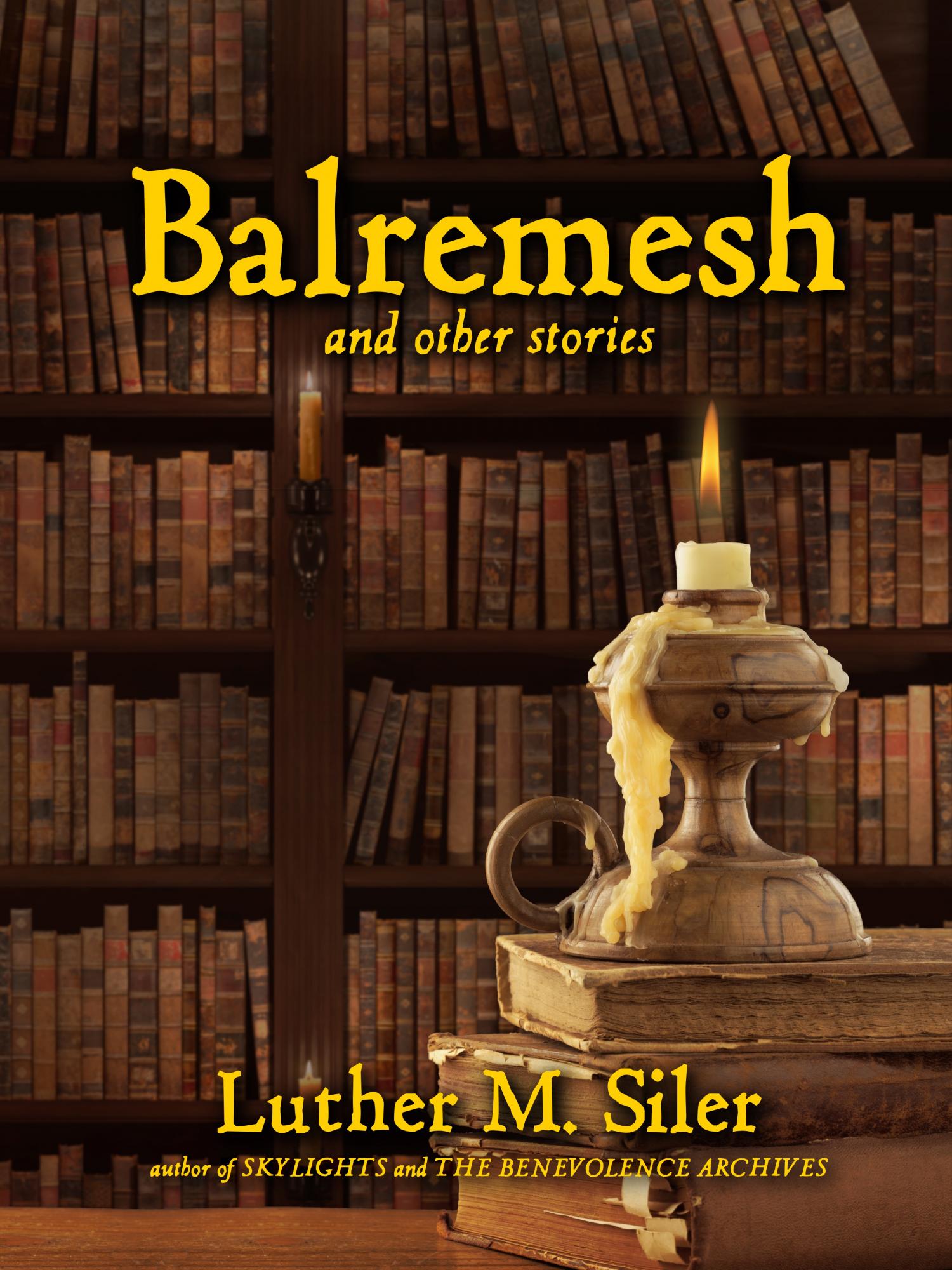
Here’s the thing, right?  My books sell for crap.  It is true that there are a lot of other books out there that sell even worse than mine, but they sell for crap.  Balremesh and other stories and Tales: The Benevolence Archives, Vol. 3 have been out for months and probably haven’t sold fifty copies yet between the two of them.  A month with a half-dozen digital sales is a good month.  I do okay when I’m selling physical copies to people who are right in front of me, but the fact is the books aren’t moving online.

Well, okay, you say, but there are people who have bought all of those books and don’t have any more to buy right now.  Maybe they might like to have a way to support you in the meantime?

Well, okay.  First, being completely honest (none of this is to elicit sympathy,) I’m not convinced there are all that many of those people, and a lot of them are relatives, and a good chunk of those who aren’t are not, shall we say, Patreon’s typical demographic.

The other problem, of course, is what I can do for my Patrons, were I to actually acquire any.  To wit: in case it’s not clear, I write fiction sporadically at best, and I write slow.  I’m working on a short story right now for an open submissions window that is going to close for good in two weeks.  I have been working on that five thousand word story, a story that essentially sprung into my head fully written from the moment I had the idea, for something like six weeks.  I might get another 400-500 words of it written today.  I might not.  And I know which way I’d bet, were I betting.  It’s an open question as to whether I’ll get it done in time.  I have two more weeks for three thousand words more.

Most authors I’m aware of don’t use a monthly auto-pay model, they use a send me money when I create something and then you can have it sort of model.  But I sell entire books online for a damn dollar; are there people who will send me a dollar every time I send them a 5000 word short story?  Okay, what if it was a 500 word microfiction?  What if it was shorter than that?  How many of those might I be able to crank out in a month?

So, yeah, let’s try an experiment: Would you be willing to support me, at whatever minimal level you want, were I to create a Patreon?  What sorts of reward tiers might be interesting?

I mean, if I don’t get any comments here, before I’ve even created the thing, it sort of answers my question, right?

#REVIEW: The Prey of Gods, by Nicky Drayden

u34+1F!EVWH7ngw7NLVXIcKIKW2pmYA+Gl!w8rbMsYH!BRIAG5OUet9tcq9F2XjffXkZsjELHH1dotzfe59Az1jyGM+mB65M9iSYJGxO3RSWsW1OYzkgsRAdZgmVYczu

Every so often I go back and forth on whether I should ever be posting book reviews here.  I follow a lot of Real Author blogs, and most of them don’t do book reviews– or, if they do, they mostly let the authors talk themselves.  This is actually how I encountered The Prey of Gods, a book I first found in a Big Idea post over at John Scalzi’s blog.

Honestly, I’d have ordered the thing based on the cover alone.  Look at that.   It’s awesome.

The book’s completely goddamned out of control, though.  Completely.  Out.  Of.  Control.  There are at least two more main POV characters than there need to be, probably half-a-dozen unnecessary subplots, and the story itself has so many things mashed together– a runaway dik-dik invasion (and if you’re thinking “will there be jokes about dik-diks?” right now?  Yes there will.), a species-jumping gene-altered virus that turns people into gods, actual gods, AIs gaining sentience, adult circumcision, 37,000 people being murdered by the main character in a fit of rage that we’re all supposed to forget about because she’s supposed to be sympathetic, a number of other brutal murders, a character with mind-control powers who has sex (? Maybe?) with his best friend then wipes his memory of the event, which is more than a little rapey, a pop musician who also has healing powers, a politician tasked with eliminating the dik-dik invasion who is also a cross-dressing singer who wants to open for the previous singer, his mother who is some sort of tree goddess, and jesus christ it never stops.

Here’s the thing, y’all: I stopped reading this with like 20 pages left because I just couldn’t take the crazy any longer– right around the time when mind-control dude swapped his boy/friend’s brain into his, then downloaded his own brain into his pet robot, then had several pages of stressing out about available hard drive space while he was trying to find room in the robot’s hard drive for his entire brain and the robot’s personality, but only after preventing his boy/friend, who may or may not have been dead at the time, from becoming a tree.

That’s not an exaggeration.  

I couldn’t do it any longer.  But if you read the GoodReads reviews, there are a lot of people who really like this book, and I wouldn’t even really argue with someone who did?  Nicky Drayden is an impressive writer, and I want to see more from her.  But I couldn’t take this book.  So… check it out, maybe?  But caveat emptor, or something?

Oh wait what’s this

mblile-72dpi-1500x2000.jpg

Coming soon.

In which I think about the future

51chrfXHMNL._SX277_BO1,204,203,200_.jpgI did something the other day that I haven’t managed to do in years:  I cleared out my Unread Books shelf in my bedroom.  It has been damn near a decade since I had less than at least a couple of books on that shelf waiting to be gotten to, and there have been plenty of times where the shelf was literally the entire shelf.

What can I say; I buy books.  Lots of them.

Anyway, I had a problem: the last book on that shelf was Hannah Arendt’s The Origins of Totalitarianism, which is a book that I both 1) ought to read and 2) genuinely want to read.  However, I’ve discovered over the last few days that I absolutely do not have the necessary headspace available to handle reading Hannah Arendt.  This is depressing but true; I can’t do heavy nonfiction right now, and heavy nonfiction about antisemitism and totalitarianism is just not a thing I’m capable of.  So that’s gonna end up DNFed until I’m in a place where I can reflect and think more clearly.  I’ll get to it eventually.

Last night as I was having those thoughts about reading it occurred to me that somehow, despite being a fan of science fiction and fantasy for forty years, I’ve never read anything by Terry Pratchett.  I quickly downloaded The Color of Magic to my Kindle and read the first hundred or so pages last night.  And, well, now I think my project for 2017 is going to be to read every single Discworld book.  This somewhat conflicts with my previously-set goal to keep books by straight white men to no more than 30% or so of my reading.  I may amend that to no more than thirty percent of the authors being straight white men.  This sort of feels like a cheat but it’s my goals and my rules and I figure I can probably change them on the fly if I damn well feel like it.

What do you think?  Is 2017 the Year of Terry Pratchett?  Should I go for it?

“Warrior Jayashree and the Gallows Pole”

     A devilishly persistent beam of sunlight dragged the warrior Jayashree into unwilling consciousness.  She tried to cover her eyes, to snatch a paltry few moments more sleep away from the accursed daytime, only to realize she couldn’t move her arm.

Either of her arms.

It occurred to her that the bed she was lying in was exceedingly uncomfortable, and that her head did not appear to rest on a pillow.

I’m in gaol again, aren’t I?

She forced an eye open.  She winced painfully, as the action allowed a bit more of the demon sunrise into her skull.

I’m probably in gaol, and I may also still be a bit drunk.

     Drunk was good.  It meant she had probably at least earned the imprisonment somehow.  Hopefully whatever had gotten her arrested had been fun.

She gathered the dregs of her strength and wrenched her other eye open, trying to look around her cell—for that was certainly what it was—while moving her eyes and her head as little as possible.  She was dressed in a light, coarse shift that she was certain didn’t belong to her.  She was laying on a stone bench set into a wall, and her arms were secured by bamboo rope tied to a metal ring.  The window the offending sunbeam was pestering her through was barred.

GaolDefinitely gaol.

She tested the ropes.  They would break, if she really needed them to, although she might have to accept spraining a wrist along the way.  Her legs were unbound.  She had enough slack to sit up, so she did.  Started to, at least, until a thousand tiny homunculi wielding icepicks declared war upon on her temples and she sank back against the bench again.

Perhaps a few minutes more, before I try again.

She heard motion behind her, and the closing of a heavy door.

“So.  What did I do?” she asked.  Her voice sounded much more like a croak than she was used to.

“You don’t remember?”  The voice was familiar.  And quite irritated.  It sounded like—

Oh, no.

Ignoring her body’s protests, she rolled off the bench and into the closest approximation her muscles and bound wrists would allow of a genuflect.  It hurt more than she expected.  And in more places.

This isn’t just a hangover.  Oh, it was certainly a hangover, and probably one caused by grape sura.  Grape sura always hurt the worst the next day.  But there was something else wrong.  She’d been in a fight.

“Who did I kill?”

“Stand up,” the voice answered, and the ropes slithered away from her wrists like snakes.  She turned toward the voice and dropped closer to the ground.

“Mother of Magic.  My deepest apologies for whatever has—”

“Stand.  UP.”

     She leapt to her feet, the voice compelling her, her limbs and torso screaming in protest.

The Mother of Magic stood before her, practically glowing in head-to-toe white raiment.

White.  White was the color of mourning.  The Mother of Magic generally wore ruby-red.

Oh, this is bad. 

     “Look out the window.”  This statement did not carry the compulsion along with it, but Jayashree did not hesitate.

Her cell overlooked a central courtyard, which was not unexpected.  The gallows pole standing in the center of the courtyard was, though.

Jayashree cleared her throat, concentrating intensely on willing her hangover away.

“Is … is that for me?”

“At the moment?  Yes.  And I am not sure I should do anything to help you change that, either.”  Jayashree turned, daring to look the Mother of Magic in the eyes.  Her pupils were gone, her eyes a shining white void against ebony skin.

This was generally not a good sign.

“May I ask what happened?”

“Do you recall being propositioned last night?”

“I am propositioned every night,” Jayashree said.  “I don’t … wait…”

She recalled a particular man, not unlovely to look at, but with food in his beard and the stink of fish on his breath.  A man who had loomed over her, trying to intimidate her with his size.  She had … what had she done?  She genuinely didn’t remember.

“Possibly one.  Large.  Unkempt.”

“You have bedded the unkempt before, Jayashree.  More than once, I believe.”

“I didn’t want to bed this one,” she said, shrugging.  “He felt differently.  I take it I overreacted?”

“Somewhat.  He went through a table on the way to the floor.  A piece of the table lodged itself behind his ear.  I suspect you did not intend to kill him.”

Jayashree thought about this.  It sounded familiar.

“And then … and then, he had a lot of friends, for some reason…” Yes, there had definitely been a fight.  She’d clearly held her own; nothing was broken.  She tested her teeth with her tongue.  Some missing, but none newly so.

“The nephew of the Rajh.”

Ah.

     “That’s bad.”

“It is.  The Rajh is rather put out about it.”

I can imagine.  “And you?”

The Mother of Magic shrugged, her first human gesture since entering the room.  “I have met the nephew.  He was a boor.  I can see why you rejected his advances.”

She forced more of the alcohol’s aftereffects out of her brain.  “Is there to be a trial?  Or are we discussing escape and not defense?”

“The Rajh has a proposition for you,” the Mother of Magic said.  “I suspect he believes it to be a death sentence of a sort.  But he has a proposition.”

“I accept,” Jayashree said.

“Yes, you do,” the Mother of Magic said.  “And then, when you are released, I will kill you.  This has been a most inconvenient morning, Jayashree.”

Jayashree bowed her head.

“Mistress,” she said.

#

     “Were this not your creature, Mother Manisha, I would have dealt with her already,” the Rajh said.  “You should keep better track of your guards.  Her survival is due solely to my high opinion of you.”  He fingered his seal of office, which dangled heavily around his neck.

“Your high opinion of my office, at least,” the Mother of Magic replied calmly.  There was no love lost between her and the Rajh.  They were both fully aware of this fact but of the two he was more likely to pretend to conceal it.  “The Potentate will frown upon open warfare between his Rajh and his goddess’ Mother of Magic.”

Jayashree knelt facedown, in a warrior’s tunic and loose pantaloons, trying to stay as close to the ground as possible.  The Mother of Magic had released her from her cell and given her less than an hour to make herself dressed and presentable.  She had forced herself to have some greasy food and cold coffee to wash away the last dregs of the hangover, and now her stomach complained.  Not so loudly, she hoped, that the other two could hear it.  Her arms and armor had not been restored to her yet, but if the Rajh genuinely expected a task from her she would surely get them back soon.

“You suggested you had a task for my creature to perform,” the Mother reminded the Rajh.  “One that might, somehow, soothe the pain of the loss of your nephew, which you surely feel so keenly.”
“I am shattered,” the Rajh said, and Jayashree realized with a jolt that this had nothing to do with her or even with his nephew.  The Rajh was simply looking for someone expendable and she had obligingly provided herself for him.  Her loss being an inconvenience to the Mother would simply be a bonus in the man’s eyes.

The Mother did not rise to the bait.  “The task, then?”

“Rise, warrior,” he said, and Jayashree climbed to her feet, trying to keep from groaning or wincing too obviously.  There were scrapes and bruises mottling the red-wheat color of her skin on her face and arms.  She would not let him think they mattered.

“Are you familiar with the pishacha?” he asked.

Jayashree barely suppressed a sideways glance at the Mother.  The question was unexpected.  “Demon spirits,” she said.  “They haunt graves and cremation grounds.  They … I do not recall, Rajh, whether they are the type to possess the living, or merely to consume them.  I am sorry.”  She bowed her head.

“Both,” the Rajh said.  “There is a cremation ground not far outside the walls.  It has of late become infested with them.  They are beginning to spill outside the grounds and bother travelers and others.  People are beginning to talk.  You are to rid me of these … upsetting presences.  Do this task, I care not how, and I will forget your offense upon my family.”

“Upon one of the lesser branches, to be sure,” the Mother of Magic added.  Rather unhelpfully, Jayashree felt.

The Rajh ignored the jab.

“How does one defeat a pishacha?” Jayashree asked.  “I have never encountered such a thing.”

“Cold iron will do, I am told,” the Rajh answered.  “But silver would be better.  A pity, then, that I have no silvered weapons to spare to you.”

“The Mother will provide,” the Mother of Magic said.  “We will outfit Jayashree properly ourselves, and send a contingent of warriors today.”

“She is to perform the task alone,” the Rajh said placidly.

“And why?” the Mother challenged.  “It seems that your problem would be solved more easily were we to send more than a single greenwood warrior.”

“The pishacha are shy,” the Rajh said.  “They have not appeared to groups, only to individual travelers.  A larger group would likely go unbothered.”

“Then someone more seasoned,” the Mother protested.  “A more experienced warrior.  One who could, again, solve your problem.”

“The pishacha or the gallows pole,” the Rajh countered.  “Those are your choices.  Those, and no others.”

Jayashree bowed her head, and made her choice.

#

     “The blade is silvered,” the Mother said, “and the dagger cold iron.  You will not need your bow.  You will be too close to them to use it, when they finally reveal themselves.”

“Any suggestions on tactics?” Jayashree asked.  She tightened the straps on her armor, not sure if she was wasting her time or not.  She had been in fights, even a few battles, but none against the undead.   

The Mother murmured a few words, pressing a thumb into Jayashree’s forehead.  Jayashree closed her eyes as the world opened to her for a moment, then snapped closed again.  “The pishacha have their own language,” she said.  “And you will feel them talking before you hear it. The word pishacha is an old one; it means chatterers.  The spell will help you understand their words, if they wish to be understood at all.  Listening to them may save you from battle.  If it comes to iron and silver, be merciless.  Every blow must be a killing one.  Aim for the neck.  They are not human, but they will die like humans if they must.  And trust all of your senses.  If you feel one nearby, swing, whether you see it or not.”

“It sounds like you are telling me not to trust my eyes,” Jayashree said.

The Mother considered.  “Not quite.  They can make themselves invisible to your eyes.  They cannot create illusions of themselves.  If you see one, it is there.  If you do not see one, it may still be there.”

“I am not ready,” Jayashree admitted.

“None of us ever are,” the Mother replied.  “But I have faith in you, daughter.  We will meet again, I promise you.”

Jayashree nodded, and strapped the silvered khanda to her hip.

#

     The old cremation grounds were a few miles outside of town, at a sharp bend in the river.  For generations, bodies had been ritually burnt on the muddy spit of land the river encircled, and any cremains not borne away by the wind were commended to the water a few days later.  The Grove of the Children was across the river; the bodies of the young were buried, not burned.  Jayashree found herself hoping the pishacha were on the cremation side, as killing the reanimated spirits of children felt like a task heavy enough to break her.

She considered riding and decided to walk.  She suspected the pishacha would not emerge until nighttime, which meant she had several hours.  The day had grown hot but dreary, a thick layer of clouds rolling in over the bright sun that had awakened her in the morning.  It would rain soon enough.  I may as well die in the rain, Jayashree thought, and considered simply continuing past the cremation grounds and never returning.  The Rajh would likely assume she had died.  The Mother of Magic would know, of course.  The Mother of Magic had a way of always eventually knowing everything.  Jayashree was not sure she would go to the trouble to track her down again.

No.  She had killed before, but always intentionally.  The Rajh’s nephew was the first whose death she had caused by accident.  She felt shame as she realized she had not bothered to find out the man’s name.  He had likely introduced himself, but the drink had erased the memory.  The Rajh had not bothered to use his name, either.  If this was the task she must perform to atone for the death she had caused, she would try her best to do it, even if it felt a bit unreasonable.

She ate a light meal a few hundred yards from the cremation grounds, enough to keep her strength until well after dark.  She had seen no one since leaving the city, and it looked as if no one had passed by here in some time.  The path was overgrown, no tracks of horse or man or cart beating down the underbrush.

Odd.  The Rajh had said the spirits were bothering passersby.  There was no sign there had been any for weeks, at least.  Not for the first time, Jayashree wished she had spent more of her time learning woodcraft.

She looked up at the sky.  The rain would come soon, before nightfall.

I will not die today, she thought.  That day would come eventually, but she would not die wet and cold.  At least being at the cremation grounds meant there was plenty of wood available to build a fire.  She set out to prepare for her vigil.  The fire would have to be large, to keep the rain from extinguishing it.

#

     She felt a cold touch, a brush across the back of her neck.  She had been meditating by the fire for hours, cross-legged, the expected rain never growing stronger than an annoying sprinkle.  She opened her eyes and rose to her feet in one motion, one hand on her khanda.

She saw nothing, but she heard whispers all around her.  They were almost understandable, as if the pishacha were deliberately concealing their words from her.

“Show yourselves,” she said.  Her words vanished into the silence, as the spirits around her stopped speaking.

Then they started again, and this time she could understand them.

     you

     what what are you

     what is this

     it has a sword it has a sword a weapon a weapon to kill

     kill it bring it down into the ground

     it hears us

     do you do you hear us do you hear our words

     we must kill it

     no not yet

     no

     soon

     do you hear us

“I hear you, honored spirits,” Jayashree said, cold fear working its way up her spine.

you were sent to kill

     no not to kill

     to kill

     to listen

     it fears

     it was sent to listen it hears and understands

     it was sent to kill it carries a sword the sword bites and shines and bites and shines and bites and shines and bites            

     to kill to kill to kill

     fear

     fear

     it fears

     Jayashree unsheathed her sword, plunging it into the embers of her fire.  There was a sudden storm of noise around her, then a withdrawal.  She waited, making no further movements, and felt the spirits growing closer to her again.

“I was sent to kill,” she said.  “But I have free will.  I will listen if you will speak.  I was told you had become a danger to the living.  That you should be removed from this place.  That you have killed travelers, and menaced the living.”

She felt more cold touches, but nothing caused her to reach for the sword again.  A shape coalesced in front of her, a swirl of smoke slowly forming into a familiar shape.  The babble of voices began again.

lies

     your words are lies

     it will kill us take it take it now

     it will not

     it speaks lies

     but it wishes for truth

     kill it kill it kill it kill it

     no

     not yet

     Jayashree felt a pressure at the back of her neck, a beckoning, an invitation.  Trust all of your senses, the Mother of Magic had told her.

“Tell me what you want,” she said.

quiet

     silence

     we wish quiet quiet the grave the silence the sound of peace

     but not by the sword no not the sword not hurting not biting not silver

     can you bring us this

     can you can you can you

     will you

     kill it kill it kill it kill it kill it now

     will you bring us

     the quiet

     “Tell me how,” she said, and felt the pressure at the back of her neck again.

She had asked the Rajh if the pishacha were creatures who possessed or merely killed.  Both, he had answered.  The shape formed in the smoke again, and the rain fell harder.

This is not the day I die, she thought to herself again, and let the pishacha have her.

#

     The visions came upon her all at once in a wave.  She panicked and tried to push them away, and they abated for just a moment.  The pishacha appeared to understand that she could not cope with them all at once.  But then the memories began to arrive one at a time, no pauses in between, and every memory ending in death and blood, and that was almost worse, for when those who had become the pishacha died, Jayashree died with them.  If she had caused one death by accident, she had atoned for it fully within minutes, as she died over and over again in their visions.

And each time, the same face.  Sometimes wielding a dagger, or a spear, or a garrote.  Sometimes standing nearby and smiling as an innocent swung from a rope.  Sometimes giving orders that, followed obediently, led to painful death at the talons of his other victims.  The same face.  The same hands, bloody from murder upon murder.  The same result, as the spirits of the unjust dead rose again, waiting for the one who could understand them, the one who could end their pain, who could avenge them.

him

     always him

     he was the one

     all of us hurt

     all blood

     all murder all blood all death

     trapped here in the cold and the wet and the cold and the wet

     do you understand

     do you do you do you do you see

     do you see

     “I see,” Jayashree said.

will you help

     “I will,” she answered.

Everything went black.

#

     She felt herself flying, moving faster than she could imagine, and hurtled into a building, through halls and up stairs.  She finally came back to herself back in the city, standing in a room, at the foot of a bed.  The storm roared outside.  The bed was opulent, surrounded by a gossamer curtain.  The room furnished as if for a man of wealth.

And she knew where she was, somehow.  The Rajh’s bedroom.  She shuddered.  How had they brought her here?  And so quickly?

They cannot see us, the pishacha told her, speaking as one voice for the first time.  The pishacha are hidden to groups, she thought.  And she had been, for a time, one of them.  She dropped a hand to her hip, feeling the khanda hanging back at her side again.  Its pommel was still warm, the metal still retaining some of the heat of the fire, unaffected by the cold and wet of the storm.

“He had guards,” she whispered.  “Did we kill them?”

They sleep.  They cannot see us, and they sleep.  He is yours.

     She unsheathed her khanda, and swept the curtain aside.  The Rajh slept peacefully, wrapped in expensive silk pajamas.

The pajamas tore as she grabbed him by his tunic and lifted him above her head one-handed, undead energies bolstering her strength.

His first reaction was to call, panicked, for his guards.  She let him, staring into his eyes.  No one would hear him.  Let him call.

“You lied to me,” she said.

“I did nothing,” he said.  “I sent you to kill spirits.  You let them have you.  I can see it in your eyes.”  He struggled against her grip.

“And the Mother of Magic let me understand them,” Jayashree answered.  “They showed me how they died.  They showed me who killed them.  Your symbol of office.  All of their deaths.  You, responsible.  And you’d have added me to their ranks without a second thought.  You’ve been executing any who cross you for years, making them disappear at the old cremation grounds.  None of them with a trial.  And few for any real offense.”

“As is my right,” the Rajh replied, choking.  “I rule here.  I.  Not the spirits, and not the Mother of Magic’s lapdogs.”

“They seem to disagree,” Jayashree answered, and there was a crack of lightning, and suddenly she stood outside, the rain now falling so hard it hurt.  The gallows pole still stood at the center of the courtyard, seven steps leading up to the platform.  She held the Rajh two feet off the ground as if he was a kitten, her muscles feeling no strain.  The voices of the pishacha were legion again, echoing in her head.

do it

     yes yes yes

     hurt him burn him kill him

     he was the one

     we died he dies

     give him to us

     give him to the ground

     do it do it do it

     Realizing where he was, the Rajh began to scream.

     “You said to rid you of the spirits,” Jayashree spat.  “You cared not how, do you remember?  The spirits will trouble you no longer, Rajh.  There is just this one thing to do, first.”

     Jayashree hauled the struggling man up the seven steps.  At the top, the rope beckoned.

“The pishacha or the gallows pole, you told me,” the warrior Jayashree said, wrapping the bamboo rope around the Rajh’s neck.  “I made the wrong choice at first.  I have changed my mind.  I choose the pole.”

She kicked the Rajh in the back, sending him flying off the platform.

The wet snap of his neck echoed like thunder in the empty courtyard.

 

GUEST POST: The Apocalypse at the End of the Inkwell, by James Wylder

I’m back from the wedding, obviously, but I never got this James Wylder story up.  Enjoy!  


filename-1 (3).jpg
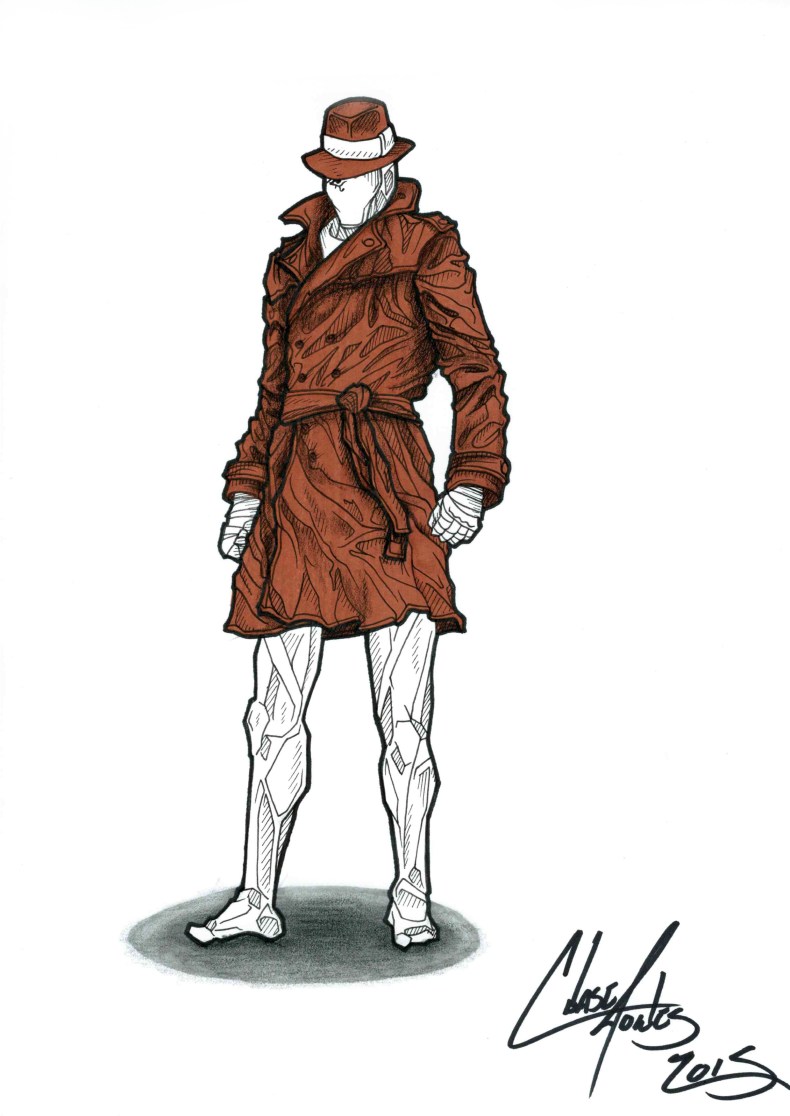
Artwork by Chase Jones.

Let me take you back to a time before your dreams, when the greatest things in the universe were just an inkblot on the horizon. This was in the days before I realized there was more to the inkblot than the slight fades in it we call stars, and the deep rivers we call the sunlight. These were the days of Ahnerabe station, the days with my family, the last days I really felt like there was anything so wonderful but to live in the thin metal halls that rotated endlessly outside of orbit.

Our home was built a long time ago, some say it was by people from Earth, and I suspect that’s true, but somehow it seems permanent and eternal, like the idea that the universe always was, that there was no beginning and we simply formed in a long string where the negatives were as long as the positives and the dead center was our own breath. But it wasn’t really so, and there was a big bang, despite some scientific disagreement. We all had a beginning, a place best described as where we thought there was no beginning. The time of no change. Just like the universe, it all ended with a Big Bang, and the beginning began.

My father wasn’t sure what to think about the noise, after all, if it was an impact from a piece of space rock, it meant we were likely all going to be dead shortly to make that much noise, so he tried not to think about that. I didn’t try to stop, and I remember I was shuddering in fear, as I spun in the gravityless air. Father hesitantly told us to put on our space suits, and he got out a toolkit, and headed towards the noise. If the hull ruptured as he went over there, there would be no father anymore, just a stick figure shaped fade on the inkblot, reflecting light back at us like a signal flare, its eyes forever locked in terror.

Luckily—No, I shouldn’t say luckily. I don’t believe in luck, any more than I believe in an eternal universe. It’s just too convenient. There was another bang, and then a weird noise, a noise that sounded horrible, like I imagined a banshee sounding like in bedtime stories in that moment you get in the sheets and you’re still cold and your mother hasn’t kissed you yet. There was a silence, and then a clank, and slowly my father came into view.

He wasn’t alone.

* * * *

One of my first memories is of when my older sister got lucky enough to have her arm amputated. nShe was very excited. You always cut the legs off early, because if you don’t you could easily die if the inertial dampeners fail and your blood ends up rushing into them during an acceleration unit. They fail often. The arms are less deadly, so we keep them longer. Her eyes were so bright when my father got out the bone saw, and I was more jealous than you can imagine.

“Why can’t I lose an arm too ma?”

“When you’re older sweetie. And its Artemis’s birthday!”

She told dad to do it without anesthetic, and he was so proud of her. Sure, she blacked out, but it was worth it. When it was time for me to lose my first limb, I was an embarrassment. I tried to be strong like sis, but I just cried and cringed and thrashed as the teeth of the knife cut into me. My dad sedated me. The last thing I saw on his face was that look of utter disappointment.

* * * *

“Who… Are they?”

My mother could have asked a million more questions, but that question was good enough.

“They’re explorers. They say they came from a station of Titans and Gods.”

“Olympus Station,” one of them said, through her pierced lips, the tattoo running along her lower and upper lip, along the side of her nose, before climaxing into an explosion of color around her eye. The tattoo faintly glowed, just like I could make my limbs do. Their spacesuits didn’t match, and were a gaudy mix of red and purple for one, and yellow and black for the other. They had what I was fairly certain was a “cat” emblazoned on it, which was one of the mythical “animals” I’d heard so much about.

“I thought we were the only ones left…” my mother stammered. The two women looked at each other.

“The only ones of what?” one of them said, in a tone of voice I had never heard before.

“People.”

* * * *

There used to be a lot of people on Ahnerabe station. There were a lot of other children there that I played with, and we would roam around in the zero gravity, bouncing balls around. There was a sports team I was on, but I can’t remember the rules to it, except that it involved swimming through the air to place a ball in a receptacle, and that I was descent at it. On my team was my first crush, Selene.

Unlike every one else on board, whose hair was blonde, hers was white, and she was teased for it immensely. The most common insult was “Crone Head.” I found her one day, curled up in a ball, slowly rotating around, her tears spiraling out from her body, glittering in the emergency lighting. I floated up to her, and pushed through the tears. It was the first time anyone ever hugged me, and I felt perverse when I felt the warmth of her body.

I’m ashamed to say I ran away.

* * * *

The two women looked at each other, and their faces made some expression I couldn’t read, and I blushed and turned away.

“You seriously think you’re the last humans?”

“We did, and could you… Make yourselves decent?”

They looked totally confused. One looked down her spacesuit as though she’d unzipped it on accident.

“What the…”

I didn’t know the next word they said, neither did my parents.

“You know…” My mom leaned in, though it didn’t help since her voice was coming out of her spacesuit speakers. “Your faces are showing.”

Their jaws went slack, and they just stared at us for a long time. Eventually, my mother undid the locks on her helmet, and showed them her mask, the smooth white oval of it contrasting hugely with their indecent flesh, its one red optical input over where her left eye was seeming so elegant and efficient.

“You don’t…. Show your faces to each other?”

“It’s indecent.”

“Are you some kind of cult or something?”

My sister intervened. “Clearly the land of Olympus has very different rules about these things, Mom.”

“Doesn’t mean they’re right…” my mom muttered.

“So, who are you two?”

“Better yet, who the hell are you guys?”

* * * *

The Family.

There is my father, Apollo. He is a wise man, after all, he and mom kept us alive all these years.

Though he cried all the time that we were the end of humanity. He liked to keep a pattern of flowing water on the video panels of his limbs and mask, it gave him a stoic tranquil appearance I could always trust in.

There is my mother, Aphrodite. She always enjoyed the hydroponic gardens we got our food from, and she used to take us there to look at the plants. While we didn’t need all of the surviving gardens to live, she kept them up, because she loved the greenery. It was so amazing to see how nature worked, that if you just put a plant in a stream of nutrient injected fluid, it would grow big and strong and make tasty things for you to eat. I swam through the zero-g jungle, and my mother would encourage us. I used to pretend there were animals there, but I knew they weren’t real, though that didn’t stop my sister from teasing me about it. My mother always kept her skinpanels in a pattern of greenery. It suited her.

There is my sister, Artemis. She was the most adventurous of us. After all, if her or I died, there was no one left for us to mate with, and we were brother and sister, which would be highly immoral. So that was the end of it. And she took her apocalyptic certainty as an excuse to do anything. She would go on spacewalks, just for fun, and see if she could hold on untethered. She would remove some of her limbs, or modify them, and try to wriggle into small spaces. She was brave. And she was dangerous. Artemis kept her skinplates grayscale, shifting colors, usually towards black.

And there was me. Archimedes. I usually forgot to turn my skinplates on, so they just stayed the generic white they are if you don’t use that feature. I was the youngest, last one born, and since I played it safe, I knew I would be the last one to die. Alone in the metal tubes of my cold heart home, pumping despair into the inkblot.

* * * *

The one in the red and purple was named Grit Simmons, which didn’t sound like a real name, and the other was named Cat Conkers, which sounded even less like a real name. They explained Titan station was like Ahnerabe station, only larger, and with more people on it.

“Did you ever find more normal people?” My sister narrowed her vision receptacle at me sadly.

“Normal?”

“You know, who look like us.”

“No, I can’t say we ever have.”

They took off their spacesuits, and I saw one of them had robotic legs, and another robotic arms, but their limbs had all of the gizmos showing, they weren’t covered at all. It was strange.

“So how long have you been living out here?” Grit said.

“Our whole lives,” my father replied, “We honestly thought we were the only ones left. That’s what our parents told us.”

“Is the Earth finally safe yet?” My mother perked up, “Or do the other survivors all live on spacestations too?” Grit had to blink a few times, which reminded me of a computer light flickering to process data.

“Er, well a few places are irradiated or polluted, but Earth and Mars have always been okay, I mean, as much as it can under Centro.”

“Is Centro some kind of protective radiation field?” Artemis inquired.

“No, its, um, no. No its not.”

“It’s a government. They are big wigs who run everybody’s life and tell people what to do and stuff.”

Cat helpfully finally chimed in. “Do you have any meat? Or is this veggie stuff all you have to eat?”

I was still wondering why people wore large wigs on Earth, but my mom had a different question.

“You… eat people?” The pair twisted their faces in very weird ways.

“No! Of course not!”

“Why would you think that?”

“Where else would you get meat!”

“Animals!”

“Animals aren’t real, everyone know that.”

“What?” Just… Stop. What?”

Needless to say, it was a long conversation.

* * * *

The time I didn’t run away was much more notable, and happened purely by chance. I was floating through the gardens, when I heard a sigh. I swam towards the sound, and found Selene, looking at some celery. “Selene?” She looked up, her hair seeming to shock into the weightless air, her vision receptacle widening. “Arch, I didn’t realize you were here.”

“I didn’t realize you were here either. I thought I was the only one who came here.” Her shoulders lowered with the faint hum of machinery.

“So did I.” We sat, and talked about the plants. It wasn’t the last time we met up there, we started doing it regularly. And soon the two of us were inseparable, Crone Head and Arch Disappointment, best of pals. She told me all her fears, and I hers. She wondered if we’d ever go to Earth. She said she’d like to, to see the plants there, and raise children. We wondered what it would be like to walk in gravity, and used to pretend to, pushing each other’s feet down, giggling all the while.

One night, as we were sitting together, Selene took my hand, and told me she’d been thinking, and she wanted to show me something. I shrugged, and said okay. I couldn’t believe what happened next: she reached up to her head, and opened her face plate, snapping off the latches installed in her skin, and letting it drift away.

“Only people who are married can see each other’s faces Selene…”

“Like they will approve us for admission to the gene pool. You’re… Special, Archimedes.”

“So are you.” Her face was… Immensely fundamental. Her eyes were a sort of pale blue, and she seemed to have to… close them occasionally, which she seemed to find difficult, and the tube leading into her eye seemed to block it partially. I wondered if eyes had been designed to do that before faceplates. Her skin showed scarring from where all of the attachments, wires, and tubes had been implanted, and her visage was wreathed in the silver teeth that held her faceplate on. And I realized I must look like that, and the more I looked at her face, the more I wanted to share mine with hers. I pulled off the latches, and my faceplate floated up into the air, and then she leaned in and put her mouth on mine like they did in books, and I wrapped my arms around her, and hers around me, and I could feel her heartbeat, and the whir of her motors, and I think we both began to cry. I had never felt another person so close before. We met up many more times, and got closer and closer each time.

Her body felt like starlight on my skin, warm, yet it wasn’t far away, and she could whisper in my ear.

And I knew it was wrong, and that to be so close with another person was immoral, but we did it anyway. I held her close. And eventually, there were no barriers between us, and we wondered why it was that you were only allowed to make children by artificial insemination, because the alternative turned out to be… Better than anticipated, and I didn’t feel at all like the darkness.

* * * *

After they explained Mars (which was apparently communist) to us, which took some time, they began to get down to business.

“So look, we can get you off of here, take you somewhere where there are people.” Grit said.

My mother looked at my Father, “We can’t just let them die here.”

My Father nodded, “We need some time to think about this, to plan… To know what the outside world is like.”

“Oh come on, we do not have enough god damn time for this!” Cat pulled out a gun. I’d read about them. I’d never seen one before. “We’re taking over your station in the name of Olympus, now shut up and get on our damn spaceship before I blow your cultass brain into the next hemisphere.”

“Cultass?”

“Just shut up!”

“Cat, what are you doing?”

“I’m not letting your molly coddling get in the way of our survival!”

“You don’t even know if this will do that!”

“Well it’s worth a fucking shot!”

* * * *

The last time I’d heard that kind of yelling, the elders of the ship were meeting. We never learned what about, but in hindsight, they must have learned that there was something outside. They yelled, and at the end of it, some of the station decided to leave, and the rest decided to stay, but neither would do it without everyone. So ended, and started, the brisk war. It was over so fast. In the opening gambit, one side lowered the defensive grid for a chunk of the station, in time for a meteor to hit it. The meteor didn’t just crack us open with stardust, it poured us into the stars, and spilled our bloody guts into the void. It had been meant as a warning blow, a way to say, “This is the end, we all have to leave anyways now!” instead, the meteor tore through the living area, ripped off an arm of the station, and left the rest venting bodies and air. My father had us hide that night in the gardens, and we lived, and no one else did. We never heard from the missing arm. It was where Selene lived, and I dreamed for a long time she lived. But she didn’t. They were all dead. Spinning out like tears.

* * * *

My father’s blank faceplate stared impassively. The gun pointed at his head. I shivered. Not again.

* * * *

Before everyone died, I got my name. We weren’t born with names, just serial numbers. Mine was 0042623.

When I was old enough, my naming ceremony came. Most children got named after Gods, so when my naming time arrived, I wondered what it would be. Zeus? Apollo like my father? Or maybe some lesser God… I didn’t care, I was excited. My parents and the registrar sat, their vision receptors glowing red against the white walls.

“Welcome 0042623, are you ready to receive your name?”

I nodded excitedly.

“Now son, your mother and I have talked it over…”

“….And we’re naming you Archimedes.” That wasn’t any God I’d heard of.

“See… We care about you, but we’re under no illusions, your sister is the talented one, and you’re simply going to follow her, and support her. You aren’t the one who is going to achieve the greatness in our family, so we don’t want to give you a name that will give you any false ideas. So we’re naming you Archimedes Artemis, so you’ll never forget your purpose is to follow your sister.”

I was never so dismayed. The other kids called me “Arch disappointment” after that.

* * * *

“Don’t!” My mother cried, and Cat glared at her, and grabbed her by the hair. In a swift motion she slammed my mother’s head into the table, and then again, and again the blood seeping out from under the cracked plastic. My father tried to intervene, and she pointed the gun at him, and shot him in the head. Apollo fell, smelling of meat and circuits, and I screamed. I was glad my mother wasn’t alive to see that, in a way…

I lunged at her when she shot. I barreled at her, propelling myself off the wall, and ramming my metal shoulder into her chest. Her companion tried to get to her, but Artemis grabbed her, and clenched with her metal hands as hard as she could, crushing bone. We wrestled in the zero gravity, till the apocalypse was signed with ink.

Cat had a gun. And she tried to save her friend.

And she shot.

The station was old, and wasn’t designed to take the strange plasma belting gun she had.

It melted through the wall, it burned it, over and over as her shots went wild. There was a moment where only air was seeping out, then the wall burst out, and Artemis and Grit were ejaculated from the station, their arms still locked in a dance of violence, a dance that they would never finish, as their flesh froze.

Cat followed soon after, with the corpses of Aphrodite and Apollo, both heading towards the sun, fittingly. And I clenched onto the table, which was bolted to the floor, till all the air was gone, and walked to the next airlock…. Where I went in, the last survivor of the apocalypse. Just like I’d always known.

* * * *

“So, you just got on their spaceship, figured out the controls, and flew it here?” The man said. I nodded.

“That doesn’t sound too believable.”

“I don’t find any of this stupid place believable. You people are ridiculous. I’m still ashamed to see you showing your faces around here.”

“Right… So what do you plan to do now?”

I squinted my vision receptacle at him, and sighed.

“I wish I knew. I’m the last living man, in a world full of people. It’s not an easy thing to figure.”

He poured me a drink. My liver told me it required extra processing, but he said it was on the house, which he explained meant free.

No, free was wrong. I went outside the bar, as the mobs of flesh wandered around me, and I looked up at the speck of light in the inkblot, that was called Earth. And there was a moment where the world was the way it was, and the end became the beginning, and apocalypse formed a broken Eden.

* * * *

The end of the Earth was a terrible thing, and we all knew about it. It was one of the first things every child on Ahnerabe learned. The earth became corrupt, immoral, decadent, and it was washed away with a fire called radiation, partially. We were spared the first round, and we build rockets, and launched ourselves into space, building the station far from where anyone would ever find us. We hid, and avoided the apocalypse, a hidden arc sustaining the best of humanity. Very strict guidelines for who could go on the trip were assembled, and we were the descendants of those lucky few. As the world burned, we on Ahnerable stayed safe, knowing that when the Earth was ready for us we would go back, and repopulate it. It was the noble dream. It was the beginning of all things, it was the end of all things. We blurred into the shadows and took a gasping breath as we plunged into the inkblot, slowly turning around the sun, like a tiny marble, or Selene’s tears when I could feel her heart beat.

There was a light, and it was the knowledge that though everyone else was dead, we would live on.

And when we finished the story, the ink spilled along the page, and no one could read it but memories.

* * * *

“Cat?”

“Yeah, Grit?”

“You see that?” they’d drifted so far out, their ship running cold, but still propelled at speeds like the chariots of the gods through the darkness, that they didn’t even know where they had run to in running.

“Looks like some sort of spacestation.”

“Nobody builds a spacestation out this far, its lunacy. You couldn’t resupply.”

“But you could hide.”

“So?”

“The boss of Olympus might want another place to hole up, this could be our shot. She might forgiv—“

“She won’t ever forgive.”

“What’s the worst that happens, we end the world?”