
Consider this a sequel, if you like, to the posts entitled “In which I don’t like things” and “In which I like things“; there will presumably be a post called “In which I like not liking things” at some point in the future, although let’s be honest: given my personality, that could be just about any post. Like, say, this one.
I read the memoirs of former President of the Confederate States of America Jefferson Davis a couple of years ago. It was a hard slog– first of all, because they’re two enormous volumes (volume 1 alone in the edition I linked to is 704 pages, and while that’s not the edition I read, I’d wager that’s 704 pages of small print) and second and more importantly because Jefferson Davis is an inveterate, unrepentant liar. My wife thought it was God damned hilarious; I spent most of a couple of weeks arguing with a dead man before I gave up and hurled one of the damn books across the room and declared I wasn’t pushing any more of Davis’ lying bullshit into my head any longer. It will surprise no one that Davis spends the entirety of his memoirs whining ceaselessly about the big mean bad North and how they were just so mean to the Confederacy and started the war for no reason and blah blah blah God go flee the capital in your wife’s dress again, asshole.
I just finished reading Gone with the Wind… well, today, actually, since I’m writing this on Thursday to autopost Friday morning, but by the time you see this it’ll be yesterday. My mother has championed Gone with the Wind as her favorite book and movie for literally my entire life. I mean no disrespect when I follow that sentence immediately by telling you that my mother doesn’t read much and that her recommendation never managed to put a copy of the book into my hands. (No one really knows where I came from; no one in my family is remotely the reader that I am.) She found out late last year that I planned to read GwtW as part of The List and insisted on buying me a copy. I made it clear that there was no way I was getting to it before 2014, as I was working on hitting 200 and I figured a) it was way too long and b) I was going to hate it and it was going to be a thousand pages of pain.
Gone with the Wind is the second most blatantly racist thing I have ever read in my life; or at least if it isn’t I’m not going to take the time to explore my memory long enough to find counter-examples. It would be first with a bullet if I hadn’t read Davis’ memoirs. It is racist in its characters, its history, its story structure; it is racist in such a way as to make it impossible to believe that Margaret Mitchell was not herself a stone-cold racist and a Southern apologist– and, as the dust jacket on the book tells me she did not discover that the South lost the Civil War until she was ten, I have very little trouble thinking that this might be a controversial declaration.
Here’s the thing, though. (You knew there would be a thing.) First of all, 1924. I kinda expect white people in 1924 to be racist assholes. For the most part they really didn’t have a choice about it back then. (You’ll note I don’t say “she lived in a racist society;” I live in a racist society. That’s a constant. But I have a choice about it in a way that I really can’t say Margaret Mitchell did.)
Here’s the other thing: I should have listened to my mother. Or, at least, my mother should have shoved this book into my hands and locked me in a room fifteen or twenty years ago; I don’t actually remember her insisting that I read the book, although I have vague memories of her making us watch the movie– but that so long ago that other than the line “Frankly, my dear, I don’t give a damn” (which is not what he says in the book!) I didn’t remember a single thing about it. Honest truth– there wasn’t a single part of the book that triggered a memory of the movie. I remembered nothing.
Gone with the Wind is fucking amazing. So good, in fact, that I’m mad at myself, because nothing this awful should be this good. The relationship between Scarlett O’Hara and Rhett Butler, fucked up as it is, is one of the most fascinating things I’ve ever seen in literature. Hell, Scarlett herself, flawed as she is– and the woman is a supreme asshole– is utterly fascinating. There’s something weirdly proto-feminist about her, almost, and I’m really interested (I haven’t done the legwork on Google yet, but I’m gonna) in seeing what a feminist take on the book looks like. Scarlett is so well-drawn that I almost can forgive the book’s ubiquitous whitewashing/sanitizing of the history of the Confederacy and Reconstruction because, even though I know that shit didn’t happen like Gone with the Wind really, really wants you to, the entire book is told through Scarlett’s eyes– and Scarlett sure as shit would have believed that the South was entirely blameless and that the darkies were all her family (even when she was threatening to whip or skin them, and then only when they deserved it) and didn’t really want to be free and that Reconstruction ushered hordes of illiterate former slaves into office where they picked their toes and took lots of bribes. This is absolutely how Scarlett would have interpreted what actually happened, so the book reports it that way.
(Sidenote: This is much the same phenomenon that I talked about a couple of weeks ago, where there’s no way that–warning, spoilers in the link– Joel’s story from The Last of Us ends any other way than it did.)
Problem is, that’s probably bullshit, and the book drops out of Scarlett’s head every now and again to give what basically amounts to occasional history lessons. This is the reason why I claim that it’s impossible to read the book and not think that Mitchell herself has got to have been a huge racist– because of the impersonal, history-book style the book adopts for a few pages every couple of chapters.
I don’t really like the fact that I liked this book as much as I did. This book contributes directly to– hell, had a hand in creating– a narrative about the South that is literally still poisoning racial and regional relations in this country; the Noble Cause, the Glorious Dead, all that nonsense and rot. In a weird way, it’s almost a point of recommendation– that Gone with the Wind is, historically and politically, awful— and that it still manages to be a wonderful enough novel that I had to tell those other parts of my brain to sit down, shut up, and go away because jesus there’s still 500 pages left and I have reading to do.
I’m gonna stop now; I could say more but the post is long enough already. I may revisit this again later if it turns out that I can actually find some feminist literature on this story and want to talk about it; if you happen to know of anything I should be looking at, let me know in comments.



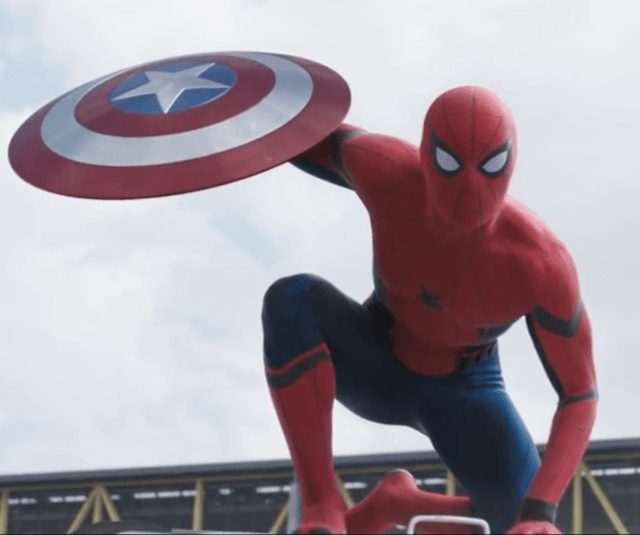 That looks terrible, guys. Somebody on Twitter compared it to a parade float, and that’s not far off.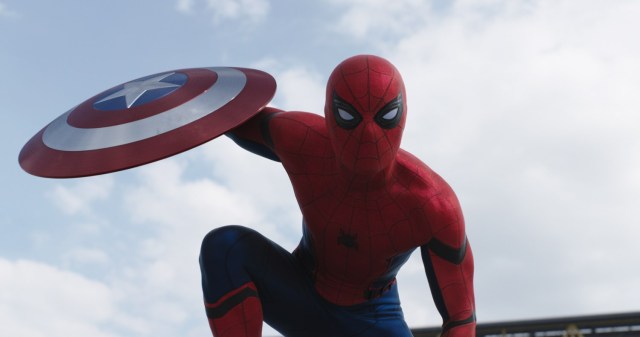
 Welcome to infinitefreetime dot com