#REVIEW: Black Shield Maiden, by Willow Smith & Jess Hendel

I waited too long to write this– life, getting sick, and various other dramas intervened– so I admit my ardor has cooled a bit, but my admiration for Willow Smith continues to grow with every project she releases. It’s impossible to really know how much of Black Shield Maiden is her work and how much is Jess Hendel’s, of course, although I do find it interesting that Hendel is more or less given co-author credit here. Her name’s smaller than Smith’s, as one might expect, but not that much smaller, and I can easily imagine a world where this is simply ghostwritten and only Smith’s name appears on the cover.

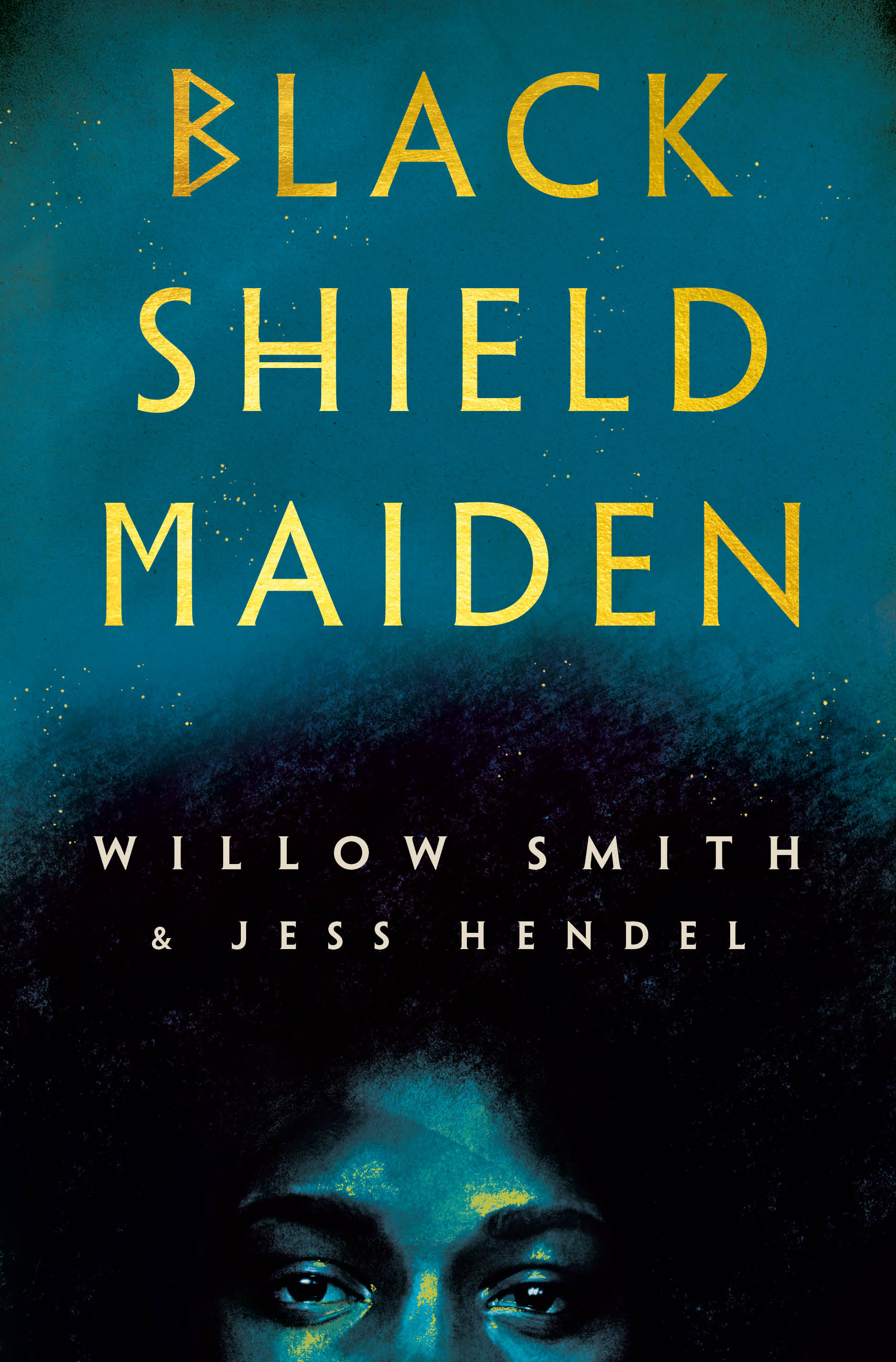
Also, I found it at Target, of all places, which is not somewhere I’m accustomed to discovering books. I didn’t actually buy it there, but that was where I noticed it for the first time. The cover’s striking as hell, and it took me a second to actually realize who the author was.

Anyway, Black Shield Maiden is the story of Yafeu, a Ghanaian warrior who is kidnapped and sold into slavery, then rescued during a Viking raid on the camp where she’s being held. She’s more or less still a slave in the frozen north, but the Viking concept of slavery was quite different from American chattel slavery, and she serves as a handmaiden to the princess Freydis and ultimately becomes a mentor of sorts to the girl as well. I won’t spoil the story, but I can safely tell you that she ends the story in a very different place than she starts it, both literally and figuratively, and the book doesn’t quite end on a cliffhanger but the last fifty pages or so make me really interested to see what’s coming next. This is book one of what I think is a trilogy; the final page promises a forthcoming book two but doesn’t give a name or a date yet.

I don’t have a ton of criticisms of this; it’s a really solid book the whole way through, and not only am I onboard for more collaboration between these two women but I’m probably going to look into Jess Hendel’s work as a solo author– this book was my first exposure to either of them. The way Yafeu is integrated into Viking society doesn’t quite go the way you think it’s going to; she learns the language perhaps a bit quicker than she ought but I’ll forgive it because her being unable to understand anyone would have gotten annoying quickly, and it really seems like most of the people around her just literally decide she’s a dark elf and roll with it. The cultural differences and her outsider’s view on Viking society is neat to read about, too, and Yafeu and Freydis and a handful of others are compelling characters with interesting arcs over the course of the story. I don’t know that I liked it enough that it’s going to end up on my end-of-year list or anything, but it’s a well-written, action-packed, enjoyable read with lots of interesting female characters and if the plot tickles your fancy I’d recommend picking it up.

In which Willow continues to impress

This is emphatically not a review, mostly because 1) I’m still about 130 pages from the end, and 2) I’m still dog-sick and have already taken tomorrow off, but I’ve spent most of my waking hours today with Willow Smith & Jess Hendel’s Black Shield Maiden in my hands, and thus far I’ve quite enjoyed it. And the cover is pretty as hell, so feel free to stare at it for a while while I go finish the book so that I can review it tomorrow.

#REVIEW: Blood at the Root, by Ladarrion Williams

This is another one of those “See that cover? Go buy this book” types of reviews. Because … damn.

They say that authors nowadays need a social media presence in order to sell any books, and, well, I’m only aware of Blood at the Root because the TikTok algorithm put Ladarrion Williams in front of my face over and over again until I caved and ordered his book. And Williams is refreshingly direct about why he wrote this book: there aren’t enough Black boys in fantasy books, and so he wrote a fantasy book with a Black boy as the main character. Or, a Black young man at least, as Malik is 17 at the beginning of the book. Which, come to think of it, I don’t remember him having a birthday during the book, so he’s an awfully young college freshman, but I think he mentioned finishing school early at some point, so it’s probably fine.

I am certain that I’m not the first person to describe Blood at the Root as “Harry Potter at an HBCU.” In fact, I’m pretty sure the author himself has used that formulation. And, honestly, for the first half of the book or so, it’s a little bit too much Harry Potter at an HBCU, to be honest with you. You will literally be going through this book saying “Okay, here’s Hermione, and this guy is probably Draco, and that guy is definitely Snape, and oh! look! Death Eaters!” and so on and so forth. The first half is very, very tropey, in a way that I was willing to let slide because 1) the book is YA and 2) the actual intended market of the book is Black boys who don’t read much, so, y’know, the repeated tropes from other books that they haven’t read isn’t going to bother them, right? But it’s definitely there and it would be kind of ridiculous to not take note of it.(*)

That said, Harry Potter at an HBCU in Louisiana with a Black male lead is going to be pretty distinct from the Daniel Radcliffe books no matter how much it borrows, and the freshness of Williams’ Afro-Haitian mix of magics and characters is enough to carry you through the first half. Malik himself is a great character; I recognize this kid, and I’ve had to teach him math in the past, and his relationships with the other characters in the book, particularly his younger foster brother Taye and his childhood friend Alexis are tremendously well-drawn.

And then that second half hits, and you discover that all that emotional investment in the characters is about to be used against you, and the number of twists and turns and betrayals is head-spinning. Like, I don’t cry when reading books, and to a large extent I don’t understand people who claim that books make them cry all the time, but if I was a crier this one would have gotten me at at least two or three entirely distinct points.

The book definitely has some weak points, and there are bits and bobs here and there where you can tell it’s a debut novel, but it ends so well that I can’t help but strongly recommend it. I’m not sure when the sequel comes out, but I’m sure TikTok will let me know, and I’ll have it on day one. Check it out.

(*) Not that I think anyone’s going to call me out on it, but I want to point out that all of the punctuation in that sentence is exactly where I want it to be. “Black boys who don’t read much” and not “Black boys, who don’t read much”. Thank you.

#REVIEW: Requiem Moon, by C.T. Rwizi

Y’all.

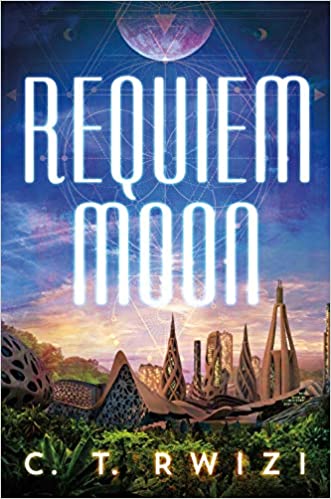
I keep telling y’all to read more African fantasy and science fiction literature. I have been on this for at least a couple of years now. C.T. Rwizi was born in Zimbabwe, raised in Swaziland and currently lives in South Africa, and his phenomenal debut novel Scarlet Odyssey was my favorite book of last year. I have had the sequel, Requiem Moon, pre-ordered for months. It jumped to the top of my queue as soon as it got into the house, and I finished it this morning, and …

… man, this guy is not a fluke. I admit it! I was kind of worried. I’ve read enough sequels to great debut novels that weren’t great, and if I slip and say “trilogy” at any point in this piece, be aware that I have no idea how many books Rwizi plans this series to run. I know that it’s entirely possible for a second book to fall apart, and there’s good reason for that; second books in a series are a fuckton harder to write than first books, and they’re frequently written under time pressure to boot; you had your whole life to get that debut novel ready, and the sequel needs to be out in a year. Look around for the sequel to Skylights. Believe me, I understand second book syndrome.

I am pleased to say that while I don’t love Requiem Moon quite as much as I loved Scarlet Odyssey, and it and The Invisible Life of Addie LaRue are battling it out in my head for my favorite book of the month, it is still a phenomenal novel and is absolutely a worthy sequel to the original.

My only regret? I probably should have reread Scarlet Odyssey before I picked this one up. It does a great job of getting you caught up, but there is a lot going on in this book. You lose the coming-of-age narrative of the first book and much of the prejudice that the mystic Musalodi had to put up with in the first novel, and also the travelogue aspect, as the entire book takes place in the capital city of Yonte Saire … or, at least, almost all of it, except the part that doesn’t, and I really want to spoil the place where Salo ends up for a chapter but I feel like it would be mean. What the book does is crank up the political complexity and gets deeper into the worldbuilding, and you find out quite a lot more about the genuinely refreshing and original math- and high tech-based magic system Rwizi has cooked up here. This book, by the way, does not give one single shit about genre conventions; Rwizi’s gonna put some science fiction in his fantasy and some fantasy in his science fiction and everybody loves a Reese’s so you’re not going to whine about it. Salo grows a lot, both in character and in power, over the course of the book, and … shit, I don’t want to spoil any of this, and there’s not really any point into getting too far into the plot anyway since it’s a second book. Just believe that shit, which was perhaps not previously as real as we thought, gets real, and I caught myself thinking at about the halfway point that there hadn’t been nearly as much action in this book as compared to the first and yeah that was just Rwizi teeing up my emotions.

And then like Jesus holy shit the ending. I have no idea where the hell he’s going with this series, and it’s fantastic.

I loved this book, I love this author, and you need to read Scarlet Odyssey, then read this, and then listen to me and start reading African speculative fiction on the regular, because there’s all kinds of good stuff out there and it needs more exposure.

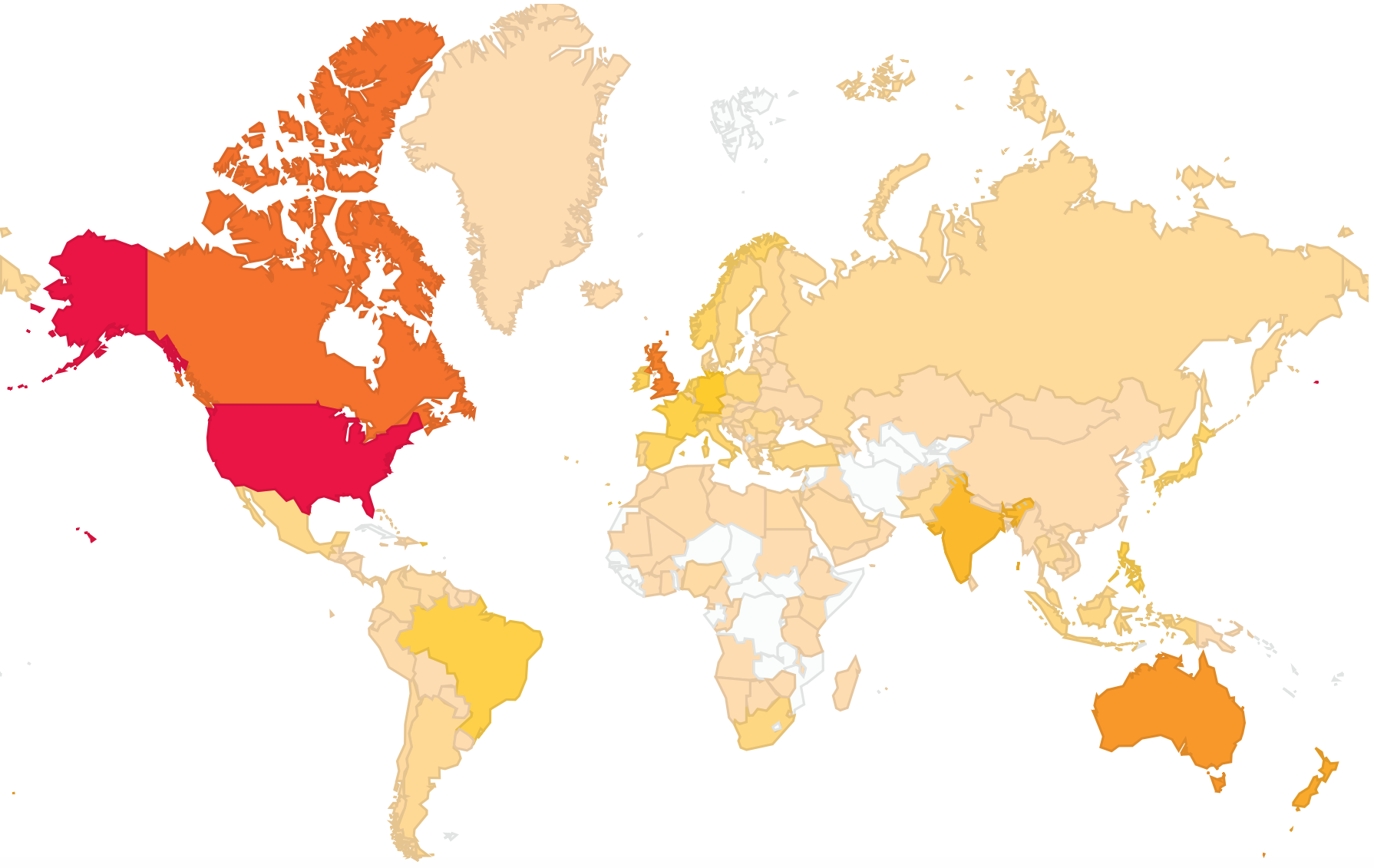
Geography #blogwanking, March 2015 edition

French Guiana!  French Guiana!  French Guiana!

Screen Shot 2015-03-03 at 6.01.27 PM

I have finally filled in a continent other than North America and Australia, as French Guiana shows up today and gives me the last little bit I’m missing.  Kosovo, at this point, has got to just not show up on WordPress’ scanners at all, because it remains the stubborn hole in Europe, and the -stans are screwing Asia all up since I’ve decided North Korea doesn’t count.

But South America!  Done!  Woohoo!