I’ve been re-reading, and doing a final edit/polish, on my own book all weekend. Guys, I have killed so many semicolons. Not all of them, but so many. Anyway, it’s gotten me thinking about science fiction.
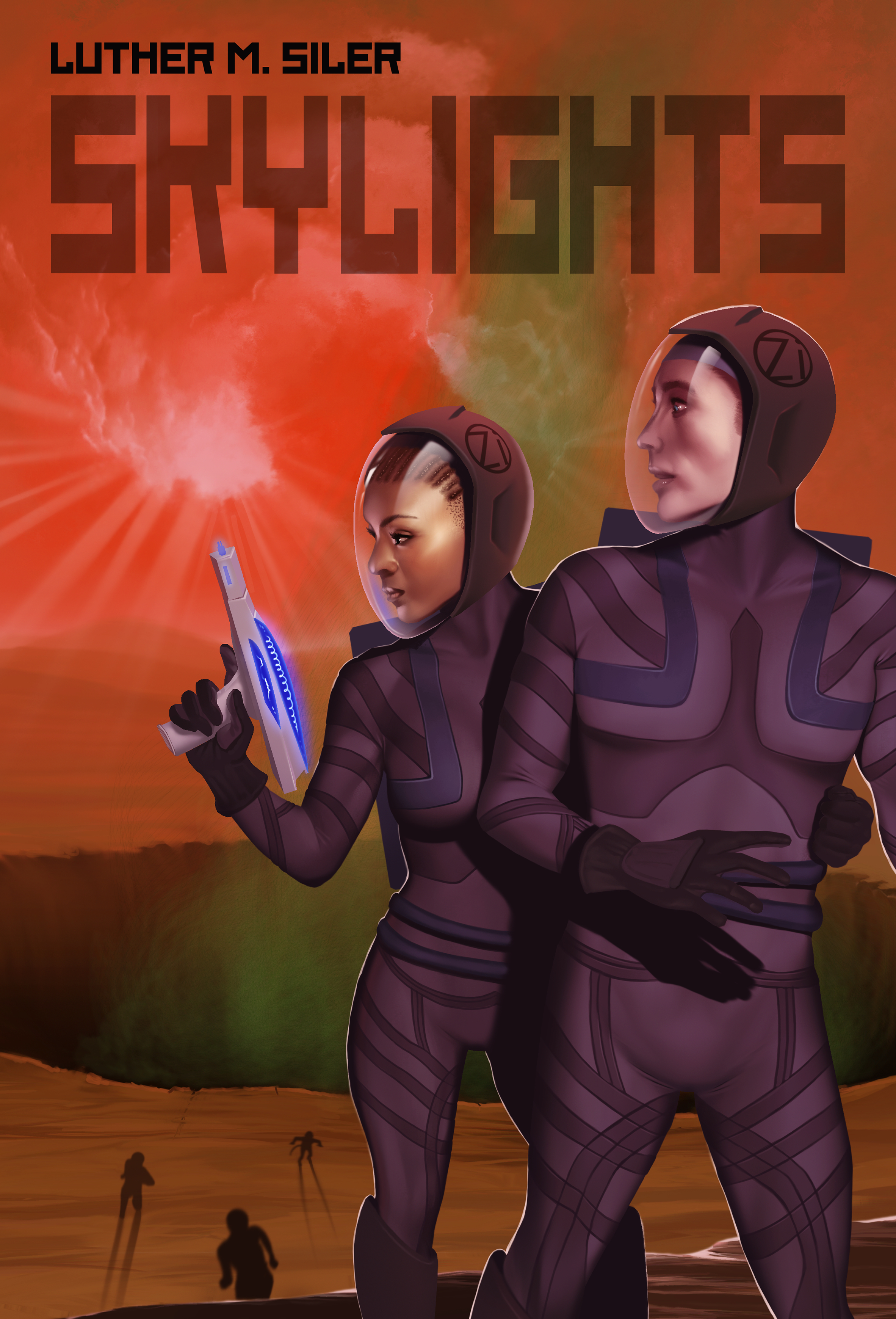
Gimme a second, here, while I post the cover again. Not just for promotion; this is actually relevant:
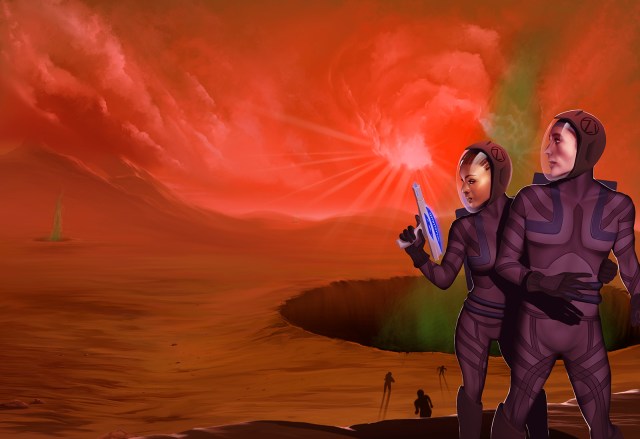
For the purposes of the conversation I want to have right now, there are two kinds of science fiction: hard and soft. Note, by the way, that if you’re a dedicated science fiction aficionado you may find much to quibble about with these definitions that I’m about to explain; be aware that I’m probably not going to be willing to argue with you about them.
Anyway, soft sci-fi can basically be characterized as stuff what is In the Future or at least involving Spaceships or Aliens in some way. Soft sci-fi can bleed over into other genres (fantasy, in particular) and does not always worry itself too much about, well, science. If you’ve ever read or watched something involving a space battle using laser beams, you were probably watching soft sci-fi. The Benevolence Archives, insofar as it is science fiction at all, is crazily soft. You’re not getting any explanations for how anything works in there, and I’m holding true to the Star Wars rule of never explaining how close anything is to anything else while I’m at it, too.
Hard sci-fi, on the other hand, is concerned greatly with scientific plausibility. These authors have done their damnedest to make sure that everything in their books is as scientifically accurate as possible. The Martian, to choose a book uncomfortably close to mine in subject matter, is quite possibly the hardest hard sci-fi I’ve ever read. There’s chemistry in it. (It’s also the best book I’ve read all year. It’s better than Skylights. You should read both anyway.)
So what’s Skylights? Skylights is what I’m choosing to call “hard enough” sci-fi. Here’s the thing: the technology in the book? Exists, or is pretty damn close to existing. This book, which is the reason why the main character’s nickname is “Zub,” details how a lot of the technology that got them to Mars and kept them alive there would work. The book is set in the 2020s; we could do most of this now. The space suits on the cover look a little… tight, right? This article came out last week. Think the technology behind the iLid(*) sounds a little far-fetched? Not really.
Then again, look at the sky on the cover. The first time I saw it, I griped about it. The Martian sky simply never has clouds like that, and the sun is too far away to have that effect when it shines through the clouds that Mars really doesn’t have. Casey had a word with the colorist about it, and the colorist either got stubborn and doubled down or didn’t quite understand his instructions, and increased the craziness in the clouds before the next time I saw it.
At which point I told them I loved it and to leave it alone, because who cares if it was realistic. It was awesome. Those skylights? They’re really there. They exist. We don’t know what’s in them. Probably not what I put in them. Hopefully. But the skylights themselves are real!
At one point I had carefully mapped out what the timing on the book had to be, so that all of the dates for trips to and from Mars matched up with Hohmann transfers properly. No one but me was ever going to notice that. (And then I blew it all, by shoving the book four years farther into the future without bothering to screw with the dates any more. You’ll live.)
Here’s the thing about the science in Skylights: I really did do a fair amount of research on how things worked for this book. That said, if any actual astronomers, and particularly any actual NASA people, read this book, they’re probably going to find shit that they want to smack me upside the head for. Some of the stuff is going to be things I deliberately ignored. Some of it will be stuff I screwed up. (I got a bit too far onto Mars in the first draft before realizing that Mars had less gravity than Earth, not more, for example. That mistake’s fixed, but I know there will be more.) I’m just hoping that it doesn’t detract from the enjoyability of the book. Three of my four main characters are scientists; they spend a fair amount of time explaining shit to the fourth character, who is the main POV character and the stand-in for the reader. I know I’ve stuffed a lot of narration into my dialogue; I hope I’ve done it in a way that entertains rather than bores. We’ll see if I hit the mark or not.
I want the book to feel realistic. I don’t necessarily need it to be perfectly realistic. And I’m really looking forward to seeing how it goes over with everyone.
Skylights comes out on Tuesday at all major ebook retailers (although it’ll probably pop at Amazon first, and most of my links will be to there) for $4.99.
(*) I did a little happy dance when I realized that my magic contact lens had to be called the iLid. It looked like this:



 I made some mistakes with the Skylights release, and I strongly suspect that the largest of them was not having seeded the world with a few promo copies so that it had a handful of reviews upon release. It has taken way too long for the book to get its first real Amazon review (there’s been a four-star rating on Goodreads for a while, but with no text appended) and I’m happy to announce that it’s basically exactly what I want reviews of my work to look like.
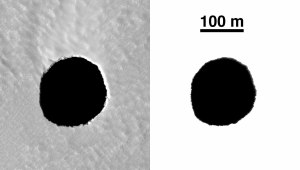 Take a look at these two pictures. Those are actual photographs from the surface of Mars of some curious features, dubbed the “seven sisters” or the “skylights.”
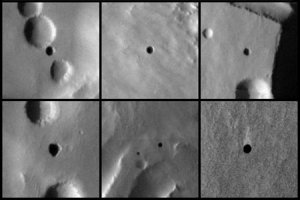 These features were discovered in 2007. I found out about them through Warren Ellis, who posted them to his website, or maybe to his mailing list, and spent a moment musing that it would be a really cool story if someone wrote about what was inside of them.
 Welcome to infinitefreetime dot com