I learned a new word while reading a sex scene tonight, and I’m both surprised and a little alarmed by that. I thought I knew all the words for the different ways humans can rub their bits together! I did not.
(That’s all I’ve got. My students shit the bed on another test today. If someone can explain to me what I need to do to keep 8th graders from consistently, from year to year, underperforming on anything I call a test, I would absolutely love to hear it, because nothing I’ve ever tried has worked. You’ve seen this post before, and I’m pre-exhausted by it without even writing it.)
I love y’all but I’ve got a book to finish and I haven’t touched Ghost of Yotei in a few days and I intend to rectify both of those problems before bed.
Had an enormous traffic spike the last couple of days– yesterday was the highest traffic day in years, possibly since the Syrian refugees post hit a couple hundred thousand views ten years ago. And other than the fact that most of them were from America (with a much smaller but still weird four-day pop from Chile, of all places) I don’t know anything about any of the visitors.
It was probably a bot– I’ve also been getting a lot of traffic from China lately– but I thought bot visits didn’t count? I wish I could get more detail on my views.
Today? Dead quiet.
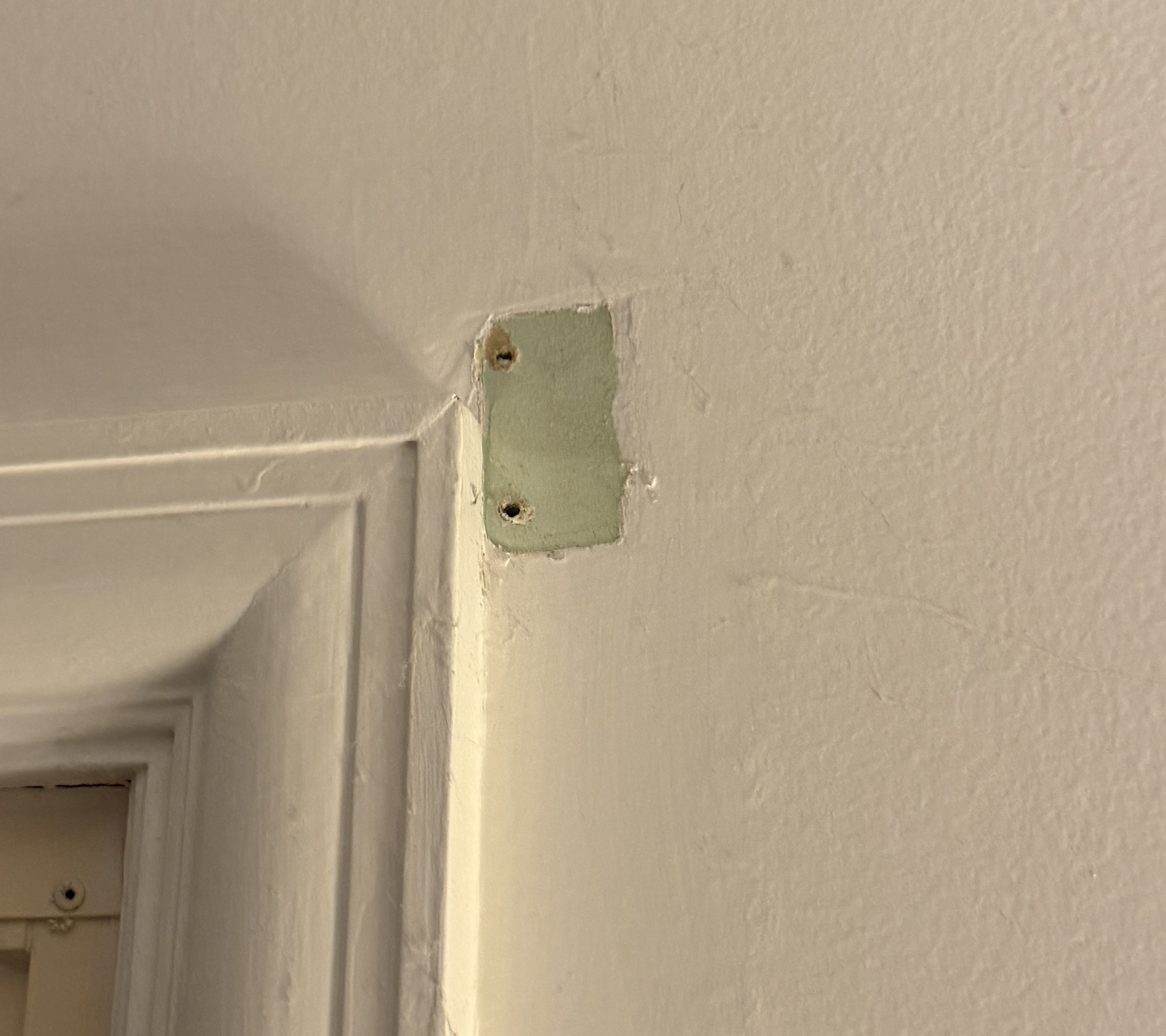
We are finally, after fourteen years of living in this house, replacing the hideous curtains in our bedroom and the gross miniblinds in our living room. I found this behind the hardware for the curtains and I would like a word with whoever built this place. I just wanna talk.
I’m not doing a full review of it, but this is a really good book. My only problem is that Hastings has a weird habit of drawing attention to the race of any American who isn’t white when it isn’t necessary– there was an actual chapter about race relations among American troops, and I’ll cut some slack on that one, but just for example, referring to the youngest soldier to die in Vietnam as “a black kid” in a weirdly flippant way really stuck out. My only problem is that now I want to read twelve other books on Vietnam that he mentioned (sidenote: are there any histories of the war written in English by Vietnamese scholars?) and my backlog is bad enough already.
This image from my email is not exactly inaccurate, but I feel like maybe Amazon is still having some tech problems.
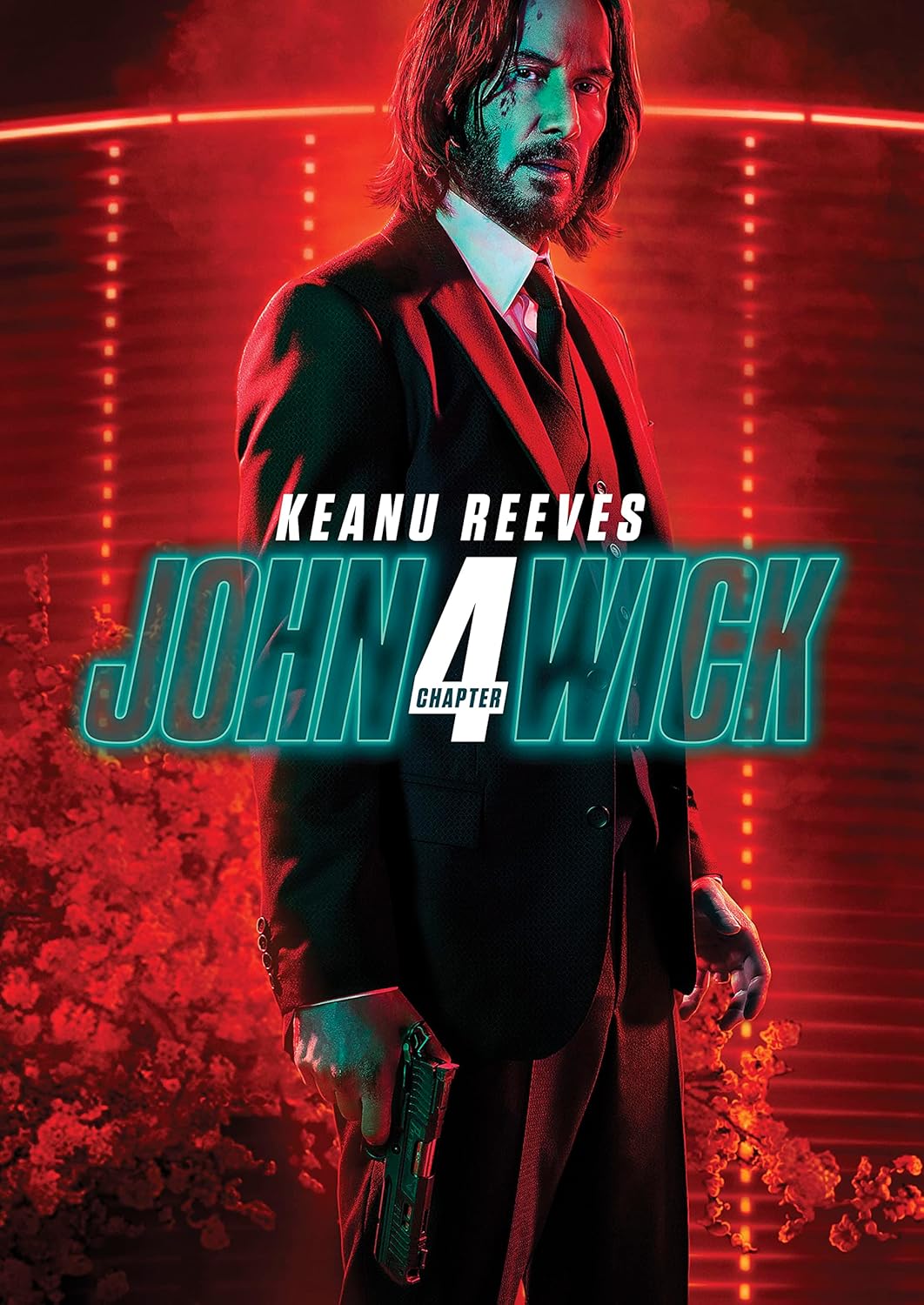
After over a year of threatening to watch it, my wife and I finally sat down to watch John Wick 4 last night, and I will forever refer to it as The Dumb John Wick. I’ve seen all of them now, and I never really loved the series, but this one takes everything that was sorta ridiculous about the first three movies and turns those up to 12, while also not adding anything of real value to the series, ignoring the cliffhanger ending of 3, and being way, way, way too long. Is there a lore reason why there are literally no cops at all in the John Wick universe, for example? Blech.
You might not be able to tell, but this picture was taken outside the window as I was removing the curtains earlier today. At 6:30. I fucking hate daylight savings time. Hate. Can we please be a society just for a little while and get rid of this bullshit? Please?
And finally, as of tonight I’ve read just over 2600 pages on my new Kindle, which means that I’ve managed to adopt the thing into my lifestyle successfully … and the battery is still at 16%, which is bloody impressive.
I’m genuinely not sure how I pulled that off, given that this isn’t a summer month– Storygraph has me at just barely under 7,000 pages for October, which looks ridiculous until you realize June was 11,500.
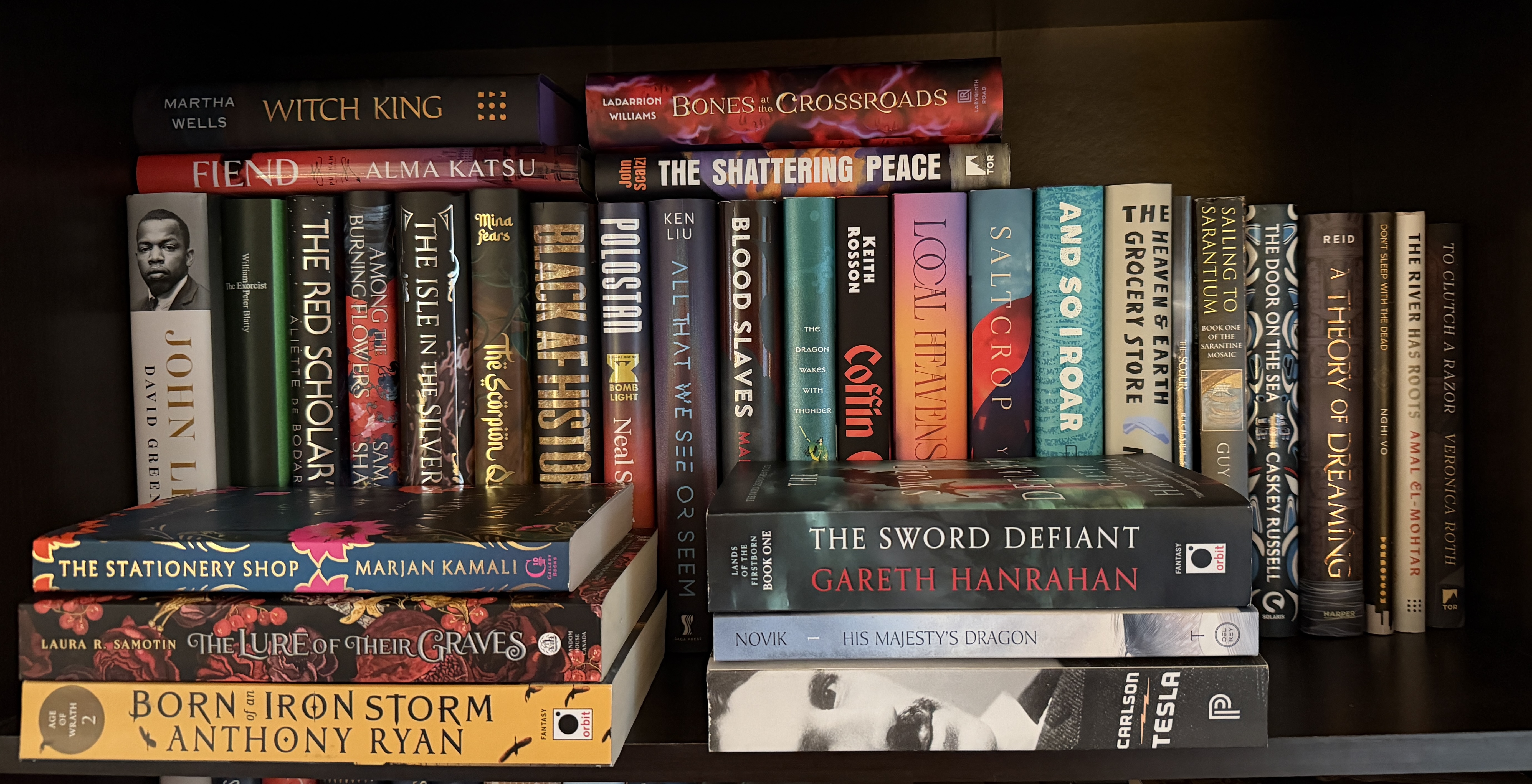
At any rate, The Eye of the Bedlam Bride is Book of the Month, followed very closely by Mark Twain. Hastings’ Vietnam book is excellent as well but I’m only about halfway through it.
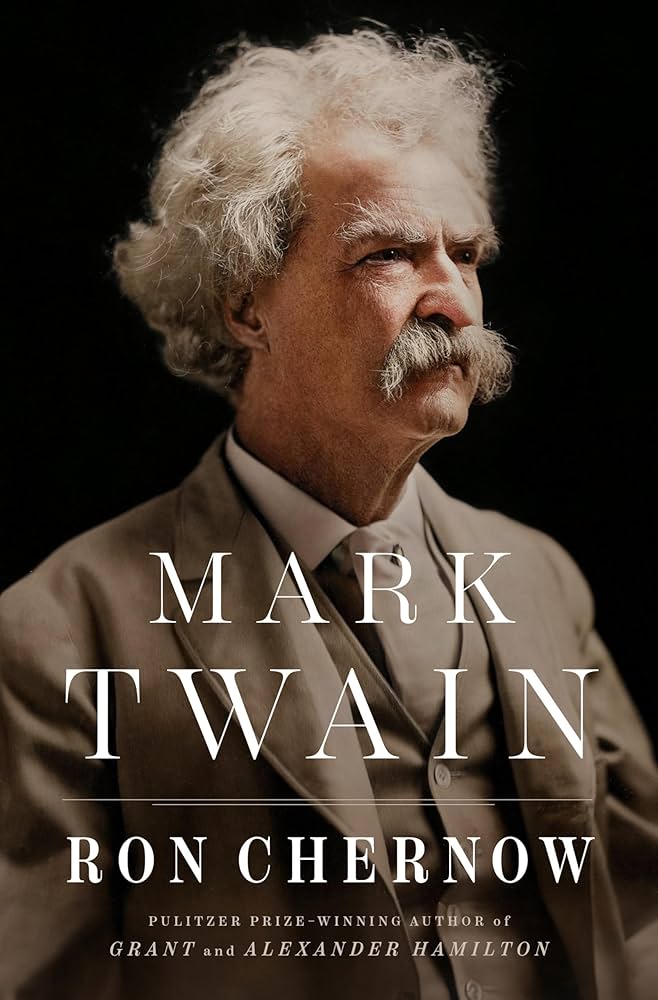
No, no, not a review of Ron Chernow’s book that happens to be called “Mark Twain.” I’m reviewing Mark Twain. And reading Book Mark Twain has caused me to lose a surprising amount of respect for Person Mark Twain. He gets three stars out of five.
Y’all, this dude was weird.
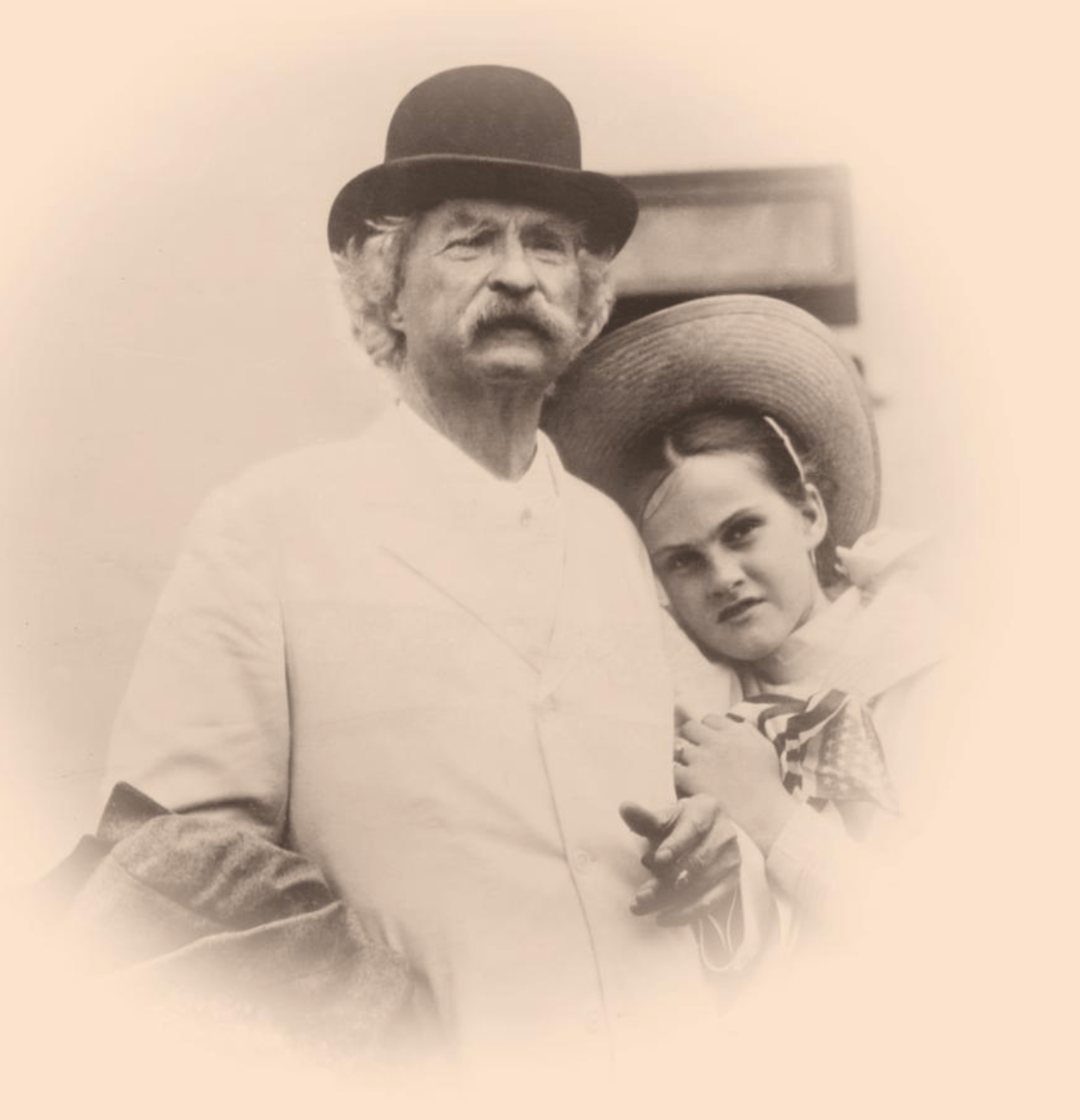
The person Twain is pictured with up there is Dorothy Quick. She is eleven years old in that picture. She and Twain were not related, and they literally met on an ocean voyage in 1907 and Twain, a man in his seventies, just decided to treat her like she was his best friend. They exchanged letters until he died, and he occasionally arranged for her parents to bring her for visits at his home. Multi-day visits.
And she wasn’t the only one. At two different points in his life Twain started a club for girls between ten and sixteen years old, and both times he was the only male member. He called the second group of girls his “angelfish.” They had membership pins. Chernow is quick to point out that there was never any kind of contemporary accusation that Twain’s relationships with these girls were sexual or predatory, but it becomes clear after a while that he recognizes how Goddamn weird the whole thing is and genuinely isn’t sure what to do about it. There’s lots of talk about substitute granddaughters– only one of Twain’s four children survived past her twenties, and his only grandchild was born after he died– but do you really need enough substitute grandchildren to call it a club? And do you stop talking to your substitute grandchildren after they get to be too old for you? Because that happened too. Once his angelfish got into their late teens he lost interest in them. This is not a joke.
Don’t even ask me about Lewis Carroll. Chernow talks about him in a throwaway sentence at one point (literally something like “at least he wasn’t drawing naked pictures of his preadolescent girlfriends, like Carroll was”) and oh my god I hate to talk about falling down a rabbit hole when literally discussing Lewis Carroll, but … yeah.
Twain was terrible at business, prone to falling for outrageous scams, deeply in debt for most of his adult life despite his royalties and his wife being ultra-rich, and held onto a grudge like Kate Winslet on a floating door. There was something vaguely Trumpian about him, where all his friends and business associates were brilliant, salt-of-the-earth, wonderful people until the moment they were no longer useful or Twain felt the need to blame them for something and then they were the worst poltroons and scofflaws in the history of poltroonery and scofflawism.
Like, I’ve read dude’s books. The fact that he was a sarcastic, irascible motherfucker is one of the things I like about him. But I feel like Chernow would have been a lot happier had he just had a chapter called “Look, this guy was a prick,” and gotten everything off of his chest.
There’s nothing genuinely damning in there. I’m never reading anything by any number of authors ever again because of their assorted bastardries and nothing Chernow reveals about Twain rises to that level. Even the angelfish thing is more of a massive ongoing WTF than something that was immoral or should have been illegal. But the last time I came out of a biography or autobiography feeling like I had less respect for its subject than I did going in was Ralph Abernathy’s And the Walls Came Tumbling Down, which I read nine years ago. The only other example I can think of is Jefferson Davis’ memoirs, and I didn’t exactly have warm feelings about that guy going into those books. It doesn’t happen all that often.
Chernow’s book is still a five-star read. Twain still has a ton of five-star books out there for you to read. Twain himself? Three. At best.
I’m going to finish the Chernow book if it kills me, and while I really don’t think it’s going to, I feel like I’m still tired from yesterday and pre-tired for tomorrow and Friday, so every time I sit down to read my brain is turning to mush.
The book is still five stars. Twain himself may have lost a star now that I know more about him.
I am not quite halfway through with Ron Chernow’s 1200-page biography of Mark Twain, so it would be unfair to call this a “review” per se, but … c’mon. It’s a book by one of America’s preeminent historians about very likely the most important writer ever born on American soil. I’ve already read and loved his biographies of Hamilton and Washington, and I’ll get to the Grant and Rockefeller books sooner or later. There’s no universe where this isn’t a magnificent book, and it’s not like there’s going to be any plot twists in the last five hundred pages. This is a great biography already and it’s enormously unlikely I’m going to encounter anything that will change my mind– and if I do, it’ll change my mind about Mark Twain, and not about Chernow’s book about him.
All that said, I learned something today, and I fell down a rabbit hole looking for more information about it, and I need to share this information with you.
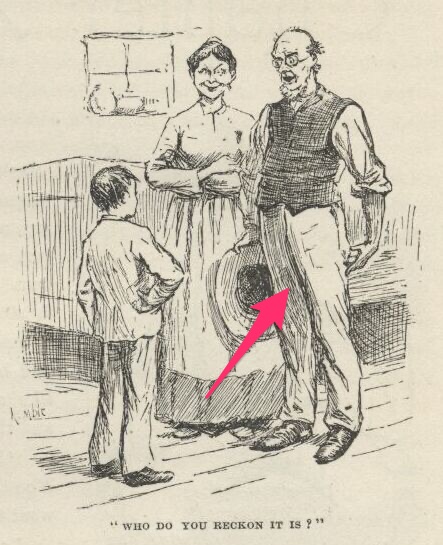
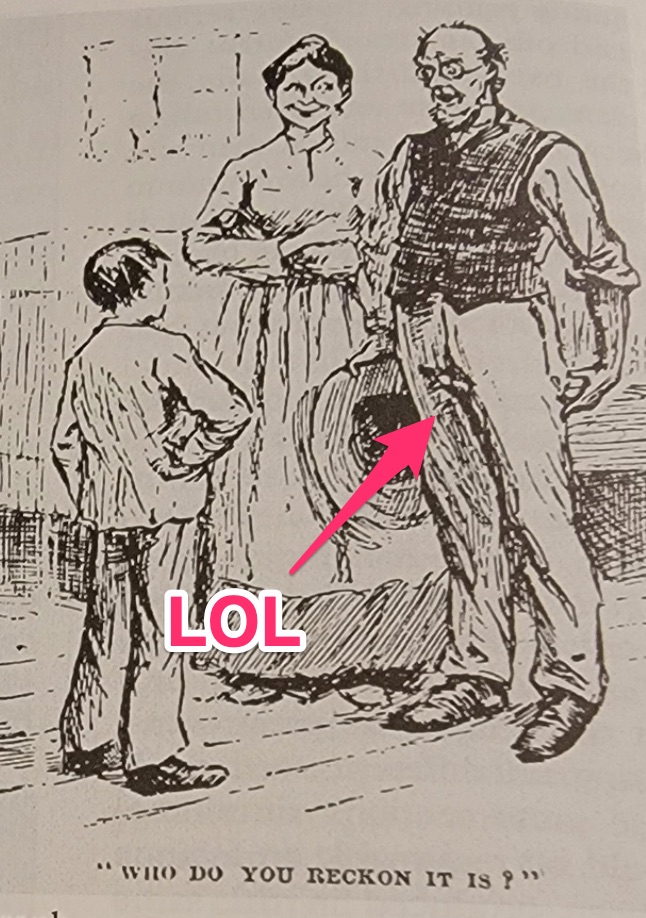
If you buy one of the approximately one billion available editions of The Adventures of Huckleberry Finn that include the original engravings, you will encounter at some point this image of Huck, his Uncle Silas, and his Aunt Sally:
You will note the arrow pointing just underneath Uncle Silas’ crotch, and you will note the straight line of his pants. You may also note the look on Aunt Sally’s face, which I feel deserves more attention in general.
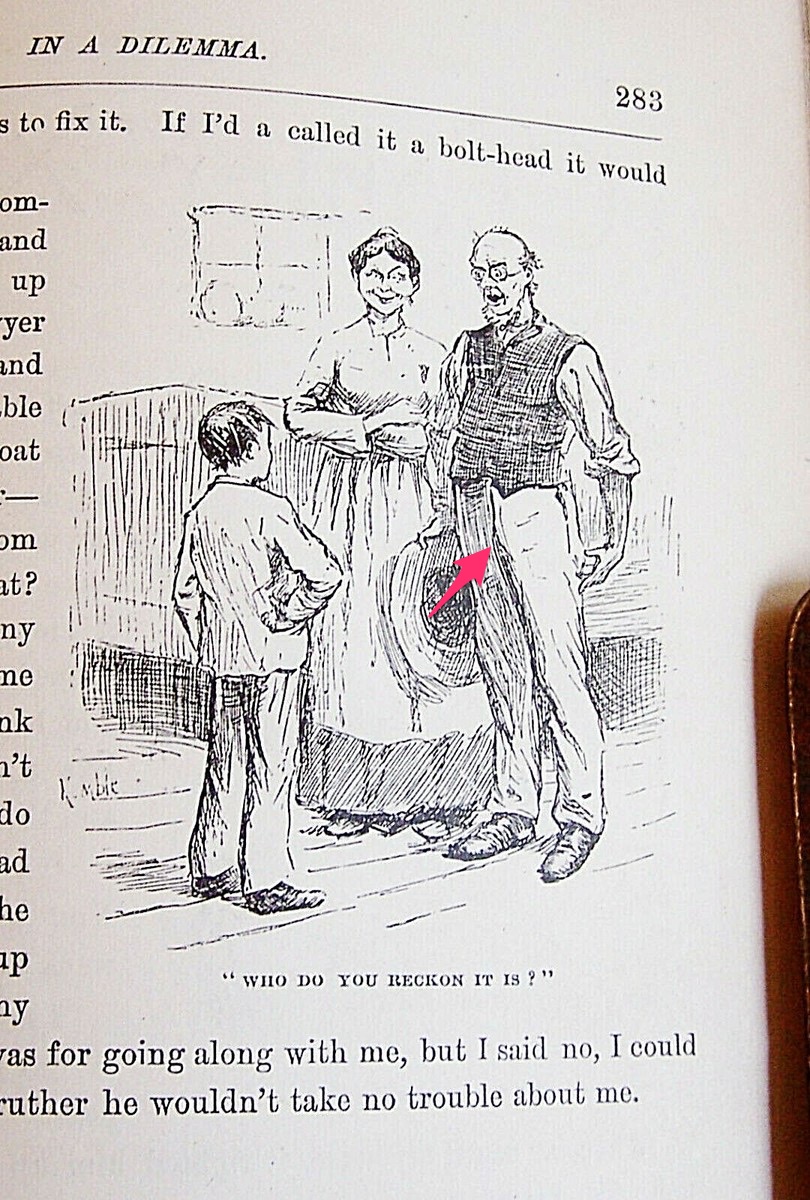
This is not the image that was in the first printing of the book. That image looked like this, known as the “curved fly” engraving:
See that curved line? That’s the original engraving by E.W. Kemble, whose name you’ll note in the lower right. Twain selected Kemble himself, and presumably did not vet this image of Uncle Silas for a single slightly, barely bulgey line in his pants.
After a few hundred copies of the first edition were printed, a salesman noticed that someone had somehow changed the engraving to … well, this:
That right there, folks, is Uncle Silas’ cock, although it appears to be growing out of his leg rather than in the usual location. Maybe that has something to do with the look on Aunt Sally’s face, I dunno. Maybe dicks were different in 1884. You’ll note that said penis is pointed directly at Huck, which isn’t relevant to the story but adds an extra little twist of creepy to it.
Anyway, the edition was very speedily recalled, and the offending pages destroyed, although an unknown number of copies remained in the wild. A book with the offending penis in it has never made it to auction or been sold publicly, and it’s not known how many might be out there. (Check out this absolutely amazing contemporary article about the controversy from New York World. The euphemisms. My God, the nineteenth-century euphemisms.)
The University of Virginia has at least one copy of the edition with the penis, which is where the image came from. They had to redo the engraving for the rest of the no-longer-“first” edition, and the new version of the engraving had a straight fly.
Copies of the “curved fly” edition (without the penis) go for lots and lots of money. My favorite detail about that $15,000 listing? Shipping is $4.00 and they accept returns within thirty days.
The person who altered the engraving was never identified.








 Welcome to infinitefreetime dot com