#Review: African Samurai, by Thomas Lockley and Geoffrey Girard

I have talked a couple of times about how recent trends in my video game habit have led to a minor fascination with the Japanese language and Japanese history. Specifically, I have the Nioh games and Ghost of Tsushima to blame for this, both of which hang very fictional video game storylines on top of actual people and actual events in Japanese history. Yasuke, a (real) African who rose to be a samurai in the service of the (real) sixteenth-century warlord Oda Nobunaga is actually someone you fight in both of the Nioh games. The real Yasuke did not have lightning powers or a magical bear spirit that fought with him, but he was a real dude who actually existed.

I’ve gone looking a couple of times for a recent biography of Nobunaga in English, a book that does not seem to actually exist, but during one of those searches I happened upon this book, and it languished on my Amazon wish list for quite a while until it finally came out in paperback a bit ago and I ordered it. And considering what the book turned out to be, it’s really interesting that I only know about Yasuke through heavily fictionalized accounts of parts of his life– because while African Samurai is definitely a history book, it’s not at all like any of the books about historical figures that I have read in the past.

Thomas Lockley, one of this book’s two authors, is an American historian currently living in Japan. Geoffrey Girard, on the other hand, is a novelist, and while I didn’t delve into his background too deeply it doesn’t seem that he has any particular academic training in either history or Japan. While there are contemporary sources that attest to Yasuke’s existence– he is depicted in artwork and there are a handful of letters from a very prolific Jesuit monk who lived in Japan that discuss him, among a small number of other sources– there really isn’t enough information about him out there to fill up a 400+ page book without finding some way to provide more detail. And this book handles that dearth of source material in two ways: one, by making this a book that is nearly as much about Oda Nobunaga as it is Yasuke (which was a treat for me, since that’s what I was originally looking for) and two, by making the book almost more a piece of historical fiction than it is a traditional history. It is clear, in other words, that a novelist had his hand in writing this, and if I had to guess I’d suggest that the majority of the words on the page are Girard’s and not Lockley’s– although, to be clear, I would be guessing.

How is it historical fiction? Because far more of the book is about Yasuke’s thoughts and feelings and day-to-day life than the extant evidence we have about him would ever allow. For example, we know, because the Jesuit monk talked about it, that Nobunaga granted Yasuke a house on the grounds of his home and provided him with a short sword and a couple of servants. That’s factual, or at least as factual as a single secondhand account from five hundred and some-odd years ago can be presumed to be. But that’s all we know, and the two-page scene where Nobunaga summons Yasuke and then surprises him with the house, and Yasuke falling asleep on his new tatami in his home and awakening to find his new servants bowing at his feet, is pure invention. It’s not necessarily unreasonable invention– there was no point in the book where I thought that the authors were going too far in constructing a narrative out of what they had, and they only very rarely go so far as to utilize actual dialogue anywhere, but the simple fact is that that whole sequence is fictionalized, and the book is riddled with things like that. Yasuke is traveling with Nobunaga, and he reflects upon something-or-another that allows the authors to inject a piece of necessary historical background. We know that at one point Yasuke fought with a naginata, and so there’s a paragraph at one point where he’s thinking about buying one. That sort of thing.

So it’s necessary to be aware of what you’re reading while you’ve got this book in front of you– it never quite crosses over to the fabulism of, say, Dutch, Edmund Morris’ “memoir” of Ronald Reagan that actually literally inserted the author into Reagan’s life and pretended he was a witness to events that he wasn’t there for, but it’s absolutely not a straight work of history. (And while I’m comparing African Samurai to other books, I want to mention Ralph Abernathy’s And the Walls Came Tumbling Down, which is another book that is supposed to be about one person and ends up being someone else along the way.) And there are several places where the authors are forced to bow to simple historical uncertainty: we lose track of Yasuke in the historical record at some point, and we don’t know how or where or when he died, so the authors actually mention multiple possibilities about what might have happened to him after the brief Nobunaga era ended; stories about enormous African warriors (Yasuke was 6’2″, and would have been easily a foot taller than anyone around him in Japan) in places where such people usually weren’t found, but they explicitly paint them as possibilities, of varying levels of likelihood, rather than picking one and ending the “story” with it.(*) But once you internalize that lightly-fictionalized aspect of the book, it’s a hell of an entertaining and informative read on a whole bunch of levels, and I’m really glad I ended up picking it up. I don’t know how big of a group of people I’m talking to when I say something like If you’ve ever wanted to know anything about sixteenth-century Japan, pick this up, but … yeah. Go do that.

(*) I wish they’d gotten more deeply into his name rather than relegating it to a footnote, but as you might have guessed, “Yasuke” almost certainly wasn’t his actual name; it’s likely that “Yasuke” is “Isaac” filtered through Japanese pronunciation, and “Isaac” almost certainly wouldn’t have been his African birth name either, for obvious reasons. So just because we see a story of a similarly large and skilled African warrior somewhere near Japan in the right time frame, knowing that other person’s name doesn’t automatically exclude it from being Yasuke, because Yasuke wasn’t Yasuke, and might have abandoned that name after leaving Japan.
One-week LASIK update and a book note

My LASIK surgery was a week ago today, and I’m pleased to announce that I seem to be adjusting fine. Other than the first few minutes after waking up during the first day or two, there’s been no pain, and as you would probably expect I’m noticing my vision less and less as the days go on. I’m still not as happy with my distance vision as I want to be, but the “good range,” for lack of a better phrase, does seem to be expanding, and the scientist in me is suffering from being unable to put my glasses back on and compare what my vision was like back then to what it is now. It’s entirely possible that this is just what it’s always been but I’m paying more attention to it now, but the fact that I don’t know and don’t have a way to check is making me moderately crazy.

The urge to reach for my glasses in the morning and when I get out of the shower remains pretty overwhelming– 37 years of conditioning will do that to you– and I’m also noticing that at the end of the day my eyes are tired, leading to a similarly overwhelming urge to remove the contact lenses that are not actually in my eyes and put my glasses back on. In fact, honestly, other than the (no longer an issue) early eye pain, this has been almost exactly like adjusting to contact lenses, except for all the eyedrops and the vague notion that my vision is improving from day to day. I need to find an excuse to take a drive after dark sometime this week to see if I have any issue with halos or starbursting; driving in general is fine so long as I’m going places I’m used to driving to (which is 100% of my driving; I’m not leaving the house much, because quarantine) but I’m not sure my distance vision is great for driving somewhere new, because I have to get pretty close to road signs before they’re legible and if I was looking for street signs to know where to turn I’d have to either drive slower than was safe or make some very abrupt decisions.

One way or another, though, I’ve been repeatedly assured that the stuff I’m currently concerned about will get better, and I still am amazed at how easy the surgery and the recovery process have been. Yesterday was the first day that I didn’t spend every second I was awake thinking about my vision, so this is definitely on an upward trend.


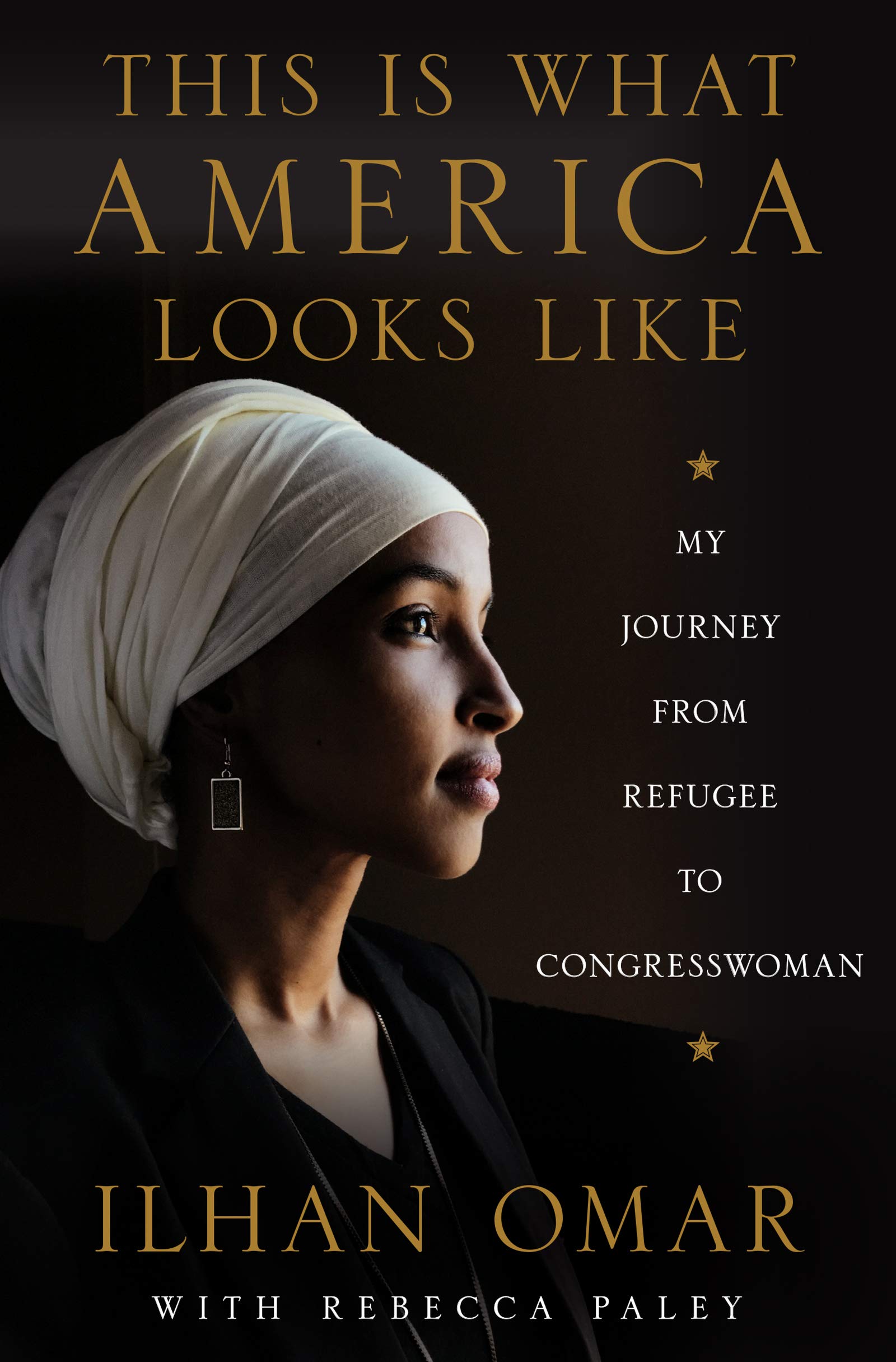
One additional sign that my eyes are improving is that after not being able to read more than small chunks of Scarlet Odyssey at a time without my eyes getting tired, I blew through Ilhan Omar’s excellent memoir This is What America Looks Like in basically two sittings. Granted, it’s quite a bit shorter, at 265 pages and a relatively large font, but it’s nice that my ability to binge-read is coming back. This is one of those books where I think you probably already know if you want to read it or not, and if you do, you should follow that urge, and if you don’t, you should read it anyway. Omar’s story is barely even possible in America any longer, but remains a perfect example of the type of country we like to think we are, and her life has been fascinating regardless of what you think of her politics (not a problem for me, obviously) so the book is definitely an engaging read. If anything, I wish it was another hundred pages long, as I’d like to know more about what life was like as a younger person for her, both in the refugee camps and her first few years in America when she was trying to navigate middle school without being able to speak English. Give it a look.

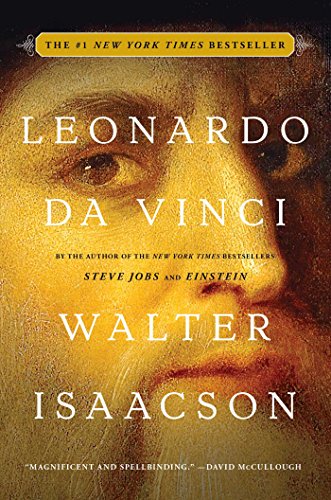
#REVIEW: Leonardo da Vinci, by Walter Isaacson

2020 thus far has been an interesting year for reading. 2019 had so many stellar books in it that I had to expand my traditional end-of-the-year Best Of list from ten to fifteen. In general, the quality of what I’ve been reading this year has been reasonably high, but there haven’t been all that many books that I was doing backflips over so far. There have definitely been standouts, of course, but nothing where I was rattling cages and shouting you must read this while running pantsless through the streets.

So it’s pretty cool to have identified my first major WHY DON’T YOU OWN THIS BOOK ALREADY of the year, finally, and even more interesting that it’s turned out to be nonfiction. There are usually a couple of nonfiction books in my top 10, but never one that I thought might be the best book of the year, and Walter Isaacson’s biography of Leonardo da Vinci is absolutely a book that I could see being my favorite of 2020 once the end of the year rolls around. Assuming we’re all still alive, that is.

I have read one other book of Isaacson’s: I was a big fan of his biography of Benjamin Franklin, and having now read this one I’ve got my sights on his book about Albert Einstein. You may notice a theme here; Isaacson very much enjoys writing about geniuses, and one of the best things about this book is the way his sheer enthusiasm for Leonardo shines through every page. This is a book about, with no real fear of contradiction, one of human history’s most interesting people, written by someone who is utterly fascinated by his subject, and it just cannot help but being a tremendously compelling and educational read.

(Two things I learned about da Vinci: I was aware that he was able to write backwards and mirror-imaged, but I was not aware that he always wrote backwards and mirror-imaged. He was left-handed and just taught himself to write that way to save time and keep from smearing ink. Similarly, one of the ways his work is validated when its source is unclear is to look for signs that it was produced by a left-handed person. Second, and I’m not sure how common knowledge this is and it’s possible y’all are going to be surprised I didn’t know this, but he was gay. Not, like, “for the times” gay, or “if he was alive now he’d be” gay, but out and fabulous gay. There apparently exists one of his notebooks where he’s put a to-do list on one of the pages, and one of the items on the list is “go to the bathhouse to look at naked men.”)

(Also, and I’ve Tweeted at him and I’ll update if he responds, but I’d love to know how much work in language Isaacson had to do specifically to write this. I suspect the differences between Renaissance-era Italian and modern Italian are not minor, even before you get to everything da Vinci wrote requiring a mirror to read, and given his other books Isaacson may not even have known Italian before writing the book– every other book he’s written was about someone who, at least, worked primarily in English.)

I can’t pass up talking about the book as a physical object, either. I got the book in paperback, and the paper used both for the cover and for the pages is thick and textured in a way that makes the book an absolute joy to hold. In addition, it’s full of pictures, as one would imagine it would have to be, but they’re scattered throughout rather than as a tip-in in the middle of the book, and every single one of them is in full color. I don’t recall how much I spent for this book, but I’m genuinely surprised it wasn’t $40. Amazon currently has it for twelve bucks. That’s madness for a book of this high quality; this could not have been cheap to print.

I am also in love with the way Isaacson talks about art. I had to take an art history class as a random requirement to get my teaching MA, and while I honestly didn’t do terribly well in the class, reading people who really know a lot about art talking about paintings is something that I will never get tired of even if to a large extent I don’t really know what the hell they’re talking about. Isaacson can drop a paragraph about the emotional resonance of a detail in someone’s eyebrows that I can’t even see, and a good proportion of this book is dedicated to analyzing da Vinci’s artwork, both finished and unfinished. His chapter about the Mona Lisa is a masterwork. I couldn’t have written something like this to save my life; I just don’t have the eye for detail or the vocabulary for it, but it was an immense pleasure to read.

Ten stars, six thumbs up, one finger oddly pointed toward the heavens, go find this and read it right away.


1:07 PM, Wednesday June 17: 2,143,193 confirmed cases and 117,129 Americans dead.

A brief, pointless whine

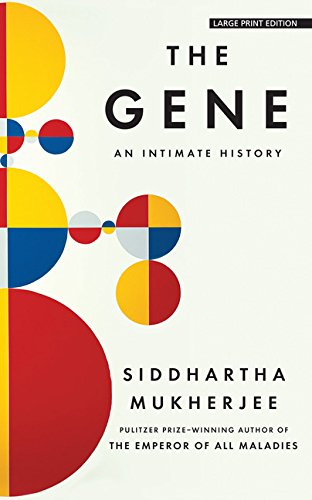
I am currently reading this:

And it’s really good! It’s incredibly engagingly written and it’s about a subject I’ve got a lot of interest and not a ton of knowledge in, which is a good combination. But it is dense, and I am maybe 215 pages into it, and it is five hundred pages long.

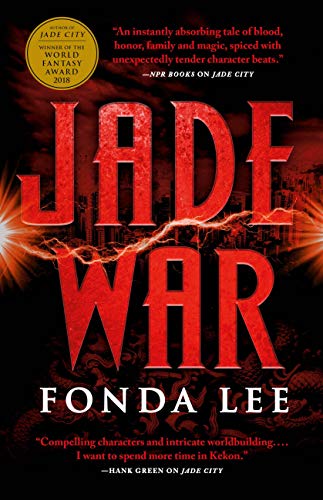
Yesterday this came in the mail:

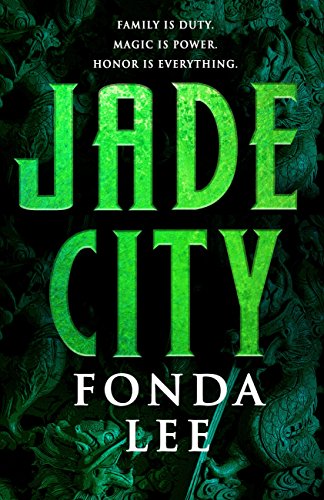
This is the sequel to my favorite book of last year, which is this:

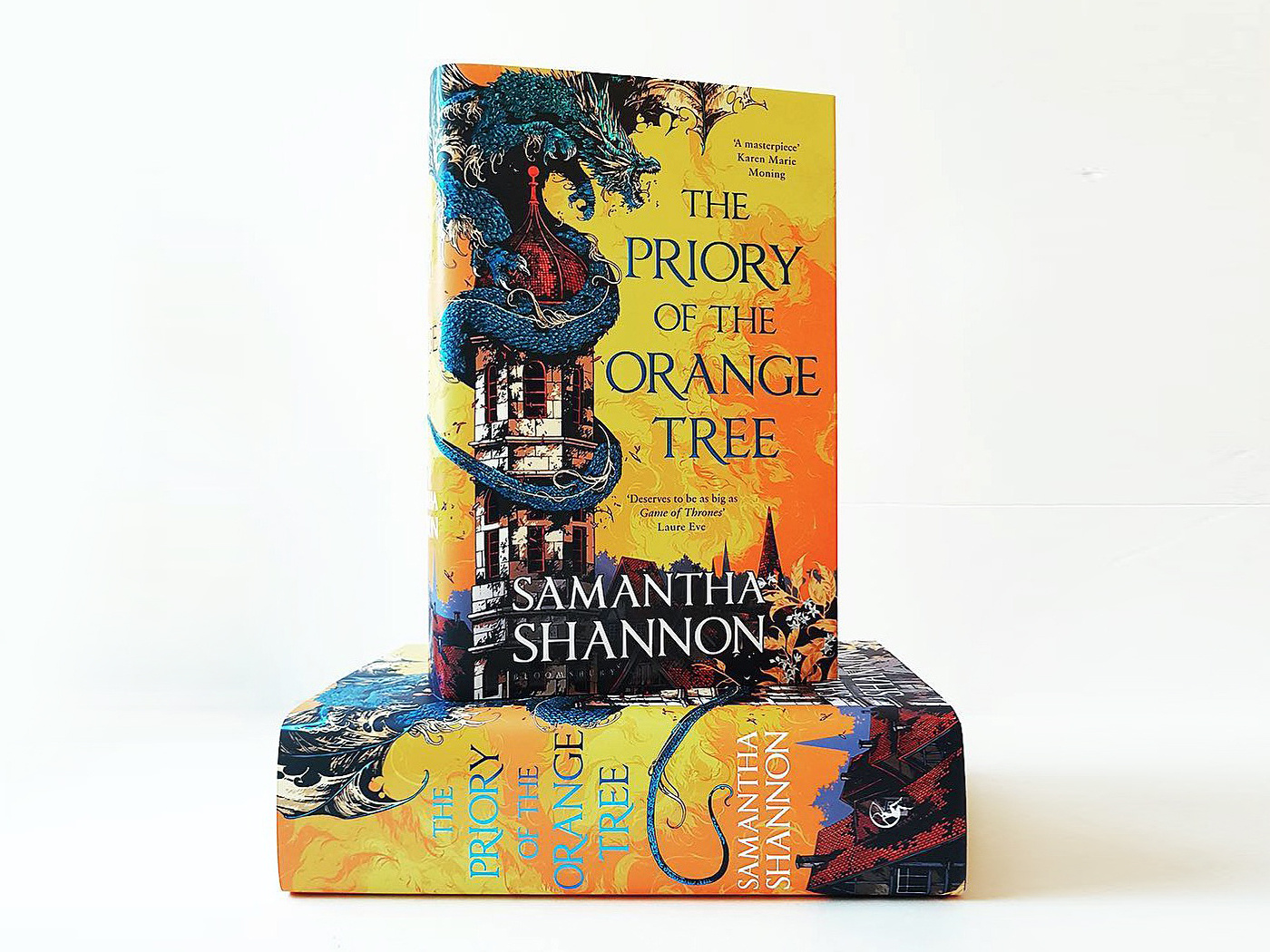
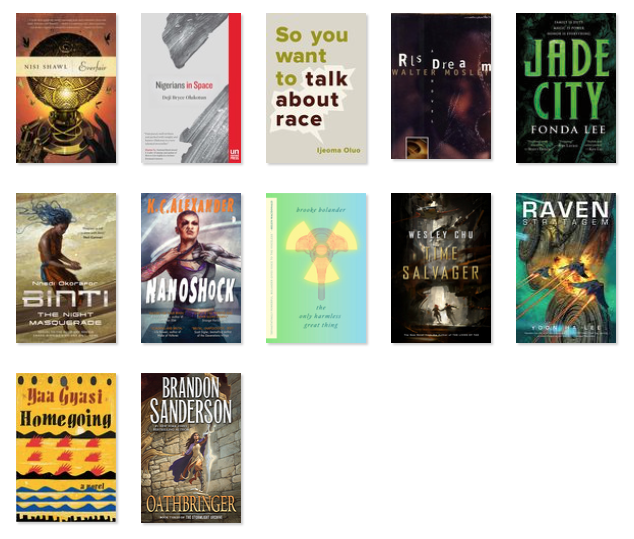
And which I’d kinda like to reread before I get into the sequel. But those are both big books too! And I also have this giant fucker also on my shelf, which is longer than any of them, and I’m psyched to read it too!

(Slightly different style of picture deliberately chosen so you can appreciate the medium-rodent-killing nature of this book, as opposed to the other three, which are more suitable for small rodents.)

I mean okay they’re books and the good thing about books is it’s not like they expire while they’re waiting for you to read them. But I kinda have a lot of shit going on right now somehow despite it being summer break? And the point of this post is if any of y’all have any extra brain cycles that you’re not using that you could loan me they would be greatly appreciated for the next few weeks.

That is all.

On reading, 2018 and 2019

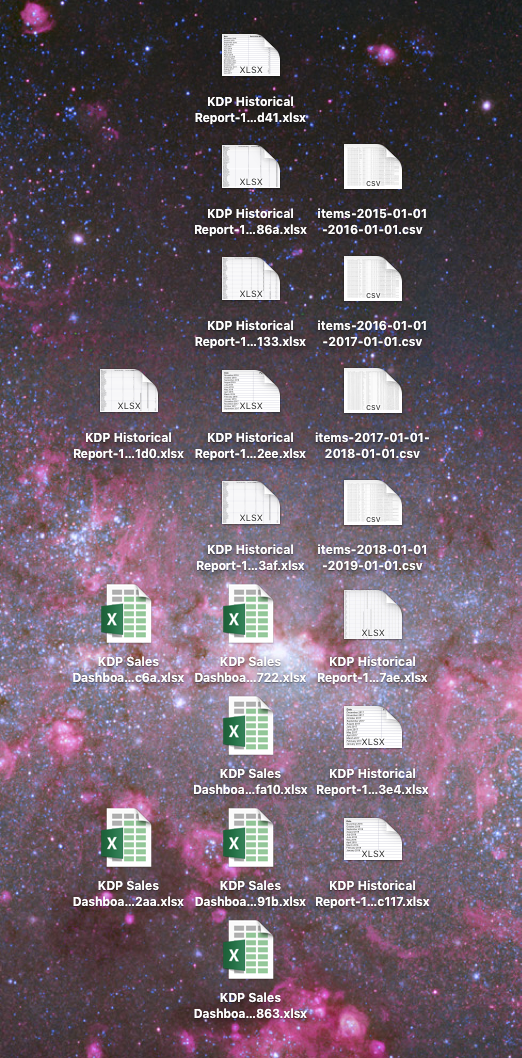
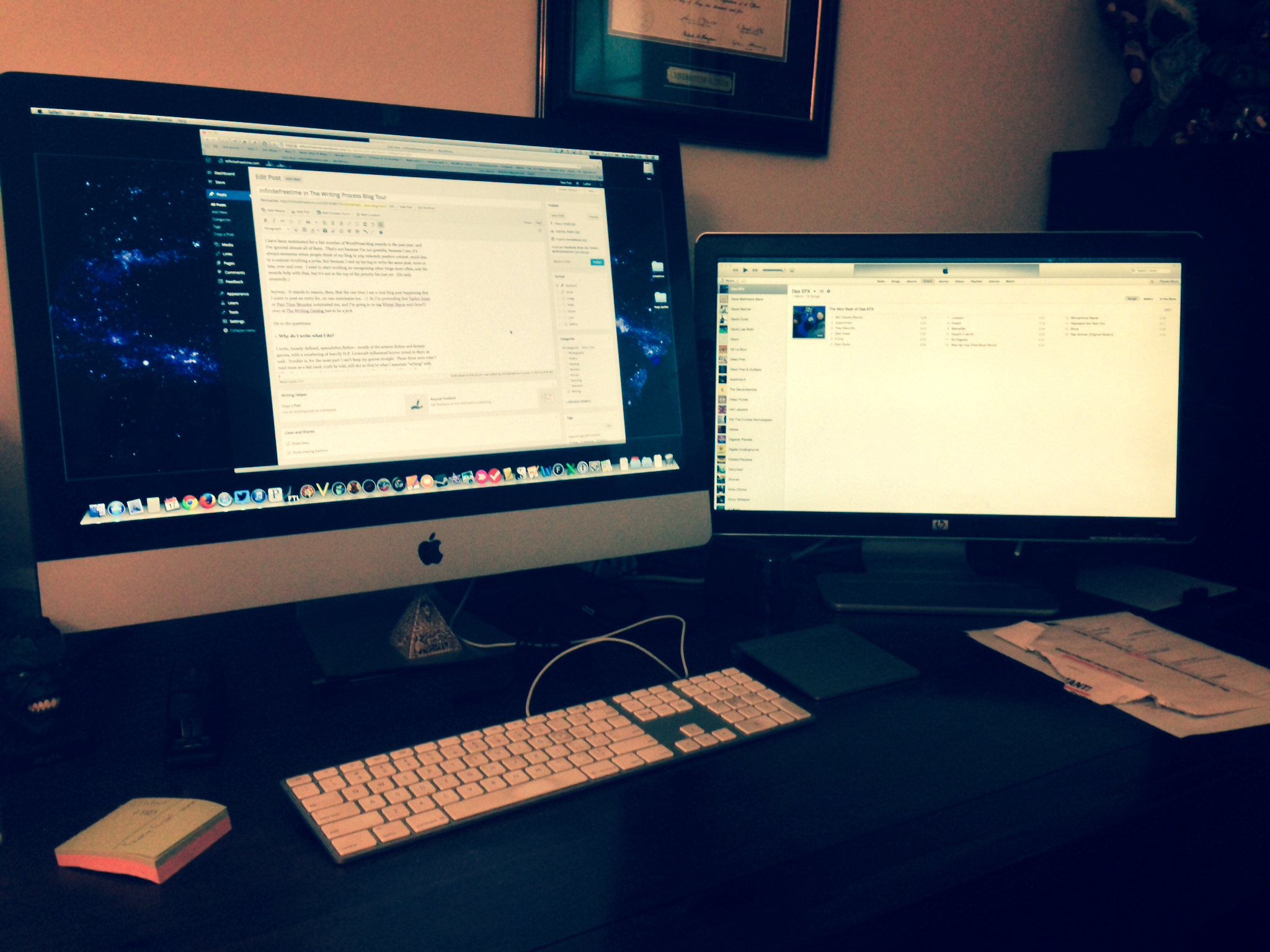
Alternate title: In which I write about something else. This was originally going to be a saleswanking post, which I haven’t done in quite a while and I wanted to do mostly for my own information and share with you guys because someone out there has to love spreadsheets as much as I do, but once I went through everything on Amazon and Squarespace just to figure out where I was at for 2018 and where (roughly) I might be for my sales since Benevolence Archives 1 came out in 2014, this was what my desktop looked like:

I’m still gonna do it, don’t get me wrong– I want this information, and I am exactly the kind of geek for whom “spend a couple of hours sorting through spreadsheets and pulling together an overall data set” actually describes a fun couple of hours. But I’m not doing this shit tonight. So, instead, since I’m no more than a day or two away from doing my 10 Best Books list, let’s talk about what I read this year. Which still involves spreadsheets. 🙂

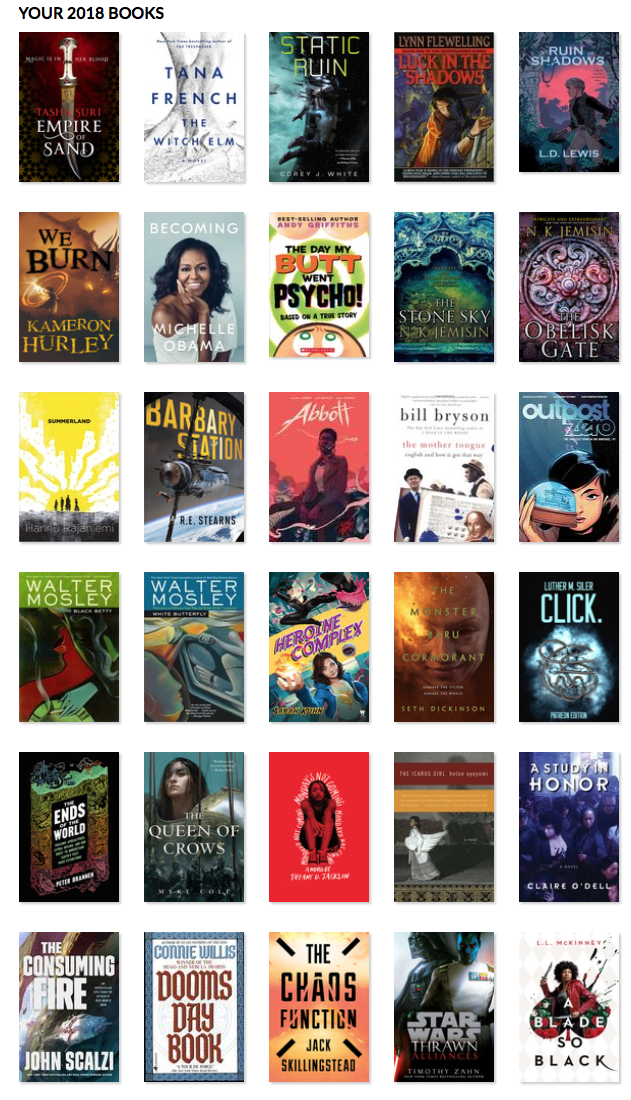
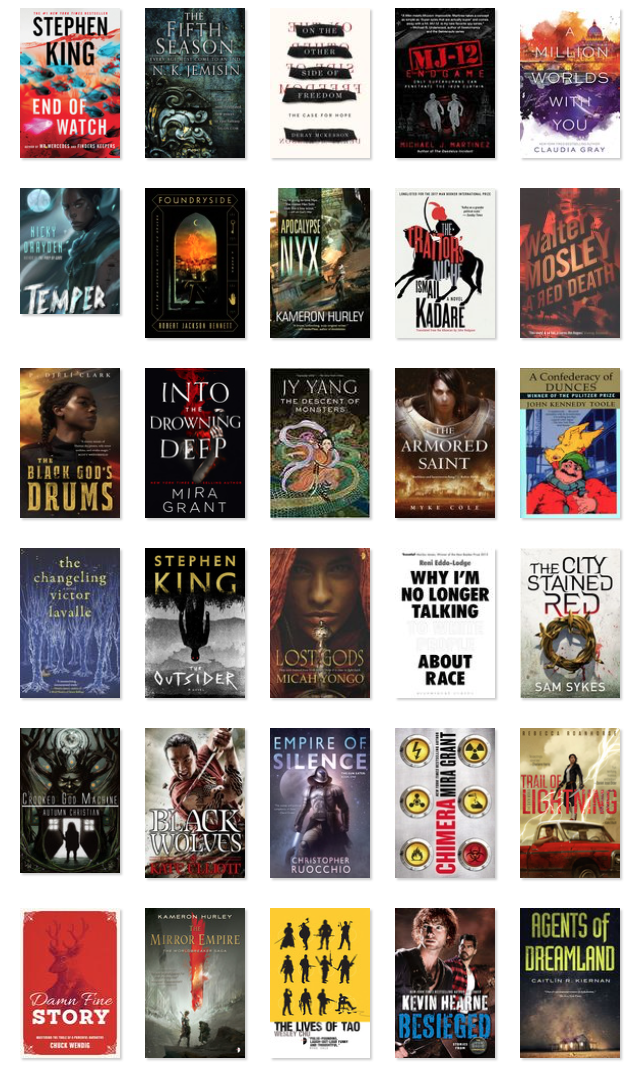
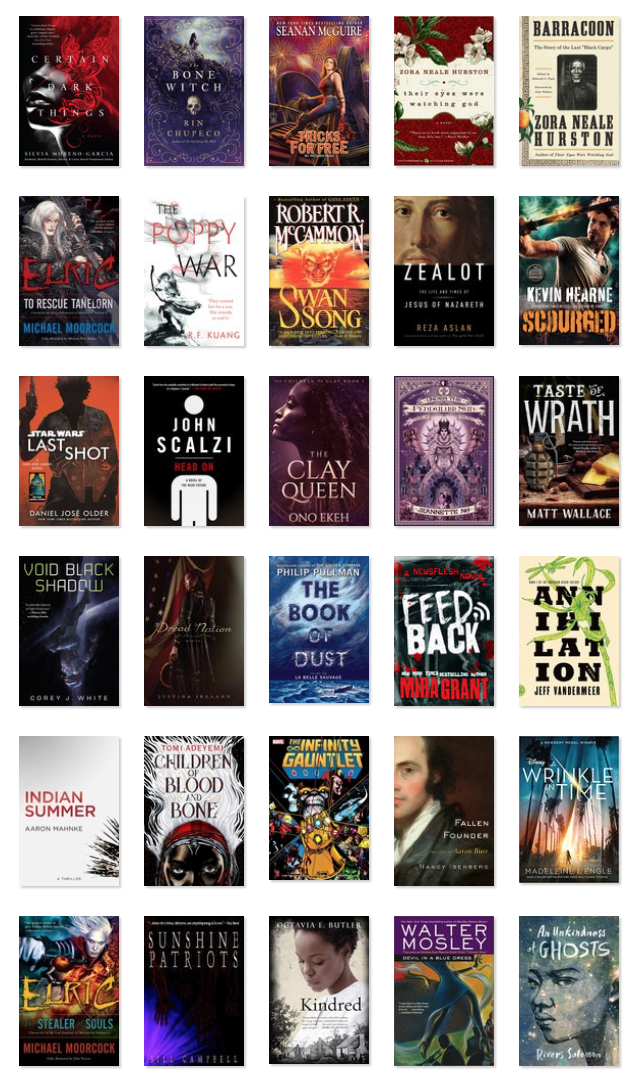
Assuming I finish the book I’m reading right now in the next three days, I’ll have read 104 books in 2018, which was four more than my goal of 100. Here they are, excepting only S. A. Chakraborty’s City of Brass, which I’m reading right now:

For the last several years I’ve been working on aggressively diversifying my reading after discovering that I was reading far more white men than I felt like I ought to be. I’ve had different goals for different years, but this year I decided to focus on making sure half of my books were from people of color. And, in fact, exactly half of them ended up being by PoC: 52 of the 104. In previous years I’ve set goals to read books by, basically, anyone other than white men, but I noticed last year that white women seemed to be the beneficiary of that policy so I decided to focus more on people of color this year. I did not specifically track books by women vs books by men, but a quick count indicates that I did pretty well there too– and, if anything, I think I read slightly more books by women than by men. 50 of these books were by authors I hadn’t previously read anything by, too.

The interesting thing is, while my 10 best list isn’t finalized yet– again, sometime this week– I have reason to believe that a substantial majority of the books on it will be by women of color, and this was a phenomenal year for reading. I read some fucking amazing books this year, and choosing the top 10 from this list is gonna be hard.

Damn near every book on the list– upwards of 90%, and probably above 95%– was read in print. Which is why next year I’m gonna pull back a little bit, and the only things I plan to track all year long, other than new authors, are rereads. My bookshelves are about to collapse on me, y’all, and they are on every wall in the damn house. I think I’m going to set a goal of 90 books, with 30 of those being books that I already own. At the end of the year, I’ll take a look at how I did in reading from diverse authors when I wasn’t specifically tracking it. I haven’t been doing a ton of rereading lately because it doesn’t really mix well with the notion of broadening the authors I’m reading work by.

What did you read this year?

SEARCHING FOR MALUMBA cover question/reveal

These are both roughs; I think the image is happening but I’m not convinced about either the font or the text placement.  Anybody have suggestions?  (“Scrap the whole thing” is a fair suggestion, by the way.)  You can click for a higher-res version but I think you get the idea.

Also, weird– the yellow on the right looks darker to me right now.  It’s exactly the same.  The only differences are caps vs. lower case.

Malumba cover rough lowercase  Malumba cover rough

Thanks!


EDIT: After reading the first couple of comments, let me take a second and explain my thinking here: this is my first (probably only) nonfiction book.  It’s going to be about teaching, and it is mostly, but not exclusively, drawn from blog posts.  About half of the material in it is on this very blog.  I do not expect, even in comparison to my other books, that this one will sell very well, and I’m mostly doing it as a vanity project.

That said: I need something that screams “teaching!” when it’s the size of a couple of postage stamps on Amazon’s website, and thus the simple image of the broken pencil, which frankly fits my feeling about teaching right now anyway.  The font choice is because I like the simplicity and the humility of it, although I think my second commenter is right that it does look a little low-rent and I may need to jazz it up a bit.

There will be a print and ebook edition; I have no illusions that anyone other than me will ever buy the print edition.  I’ll print half a dozen of them to have some with me at cons and I suspect I won’t have to reorder that often.  🙂

Also, the image was purchased from SelfPubBookCovers.com, which means that I can’t just arbitrarily rotate the pencil or change the background color.  Now, that doesn’t mean I don’t want to  hear those types of suggestions– if the cover is bad, it’s bad, and I want to hear that– but understand that when you suggest that you’re saying “redo the entire cover,” not “alter this in Gimp.”

(All that said: my wife hates the cover, so if you feel the same, please don’t hesitate to tell me.  If everyone thinks this is a misfire I’d rather know now.)

Reading tag!

Found this through Winter and thought it would make a good Sunday morning post.  If you want in, consider yourself tagged.  🙂

Question #1: Do you have a certain place at home for reading?

I am, at this late point in my life, practically biologically programmed to have to read before bed.  This actually was a big sticking point between my wife and I when we moved in together because we needed to find a way that I had enough light to read and she had enough dark to sleep.  At any rate, this means that “prone” is my general reading position, although I do have a couple of comfy chairs in the house and the couch that I use as well.  But I read in bed every single day.

Question #2: Bookmark or a random piece of paper?

Bookmarks.  There are a few dozen in my end table next to my bed and another couple of piles of them strategically arranged on my bookshelves.

Question #3: Can you stop reading anytime you want or do you have to stop at a certain page, chapter, part, etc.?

Generally I need some sort of break in the text to give me a visual indication of where to start the next time I pick the book up.  You’ll notice I do this a lot in my books:

*     *     *

Or a lot of writers will indicate a break by occasionally putting in a double-space between paragraphs.  I prefer the asterisks, and I use them in my books because that’s how I read.

Question #4: Do you eat or drink while reading?

Eat, no, but I’ll frequently have a beverage next to me if I’m reading during the day.

Question #6: One book at a time, or several at once?

Generally just one.  There have been times where I’ve taken a break from a dense nonfiction book to read a novel, but I almost never read more than one novel at a time.

Question #7: Reading at home or everywhere?

At home, but I don’t really lead a lifestyle that would lend itself to reading outside my house anyway.  If I have a few spare minutes I’ll generally check Facebook or Twitter over an ebook.  I have a Kindle but it doesn’t get as much use as it should.

Question #8: Reading out loud or silently in your head?

Silently.

Question #9: Do you read ahead or skip pages?

Rarely, in nonfiction books where I’m very familiar with the subject matter, I’ll skip over what seems to be introductory stuff.  I never skip ahead in fiction; if I’m that bored with a book I just stop reading it.

Question #10: Breaking the spine or keeping it new?

I have actually bought new copies of books that I broke the spine of.  I am fanatical about keeping my books in good shape– most of my library looks like it went from the bookstore straight to the shelf and was never touched again– and I almost never loan my books out because most people don’t get how nutty I am about it.

Question #11: Do you write in books?

Absolutely the hell not.  See #10.  🙂  The one exception is my Biblical Hebrew textbook from college and grad school, which is covered in notes.   I also have a Bible that I’ve annotated fairly extensively.  That’s about it.

Infinitefreetime in The Writing Process Blog Tour

photoI have been nominated for a fair number of WordPress blog awards in the past year, and I’ve ignored almost all of them.  That’s not because I’m not grateful, because I am; it’s always awesome when people think of my blog in any remotely positive context, much less in a context involving a prize, but because I end up having to write the same post, more or less, over and over.  I need to start working on recognizing other blogs more often, and the awards help with that, but it’s not at the top of the priority list just yet.  (He said, smarmily.)

Anyway.  It stands to reason, then, that the one time I see a viral blog post happening that I want to post an entry for, no one nominates me.  🙂  So I’m pretending that Taylor Grace or Part Time Monster nominated me, and I’m going to re-tag Winter Bayne and Gene’O over at The Writing Catalog just to be a jerk.

On to the questions:

1. Why do I write what I do?

I write, loosely defined, speculative fiction— mostly of the science fiction and fantasy genres, with a smattering of heavily H.P. Lovecraft-influenced horror mixed in there as well.  Trouble is, for the most part I can’t keep my genres straight.  Those three were what I read most as a kid (and, truth be told, still do) so they’re what I associate “writing” with.  When I’m not writing fiction?  Well… look around.  My nonfictional/blog stuff is mostly about teaching, although I’ll write about anything that strikes me around here and my blog is frequently filled with nonsense.

2. How does my writing process work?

Blogging is first-draft, sit-down-and-go stuff, and once I can get started (which can take a while) if I’m writing nonfiction I write insanely quickly– I once pulled off a thirty-page paper in a few hours in grad school.  Got an A, too.  Fiction requires hours, days or weeks of “thinking” (read: procrastination) and is much, much slower, although one benefit of the advanced thinkytimes is that my first drafts tend to be pretty clean.

If I’m doing blog posts, nothing is required– I can bang out a blog post while watching my son and cooking dinner at the same time.  (And I’ve done that.)  Fiction requires solitude, music, the house to be reasonably clean, nothing else hanging over my head, and music.  I’m thinking of keeping a running soundtrack of my current novel, actually, which so far includes Murs, Mika, and Meg Myers, because apparently iTunes got stuck on M yesterday.

3. How does my work differ from others of its genre?

Genre-bending and humor, although I think tonally my work sounds a lot like John Scalzi, if John Scalzi were about a third as good as he is, and that might be overstating my abilities.  But, yeah, the genre-bending.  My series The Benevolence Archives involves ogres and gnomes and dwarves who ride around in spaceships, so I clearly don’t know what the hell I’m doing in keeping genres together.  My first novel, Click, was originally going to be a Conan-type barbarian sword & sorcery thing and somehow ended up with the first major scene being set in an antique shop on Milwaukee Avenue in Chicago.  Hopefully this means fans of either genre will like me; the darker parts of my brain think it’s going to ghettoize me out of existence.

I suspect I was bad at coloring in the lines as a kid.

(You can buy The Benevolence Archives, Vol. 1 at Amazon right here, if you like.)

4. What am I working on at the moment?’

Two projects:  One, a Benevolence Archives novel (the piece linked above is a short story collection and is novella-length) and two, an entry for the Baen Books Fantasy Adventure Award that is– eek– due in just a couple of weeks.  The contest entry is kinda giving me fits, because of the genre-bending tendencies I discussed above:  it’s wanting to bend toward horror more than I think a “fantasy adventure” story ought to, and I either need to rein it in in a direction I don’t think the story wants to go or give up on submitting it and come up with something else.  Which… God, who knows how long that could take.

(Oh, and random advice: if you’re going to take a picture of your workstation for a blog post, make absolutely sure there isn’t a credit card sitting on your desk, face-up, right next to your keyboard!  That is an incredibly bad idea!)