#REVIEW: Mark Twain (1835-1910)

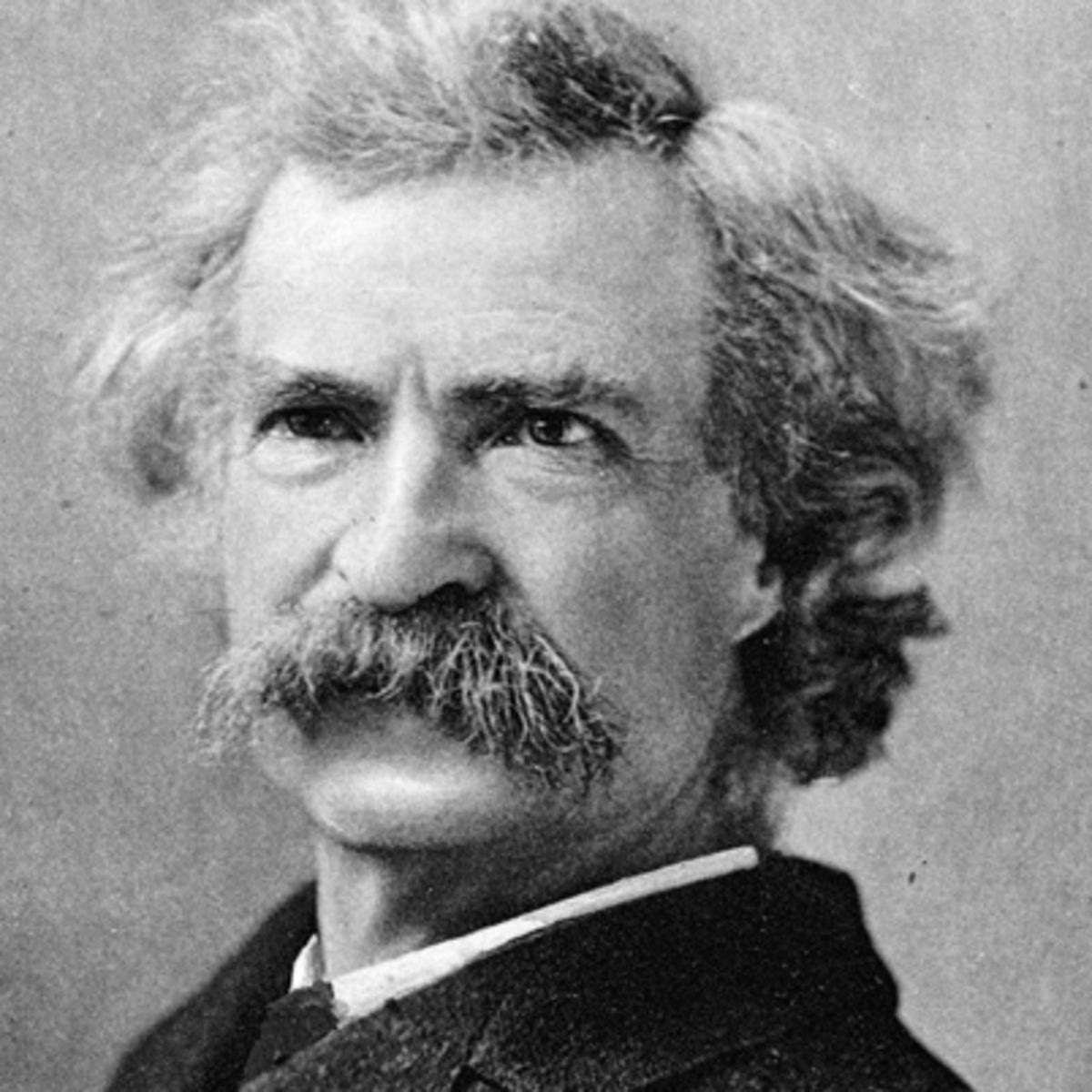
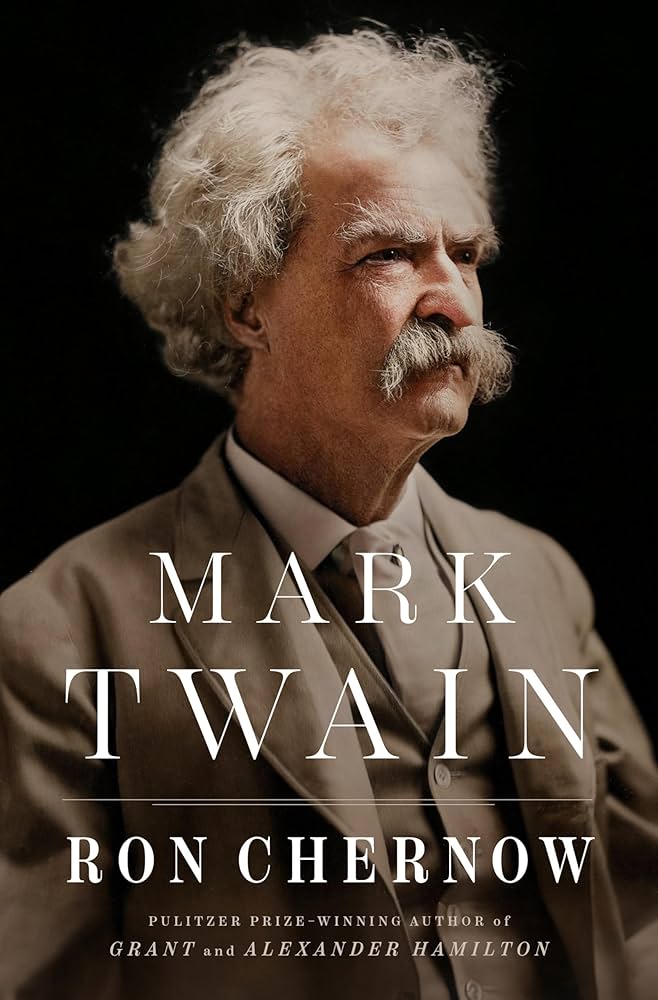
No, no, not a review of Ron Chernow’s book that happens to be called “Mark Twain.” I’m reviewing Mark Twain. And reading Book Mark Twain has caused me to lose a surprising amount of respect for Person Mark Twain. He gets three stars out of five.

Y’all, this dude was weird.

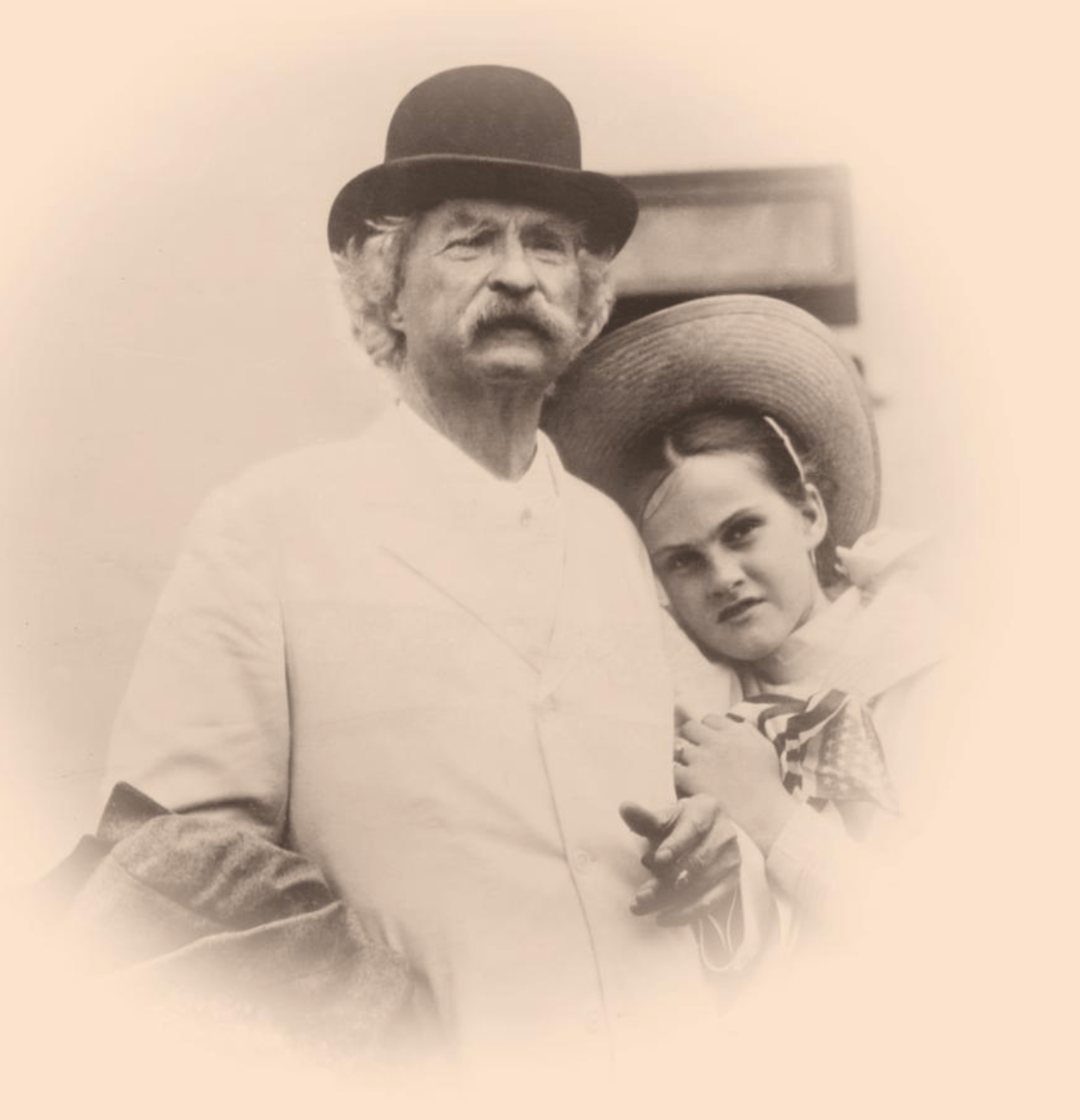
The person Twain is pictured with up there is Dorothy Quick. She is eleven years old in that picture. She and Twain were not related, and they literally met on an ocean voyage in 1907 and Twain, a man in his seventies, just decided to treat her like she was his best friend. They exchanged letters until he died, and he occasionally arranged for her parents to bring her for visits at his home. Multi-day visits.

And she wasn’t the only one. At two different points in his life Twain started a club for girls between ten and sixteen years old, and both times he was the only male member. He called the second group of girls his “angelfish.” They had membership pins. Chernow is quick to point out that there was never any kind of contemporary accusation that Twain’s relationships with these girls were sexual or predatory, but it becomes clear after a while that he recognizes how Goddamn weird the whole thing is and genuinely isn’t sure what to do about it. There’s lots of talk about substitute granddaughters– only one of Twain’s four children survived past her twenties, and his only grandchild was born after he died– but do you really need enough substitute grandchildren to call it a club? And do you stop talking to your substitute grandchildren after they get to be too old for you? Because that happened too. Once his angelfish got into their late teens he lost interest in them. This is not a joke.

Don’t even ask me about Lewis Carroll. Chernow talks about him in a throwaway sentence at one point (literally something like “at least he wasn’t drawing naked pictures of his preadolescent girlfriends, like Carroll was”) and oh my god I hate to talk about falling down a rabbit hole when literally discussing Lewis Carroll, but … yeah.

Twain was terrible at business, prone to falling for outrageous scams, deeply in debt for most of his adult life despite his royalties and his wife being ultra-rich, and held onto a grudge like Kate Winslet on a floating door. There was something vaguely Trumpian about him, where all his friends and business associates were brilliant, salt-of-the-earth, wonderful people until the moment they were no longer useful or Twain felt the need to blame them for something and then they were the worst poltroons and scofflaws in the history of poltroonery and scofflawism.

Like, I’ve read dude’s books. The fact that he was a sarcastic, irascible motherfucker is one of the things I like about him. But I feel like Chernow would have been a lot happier had he just had a chapter called “Look, this guy was a prick,” and gotten everything off of his chest.

There’s nothing genuinely damning in there. I’m never reading anything by any number of authors ever again because of their assorted bastardries and nothing Chernow reveals about Twain rises to that level. Even the angelfish thing is more of a massive ongoing WTF than something that was immoral or should have been illegal. But the last time I came out of a biography or autobiography feeling like I had less respect for its subject than I did going in was Ralph Abernathy’s And the Walls Came Tumbling Down, which I read nine years ago. The only other example I can think of is Jefferson Davis’ memoirs, and I didn’t exactly have warm feelings about that guy going into those books. It doesn’t happen all that often.

Chernow’s book is still a five-star read. Twain still has a ton of five-star books out there for you to read. Twain himself? Three. At best.
Taking tonight off

I’m going to finish the Chernow book if it kills me, and while I really don’t think it’s going to, I feel like I’m still tired from yesterday and pre-tired for tomorrow and Friday, so every time I sit down to read my brain is turning to mush.

The book is still five stars. Twain himself may have lost a star now that I know more about him.

On rare books, Mark Twain, and penises

I am not quite halfway through with Ron Chernow’s 1200-page biography of Mark Twain, so it would be unfair to call this a “review” per se, but … c’mon. It’s a book by one of America’s preeminent historians about very likely the most important writer ever born on American soil. I’ve already read and loved his biographies of Hamilton and Washington, and I’ll get to the Grant and Rockefeller books sooner or later. There’s no universe where this isn’t a magnificent book, and it’s not like there’s going to be any plot twists in the last five hundred pages. This is a great biography already and it’s enormously unlikely I’m going to encounter anything that will change my mind– and if I do, it’ll change my mind about Mark Twain, and not about Chernow’s book about him.

All that said, I learned something today, and I fell down a rabbit hole looking for more information about it, and I need to share this information with you.

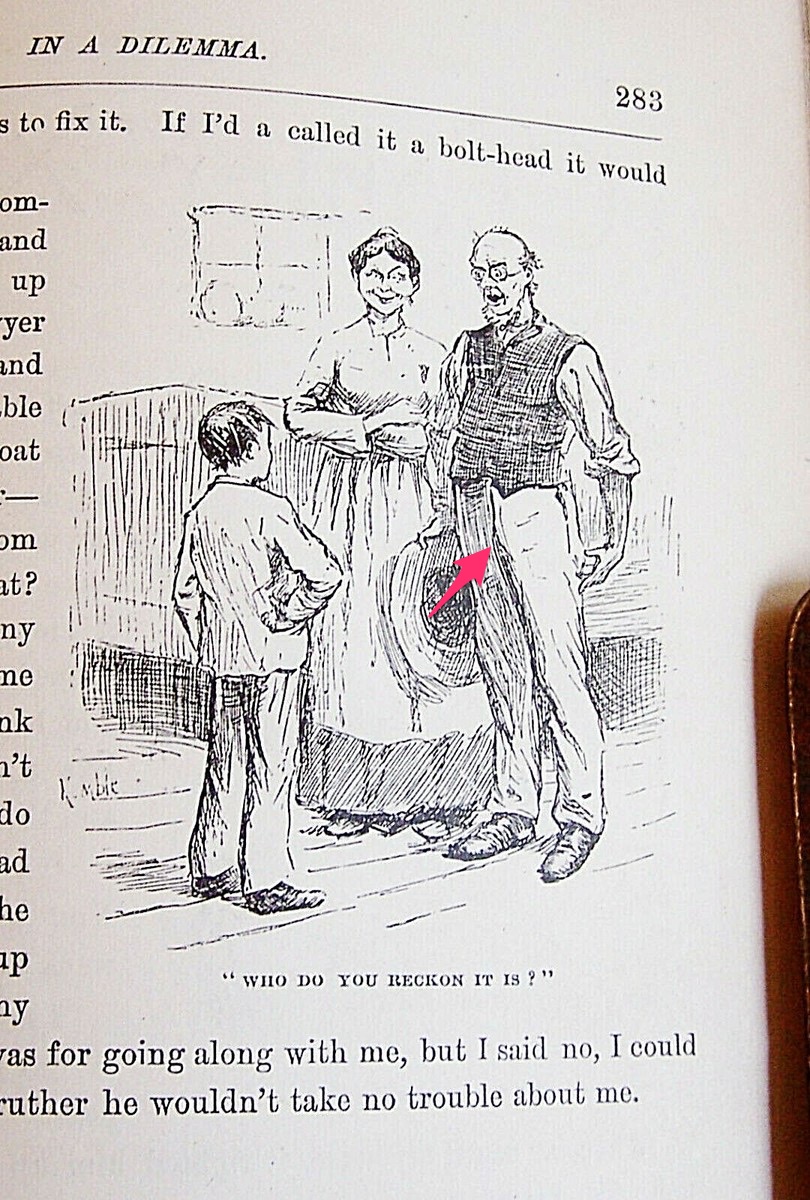
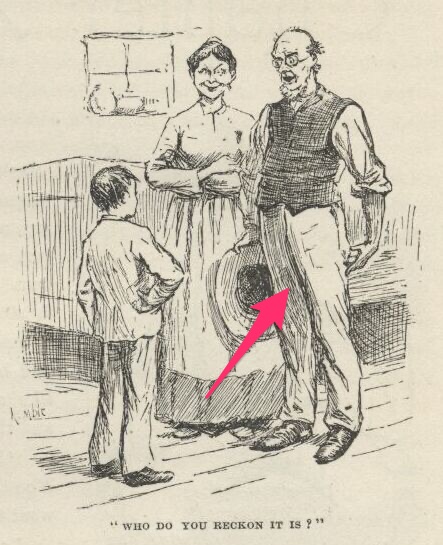
If you buy one of the approximately one billion available editions of The Adventures of Huckleberry Finn that include the original engravings, you will encounter at some point this image of Huck, his Uncle Silas, and his Aunt Sally:

You will note the arrow pointing just underneath Uncle Silas’ crotch, and you will note the straight line of his pants. You may also note the look on Aunt Sally’s face, which I feel deserves more attention in general.

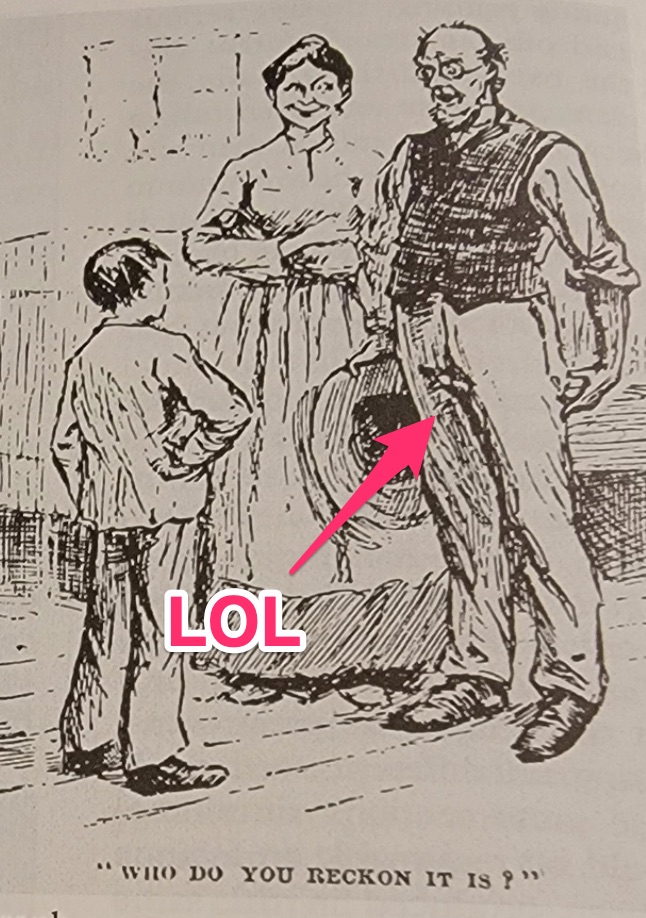
This is not the image that was in the first printing of the book. That image looked like this, known as the “curved fly” engraving:

See that curved line? That’s the original engraving by E.W. Kemble, whose name you’ll note in the lower right. Twain selected Kemble himself, and presumably did not vet this image of Uncle Silas for a single slightly, barely bulgey line in his pants.

After a few hundred copies of the first edition were printed, a salesman noticed that someone had somehow changed the engraving to … well, this:

That right there, folks, is Uncle Silas’ cock, although it appears to be growing out of his leg rather than in the usual location. Maybe that has something to do with the look on Aunt Sally’s face, I dunno. Maybe dicks were different in 1884. You’ll note that said penis is pointed directly at Huck, which isn’t relevant to the story but adds an extra little twist of creepy to it.

Anyway, the edition was very speedily recalled, and the offending pages destroyed, although an unknown number of copies remained in the wild. A book with the offending penis in it has never made it to auction or been sold publicly, and it’s not known how many might be out there. (Check out this absolutely amazing contemporary article about the controversy from New York World. The euphemisms. My God, the nineteenth-century euphemisms.)

The University of Virginia has at least one copy of the edition with the penis, which is where the image came from. They had to redo the engraving for the rest of the no-longer-“first” edition, and the new version of the engraving had a straight fly.

Copies of the “curved fly” edition (without the penis) go for lots and lots of money. My favorite detail about that $15,000 listing? Shipping is $4.00 and they accept returns within thirty days.

The person who altered the engraving was never identified.

I need a new word

There is a very specific type of bad writing that I feel like we need a name for, and this couple of paragraphs from the book I’m currently reading may be the literal Platonic ideal of it:

I’m not going to name the book, but the sleuths and generically curious among you shouldn’t have a whole lot of trouble figuring it out.

  1. This is the wrong verb, in a way that would make Mark Twain’s eyelid twitch. One does not “snatch” a piece of paper that is sitting on one’s own desk.
  2. Also the wrong verb. I also kind of want to quibble about the use of the word “worn,” which implies age– “tattered” might work better here. That said, I think this is probably the point I’m most willing to argue about.
  3. A blockade “of sorts”? You’re surrounded by twenty thousand enemy troops. That’s a fucking blockade. Or, even better, a siege, which has the advantage of being the correct word.
  4. Two sentences ago you said the blockade happened “one night past,” and now they’re testing your defenses “each night.” You’ve got to be outnumbered thirty to one; what the hell could they be waiting for?
  5. How are the scouts getting past the twenty thousand enemy troops? Why do you need scouts when you’re fucking surrounded? Also, how the hell did this letter get past the siege in the first place?
  6. This is Capital One arena, which seats twenty thousand, in far tighter accommodations than troops besieging a fort would use. See note #5.
  7. This is a world where dragons exist. So do the Uraks themselves, who are basically tall orcs. “Monsters” really doesn’t tell me anything about what these “larger beasts” are.
  8. Why? Why in the world would you not believe them?
  9. I don’t think you will, sir, and you’re sending this letter because you don’t think you will either, so “No matter” is a really weird way to conclude this letter.

This book is six hundred and eighty pages long, and this type of thing is on nearly every page, although it’s quite a bit more concentrated than usual here. I’m going to finish the book today, because while the writing is … again, I need a word more descriptive than “terribad” here, the story itself is engaging enough to keep me interested. But god, man, find a better editor. You need the help.

In which apparently I’m looking for a fight

MTE5NDg0MDU1MTUzNTA5OTAz.jpg…I’m not, really, but I suspect I’m going to get one anyway.

Go read this article.  It’s okay, I can wait and the article’s short.

You didn’t click on the link, did you.

Sigh.  People nowadays.

That’s okay, actually, as this article’s really easy to nutshell and isn’t very complicated:  a high school in Philadelphia has decided to stop teaching The Adventures of Huckleberry Finn in their eleventh-grade language arts classes, primarily because of the book’s repeated (over 200 times, apparently) use of the N-word.  Predictably, folks are mad.

I feel like this is the part where I should start establishing my Twain bona fides.  I’ve read Finn and Sawyer repeatedly.  His Fenimore Cooper’s Literary Offenses is one of the greatest pieces of writing in the history of the English language.  And I have read a ton of Twain outside of those three pieces, although obviously those are the big ones.

(Takes deep breath)

I’m good with this, guys.

Lemme be real specific, here: I’m not saying whether Finn should or shouldn’t be taught in high schools.  I’m saying that I’m okay with the decision made by this high school that the difficulties introduced by the language in the book outweigh the literary benefits of making the kids all read it.  I note that the book will remain in the library, where kids who want to read it can still easily access it.  And that, to me, makes an immense amount of difference.

Here is the thing, and it’s one of the most wonderful things about literature:  I am absolutely certain that I will die without running out of things to read.  Absolutely certain.  I will die regretting never having had read something.  And that’s speaking as someone who reads 125-150 books a year.  The median number of books read by adults per year in the United States, a number in this case more useful than the average, is five.

In other words, there are lots and lots and lots and lots and lots of books that high school students could be reading as part of their English classes.  Several of them are even by Twain.  Even more are from the same time period as Twain, and cover similarly pedagogically-useful material!  Relatively fewer guarantee that you’ll have to spend sizeable chunks of your class time debating whether your kids have to or should read the n-word out loud if for some reason they have to read something out loud.

(Yes, it’s still useful for high school students to have something read to them from time to time.  Choral or turn-based reading, maybe not, especially at the class level, but even a class with no out-loud reading at all will surely have to repeat a passage every now and again while discussing it.)

Is Huckleberry Finn one of the foundational works of American literature? Hell yes.  Should everyone– American or otherwise– read Huckleberry Finn?  Yes.  Eventually.  

I have more trouble with the suggestion that everyone must read Huck Finn while 1) in high school and 2) under the auspices of an English teacher.  Pull Huck from your library?  Make it unavailable in bookstores?  You and me, we gon’ fight.  Pull it from a college curriculum?  Less defensible, since those kids generally have a lot more leeway about what classes they’re taking.

But I just can’t get mad that a high school has decided that this one book isn’t worth the effort of the external issues it brings with it.  I almost feel like it’s better taught in history classes anyway, where the social milieu of the book can be discussed more fully, and hopefully by people a bit more qualified to do so.  (At this point I laugh, because I know full well that the first name of most high school history teachers is “Coach,” but I also know I had a couple of really good ones.)

So, yeah.  Feel free to call me an asshole in comments now.  I think I’m okay with this.