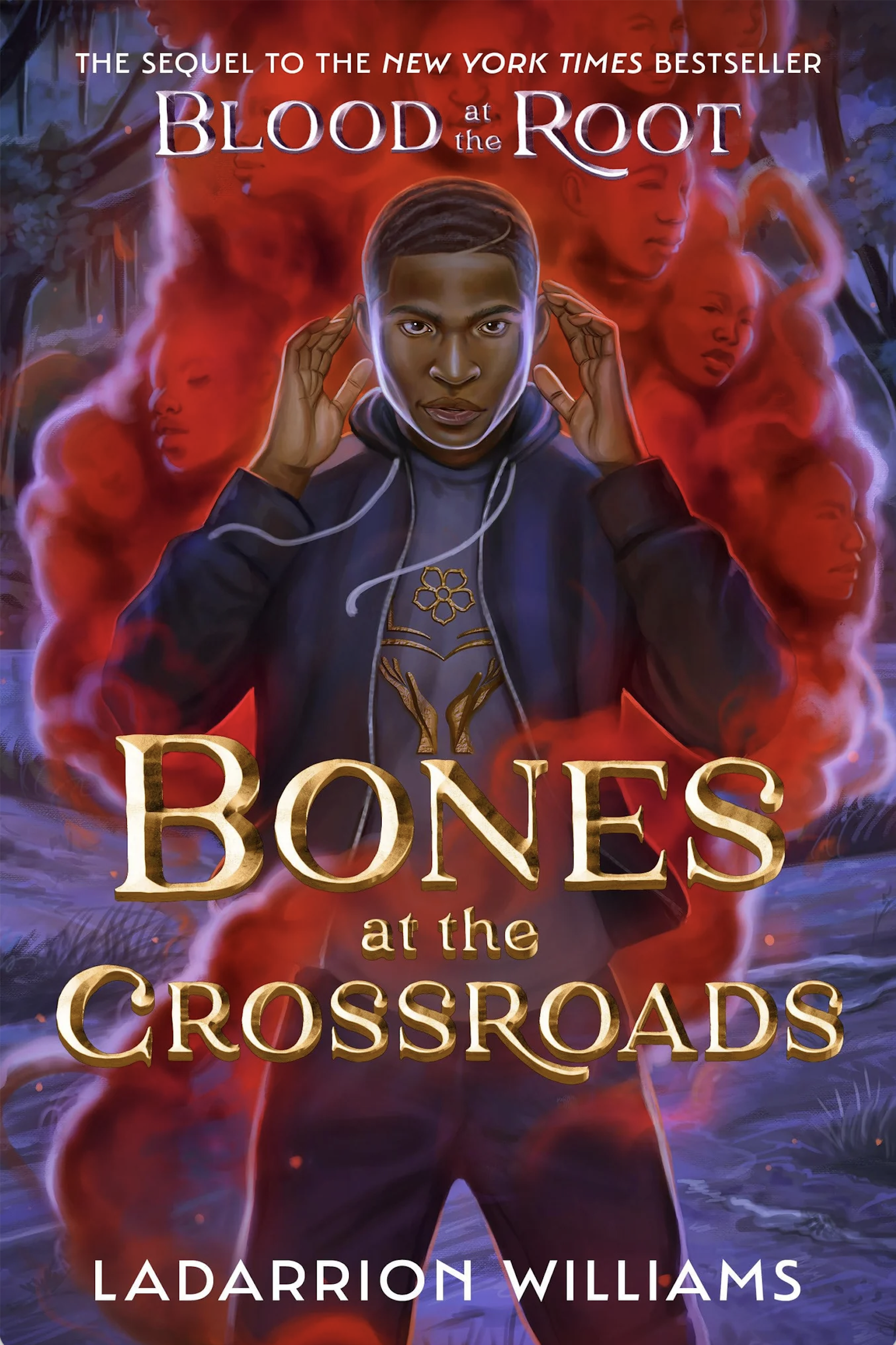
Before you read this review, which is of the second book in the Blood at the Root series, I’d like you to read my review of the first book, Blood at the Root. Why? Because it’s kind of fascinating just how cleanly my reading experience of Bones paralleled my reading of Blood:
I definitely and absolutely have had Malik in my classroom before. Even more so in this book than in the previous one, honestly; Williams calls Malik “messy” in his Author’s Foreword to this book, and I feel like Malik’s messiness, and to be more specific, his temper, maybe hurts him more in this book than it does in Blood. This is a kid who has been handed a raw deal by life on a ton of different levels (the magic kinda makes it better, I imagine) but one way or another he doesn’t handle it like a grown-up. Why? He’s not one.
Watching Malik navigate romantic relationships? Also super familiar.
I would say the moment where Williams absolutely stomps on the accelerator is closer to the 2/3 mark of the book than the halfway point, but while Blood came close to making me cry a couple of times– something that, let me repeat, almost never happens while I’m reading– page 368 absolutely 100% got me. Like, a literal gasp, and a well of pride, and I’m not going to pretend I was sobbing or anything but there were actual real tears.
I am not enough of a nerd that I’m going to figure out exactly what percentage of the book was finished at page 368, and you can’t make me.
NO.
It’s 67.6%, so my estimate was right on the money, fuck you.
Anyway, I referenced “twists and turns and betrayals” in the first review, and … YEAH. Along with some major reveals and some major shake-ups of what you thought you knew from the first book.
And then the Goddamned thing ends on a cliffhanger, and … remember when I was reading Godsgrave, a million years ago, and I said that I’d never been happier to have the sequel of a book on hand before finishing it? The sequel to Bones at the Crossroads hasn’t even got a release date yet, so LaDarrion Williams is about to acquire a new, and very impatient, roommate.
I will ding the book a tiny bit for dragging occasionally before that pedal-to-the-metal moment that carries through the rest of the story, and it doesn’t mean a whole lot to say this is the best book I’ve read so far this year on January 7th, but this was real real good and if you haven’t read Blood at the Root, go pick that up, and read slowly, and maybe by the time you finish Bones the end of the trilogy will be available.
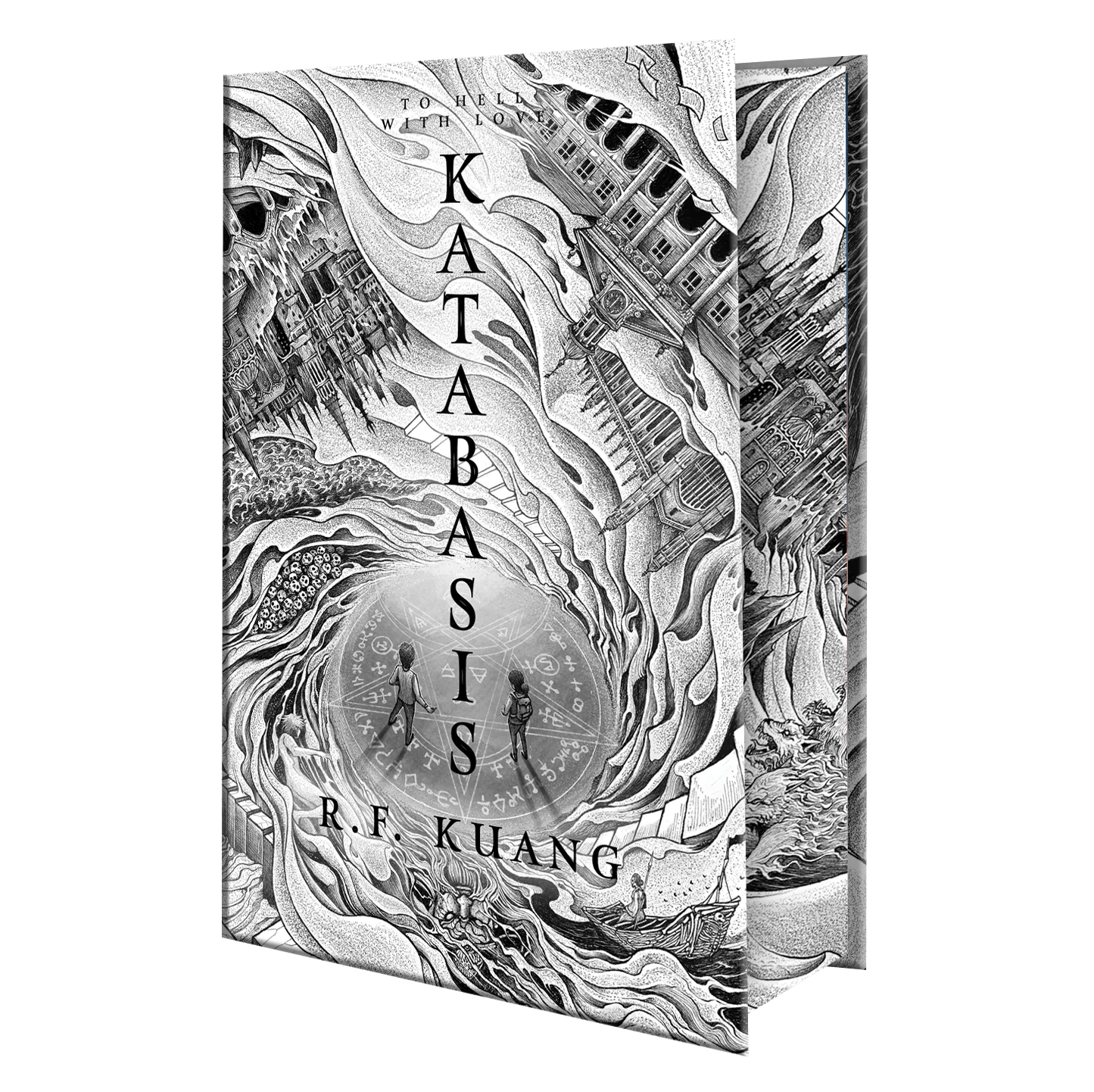
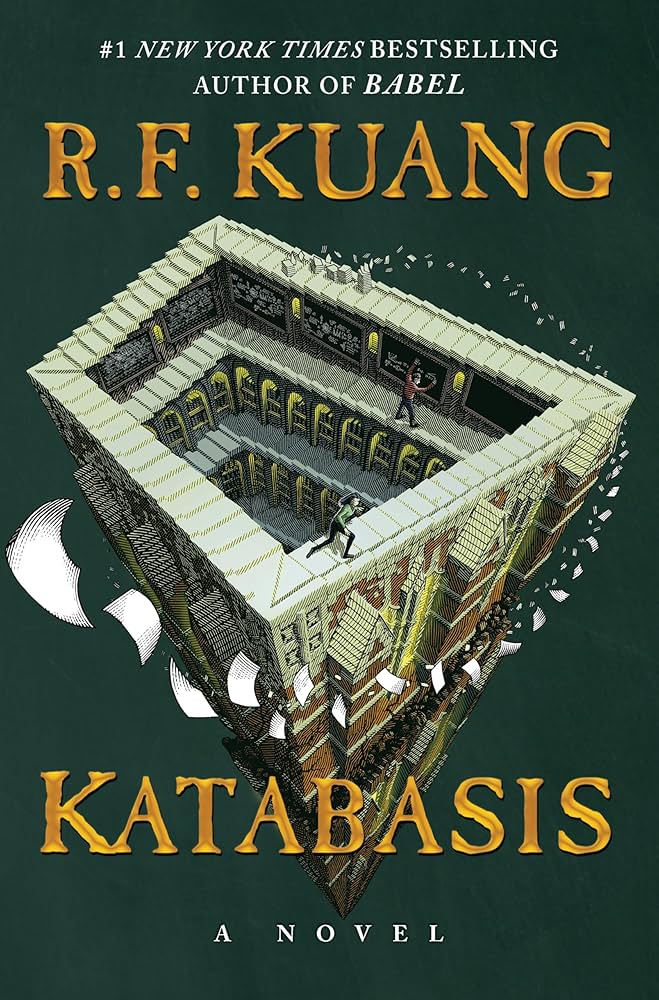
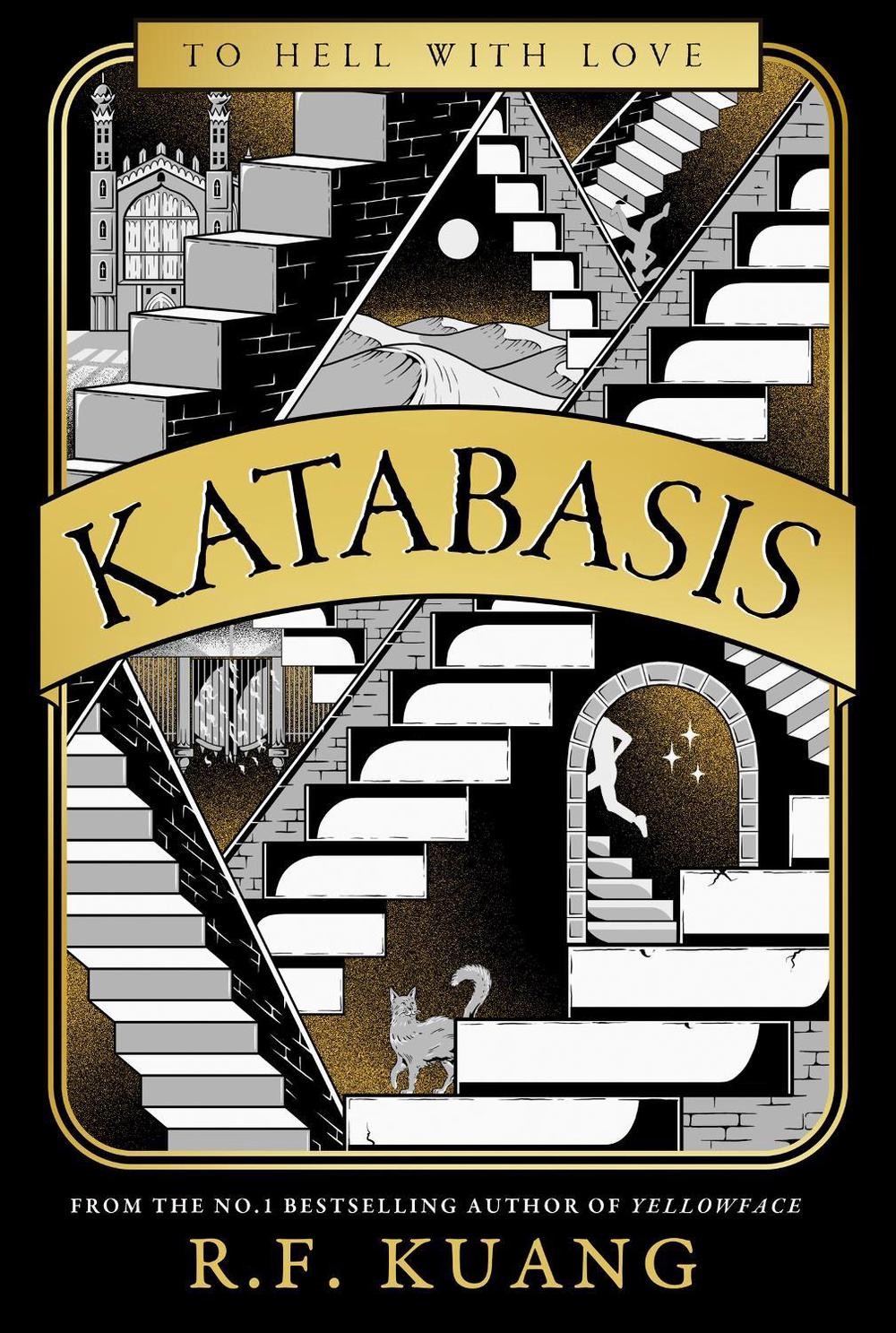
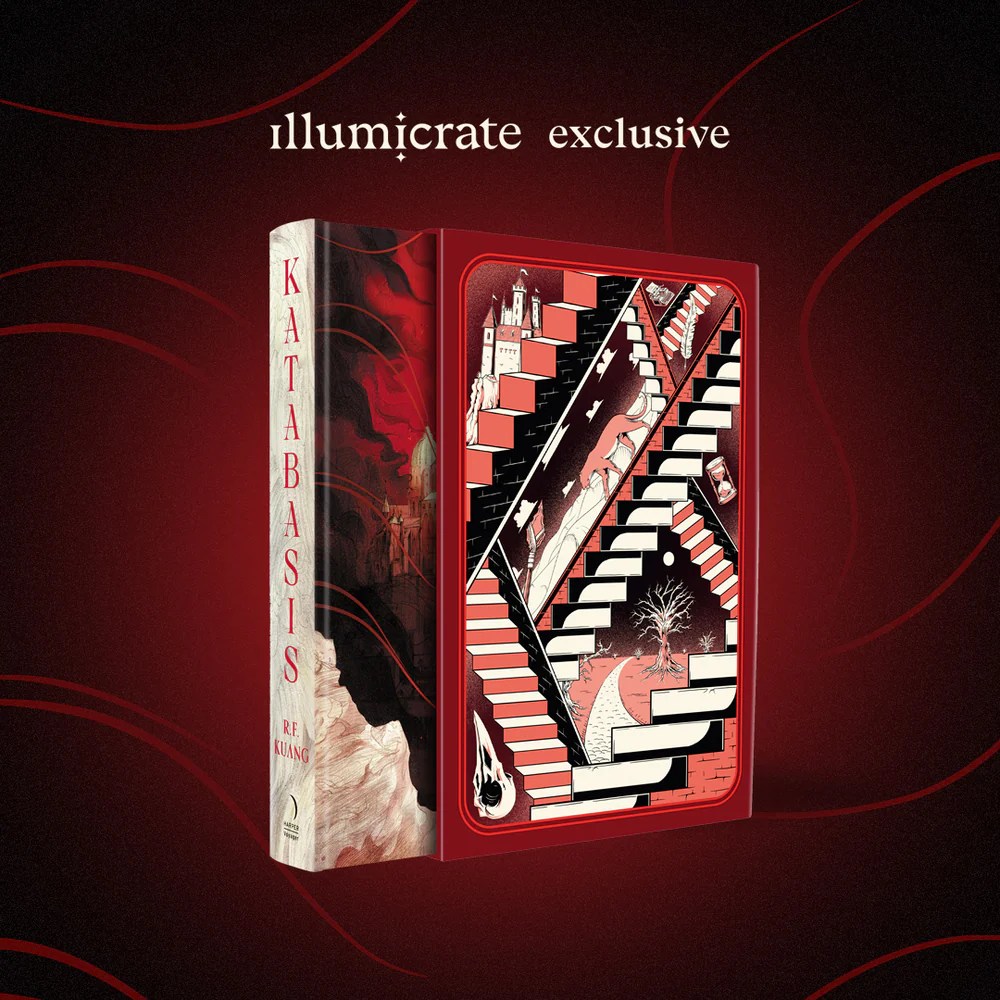
Up there are four of the seemingly unlimited Special Editions of R.F. Kuang’s new book Katabasis. I own three of them; two are currently in my house and I believe one is on the way. The fourth is the UK edition and despite everything I’m about to say it is still a maybe. Perhaps it wasn’t the wisest decision to order three expensive hardbacks of a book I hadn’t read yet, even if it was by one of my favorite authors! But as we’ve firmly established by now, I cannot be trusted with adult money.
Katabasis is the sixth book Kuang has written; I have read them all, and previously my least favorite of her books was one that was ranked third on my end of year Best Books list. My least favorite, mind you. Least. And part of me really thinks that I should sit with this for a minute and not write the review just yet, because part of the problem is that this book did not match the expectations I had set for it, and because I’ve enjoyed Kuang’s work so much in the past, I feel a need to be fair to it that I might maybe not feel with other authors. Then again, maybe not. Maybe, much like main character Alice Law about her mentor and Ph.D advisor Jacob Grimes, I’m making excuses so that I’m not disappointed.
Katabasis, somehow, has made Hell boring.
But let’s back up. Katabasis is the story of two graduate students (in theoretical Magick, of course) who travel to Hell to rescue the soul of their doctoral advisor, not because he doesn’t belong in Hell– he clearly does, and they’re both fully aware of this– but because their careers will be damaged by him being dead, and they need him for recommendation letters and such. I feel like this aspect of their motivation could perhaps have been explored a bit more; sadly, it was not. Katabasis (kuh-TAB-uh-sis, the word is Greek for “descent”) was supposed to be this dense, deeply literary work, heavily reliant on previous let’s-traipse-off-into-Hell books; there were pre-Katabasis reading lists floating around, and while I’m not actually completely certain Kuang was behind any of them, they were kinda intense!
And … well. Kuang is an academic writer; most of her books have at least partially involved schooling in some way and Babel was literally about a group of Oxford students who powered the world with magic based on translation, so this isn’t exactly a road untread for her. But this book is no more complicated than Babel was and no more academic; I was expecting a challenging read, and just didn’t get it. This is also the book that showed Kuang’s youth (she is still, somehow, not even 30) the most, I think; what she knows best is academia and grad school and I think that finally caught up to her with this book. And I get it! I’m not exactly a stranger to pretentious/prestigious graduate experiences; I hold an AM from the Divinity School at the University of Chicago, after all, which probably left me better prepared for going to Hell than most people’s educations, and I “hold” an “AM” rather than “have” an “MA” or a pedestrian “Master’s Degree” because, well, University of Chicago gotta University of Chicago. Those letters being reversed mean something. To somebody. I don’t know what, but they do.
Anyway, Alice (and is that name an accident, no, it is not) and her friend/fellow genius/academic rival Peter Murdoch head off to Hell to drag Grimes back into the world with them, and the book spirals (I see what you did there) back and forth between the past and the present as they argue about the map of Hell and, for the sake of argument, descend down to the final level to find him. They go in without much of a plan, and “no plan” really never gets better; they have a couple of never-ending water bottles and a sackful of, this is really what it’s called, Lembas bread with them so that they don’t starve to death or have to drink anything in Hell, and they mostly just wander around for five hundred pages, occasionally interacting with some of Hell’s shockingly small number of denizens. Most of Hell is an empty wasteland. They eventually arrive at the city of Dis, and I feel like if we’re going to start with a pre-reading list, maybe one of the New Crobuzon books, or Gormenghast, or the Shadow of the Torturer, or something like that should have been on there, because I have definitely read better infernal cities before.
It’s not … bad? Or at least I’m not willing to admit it was bad yet? And if you are someone who reads books for character development, this probably is right up your alley, as Alice Law and Peter Murdoch really are two of Kuang’s more completely drawn characters. But I don’t really read for character; I read for story and setting, and the story and setting here are both far too thin for my tastes. I probably owe this book a reread in a year or two regardless, just to let the expectations clear and to go into it with a better idea of what I’m about to read. But right now I’m deeply disappointed in it. The extra copies are still going to look great on my shelf, and Kuang is still an insta-buy author, but this one really didn’t do it for me.
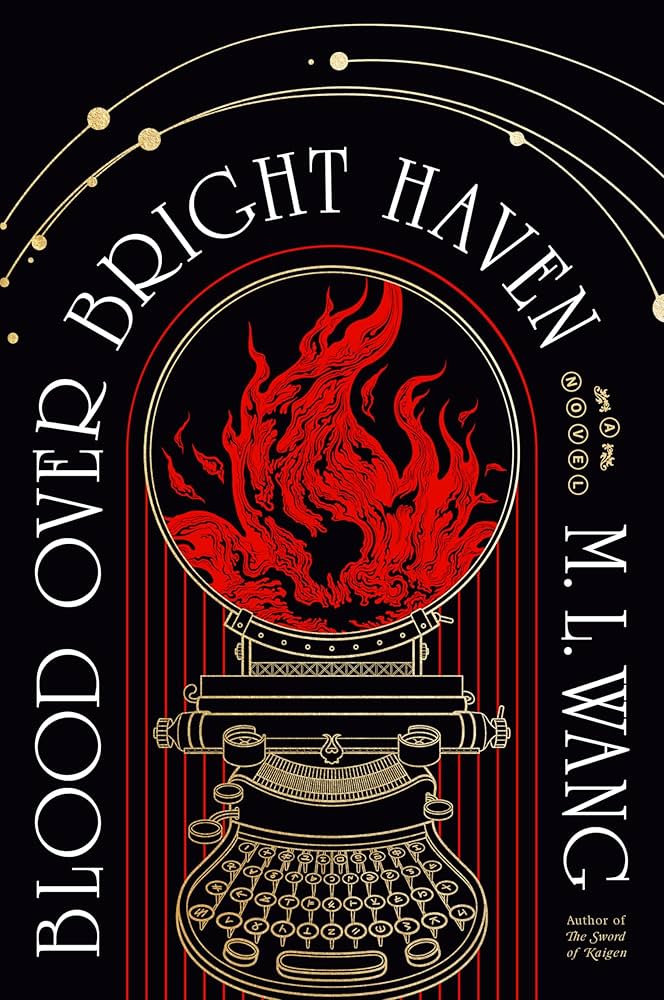
I discovered the work of M.L. Wang through BookTok, which is, by and large, convinced that her The Sword of Kaigen is one of the best books ever written. I read that one first, and … it’s not one of the best books ever written, not by a long shot, but it was good enough to get me to pick Blood over Bright Haven up and then take several months to get around to reading it. I didn’t start off well with this book either; by pure coincidence it shares a lot of plot points with Ava Reid’s A Study in Drowning, which I read immediately before it, and starting a second book in a row where the main character was a trailblazing female academic in a field where no one wanted her around and who cried all the time was a bit jarring even before it turned out that, somehow, in both books the fact that said main character was a huge fucking racist was a big plot point. Now, this is fantasy racism, which doesn’t make it a lot better,(*) mind you, but it’s a big theme of both books, so be prepared for that. Also, while we’re talking about things that might be in a content warning, Drowning has a character who is a rape survivor (although, creepily, the act in question comes off as consensual the first time it’s described) and there’s a rape attempt in Blood.
A Study in Drowning was not a great book– serviceable, but not much more– and it kind of poisoned me against Blood over Bright Haven for the first third or so. I nearly put it down. I’m glad I didn’t.
For starters, and I don’t want to get too deep into spoilers, because you deserve to experience this at the book’s pace, Sciona is very much not the main character of Blood over Bright Haven, even though it will seem like she is for most of the book.
Second, Blood over Bright Haven is one of the angriest books I’ve ever read, up there with Yellowface and Iron Widow,(**) although, again, you spend enough time in Sciona’s head that you might not realize how angry the book is at first. This is a deliberate misdirect on the part of the author and in retrospect it’s tremendously effective at prepping you for the big twist midway through the book. A bit of background: Sciona starts the book off by being named a Highmage of her home city-state of Tiran, an office that no woman has ever held before. This happens quickly; another weird similarity it has to Drowning, come to think of it; you get yourself mentally ready for her to take half the book to become a highmage and it’s, like, a chapter. Magic in this book is fascinatingly mathematical and complicated and meaty, it’s more like writing equations or geometric proofs than what for lack of a better word I’ll call “traditional” spell casting, although it’s not as explicitly mathematical as, say, To Shape a Dragon’s Breath.
Anyway, for our purposes the salient part of writing a spell is that you have to determine where the spell gets its energy from, and how much energy it might take to pull off any given magical effect. If you pull too little you’ll get partial results and if you pull too much, something is probably going to explode. Sciona is a prodigy at mapping, which is the process of figuring out where magical energy sources are and how to pull from them, and she gets put on a huge project involving pushing back the magical wall that surrounds the city, a huge … public works project, which isn’t quite what you might expect from a fantasy book but that really is what’s going on here.
Also, spells are written on magical typewriters, which is just super fucking cool.
Anyway, blah blah blah class conflict blah blah blah sexism blah blah blah plot development and then she figures out where the sources of her magic are really being pulled from, and I’m not telling you anything else, because you deserve to experience this on your own, and probably by this point if you’re like me you’ve decided you don’t like Sciona all that much. Unlikable MCs are tricky, right? First of all, you often can’t be sure if the author realizes they’ve written an unlikable main character, or if it’s just your reaction to that person (I call this “Lana Lang syndrome”) and also because the author wants you to keep reading, which can be a hard sell if you don’t like living in the head of the person you’re reading about.
I’m just going to say that it was clear quickly that M.L. Wang knew exactly what she was doing here, and that Sciona’s personality flaws are clearly intentional and are also pretty essential to the book unfolding the way it does. She has a great conversation (well, fight) with a relative late in the book where the relative just rips her to shreds and every word she says about her is true and I just kind of read it in awe of how fully in control of her characters Wang was.
Also, and I’m not going to go into details because, again, I want as few spoilers as possible, but reading this book on Thanksgiving lent the whole book a really interesting synchronicity with actual life. You’ll understand when you read it.
And, yeah, I’m about to end the second review in a row with the phrase “one of the best books of the year,” and a wish that M.L. Wang’s many fans on BookTok and elsewhere would realize which of her tradpubbed books (she has several that she published herself, and this and Kaigen were both originally indie titles) is clearly the superior one, because this book deserves the press and attention that The Sword of Kaigen has gotten. Go read it.
(*) The sole physical characteristic that the Kwen characters are given is “copper hair,” and I’m still unclear what precisely the difference between copper and red hair is, but you could take this as evidence that the despised minority in this book are white people, which is an interesting choice that ultimately doesn’t end up mattering very much since this is very much a Not Earth book.
(**) The fact that all three of the authors here are Asian women is a coincidence. It’s an interesting coincidence, but a coincidence nonetheless.
Okay: the first half of this post is not going to be the review. Here’s the tl;dr: this series is easily the best thing I’ve read this year. The first half of this post is going to be about me being a dumbass. It’s related to these books! But it’s not a book review, and I just wanted to make it clear that I know what I’m putting you through. You don’t have to read it if you don’t want to, and I’ll put in a divider. But go read these regardless.
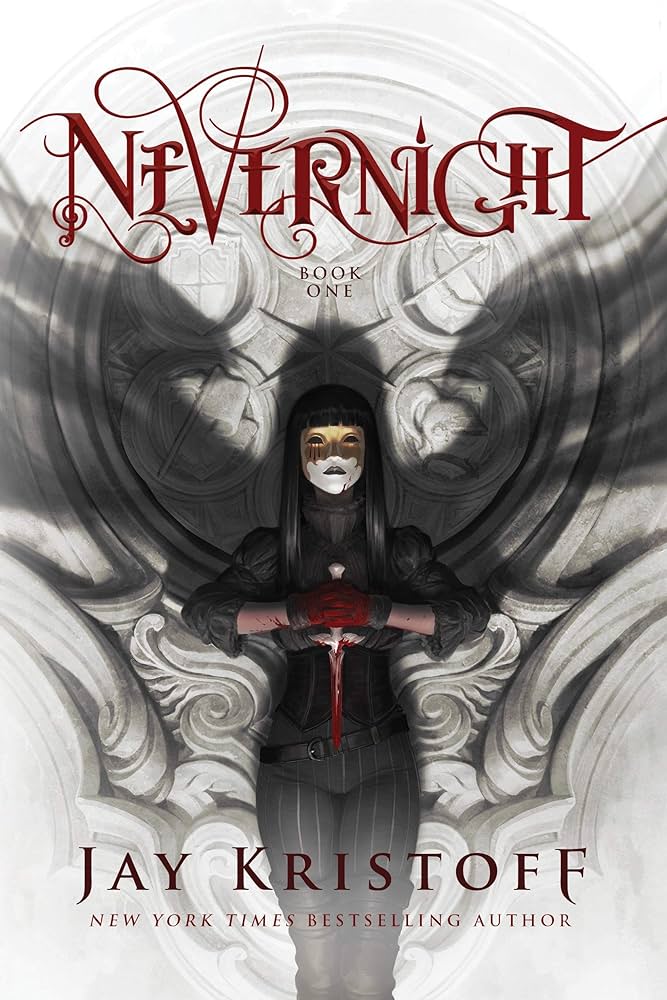
And yet, that book was pretty clearly not in my Monthly Reads pile a couple of days ago– and while I didn’t show the front covers, you’d be correct if you assumed that the copies of the trilogy in that post matched the image at the top of this one. So what’s the deal? Did I buy a second copy of Nevernight?
Sigh. Yes.
I sat on this trilogy for a minute, and I’ve been getting into the rather unwise habit lately of ordering entire trilogies at once, or getting just a little bit into the first book and then making a call that, at least once, has bitten me in the ass. And when I went to Amazon to order Godsgrave and Darkdawn, I encountered a problem: Godsgrave wasn’t available in an edition that matched my copy of Nevernight. But there was a three-book set readily available for, as it turned out, less than it was going to cost me to go to Barnes & Noble and pick up matching copies of Vols. 2 and 3, since Amazon is so much cheaper than B&N. So I could go to B&N and — hopefully, if they were in stock — pick up 2 & 3 that matched my pre-existing copy of 1, but spend more money than it would cost to order all three in the new covers, which, to be honest, I preferred– but ordering the three-book set put me in the rather ridiculous position of owning two copies of a book I hadn’t read yet.
I chose to save money and get the prettier covers, which turned out to be the UK edition, so why Amazon was pushing them on me so hard is kind of unclear at the moment. Point is, though, I’ve got an extra copy of Nevernight floating around, so if you think this sounds up your alley, if you wanna Cashapp me the cost of postage I’ll send it to you.
I’ve already said this twice, including once in this post, but let me say it again for those of you who may have jumped past the divider: this series is the best thing I’ve read this year. I know I get book-drunk and I get super enthusiastic when I like shit; I have sat on this post long enough to have read a whole entire other book in between, and you’ll get a review of that one tomorrow, probably. Where I’m really running into trouble, though, is figuring out how to talk about what’s good about it, in part because this is very much a Not for Everyone type of series. The main character, Mia, is an unrepentant asshole with a vicious temper and a tendency to charge into shit. Jay Kristoff is not interested in letting his characters be happy. And the series is hellaciously violent. It’s not as relentlessly dark as, say, the Poppy War books were, but you’re going to get your heart ripped out on more than one occasion in this series and Mia’s solution to any given problem tends to be to try to kill it.
And Mia is very, very good at killing. Assassin main characters are becoming a cliché if they’re not there already, but this is two series in a row (the first being David Dalglish’s Vagrant Gods, which shares a fair amount of DNA with this series) where the main character’s job was basically “killer” and the author had no interest in backing off from that at all. Dalglish’s Cyrus is a political revolutionary, where Kristoff’s Mia becomes a literal priestess of the goddess of murder over the course of the first book. Both series are explicitly revenge fantasies. Nevernight features copious footnotes, mostly used for snarky worldbuilding. As a deep and abiding lover of worldbuilding, I loved them; I can imagine them getting on certain readers’ nerves.
So, yeah: the overall arc? Mia’s parents are dead and she wants to kill the men responsible. We’ve seen that before. She joins the assassins in order to get the training she needs to be able to get close to the man responsible for her father’s death, who, rather inconveniently, happens to be imperator. Also not the most unique plot line imaginable. And then the first book really doesn’t end quite the way you thought it was going to, and you literally gasp at one point, and then you kick your opinion of the series up a couple of notches, and then maybe … midway through the second book, as you’re enjoying yourself, and grooving on the cool magic/religious system Kristoff’s got set up …
… all fucking hell breaks loose, and the series never calms down after that. I have never been happier to have Book 3 of a series already on hand after finishing Book Two, as it ends with so many massive revelations and cliffhanger shit that I literally screamed at one point while reading. If I had had to wait for Kristoff to write Book Three I’d have had to find out where he lived and stalk him to get some answers. Book Three is literally insane in a way that I can’t describe without spoilers. At one point the page formatting is used to give you a subtle hint about something that’s going on. Like, I can’t tell you a single word about Book Three. I don’t want you to know anything. Just that you’re going to get knocked on your ass over and over and over again and no one is safe, ever.
And I was really glad that I’d bought the series with the covers I got, and no, I’m not explaining that either, but you’ll understand when you finish the series. Which you are going to read.
Kristoff has one completed series out there and has another where he’s two books in out of (I think) three, and that one has vampires, and I’m excited to read it anyway. I’m just going to wait until the whole thing is out and then buy all three of them, because I do not trust this man to not destroy my sanity any longer.
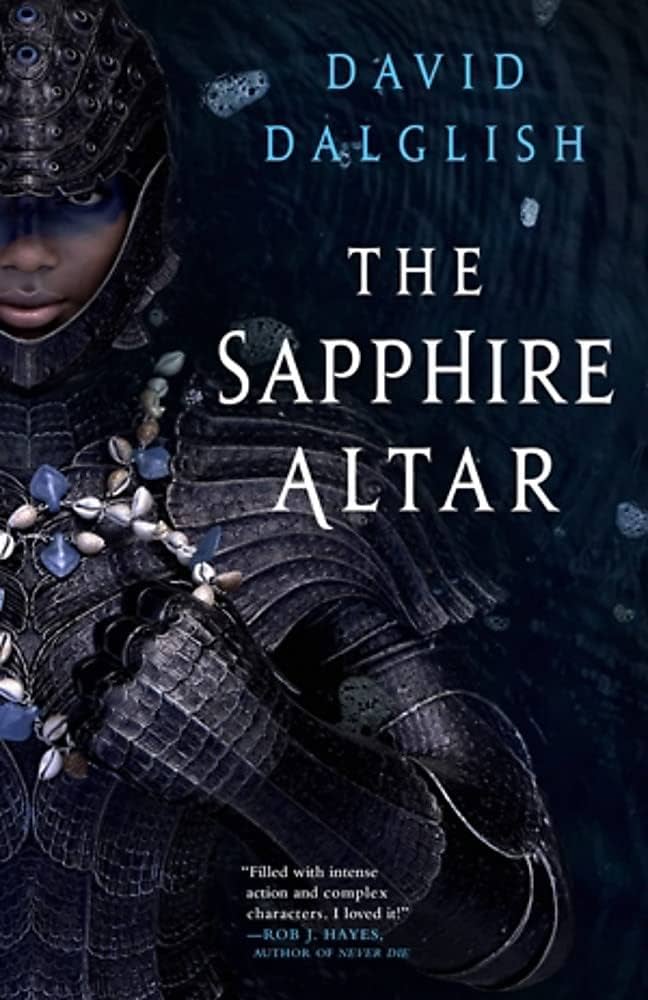
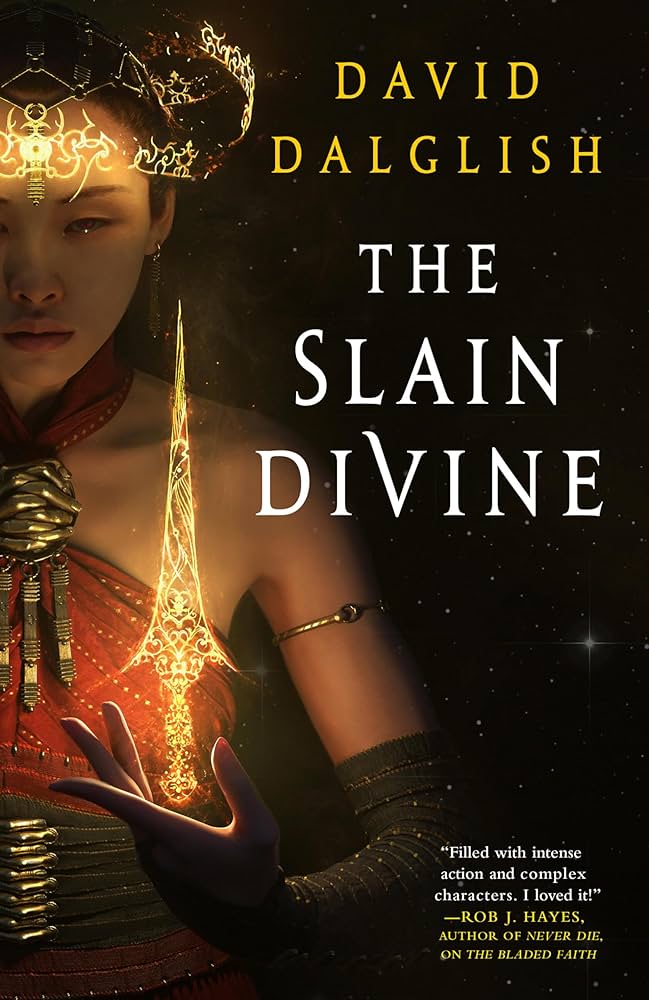
It took me eight days to read through David Dalglish’s three-volume, 1500-page Vagrant Gods series, the covers of which ought to be clickable above. I don’t recall what drew my attention to this series initially, but I bought all three in a fit of consumerism before reading any of them, and they’ve been sitting on a shelf for perhaps longer than they should have before I finally got to them. I’m not about to go back and look to find out how long; it’s been a while.
Shoulda read ’em earlier, because they’re awesome, and they manage the rare feat of starting off pretty good (I four-starred the first book) and then getting better with each successive volume. The series tells the story of Cyrus, a young (initially, at least) prince who not only witnesses his parents’ executions in front of him during an invasion but also literally witnesses the death of one of his gods. Cyrus is held in captivity as a puppet regent for a few years, and ultimately is able to escape with the help of a small band of revolutionaries, who forge him into the Vagrant, a vicious assassin whose one and only goal is to drive the Everlorn Empire from his native island of Thanet.
It is possible you are rolling your eyes right now; the word “assassin” is used way too much in fantasy literature nowadays, and a whole lot of assassins don’t really do a lot of assassinating because the authors want them to be relatable, and it’s harder to do that with somebody who is killing people all the time. You will possibly be pleased to learn that Cyrus does an immense amount of assassinating in Vagrant Gods. Holy crap, does he do a lot of assassinating, and his body count by the end of the series is horrifying. He’s practically the PC of a first-person shooter out there; this is a series that does not shy away from violence and is really not at all interested in a relatable main character. (It’s also, for what it’s worth, rotating-POV third person, but Cyrus is absolutely the main character for all that.) The books also do a pretty good job of making even the ultimate big bad guy of the series feel, if not relatable, at least understandable; the Everlorn Emperor is (mostly) immortal but the previous emperors live in his head, and he’s really only about half-sane during the book his POV shows up in, which makes him a fascinating character.
But the most interesting thing about this series is the way it handles divinity. Gods can be killed, and in fact are killed, and resurrected and sometimes killed again after resurrection, all over the place in this series, and the Everlorn Empire’s drive for, well, empire is due mostly to the need of the Divine Emperor for more worshippers. I’d call it an analogue of Christian imperialism, but only if Jesus was, like, still alive, but on his fifth or sixth body, and if he literally got more powerful with every new worshipper. One character ends up channeling one of the deceased gods for most of the series, and she can literally transform back and forth like the world’s most awesome lycanthrope between her form and the god’s. The crew that Cyrus amasses around himself is uniformly very cool, with a lot of interesting abilities, some of which are divinely inspired and some of which aren’t. Basically everything magical can be traced back to some god or another; this isn’t a world where mages, per se, exist, but the gods are generous with their followers.
Also, for what it’s worth, nearly everyone in the series is brown to some degree or another, and there’s a handful of prominent gay characters. Thanet is clearly more friendly to the LGBTQIA spectrum (not that they call it that, and the words “gay,” “lesbian” and “transgender” are never actually used) than Everlorn is, and some of the most noteworthy revolutionary activities are triggered by Everlorn trying to mess with Thanet’s rules about who can marry who.
Again, I don’t remember what brought me to this series, but it turns out David Dalglish has written a lot of books, so I’ve got a nice back catalogue to dip into if I want. I’m pretty sure this series is the only one set in this world, but I’m looking forward to seeing more of what he has to offer. If you’re looking for a series with a lot of political intrigue, great action, and a fascinating perspective on fantasy religion, you’ll love these books.
“I don’t understand reviews sometimes,” he said, as the first sentence of his book review.
I have received two books through my new Illumicrate subscription– one, Fathomfolk, was already on my radar, but Elizabeth May’s To Cage a God was a book I’d never heard of by an author I’d never heard of. Which sounds like snark, but I hope it’s obvious that it isn’t– there are lots and lots of books, as it turns out! Anyway, I looked it up on Goodreads when I was ready to start it, and … well, it didn’t look hopeful. Generally anything under a 3.5 is going to be a rocky road, and this is at 3.3 right now. Sometimes that happens solely because a book is written by a woman or a person of color, though, or– God forbid– features women or people of color, or The Gays, so it’s not always a useful metric, but it’s usually a fair bet that an aggregate score under 3.5 is going to be a mixed read at best.
I’m happy to say, having read the book, that I don’t have any idea what the hell the reviewers are on about on this one. This book is indeed written by a woman, and does feature The Gays, but scanning through the reviews didn’t immediately produce any reviews that appeared to be the result of a pile-on or a Neanderthal eruption, so I just stopped looking and stopped worrying about it.
To Cage a God is a political thriller wrapped up in an intriguing magic system with a dollop of romantasy on top, and at its best moments it reminded me of something that Lisbeth Campbell might have written. And, honestly, this book and The Vanished Queen have a lot in common, and although To Cage a God has the romantasy aspect and tilts just a bit more toward YA than Queen does, if you enjoy one you’ll likely enjoy the other.
I want to talk about that magic system for a bit, though, because it’s super cool. All of the POV characters are part of a conspiracy against the Evil Empress (not actually her name, but it’s more fun to call her that) and all of them have different motivations and abilities that they bring to the revolution. Magic abilities in this world are granted by literally– and, it’s implied at least, physically, take a close look at the cover– imprisoning a dragon inside your body, and dragons are gods. The book uses the words pretty interchangeably, but the gods have teeth and claws and move around and are not remotely beyond inflicting pain on their hosts if they feel like it. In fact, one character’s god hates her and she has to more or less practice blood magic in order to convince it to do anything. The gods also have opinions about each other, and at least one relationship in the book is driven by mutual attraction of the gods as much as the humans involved. It’s really cool, and I’m looking forward to more exploration of the idea in the conclusion to the series, which I believe is currently planned as a duology but stands really well by itself. All of this stands against the background of a war with another nation that is talked about but never appears on the page, so I assume the sequel will delve into figuring out what to do with the new political status quo at the end of the book.
I have some minor gripes– the Evil Empress is a bit much, but in a sort of delightful way– one can imagine Glenn Close or Angelina Jolie just devouring scenery by the handful while playing this character, and the book as a whole is a little tropey, but tropes become tropes because when they’re well done they’re effective, and they are. It’s always nice to pick a book effectively at random and be rewarded by it, and I didn’t even pick this one, so it’s a genuine pleasure to be able to recommend it. I’ve ordered the non-Illumicrate hardback so that I have something to match the sequel on the shelf when it comes out. You don’t need to buy two copies, but definitely check it out.
Guys I am very tired and very sick and I should have been in bed an hour ago but instead I started this 500-page book like last night or maybe the night before that again I’ve been sick and this weekend is a bit of a blur but holy shit it’s good and I just finished it after reading basically all day and you need to read it now now now now dammit now why are you still here




 Welcome to infinitefreetime dot com