I called this “deliciously, delightfully fucked-up” in my Goodreads review, and … really, isn’t that enough?
I am tempted to say it is, because it has been a long day, and I am tired, and I don’t have a ton of stamina at how the hell is it almost 8:00 already to write a complete review, so I’ll just say this: Monika Kim’s debut about a college-aged Korean-American girl named Ji-Won is equal parts horrifying and rage-inducing, which is an interesting combination. Ji-Won’s father leaves her mother at the very beginning of the book after an extramarital affair, leaving Ji-Won’s mother an emotional wreck and upending their family entirely. Ji-Won has to take on trying to keep her family stable while negotiating her first semester at college, and when her mom takes up with a white guy who is pretty clearly a narcissistic, womanizing scam artist and she catches the attention of a second white guy who is horrible for a whole different set of reasons, keeping her family stable starts to take a backseat to keeping herself stable.
Because she’s growing obsessed with eyes– eating them, specifically– and the more her mother’s beau pulls the wool over her eyes, the easier simply murdering him to get him out of their lives becomes to consider. And we’re off to the races, as Ji-Won both grows (descends?) into becoming a budding serial killer and definitely descends into some pretty interesting types of what I think is technically referred to as The Crazy. She has bad dreams and occasional hallucinations and for a minute at the end there you think the book is going to take the easy way out and then it doesn’t, and … yeah, I’m sticking with “deliciously, delightfully fucked-up,” here. Not for everybody, either, in case that’s not perfectly obvious, but I loved it.
A quick word on the white guys, as I feel like I just opened the book up to a certain set of accusations: the book is not anti-white so much as it is anti-a couple of specific kinds of white guys, and in particular it takes aim at Asian fetishization, which, at least as far as I’m familiar with it, pretty much is a white guy thing. The college guy is unbearable in a few other kinda white-specific ways too, but at least at first he pales(*) in comparison to the mother’s new boyfriend, who is immediately and clearly awful to everyone except her. Anyway, if you’re the type to get het up when you think white people are being criticized you’ve probably bailed on my blog years ago, so I doubt this will be a real problem for anyone who might take my recommendation seriously anyway. If not? We can take it, I promise.
One way or another, there’s a great build-up here, a brief moment where you might be worried that the end is about to get away from the author, and then she nails the landing anyway. I really liked this one, and I’ll be keeping an eye out for future work from Monika Kim in the future. (I also picked up a second copy from Illumicrate, because … my god, that cover!)
(*) I swear I didn’t do that on purpose, and I’m sorry, but not sorry enough to remove it.
Well, this was an unexpected little bit of awesome.
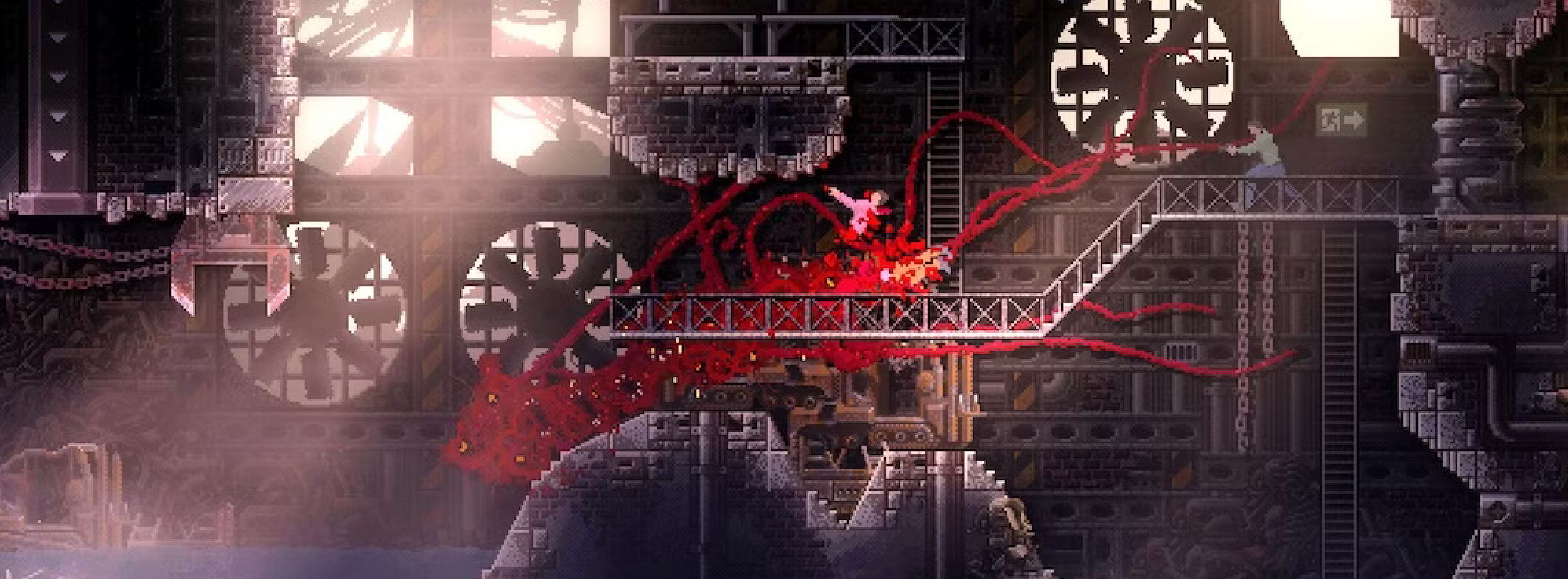
I don’t know what caused Carrion to catch my eye– I mean, it was on sale for $5, and still is until tomorrow, but that’s usually not enough– but if somehow you happen to be the reason I found this fun little game I need to thank you. Carrion is a pixel-art Metroidvania and a “reverse horror game,” where instead of playing the intrepid scientist or lone soldier trying to kill the horror that wants to eat you, you play the monster. Your goal is to escape the giant facility you’re imprisoned inside, and if you happen to eat every living thing inside it along the way, more the better. You are, effectively, playing a shoggoth; a giant Lovecraftian creature made of flesh and teeth and eyes and tentacles, and over the game you acquire powers ranging from defensive spikes (which I don’t think I ever used, come to think of it) to different movement abilities to growing protective chitin to just getting real, real big and terrifying.
It is gross, in a pixelated sort of way, and your attacks can literally rip your enemies in half. I encourage eating every little part of them, but if you rip someone in half and then just eat their head I think you get the same benefits (health and size upgrades) you get from eating the whole body, so if you decide to toss the legs across the screen, go ahead:
Most screens end up covered in blood after a while, because even your non-offensive moves will cause your shoggoth to leave blood behind; if you smash through a door it won’t actually affect your health but you will leave bloodstains behind.
Your various enemies range from unarmed humans, who will hide and cower, to unarmored people carrying handguns to shotgun- and flamethrower-toting soldiers to the occasional drone and mech. Nothing ever respawns, which led to what at first I thought of as a cheap tactic when facing a ton of enemies– run into an area (your monster moves crazy fast most of the time,) rip someone, anyone in half, and then dart back out before the three guys with flamethrowers and the one guard with a shield and machine gun can kill you. Head to the nearest save point (you basically make your way through areas by unlocking all the save zones, at which point you can get to the next area) and save, which gives you your health back, then rinse and repeat.
It felt cheap until I realized that it was exactly how monster movies work a lot of the time. The monster shows up, kills somebody, then disappears for a few minutes until coming back and killing someone else. The fact that there were generally multiple ways to approach any given zone full of food enemies just made this even better. Of course I can come back at full strength! Did any of the monsters in the Alien movies ever limp? Obviously not. This is a monster movie. My job is to terrorize motherfuckers, not to get killed.
Oh, and you can also smash through a door, then grab the door and beat the hell out of something with it. The way to beat drones is to grab them and bash them into other things, like walls, and floors, and civilians, until they’re broken. It’s a blast.
I had a lot of fun with this, obviously, but there were a few points where the game got in its own way. To start, at the maximum size, your monster can get tricky to control. Check this screenshot out:
You tell me: which end of that thing is the front? Is it going clockwise around that block in the middle or counterclockwise? At maximum size, you can easily stretch most of the way across the screen, or bunch up into a big blob, and this leads to occasional control hiccups, especially when trying to squeeze into small holes or (especially) flip switches at maximum size. There are a couple of places where you need to squeeze into an elevator and flip a switch just outside the elevator to move it, and hitting the switch with a tentacle was more annoying than it should have been. The most frustrating part of the game was a sequence where you needed to be at full size (abilities are tied to the size of your monster, which … was not my favorite design choice) in order to grow armor that would keep a little exploding harpoon-thing from one-shotting you, but the harpoon-thing respawned, and it respawned faster than your armor ability, so if you didn’t get your entire body past the radius of where the harpoon would shoot at you, you could survive the first shot and then get killed by the second one before you could do anything about it. Most of the time, though, traversal was a lot of fun; you can basically move in any direction at any time, as the beast just flings out tentacles and pulls you toward wherever you want to go.
If you have a PS5, there’s literally no reason not to grab this right now while it’s $5. If you like Metroidvanias, it’s maybe a little short, at 5-6 hours, for the full $20 price, but I suspect it’ll be on sale again soon, and even if it’s a little short for the price it’ll be a good time.
It’s entirely possible that you’re going to get a flurry of posts today; I have at least three in the hopper right now and that’s only not five because I’m planning on packing three book reviews into a single post here. One of them is a super late entry into my best books of the year post, which right now is coming tomorrow, I think. We’ll see. Anyway, off we go:
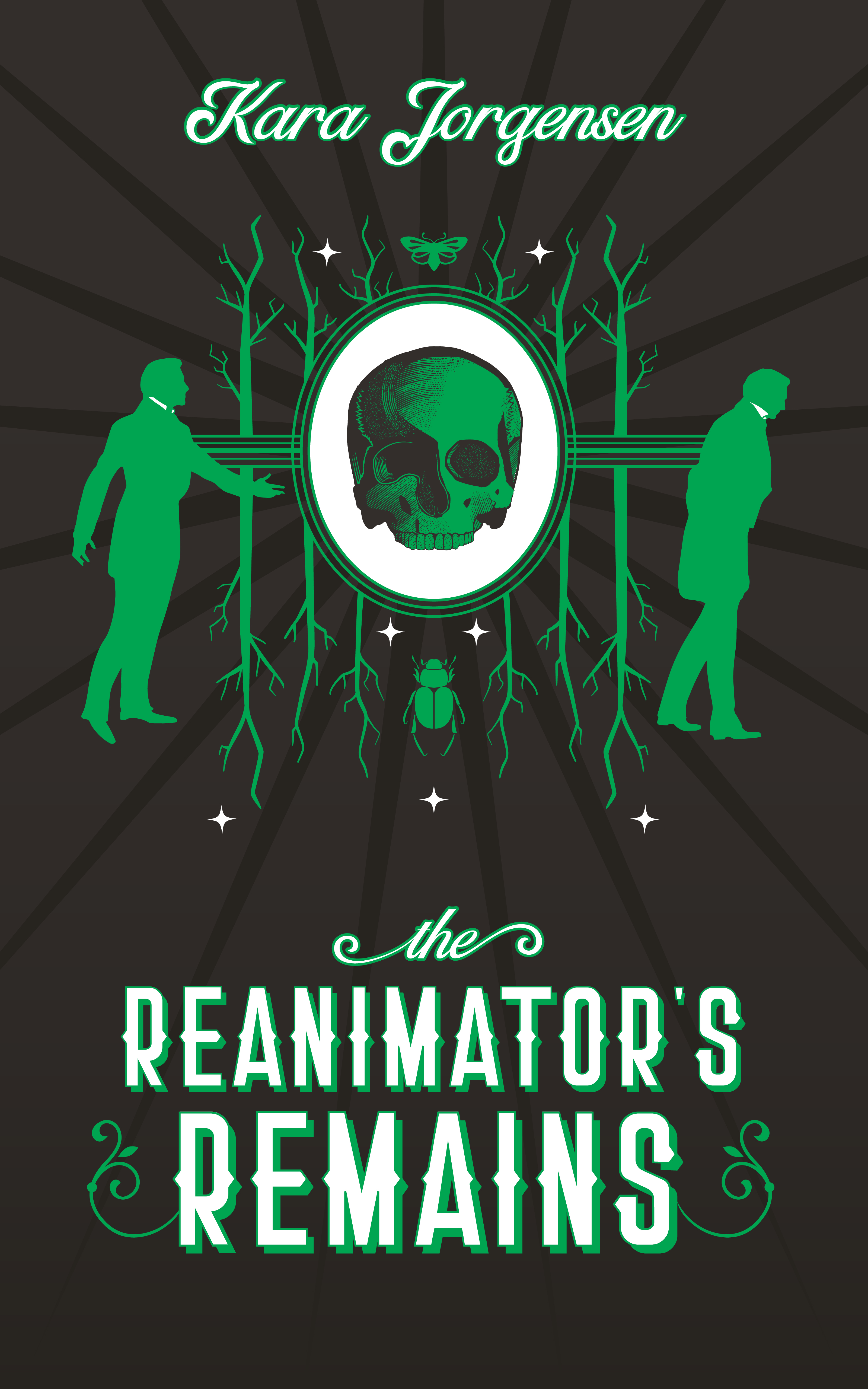
Standard disclaimers, I suppose, for whenever I review an author who I “know” online; Kara and I have been mutuals long enough that I couldn’t tell you where we met or how long ago it was, and we tend to find each other near-immediately any time a new site pops up. That said, I’m a big fan of their Reanimator Mysteries series, the third book of which came out in October and I read a couple of days ago. Kara’s books tend to be(*) queer Victorian paranormal romances, and this one concerns Oliver Barlow, an autistic necromancer who works as a coroner, and Felipe Galvan, an investigator for New York’s Paranormal Society who is, uh, dead. And resurrected by Oliver. And they’re lovers now. And they can’t get more than half a mile apart.
It’s kind of a delightful series, believe it or not. The first sentence of the third book mentions “freshly rinsed organs.” It’s that kind of book.
Anyway, this one dives into both Felipe and Oliver’s pasts, and the main mystery of the book concerns the nearby town of Aldorhaven and a sudden infestation of the risen dead. Aldorhaven is a “murder town,” a decidedly unofficial designation for a place where the number of unexplained deaths and weird paranormal happenings is way above the norm. The town, and the forest surrounding it, become characters of a sort in this book, which has more than a little of The Shadow over Innsmouth‘s DNA in it. It’s wonderfully creepy in a whole lot of ways and you should probably grab the whole series, which starts with The Reanimator’s Heart and The Reanimator’s Soul. Book IV comes out next year.
(*) Tend to be? Possibly “always are”? This is Kara’s 10th book and I haven’t read them all.
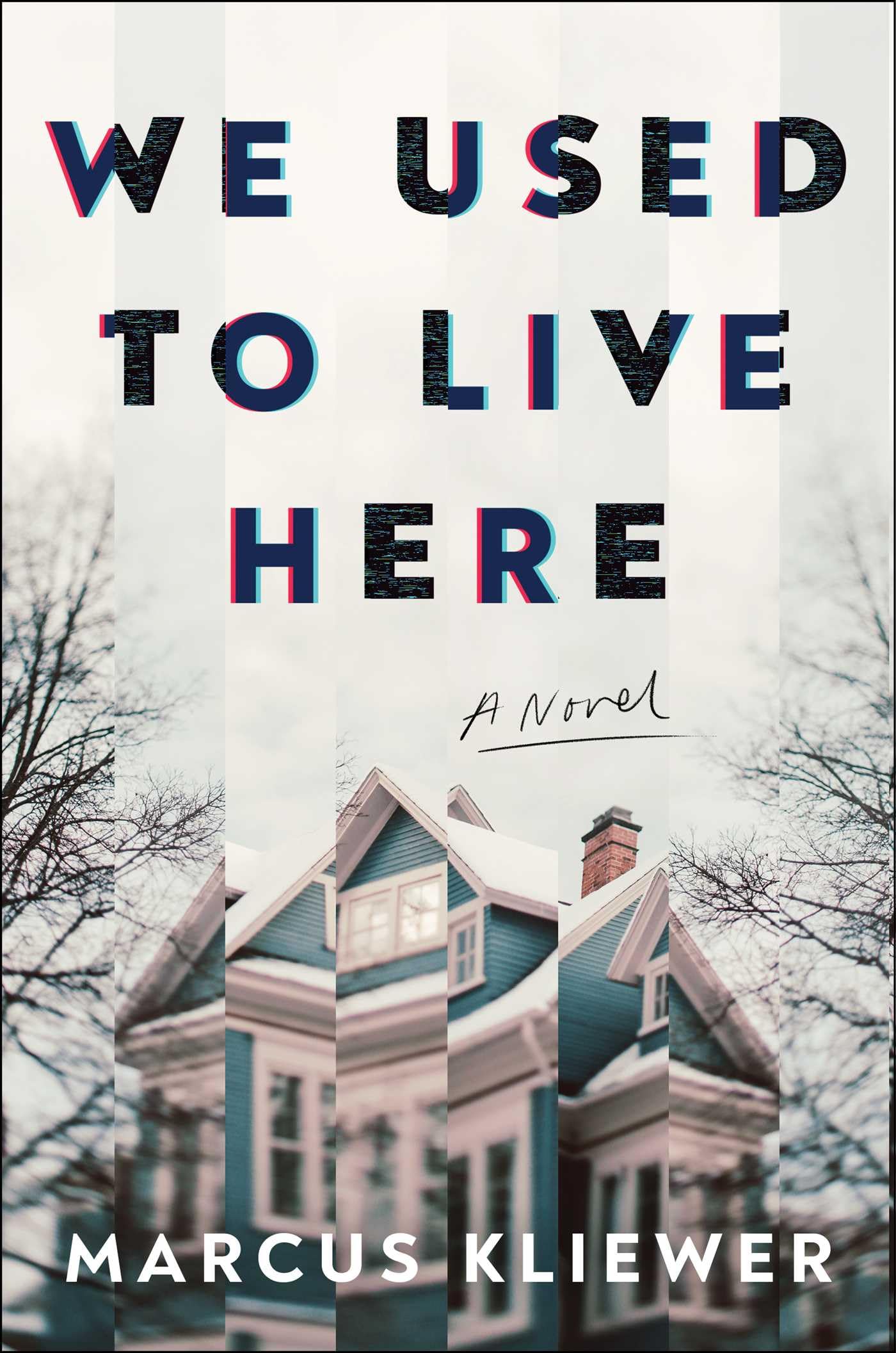
I’ve been putting off picking up Marcus Kliewer’s We Used To Live Here until it came out on paperback, but Barnes & Noble’s still-ongoing end-of-year hardback sale and a couple of Christmas gift cards pushed me over the edge. The premise of this one is that a young couple has bought an old crumbling house high up on a mountain, planning on renovating and possibly flipping it, and one night a family of five shows up on their doorstep while Eve, one of the homeowners, is at home alone. The father claims that he used to live in the house, and asks if he can have fifteen minutes to show his family around. Eve reluctantly agrees, and … well, it doesn’t go well. This is psychological horror and not the murder-and-torturefest that “it doesn’t go well” implies there, but Eve basically spends the rest of the book going slowly crazy. It’s intense.
This, I think, is the most your-mileage-may-vary of the three books, because how much you enjoy this book is going to depend on how willing you are to 1) scour the text for clues that may or may not be in there and 2) live with ambiguity about what exactly is going on. Eve ends up unable to trust her own perceptions and her own memories about literally anything, and this is the kind of book that has little interstitials throughout, clips from interviews or TV shows or message board posts that initially won’t make sense but will tie together eventually, and all of them end with Morse code. I deciphered one and got the word “and” and decided that I didn’t need to decipher the rest. Maybe you will! Maybe that whole idea kind of annoys you. I have no idea if the Morse code is important or not. I know I didn’t bother to check.
Anyway, for me, this book started off as a great slow-burn mindfuck but sort of collapsed under its own weight by the end. I four-starred it on Goodreads, but you’ll need some tolerance for gaslighting and unexplained events and a wildly unintentionally unreliable narrator. By the end of the book if Eve so much as mentioned the color of something I was flipping back to see if that thing was the same color the last time she mentioned it. I don’t mind some ambiguity in this kind of book but it went a little beyond my comfort zone. You will doubt everything by the time the book ends, but the atmosphere and the oppressive quality of Kliewer’s writing meant I more or less finished this book cover-to-cover in a single sitting. You decide if that sounds like your type of thing.
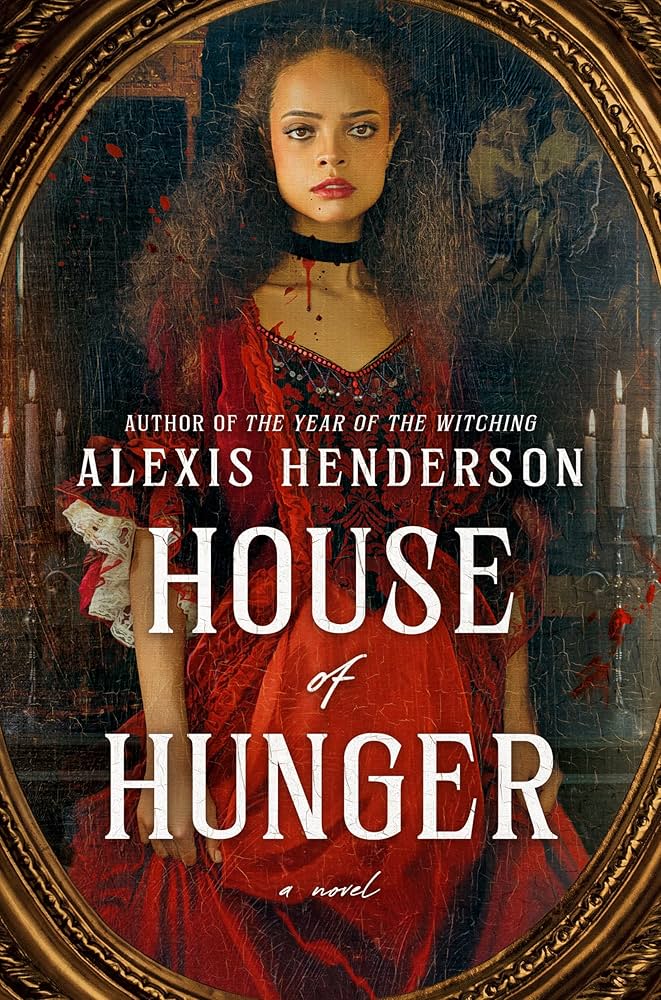
I meant to hold off until paperback on the Kliewer book and ended up grabbing a hardback; I have this one in paperback and I regret not buying it sooner. Alexis Henderson’s debut, The Year of the Witching, was an Honorable Mention for my best books of 2020 list, and House of Hunger is better than Witching. It’s a vampire book in all but name; there is, in fact, no explicit magic or supernatural powers mentioned anywhere(*) in the book, but Marion, the main character, flees a life as a scullery maid to take a position as a Bloodmaiden in the ambiguously defined “north.” Her job is to provide her blood when her obscenely wealthy patroness, the Countess Lisavet, requests it. In return for seven years of indentured service, she will receive a huge pension for the rest of her life upon her retirement.
And, yeah, Lisavet isn’t a vampire, and neither are any of the other rich people in the book– blood is extracted through needles or occasionally through bites, and even when Marion is bitten it’s made clear that Lisavet is wearing prosthetic sharp fangs in order to puncture her skin. But there’s a whole lot of blood-drinking going on, and the closest the book gets to actual magic is mentions of things like “blood lamps,” which might just be regular lamps inside a hollow globe so that the light is red but might also be powered by blood somehow? It’s unclear. One way or another, Lisavet in particular is a fascinating character, and her relationship with Marion is really well-written and interesting, and when things inevitably go to hell at the end the horror is real. This book isn’t related to The Year of the Witching, and Henderson’s third book just came out and is also a standalone, but I’d love to see more about this world. I’m genuinely not sure if this is actually going to show up on the list tomorrow, but it’s definitely in the running. Check it out.
(*) Heavily implied, maybe, but not until late in the book.
A touch of housekeeping first– I have parent/teacher conferences after school tomorrow and Tuesday, and am expecting to get home a shattered wreck of a human being both nights, so I’m going to do my damnedest to get three book reviews written today so that I don’t have to get home and scribble something down after 13-hour days at work. In accordance with prophecy, this means that I absolutely will get home and scribble something down after both of those 13-hour days, but still.
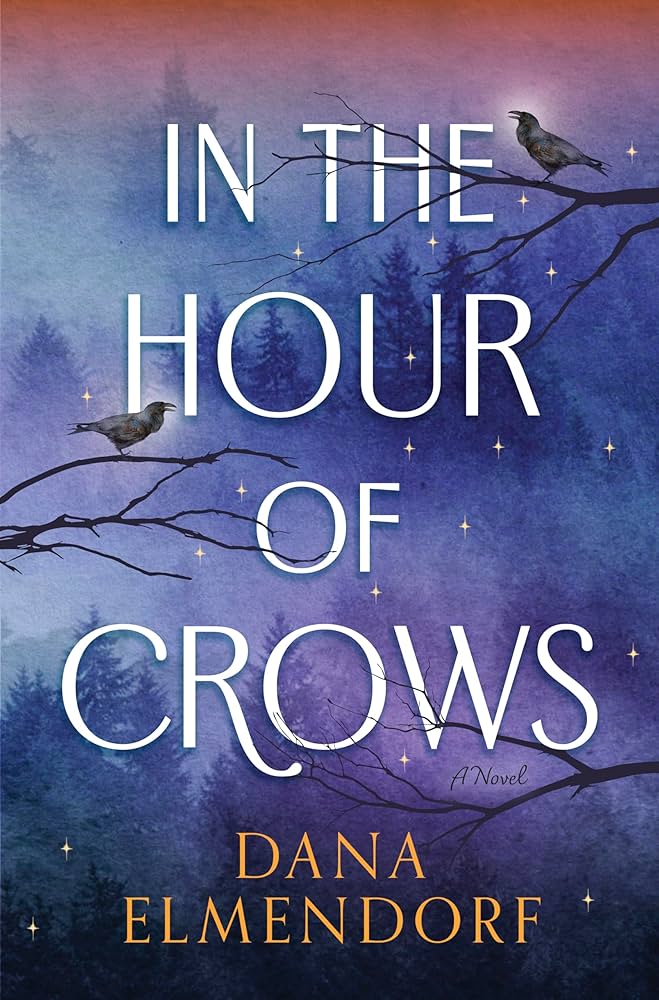
Dana Elmendorf’s In the Hour of Crows is one of those books where I heard about the premise and then suddenly had the book; I don’t recall spending money or making an active decision that I needed to own it, but I heard “Appalachian gothic horror about a young woman who can raise the dead” and then it was on my unread shelf somehow. It’s a quick read at only 288 pages, and I started it before bed one night and finished it the next morning. The main character, Weatherly, has the ability to raise the dead by “talking the death out of them,” which I can imagine being the premise for something utterly ridiculous and instead ended up being this cool Christian/aboriginal syncretistic thing where she starts by whispering secret Bible verses into a dead or dying person’s palm and ends with her absorbing their deaths and literally spitting the substance of their deaths out into a nearby vessel, one that can never have contained alcohol before she uses it. She can only do this once for any person; if she tries it again, it won’t work, and her powers must be deliberately passed on to someone else before she dies.
Like, right away, yup, I’m in, and let me remind everyone again that part of the reason I like most of the books I read is that I have years of practice in determining what I like to read and what I don’t. And I was utterly on-target on this one; between the setting, the approach to magic, and the characters (Weatherly’s grandmother, who despises her, is a standout) I ended up really enjoying this one. The book actually ends up being a murder mystery, as Weatherly attempts to save someone and fails, leading everyone to assume that she did it on purpose, and her cousin Adaire’s death in a car accident ends up being wrapped up in that death. Weatherly herself is a bit of a hellion, or at least recovering from her hellion years– she’s in her early/mid twenties in the “now” of the book, but it jumps around in time quite a bit– and her utter lack of concern for what the law might want in any particular set of circumstances is occasionally kind of hilarious. Pretty much every move she makes makes her look more guilty of murder, and she … just does shit anyway, because she wants to. She’s great.
The book also features the single most disrespectful and petty funeral service I have ever seen in print; it’s probably only a couple of pages in total, but it’s the thing I’ll remember the most about this book after the details have faded on the rest of it.
I think this is Elmendorf’s debut, and I kind of hope she stays with this wider setting and style of book in the future, as I’d love to read more of it. More books about Weatherly probably aren’t super likely, but if she wants to write an actual sequel of sorts, I’d love to see something about the grandmother. Definitely give it a look.
I’ll not bury the lede: this is the scariest fucking thing I’ve ever read.
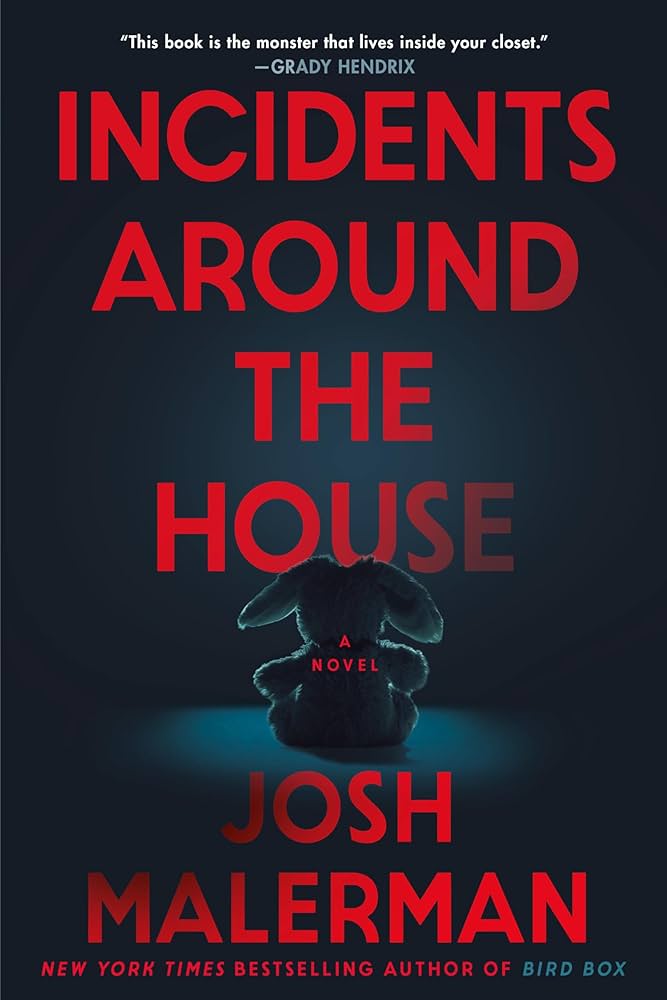
My regular readers might be protesting already. Didn’t I just post a “review” of Josh Malerman’s Incidents Around the House that more or less boiled down to “Nope”? And then I named it Book of the Month? And, like, a week later, this book is the scariest fucking thing I’ve ever read?
Here’s the thing: Incidents Around the House is scary as hell. If you enjoy horror as a genre you should read it. But it’s absolutely, indisputably, fictional horror. None of that stuff is going to happen in the real world and you’re not going to learn anything terrifying about the real world while you’re reading it.
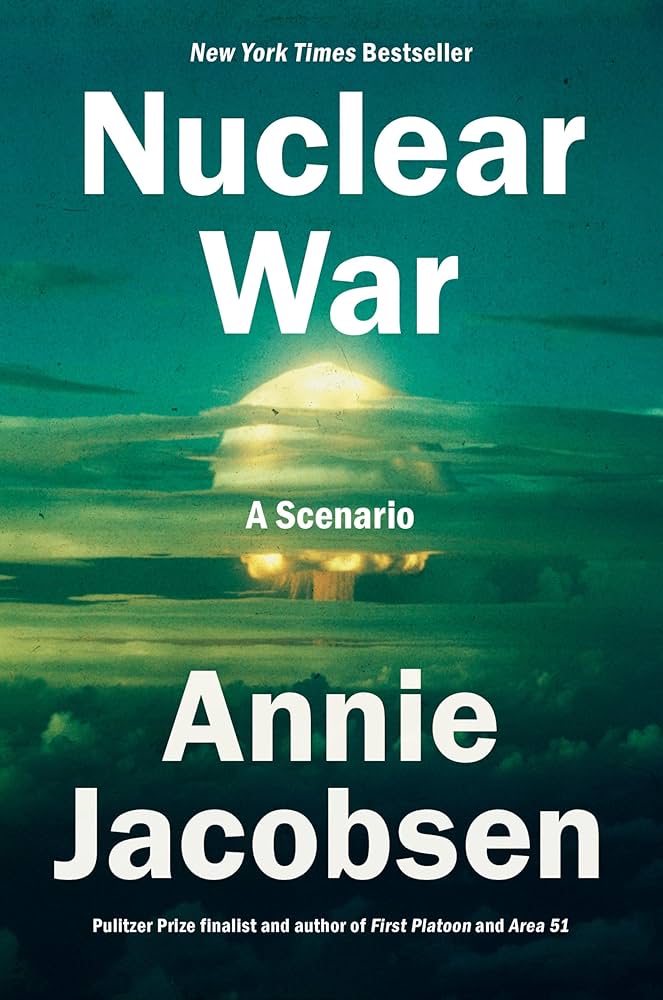
I am, meanwhile, not even sure whether I can classify Nuclear War: A Scenario as fiction or nonfiction.
I mean … okay, technically it’s near-future science fiction. And by “near-future” I mean “could, in theory, happen tomorrow.” But the book is so heavily researched and so thoroughly grounded in the world as it exists today that it feels nonfictional, and if you look at the categories it’s trending in on Amazon none of them are fiction categories. There are elements, of course, that are more fictionalized than others; some specific things that happen to, say, the President are not exactly likely to unfold in that exact manner, and there’s an unintentionally (I think) hilarious throwaway detail about the President pro tempore of the Senate that is a clear invention.
But this book starts off with the all-too-possible launch of an ICBM carrying a one-megaton nuclear bomb toward Washington DC, and the next 300 pages covers the next seventy-two minutes in more or less second by second detail, and by the end of the book human civilization is over and everyone you know and care about is either dead or wishes they were and reading about it is not fun. I had to force myself to put it down and go the fuck to sleep Monday night, and got home from work yesterday and sat down and finished it before doing anything else. It’s a propulsive, compelling read but Jesus fuck is it going to give me nightmares.
I will make one small complaint: by the end of the book– spoilers, I suppose, but whatever– Europe, Russia, the Korean Peninsula and the United States are smoking wastelands. However, it might not surprise you to discover that Australia, Africa and South America are more or less entirely unmentioned. There are no nuclear powers in Africa or South America, to start, and Australia just doesn’t get involved. Here’s the thing: I don’t really have a sense of how much of a literally global problem that amount of fallout would be, or whether the inevitable nuclear winter’s effects would possibly be mitigated somewhat in the Southern hemisphere. Jacobsen is clear that she thinks human civilization is fully past-tense after a multination nuclear exchange, but, like, would pockets of civilization be able to survive in, say, Brazil or sub-Saharan (and thus farther from fallout) Africa? Is it possible that the currently inhabitable parts of Australia would stay habitable? Or is everyone literally fucked from the fallout in the atmosphere? Maybe the jet stream keeps it in the northern hemisphere, or, like, something. I don’t know, and I’d like to.
You don’t want to read this book, because it’ll fuck you up hard. But you may want to read it anyway. I dunno. You do you. I’m gonna go crawl under the bed for a week.
I do not like writing negative reviews of books. I certainly do it from time to time, and most of the time when I do I begin that review with a disclaimer similar to this one: in order for me to write a negative review of a book, it has to not only be bad, it also has to offend me in some way– generally by having some good qualities that might have made a good book were it not for all of the terribleness. Furthermore, I have to feel like I am capable of making the bad review at least moderately entertaining; sometimes more entertaining than I found the book.
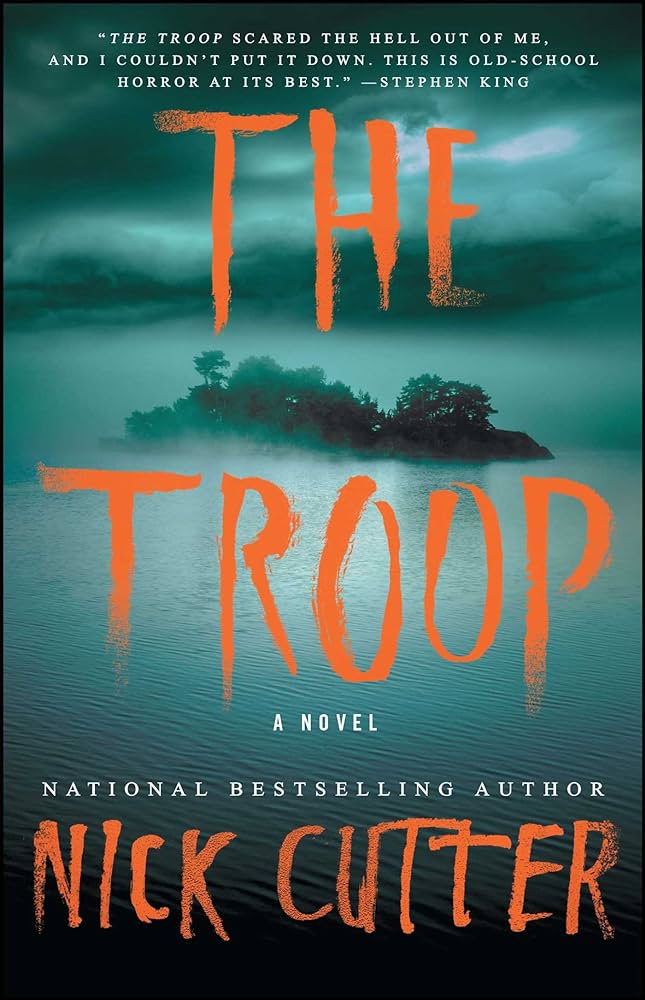
I hated Nick Cutter’s The Troop. Hated it a whole damn lot. I can think of one book that I have reviewed here that I hated more, and one that I hated about the same amount. A third I read before I started the blog, and I’ll get to that later, but that’s about it.
I hated this book so much that about a third of the way through it I decided I was finishing the Goddamn thing just so I could write this review. I will never get those four hours back. Never let it be said I don’t sacrifice for my audience.
The Troop is about a Boy Scout troop and their Scoutmaster who get lost on a camping trip to an island in Canada, and imagine Stephen King’s Thinner, only it’s contagious. All but one of them die. It is a fucking terrible book. You are welcome, if you like, to stop reading now. I will be providing receipts.
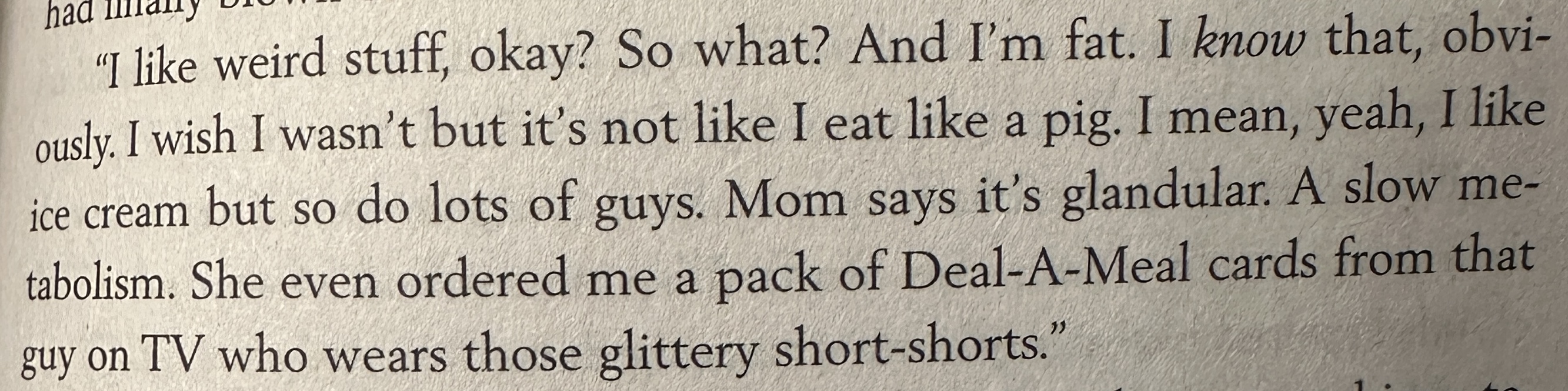
Let’s start with the Stephen King thing. King is quoted on the cover, as you can see, and it is very clear that Thinner was at least partially an inspiration, although the focus on hunger and eating things that aren’t food and, oh, worms are differences from that book. King used to be one of my favorite authors, and still can produce a gem now and again, but he’s developed a disease lately where all of his characters talk like grizzled Vietnam veterans and all of his cultural references date from the 1950s to the 1970s. Nick Cutter is my age and he has no excuse for his characters to talk like this. The book refers to cell phones (he makes sure to throw in a bit where the Scoutmaster asks the kids if they really didn’t bring their cell phones, which were supposed to be forbidden, although he also didn’t bring his, which is unimaginable) and at one point refers to 2002 as far enough in the past that I have no reason to not believe this book is set roughly now. And yet:
This is a fourteen-year-old talking. Now, I don’t have a problem with a fourteen-year-old in 2024ish not knowing who Richard Simmons is. But Deal-A-Meal cards have not been commercially available sincethe nineties. His mom absolutely did not order him any, and he has never heard of them.
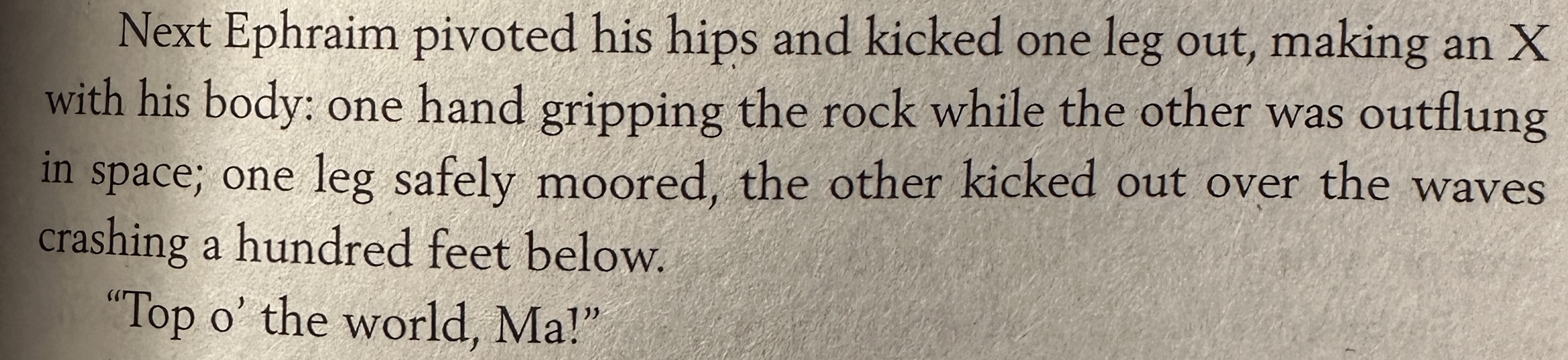
Or how about this contemporary cultural reference?
James Cagney made that line famous in White Heat, which came out in nineteen fucking forty nine.
Feel free to try and turn that description into a mental image, by the way. I can figure out what he’s describing if I try, but … Christ, man, there has to have been a way to have phrased it better than that.
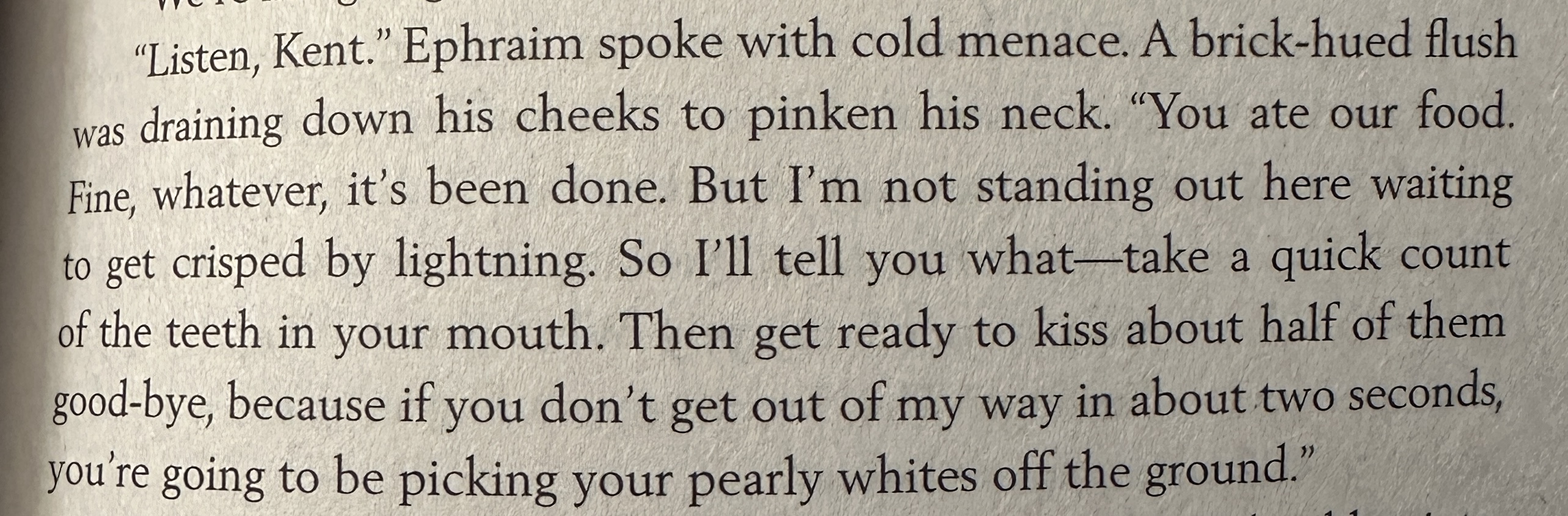
Try and imagine a literal child letting this come out of their mouth:
Also, I’m far from convinced that “pinken” is a word.
I’m going to emphasize right now that while I do have a few of these images to hand (I spent some time griping about the book on a Discord while I was reading it), most of the time I’m just flipping through the book until I find an appropriate quote for a complaint. There’s something awful or stupid or incomprehensible on damn near every page.
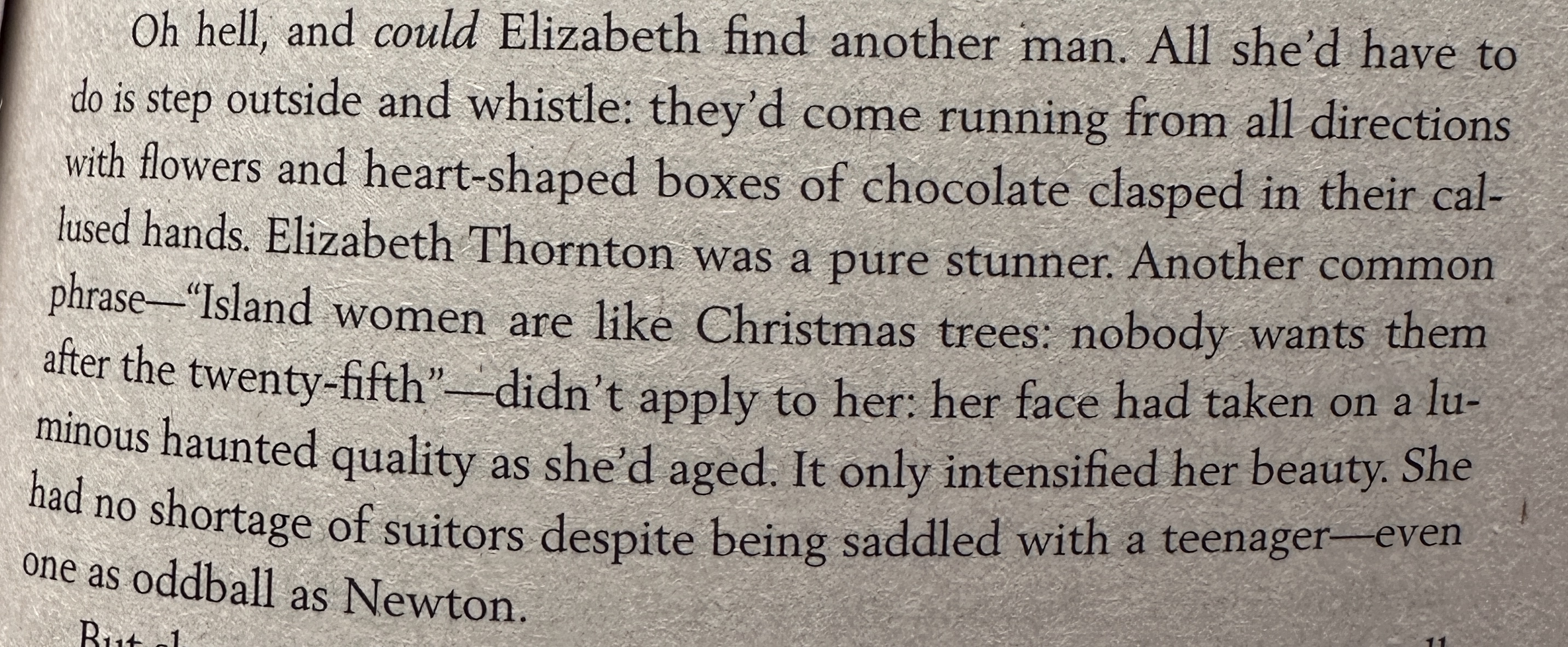
Let’s talk about how the book treats women. First of all, there aren’t any. Literally not a single line of dialogue from a woman in the book. One kid does think this about his own mother, though:
While you’re gaping at the “island women” quote, or the idea that, again, this represents a fourteen-year-old kid’s inner monologue about his mom, note that in the last sentence the author uses the word “even” when he clearly means to use the word “especially.”
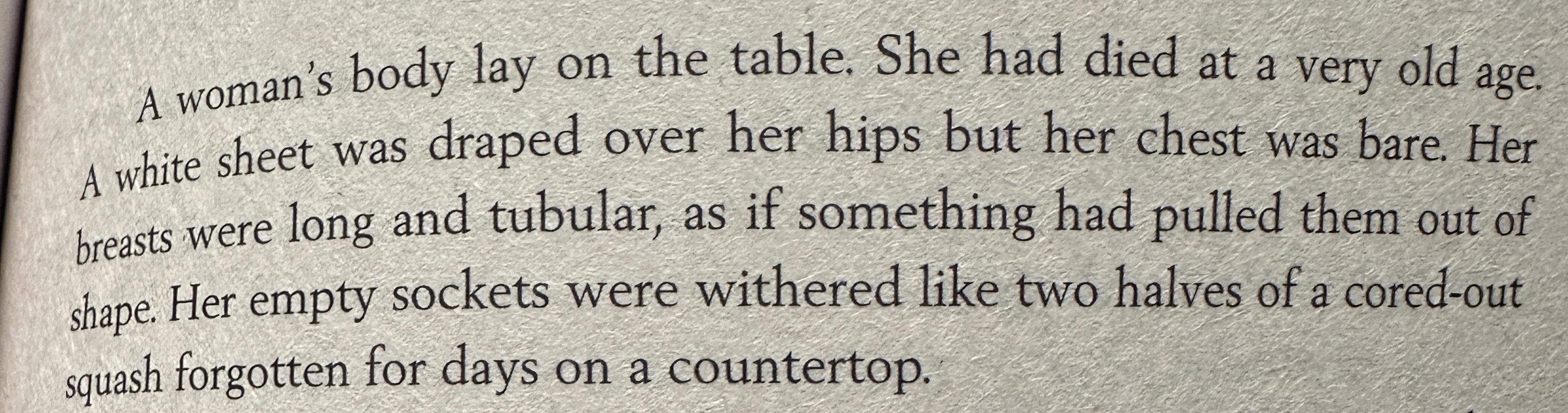
And, hey, when women are mentioned, do they talk about their boobs of course they talk about their boobs:
And for the second time in a row, this leads me into another complaint: every single metaphor and simile in this book sucks. Every single one. If you see the word “like,” you have some bullshit headed your way. Two halves of a cored-out squash forgotten for days on a countertop? Is what her eye sockets looked like? What the fuck?
It gets worse. Here’s two in a row:
Is … is that what the sound sounds like? Like cockroaches “scuttling and shucking,” a phrase every middle schooler uses all the time, in a bowl of semisolid Jell-O? Are you fucking serious? And then, in the next sentence, the saliva in his mouth tastes not like the already-too-specific waxy leaf, but the chlorophyll in said waxy leaf.
What?
Occasionally he’ll throw in a random detail about the world that doesn’t need to not make sense and would be perfectly fine if he just quit trying to be so fucking clever, but we can’t have that:
I am neither a lobsterman nor a potato farmer, but one thing about lobstermen and potato farmers is that they are never found in the same Goddamn town. Potato farms aren’t fucking coastal! What the shit is this?
(This is the paragraph before the one about Mom up there, by the way.)
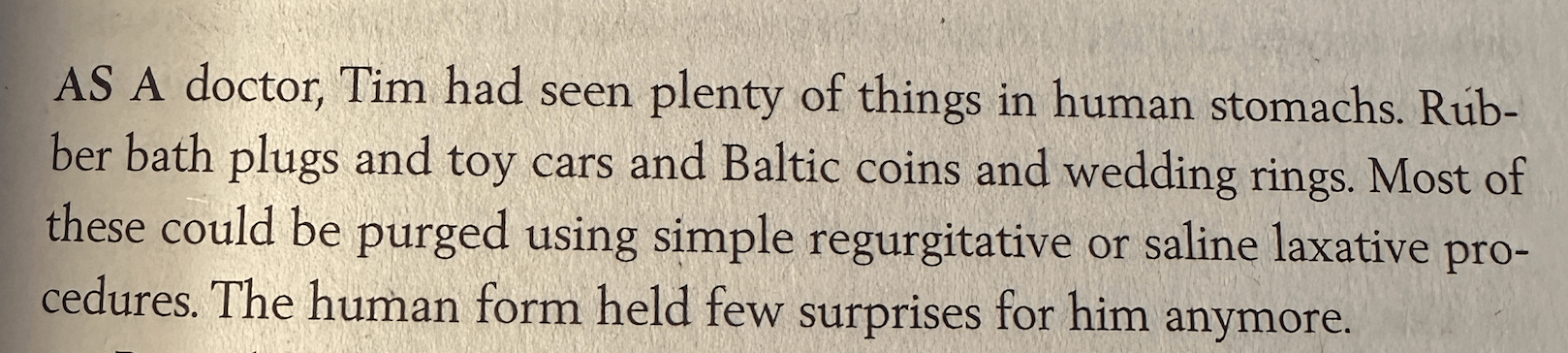
The scoutmaster is also the only doctor in their town, by the way. When the first guy with the skinny-worms shows up, Scoutmaster Tim completely inexplicably decides that the only way to help him is to perform exploratory surgery– easy to do in the wilderness!– which leads to this reverie:
If you were to make a list of random objects that might be found by a, remember, small-town Canadian doctor in someone’s stomach, would rubber bath plugs be the first thing you mentioned? I have seen rubber bath plugs, and they are large, and not easily eaten. And Baltic coins? Specifically Baltic coins? Seriously? Not just … coins? No, we’ve gotta be less realistic than that.
Also, I strenuously object to the idea that the way you get a toy car out of someone’s stomach, or a wedding ring, which might have sharp edges, is to make them vomit it up or shit it out.
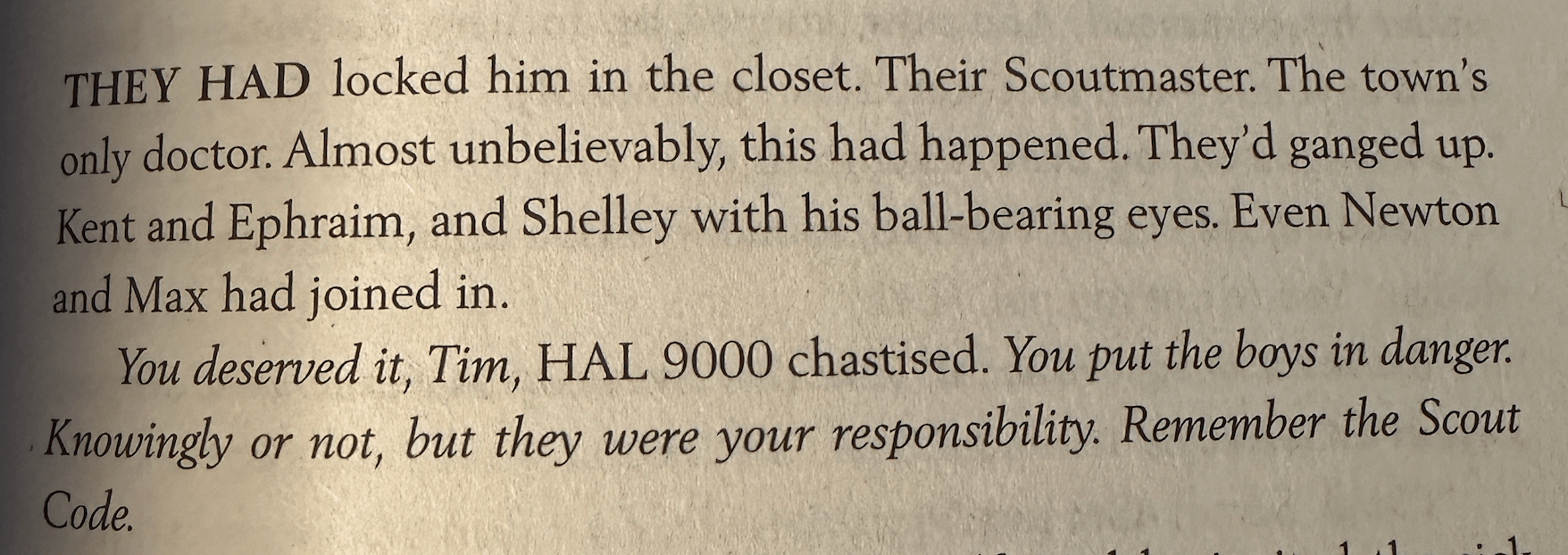
Also also, he uses one of the kids as an assistant for the surgery, which … sure, that’s a good decision, and then naturally he catches the worms. So the kids lock him in the closet in the cabin they’re staying in. Which leads to this gem:
This one’s a twofer; we have bad writing (never complain about your own plot; that fourth sentence should have been snipped for redundancy and ridiculousness, and why the hell does it matter that he’s a doctor here?) and, while Tim is an adult and might have seen 2001, he’s younger than me, and thinking of his own inner monologue as HAL 9000 is just kinda weird.
Scoutmaster Tim is later killed when a tree branch falls on the cabin and somehow manages to crush his head.
You might be thinking I’m nitpicking. I realize that. But I want to reiterate that there’s something stupid or fucked-up on nearly every page of this book, and after a while you just stop extending nonsense any grace.
This is before I get to how graphic the whole book is, or how they take four pages to kill a turtle, or the animal torture lovely described in other parts, or how the book devotes three pages right at the beginning to talking about how terribly nerdy one of the kids is(*), or anything else that might require a content warning. I looked through Goodreads and that stuff alienated a lot of people, but that wasn’t my problem. It’s torture porn and it’s shittily-written torture porn. Naturally, I find myself more offended by the writing than the content.
(*) Hey, you think, this might lead to him coming up with a smart solution to something at some point! Nah. I can’t even remember which kid was the nerd(**). Kent is the big one and Shelley is the sociopath and the others are just kinda there.
(**) That’s not true. Of course the kid named Newton is the nerd.
Oh, shit, I forgot this one:
First, kids vape now. Second, no fourteen-year-old has ever described a cigarette as a “coffin nail.” Third, “confused in his thoughts” is shit writing.
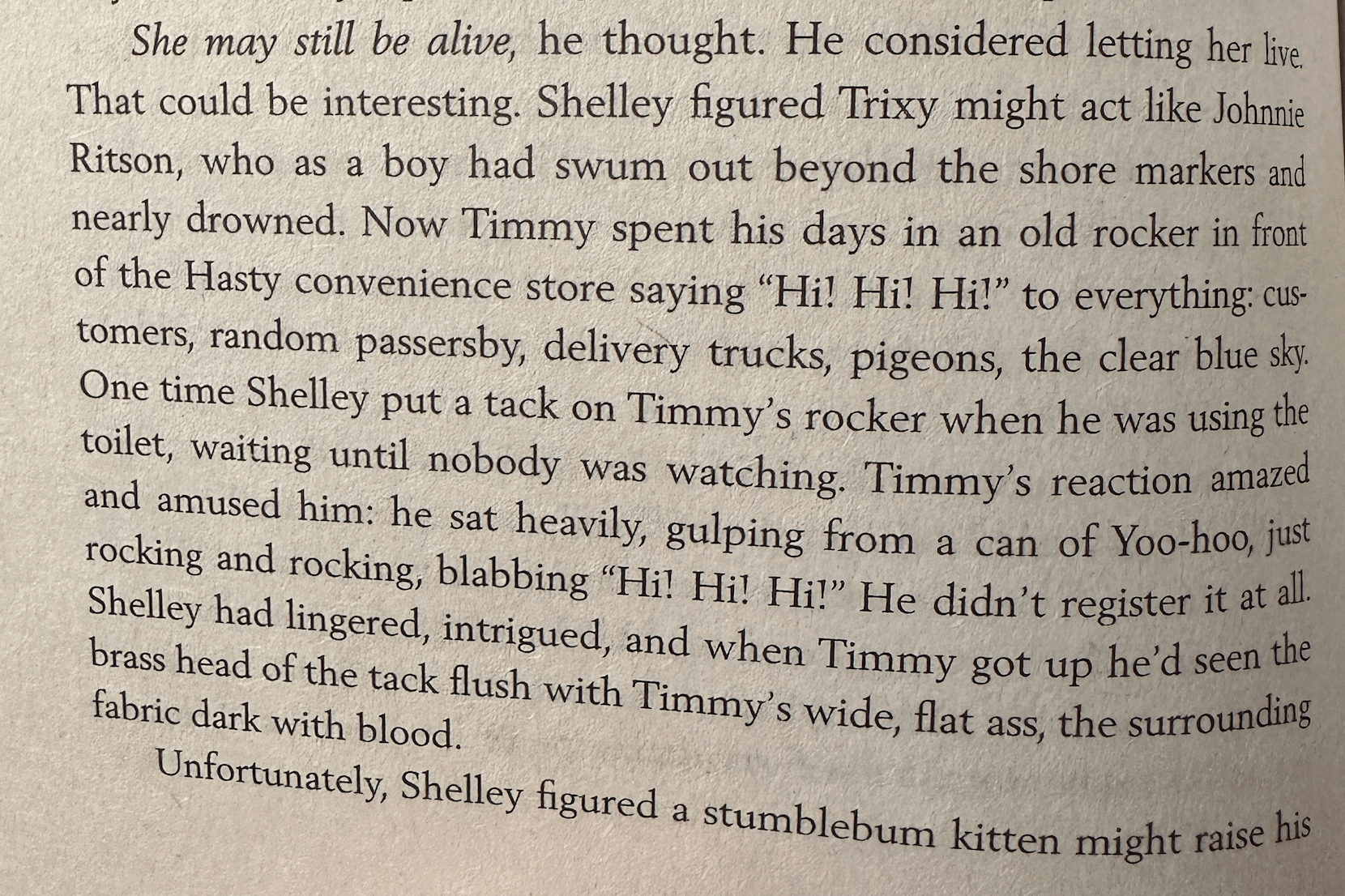
One more absolutely beautiful piece of evidence of just how little editing this Goddamn book got:
This paragraph is embedded in the middle of Shelley reminiscing about drowning his mother’s kitten, which is just super and goes on for a few pages, but do you see the problem here? Johnnie Ritson is Johnnie the first time he’s mentioned and then his name changes. Nobody caught it, and nobody stopped to suggest using the name “Timmy” for the disabled kid might be a little too on the nose.
Don’t miss the use of “stumblebum” in the last line there, either, another example of modern teenage slang.
Guys, I could keep going on for so much longer. This book is so fucking bad. But let’s close with this: remember that third bad book I mentioned up there? It’s The Ruins, by Scott Smith. It’s awful in exactly the same way The Troop is. Upon finishing the book, and before reading the author’s afterward, I commented to my wife that the only books I could think of (at the time) that matched this one in terribleness were Swan Song and The Ruins. And then I encountered this:
I … uh … nope. Nope. I’m going to go put this book in the freezer, and it’s going to stay in there, forever, and I’m going to be very very happy that I started reading it in the morning (and finished it by noon) because being up at 3 AM last night reading this and then trying to sleep would not have worked very well.
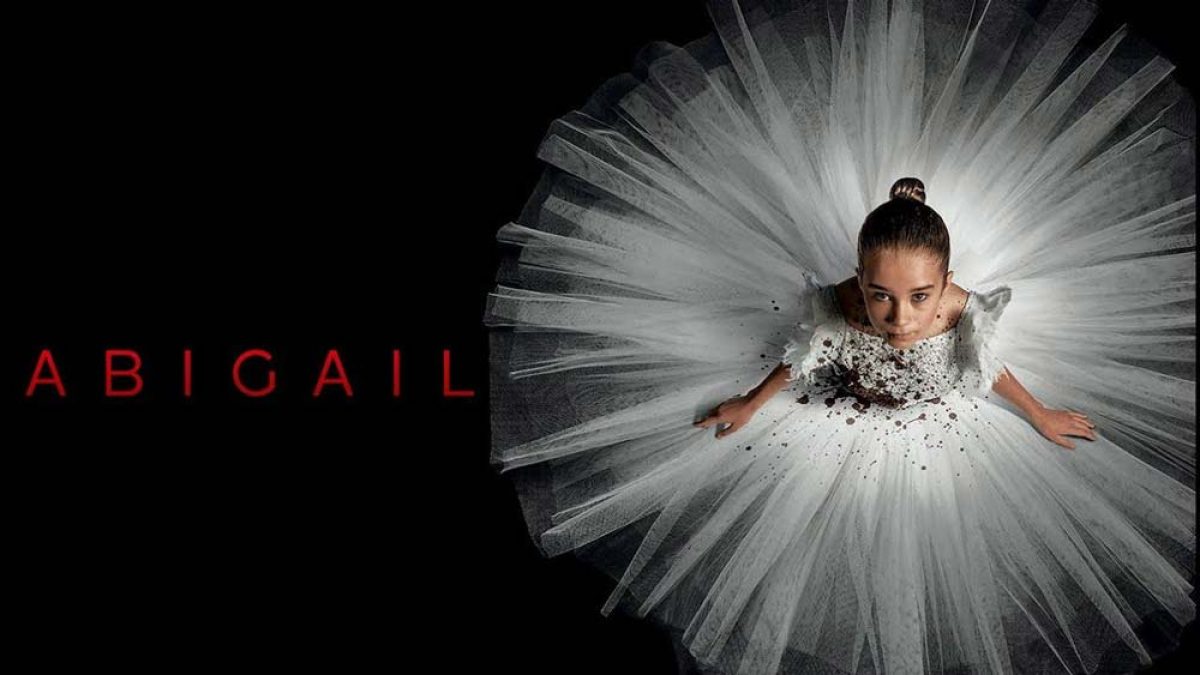
ABIGAIL is one of those movies that technically has a big twist, but if you’re aware of the movie at all, all of the marketing, including the trailers, has spoiled the shit out of that big twist already, and it happens early enough in the film that the twist is kind of also the premise, which makes it hard to talk about. So this sentence will serve as the spoiler-free review: Abigail is kind of a failure as a horror movie– I am bad at horror movies, and I have been since I became a father, and I was never scared. It is, however, a pretty damn effective, predictable but wildly entertaining horror-adjacent action/slasher film, and all in all I’m going to recommend it, so long as you go in with the proper expectations. Expect something closer to From Dusk Till Dawn than to The Exorcist or Paranormal Activity and you’ll be fine.
So, yeah. Spoilers from here out, although once you know the premise, you already know the broad strokes of the movie.
Alisha Weir, am I right? I haven’t seen a child actor this effective since Season 1 of Stranger Things Millie Bobby Brown, and I really don’t think Millie has ever had a role that allowed her to cut loose the way Weir gets to in this movie. Millie has never gotten a line as iconic as “I’m sorry for what’s going to happen to you.” But let’s back up and talk about the actual movie: Abigail starts off as a heist movie, as a group of criminals kidnap a little girl from a massive mansion and then, rather inexplicably, spirit her off to a similarly massive but much older and creepier mansion out in the middle of nowhere, where Giancarlo Esposito tells them to wait with the girl for 24 hours, during which time he’ll extract a $50 million ransom from her father, which they can all split and then be off on their separate ways.
Only, oops, the little girl is a vampire, and, well, it doesn’t go great for them. This plan has some flaws even before you get to the vampire, and my wife called another minor twist early on– all of the kidnappers have screwed over this little girl’s vampire crime lord father at some point or another, and she’s managed to bring them all here so she can hunt and kill them. Two of them die before it’s immediately clear what’s going on, and the reactions of the rest to being hunted by an actual vampire are kind of hilarious. Eventually the main female character survives, blah blah blah, you know how this is going to go.
This movie rides on the strength of its atmosphere and its characters, and the house is effectively creepy, Amelia’s penchant for tossing ballet moves into her fighting style and her hunting (watching her tiptoe across a stairway bannister on her way to try and kill somebody is impressively fucked up; her movement and physicality throughout the movie is excellently done) and the gore level is turned up to 15; the number of bodies and/or body parts that literally explode in this movie is … significant.
And, again, the characters are fun, if broadly drawn; the ex-undercover cop turned criminal, the dim-bulb Quebecois muscle guy, the e-girl hacker, and the Main Character With a Dark Past, along with an ex-marine and a druggie wheelman, plus Giancarlo fucking Esposito, who has never in his life not elevated anything he was in. The biggest problem with the movie is that everyone in it looks like someone more famous than them; the Quebecker looks like Elon Musk, the hacker looks like Winona Ryder circa Beetlejuice, the ex-cop is Not Ryan Gosling, and the druggie is basically playing the exact same character he played in Euphoria, which I guess isn’t quite the same thing but it’s still kinda weird. They all bounce off of each other nicely and most of them get at least a couple of cool moments here and there to chew some scenery of their own. I mean, this moment here. I love it:
The house itself is straight out of Resident Evil, and I mean it as a compliment when I say this movie would make a great video game, although it kind of already did, except with a little ballerina girl instead of nine-and-a-half-foot-tall Lady Dimitrescu. The scenery is great, the pool scene is horrifying, the ‘plosions are gross, the characters are fun, and at least some of the acting is absolutely phenomenal. Again, it’s not scary, so don’t go in wanting that, but I’m really glad we actually sat down and watched this last night. I don’t watch many movies any more so I like to be able to recommend them when I do. Two thumbs up.







 Welcome to infinitefreetime dot com