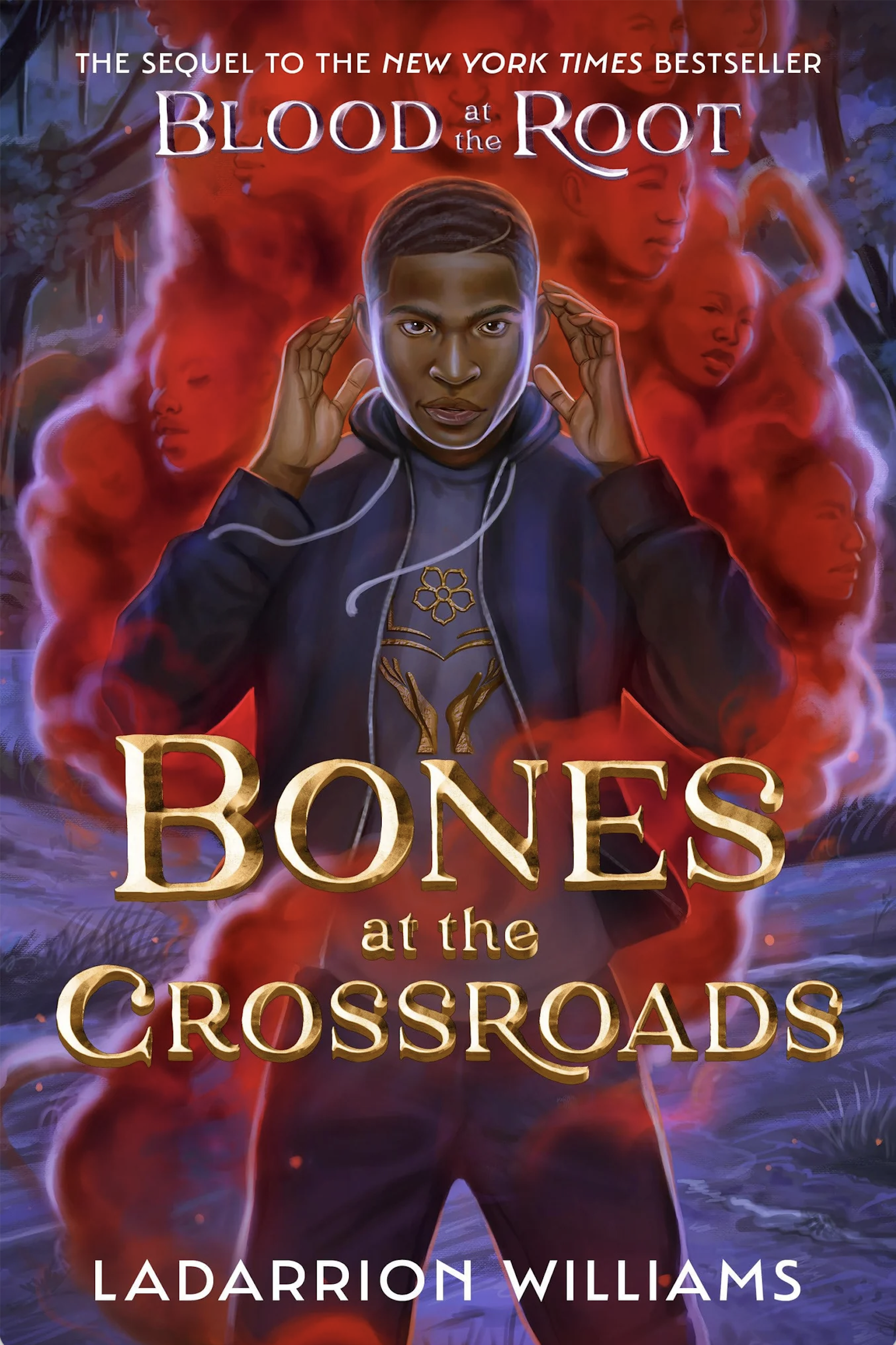
Before you read this review, which is of the second book in the Blood at the Root series, I’d like you to read my review of the first book, Blood at the Root. Why? Because it’s kind of fascinating just how cleanly my reading experience of Bones paralleled my reading of Blood:
I definitely and absolutely have had Malik in my classroom before. Even more so in this book than in the previous one, honestly; Williams calls Malik “messy” in his Author’s Foreword to this book, and I feel like Malik’s messiness, and to be more specific, his temper, maybe hurts him more in this book than it does in Blood. This is a kid who has been handed a raw deal by life on a ton of different levels (the magic kinda makes it better, I imagine) but one way or another he doesn’t handle it like a grown-up. Why? He’s not one.
Watching Malik navigate romantic relationships? Also super familiar.
I would say the moment where Williams absolutely stomps on the accelerator is closer to the 2/3 mark of the book than the halfway point, but while Blood came close to making me cry a couple of times– something that, let me repeat, almost never happens while I’m reading– page 368 absolutely 100% got me. Like, a literal gasp, and a well of pride, and I’m not going to pretend I was sobbing or anything but there were actual real tears.
I am not enough of a nerd that I’m going to figure out exactly what percentage of the book was finished at page 368, and you can’t make me.
NO.
It’s 67.6%, so my estimate was right on the money, fuck you.
Anyway, I referenced “twists and turns and betrayals” in the first review, and … YEAH. Along with some major reveals and some major shake-ups of what you thought you knew from the first book.
And then the Goddamned thing ends on a cliffhanger, and … remember when I was reading Godsgrave, a million years ago, and I said that I’d never been happier to have the sequel of a book on hand before finishing it? The sequel to Bones at the Crossroads hasn’t even got a release date yet, so LaDarrion Williams is about to acquire a new, and very impatient, roommate.
I will ding the book a tiny bit for dragging occasionally before that pedal-to-the-metal moment that carries through the rest of the story, and it doesn’t mean a whole lot to say this is the best book I’ve read so far this year on January 7th, but this was real real good and if you haven’t read Blood at the Root, go pick that up, and read slowly, and maybe by the time you finish Bones the end of the trilogy will be available.
A warning: I haven’t even written it yet, and I feel like this review might be a little unfair, so adjust your expectations accordingly. This is the third Travis Baldree book I’ve read and the third review I’ve written of his books, which means that I’ve cursed at autocorrect for changing “Baldree” to “Balder” approximately one hundred and forty thousand times.
I loved his first two books. Legends & Lattes was my second-favorite book of 2023 and Bookshops & Bonedust, the prequel follow-up, was an honorable mention. And I’m going to be a bit of a wanker and quote myself in my write-up of L&L for the Best Books of the Year post:
The sequel is on my shelf right now and I haven’t read it yet because it’s set before Viv opened the shop and I’m not sure I’m nearly as interested in her as an adventurer. I want more of the coffee shop. I will read about Viv and Tandri making delicious coffee and being quietly and happily in love for a hundred years, and I will love every second of it.
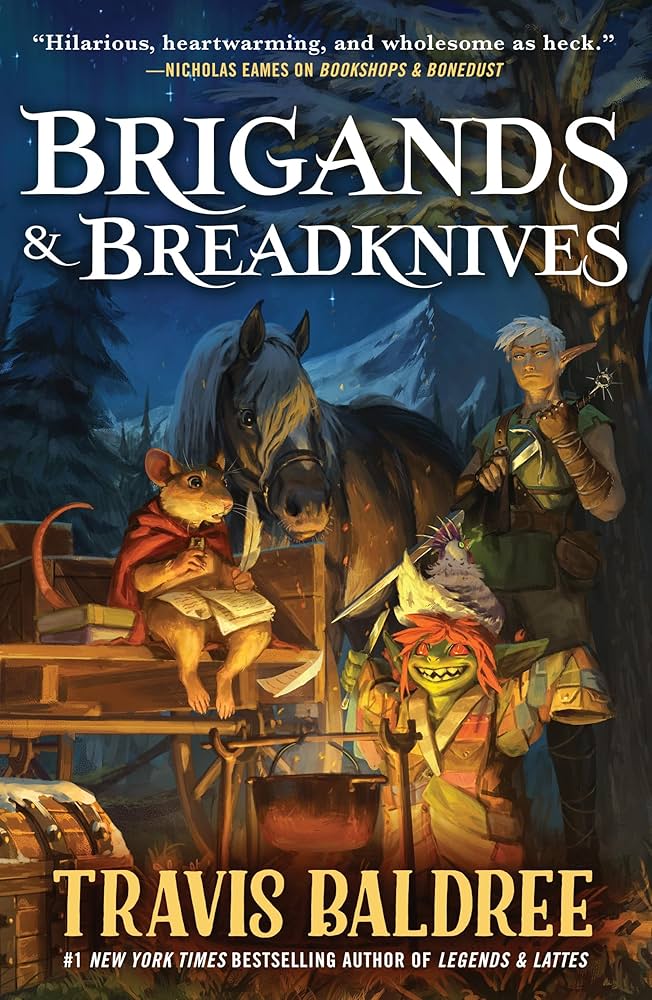
And Brigands and Breadknives is about Fern, the ratkin bookseller from Bookshops & Bonedust, so it’s still not a book about Viv and Tandri. Now, I knew this going in! Fern’s right there on the cover, and Viv and Tandri are nowhere to be seen. But I figured that since it was at least a chronological sequel to L&L, we’d have a good amount of both of them in there anyway, right?
Not only do we get very little of Viv and nothing of Tandri, the book starts with Fern screwing both of them over, and to make things worse, abandoning Potroast, who was absolutely the best thing about the second book. This book is basically about Fern’s character flaws. I mean, there’s other stuff going on, but I came very close to abandoning this book, which was shocking to me. And what makes this somewhat unfair is that I’m basically punishing the book because Travis Baldree, for the second book in a row, didn’t write the book I wanted him to write, which … isn’t exactly his job as an author? But I didn’t like Fern as a character nearly as much as Viv and Tandri going in, and when Fern gets drunk and pulls a huge asshole move within the first few chapters, I switched from “I don’t like her as much as I like these two characters I really like and this cool pug-owlbear thing” to “I don’t like this character at all, and I want the people I liked back.”
I dunno. It’s not a bad book. I can’t and won’t make that claim. It has a lot of the same strengths that made the previous two books such a pleasure to read, so it’s entirely possible that someone else with slightly different preferences about the characters might have different feelings, and I wouldn’t argue with someone who really liked it. But, man, it just wasn’t what I was looking for, and I still want my damn Viv and Tandri book. They got married! OFF-SCREEN! Write that goddamn book, Travis Baldree!
A slight sidenote, and I’m gonna quote myself again, because I suck:
I need a word for the precise moment when you realize you're not enjoying something you really hoped was going to be awesome.
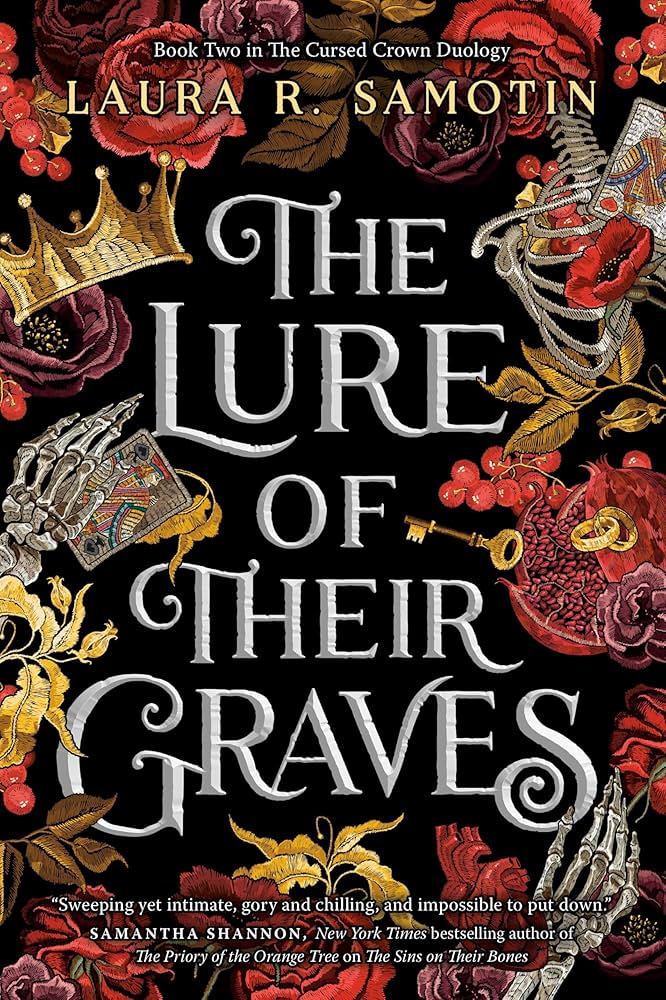
In April of last year, I reviewed Laura R. Samotin’s The Sins on their Bones, which I was sent an eArc of by a publicist. I liked it enough that I finished it in six hours and immediately ordered a physical copy of it, and while it’s been sitting on my shelves for a minute or two, I got the sequel on release day as well.
And … well, I could literally rewrite the previous review more or less word for word for this book. I finished The Lure of their Graves in an hour before going to sleep last night and a few hours across this morning and afternoon– less than a day, easily– and if I talk about it much it’s going to seem like I hated it. My gripes about the first book still apply to the sequel; everyone’s obviously Jewish but the word “Jewish” never appears; Russian only exists for the phrase moy tzar, the main character is kind of a lot, the characters in the book are supposed to be the main figures of a government but come off more like a grad school polycule, etc, etc. I’m slightly revising my initial “holy shit, this book is gay as hell” assessment; it’s gay as hell, but what it actually is is a world where literally everyone is bisexual. Sexual orientation and possibly even sexual preference effectively doesn’t exist. Dmitri Alexeyev, the Tzar from the first book (and still the tzar of the second, although he’s never going to feel like a ruler of anything at all) spends most of the book trying to decide who he should marry to keep his country and the surrounding lands stable, and the three main candidates are a man, a woman, and a nonbinary person who makes it abundantly and repeatedly clear that they are willing to swing any direction the vine can get to.
Also, I genuinely don’t get the title. It’s possible that I’m dumb, but I don’t get it.
That said, once again I enjoyed the hell out of this book and I will be reading more from Laura Samotin in the future. Yes, I know I just did nothing but complain. I contain multitudes. Deal with it.
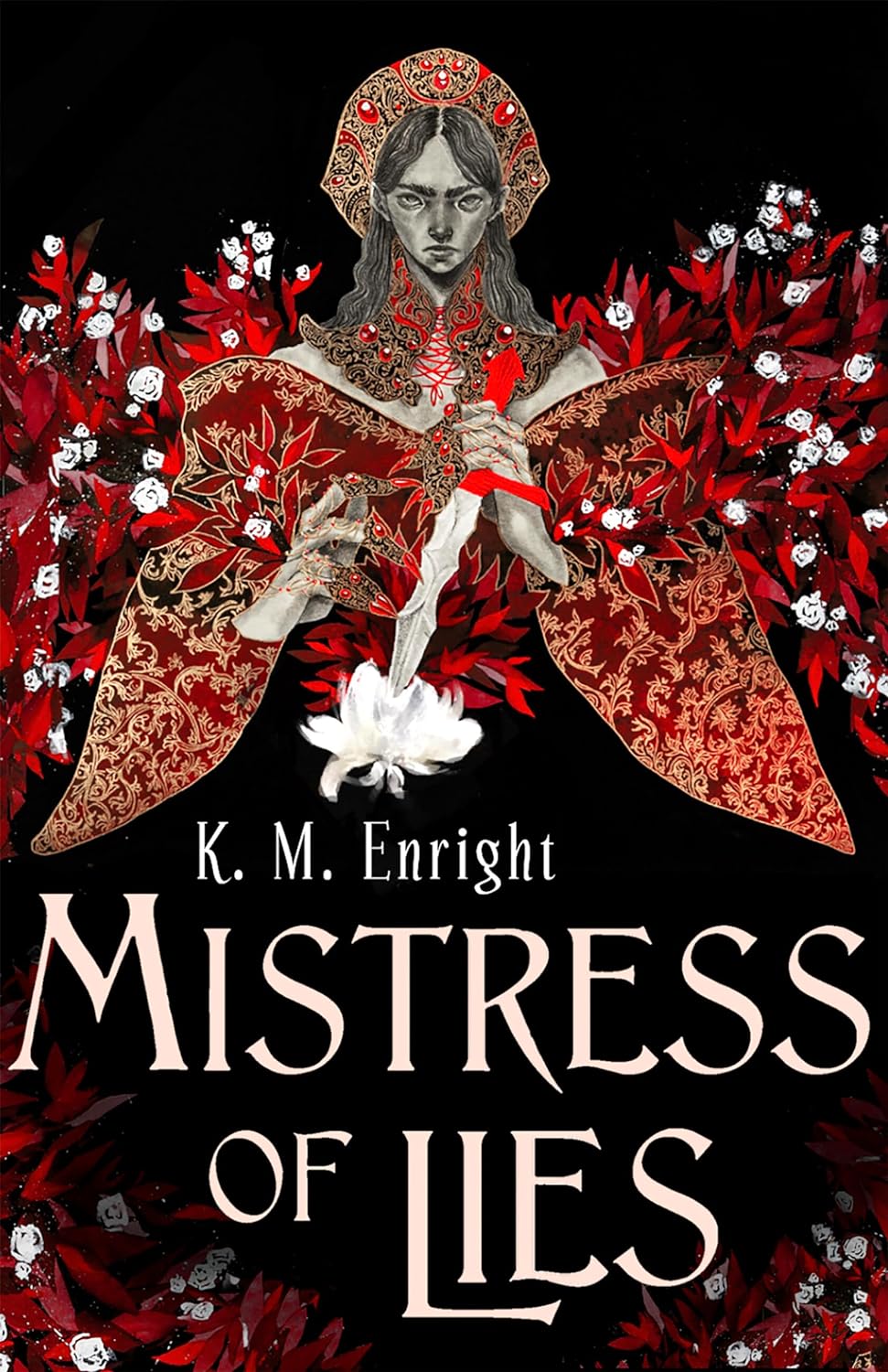
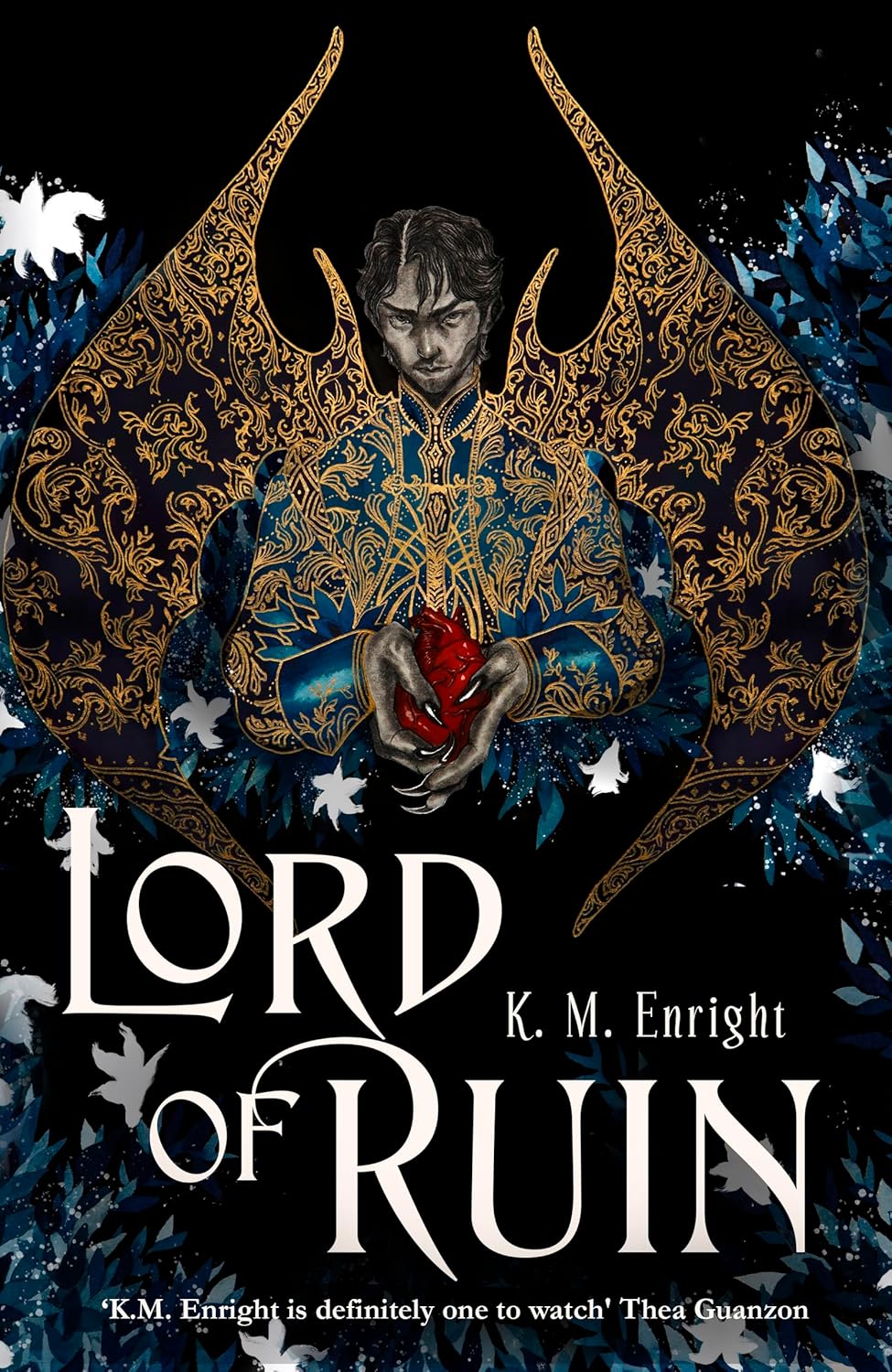
I apparently didn’t review K.M. Enright’s Mistress of Lies when I read it back in July, but I liked it quite a lot, and I finished the sequel, Lord of Ruin, yesterday, and because any time I read a Laura Samotin book I have to have weird synchronicity with the book before it, it’s also super gay and involves a spymaster and a king and an attempt at a rebellion and a fair amount of explicit sex, although this one also involves the scariest vampires I’ve ever encountered in a book (Oh, and the book before this, Coffin Moon, also involved vampires, so we’re all about the themes recently) and a Polynesian monstrosity called a manananggal that is not something that your nightmares need to be aware of in Donald Trump’s America.
Oh, and magical trans people. I’m deliberately withholding details. But transitioning at least can involve magic– it’s not clear if it has to– and you’re going to be confused at a couple of points in this book by who has what body parts, because being trans in these books does not work like it does in the real world. Just a heads-up. The Cursed Crown books are a duology that is now finished, and Enright’s series still has one more coming. I’m definitely in.
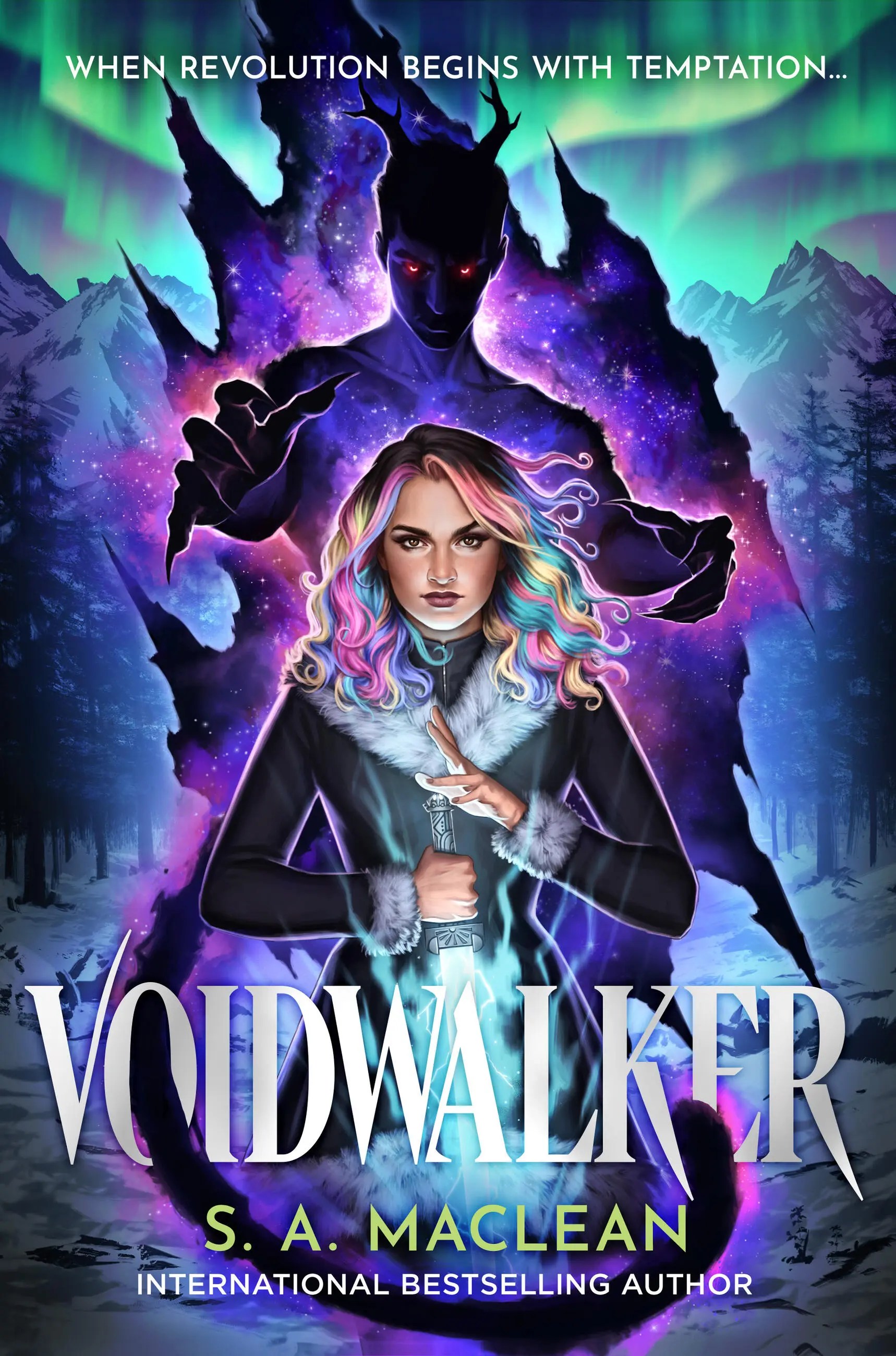
It’s nice to be surprised once in a while, although maybe this book shouldn’t have been a surprise. I’ve been losing steam with my Illumicrate book box subscriptions; I cancelled my quarterly horror box after the third book in a row that I already had, and upon reading the description of the book that turned out to be S.A. MacLean’s Voidwalker, I very nearly skipped it. To be clear, the way Illumicrate works is their boxes are semi-blind; they’ll give you a description and a theme but you’ll have to do a bit of detective work if you want to know the actual title of the book before it shows up on your doorstep. And as Illumicrate’s main subscription line has been leaning far too hard into romantasy lately for my tastes, and the brief description of Voidwalker I had felt pretty bog-standard for the genre, I was disinclined to pay for it at first. Then I learned that the author was the same person who had written the excellent The Phoenix Keeper and decided to go ahead and let it ride.
(I suddenly find myself wondering how MacLean managed to get featured in two Illumicrate boxes in less than a year; her agent may be owed a raise.)
The premise still isn’t the most original thing on the planet, even considering that romantasy is a genre ruled by the trope and its biggest fans seem to literally want a checklist of Things What Are Supposed to Happen that they can go through as they’re reading. The main character is a smuggler; there’s a turf war happening between two members of a vaguely-fascistic race of antlered and tailed humanoids who each rule a chunk of the world and, oh, also eat people; the turf war turns into a revolution, and one of the daeyari (those are the monsters; I’m picturing Nightcrawler with antlers, but not blue) turns out to be really sexy.
And … well. There’s an interesting mix of fantasy and science fiction going on here, the main character rides a Void Horse, which is a horse that is actually a lizard, possibly my favorite kind of horse; and there’s lots of hints at a wider world that I assume will pay off in future sequels. I’m being snarky, but I didn’t really expect much from Phoenix Keeper and loved it; I expected even less from Voidwalker and enjoyed it enough to write about it and recommend it. MacLean has a great grasp of character that serves this book quite well; the relationships between MC Fionamara and the other secondary characters in the book are what keeps the book interesting, and while Antal, the daeyari, initially comes off as the same Tall Dark and Scary broody big-dicked male character that I’ve read about in a thousand Sarah J. Maas books and more recently in Alchemised, he’s got enough unexpected twists to his personality that I ended up liking him by the end. And while I hate the phrase “slow burn,” MacLean takes her time with the romance angle of things, so by the time Fi and Antal start boning it feels earned and not inevitable.
Honestly, my biggest gripe is a deeply nerdy one, which is that S.A. MacLean doesn’t know the difference between antlers and horns. Do you know the difference? I didn’t until recently, but now that I do I’m going to notice every time the words are misused in books for the rest of my life. There are other differences, but antlers are shed, and horns are permanent, and what the daeyari have are horns, even though they look like what you’re probably picturing when you hear the word “antler.” This would have been less of a big deal was it not an actual plot point that daeyari horns grow throughout their entire immortal-unless-killed lives and so you can get an idea of how old one is by the number of points and bends in the horns. So they are definitely horns and not antlers.
And now you know. Even if you weren’t interested in the book, hopefully the random factoid made reading the post worth it.
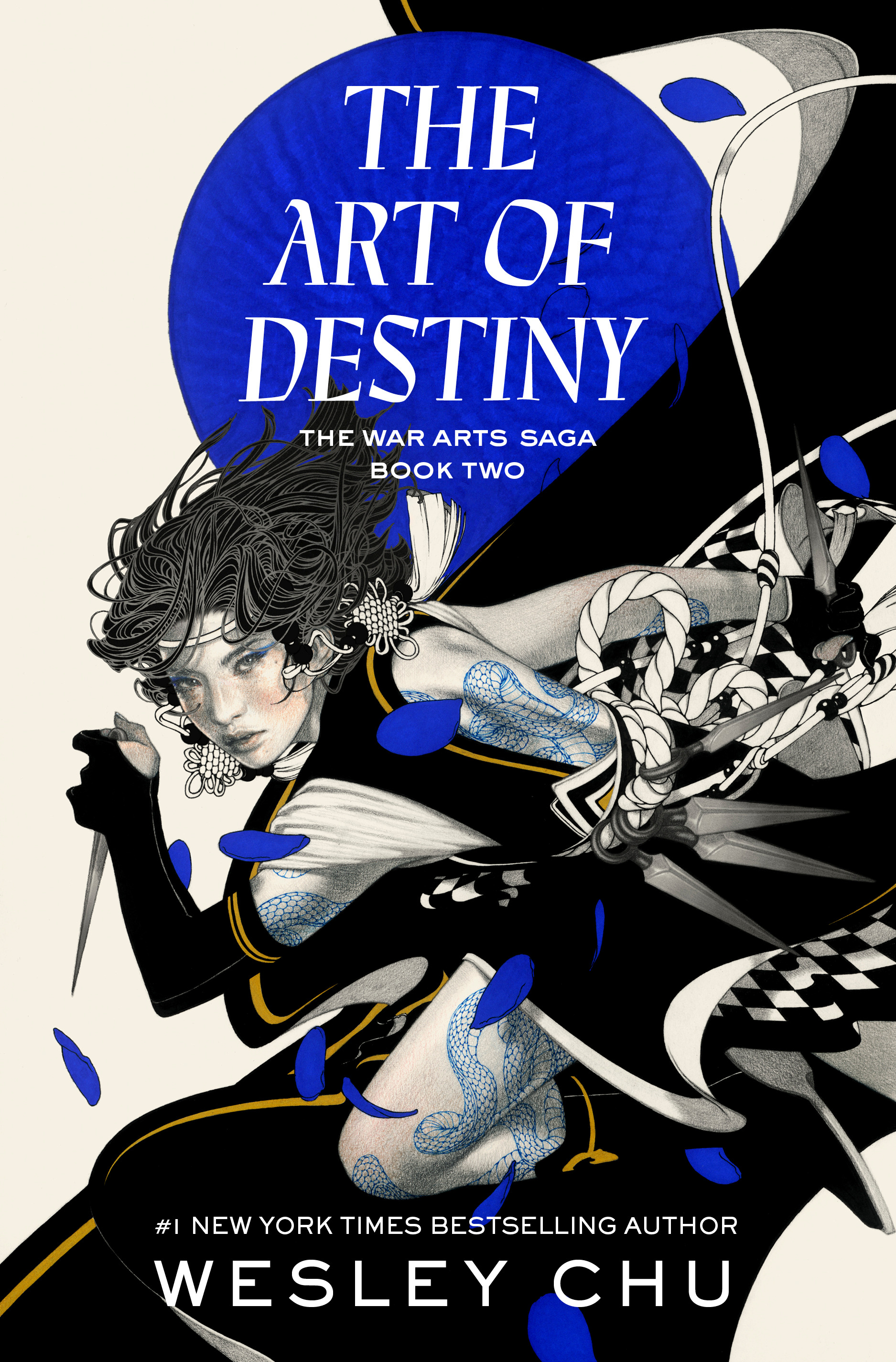
A quick recap: I got asked if I was interested in reviewing Book Three of Wesley Chu’s War Arts Saga, and replied that I’d love to, but I hadn’t read the first two books yet, and somehow that led to me getting sent review copies of the entire trilogy. My review of the first book, The Art of Prophecy, is here, and while I’m not going to go directly into Book Three like I thought, there’s only going to be one book in between, so I’ll probably have a review of that next week sometime.
But yeah. I enjoyed the book, but it definitely has a case of Middle Book Syndrome, where it sort of feels like they’re moving pieces around in preparation for finishing it off in Book Three. Destiny sticks with its same crew of players as the first book; Jian and Taishi are in training, Qisami spends most of the book on a job, and Sali spends the book trying to get the fragment of the Khan’s soul out of her body. Qisami feels like the main character of this one, which is a little odd, as I felt like she was the least important of the leads in the first book, to the point where I don’t think I mentioned her in the review. She has some interesting character development that is almost entirely tied up in spoilers, and Sali has a major status quo change and a clear direction going into the last book. The characters don’t interact as much in this one, either; they all end up in the same place for the last third of the book, but even then nobody really runs into each other; they’re all just doing their thing in the same city.
Jian and Taishi … feel kinda wheel-spinny. Taishi was easily my favorite character of the first book and she’s not got nearly as much time on-page in this book, and Jian gets captured again and it just sort of feels like a retread of a lot of what happened in the first book. There are some interesting developments in the religion around Jian; I was thinking as I was reading Prophecy that it’s super rare in the real world for a prophecy to be proven wrong and its supporters to just shrug and give up, and … well, turns out they didn’t, but I won’t say much more about it than that. But Jian still kind of feels like an immature kid for the majority of the book. There are some signs of maturation toward the very end of the book, so hopefully I won’t feel this way about him in the conclusion to the trilogy.
Don’t misunderstand me; even if I had bought these, this certainly wouldn’t put me off the third book, as a lot of my gripes are just part and parcel of the way middle books in trilogies tend to be messy. It’s not like there was much of a risk of anyone trying to read this as a standalone.
I’ve got another book I was sent for review to read next, as it’s out on the 16th, and then I’ll be diving into the conclusion. Stay tuned!
There is a very specific type of bad writing that I feel like we need a name for, and this couple of paragraphs from the book I’m currently reading may be the literal Platonic ideal of it:
I’m not going to name the book, but the sleuths and generically curious among you shouldn’t have a whole lot of trouble figuring it out.
This is the wrong verb, in a way that would make Mark Twain’s eyelid twitch. One does not “snatch” a piece of paper that is sitting on one’s own desk.
Also the wrong verb. I also kind of want to quibble about the use of the word “worn,” which implies age– “tattered” might work better here. That said, I think this is probably the point I’m most willing to argue about.
A blockade “of sorts”? You’re surrounded by twenty thousand enemy troops. That’s a fucking blockade. Or, even better, a siege, which has the advantage of being the correct word.
Two sentences ago you said the blockade happened “one night past,” and now they’re testing your defenses “each night.” You’ve got to be outnumbered thirty to one; what the hell could they be waiting for?
How are the scouts getting past the twenty thousand enemy troops? Why do you need scouts when you’re fucking surrounded? Also, how the hell did this letter get past the siege in the first place?
This is Capital One arena, which seats twenty thousand, in far tighter accommodations than troops besieging a fort would use. See note #5.
This is a world where dragons exist. So do the Uraks themselves, who are basically tall orcs. “Monsters” really doesn’t tell me anything about what these “larger beasts” are.
Why? Why in the world would you not believe them?
I don’t think you will, sir, and you’re sending this letter because you don’t think you will either, so “No matter” is a really weird way to conclude this letter.
This book is six hundred and eighty pages long, and this type of thing is on nearly every page, although it’s quite a bit more concentrated than usual here. I’m going to finish the book today, because while the writing is … again, I need a word more descriptive than “terribad” here, the story itself is engaging enough to keep me interested. But god, man, find a better editor. You need the help.
The standard disclaimers apply: Dan and I are Internet Mutuals, the origin of which is lost to time but almost certainly involves Twitter somehow. I spend a fair amount of time hanging out in his Discord server, which is, in fact, the only Discord server I spend any time in. And while I reviewed The Warden, the first book in this series, I somehow did not review Necrobane, the second book. My vague recollection is that I had kind of complicated feelings about it and the review just kind of got away from me; I didn’t dislike it, although I do have to talk about it in order to talk about Advocate.
Which, by the way, I’m gonna screw this up: the name of the book is Advocate, not The Advocate. I keep wanting to put that The in there.
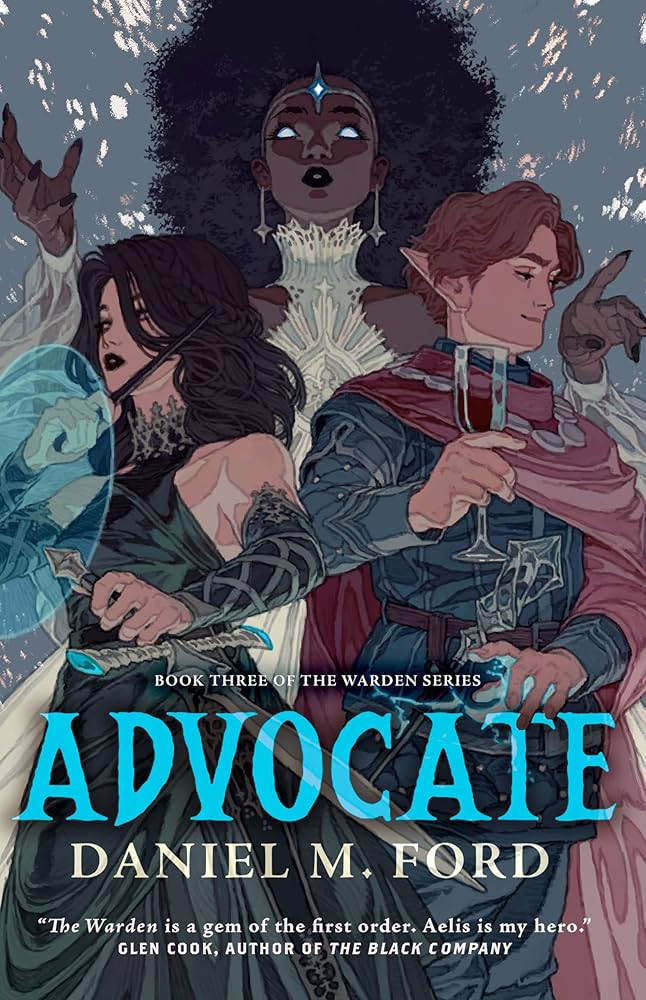
So let’s rip the Band-aid off here: viewed on its own, I really enjoyed Advocate, for much the same reasons I enjoyed Warden, and the rest of Dan’s work. Aelis is a fabulous asshole, of a type I enjoy reading about, and a couple of the new characters, particularly an alcoholic gnome named Mihil and a fellow Warden (and ex-girlfriend) of Aelis’ named Miralla, are also a lot of fun. That’s Miralla in the back on the cover, although the elf on the right is not Mihil, even though he should be.
(I get why he isn’t; that’s Amadin, another Warden, and he’s a fairly important character, but I suspect the real reason Mihil isn’t on the cover is that including a gnome in the composition would make placing the cover text tricky.)
The bulk of Advocate unfolds like a mystery, although we know who committed the crime from the first pages of the book, and Aelis’ job is less to prove her former mentor innocent than to convince the court that no crime was committed in the first place. The story is satisfyingly twisty-turny and Aelis gets plenty of time to show off her two best character traits: her utter confidence in her own ability to outwit literally anyone and her tendency to make a snap decision, get in over her head, and then somehow come out on top anyway. There’s lots of swordplay and quite a bit more actual necromancy than what we saw in the last couple of books.
Advocate‘s biggest problem is that, while the cover calls it “Book Three of the Warden Series,” it is, for now at least, the final book of the Warden series, and it’s structured much more like Book Three of Six than Book Three of Three. But let’s back up a little bit and talk about Warden and Necrobane.
Warden ended with Aelis screwing up in a fairly spectacular way, potentially unleashing a continent-wide zombie plague. I was expecting the rest of the series to be focused on that not-minor problem, and the book went an entirely different way than I expected, dealing with what I thought was going to be a two-book problem in about a hundred pages or so and then pivoting into something else. At the end of Necrobane, Aelis’ love interest is magically bound to a particular plot of land in the midst of a wild forest a fair distance away from Lone Pine, and Aelis is unable to figure out how to free her. Then, at the end of the book, she is summoned to the city of Lascenise, a major (and wealthy) metropolitan area, to serve as an Advocate for her old mentor, who has been accused of murder. An Advocate is basically a Warden lawyer; Bardun Jacques has a lawyer but is entitled to a Warden defending him (and investigating his case) as well. He has asked for her specifically. She has no real choice but to go.
This was another left turn, and I was concerned with what it meant; that Book Three would be taking place in an entirely different place and with, importantly, an entirely new cast— Maurenia being magically stuck on a couple acres of land a week or two away, and half-orc werebear Tun being entirely unsuited to life in a city. And, in fact, that’s exactly what happened. The two stories do end up knitting themselves together, but Tun’s presence in the story is minimal and Maurenia’s role is basically to be something else that Aelis has to worry about in addition to the rather significant number of new problems the story is dumping on her head. It’s probably important to point out that Aelis was going to have to head toward civilization anyway, as she was going to need access to libraries to figure out how to release Maurenia, but she’s more or less stuck there until her Advocate duties are discharged. Making things worse, in her last scene with Maurenia before leaving it’s made clear that there’s a time limit on how long she has to break the spell before Maurenia is, effectively, taken over by the forest.
(Side note: Necrobane also features a fight with one of the creepiest monsters I’ve seen on-page. The book contains a tooth golem, which is every bit as awful as you might think, and maybe worse.)
So your appreciation of Advocate is going to be contingent on how much you like Aelis, and how willing you are to lose the supporting cast we’ve grown to like over the last two books. This is what I mean by it being a better “book three of six” than an end to a trilogy; there’s lots of expansion to the worldbuilding and lots of character development for Aelis (we meet her family!) and all of that is cool but if you were really vibing with her and Maurenia’s relationship, or her mentor/mentee relationship with the little girl she’s teaching to read at the end of Necrobane, you’re gonna have a hard time. And this would be much easier to bear if we knew there was Book Four on the way out there, but Tor has really screwed this series over(*) and right now there isn’t one. I decided to star-rate it on its own merits, mostly because no one can stop me, but I can imagine other readers being less happy.
I want more books in this series, in other words, not only because the world is fascinating and I want more but because I think the story and the characters deserve it.
(*) Not my story to tell, unfortunately, but I feel like they owe Dan another trilogy to make up for how they treated this one. Even if I didn’t know him, the simple fact that somehow I have bought five copies of the three books in this trilogy and still don’t have a matching set to put on my shelf would have me deeply pissed.
My wife genuinely suggested to me, half an hour ago, as I was telling her that I had to write this and that I was not looking forward to it, that I just make the entire post a single word:
“Don’t.”
And … well, no. Perhaps the most frustrating thing about this series is how close to being remarkable it is. Most of the reviewers certainly seem to think it’s amazing; the lowest-ranked of the main Archives books is at 4.51 on Goodreads, which is hardly a failure.
And in many ways it really is remarkable. I stand by my repeated assertion that The Way of Kings is an amazing fucking book. But unfortunately the series follows what has become a sadly typical trajectory of the fantasy megaseries, that being that each book is worse than the book before it. And much like the best example of this phenomenon, A Song of Ice and Fire, the first book is so good that there’s plenty of room for the books to get worse before they even begin to approach being bad.
So let’s start off with some good stuff. The books are clearly carefully planned out. George R.R. Martin and Patrick Rothfuss are never releasing the next books in their series because they have written themselves into corners. I believe completely that Sanderson is going to deliver on books six through ten if he lives long enough, and I may even buy them if only to have them on the shelf. He’s going somewhere with this and he knows what he’s doing. And while I have some serious issues with his worldbuilding– more on that later– there is no doubt that it is both deliberate and meticulous. It’s not easy to write a five-book series in the first place! I certainly couldn’t do it! It’s even harder when each book is over a thousand pages long and all five of them come out in a fifteen-year period of time where you also write and release seven hundred other books.
By all rights, these books should be much, much crappier than they are. It’s amazing that they’re even readable, to be honest.
But about halfway through Oathbringer, a book that I abandoned early the first time I tried to read it, the books took a turn that I wasn’t expecting.
Unfortunately, that turn was directly up Brandon Sanderson’s ass.
The Cosmere has its fans, I am aware of this. I am very very much not one of them. For those of you unaware of the meaning of that term, all (perhaps most? Let’s go with most) of Brandon Sanderson’s books exist in the same universe. During the time where I was reading his work regularly, he hadn’t really revealed this little detail of his work, and any connections between different series either went unnoticed or were dismissed as Easter eggs of no particular real significance.
You can imagine my dismay when the fucking annoying talking sword from Warbreaker, by far my least favorite of Sanderson’s books, showed up in Oathbringer, and you will have to take my word for it that said dismay increased significantly when it became clear that not only was the sword not going away but it was far from the last intrusion his other books were going to make into Stormlight. It was never really explained why the sword was there. It just was. Other characters from his books showed up too, one with a pretty prominent role, others in cameos. Other planets were frequently discussed, and travel between them became a sub-theme. And after a while, every time I encountered a character I didn’t immediately recognize, I had to play this stupid game where I was wondering if it was just a minor character that after thousands and thousands of pages of narrative I simply didn’t remember, or if it was someone from another book and I was supposed to realize something about it.
Again, you may like the Cosmere. More power to you. Enjoy the wikis. It damn near destroyed the books for me.
I nearly started talking about his characters when discussing the positives of the series, and stopped; most of his characters are assassinated over the course of the series. Kaladin is amazing in The Way of Kings; he has the following exchange in Wind and Truth, which is treated like a mic drop:
“How?” Ishar repeated. “What are you?” He gestured toward Szeth. “Are you… are you his spren? His god?”
“No,” Kaladin said. “I’m his therapist.”
…
Shut up, Brandon Sanderson. Mental illness is a theme of at least three if not four of the books, but it’s handled so, so poorly that I don’t even want to talk about it. Everybody’s fucked up somehow, and it becomes annoying after a while. The final book, one thousand three hundred and twenty-nine pages long, is 70% flashbacks, and the other 30% is mostly self-affirmations.
Which. Yeah. Bloat. I’m not joking about Wind and Truth being 70% flashbacks. Nearly all of the book is presented in a series of visions. What happens in Book Four? At the beginning of the book the bad guys take over a place, and at the end of the book they are driven out of that place again. The actual changes to the status quo over Rhythm of War’s 1200 pages or so could be done and dusted in 250 pages. Whole subplots just never gelled with me at all. Shallan spent two books chasing around something called the … Dustbloods? Ghostbloods! It’s Ghostbloods. They’re from Mistborn, apparently? They’re completely irrelevant to anything, as far as I was able to tell, and the entire subplot could have been cut with no damage. And it takes her away from characters who her interactions with are actually interesting. I don’t think she has a single scene with Jasnah after the third book. It’s fucking ridiculous.
The books are so thoroughly up Brandon Sanderson’s ass that it may be better to stop comparing the series to A Song of Ice and Fire and compare them instead to another megaseries written by an author so famous that he could shit on a napkin and sell a million copies: The Dark Tower.
What I’m saying is that were I to discover that Brandon Sanderson self-inserts into Book Seven, I would not be the least bit surprised.
Gah. I could keep going; I don’t want to. Like I said, I’ll probably buy the rest of the books if only because having half of the series on my shelf will annoy the shit out of me. Will I read them? Okay, I’ll probably read Book Six, because it’ll be interesting to see where he goes with what he’s calling the “second major arc” of the series. I make no promises after that, and I am absolutely not dragging myself through another reread of this monstrosity.
They aren’t terrible. They really genuinely aren’t. But there is six and a half thousand pages of this, and “not terrible” is not good enough motivation to read six and a half thousand pages, and it certainly isn’t enough to get me to recommend them. I won’t stop you, but … God, go read twenty books by other people instead.


 Welcome to infinitefreetime dot com