
I make bad decisions, guys, and it seems like James Islington’s books are just absolutely committed to proving that at their every opportunity.
Islington has written, to my knowledge, five books. I own six of his books. I have read three and a quarter of them. I have liked one of them. I bought and read The Shadow of What Was Lost, the first book of his Licanius trilogy, three years ago. I did not like it very much, but the book as a physical object was remarkable, and I bought the entire trilogy before finishing the first book. I made it, if I remember correctly, less than 25% of the way through the second book before deciding I was done and putting it away. Other than placing it on the shelf and perhaps moving it to a different shelf once or twice, I have barely touched the third book and have never opened it.
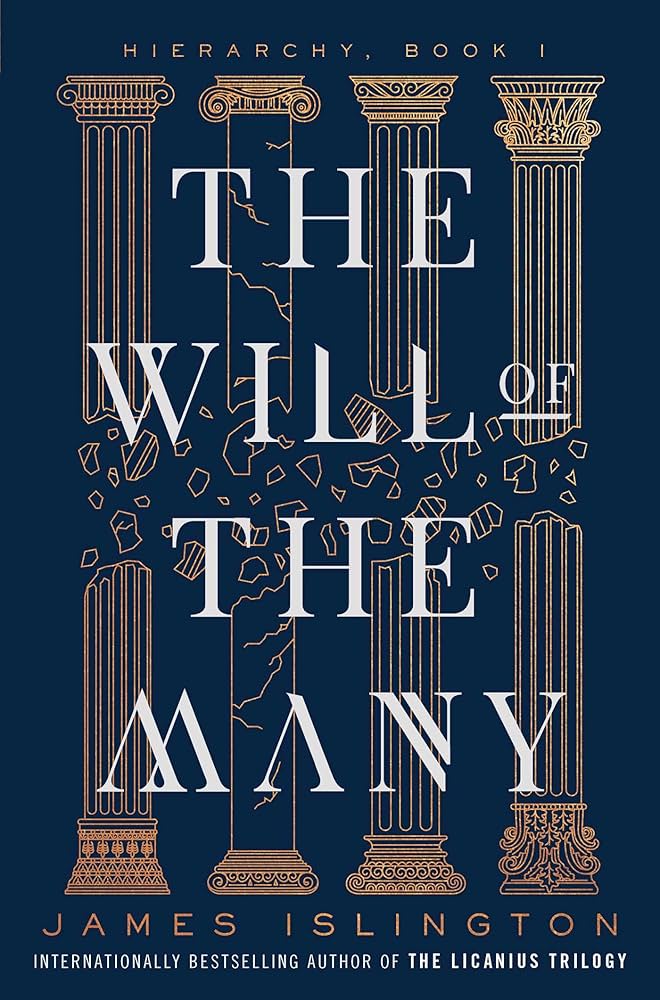
Somehow, this did not prevent me from buying The Will of the Many when it came out– and I bought the original cover, the one with the columns up there. I read it and quite liked it– the world building was a little shallow, and the plot not especially unique; every “brilliant young person goes to a Special School” book is gonna have some major similarities, but the Rome-inflected world was at least interesting if, again, not very deeply thought-out, but whatever.
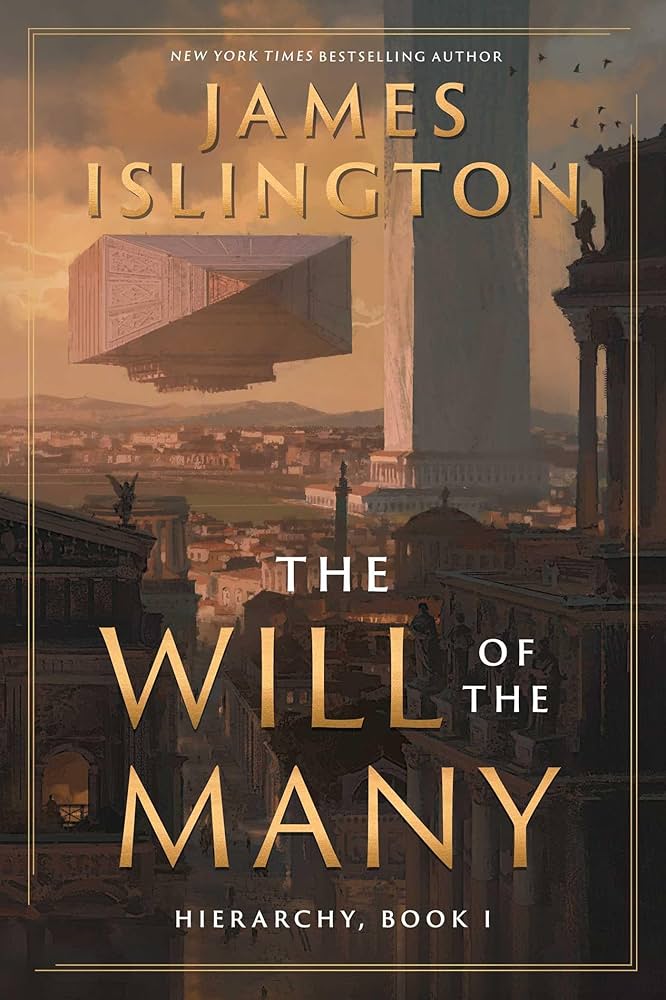
Then I started seeing the book on shelves with a whole new cover. You know this about me; I like my shit to look nice and clean, and midseries changes to covers annoy me tremendously, and I didn’t want to buy a second copy of the first book just to match the second on the shelf.
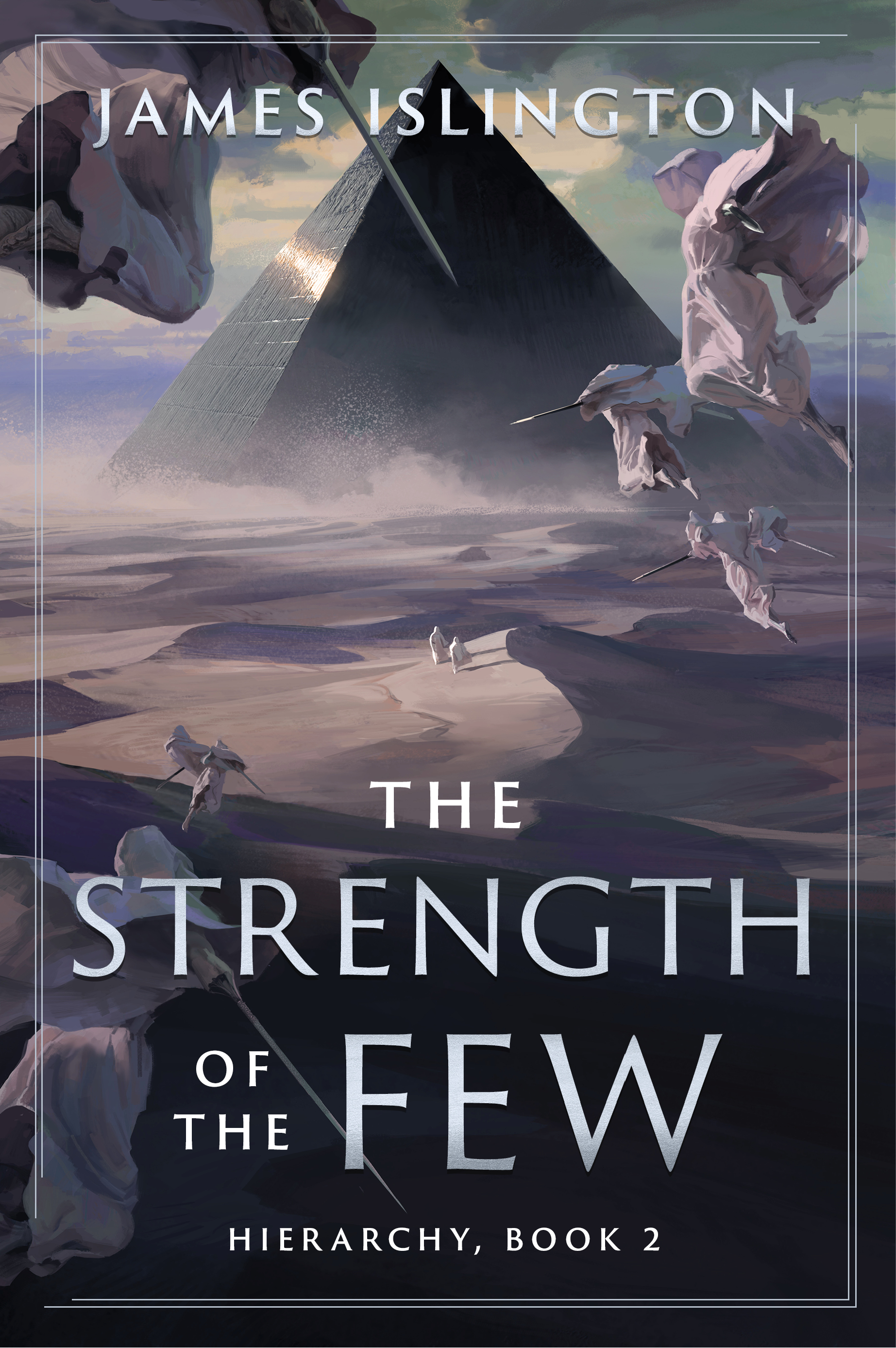
And then they made an announcement that all copies of The Strength of the Few would have reversible covers, one to match each version of the original cover! My understanding is that Islington himself was behind that decision, which I both support and tremendously appreciate. My man knows his audience! Good on you.
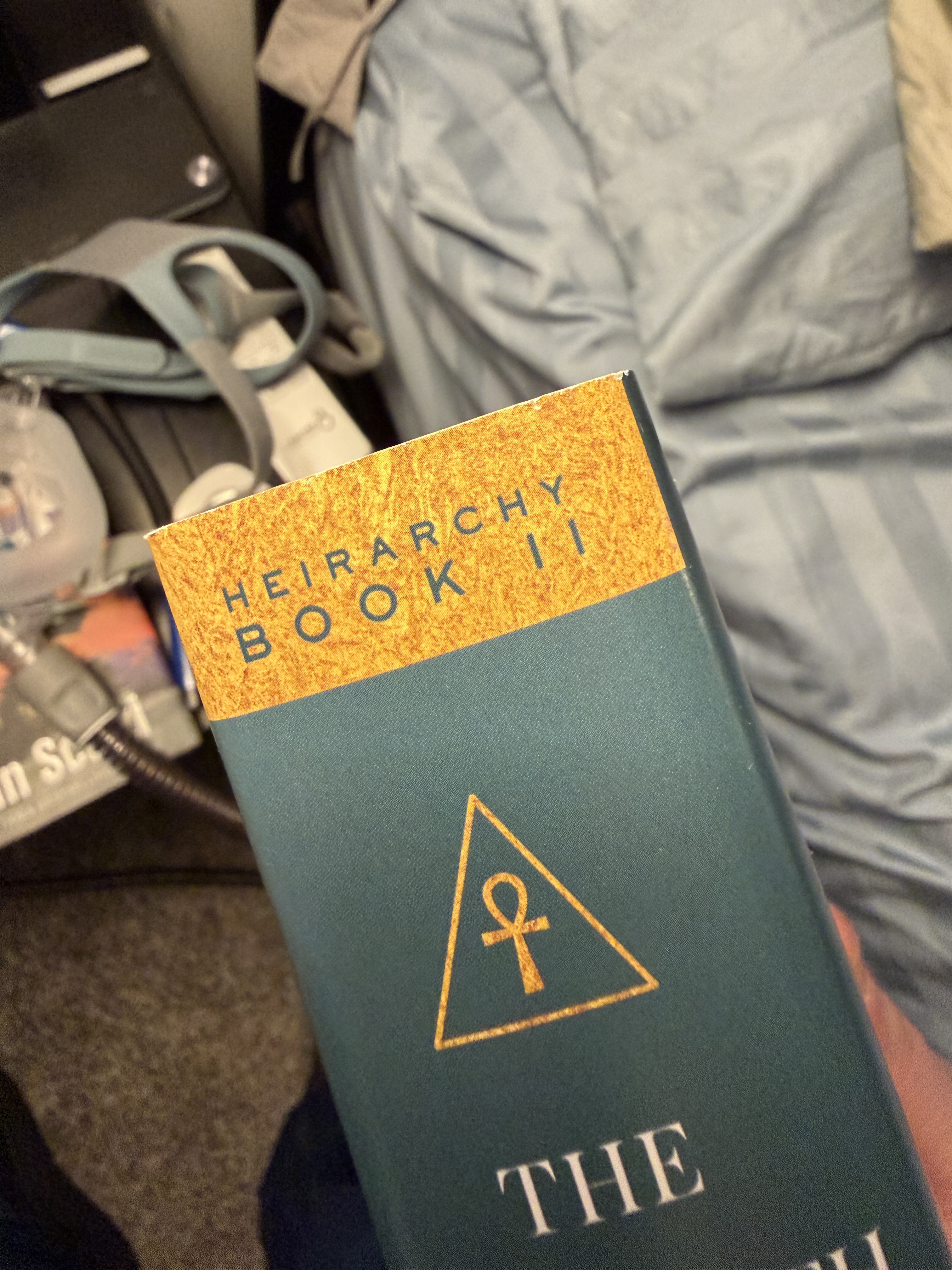
The fucking word “Hierarchy,” the title of the series, was spelled wrong on the spine.
I swore– a lot– and then said “Fuck it, this is why I have a job” and bought a new copy of the first book so that it would match. I cannot display a fucking spelling error on my bookshelves. Unimaginable.
(Right about here is where I’m going to stop reviewing myself and start reviewing the books, btdubs.)
I decided that since I was getting a new copy of the book anyway, I’d reread Will before diving into Strength. This, I feel, was the right move. I read so much that most of the time I have read literally hundreds of books in between any given book and its sequel, which means that I frequently don’t enjoy sequels as much as I should because I simply don’t recall the first book as well as I should. And I’d already had one Islington series go sour on me, and I didn’t want it to happen again.
The Will of the Many was an excellent read the second time through as well. It’s a genuinely good book. I stand behind it.
The Strength of the Few … was not. I’ve got it three-starred on the various book services right now and I genuinely might move it down to two. And the most frustrating thing is that a lot of the problems with Licanius are showing themselves again in Hierarchy. It was okay that there wasn’t a whole lot of clarity about how the wider world worked in Will, because the main character was confined to this little school on a tiny island and wasn’t really interacting with the wider world, so when you’ve split the … government? into Religion, Governance and Military and not really defined what it means to be “in Religion”, or when you have a couple of characters who are in the Senate, because this world is based on Rome somehow so there has to be one of those, but haven’t actually really said what the Senate is for, you can get away with it. But you’ve got to broaden that scope out in any sequel, especially when you end Book One, which was mostly a hunt for What Really Happened to the MC’s adoptive father’s brother, by splitting the entire universe into three parallel planes. At that point, I would like to understand how all this works. The main character exists in all three worlds in book two, only at least two of the three versions of him don’t know that he’s in all three worlds, and one of them is Egypt-except-not, and one of them is, bewilderingly, Wales-except-not.(*)
It means that the world you’ve learned about in the first book is only a third of the second book, and the other two worlds genuinely aren’t very interesting (not-Egypt is better than not-Wales, but not by much) and that’s before he starts sidelining and/or killing every interesting female character in the first book, and it’s also before you hit the No One You Thought Was Dead Is Still Dead part of the book, which is just fucking annoying.
There’s also a form of magic called Will, and an interesting setup in not-Rome where society has organized itself into pyramids where everyone pledges part of their Will to the people above them, and Will does stuff but it’s not entirely clear that Islington has figured out the parameters of what it can do, nor is it clear to me why holding someone’s hand and saying “I cede you my Will,” or whatever the code phrase is, lets them take part of your life essence away from you. It’s rigorously codified without actually making a whole lot of sense, which is not a great combination. I feel like if you poked the whole system too hard it would collapse.
(Even the school the MC attends in the first book was … kinda sketchy, as far as the worldbuilding goes. It’s also organized into tiers, and the MC moves from seventh tier to third over the course of a single semester, but everybody seems to be the same age and it’s not at all clear how often or even whether anyone graduates, or how long they’re supposed to be there, or really even what they’re studying; dude mentions that his classes are getting harder a few times but never really says why, and nothing is ever difficult for him, really.)
I damn near DNFed the second James Islington Series Volume II in a row, is what I’m saying here. It’s just not nearly as good as the first book, and again, much like the first series, I feel like the central conflict is not well defined here. The first book was a pretty straightforward “find out what happened to this guy” thing, and it got more complicated than that but that was basically what was going on. Now there’s a Cataclysm every three hundred years (what happens during a Cataclysm? Bad stuff, but … don’t ask what kind! People die, alright?(**) It’s bad!) and apparently we’re going to stop it somehow, I guess, and something something worlds got split up, and …
<spits>
Blech.
Again, I’m an idiot, so I’ll probably pick up the third volume when it comes out (I hope there are only planned to be three, but who knows) just for completeness’ sake, because it would really piss me off to have two copies of the first book, one of the second, and not have the third) but I think I probably have to be done with this guy after that unless everything really turns around.
(*) This got me thinking about how Rome and Alexandria, two massively different cultures, are only 1200 miles apart. That’s about the distance from northern Indiana to Houston.)
(**) The phrase “all right,” which is two words, not one, and I will let you get away with “alright” in dialogue but not much else, is misspelled every single time it appears in both books. I hate it.
 Welcome to infinitefreetime dot com