Still in Chicago, obviously, since the con actually starts today. You’re gonna come see me, right? I’m in Booth 228. Awaiting your arrival.
Come to Butt-head.
Up today: Diana Gordon of Part Time Monster.
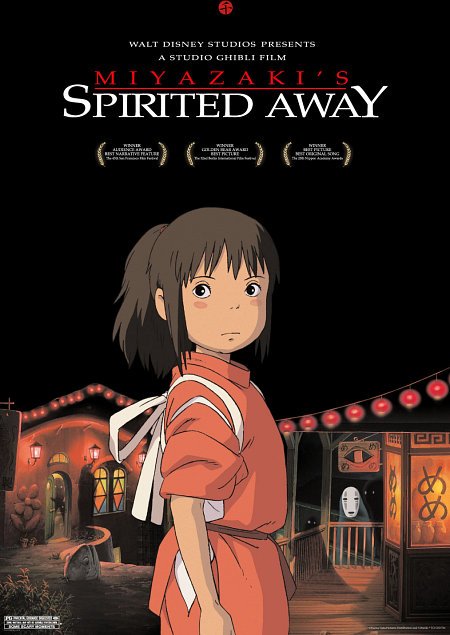 Fifteen years ago (July 2001), Studio Ghibli and Hiyao Miyazaki released Spirited Away, an animated feature-length fantasy that would become one of the most successful Japanese films of all time, winning national and international awards and smashing box office records.
I watched the film for the first time as a double-feature. A dear friend had been absolutely insistent that I watch some of Miyazaki’s work, and so one rainy afternoon we decided to watch Howl’s Moving Castle (2004) and Spirited Away. (Would that all rainy afternoon plans were so pleasant.) Howl’s Moving Castle works as an adaptation of the Diana Wynne Jones book of the same title, but the story for Spirited Away was a wholly original one.
And it is captivating. The whole business is a bit surreal—maybe more than a bit, really. (It’s often compared to Alice’s Adventures in Wonderland; Lewis Carroll’s 1865 story and Miyazaki’s film can both be read as texts coming of age stories and suggest ambivalence about girlhood. Both stories were also inspired by real girls—Carroll’s text was written after he told the story to Alice Liddell, and Miyazaki has stated that his inspiration for Spirited Away was that he wanted to make a film for a young girl who was a family friend.)
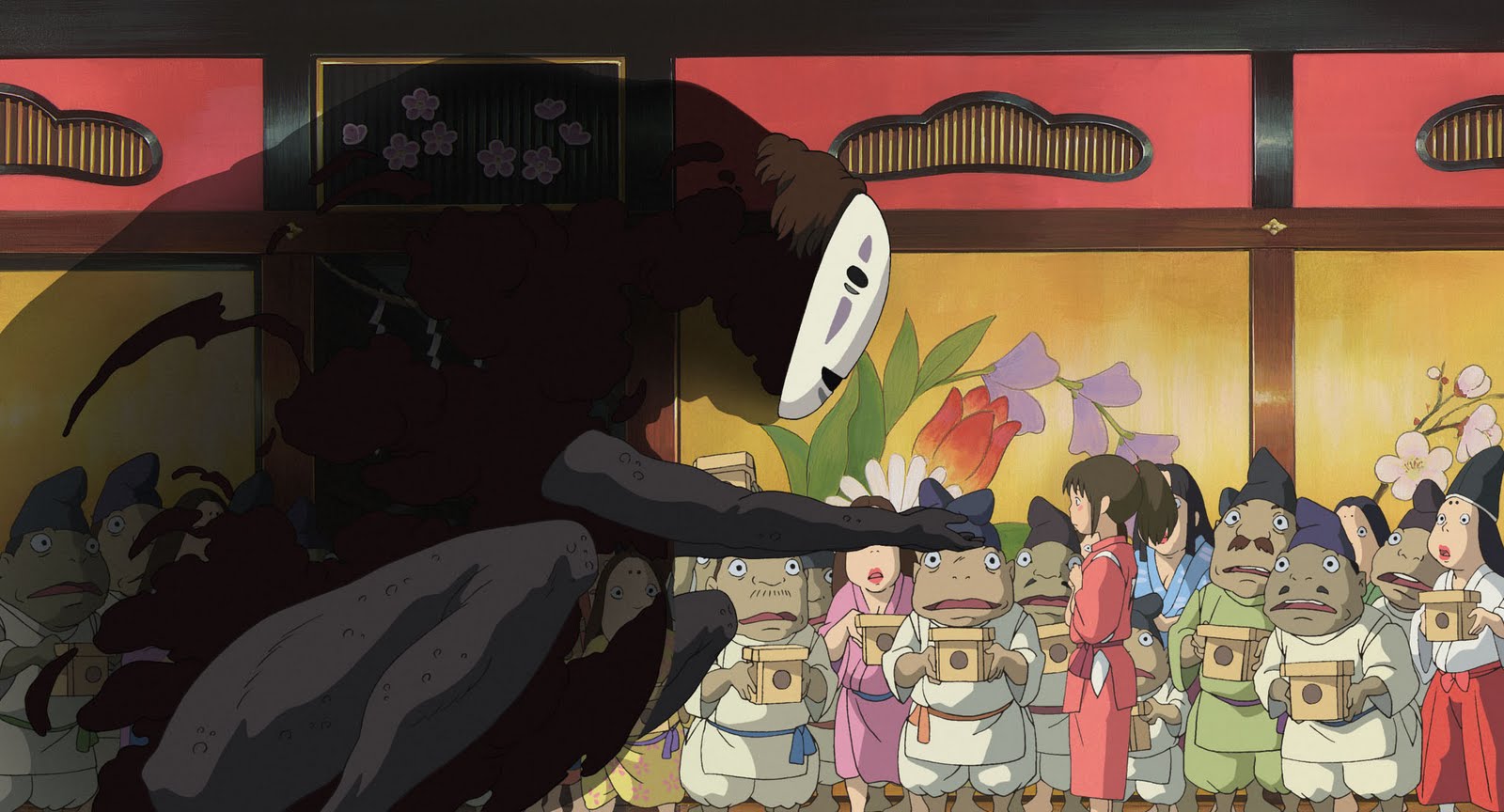 Ten year old Chihiro and her parents are moving to a new home when they take a wrong turn, arriving at what looks like an abandoned amusement park. Chihiro’s father wants to explore the place, so the two of them and Chihiro’s mother climb out of their car. The animation and setting here are fantastic. The dilapidated and broken amusement park is suggestive of so many things—rampant and broken consumer capitalism, the boundary between childhood and adulthood, the conflict between traditional Japanese culture and Westernization, etc.
All is not what it seems in this place, of course. Chihiro’s parents stop to eat, but Chihiro herself has gone another way, where she discovers an old Japanese-style bathhouse. She’s warned by a young boy named Haku that she is now in the spirit world, and must get out before sunset. But when Chihiro finds her parents again to hurry them out, she discovers that they’ve been changed into pigs and that her way home has been blocked.
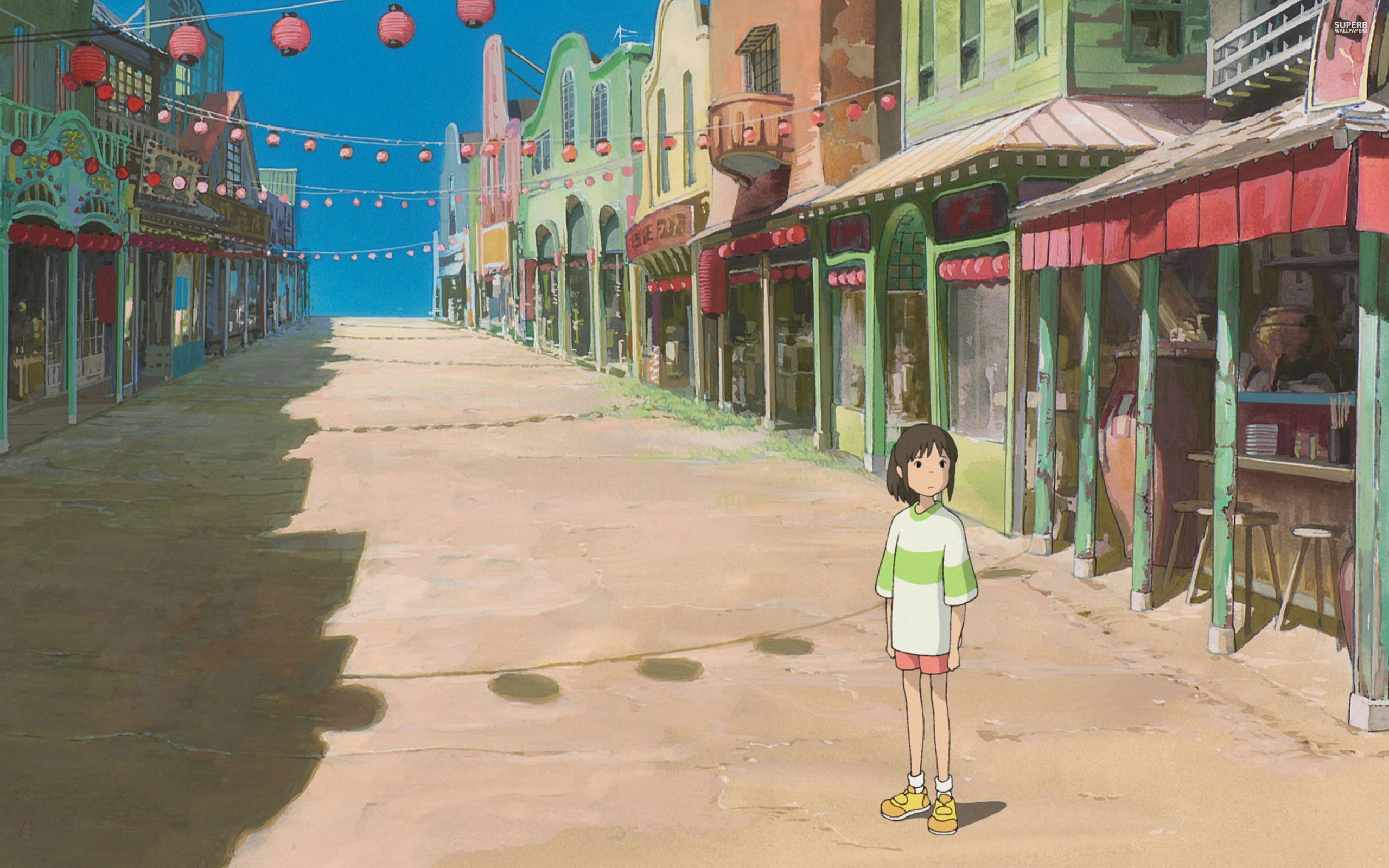 And as night falls, all manner of spirits and creatures make their way to the bathhouse. Chihiro finds Haku again, who advises her to demand a job in the bathhouse from Kamaji, the boiler-man, so that she can stay. Kamaji apprentices Chihiro to Lin, another of the bathhouse employees, and she is taken to Yubaba—the mistress of the bathhouse. Unlike everyone else in the bathhouse, Yubaba dresses in Western clothing, and her rooms are furnished in European style. She is completely out of keeping with the traditional minimalism of the place, and her greed is part of what makes her such a formidable opponent for Chihiro.
Yubaba symbolically and literally strips Chihiro of her identity when she replaces her name with “Sen.” Later, Haku warns Chihiro against forgetting her old name. This, he says, his how Yubaba controls and keeps her servants.
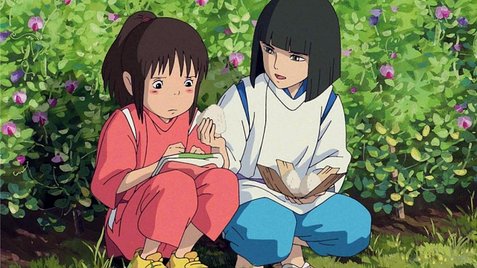 Chihiro then sets off to work in the bathhouse. The place is a maze of corruption and greed, and many of the other employees are rude to Chihiro because she is a human. At the bathhouse, she encounters a creature called No-Face, who wreaks havoc in the bathhouse when he starts giving out fools gold and then eating the other customers. No-Face grows larger and more monstrous as he consumes more of the customers, and only Chihiro can calm him. No-Face is eventually made to regurgitate the creatures he has eaten and leave the bathhouse.
Chihiro also has to save Haku, who has been poisoned by a magic seal he stole from Yubaba’s twin sister, by going to Zeniba’s home and apologizing for him. For Haku’s part, he wakes to discover that Chihiro’s love was strong enough to break the curse, and he finds her at Zeniba’s home. On their return journey, Chihiro remembers who Haku actually is; he is the spirit of the Kohaku River, and he is free again once Chihiro names him. Haku’s story is not just a reminder how the power of names in this spirit world but of ways that pollution and the destruction of nature affects that spirit world, as the Kohaku River was lost to urban development.
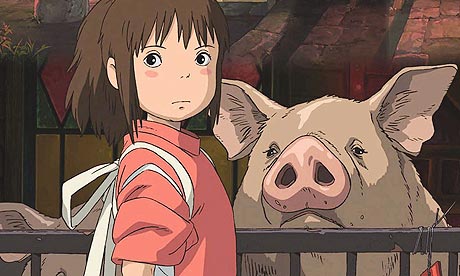 Likewise, as Chihiro’s journey draws to a close, she must recognize her parents. Yubaba sets Chihiro in front of a drove of pigs and gives her the task of recognizing her parents in order to gain their freedom. Yubaba’s trick, though, is that she has left Chihiro’s parents elsewhere. But Chihiro susses this out rather quickly, so she is able to win her freedom. Haku leads her back to the entrance, where Chihiro’s parents are waiting for her but do not remember what has happened. Chihiro, of course, remembers all. She’s not confused by the dust and leaves covering their car or the other markers of time, because she recognizes what has happened.
And so, as is often the case in children’s fantasy literature, Chihiro returns to the real world at the story’s end. She comes home to her family. Her place. To live the rest of her life. But during her journey, she has had the chance for true agency—not being looked after by her parents in a situation with the direst of possible consequences. And that agency has changed Chihiro. Even if she has all along had the courage, smarts, and loyalty to take on a witch (or two) and save those she loved, it is only in the doing that she is able to recognize that.
And damn, I love to watch it happen.
***
Diana is a nerd, a bookworm, a feminist, and a social media junkie. She is a freelance writer and researcher and the administrator of the blog Part Time Monster. You can follow her on Twitter @parttimemonster or find her on Facebook at facebook.com/parttimemonster. She lives in New Orleans with her son, her husband, and one very energetic terrier.




































 Welcome to infinitefreetime dot com