On Season 3 of THE BOYS

This will be the third time I have written about Amazon Prime’s series The Boys, based on the Garth Ennis and Darick Robertson comic book of the same name, in this space. The first piece I wrote about it started with a content warning for “everything,” and mainly talked about the fact that I thought the show was problematic as hell, leaning way too much into sexism and rape and fridging female characters than anything I could be comfortable with recommending, but … well … if you could get past that awfulness, there was a pretty good show in there, somehow?

Then Season 2 rolled around, and they’d shed most of Ennis’ bullshit from the first season, in general treating their female characters a lot better, not relying on rape as a driver of the plot at all, and still keeping the insanely hyperviolent and raunchy tone of the first season, which moved the show from “Eh, if you were curious already, check it out, but don’t pay for Amazon Prime for this” to “Well, don’t pay for Amazon Prime just for this, but if you already have it, you probably ought to watch an episode or two and see what you think.”

We are, as of right now, three episodes into Season 3; my understanding is that new episodes are going to drop on Friday, although I’m not 100% sure what the actual schedule is– in other words, I’m not sure if they gave us three episodes to start and there will be 3 more this Friday, or if it’ll be on a more traditional one-episode-a-week schedule, or what, but we’re three episodes in. The season isn’t finished.

But based on those three episodes, and continuing to keep in mind that this show is not for everyone, and that I really can’t emphasize enough how much bodies literally exploding into chunky red sauce has been a part of this season, and there was a sequence in the first episode that very nearly had me hiding behind the couch …

I know Amazon Prime is $129 a year now, but … yeah, you need to be watching The Boys, if your constitution can handle it. If you know you can’t, go in peace and ignore this. But if you can?

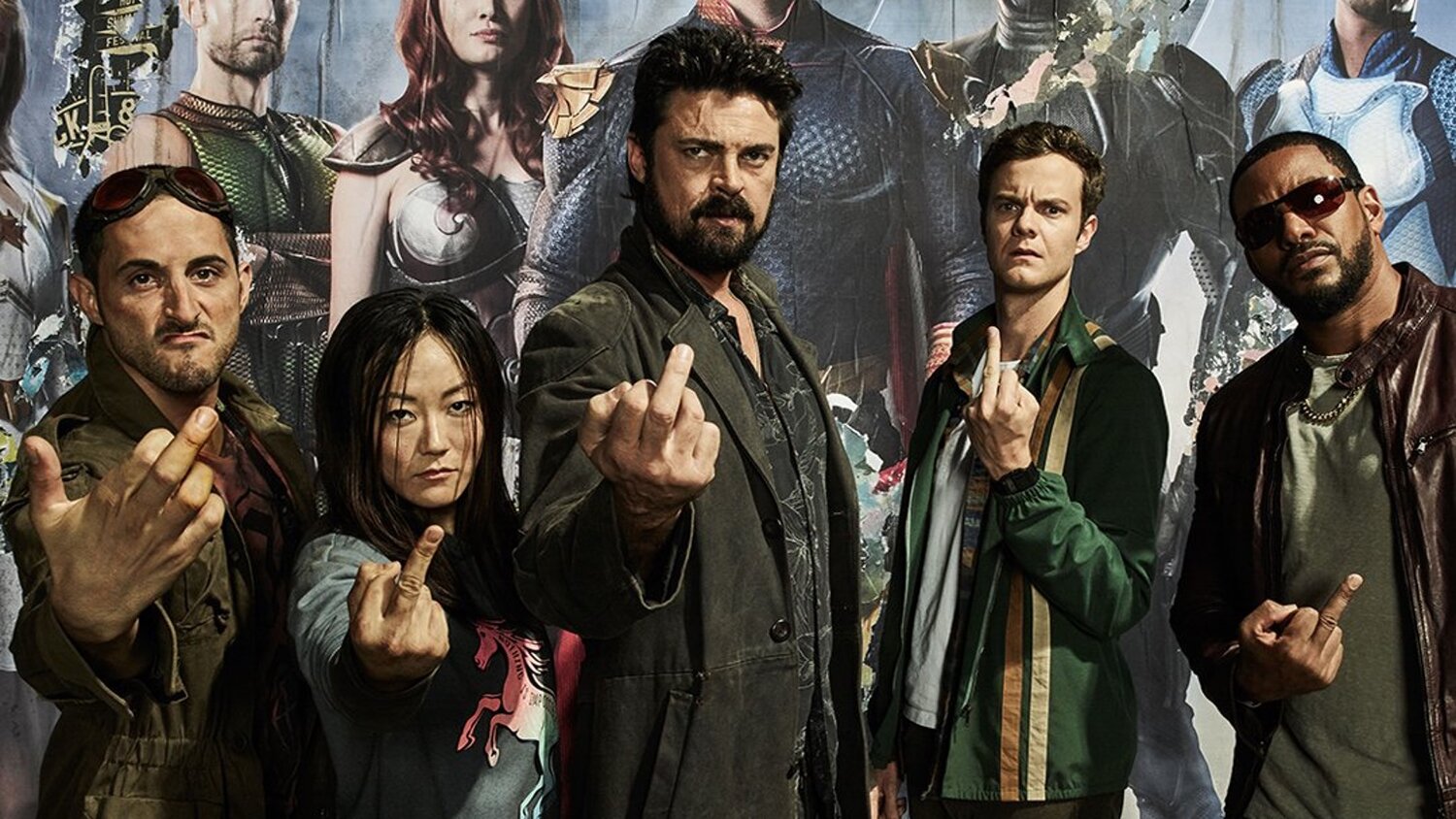
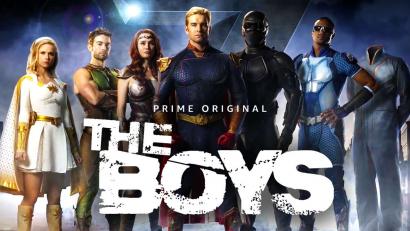
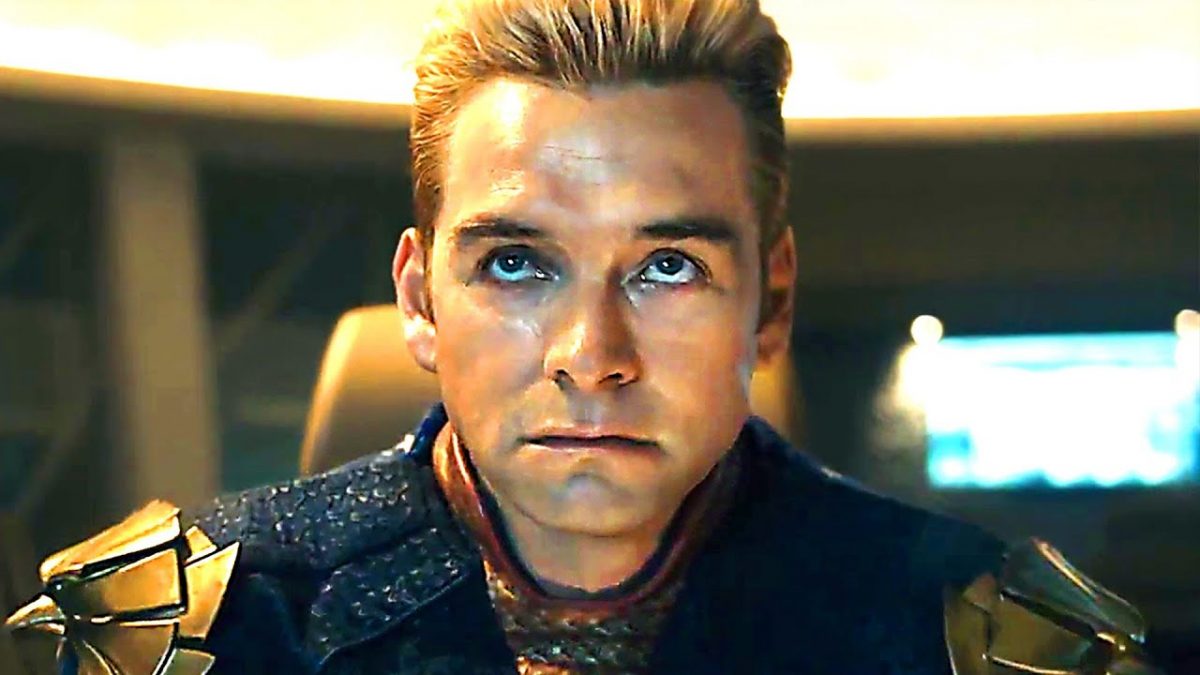
This show has some of the best acting I have ever seen on a TV screen. Antony Starr as the Homelander is absolutely fucking terrifying in a way that I have never seen in a television character before. Like, my heart rate shoots up whenever he’s on screen. I want him to play the Joker so badly I can taste it. Karl Urban is amazing. Giancarlo Esposito is amazing. Jack Quaid is amazing. Erin Moriarty and Chance Crawford and Jessie Usher and oh my God Colby Minifie are amazing. Everyone with a role on this show is doing the job of their lives.

(Discovers that Mesmer, from last season, was Haley Joel fucking Osment, and has to take a moment.)

I really cannot express enough how much you need to see the clinic that Antony Starr is putting on here, though, managing to marry being an angry, unstable god with somebody who was very clearly so broken as a child that you almost feel sorry for him. Until, of course, you realize he’s fantasizing about killing every living person in New York City in the same disconnected, unconcerned way you might think for half a second before stepping on a bug. But you can see the scared little kid in him, and it’s just so good. And the writers, who are continuing to do adaptations The Right Way, have made it so clear that this show doesn’t even vaguely understand the concept of Plot Armor that there is literally not a single second where this man is on screen where you’re not worried about him doing something terrible at any moment. It’s been years since I had to take time to calm down after watching a TV show, and we’re only three episodes into this season and they’ve done it to me three times.

So, yeah. There’s still plenty of time for shit to go wrong, but at this point, and without relinquishing any of the previous warnings attached to previous seasons, this show is moving to You Need To Be Watching This. I’ll update again once the season is over.
A random note on adaptations

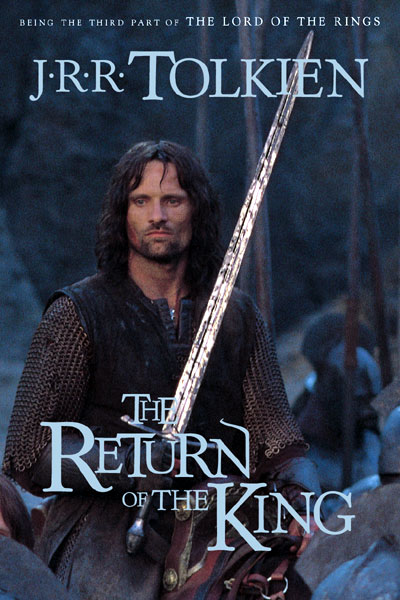
I’m rereading The Return of the King right now, for the who-the-hell-knowsth time, probably somewhere between thirty and fifty. My current “reading copies” (I have a lot of different editions of this series) are the ones that came out along with the movies, and all three feature scenes from the films on the covers.

(I never really loved Viggo Mortensen’s casting as Aragorn, but in general I have very few complaints about the films, and I very well might end up taking a weekend to watch through the extended editions if I ever finish playing Elden Ring.)

Anyway, it just hit me tonight, as I moved into Book Six, the halfway point of ROTK, where Sam and Frodo finally reach Mount Doom: I have completely lost the versions of these books that existed in my head before the movies came out. And these are books that I read for the first time in second grade, and– again– reread repeatedly and religiously over my life between then and Fellowship hitting movie screens in a year long enough ago that I don’t want to look it up.

I had mental pictures of these characters once. All of them. Probably pretty detailed ones, too. Now, granted, they were probably at least a little influenced by Ralph Bakshi’s animated version of The Fellowship of the Ring, particularly Boromir, who will forever be a thickly-bearded Viking in my head. But they were there, and they didn’t particularly look like Elijah Wood or Sean Bean, and now they’re gone. Similarly to every other filmed adaptation I’ve ever seen of a book I read first– it’s fascinating and more than a little sad how completely and utterly watching a movie, even a movie you didn’t particularly enjoy, will just erase the ideas you had in your head of what everything looked like when everything was created in your head.

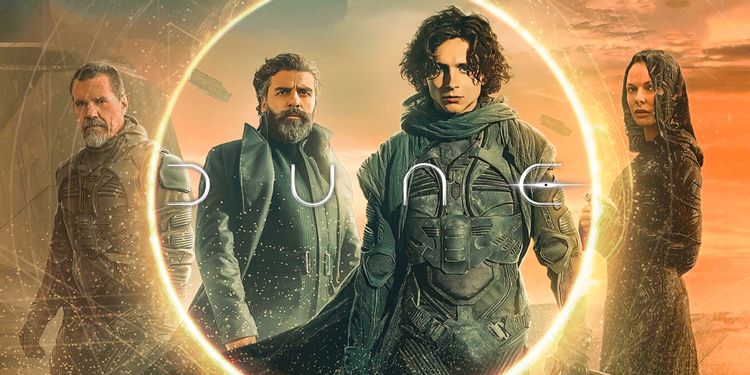
(Okay, probably not Dune. Nothing from Dune is rewriting anything. But still.)

I don’t have any larger point to make about all of this, but it was kind of a striking realization so I wanted to get it written down before I lost it.

#REVIEW: DUNE (2021)

I think the most damning thing I can say about Dune is that even now that I’ve started typing I kind of want to bail on the idea of writing a review.

I am more of a Dune fan than most people but not very much of a Dune fan, if that makes any sense. I have read (and, to be clear, enjoyed) the original novel four or five times, maybe, most recently within the last couple of years, but have never picked up any of the sequels, a fact I consider rectifying every year and never do. Over the last few days I’ve seen lots of people pretending the novel is terribly complex and difficult to read and I don’t know what they’re talking about. It’s long, yeah, but it’s perfectly readable. I have not seen the 1980s original film, either, although my wife keeps threatening to make me watch it, and is probably going to ramp up her campaign now that we’ve watched this one. Frankly, were she not interested in seeing the new film, I wouldn’t have watched it.

It’s … meh.

It’s pretty. It’s got an awesome sense of scale; anytime you’re looking at something that’s supposed to be real real big there’s always something in frame to make it clear just how colossal whatever you’re looking at is. And if I stop typing right now, I can move on with the process of forgetting that I saw it, which I suspect will take all of a day or two. Even complaining about it for a few more paragraphs will give my dislike of the movie more weight than it deserves; I barely have the energy right now to point out the bits that I didn’t like. I mean … bullet points? And not worrying about complete sentences? Sure, let’s try that.

  • The casting is terrible. Every actor is either bad, distracting, or Timothée Challawhatever, who is not remotely heroic. Why is Drax in this?
  • Jessica always, always, always crying
  • Slooooooow-mooooooooo. If they’d cut half of the slow-motion they could have included some, like, context for this nonsense
  • This movie is very serious
  • The phrase “my boy!” is 50% of Jason Momoa’s dialogue and he somehow isn’t even pretty in this movie
  • Terrible pacing. At one point they cut away from a plane crash so we can have a brief scene of a fat man taking a bath.
  • The fat man isn’t even fat enough. I’m fatter than this guy. I want my levitation belt.
  • brown
  • The Gom Jabbar scene is the best part of the book and Chalamet looks like he’s struggling to hold off an orgasm for half of it
  • half the film is inappropriately-timed dream sequences
  • The Harkonnens are, like, cartoonishly evil on a level with Cobra Commander and Skeletor
  • bleh

I mean, see it if you want to, I suppose, it’s not going to, like, hurt or anything, unless you see it in a theater and get Covid-19, and man, dying because you went to see Dune has to be the worst way to go ever.

#REVIEW: The Boys, Season 2

Before I get into the post itself, I just want to point out that I find it kind of funny that I made a point of mentioning the other day that I hadn’t missed a post since April, and then bloody went and forgot to post yesterday until almost 11:30, at which point my inner fuck it, nobody is paying me for this kicked in and I didn’t bother throwing something onto the site just to check off the day. In my defense, yesterday was a deeply weird, schedule-murdering sort of day, the kind of day where you wake up with a certain set of expectations on how the day is going to go and then those expectations are rather rudely tossed onto their ear before you’ve finished your coffee.

What we did manage to do was finish the second season of The Boys. And while I watched the first season by myself, my wife was along for the ride for the entire season this time, thus the “we” and the slightly longer amount of time elapsing before its release and me managing to watch it all. The first season of The Boys was … messy. Real messy. To the point where I felt kind of squicky about recommending people watch it.

The second season was phenomenal.

Now, let’s not misrepresent things: The Boys is still hyper-violent (exploding heads make up more of the season’s plot points than you might typically see in a TV show, and there’s a thing that happens with a whale that is, like, wow) and profane and a lot of other stuff, but while the first season followed the comic books into leaning way too hard into sexual violence and rape than anything really needs to be, the second season has none of that. In general, the female characters are treated much better this season; there’s no fridging at all, and most of the new characters introduced are women.

This show does a couple of things that I really like. First, the acting remains absolutely top-tier across the damn board. Antony Starr as Homelander is Goddamned amazing. This is the role of Karl Urban’s life. The relationship between Jack Quaid and Erin Moriarty’s Hughie and Starlight is sweet and awkward in all sorts of adorable ways. And Giancarlo Esposito is in this show and I praised four other actors before I got around to mentioning him. I mean, come on. And while I wasn’t happy with the semi-redemption arc Chace Crawford’s The Deep got last season, his role this season is far more interesting than last year’s. And his character is responsible for what might be the single greatest cameo in the history of television. You wouldn’t think that the acting and the character work would be the highlight of a show that spends fully three-fourths of a season making you think a head might literally explode at any given moment, but it absolutely is.

(Also, I want every shirt that Mother’s Milk wears during the series. Every single one.)

The second thing that I love about the show is how it has handled adapting the comic book, and it’s kind of fascinating to me that my other example of an outstanding adaptation, The Walking Dead, is also an adaptation to TV of a comic book series. This is the right way to adapt things, guys: take what you think works from the original material and then twist it and fuck with it however you want so that the people who know the source material don’t necessarily know what’s coming next. Something happens at the end that manages to recast the entire first two seasons as a prequel, at least of sorts, to the place where the entire comic series starts. And while at least part of this season is taken, broadly, from the comic book, a huge chunk of it isn’t, and there’s no smug “I know what’s going to happen at the Red Wedding!” sort of scenes for people who have read the comics. I knew one reveal was coming about one character, and one major reveal from the end of the comic series appears to not be the case in the TV series, based on about four seconds of footage in the second-to-last episode. So they’re definitely going their own way here.

The last time I talked about this show, I ended with “If you think this is something you might like, and you’ve already got Amazon Prime, maybe check it out.” I’m still not telling you to get Amazon Prime just for the show, but it’s definitely a reason to get Prime now, as opposed to an ancillary side benefit, and if you already have the service you should strongly consider checking it out if the ultraviolence isn’t going to push you away.

In which I recommend something problematic: on THE BOYS

Trigger warning. For, like, everything. If you’re the type of person who has been helped by a trigger warning in the past, don’t bother reading this post and avoid this show like the plague.

Let’s get some stuff out of the way right away about the first season of The Boys, the Amazon Prime adaptation of the Garth Ennis and Darick Robertson “What if superheroes were all fucked-up assholes?” comic series of the same name:

  • Not one but two male characters’ prime motivation is to avenge the death of, respectively, a girlfriend and a wife. The girlfriend is fridged within fifteen minutes or so of the start of the first episode.
  • While the lone female member of the “good guys,” such as they are, is never actually referred to as The Female as she is in the comics, she never talks.
  • This is an insanely graphically violent show; at one point an infant is used as a weapon. Multiple people are murdered with– not by— a baby. That is not a joke. That’s a thing that happens.
  • While it doesn’t happen on screen, and in fact it’s toned down from what happens in the comics (“toned down from the comics” is a recurring theme) the main female character is raped in her first episode.

There is, in other words, a lot of lazy, sexist writing in this program, particularly in the initial episode. And I would not for a second get on the case of anyone who looked at those four bullet points and went “Nope, not for me.” Honestly, had I not been familiar with the comic series from when it came out, I probably wouldn’t have made it past the first episode either. But I was curious about how they were going to adapt the series (12 graphic novels, so not at all a small amount of source material) to television.

And here’s the thing: all of the stuff in those bullet points is in the comics, and in general this is a pretty loose adaptation of the source material. All of the decisions that the television producers made– every change that they introduced– kind of blunt the bullshitty edges of what happened in the comics. They certainly don’t turn away from how over the top The Boys was, but this isn’t Game of Thrones, where they took a series with a bunch of sexism and rape and decided the best thing to do with it was to add more sexism and rape. And the show is independent enough from the comics that by the end of the first season I have no idea where they’re planning on going with it next season. That, for me, is always a win for an adaptation.

Here’s some more good news: the acting, across the board, is absolutely phenomenal, and one of the cool things about having a show where damn near every character is a deranged mess of a human being is that it gives every actor something to really dig into with their character. Karl Urban’s Billy Butcher and Antony Starr as the Homelander are particular standouts– I don’t know what sorts of acting awards someone on this program might be eligible for, but Starr in particular needs to be up for something for this role. Chace Crawford’s portrayal of The Deep is also worth mentioning– although, as the rapist mentioned above, the fact that he sort of gets a redemption arc, or is at least eventually portrayed as a sympathetic character complete with his own sexual assault, is also … skeevy.

And the thing is, everybody is fucked up in this show. All of them. There are no characters without some damage to them in The Boys, and there are no underwritten roles, either– even The Character Previously Known As The Female has some interesting moments, and watching the cast inhabit this world is tremendously compelling– and that, to me, is more than enough to make overlooking the more troublesome and lazy aspects of the show and its premise possible. Plus, again for me personally, I first read these books when they came out in 2006 and so nothing about the problematic aspects of the story is new. Which, I think, might make me a bit more likely to look past them than some other people.

Your mileage, obviously, may vary. And with Amazon Prime at $99 a year I’m not about to tell you to subscribe in order to watch this. But if you already were, and you were on the fence about the show? Definitely give it a couple of episodes and see if it grabs you.

Some additional PREACHER thoughts

preacher-season-1-post-103-Jackie-Earle-Haley-Odin-Quincannon-1200x707.jpgWe’re, what, four episodes into PREACHER now?  Five?  You may remember I had some quick, mostly ambivalent thoughts about how the show was going after the first episode aired.
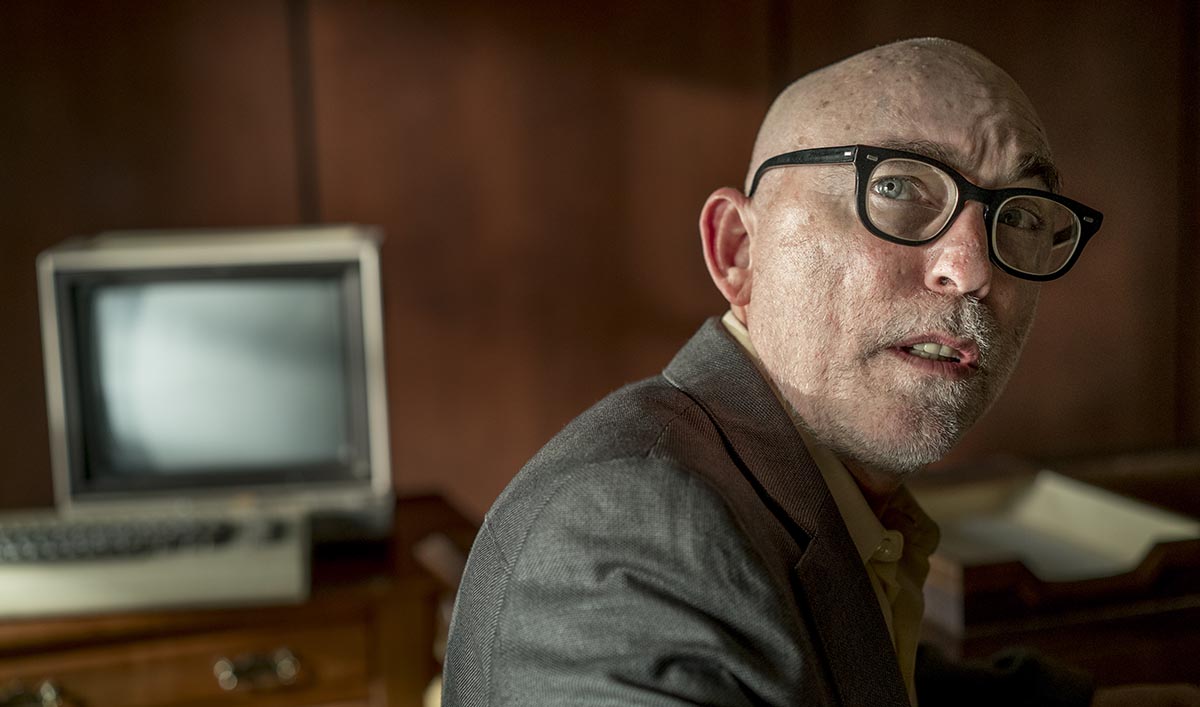
Well… I haven’t missed an episode yet, and I’m probably not going to be starting anytime soon, but I’m still not exactly hooked.  Two definite pluses have revealed themselves as the show has gone on, though: Jackie Earle Haley’s performance as Odin Quincannon is wonderful, and what initially appeared to be a minor lack of concern with the source material has evolved into full blown “Fuck it, we’re doing it live”-level disrespect.  PREACHER doesn’t care at all about the source material beyond vague character descriptions (Tulip is nothing like she is in the books) and is just kinda gleefully throwing whatever it wants at the wall to see what sticks.  It’s as if they’ve been told that they get two seasonsmax, but that if they don’t work in at least one plot detail from each graphic novel of the series Garth Ennis gets to take all of their money.  I thought THE WALKING DEAD was a loose adaptation of the source material.  Nah, son.  TWD is an amateur compared to PREACHER.

Is that a plus?  Right now, I’m going with yes, because I have absolutely no idea what’s coming next, and the first half-season of an adaptation doesn’t usually do that to you.  I kinda knew what was going to happen to Ned Stark at the end of Season One of GAME OF THRONES, y’know?   I just hope the show has an idea what’s coming next, and I’ll admit I have some doubt.  But I’m still watching.  We’ll see where we are at the end of the season.

On adapting

impin-aint-easy-tryion-memeDecided to take another day home with the wife; she was perfectly happy to go it alone today– and she’s planning on going back to work tomorrow– but I really didn’t like the idea of leaving her by herself all day.  I have to duck out this afternoon for a meeting I can’t miss but will be home with her most of the day.

That said, she’s asleep right now– I didn’t bother going back to bed after taking the boy to day care– so I have some time to write.  Most of my writing around here is done 1) in between getting home from school and her bringing Kenny home from day care and 2) during bath time.  Both of those times are going to cease to exist during the next couple of weeks, as she recovers from her surgery and I take over delivery and pickup from day care and bath time at night.  Time to blog is therefore going to seriously be at a premium, so if I go dark for a bit over the next few weeks, don’t assume I’ve lost interest.  Despite the name of the blog, I actually do have a few real-life examples of demands on my time.  🙂

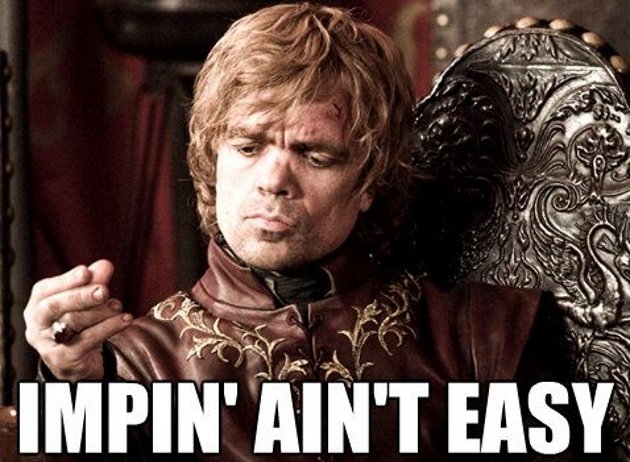
(Disappointing fact: none of the pictures I find when I Google “Stay at home dad” are funny.  Uses Tyrion meme instead.)

Anyway.

I’d like to make a claim here, and I’m genuinely interested in people’s reactions to it:  The Walking Dead is the most successful adaptation of a story from one medium to another medium ever.   Furthermore, it owes much of its greatness to the fact that it is absolutely fearless about changing, ignoring, or adding to the source material as much as it damn well pleases.  It has taken the setting and many of the characters, but it has added characters as necessary, ignored others, and played all sorts of merry hell with who it has chosen to kill off and who it has kept alive.

I have spent most of the last couple of days trying to come up with a way for me to more precisely define that without saying something that boils down to “but I liiiiike it” and I’m having difficulty with it.  Part of the problem is that Walking Dead is in a lot of ways in a very unique position as far as adaptations go:

  • As a comic book series, it is ongoing.  There are therefore new stories getting added all the time to pull from, and not a single novel or trilogy or whatever to draw from.
  • It is the work of a single creator, or a small handful of creators if we include Charlie Adlard and Tony Harris and a few other artists along with series writer Robert Kirkman.
  • Related, but not exactly the same thing as, point 1:  While Kirkman may be working toward an ending that he’s already got in his head, as a comic series Walking Dead is sort of expected to run on until he’s tired of it.  We’re therefore spared the Game of Thrones disaster scenario where the actress playing the nine-year-old is going to be thirty before he gets around to writing the ending.  And because the Walking Dead TV series established from practically the first two or three episodes that they weren’t interested in slavishly following the comic book series (Shane died six issues into the comic book’s run) they’re not going to have anyone mad at them for Screwing Up Kirkman’s Ending.

Here’s the interesting thing:  I read a lot of stuff online about The Walking Dead; the half-hour or so past a new episode is silent time in my house, as both my wife and I jump online to read reviews and commentary and shit like that about the show we just watched. You know what I never see when I’m doing that?  “Waaah the show is ruining the comic book!”

I mean, it’s probably out there, the Internet being what it is, but I literally can’t remember a single example of it happening, whereas you see it all over the place with any other kind of adaptation.  And, don’t get me wrong, I’ve done it myself plenty of times; to pick two quick and prominent examples I won’t see the two Hobbit sequels because the first film was an abomination, and I never saw whatever the hell the two later Chris Nolan Batman movies were called because those movies should have been called Sword-swingin’ Rodent-Costume Ninja Dude and not Batman.  

(Avoids rant about how fucking awful Batman Begins was.)

Here’s the thing:  interestingly, it’s their fearlessness about making changes in canon that makes The Walking Dead so interesting to me as a television program.  (Spoilers abound for the next few sentences, but mostly older ones.)  Shane gets to live two full seasons when he died almost immediately in the books.  Rick kills Shane instead of Carl doing it.  Judith survives the prison, and Lori’s death is completely different from the books, including Carl having to kill Lori.  While I have all sorts of issues with how the Sophia storyline from the second season got handled, and Season 2 is the show’s worst by a long shot, it needs to be pointed out that Sophia is still alive in the comic books.  Michonne’s interactions with the Governor are very different.   Carol’s entire arc is different, and she’s dead in the comics.  The final confrontation with the Governor is different.  Rick still has both of his hands.  Merle and Daryl Dixon, for shit’s sake, are complete inventions of the TV series.  I could go on for much, much longer, including a discussion of how what happened in the last episode was way better than what happened in the comics, but I think you get the idea.

Meanwhile, the new Fantastic Four movie has made The Human Torch black and the Internet is aflame– heh– with idiocy.  I don’t know what makes the difference; I’d like to think that it’s something other than “It’s well done,” but I can’t come up with a good reason.  Even adaptations that have changed a lot of stuff still generally do it by deletion; Tom Bombadil didn’t show up in the movie version of The Fellowship of the Ring, but they didn’t go and make Aragorn a ring-bearer.  There have been modifications in the Game of Thrones series, but they didn’t let Robb survive the Red Wedding or, alternatively, kill him before the Wedding ever happened and put that in somewhere else.

A recommendation:  George Martin’s gonna finish the books when he feels like it, guys, and most of us will be dead by then.  Finish the series however you want.  Don’t worry about his ending.  I’d love to see what the TV people do when they’re cut free of whatever Martin had in mind.  And I say that not to claim that Martin’s ending is going to be bad– although it probably will; at the rate the books are getting worse, he may as well let Jay Bonansinga co-write the two final books– but so that everybody can stop worrying about it.  The books are different from the TV series; there’s nothing wrong with them ending differently too.