#Review: ON THE COME UP, by Angie Thomas

I shouldn’t write this tonight. I am tired, y’all; there was no school on Monday because of Presidents’ Day and this week has still been at least six years long. I don’t even have to go to work on Friday because I have a training all day and I still don’t know how the hell I’m going to make it through the rest of the week. It’s just been bullshit on top of bullshit on top of bullshit on top of bullshit, and that’s just been within the walls of my building. It’s not like there hasn’t been substantial bullshit going on in the real world, too. There’s been plenty. I am as tired of white men and our bullshit as I have ever been in my life and the notion that I am almost by definition guaranteed to be less tired of white men than damn near every person of color and damn near every woman on earth is practically incomprehensible. I don’t know how any of y’all make it through a day without killing any of us. I really don’t.

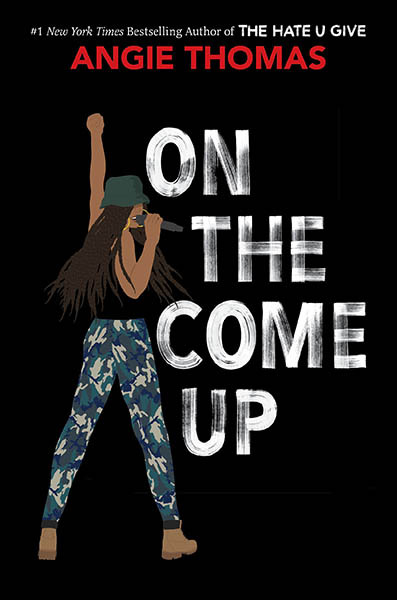
You may remember that I liked Angie Thomas’ debut novel The Hate U Give quite a lot. In fact, it was my second favorite book of the year. I ordered her follow-up novel On the Come Up a few weeks before it released and was up far too late last night because I couldn’t put it down. (Note: “follow-up” is a decent way to describe the book, which alludes to the events of THUG and is set a year later and in the same neighborhood, but does not share any major characters. There are a couple of shop owners and neighborhood figures and the like who I think appear in both, but I’d need to reread THUG to be sure.)

On the Come Up is not as important a book as THUG, but I think I might have liked it more anyway. Bri, the main character, is a neophyte rapper and the daughter of a local hiphop legend who was shot and killed when she was very young. Hiphop was a big part of THUG, but this book is utterly drenched in it, and honestly I’d love to hear some of the raps she performs in this book actually recorded. My understanding is that Angie Thomas at least dabbled in rap herself, and I can absolutely hear this kid performing the lyrics she writes throughout the book. Let’s be real here; given my previous experience with this author and the subject matter, there was no chance I was going to dislike this book. The only question was how much I was going to love it. Will it end up at #2 on my year-end list? Perhaps not, because, again, this book doesn’t feel as important as THUG— which is less a criticism of Come Up and more of a statement that if you haven’t goddamned read THUG yet you should get off your ass and do it.

I look back over this and realize I haven’t really discussed the plot of the damn book at all; chalk that up to being tired. In lieu of me rewriting it, let me just post the blurb from the back of the book, which is a perfectly fair description:

Sixteen-year-old Bri wants to be one of the greatest rappers of all time. Or at least win her first battle. As the daughter of an underground hip hop legend who died right before he hit big, Bri’s got massive shoes to fill.

But it’s hard to get your come up when you’re labeled a hoodlum at school, and your fridge at home is empty after your mom loses her job. So Bri pours her anger and frustration into her first song, which goes viral…for all the wrong reasons. 

Bri soon finds herself at the center of a controversy, portrayed by the media as more menace than MC. But with an eviction notice staring her family down, Bri doesn’t just want to make it—she has to. Even if it means becoming the very thing the public has made her out to be.  

Insightful, unflinching, and full of heart, On the Come Up is an ode to hip hop from one of the most influential literary voices of a generation. It is the story of fighting for your dreams, even as the odds are stacked against you; and about how, especially for young black people, freedom of speech isn’t always free.

Give it a read, y’all. Angie Thomas is a goddamn national treasure; you should be appreciating her while we’ve got her.

Double book review!

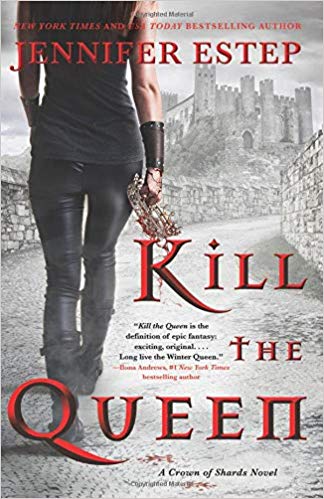
I read these back to back, and they are very similar books, right down to my actual opinions of them, so let’s do a dual review sort of thingie here. I ordered Kill the Queen a month or so ago after reading an article that recommended a bunch of epic fantasy by women, and Throne of Glass is the first book in a series whose final book just came out and which apparently a lot of my friends enjoyed, because I saw alllll sorts of tweets and Instagrams and all sorts of stuff when it came out. So I jumped in. Throne of Glass has six or seven sequels out and the series is complete; Kill the Queen’s second book comes out in June or July and I’m not certain how long it’s planned to run.

tl;dr: neither book is perfect but both have a lot of potential and you should check them both out.

Somewhat more detailed: both books feature young, orphaned women as the main protagonist (I’ll admit to rolling my eyes when KtQ’s protagonist first mentioned her parents were dead; I read that book second) although KtQ’s Evie is ten years older than seventeen-year-old Celaena in ToG. Both books spend the majority of their time in or around castles and dealing with the problem of royalty, although in different ways; Celaena, an actual assassin, is freed from jail by the crown prince at the beginning of the book and offered her freedom in exchange for serving as the king’s assassin for four years, and Evie is seventeenth in line for the throne at the beginning of KtQ, although … well, some stuff happens that sorta moves her up in the line of succession a bit. Spoiler alert, I guess. Celaena is uber-competent from the jump– if anything, a bit too competent for a seventeen-year-old; Evie starts off kinda useless but gets over it quickly.

ToG is Young Adults, although it’s the kind of YA that bitchy old men like myself can read without complaint. It’s real YA, as in the publisher markets it that way and that’s where you find it at bookstores, not the sexist “fantasy written by a woman, starring a woman, so it must be YA” YA. KtQ might fool you for about fifty pages and then the shit hits the fan and it definitely ain’t YA no more.

As I said, both books have some weaknesses, although ToG’s are less weaknesses of the book and more consequences of being YA: Celaena is an impressive badass, but I was never really sold on the idea that this seventeen-year-old who has been in jail for a couple of years working the salt mines was a world-renowned assassin. She doesn’t really ever come off as super assassiny, I guess? I mean, she’s a bitchy asshole, and I mean that as a compliment– I like her personality– but there’s a bit too much tell and not enough show, and I want much more backstory on her. But there’s six more books coming, so I’ll probably get it. In KtQ’s corner, the book begins with (spoiler) a Red Wedding-esque massacre that Evie is one of a very small number of survivors of, and I kinda feel like PTSD should have played a bit more of a role in her story? There’s also not as much societal upheaval as I’d guess from a book that starts with the utter destruction of damn near the entire (spoiler) ruling family. Like, nobody really seems to notice much other than a day of mourning.

Both books have romance; in no case does the romance go quite where you think it’ll go, which is cool. Throne of Glass also has a great bit where it is made clear that the book was written by a woman, and one who has thought about the biological ramifications of her protagonist basically being enslaved in a salt mine for a couple of years.

Also! I like the worldbuilding and the magic in ToG quite a bit, and again, I like Celaena quite a bit despite not quite believing in her, and despite being fucking called Kill the Queen, Kill the Queen‘s story managed to surprise me twice. I mean, it’s called Kill the Queen. You might imagine there’s some queen-killing! And there is! And it’s surprising anyway. It’s weird, but it works.

So, yeah: these are both four-star-out-of-five reads, with KtQ’s excellent ending very nearly pushing it up another half-star or so, and they’re both definitely checking out. I’ve already ordered the next two books in the Throne of Glass series, and I’ll be buying the sequel to Kill the Queen, called Protect the Prince, when it comes out in a few months. Check ’em both out.

Two brief book #reviews

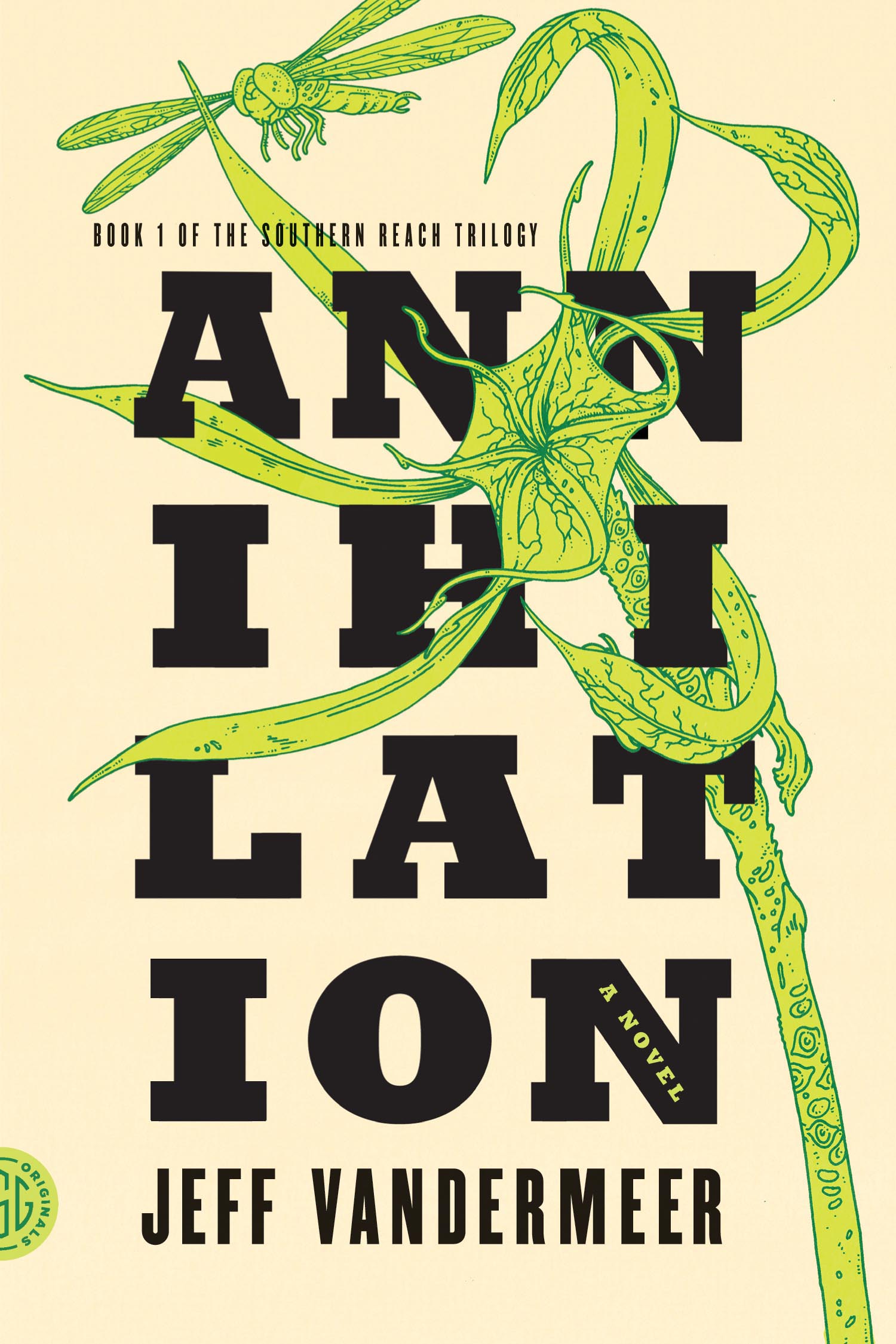
annihilationReviewlets, anyway.  I’ve had Jeff Vandermeer’s ANNIHILATION on my Kindle for what seems like forever– several months, at least, and I either got it at a scandalously low cost or actually for free.  One way or another, I don’t remember when I downloaded it, but I finally decided to start reading it the other day– mostly prompted by hearing some good things about the movie.

I don’t know what the hell I just read, guys.  On one hand, I blew through the thing in like two days, finishing the last 40% or so of it this morning while my son celebrated Spring Break by watching iPad videos and playing Mario Odyssey.  That’s actually a hell of a thing– reading, for me, is a very solitary activity, and the idea that I can get sucked into reading a book while there’s someone else in the room who is doing something that makes noise is pretty damned impressive.  And the weird thing is that most of the time while I was reading it I was vaguely annoyed by it.  I’m usually pretty quick to put down a book that annoys me, especially if I’m reading it on my Kindle and I don’t have to look at it staring at me from a shelf and mocking me with its unfinishedness.  There’s something just very offputting about the way this book is written that reminds me of a college lecture about Bertolt Brecht.  I know that sounds wankerish, and it probably is, but the prof (whose name I don’t remember) talking about how Brecht deliberately wrote his play (I don’t even remember the name of the play) to annoy and push away the audience really stuck with me for some reason.  I think Vandermeer wants you to feel a bit alienated by this book, which is both good and bad.  I mean, none of the characters have names, and they refer to each other only by their jobs, like “the biologist” and “the psychologist,” and if The Surveyor is talking to The Biologist, she’s going to call her that.

Also, and I feel like this is going to come off really weird, and I can’t explain it other than to hope that you’ve read the book and you understand, but all of the characters in the book are women, including the narrator, and there is nothing remotely feminine about any of them.  Which sounds like I think that Women Should Be Like This and Men Should Be Like That and isn’t the case.  It’s just … hell, the whole book is inexplicable.

Also: I watched the trailer for the movie after finishing the book and the two appear to have not a whole lot in common.  Part of me wonders if the movie is pulling in bits from the other two books in the series.  Which, despite having written this and not having much good to say about the book, I might buy anyway.

… someone, please tell me you’ve read this damn thing and know what I’m talking about.


34728667

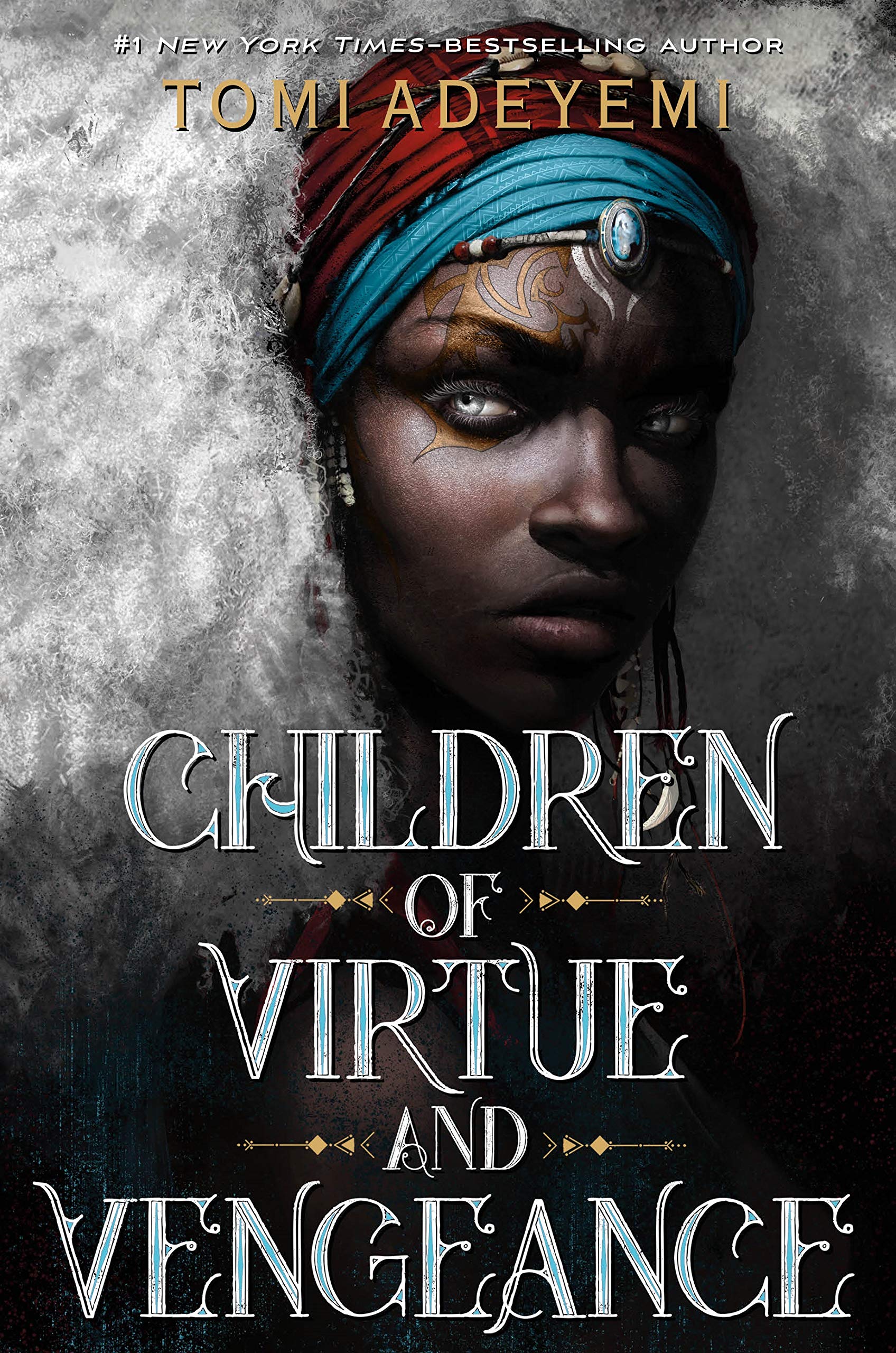
On the other end of things, I’ve been really excited to read Tomi Adeyemi’s CHILDREN OF BLOOD AND BONE since I first heard about it, and I actually timed finishing the book before it to be able to start it as soon as possible once it got into my house.  I spent most of the book thinking it was supposed to be a one-shot (it’s not, it’s the first of a trilogy) and feeling simultaneously like it needed to be a bigger story and it needed to be pruned down a bit.  I like Adeyemi’s writing quite a lot and the broader story of BLOOD AND BONE, about a persecuted minority who used to have access to magic and for most of a generation has lost it, and the group of young people who are working to bring their magic back– is compelling as hell.  My problem with the book, and what made it a three-and-a-half-stars-rounded-up-to-four instead of the five-star I wanted, is that the book is just a touch too YA for my tastes. Which, y’know, it’s a YA novel, so that’s my reaction and not a flaw with the book, but the book employs four different POV narrators and has short chapters (five pages or fewer, most of the time) and so there’s an awful lot of recapping and restating and reminding the audience of the specific angst of this character as opposed to that character.  One character in particular discovers he has magical abilities he was unaware of and hates himself for it, which is great except that he has to hate himself anew for it in every one of his chapters, and it gets to be a bit much for me.

That said, the book’s unexpected ending and approach to the inevitable romantic entanglement of the characters wins it an extra star, Adeyemi’s wordcraft is solid throughout, and I want to know more about where this world is headed, so despite some reservations I’m definitely in for the second book.

tl;dr: I want you to have already read ANNIHILATION and tell me what you thought, and I want you to go read CHILDREN OF BLOOD AND BONE despite the fact that it isn’t quite a home run for me.  The end.

#REVIEW: The Hate U Give, by Angie Thomas

32075671One of our local radio stations does a bit called Group Therapy in the morning, which is usually airing just as I’m driving the boy to school.  The general pattern is this: they pose a problem, submitted by a listener, that should generally be easily dealt with by anyone with an average middle schooler’s level of sophistication and emotional intelligence.  They do not provide enough information about the problem to allow listeners to give useful advice, and people who like hearing their voices or names on the radio submit useless advice on Facebook or on the air so that the person involved can do whatever they were going to do anyway.

I’m going to start listening to Pandora more in the morning, is what I’m saying.

This morning’s problem was as follows: a parent’s 11-year-old has stolen their credit card, for the second time.  It wasn’t made perfectly clear, but it seems that as of the time of the advice-asking, the boy still had the card.  He had used it to buy $50 worth of drinks and snacks from a local convenience store and not to, say, order hundreds of dollars worth of electronics from somewhere, which is what you’d think most kids would do with a credit card they’d stolen.  Anyway, this parent had reported the card stolen, and apparently under the (incorrect) idea that the police would show up if the kid attempted to use the card again– which, yeah, right— was wondering if he/she should just talk to his/her kid or let the police “scare him straight.”

And all I could think of, listening to this, was that the person asking for advice and every single one of the dumb motherfuckers providing (generally approving) advice for the latter piece of advice had to be white.  Because every black parent in America knows that you do not let the police anywhere near your child unless someone is guaranteed to die if you don’t.  There are no optional encounters with the police.  Fuck, I’m white and I live in a nice neighborhood and I’m never calling the police again unless somebody is under serious immediate physical threat.  And you’re gonna call the police on your baby because of a $50 credit card bill?  Your privilege is not only showing, it’s leaking out of the dashboard of my car, and I ought to be able to charge somebody to clean that shit up.

(Leave aside the ridiculous notions that 1) the police care about a $50 fraudulent credit card charge because they have nothing else to do and 2) they have time to help you with relatively routine parenting decisions.)

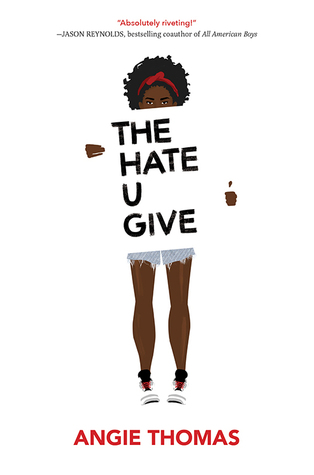
Which brings me to Angie Thomas’ The Hate U Give, or THUG for short.  The title of the book is a Tupac reference; Pac was fond of the backronym, explaining, for example, that “nigga” stood for “Never Ignorant, Getting Goals Accomplished.”  “Thug Life,” to Tupac, meant “The Hate U Give Little Infants Fucks Everybody,” and the meaning of that phrase is discussed throughout the book.

The story is told through the eyes of Starr Carter, a sixteen-year-old black girl.  Starr is the sole witness when a policeman murders one of her oldest friends during a traffic stop.  Her friend, Khalil, was unarmed and unresisting when he was shot.  The rest of the book spins out from that one moment; the different sections are even dated by it: “Three Weeks After It Happens,” and such.

You can probably predict the overall story beats from the premise, right?  America knows this story pretty Goddamn well by now, and the tension here is less from what happens (anybody want to put money down on whether the cop is exonerated by the grand jury or not?) than how the people in the book react to it.  Starr herself is a fascinating character; she lives in a rough neighborhood but her parents scrape and save to send her to a private school 45 minutes away, so many of her best friends aren’t black and she thinks of herself as being two different people, one at school and one at home.    Her uncle is a police officer, her father a former gang member.  Khalil himself has a complicated backstory, and the book dives into the inevitable attempt by the media and the police to slander him and make him responsible for his own murder.  For a large portion of the story Starr’s school friends and her (white) boyfriend aren’t aware that she’s the anonymous witness the news keeps referring to, and the way she reacts to their treatment of Khalil’s death is complex and fascinating.  Her navigation through the web of relationships and identities she’s struggling with throughout the book is a pleasure to read.

I recommend books here all the time; I rarely bother to review anything I didn’t love unless I think I can hate it in an entertaining way, but it’s not terribly often that I use the word important to describe a book that I’ve read.  You need to read THUG, and you need to get THUG into the hands of as many other people as you can, particularly young people.  Angie Thomas’ writing is crisp and clear, Starr herself is a wonderful character, and I can’t wait to get my hands on more work by this author.  Go read this book.  Do it right now.

Pre-review: THE HATE U GIVE, by Angie Thomas

I hav32075671.jpgen’t been around much lately– I’ve had a distinct lack of things to say, to be honest– and this post isn’t going to change things all that much, but at the moment I’m halfway through Angie Thomas’ The Hate U Give and I figure I may as well start right now: this book is a big fucking deal, and a whole goddamn lot of people who aren’t reading it need to be.   This book is fucking important in a way that nothing I’ve read in a while really has been, and I know I’m frequently all sorts of ebullient whenever I write about a book around here, but take this seriously.

Full post incoming once I finish it, of course.  I can imagine a world where the back half goes pear-shaped, but I don’t know that it even matters.  I can’t imagine it going sour enough that I wouldn’t be recommending this to everyone I could find when I was done with it.

GUEST POST: Messing with a Good Thing, by Adam Dreece

Sunday.  I am likely tired and crabby by now, and it’s the last day of the con.  I cannot emphasize enough how much you need to drive to Chicago and come see me RIGHT NOW.  Do it.  I have to drive home tonight and I need entertaining stories to keep me awake.  

Today: Indie author extraordinaire Adam Dreece!  


XwLwfWihFirstly, thanks to Luther for letting me guest post today. We’ve been friends for going on two years thanks to Twitter, and I hope we get to meet in person sooner rather than later.
Now, how about some “Messing with a good thing.”
When I told a friend of mine that I was writing The Man of Cloud 9, and how it wasn’t for the same audience as my series, The Yellow Hoods, he shook his head.
Phil has written a lot of books, and a few of his books have sold over 100,000 copies. He’s traditionally published for the most part, though he has some indie things, like an anthology with a few other authors, which has sold ‘only’ about 30,000 copies or so. Compared to him, when it comes to sales, I’m still thinking about writing.
So when I told him that I was writing a science-fiction novel that didn’t have any young characters, that it was ‘classic science-fiction’, he asked me, “Why? You already have an audience. You’re at an early point in your writing career, you should build that, not divide it.”
Since April 2014, I’ve released four novels and a novelette in my steampunk-meets-fairy tale world. The layered style of writing has been a hit with kids 9-15 and adults (usually over age 28). I’ve been building up my newsletter, and sharing goodies there that give me a very high open rate. So why-why-why-why, why would I not just keep feeding that group? Well, from my perspective, I sort of am.
I don’t want to be known as only “The Steampunk Fairy Tale Guy.” I want to be known as “A Great YA author.” An author you can trust for a great read that won’t leave you feeling like an emotional train-wreck, or bring graphic violence or sex into the story. I’ll bring you right up to the border of YA, I’ll make reference to things, I’ll infer things, but there’s a line that I won’t cross. I’ll be the ‘mature adult’ author who stepped over the line to YA, rather than someone who writes children’s stories with an edge or two.
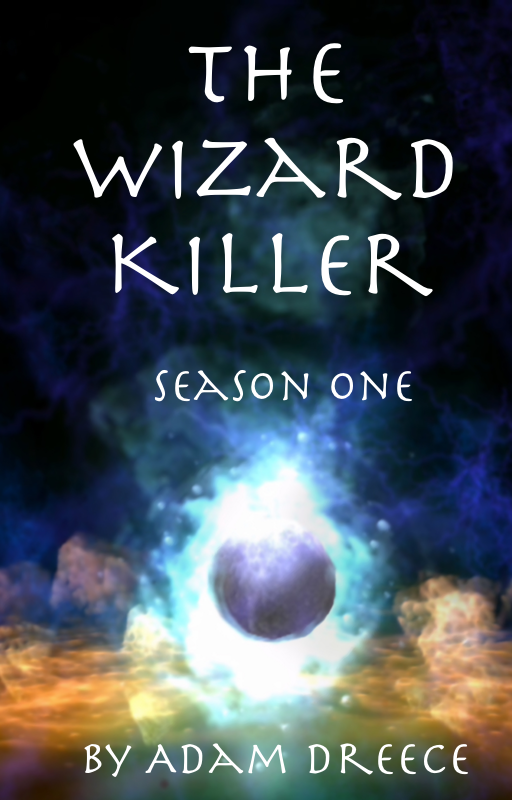
WattPad-Cover-PNGAlong this line of thinking, I started writing The Wizard Killer several months ago. It’s a serial that I publish every week (while it’s in preview, i.e. unedited and unrevised). It’s gritty and intense, a very different feel from The Yellow Hoods. And when my daughter, who’s 11, read it and loved it, it reinforced the idea for me that I can tell a great tale while still within the realm of “YA.”
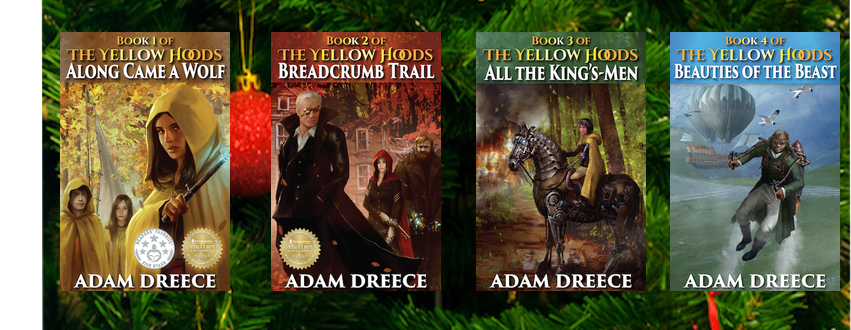
So when I wrote The Man of Cloud 9, I wanted to bring to the table my life in technology, my experience in Silicon Valley and with startups, I wanted to tell a tale that a fourteen-year-old me would probably love to get into, and the thirty-year-old me would have been able to connect with. As for my younger audience? Well, they have Book 5 of The Yellow Hoods that’ll be coming out at the end of the year.
This all said, my friend had a really good point. I could end up with people buying the book for their kid, without reading the back, without seeing the recommended age we put on it, and the kid hates the book and the parent never buys another Adam Dreece book again. It is a risk. Also, people could look at the back of the book, not like it and decide not to give any of my other books a passing glance. But there’s an upside I’m willing to risk it for.
Suppose for a minute that I release The Man of Cloud 9 and it is a run-away success. Suppose I discover that I wasn’t meant to be known as the “Steampunk-Fairy tale guy,” but rather as an author of science-fiction? Would that be terrible? Nope.
And what if the adult audience that I’ve already built up loves the book and feels that this was for them? Something that reinforces their support and love of my work even more, by allowing them to have a different take on it, similar to how different Wizard Killer is?
As authors, we shouldn’t just write things in all sorts of genres and leave the burden to the reader to feel like there’s a dozen different people writing under the same name. In my case, I’m being consistent with my writing style, with my view on people and humanity, and how I capture the story, it’s just a more mature story than the other series I write. And guess what? That’s what a brand is about. You have different product lines (Cloud 9, Wizard Killer, The Yellow Hoods) but they are all unified by some base characteristics: Great stories, solid female characters, no real swears (what do I look like, a flaring pargo? Yig.), etc.
Will the experiment in branching out work? Sure. How much? That’s yet to be seen.
– Adam
Adam Dreece is an indie author and speaker. He’s one of the founders of ADZO Publishing, and has 4 novels in his series The Yellow Hoods, and has been published by Sudden Insight in its anthology, Paw for a Tale. His serial, The Wizard Killer, and blog posts can be found at AdamDreece.com. He’s also very engaged on Twitter @AdamDreece and on Facebook AdamDreeceAuthor.
His books are available as eBooks and in print at AmazonIndigoKoboSmashwordsBarnes and Noble, and elsewhere.
10534440_926115004130698_1624872713340914592_n

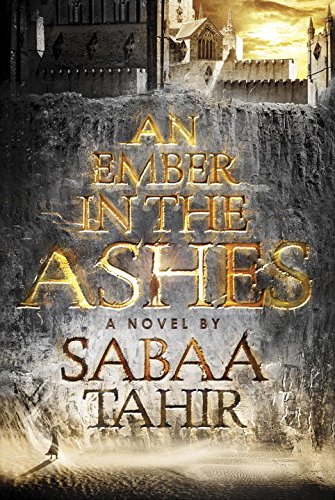
#REVIEW: AN EMBER IN THE ASHES, by Sabaa Tahir

61BcvUoJGML.jpgI don’t know what to do with this one.  Generally I know when I’m reading a book whether I like it or hate it or, more rarely, if I’m hate-reading it, which is definitely a thing.

(Actually, before I go any further: trigger warning for rape.  Don’t go anywhere near this book if you’re someone who needed that trigger warning.)

Here’s the problem with AN EMBER IN THE ASHES:  it’s just well-written and interesting enough to keep you moving past the problematic parts, but problematic enough that you feel like you’ve wasted your time, or at least that you need a nice long shower, once you’ve done so.  The basic scenario is pure YA; the world is split into two factions (shades of Divergent) for no clear reason, one of the factions is Really Evil, and there are two main characters on either side of the struggle and a second girl to provide a convenient love triangle.  Oh, and two of the three mains have a chance to be the Emperor.  Of the bad guys.

The villains are cartoonishly evil; the Commandant keeps killing and/or maiming all her slaves (while simultaneously complaining about how much they cost her) and the other bad guy is basically a more one-note version of Draco Malfoy crossed with all of Joffrey Baratheon’s ideas of progressive gender relations.  Take that and toss in, oh, I dunno, thirty or forty rape references over the course of the 450-some-odd pages of the book.

It’s YA.  It’s YA and it’s filled with rape references, but no actual rape.  Ordinarily I would think “does not contain rape” would be a good thing about a book, but much like the Sansa dilemma in the Game of Thrones books, once you’ve referred to a character potentially being raped (and yes, of course she’s underage) enough times, the reader eventually can get very close to the point where they would like you to get on with it so that the book can fucking move on.  If that sounds terrible, it’s because it is, but seriously: Sansa’s entire story in the GoT books for the last three thousand pages has been “Is this the book where Sansa gets raped?” and it’s at the point where that’s almost the sole reason for her existence in the narrative: to make you worry that she’s going to be raped.  It’s exhausting.  Anton Chekov is out there somewhere spinning in his grave and yelling at you.

This entire book is “Is this the chapter where one of the three young female protagonists get raped?”  Because two of them are slaves, and it’s made clear that slaves should expect to be raped all the time, and the third is a badass soldier type who, by virtue of her martial prowess one would expect to be less likely to have to put up with that shit but catches just as many rape threats (from Draco Baratheon, over and over again) as anyone else– and, worse, the book basically puts her in a place by the end where it’s pretty clear that she’ll spend at least the next book being assaulted over and over and over again.  The other two might be safe, but who knows.

“So why’d you finish it, then?” you might be asking.  And I’ll make it worse: I finished this book in basically three big gulps, including one point where I sent out a Tweet that the next reference to rape would be the book’s last chance and then somehow made it ninety more pages (and to bed) before another one.  (So, yeah.  That’s about 1/4 of the book with no rape references.  The other 3/4 is chock full of them.)

Thing is, Sabaa Tahir is actually a pretty damn good writer despite this one thing.  Then again, so is George R.R. Martin, and I’m pretty much done with Game of Thrones too.  So the book’s going to keep you reading until the rape references or the vaguely incoherent worldbuilding or the occasional odd character choices drive you away.  On a page-to-page basis, though, it’s well-written, and it’s the type of book that makes you think it’s completely predictable and then keeps yanking the rug out.

I three-starred it on Goodreads; I feel like anything I race through like I did this book deserves at least three stars, but I could justify anything lower than that without much of a problem, and right now I sort of feel like moving it down to two.  Because blech.  But, somehow, blech where I’m still thinking of picking up the sequel.

See what I mean?  I have no idea what to think of this damn book.

#Review: LOST STARS, by @ClaudiaGray

518FIzHQEGL._SX329_BO1,204,203,200_.jpgI’ve not liked the new, post-Disney Star Wars books all that much, as a lot of you know.  Chuck Wendig’s AFTERMATH was the first one I felt like I could recommend, and I had my reservations about that one as well.  Claudia Grey’s LOST STARS, ostensibly a YA book but you basically can’t tell beyond the font size, is easily the best of them that I’ve read, and the first I can recommend wholeheartedly.  If you like Star Wars, you should read LOST STARS.  If you like Star Wars books, you should drop what you’re doing and read LOST STARS, because I think you want to have read this when the new movie comes out.

The premise is the most YA thing about it.  The main characters are a boy and a girl, from the same planet but vastly different social strata within that planet, who meet as children and first become best friends, join the Empire together, rise in rank, fall in love, and then one of them defects to the Rebellion.  Their– ahem– star-crossed love spans all three of the OT Star Wars films and the book ends just after the Battle of Jakku, which will apparently play an important role in The Force Awakens.  Those couple of shots of Rey in and/or speeding past the crashed Star Destroyer?  You see that Star Destroyer crash in this book.  The two main characters are in it at the time.

So, Romeo and Juliet, with lasers, right?  Well, yeah, I guess, but only if you nutshell it in a few paragraphs, and like I said the premise is the most YA part of the book.  The broad premise is purely Shakespearean; the actual execution will not leave anyone anything to complain about.  Claudia Gray, who I had previously not heard of but will be looking more closely into, manages to pull off a number of things in this book:

  • She manages to show how broad the Star Wars universe is despite starting with two characters from the same planet;
  • She avoids the constant problem of trying to Star Warsify common English expressions and animals, which happens far too often and drives me nuts;
  • She humanizes the Empire to a great degree without minimizing the fact that they’re the bad guys or being too ridiculous about it; while the character who stays with the Empire and doesn’t defect probably should have figured out what was going on a bit earlier, good cultural reasons are set up well before enlistment that make the decision-making process make some sense;
  • She inserts her characters into major scenes in all three of the Star Wars films without being overly Forrest Gump about it, to the point where I want to watch certain scenes to see if a snowspeeder does a certain move at a certain point (pretty sure it does) or if there is actually a character standing at a certain place in the background during certain scenes.
  • She manages to use the fact that Disney decided to wipe out the old continuity.  In fact, hell, this is the first book that changed things about the previous continuity and made me happy about it.

And then there are the hints about The Force Awakens.  Be aware that everything past this point is wanton speculation, and in fact I think I’m going to phrase it in a non-spoiler sort of way.  None of this is explicitly spelled out anywhere, but after carefully reading LOST STARS I believe I know the following:

  • I think I know where Luke Skywalker has been, and why;
  • I think I know why the good guys and the bad guys are now called the Resistance and the First Order rather than the Rebellion and the Empire;
  • I think I know who Kylo Ren is.

The last is the most tenuous, and I can come up with reasons I might be wrong, but if I’m right, it’s completely awesome and the fact that they hid those clues in a YA book that at least in the circles I move in didn’t get any real attention is fantastic.

So.  Yeah.  You need to read this book.