
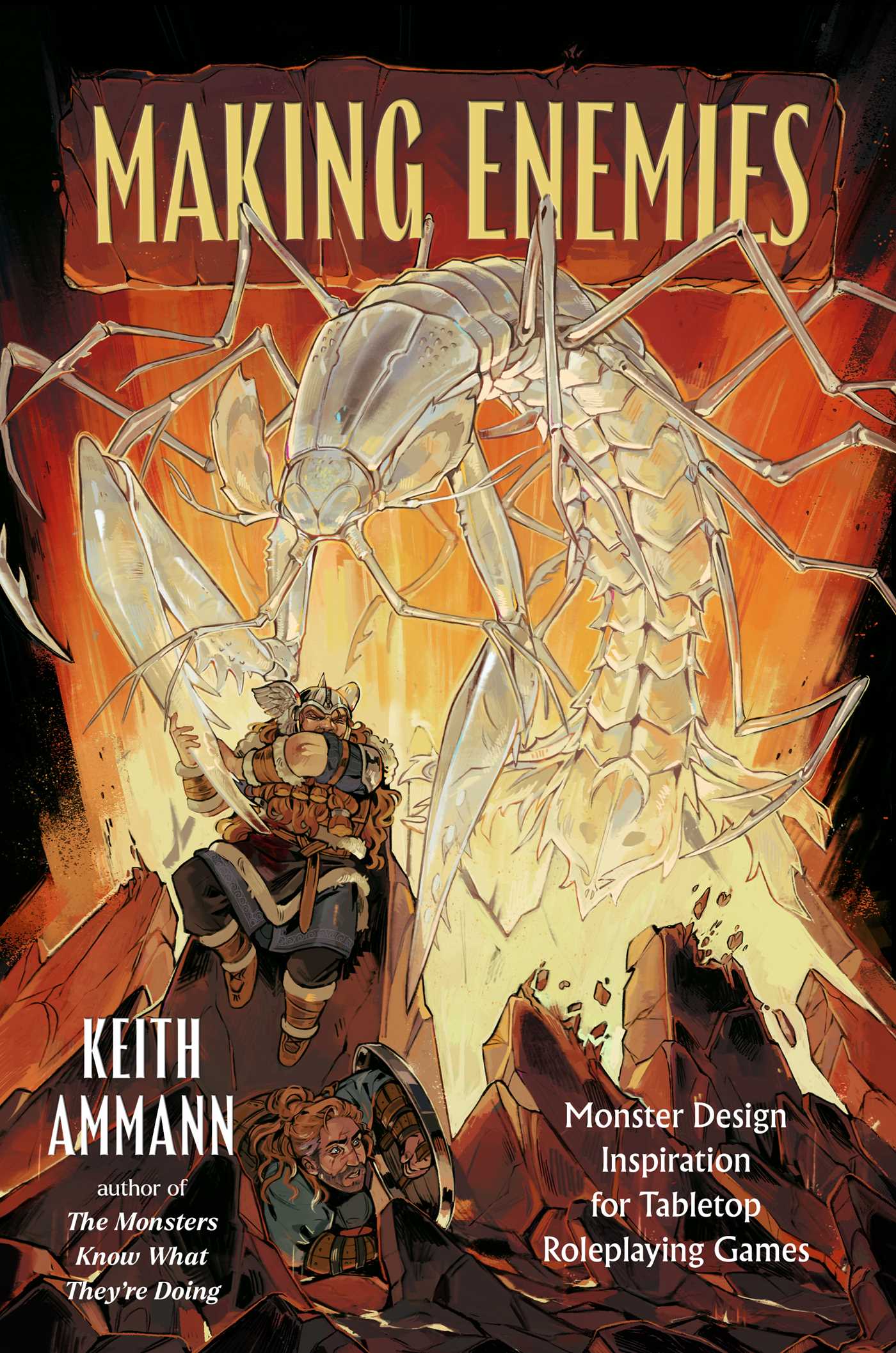
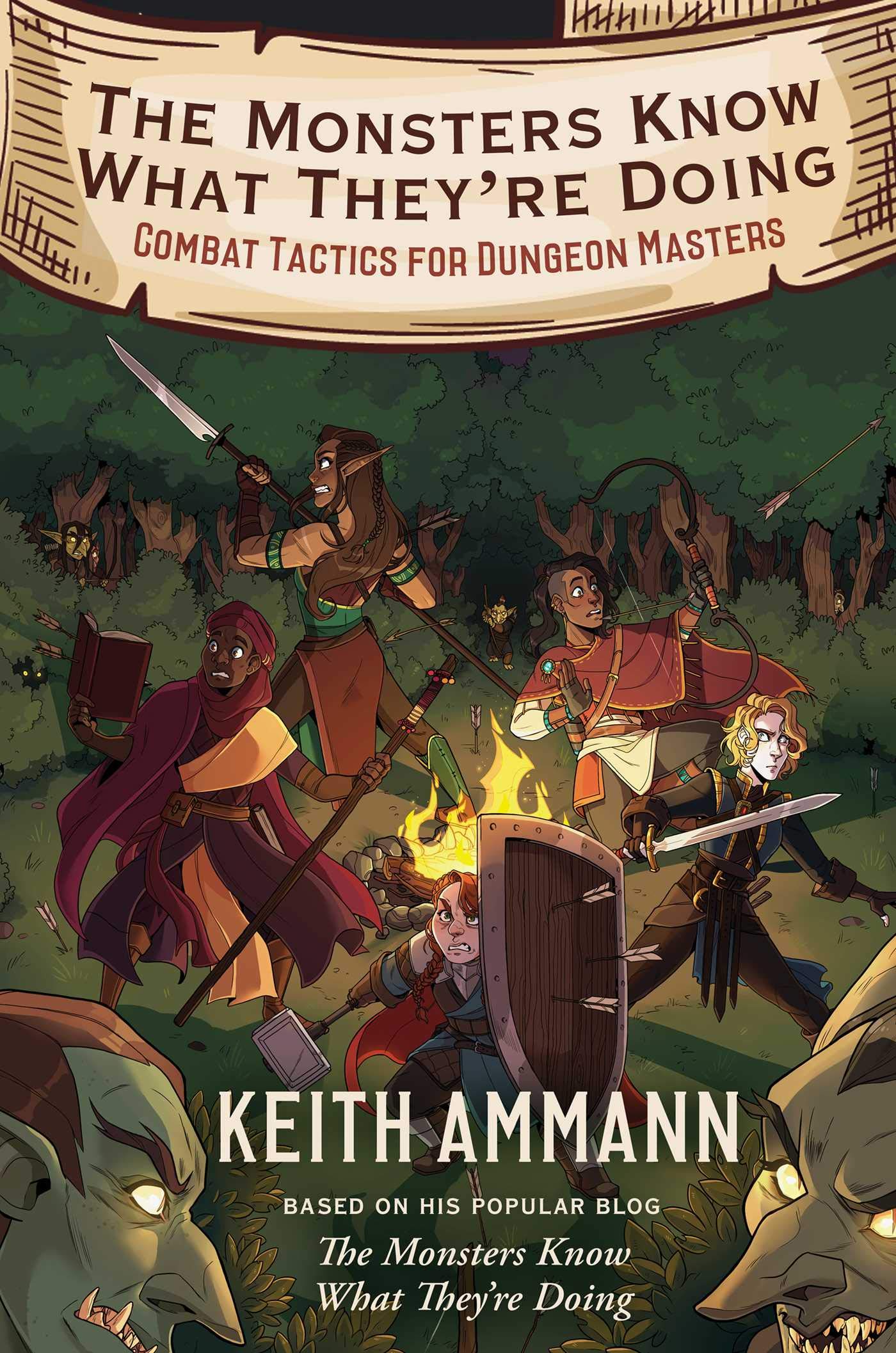
We’ll begin with my absolute favorite thing for book reviews: Disclaimers! First, that I got a copy of this book for free (it comes out on Tuesday) and second, that I’ve known the author for a vaguely shocking twenty-two years, and not in the usual parasocial Internet way that I know a fair number of authors but in a “he’s been in my apartment and we’ve worked on grad school projects together” sort of way. There’s a review of his book The Monsters Know What They’re Doing here; this is actually his fifth book, technically part of a series but, given that they’re all roleplaying sourcebooks dedicated to helping game masters for TTRPGs do their jobs better, there’s no reason to feel like you need to read them in order. I admit it; I have not read the books in between, although I intend to.
Here’s the thing about Keith, guys: Keith is one of the smartest motherfuckers guys I’ve ever met. He’s ludicrously well-read and he’s got a mind like a steel trap. If he had been born seven hundred years ago he would have been a monk and would have discovered something that we all take for granted by now; if he’d been born in the 1810s instead of the 1970s you would never have heard of Gregor Mendel. However, he was born in the 1970s, so instead of more or less inventing genetics as we know it, he writes about roleplaying games.
Making Enemies is, ostensibly, about creating home-brew monsters for your TTRPG campaign. He doesn’t limit himself to Dungeons & Dragons with this one; attention is paid to Pathfinder, Shadowdark and Call of Cthulhu, along with another system that I have to admit I’ve never heard of called the Cypher System. Each section of the book begins with a more generic introduction to/discussion of the aspect of monster design being discussed, such as morphology, abilities, size and number, quirks and weaknesses, etc; and then there will be sections afterward dedicated to the differences you’d see among each of the specific systems. I felt like Call of Cthulhu got a little shorted, as it doesn’t quite work the same way as the rest of the systems (You Are Fucking Doomed is more or less Call of Cthulhu’s entire thing, and this book is about making good enemies for your players, not killing them in seconds) and of course D&D gets a bit more attention than the others, but there’s good stuff here for everybody who plays TTRPGs.
Nothing I’ve just said is sufficient to prepare you for just how deep this book gets, over and over and over again. The chapter called Weird Nature, about monster type and morphology, could be copied and pasted into a biology textbook with barely a sentence changed. The book interrogates the entire concept of “monster” over and over again in a way that is completely fascinating and yet in some ways entirely unnecessary to a book about TTRPGs, which are generally much more lowbrow than this. There are interviews scattered throughout the book with professional game designers, and it’s stunning how high-level, no pun intended, some of these discussions get. I would love to know how much actual research went into this book that had no direct relationship to TTRPGs. My guess is: lots.
(Memo to Keith: go whole-hog on your next book. I want four hundred pages on your theory of game design. Do it.)
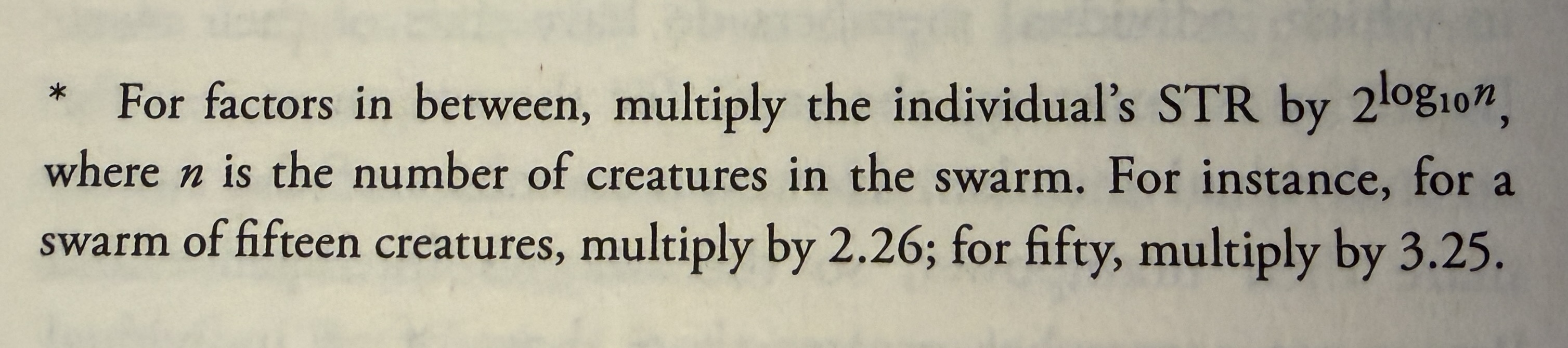
But seriously. I feel like I should have been taking notes and adding Post-Its into the book while I was reading it, and the reader of this book should be prepared to see the occasional quotes from genuine academic works of philosophy and then less than a page later an anecdote about The Muppet Show. That’s not to say that this book doesn’t have a ton of good old-fashioned in-the-weeds nerd math, because it does. Witness:
I’ve talked about this before: I love enthusiasm. My favorite thing about TikTok is how great of a vehicle it is for people to share activities they love with other people. And the reason I feel so comfortable recommending what by rights ought to be a very niche book to literally everyone I know who reads is that Keith’s incredible enthusiasm for game design and TTRPGs shines through every page of this book. I enjoyed The Monsters Know What They’re Doing quite a bit and recommended it, but I was clear (and so was the book!) that it was a book for people who ran TTRPG games. I think there are people out there who would enjoy this regardless of what they’ve done in the TTRPG space; if you consider yourself an autodidact and an intellectual (dare I say “polymath”?) you may find yourself skipping the weedier sections here and there that get into specifics about the systems, but the interviews and the beginnings of every chapter and the relentless attention to careful thinking throughout are going to bring a smile to your face.
Making Enemies comes out October 7th. Check it out.
 Welcome to infinitefreetime dot com