Two quick book reviews

I am in a horrendous mood, as the world is continuing to go to shit and nothing seems to be able to stop it or even slow it down, but there are still books out there, so I may as well talk about them. I don’t have the energy to make a full post about either of these so let’s just do a couple quick paragraphs each and call it a day.

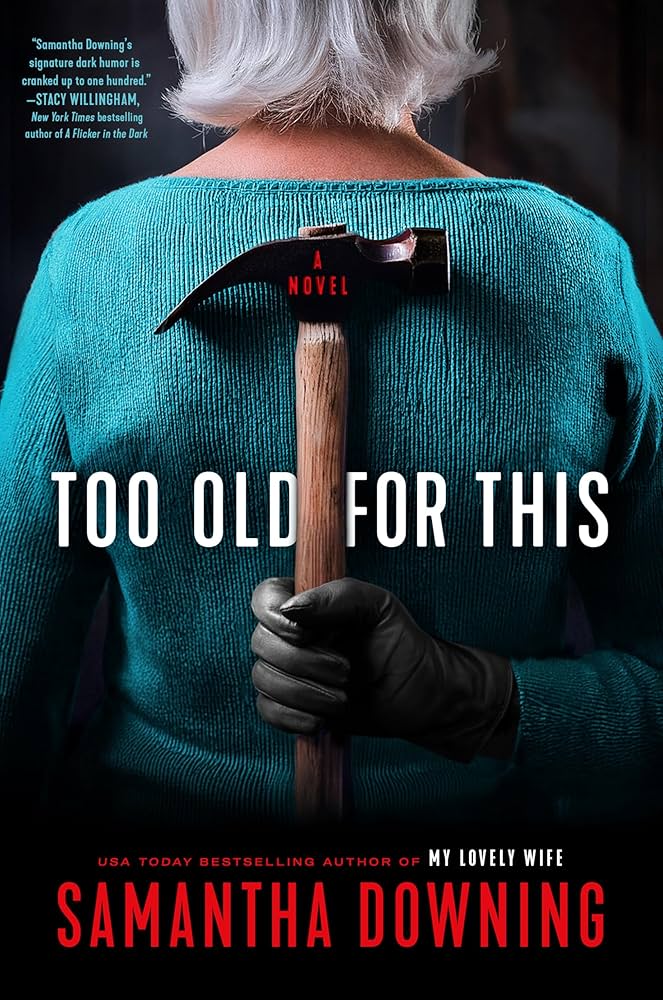
Samantha Downing’s Too Old For This is a book about a serial killer forced out of retirement when a documentarian comes calling who wants to make a series about her. She was never actually brought to trial for her crimes, but changed her name and moved across the country anyway, and she’s less than interested in someone dragging all of that back into the light again.

She’s in her seventies, by the way.

This book ended up being lightweight and quick and more fun than it probably had any right to be, as Lottie Jones’ life keeps getting upended more and more as she attempts to cover for her crimes– both the old ones before she moved away and the new ones she has to keep committing as she keeps making mistakes that wouldn’t have mattered when she was killing people decades ago but are a bit of a problem in an era of near-constant surveillance by our own possessions. I can imagine a reader who is bothered by the fact that the protagonist is an unrepentant serial killer who we’re more or less expected to like, or at least enjoy reading about, but I’m not that reader and I had fun with this. I may look into more of Samantha Downing’s work if I ever allow myself to buy books again.

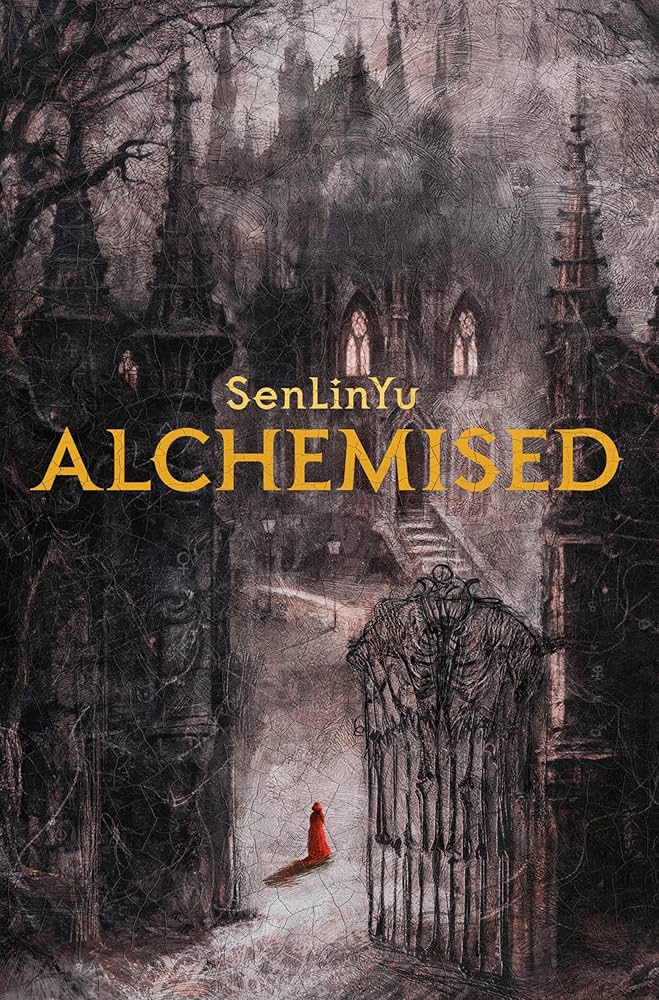
So, yeah, okay, I finished it, and it’s a thousand pages long and I have a full-time job and I still finished it in less than a week, and because of that I can’t really call it bad, but … if you weren’t going to buy this anyway, don’t let anyone talk you into it. SenLinYu is a perfectly cromulent author and no one would ever read this book and figure out on their own that it was originally brought into the world as Harry Potter fanfiction, but it’s way overhyped, at least from my perspective. I keep seeing videos about people who were in tears for the last two hundred pages or whatever, and I feel like these people need pets or significant others or something, because in the end it’s just a book and it’s being treated like a life-altering event online. I said in my first post that I was buying this out of FOMO, and I’ve got to stop doing that. I’m never going to be missing out if I don’t read a book TikTok likes.

(I deleted the app again today; we’ll see how long it lasts this time.)

Again, it’s not awful, but it’s definitely romantasy despite all the people insisting that no, it’s dark fantasy— I’m pretty sure “dark fantasy” is just romantasy with at least one rape scene to these people– and I’m tired of romantasy as a genre. It’ll look good on my shelf, and I didn’t hate it like I figured I would, but those are the best things I have to say about it.

#REVIEW: The Raven’s Gift, by Don Rearden

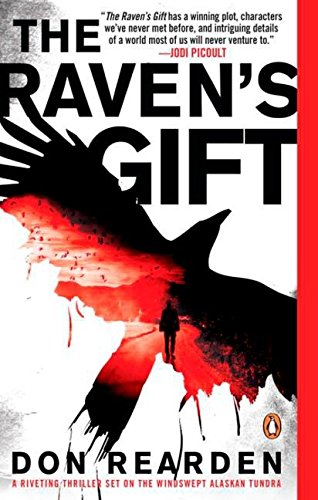
This is one of those reviews that, if I’m not careful, is going to sound sort of insulting. I picked up The Raven’s Gift after deciding that it was time for me to read a book from Alaska for my #readaroundtheworld thing and deciding I wanted a book written by someone indigenous and not just some yahoo who had moved there. I literally searched for names and picked a book that looked like it had a fair chance of being something I’d enjoy. I’m at the point now where I have four or five books that are by people living in the extreme North somewhere on the planet, and there’s something about living in the cold and the tundra that makes for excellent thrillers. Here’s where I need to cross my fingers and hope that y’all understand what I’m getting at with my comparison: you know how occasionally you get McDonald’s, and somehow your Double Quarter Pounder with cheese is just, like, the platonic ideal of the Double Quarter Pounder with cheese? And you actually sit back after you eat it and rub your stomach and think Man, I probably just took another day off my lifespan, but it was worth it?

Don Rearden’s The Raven’s Gift is the literary equivalent of the perfect Double Quarter Pounder with cheese. I mean, it’s not bad for you or anything, but it knows what sort of book it is and it is an exceptionally well-crafted example of the form. I’d call it a beach read, but half of it is about avoiding freezing to death so it maybe isn’t a beach read.

The Raven’s Gift is about a young white couple, both teachers, who accept a job in a remote– and by remote I mean remote— village in Alaska to serve as literally half the teaching faculty at the village’s school. The husband takes the high school kids and teaches everything but math, and the wife ends up with the younger kids. The recruiter warns them that the job has been hell on couples before, and points out that no matter how prepared they think they are, they aren’t— that he has had teachers arrive at the village (by plane, the only way to reach it) and take one look and refuse to get off the plane. This is a community of people used to subsistence farming, and absolutely everything that can’t be manufactured by hand has to be flown in specially, including things like fuel and food. No running water. That sort of thing.

And then the bird flu hits, and the village is very quickly cut off, and … well, that’s the setup. The book does an interesting thing temporally where it tells the story in two parallel time tracks, one beginning when they first accept the job and the second beginning after Something Bad happens because of the plague, and for a lot of the book it isn’t entirely clear what’s going on– whether it’s a normal (well, exceptionally virulent, but “natural”) disease or a government conspiracy or something more supernatural, and while this is not a zombie story, you never feel like you’d be suprised if a corpse stood up and started shambling around, and as they get farther into the epidemic the survivors start resembling the walking dead more and more anyway.

I started this book Thursday night and finished it today, and I came damn close to finishing it last night but couldn’t keep my eyes open any longer with about 40 pages left. This is a great piece of craft even if it’s not the most original book on the shelves– I read at least one book last year from northern Canada that I could have written almost exactly the same summary of except without the fish-out-of-water complication of the white protagonists, and another set in Iceland this year that worked a murder mystery into the mix– but originality ain’t everything. Give it a read if you’re in the mood for a claustrophobic, dark, cold thriller. Maybe wait until it’s warmer outside, though.

#REVIEW: THE LAST SWORD MAKER, by Brian Nelson

The obligatory disclaimer: Brian Nelson’s The Last Sword Maker is another book that a publicist sent to me for free in return for an honest review.

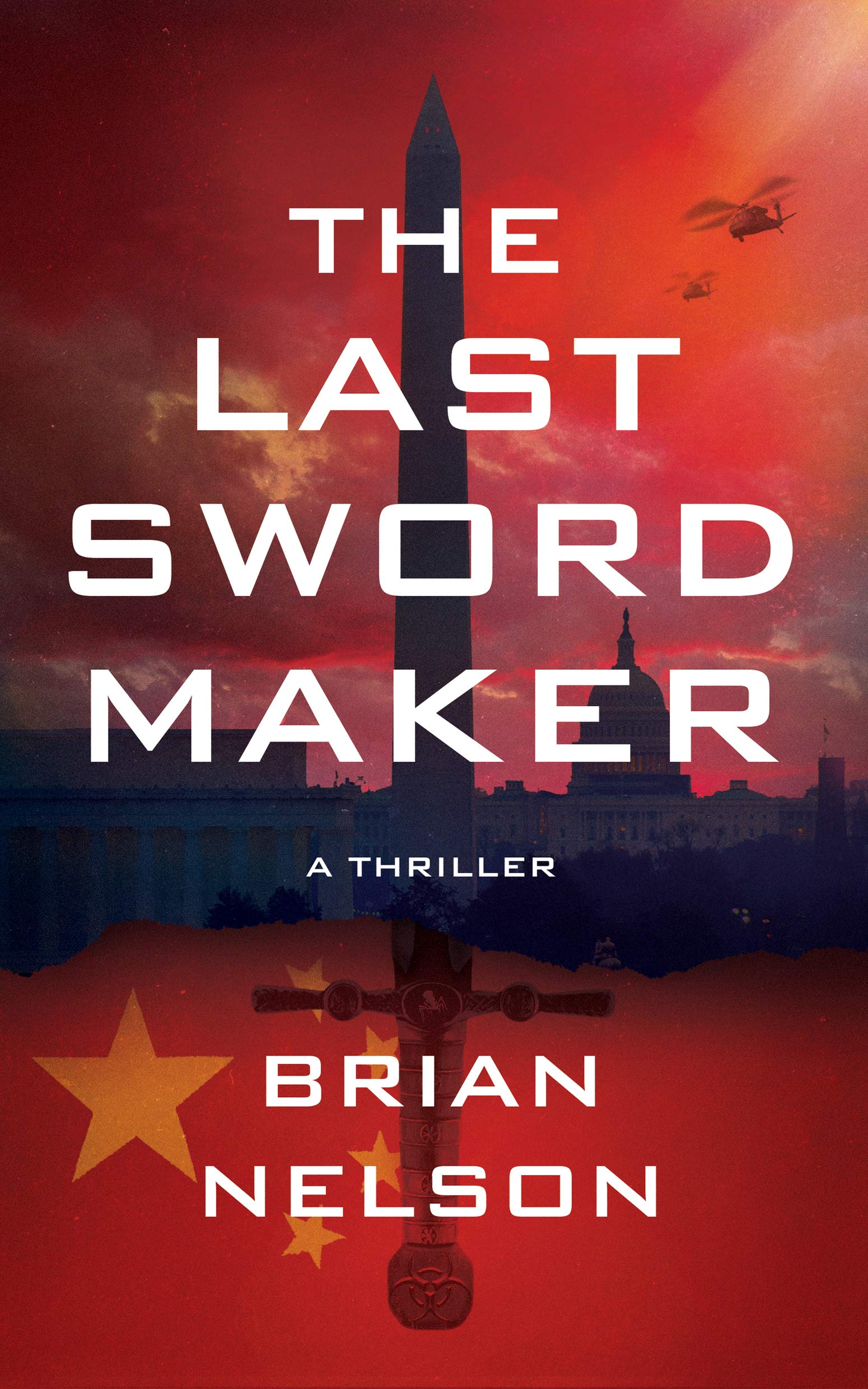
This is one of those books where star ratings kind of fail me, because what you get out of The Last Sword Maker is going to be very directly related to what you’re willing to put into it. It is four hundred and sixty-odd pages long, I started it before bed last night, and less than 24 hours later I am typing out this review. That’s a good thing! The book is a hell of a page-turner; it doesn’t quite borrow the Dan Brown trick of ending every single chapter on a cliffhanger so that you’re compelled to keep reading, but it does borrow the classic page-turner move of short chapters– there are 44 of them, plus a prologue, a bunch of interstitial pages, and an epilogue, so you’re never dissuaded from just one more chapter. I mean, it helps that I’m a teacher on summer break during a pandemic; it’s not like other than keeping my son alive and fed I have a lot of other tasks to attend to. But! I have many books, and I did not read all of them in effectively one big gulp overnight. That’s an achievement, and if you are looking for a fast read that will keep your eyes glued to the page, this will absolutely be right up your alley.

Speaking of pandemics, though: The Last Sword Maker is about warfare and nanotech and genetics, about a bunch of very smart people and a bunch of very dangerous people trying to crack a new technology before … well, before China, specifically, because the technological edge granted by achieving self-replicating nanotech will effectively secure the winning nation’s top-of-the-food-chain status for generations to come. There are lots of references to nanobot-driven plagues that are able to target their victims based on their genetic code, and early in the book China tests that capability on a few Tibetan villages. All of the characters are therefore either scientific geniuses or hard-ass military types, and while it kind of seems like cheating to say if you like this kind of thing, this is the kind of thing that you will like, but … yeah. Chances are, you already know, based on what you’ve read, whether you’re going to enjoy this or not.

But to circle back to that star rating thing again: I enjoyed reading this! I read it fast, and I barely put it down once I started it! Those are definitely good things. I am, however, going to try really hard not to think too much about the plot, because while one of the advantages of the page-turner is that they’re very good at hey look over here boom bang zip pow! type of stuff, they don’t always hold up all that well afterwards? And I mentioned Dan Brown earlier, and he’s again the classic example, because his books feel smart while you’re reading them but don’t you dare think about them afterwards or they’ll fall apart.

If you are, and I swear I don’t mean this as an insult, because I am frequently this type of person, particularly with respect to movies, the type of person who does not waste a lot of time poking around for plot holes or thinking too hard about whether the tech described in the book ought to work as described, or if the sudden jump from Development A to Development B might be a bit too abrupt, this may be the book for you. If on the other hand you are the type of person to notice that hey, did that really important guy get kidnapped offscreen, and nobody seems to have noticed in America? then maybe it might not be your type of book.

Also, if repeated use of the phrase the hardness makes you giggle, especially when it is used in concert with phrases such as entered him or filled him, and no it is not in the context you think it is, well … giggling is going to happen. There’s a guy; he has a thing going on. It’s not what you think. You’ll see.

It also leans really hard into the Chinese being the villains, and there are a couple of kinda sketchy ehh moments here and there with some of the minority characters that maybe could have used another pass. I don’t think it quite reaches racism, especially given how it ends and who the big monster of the book ends up being, but it’s possible that it will get to you. Or not! This book is the type of thing I always think of when I hear the phrase beach read; it’s a thriller, and it aims to entertain you while you’re reading it and doesn’t have particularly lofty goals beyond that. If that’s your thing, definitely check it out.


7:51 PM, Monday June 22: 2,306,247 confirmed cases and 120,384 Americans dead.

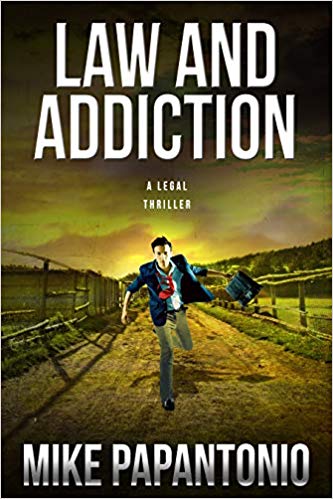
#REVIEW: LAW AND ADDICTION, by Mike Papantonio

I received a free review copy of Mike Papantonio’s Law and Addiction from the same folks who were responsible for me receiving the two Thom Hartmann books I’ve reviewed and Closer Than You Think, by Lee Maguire. There’s been no promises of anything other than a fair review, and … well, read on.

Law and Addiction tells the story of Jake Rutledge, a fresh-from-law-school West Virginian who discovers the week before his graduation that his twin brother Blake has just died from an addiction to opiates that Jake was unaware of. Jake decides to honor his brother by suing the companies responsible for the opiate epidemic, including the three largest (fictional) drug companies in America, and … well, it turns out that’s kind of complicated.

(True story: a relative has recently casually suggested to me that I sue a drug company because of some events related to the Ongoing Medical Calamity last summer. I, uh, declined, because I do not have millions of dollars and unlimited time. Neither does Jake Rutledge, but he is apparently very, very good at gaining allies.)

Now, here’s the thing: Mike Papantonio is a lawyer, and according to his biography (which also describes him as a “skilled musician and athlete”) he has actually sued pharmaceutical companies in connection with the opioid crisis. So there’s very much a John Grisham thing going on here, where this actual lawyer’s actual practice is informing the events in his fictional novels.

Let’s start with the good stuff: I read this novel in two big gulps over two days, so there’s certainly a page-turner in here; Papantonio has a Dan Brown-esque talent for writing books that read quickly and keep you moving through them, and he’s a reasonably talented writer on a sentence-to-paragraph level.

Unfortunately, the novel as a whole has some problems. I was surprised to discover while reading that this book about a lawyer who is suing drug companies for pushing pills, written by a lawyer who has sued drug companies for pushing pills, really doesn’t read like it was written by a lawyer. All the lawyerin’ is sort of pushed off the page, other than some courtroom scenes, and it feels like the action of a writer who doesn’t really want to learn how something like suing a drug company might actually work, and is instead mostly writing based on half-remembered court scenes from Netflixed episodes of Law and Order and L.A. Law.

I mean … the book is really clear several times on the timeline. Jake’s brother dies a week before Jake graduates from law school, and Jake gets home from graduation and immediately dives into this lawsuit.

Take a second and see if you can figure out what’s missing.

If you said “the bar exam,” pat yourself on the back. And I actually looked this up– West Virginia is one of the few states that will technically allow you to take the bar without your JD, but you have to have completed all of your classwork and just not have actually received the degree yet, and I’m pretty certain that’s not what’s supposed to have happened here. The author either didn’t think of it or didn’t think his audience would. Jake meets with one lawyer who is really mean to him for no good reason and then in the next scene has talked two counties into becoming his clients, one in Ohio and one in West Virginia, but we never actually see that conversation and never once in the book does he actually talk to his clients. Frequently what should be big plot points are just skipped over. He talks another big Florida lawyer into working as co-counsel because he needs a firm with resources, and the conversation is literally “I wrote a paper on you in law school and so I know how to ask you about this in a way that will pique your interest.” And then the guy drops everything to basically move to West Virginia for the rest of the book, taking a bunch of his team with him.

At one point I found myself musing about the cover description of the book as a “legal thriller,” and thinking that other than a really ham-handed attempt at a bribe early in the book there hadn’t been a lot of thriller elements in the book. Ten pages later Jake was kidnapped (off-screen, mind you) and crammed into a hog pen somewhere in the woods, where he was injected in the ass with some sort of opioid on a daily basis and also only provided food and drink laced with the drugs, because the idea is you get him hooked and then that discredits him somehow, right? Only once he escapes (because, in this scenario, you either have to let him go or he has to escape) he basically just says yeah, I was kidnapped, and well, yeah, obviously he was fucking kidnapped, and this plan goes nowhere. There was some Sinister Villain Talk about how they couldn’t just kill him, but then just before he escaped they changed their minds, I guess, but he got away.

And then the book ends on a note so abrupt and ridiculous that I’m tempted to spoil the entire thing, but … yeah, the ending is bad, y’all.

Here’s the thing: Mike Papantonio obviously cares very deeply about this issue, and one of the things that is good about this book is that his passion about the subject bleeds through into his characters. I don’t know if he’s ever lost anyone to opioid (is there a difference between “opioid” and “opiate”? I’ve been using them interchangeably) addiction but he’s very clearly emotionally involved in the issue and I have no doubt that he was a fierce advocate as a lawyer. But where I might enjoy reading a book about the twists and turns of the legal case with a little bit of personal jeopardy in there to justify the “thriller” label, what we get instead is lots of speeches and polemics about how awful drug companies are and how opiate addiction has destroyed so many communities in West Virginia and elsewhere. Which is true! This is a huge, real problem! But it’s also not really how humans talk, and a much-larger-than-expected portion of this book is folks tossing facts and figures at each other in a way that is fine for a polemic but not necessarily fine for a legal thriller.

I dunno. This one really missed the mark for me. I didn’t have to force myself to finish it or anything; again, the book has enough energy to carry you through it, but it’s not strong enough to recommend.

Law and Addiction Amazon page
Mike Papantonio’s website
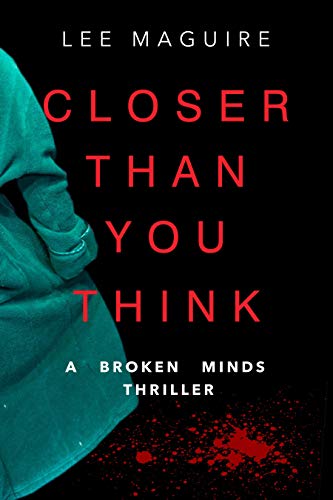
#REVIEW: CLOSER THAN YOU THINK, by Lee Maguire

A fascinating thing happened a few weeks ago, where within a couple of days I got emails from two different publishers offering me a free book in return for a review on this site. I’ve had individual authors send me ARCs a couple of times, but those were always in “Hey, who wants an ARC?” types of situations where I jumped in and happily claimed a book.

At any rate, they were hoping my review of Lee Maguire’s Closer Than You Think would hit the site on May 8th or 9th, and … uh … yeah, it’s the 11th, so I’m not doing a great job just yet in fulfilling my end of the bargain. Life has been doing an admirable job of getting in the way of my blogging lately, if you haven’t noticed.

Closer Than You Think is about Bryce Davison, a psychologist, who lives in central Pennsylvania with his basset hound, who he shares custody of with his estranged, not-quite-ex-yet wife. Lee Maguire, by the way, is a psychologist who lives in central Pennsylvania with his presumably not estranged wife and a basset hound. Davison’s life is more or less falling apart around him as the book opens; he’s trying to make things work with his wife but it’s not going well, he’s moved out and into his own place, and … oh, someone is stalking him. Someone who clearly is able to get into his apartment whenever they want, and is fond of doing things like drenching his pillow in floral perfume, leaving creepy notes about, hacking into his email, and stabbing his bathrobe to death, a scene that is actually quite a bit freakier than it sounds when I describe it that way.

I gotta be honest; I wasn’t a huge fan of the book. There’s a serviceable storyline in here, and Maguire knows how to pace a thriller– there are 91 chapters in this book’s 306 pages, which encourages binge-reading because finishing just one more chapter is always an easily achieved goal. But … well, look at the cover. See how the words “A BROKEN MINDS” at the bottom don’t look like they’re quite centered, and are kinda spaced funny, and maybe you’re not the type of person to notice and be bothered by that but I absolutely am? The whole book was kinda like that. Nothing terrible, just a lot of little stuff that kept cropping up and kicking me out of my reading. Occasional typos. Dialogue that is definitely consistent but is maybe rotated fifteen degrees or so from how people actually talk. A book that is set in 2019 (or, if it isn’t, never makes that clear) but whose main character takes a paragraph to log into his computer every single time he checks his email — something that happens a lot — and doesn’t really seem to understand how his phone works, and I’m not sure whether that’s supposed to be something about the character or if it reflects something about the author.

It’s not bad, mind you. There are things about the book I like. There’s real tension here, and a twisty-turniness(*) to the plot that I like, and I have to admit I didn’t see the way it ends coming, which I’m going to choose to interpret as a good thing. It’s kind of the Platonic ideal of the three-stars-out-of-five book; if you’re really into thrillers maybe bump that up a point.

(I sigh deeply, as I realize that this review isn’t super likely to get me sent any more free books. I like free books!)

Some links, for your websurfing pleasure:

(*) which autocorrect alters to “twisty-turviness,” which isn’t a word at all.

On mostly unreviewable movies: I saw SPLIT

split_ver2.jpgSo, I’d call myself an M. Night Shyamalan fan, right?  I’ve seen most of his movies, or at least his adult thrillers (I haven’t seen The Happening or The Visit, and from what I’ve seen that’s at least 50% good news) and I’ve liked damn near all of what I’ve seen.  I will defend Signs to the death, for example, and I remember really liking Lady in the Water although if I’m being honest I can’t tell you a damn thing about it now.

(There’s gonna be some minor spoilers about a paragraph down.  Don’t panic, no big deal.  But just FYI.)

Here’s the thing about Split.  You should see this movie if you’ve ever liked anything by Shyamalan.  All of the things that he’s good at are on full display in this film, along with an incredible performance– set of performances, maybe?– by James McAvoy.

There is– brace yourself for this– not a twist ending on this one.  Sort of.  I guess.  But what’s getting frustrating about Shyamalan is that he’s done the twist ending so many times at this point that his movies have this weird metatextual thing going on that rather than watching the movie you’re trying to figure out the twist.  There is a thing at the end of this movie, and the more of a Shyamalan fan you are, the more likely you are to walk out of the theater with a huge smile on your face.  If you are not a Shyamalan fan than the ending of the film– which is more of a Marvel-style stinger than anything else– will likely leave you more than a little bit confused.  But there’s not a twist, so don’t go looking for it.  Bask in the good performances and the creepiness and enjoy the film.  Because the performances are great and the film’s excellently creepy and Shyamalan’s directing skills are used to their fullest effect.

All that said:

I feel like I ought to warn you that this film is going to be triggery as fuck for a lot of people, and there are about to be a couple more spoilers.  It’s about three high-school aged girls getting kidnapped by a maniac with MPD, right?  Which is a problem on a couple of levels: one, you spend the whole movie playing the “when are they gonna get raped?” game, which is always horrible.  The answer: there is one scene of implied molestation in this film and it will come at you sideways and not the way you expect it to be.   There is a lot of implied child abuse.  There is not actually any sexual violence between the kidnapper and his victims.  There are also a lot of angry disability advocates out there who are upset that once again dissociative identity disorder is being used as a crutch for a villain.  I’m… a little more sympathetic toward the folks who will be triggered by the film than the disability advocates, if only because McAvoy’s character’s therapist is also part of the film and she has some very interesting comic-booky theories about DID that… well, probably won’t make anything better for those bothered by the disorder being featured in the film but it certainly makes it more interesting for the rest of us.  That’s probably not entirely fair of me but it’s how I’ve reacted.

#REVIEW: MJ-12: INCEPTION, by Michael J. Martinez

I have51V8EMC0iNL._SX331_BO1,204,203,200_.jpg gone on the record twice as being a big fan of the work of Michael J. Martinez.  I have read all three of his previous books from his Daedalus trilogy, and I loved the latter two enough to rave about them on the blog.  In the third one, he was kind enough to mention me in the afterword.  I’ve never met the guy, but we interact occasionally on Twitter.  He is my favorite current, working adventure writer.  I have no idea if he’s noticed my books or not.

Well, one way or the other, I lucked into an advance copy of the first book of his new series.  The book is called MJ-12: INCEPTIONand the series is just called Majestic-12.  

The Daedalus books were about… well, quite a lot of things, actually.  Dimension-hopping hard-sci-fi steampunk space galleons with aliens on Venus and ancient magic affecting the real world.  They were, uh, a bit hard to categorize, but what was clear about the entire series was that Martinez had a huge amount of fun writing them, particularly in the last installment of the series.

MJ-12: INCEPTION is a very, very, very different series from the Daedalus books.  So much so, in fact, that were it not for his love of genrebending (or, perhaps, hatred of the idea of genre) bleeding through, I’d not have been able to guess that the books were by the same person.  That said, I can find out quickly if you are interested in reading the book by asking a very short question:  How do you feel about Cold War superheroes?

Okay.  You just told yourself whether you should read this book or not.  And if I have any influence, you should.  MJ-12: INCEPTION isn’t as madcap or as breathtakingly original as the previous series, but it’s a convincing period piece set at the very beginning of the Cold War, right after the end of World War II.  Harry Truman is a character, as is large chunks of his Cabinet, and if Martinez played fast and loose with any historical events other than a couple of obvious ones they got past me.  It’s not as fun as his previous series but I’m not sure that’s a criticism, as “Cold War thriller” isn’t necessarily a genre I need to be a lot of fun.  It is, instead, a solid espionage story that links the emergence of superpowered people, known as Variants, to the Hiroshima and Nagasaki bombings (well, Hiroshima, specifically) and then imagines what might happen if the United States and the Russians both had access to an expanding pool of metahumans.  Along the way we get a cool look at mid-1940s tradecraft and a bit of Bond-level gadgetry.

It’s not the Martinez I’m used to, but I’ve pre-ordered the hardcover despite getting the book for free.  The rest of you can have it on September 6.  I highly recommend it.