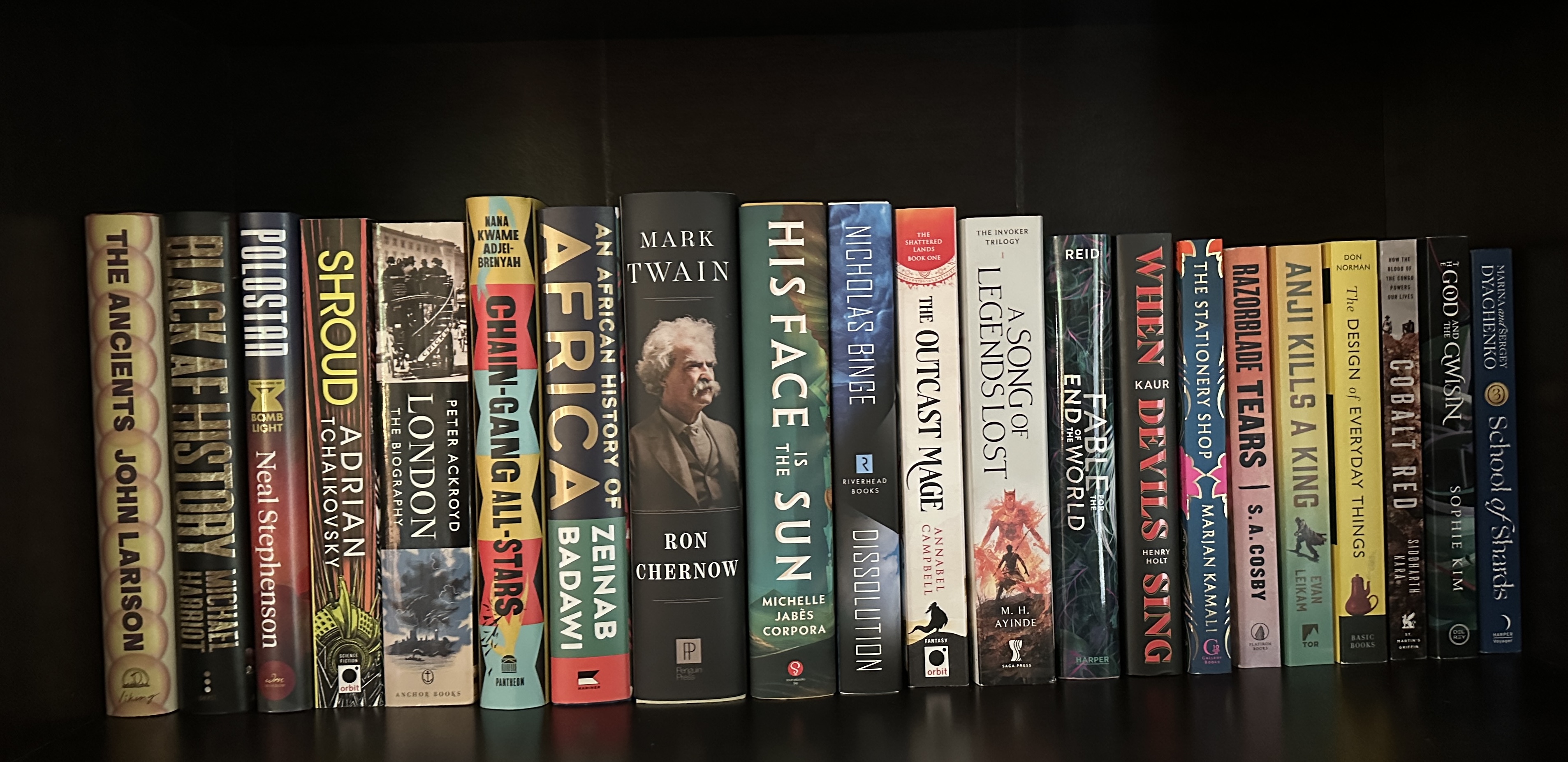
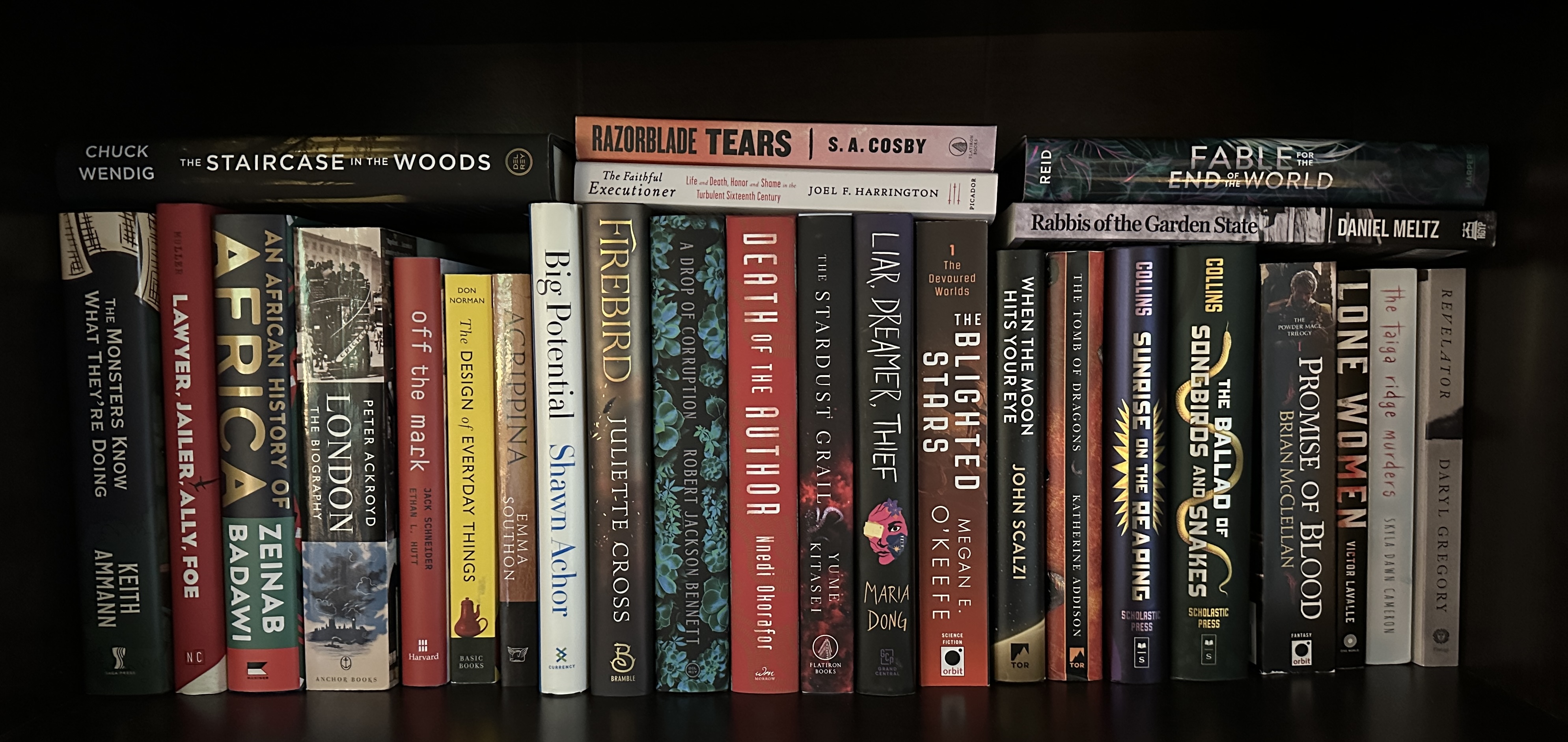
Pretty sure this is the lightest the shelf has been in months (EDIT: It’s been a year.) I can make a significant dent in this next month if I’m disciplined about not spending a ton of money. LOL.
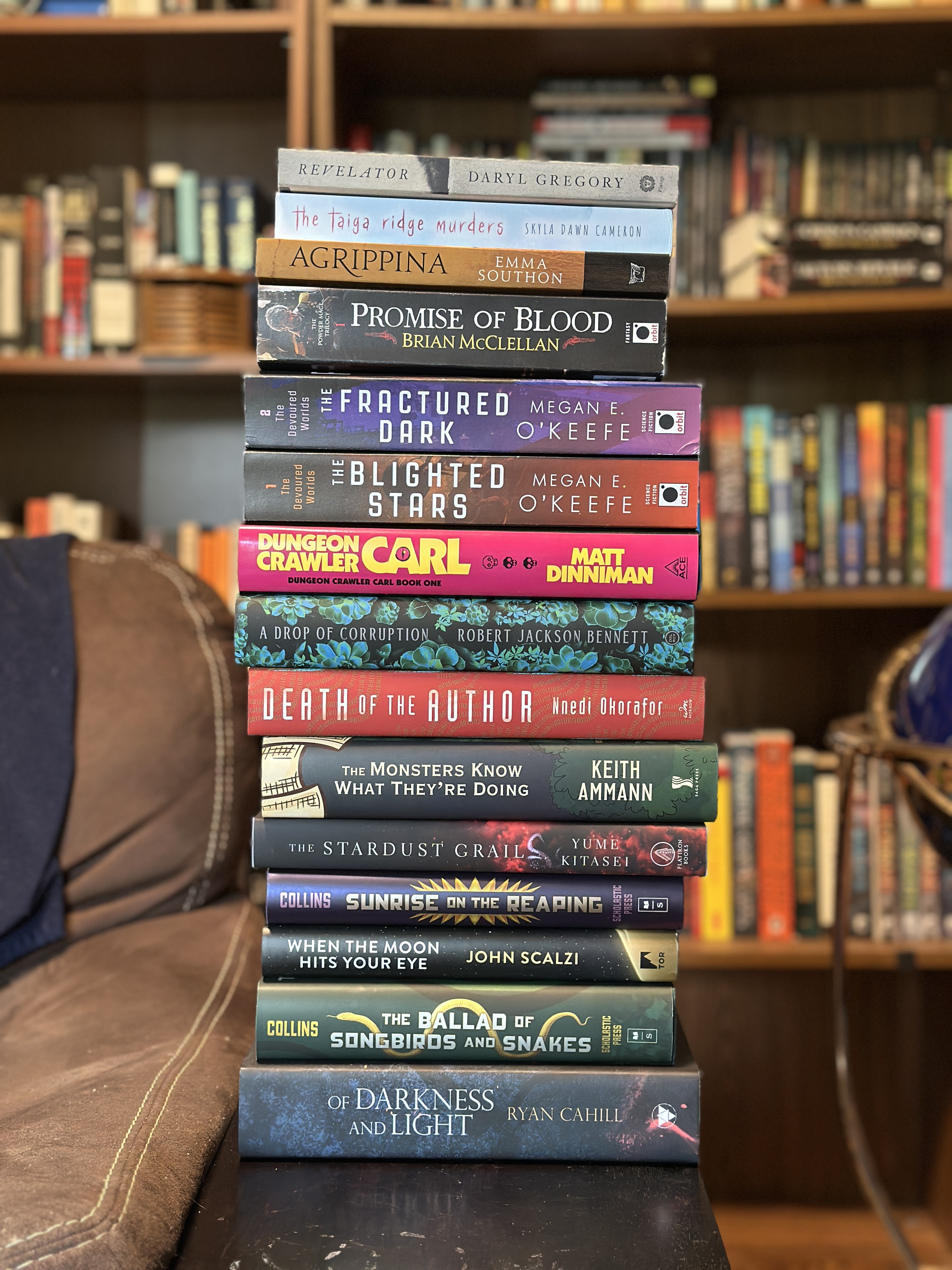
Tomorrow’s Monthly Reads is going to be insane.
Picking on church billboards is such low hanging fruit that it’s not even worth it most of the time, but I drove past this … message on my way home today, and I needed to preserve it. I may have the verbs slightly wrong (I was driving, after all) but the weird part is preserved correctly:
Trust in The Lord Delight in “ Commit to “
… with fucking quotation marks, just like that. The quotation marks were red, though.
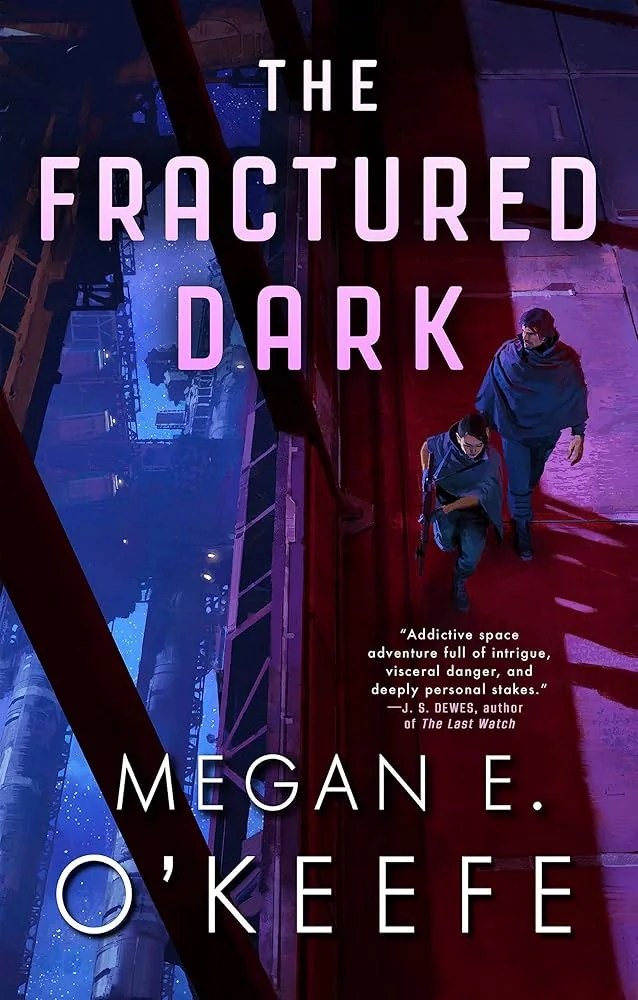
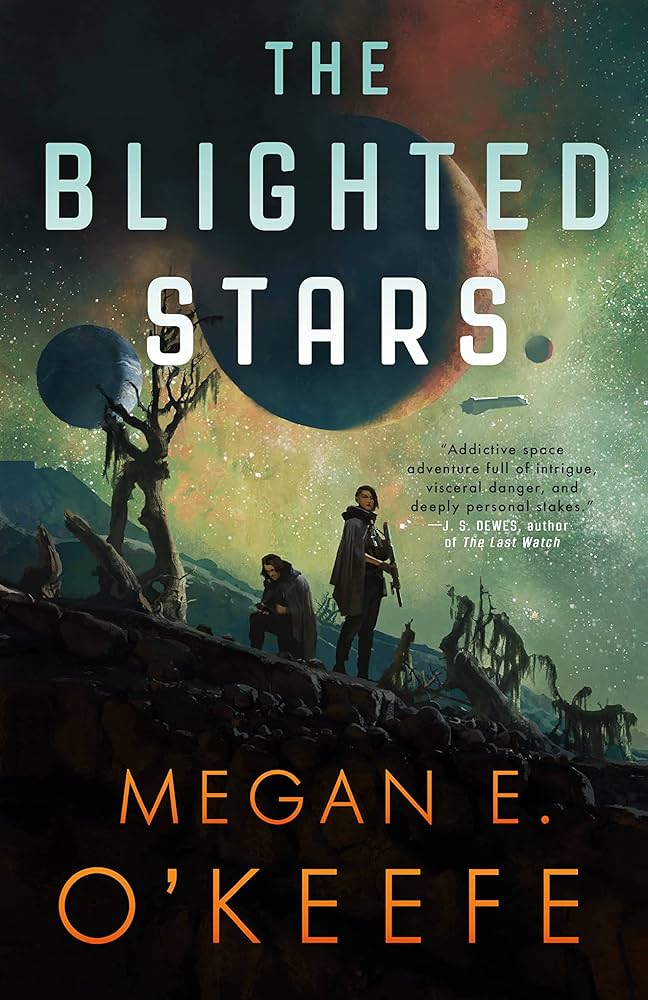
The first book of this trilogy sat on my Unread Shelf for way too long, mostly because I knew it was book one of a trilogy and if I read it and liked it I was locking myself into the next two books. And, well, yeah, in accordance with prophecy, I ordered The Fractured Dark and The Bound Worlds within the first couple hundred pages of The Blighted Stars, and … well, yeah. This is real good stuff.
The Blighted Stars starts off as a combination of a corporate espionage book (it’s one of those worlds where five big ultra corps control basically everything, and the leaders of those corporations are basically royalty) and an eco-disaster book. The Mercator corporation holds a monopoly on mining a material called relkatite, which is more or less completely essential to human civilization; it powers starship drives, for one thing, and it’s essential in printing human bodies as well.
… yeah, roll with that for a minute, I’ll come back around, I promise.
The two main characters are Tarquin Mercator, the scion of the family, who would prefer to not actually have anything to do with the family business and just study geology for a living, and Executor Naira Sharp, a monstrous badass who acts as a personal bodyguard, more or less, to Tarquin’s father. She’s also a revolutionary who wants to tear down the entire system from the inside. The Mercators are battling a major problem on their mining planets; a fungus that they’re calling the Shroud has begun appearing anywhere relkatite is mined, and it’s been overwhelming entire planets, rendering them more or less biologically sterile and preventing further mining from taking place. There are not many planets where humanity is actually able to live and thrive (the Earth has been rendered inhabitable a long time ago by the start of the series) and so the Shroud’s spread poses a genuine threat to the further existence of humanity.
That’s where it starts. It gets really fucking wild after a while, trust me.
For me, though, the most interesting thing about the series is the whole “human printing” thing. Basically nobody is in the body they are born in; if I understand the process correctly, once a kid comes of age they can be reprinted into new bodies that are more to their tastes, and people back up their own minds with some regularity, so that if they die the body they get reprinted into will have memories that are as close to “up to date” as possible. This isn’t necessarily unlimited; for one, it’s quite expensive, and especially traumatic deaths (or too many of them) can lead to a psyche being “cracked,” which basically drives the person irretrievably insane. The same will happen if someone is accidentally (or deliberately, as it turns out) double-printed, so that their mind is in more than one body at the same time. The fact that a cracked mind cannot simply be restored from a backup sounded like a weird sort of cop-out at first and ended up being really important later on.
The thing I like the most about this plot device is that O’Keefe really appears to have carefully though through its implications on society, to the point where I spent the whole first book trying to poke holes in this idea and make it retroactively dumb and every time I came up with something she’d anticipated it and dealt with it. Society is completely queernormative, for one thing; when you can simply reprint yourself into another body any time you want it’s hard to be against trans or gay people, and it’s heavily hinted that Tarquin was not born into a male body. There are a couple of prominent gay married couples as side characters as well.
The second thing, and I suspect some people might really be bothered by this, is the wide acceptance of suicide. Because you’re not really killing yourself; you’re just killing that print (the word “print” is used much more often than “body,” if not, possibly, every time) and you’ll be back soon anyway. In fact, a quick and clean suicide is a much better idea than several other ways you could be killed, because remember, really traumatic or messy deaths can lead to cracking. I feel like slitting my own throat might be kind of difficult, but it happens repeatedly across these books.
This blasé attitude toward death extends to murder as well, which is probably still illegal but not as much? This is probably a bigger deal for the poor, who can’t afford what are called “phoenix fees” to reprint, but all of the book’s main characters effectively have access to infinite money and so the characters kill each other with astonishing regularity. There is at least one point in the book where a character gets killed at the end of one chapter and then is the POV character of the next chapter after being reprinted in between the chapters.
My two biggest critiques of the series are both connected to reprinting. One, shit can get really confusing when a character dying does not have any actual impact on whether that character continues to show up or not. There are also occasional jumps forward or back in the timeline– not a ton of them, but they happen– and when you aren’t the world’s most careful reader (ahem) there can be a lot of rereading happening because something confusing has happened and you’re not sure if you missed a detail or not.
Second– and literally as I’m typing this I’m realizing what the answer is, but I’m going to do it anyway– is the notion that reprints are literally being loaded back into bodies from a “map,” which is their word for a personality download or backup, and maps can be altered through various nefarious means, but no one is against this whole idea, which I would think would be a thing. It’s the Star Trek problem– is the transporter really moving you from one place to another, or just killing you at location A and reconstructing you at location B? Personally, I’ve always been of the “killed then rebuilt” school, but people in this world really just treat reprinting as an inconvenience that might cost them some memories– and that’s occasionally even used strategically from time to time.
(The book does answer this, but kind of obliquely, to the point where I really did just realize what was going on, and I think they’re just relying on the tech having been around for so long that nobody thinks in these terms any longer, much like by the time Star Trek: The Next Generation rolls around absolutely no one is fighting against using transporters.)
I really enjoyed this series, and Megan O’Keefe has been around for a while, so there’s a bunch more where this came from, although these are currently the only books in this series. Strong recommend, especially if you’re in the mood for some complex, twisty sci-fi.
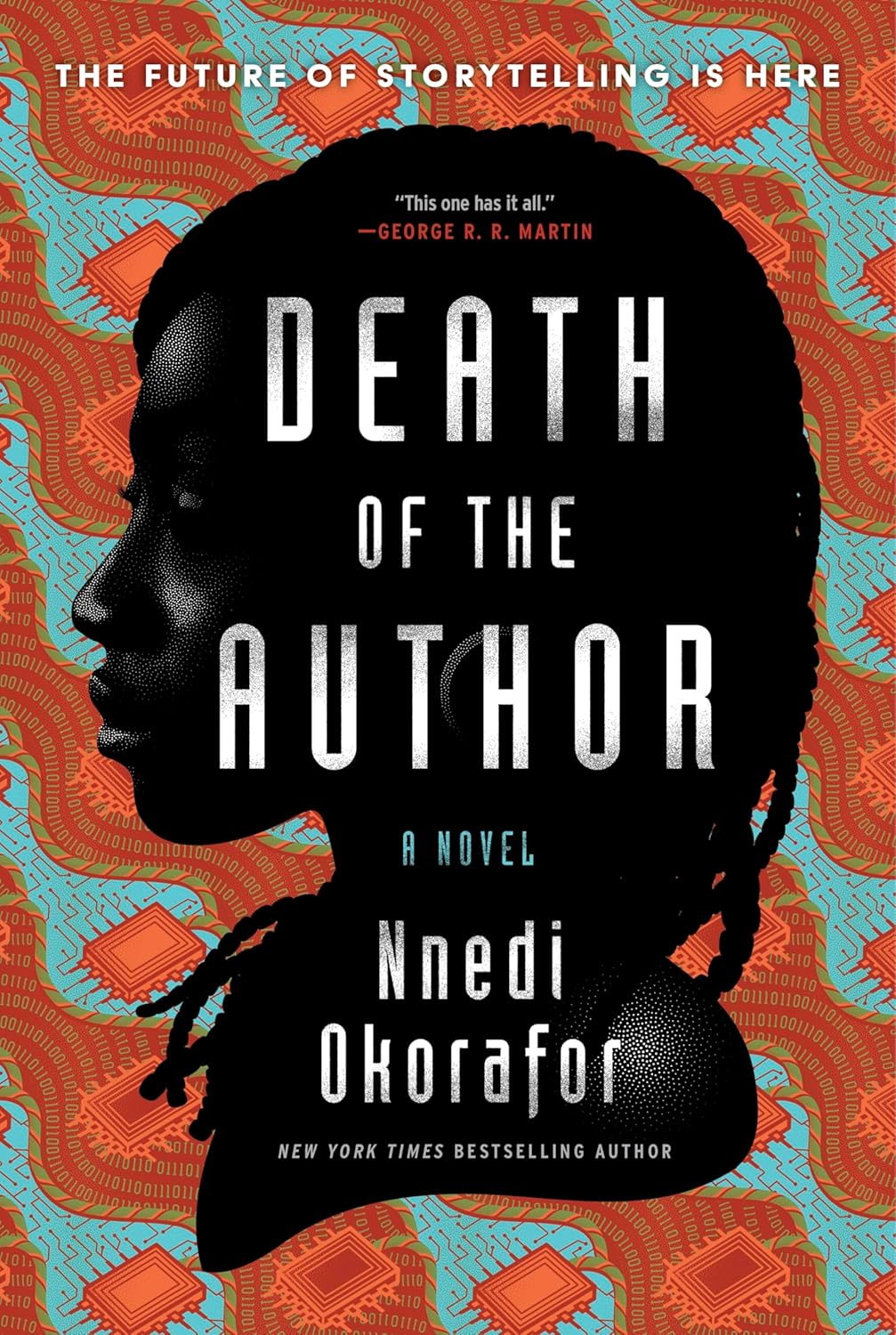
I have spent a couple of days trying to think of a time where I thought a story-within-a-story structure worked for me, and for the life of me I’ve been unable to come up with one. The main character in Nnedi Okorafor’s Death of the Author is– get this– a Nigerian-American female author who lives in Chicago and is in a wheelchair due to a childhood injury, and at the beginning of the book she writes a science fiction novel that is a massive success. A massive, massive, massive success, propelling her to J.K. Rowling or Stephen King levels of fame. Portions of the book are given over to excerpts from her book, Rusted Robots.
The problem is Rusted Robots is terrible. It’s unreadable. By the end of the book I was skipping all of the Rusted Robots sections, and I generally don’t skip or skim parts of novels. And, man, it’s really damn hard to read a book that is all about how amazing and life-changing some other book is, especially when they keep giving you parts of that other book and you keep skipping them. The obvious self-insert doesn’t really make any sense (Okorafor doesn’t use a wheelchair, but had a surgery for scoliosis go bad as a young woman, and she needed crutches to walk for a long time) and Zelu as a character is generally unbearable. She’s selfish and impulsive and her family is terrible, so you’re confronted with a situation where you don’t like the main character and think her family treats her poorly and think they’re mostly right even though they’re terrible about the way that they’re right.
It’s also really weird to read about the various ways Rusted Robots affects Zelu’s life, because as an actual science fiction author Okorafor has to know that this isn’t how this shit works. Okay, granted, Nigerian women in wheelchairs aren’t terribly common sights, and Nigerian women with the experimental leg exoskeleton devices she acquires midway through the book are even less common, but Zelu gets recognized repeatedly every time she leaves the house, by people who a lot of time are reading her book right at that very second so they can shove it in her face to sign. Zelu’s relationship with her Internet fans makes more sense, especially as the wait for Book Two of her unplanned trilogy gets longer, but no debut author has ever gotten this famous this fast. It’s nutty.
I three-starred it on Goodreads because despite my complaints it’s still an Okorafor novel, and it was one of those books that despite not liking it very much I didn’t want to put it down, but a twist at the end very nearly made me knock it down to two, and I still might.
Sigh. I really like all three of the authors in this post! Scalzi, in particular, is someone who I have referred to as “one of my favorite authors” more than once, but When The Moon Hits Your Eye marks his second miss in a row after Starter Villain, which was mostly underwhelming.
The biggest problem is that When The Moon Hits Your Eye actually is the book that Scalzi’s online detractors want to tell you all of his books are– it’s slight (I read it in three hours or so, and not because it was so amazing I couldn’t put it down), all of the characters feel exactly the same, and all the dialogue is bantery and quippy in a way that’s okay for one or two characters in any given book but not for damn near everyone. The concept of the book is that the moon suddenly turns to cheese, and the book talks about the next thirty days after that. There’s no main character, although some people are revisited a few times, but Day Fourteen might talk about a character that you never see again, or you might jump back to the people from Day Three on Day Twenty-Two and it’ll take you half of the four-page chapter to realize you’ve seen them before.
Oh, and I knew a girl once whose nickname was Mooncheese, for reasons I no longer remember, and I spent the whole book thinking about her, which wasn’t entirely unwelcome but was kinda distracting.
I dunno. The whole concept of the book is kind of deliberately dumb, and you can take something like that and play it kind of straight if you want to, but the characters in the book keep talking about how fucking stupid it is (those exact words) that they have to take the idea of the moon turning to cheese seriously, and after a while it’s really wearying. It’s just … it’s blech. It’s not very good, and it pains me to say that about a Scalzi book.
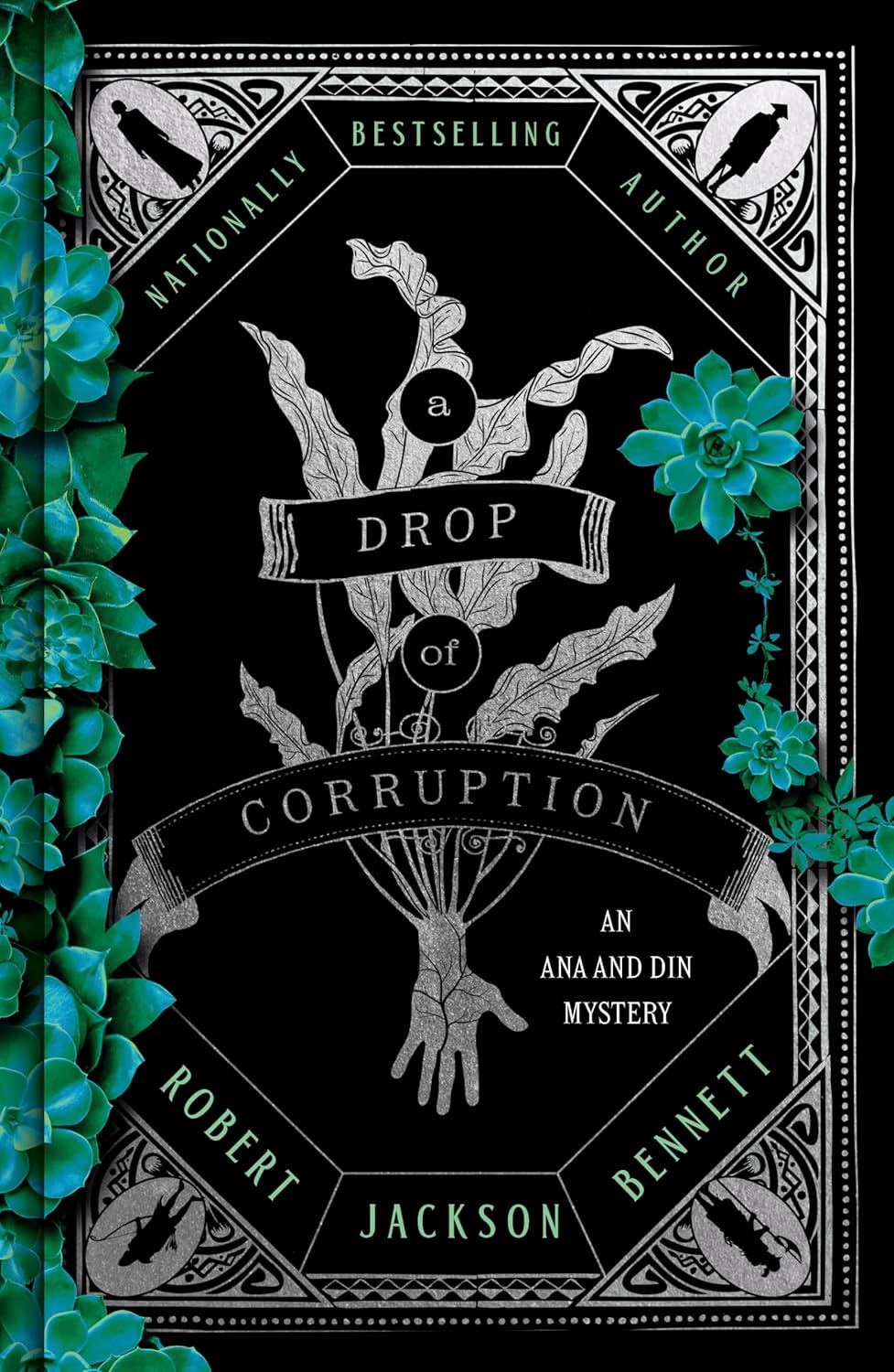
This, on the other hand. Go buy this immediately, and if you haven’t read the first book in what are apparently called The Ana and Din Mysteries, go grab it right now; it’s called The Tainted Cup and it’s really damn good too. The series hails from one of my favorite subgenres, “Sherlock Holmes, but …”.
This time our crime-solving pair are representatives of an Empire on a fantasy world with lots of biopunk “grafting” tech and occasional attacks by what are basically kaiju but they call Leviathans. Jackson Bennett leans heavy into body horror here– the victim in the first book died when a literal tree suddenly grew out of his body– and the Holmes of the series, Ana Dolabra, is a drug-addicted and probably genetically modified ubergenius who wears a blindfold because she can’t handle the constant visual input of the world around her. Dinios Kol, the Watson, is an Engraver, possessed of perfect recall but with a neat little twist where he needs to anchor his memories with scents to be able to describe them in a way that makes sense to anyone else. Ana is delightfully nuts and the world itself is fascinating as hell, and the Macguffin of this book is Leviathan marrow, which is just a great thing for characters to be chasing around and trying to find. I love this series, and right now this book is on my shortlist for 2025.
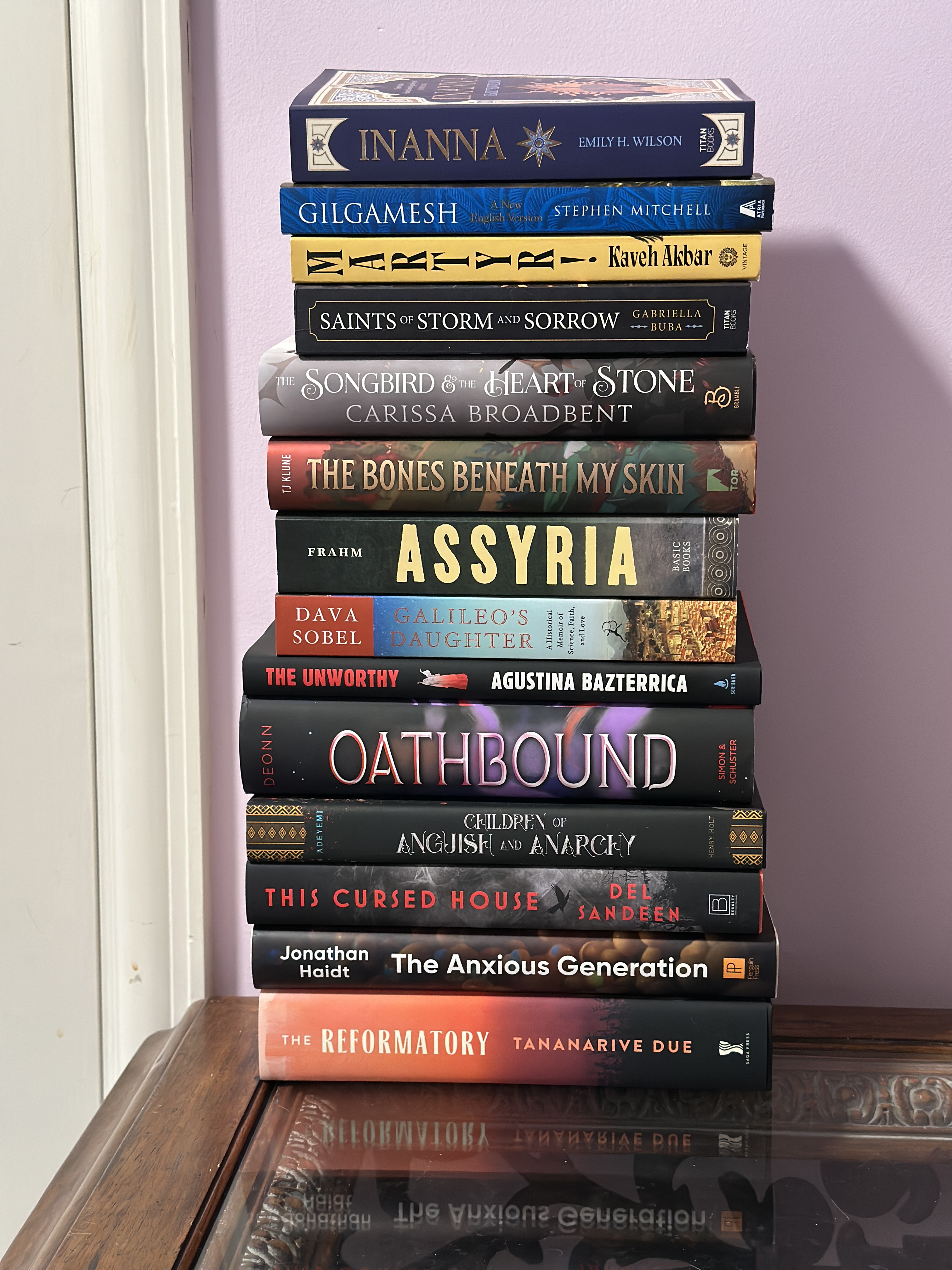
There are actually quite a few good choices for Book of the Month in here. The Reformatory? Oathbound? The Unworthy? Martyr!? The Bones Beneath My Skin? All are great choices, but I have to go with Galileo’s Daughter, by Dava Sobel. Review coming in the very near future. Lots of great books this month, though.






 Welcome to infinitefreetime dot com