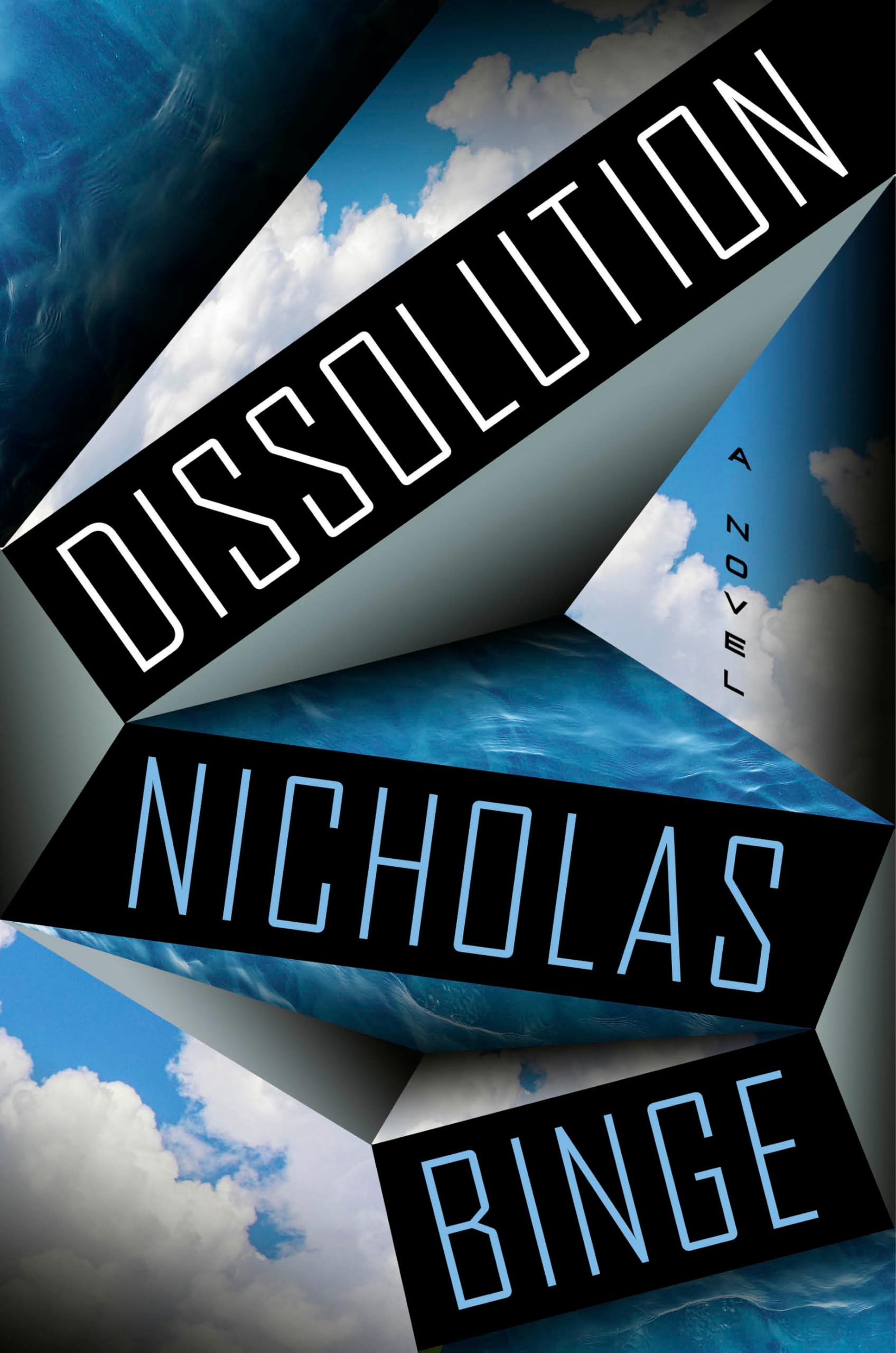
Are you familiar with Aardvark Book Club, by any chance? For $17.99 a month, assuming you’re in the US, you’ll have a choice of one of six different new (and sometimes unreleased) books across a bunch of genres. The books will be hardcover and are generally of solid quality, so you’re already getting a decent deal, because you can’t sneeze at a hardcover for $18 anymore. Then you can order up to two more from the current month or any previous month for $10 each. I’ve been a member since January, and I have yet to have a month where I didn’t order three books. Most of the time they’ve been from new-to-me authors and there have definitely been more hits than there have misses. I ordered Nicholas Binge’s Dissolution in June basically just because I could.
And … damn.
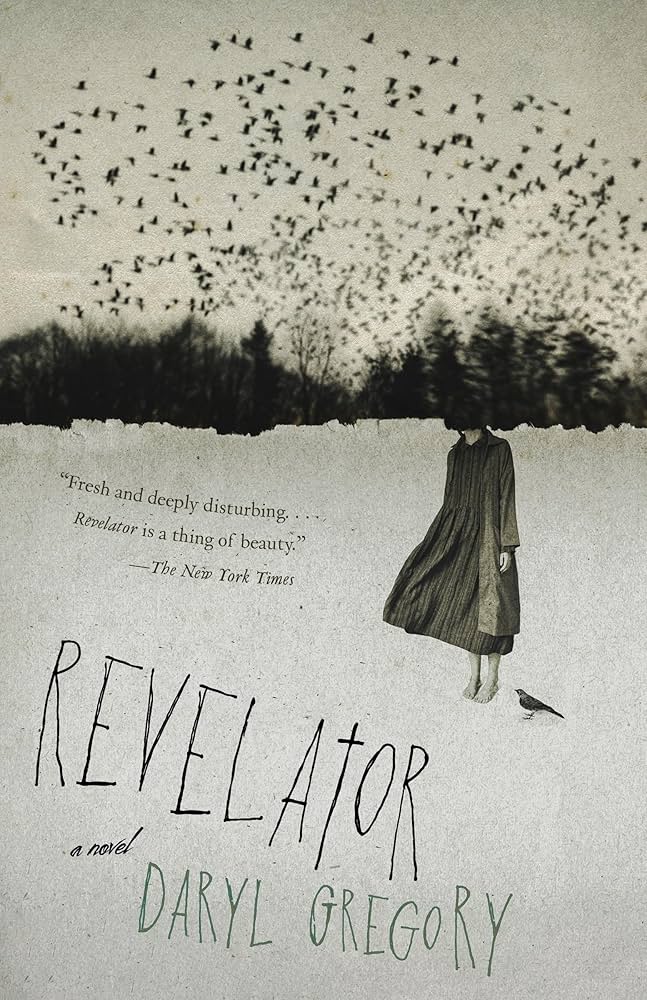
I’m going to let you know now: this is one of those “trust me” books, because it’s all about the mysteries and twists and turns, and I ain’t spoilin’ nothing. The main character is Maggie Webb, an 84-year-old woman whose husband of fifty years, Stanley, has been disappearing to Alzheimer’s over the past several years. Only one day a Mysterious Stranger (TM, pat. pending) shows up at her door, and, uh, it turns out that maybe it’s not Alzheimer’s. Someone is actively and deliberately removing Stanley’s memories.
And, uh, that person might be Stanley.
Like, you already know, right? You know if you want to read this or not, and if you’re somehow still on the ledge, maybe if I told you that this book was a bizarre combination of the modern-day parts of Assassin’s Creed, the “insane professor” bits of The Poppy War, the movie Memento, and a self-help book about the memory palace, would that help?
Yeah. I picked this up before bed last night, it kept me up until midnight, and I was reading again by 8:30 this morning. You should check it out.
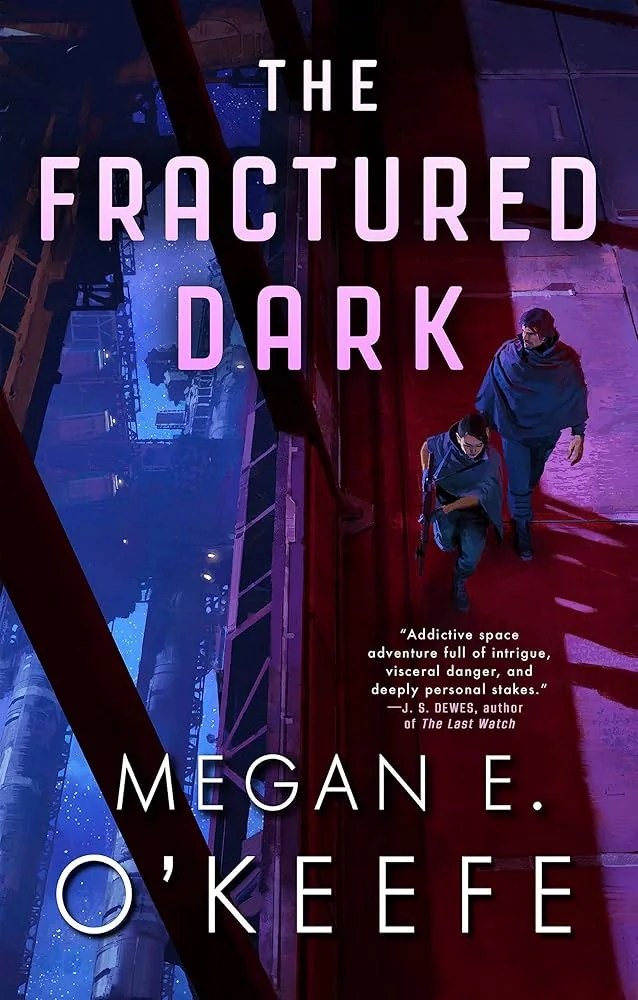
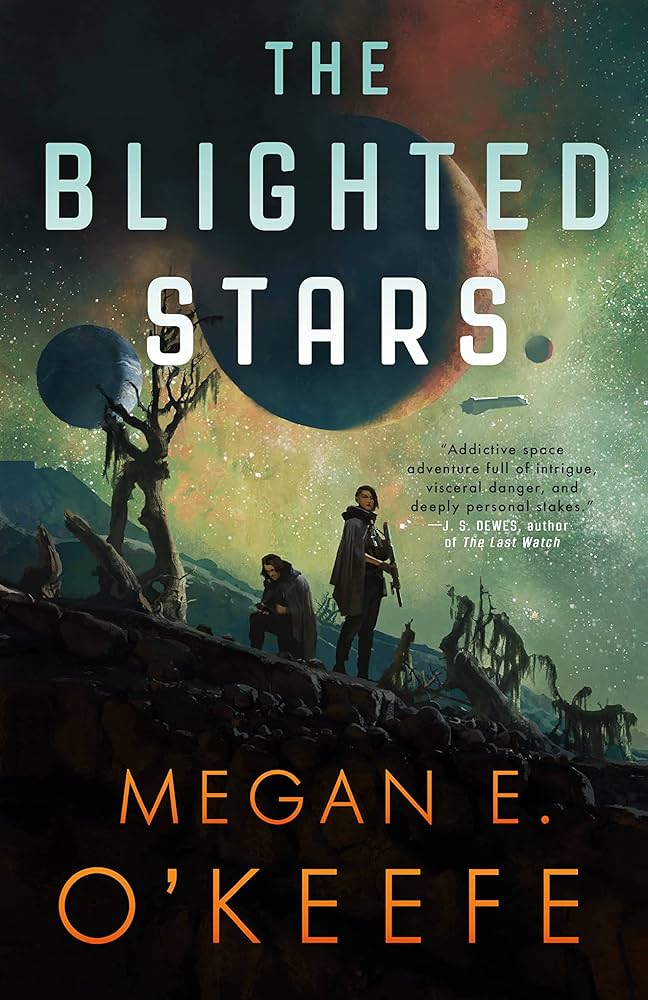
The first book of this trilogy sat on my Unread Shelf for way too long, mostly because I knew it was book one of a trilogy and if I read it and liked it I was locking myself into the next two books. And, well, yeah, in accordance with prophecy, I ordered The Fractured Dark and The Bound Worlds within the first couple hundred pages of The Blighted Stars, and … well, yeah. This is real good stuff.
The Blighted Stars starts off as a combination of a corporate espionage book (it’s one of those worlds where five big ultra corps control basically everything, and the leaders of those corporations are basically royalty) and an eco-disaster book. The Mercator corporation holds a monopoly on mining a material called relkatite, which is more or less completely essential to human civilization; it powers starship drives, for one thing, and it’s essential in printing human bodies as well.
… yeah, roll with that for a minute, I’ll come back around, I promise.
The two main characters are Tarquin Mercator, the scion of the family, who would prefer to not actually have anything to do with the family business and just study geology for a living, and Executor Naira Sharp, a monstrous badass who acts as a personal bodyguard, more or less, to Tarquin’s father. She’s also a revolutionary who wants to tear down the entire system from the inside. The Mercators are battling a major problem on their mining planets; a fungus that they’re calling the Shroud has begun appearing anywhere relkatite is mined, and it’s been overwhelming entire planets, rendering them more or less biologically sterile and preventing further mining from taking place. There are not many planets where humanity is actually able to live and thrive (the Earth has been rendered inhabitable a long time ago by the start of the series) and so the Shroud’s spread poses a genuine threat to the further existence of humanity.
That’s where it starts. It gets really fucking wild after a while, trust me.
For me, though, the most interesting thing about the series is the whole “human printing” thing. Basically nobody is in the body they are born in; if I understand the process correctly, once a kid comes of age they can be reprinted into new bodies that are more to their tastes, and people back up their own minds with some regularity, so that if they die the body they get reprinted into will have memories that are as close to “up to date” as possible. This isn’t necessarily unlimited; for one, it’s quite expensive, and especially traumatic deaths (or too many of them) can lead to a psyche being “cracked,” which basically drives the person irretrievably insane. The same will happen if someone is accidentally (or deliberately, as it turns out) double-printed, so that their mind is in more than one body at the same time. The fact that a cracked mind cannot simply be restored from a backup sounded like a weird sort of cop-out at first and ended up being really important later on.
The thing I like the most about this plot device is that O’Keefe really appears to have carefully though through its implications on society, to the point where I spent the whole first book trying to poke holes in this idea and make it retroactively dumb and every time I came up with something she’d anticipated it and dealt with it. Society is completely queernormative, for one thing; when you can simply reprint yourself into another body any time you want it’s hard to be against trans or gay people, and it’s heavily hinted that Tarquin was not born into a male body. There are a couple of prominent gay married couples as side characters as well.
The second thing, and I suspect some people might really be bothered by this, is the wide acceptance of suicide. Because you’re not really killing yourself; you’re just killing that print (the word “print” is used much more often than “body,” if not, possibly, every time) and you’ll be back soon anyway. In fact, a quick and clean suicide is a much better idea than several other ways you could be killed, because remember, really traumatic or messy deaths can lead to cracking. I feel like slitting my own throat might be kind of difficult, but it happens repeatedly across these books.
This blasé attitude toward death extends to murder as well, which is probably still illegal but not as much? This is probably a bigger deal for the poor, who can’t afford what are called “phoenix fees” to reprint, but all of the book’s main characters effectively have access to infinite money and so the characters kill each other with astonishing regularity. There is at least one point in the book where a character gets killed at the end of one chapter and then is the POV character of the next chapter after being reprinted in between the chapters.
My two biggest critiques of the series are both connected to reprinting. One, shit can get really confusing when a character dying does not have any actual impact on whether that character continues to show up or not. There are also occasional jumps forward or back in the timeline– not a ton of them, but they happen– and when you aren’t the world’s most careful reader (ahem) there can be a lot of rereading happening because something confusing has happened and you’re not sure if you missed a detail or not.
Second– and literally as I’m typing this I’m realizing what the answer is, but I’m going to do it anyway– is the notion that reprints are literally being loaded back into bodies from a “map,” which is their word for a personality download or backup, and maps can be altered through various nefarious means, but no one is against this whole idea, which I would think would be a thing. It’s the Star Trek problem– is the transporter really moving you from one place to another, or just killing you at location A and reconstructing you at location B? Personally, I’ve always been of the “killed then rebuilt” school, but people in this world really just treat reprinting as an inconvenience that might cost them some memories– and that’s occasionally even used strategically from time to time.
(The book does answer this, but kind of obliquely, to the point where I really did just realize what was going on, and I think they’re just relying on the tech having been around for so long that nobody thinks in these terms any longer, much like by the time Star Trek: The Next Generation rolls around absolutely no one is fighting against using transporters.)
I really enjoyed this series, and Megan O’Keefe has been around for a while, so there’s a bunch more where this came from, although these are currently the only books in this series. Strong recommend, especially if you’re in the mood for some complex, twisty sci-fi.
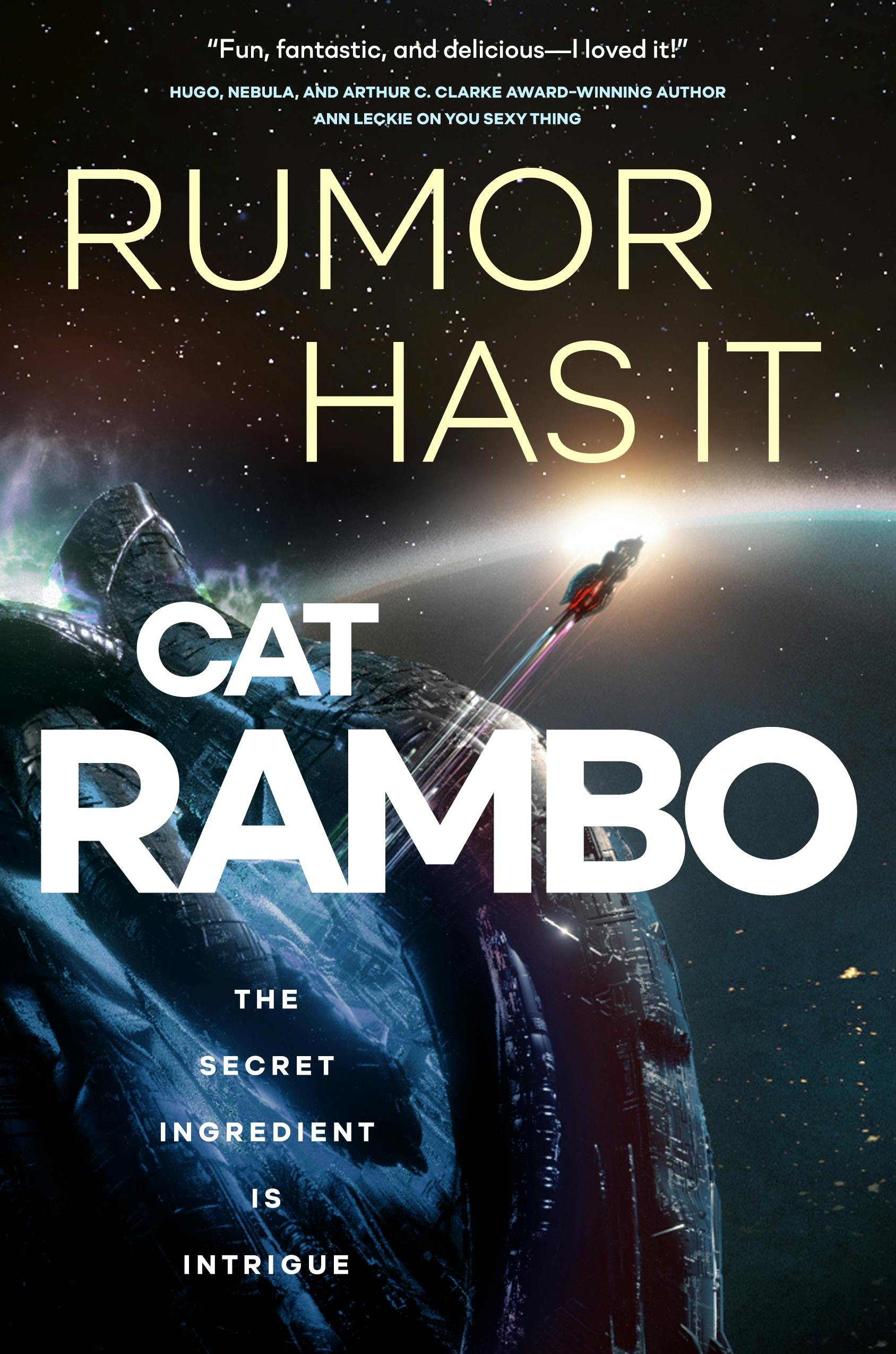
It’s possible that my review of this book is going to be slightly unfair.Rumor Has It is the third volume of Cat Rambo’s excellent Disco Space Opera series, which started with You Sexy Thing and continued with Devil’s Gun. It’s also the third volume that their publisher has been nice enough to send me an ARC of. Cat actually lives in South Bend, and they did a reading at my local Barnes and Noble last weekend, and unfortunately I didn’t find out about it until about an hour beforehand. I reviewed both of the first two books, and I’m a big fan of the series.
… which I thought was a trilogy, and I read the first 2/3 of Rumor Has It under that assumption, and only when I realized that there were not remotely enough pages left to wrap up the storyline did I Google around a bit and discover that nobody was calling it a trilogy. I currently have no idea how many books are planned in the series, as I can’t find that information anywhere; it’s possible that it’s meant to be open-ended. Ordinarily the idea that there was going to be more of something I liked is good news, but reading it with an ending in mind kinda screwed up my perception of the story. Also, while “the secret ingredient is intrigue” is a perfectly cromulent tagline for a book about a group of mercenaries turned interstellar restauranteurs, the secret ingredient is not intrigue. The secret ingredient is phone:
Every time and I mean every time I picked up the book, I heard Krieger’s voice in my head.
So here’s the thing: this book still has all of the strengths I talked about in my reviews of You Sexy Thing and Devil’s Gun. Rambo’s writing is punchy and funny, the characters are absolutely unforgettable, and the basic premise, elevator-pitched as Farscape meets The Great British Baking Show, is absolutely packed with flavor potential.
Unfortunately, it also has the weakness of the second book, which I referred to as “one of the most second-booky second books I’ve ever read.” The good bits are still good, but the overall story really isn’t advanced at all in Rumor Has It, and the book suffers from both being (remaining?) incomprehensible if you haven’t read the first two and it’s also quite wheel-spinny in a way that Devil’s Gun wasn’t. The characters spend the entire book at a single space station trying to drum up some money, and while that space station is cool, if you could have replaced the whole book with the ultra-rich owner of the intelligent bioship they’re riding around in simply cutting them a check, you have a bit of a problem. Some character arcs get advanced a bit, but what felt like the most important character storyline of the book ends up literally being nothing worth worrying about at the end. The big villain has now spent two entire books entirely offstage. I genuinely don’t even remember why they’re mad at him at this point.
(Okay, he sort of shows up. But not really, and going into further detail would be a spoiler, so I won’t do that.)
Anyway, what this leads to is that for the second book in a row I’m writing the phrase “It’s not a bad book, but …” about something I wanted to like more. Again, the strengths of the series are still here, and even if I don’t get sent an ARC I’m spending money on the fourth book. I’m invested, there’s no doubt about that, and it’s possible that had I realized that the series wasn’t coming to an end with this novel I’d have more positive feelings about it. But right now the entire book kind of feels like a subplot that went on for too long, and I’m really hoping the fourth book slaps the status quo around a little bit more. You Sexy Thing still retains my full-throated support, and you should pick this up if you’re into the series already, but know what you’re getting into before you start reading.
Nicky Drayden has written three books, and I have read all three and at least briefly discussed each of them here. Her first book, The Prey of Gods, ended up being too much for me, and I actually didn’t manage to finish it because of how completely nuts it was, although I think it’s due for a reread sometime soon regardless. Her second book, Temper, was a much more assured novel but still wasn’t quite a home run for me. The interesting thing about Drayden’s work is that she is very obviously a writer with an enormous amount of potential, and even though I didn’t finish her first book and didn’t exactly love the second she was still very much an author I was keeping an eye on and was going to continue to buy books from.
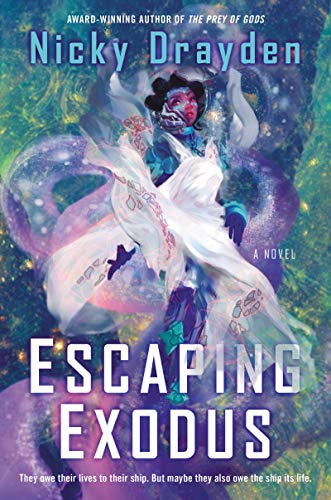
And, y’all, Escaping Exodus is the book I’ve been waiting for. I was sooooo right to keep watching Drayden; this book is the payoff, and will end up quite highly ranked on my end of the year list, which is coming in the next couple of weeks. Drayden continues with her firehose of ideas and her intensely weird fiction; this one is about a Juliet- and Juliet-esque love between an heiress to a matriarchy and someone who is effectively a manual laborer, only they’re also traveling through space in a living generation ship while they’re doing it. Throw in atypical family structures (everyone has multiple sets of parents and multiple spouses, of both genders, and blending “matrilines” is a big part of the politics of the book) and a fascinating bit at the end where we find out that there are other spaceships out there and that the colonies on those ships have evolved, and cared for their ships, very differently from the characters in this, and … man, this is really something special.
My only gripe is that the end doesn’t land quite as perfectly as I’d like; one storyline that I was quite interested in kind of gets disregarded in the last twenty pages or so, which was a bit of a disappointment, but overall this is the book I always felt like Drayden was going to write eventually and I’ve finally got. It’s just much more under control than her previous work; you got the idea in Temper to some extend and to quite a large extent in The Prey of Gods that her ideas just got away from her, and that feeling is gone from this. This novel is tight in a way her previous work hasn’t been, and you should all read it. God, 2019 has been a great year for books.
It is hyperbole, but only by a little bit, to state that I have hated every second of 2019. I won’t go into the details; if you’ve been reading here for a while and especially if you follow me on Patreon you know a lot of them by now, but this has been the single worst year of my life by a wide margin and there are still four fucking months of it left.
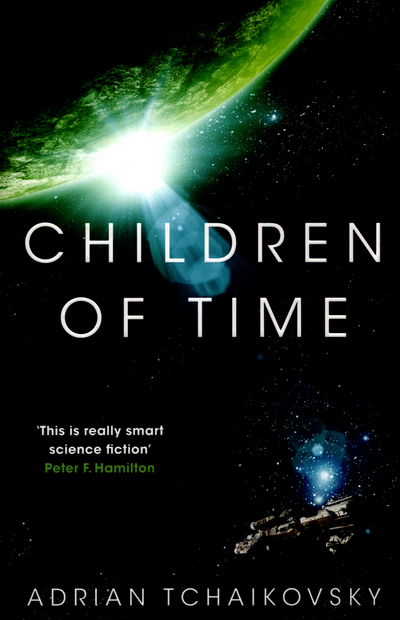
The one shining bright spot of 2019 has been the books I’ve been reading. Adrian Tchaikovsky’s Children of Time was number ninety, I believe, and it is the book that convinced me that my traditional end-of-year top 10 list is probably going to have to be pushed to fifteen this year. It was effectively a random buy; we took my son to Barnes and Noble to spend some money on him for his birthday and it jumped off the shelf at me. I will own the sequel by the end of the weekend.
Children of Time is a post-apocalyptic, more or less post-human novel set in two places: a green planet far from Earth and an ancient, decaying generation ship containing what are, as far as the occupants know, the last few thousand members of the human race. It takes place over centuries if not actual millennia– the time scale is kept fuzzy, and the human characters’ ability to put themselves into cryogenic storage until the next event that causes them to need to wake up allows the timeline to be pushed well beyond the human lifespan. At the very beginning, a human scientist attempts to seed the green planet with primate life and with a nanovirus that will tailor their evolution over the years to produce sentient life on the level of human beings. Something goes terribly wrong, and the proto-primates are lost, but the nanovirus is not … and it settles into a species of spider instead. The book tells two parallel stories: the slow evolution of the spider species and their eventual rise to supremacy on their planet, a story that takes place over many generations and thus has many different “main” characters for each part of the book, most of whom are named “Portia,” basically for narrative convenience, and the remaining humans on a generation ship called the Gilgamesh, a cultural reference they have long since forgotten the meaning of. Eventually, the two discover each other’s existence, and while there is conflict, it doesn’t work out the way you think it will, and the final resolution was so simple and elegant that it blew me away.
It is– and this is the entire review, so pay attention– one of the most fantastically inventive things I have ever read. That should be clear just from the plot summary, right? You already know you need to read this book, and you should go get it right now and get started. I know, I know, I’m prone to hyperbole, I start the review off with hyperbole and I mention my tendency toward hyperbole in damn near every positive review I write. But this book is really something special, y’all. You owe it to yourself to read it.
I haven’t heard any buzz about this program at all, and only found out about it because I was scrolling through Netflix menus pretty much at random– any of you Netflix folks watching 3%? We’re only three episodes in, so consider this a conditional recommendation, but so far my lovely wife and I are both finding the show to be pretty compelling science fiction. The disadvantage: it’s dubbed from Portuguese, so when I say things like “the acting is good,” which is a thing I’d say about this show, what I basically mean is that the actors look like they’re acting well, and the English speakers they’ve hired to overdub their voices usually don’t suck that much.
The premise, so far: it is The Future, and The Future appears to really suck for everyone who lives in what I assume is still called Brazil. Each year everyone who turns 20 is eligible to take a series of tests that only the titular 3% will pass. Those who pass are able to go to “the Offshore,” which…
…well, none of them seem to know what the Offshore is, they just really really hope it’s better than the shit dystopia they live in now, and no scenes have been set in the Offshore yet, so the viewers don’t have any idea either. So, really Hunger Gamesy, but done pretty well. Three episodes in, we’re still all testing, and the tests have been varied and interesting enough to keep us watching. If this is what the entire first season is about, it might be a problem, but so far? So good.
Anybody else watching this? If not, anybody want to start so I have someone to talk to about it?
… which, holy shit, that’s a double entendre, isn’t it? And it took me 32 years to notice it? Okay, now my childhood’s ruined.
Here’s the clearest indication that I enjoyed Ghostbusters: the main characters’ names are Abby Yates, Erin Gilbert, Jillian Holtzmann, and Patty Tolan. The receptionist’s name is Kevin, and I don’t think he had a last name.
I need you to understand this about me: I don’t remember the names of fictional people. I can read entire books and be able to describe the plot in close detail and have trouble recalling the main character’s name. I can almost never remember the names of any of the leads of movies. And I know all five of the major characters in this film. First and last names. That’s freaking amazing. It shouldn’t be the case, but it is.
I didn’t initially want to see Ghostbusters, not because I thought it would Destroy my Childhood– that’s not a real thing– but because I thought it was an unnecessary remake. The first film is sacred to me, but its sacrality has not led to me seeing the second film more than perhaps twice, so I can’t really pretend I have any loyalty to the franchise. And there are no Marvel superheroes in this movie, so ignoring it would be well within my established prior practice. Then I looked around and decided I’d rather change my mind than be on the same side of some of the people who agreed with me about not seeing it, and then I laughed my ass off at the first trailer. And then I saw the movie on opening night, a thing I haven’t done in, literally, years.
This movie’s funny as hell and you should watch it. If Kate McKinnon isn’t the funniest motherfucker alive– can I call a woman that? What if she’s gay?– I don’t know who it is, and Leslie Jones is funny as fuck too. Also notable is Chris Hemsworth’s performance; I’ve enjoyed his Thor but I seriously had no idea that the guy could be as funny as he is in this movie.
You may have noticed that I haven’t mentioned the putative leads yet, Melissa McCarthy and Kristen Wiig. I know little about Wiig, but I’ve seen McCarthy in other stuff and she has annoyed me. Honestly, I thought the two of them were among the weaker bits of the movie. They have their moments, certainly, but they don’t do “smart” as well as McKinnon does– she is the perfect mad scientist– and many of McCarthy’s lines in particular read like the kind of dialogue that dumb people write for smart people to say. “You did not disclose that the vehicle in question would be a hearse!” or whatever it was, for example. Wiig forgets that she’s supposed to be a physicist about fifteen minutes into the movie and there’s no real need for her to remember it since someone has to be the straight woman and be the butt of all the ghost-vomit jokes. I didn’t dislike her, but she’s not a reason to see the movie.
I do find myself wishing that Patty could have been an academic– either also or maybe flip her role with one of the other women. I think the idea of a Ph.D candidate in New York history working for the MTA could have worked, for example. But Patty is a fun character and the Sassy Black Woman stereotype we were all worried about is dialed back about as far as it can go.
Interestingly, this film shares its biggest flaw with Star Wars: The Force Awakens. TFA’s worst moments all involved the characters from the original trilogy. Similarly, Ghostbusters is at its worst when it’s trying to remind us that all of the actors from the original films (except for Rick Moranis, who quit acting years ago) supported the project. Other than the nice touch of putting a bust of Harold Ramis outside Erin Gilbert’s office, the only cameo that wasn’t insanely distracting was Annie Potts. Murray and Aykroyd, in particular, brought the movie to a screeching halt the three times they were on screen. And then once you realize what’s going on, and that they’re all gonna show up, you spend the movie watching for the next one, and it’s distracting as hell.
Other than that, though, and Paul Feig’s moderately annoying habit of cutting to Kate McKinnon’s or Leslie Jones’s reaction to every line someone else says (make it part of the drinking game) it’s a hell of a movie. The villain is interesting– he’s basically a GamerGater who has lucked into some supernatural physics– the effects are fun, and some of the shit they get up to with the proton packs and the other weapons Holtzmann comes up with are awesome fun. There’s a great stinger at the end of the movie, too, even if the film should have ended with the line “I love this town!” like the first one did.
(Yes, I know what I just said about the first movie. But they set up that line and then don’t deliver it. They shoulda, dammit.)
Also, this:
I wanna marry Kate McKinnon, guys. I know; I’m married and she’s gay. Realistically, though, if you think about it, neither of those two things really have much of any effect on my chances, so I figure I’m free to dream on that point. Then again, I’ve never seen her in anything other than this movie, so maybe it’s the possibly-straight-but-I-doubt-it Jillian Holtzmann who I want to marry. She’s not real. That doesn’t affect my chances much either, I guess.
This movie is funny and you will like it so go see it.





 … which, holy shit, that’s a double entendre, isn’t it? And it took me 32 years to notice it? Okay, now my childhood’s ruined.
 Welcome to infinitefreetime dot com