The Top 15 New(*) Books I Read in 2024

And. We. Are. Back.

This is the twelfth post in this series that I have written; I spent some time thinking about doing a Best of the Best list and when I realized how many rereads that would require– believe it or not, when you read 100+ books a year it tends to hurt your recall a little bit, like, I’ve literally read well over a thousand books since writing the 2013 list– I abandoned the idea. I am back to 15 books this year because right now I’m at 181 books read for the year and since it is only the 29th I may very well be at 184 by New Year’s Eve; hopefully I don’t read anything too brilliant in the next couple of days because it’s gonna have to wait until next year.

As always, don’t take specific rankings all too seriously– this started as a shortlist of 31, then got cut down to 17, and going from 17 to 15 was really hard, and honestly anything in the top seven or so could have ended up at number one if I’d woken up in a different mood. Also, the asterisk up there means that these books were new to me in 2024; the oldest book on the list is from 1975. I’m pretty sure a majority of them are 2024 releases but it’s definitely not all of them.

Previous lists:

And we’re off!

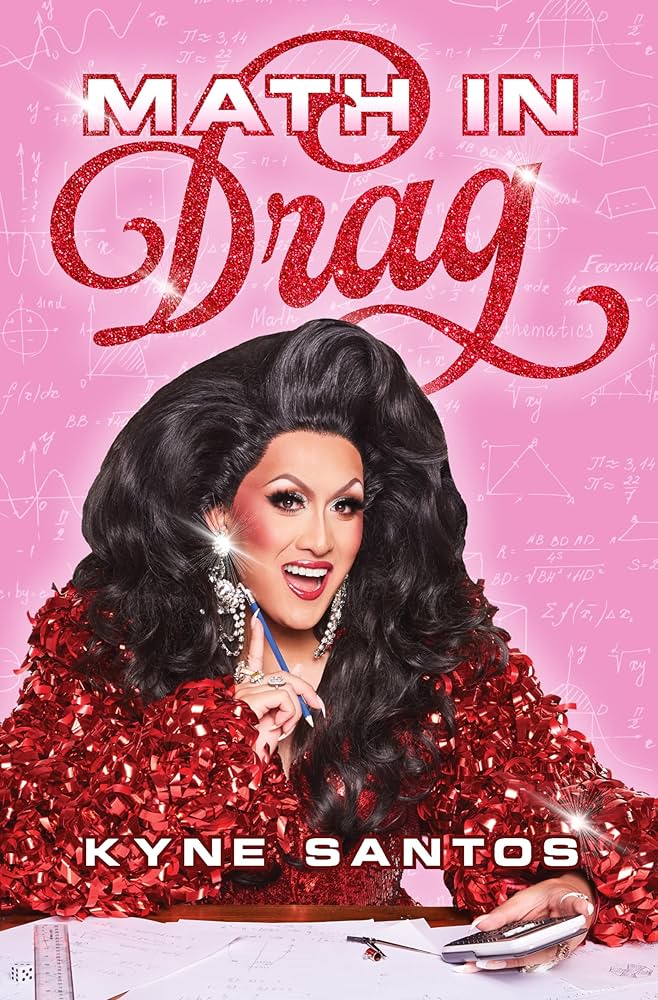
15: Math in Drag, by Kyne Santos. One of my reading goals for 2025 is to read six books about math and/or teaching math, right? And one of the reasons it’s only six books is that books about teaching and books about math tend to be dry as hell, and despite wanting to improve my craft as a math teacher I like to enjoy what I’m reading.

Kyne Santos needs to write a lot more books about math, is what I’m saying here. Drag queens who post mostly about mathematics is somehow a subgenre on social media, and Santos is the most visible of the group (if you’re on TikTok, check out Carrie the One) and this book is a whole bunch of things at once– a memoir, a history of math, a math textbook, and a history of the drag movement– and it’s tremendous on all levels. I actually took one of the chapters about negative square roots and turned it into a warm-up activity for my 8th graders, and then ensured that they would all look up the book on their own by telling them that I could give them the author’s name but not the actual name of the book. Which, for the record, probably wasn’t true, but I teach in Indiana.
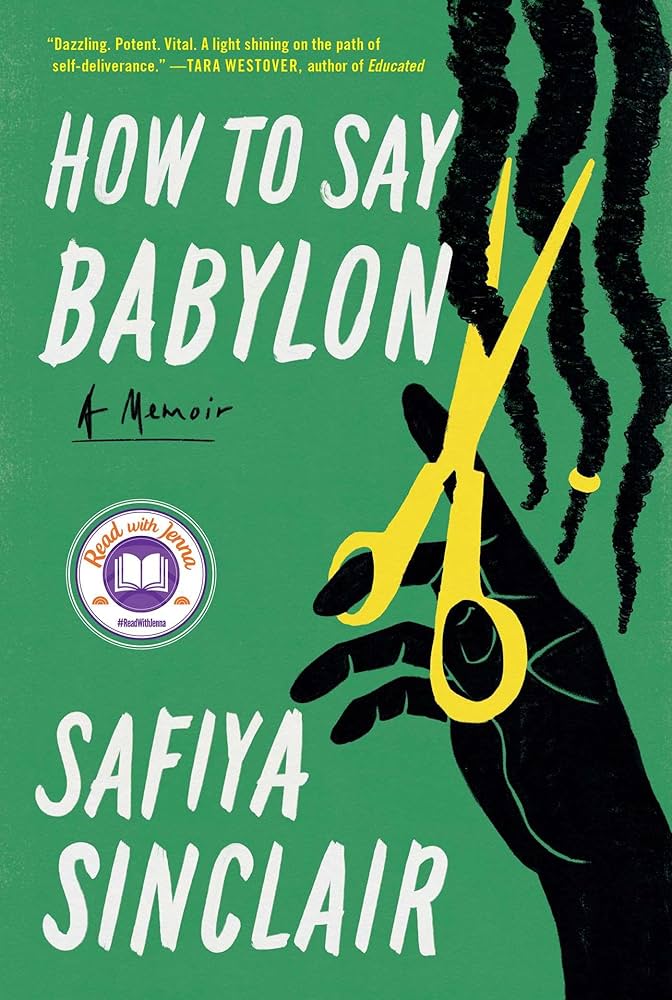
14. How to Say Babylon, by Safiya Sinclair. It’s at this point where I realize there’s more nonfiction or at least nonfiction-adjacent (you’ll see) books on this list than usual, as Sinclair’s book is also a memoir about growing up in Jamaica in the eighties and nineties. Her father was a hard-core Rastafarian and a reggae musician, and growing up smart and female in a very patriarchal religious structure is a big part of the book.

The other fascinating thing about this one is the language; the dialogue is mostly in Jamaican English, which isn’t quite far enough from American English to qualify as a patois (which is a whole other thing, to my understanding) but it means that things like pronouns aren’t going to work quite like you’re used to, and you are going to hear every word her father says whether you normally hear dialogue or not. Sinclair is an award-winning poet, and while I’m not likely to check out her poetry, if she writes any more prose works in the future I’ll be in line for them.
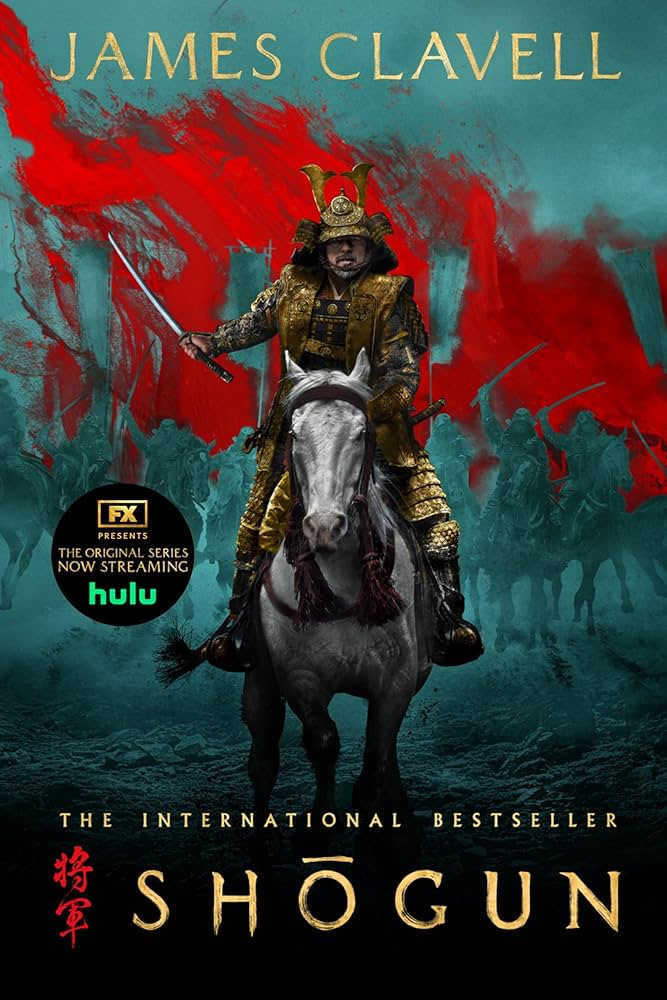
13. Shōgun, by James Clavell. I have never seen either of the miniseries that were based on this book, either the original one from the 1980s or the apparently far superior one Hulu did this year, but I swear that if I ever start watching television again, I’m gonna, dammit. I picked this up (for the record, it’s printed in two volumes because it’s 1500 pages long, but it’s one book) based on a bunch of people being very enthusiastic about the miniseries and the strength of the cover.

Okay, that’s a lie, I picked this up because of the precise shade of blue-green used on the new covers, which sounds ridiculous and I don’t care, it’s true. Luckily for me the book is really good, and a lot less racist than you might guess “book written in the 1970s by a white guy about Japan” might be. The main character, a navigator named Blackthorne, is just open-minded enough of a character to make it possible to get into his head, and the late sixteenth and early seventeenth century were a fascinating period of history both in Japan specifically and the world in general. This book is a heavy damn lift in more ways than one, but I really enjoyed it and I’m glad they didn’t reprint it with a boring cover.
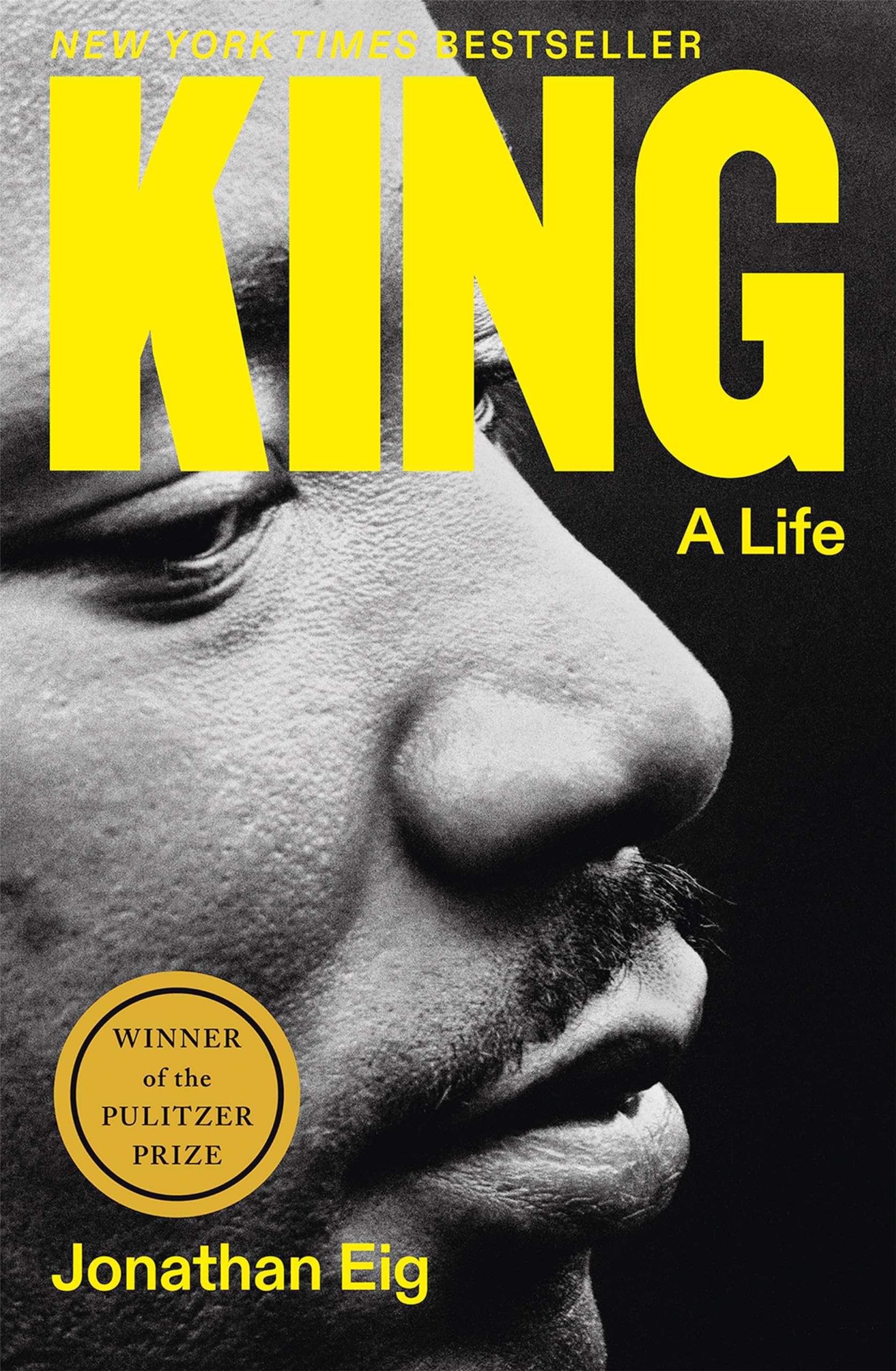
12. King: A Life, by Jonathan Eig. The Civil Rights movement is my favorite period of American history, and easily the one I know the most about, so you can probably imagine that I have a bunch of books specifically about Martin Luther King, Jr. on my shelf, as well as a couple that aren’t officially about him but may as well be. What sets Eig’s version of his life apart from the rest is his focus on King as a human being and not as a man whose face would eventually be carved into marble as a national memorial. It isn’t quite a psychological biography, if that’s even a real thing, but it may not surprise you to learn that King struggled with depression and anxiety for his entire life as well as a healthy dose of imposter syndrome (the man was in his twenties during the Montgomery bus boycott, and was only 39 when he was murdered) and he doesn’t come out and say it, but it’s strongly suggested that his mental health struggles led to his well-known issues with adultery, drugs and alcohol.

What, you didn’t know Martin Luther King dabbled in drugs? Yeah. Sorry about that. But unlike, say, Ralph Abernathy’s book, there’s no sense of score-settling in King: A Life; Eig talks about these things because they were important, and he’s not trying to knock King off his pillar so much as talk about a guy who would have been deeply uncomfortable up there in the first place. When you’ve read as much about King as I have it takes a lot to write something new and impressive, and Eig has certainly delivered here.
11. Seal of the Worm, by Adrian Tchaikovsky. This is the first of two books on this list that should be understood as endorsements of the entire series rather than the individual books I’m writing about, and in the case of Seal of the Worm I’m talking about his Shadows of the Apt books, a ten-book, 6000-page series, most of which I read in 2024.

That isn’t to say that Seal of the Worm isn’t the best book of the series, as even just from a technical level capping off that massive of a work in a satisfactory manner is an impressive achievement all on its own, but what if I told you that Seal of the Worm manages to introduce an entire new antagonist and kicks the legs out from underneath all nine previous books, something that has already happened once in the series? Tchaikovsky may be science fiction and fantasy’s most underrated author, and I still don’t know anyone else who has read this series, which is a Goddamned crime. They’re right there, and you can buy them. What are you waiting for, other than the time to read six thousand pages? Please, somebody, read this.
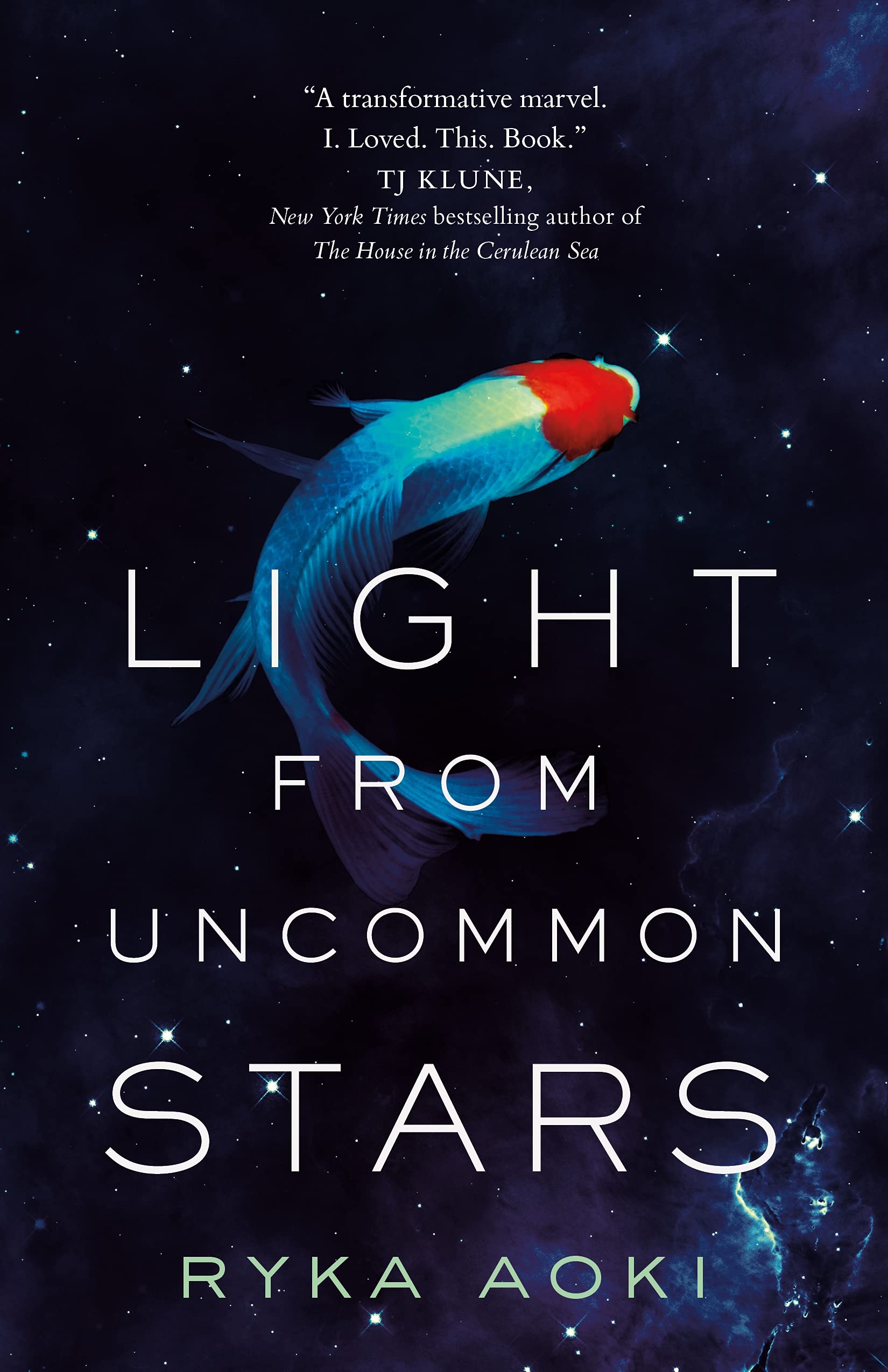
10. Light from Uncommon Stars, by Ryka Aoki. Another mini-theme of this list that is going to start becoming more apparent is books that are batshit nuts, and … man, this book has a little bit of everything in it, and I think would wear a “batshit nuts” badge with absolute and undeniable pride.

I mean, check out how many whole entire books are superglued together here: Light from Uncommon Stars features 1) a young, transgender runaway who is 2) a world-class violinist who 3) meets a mentor who has made a deal with the Devil to 4) corrupt seven young violinists into also selling their souls to the devil and 5) is looking for number 7, and meanwhile 8) there are aliens who 9) are stuck on Earth and 10) running a donut shop while they’re stuck here. It is complete madness from the first page to the last, and I recommended it to one of my trans orchestra students during the last school year and I should really find out if they ever read it or not. Meanwhile, you should read it too.
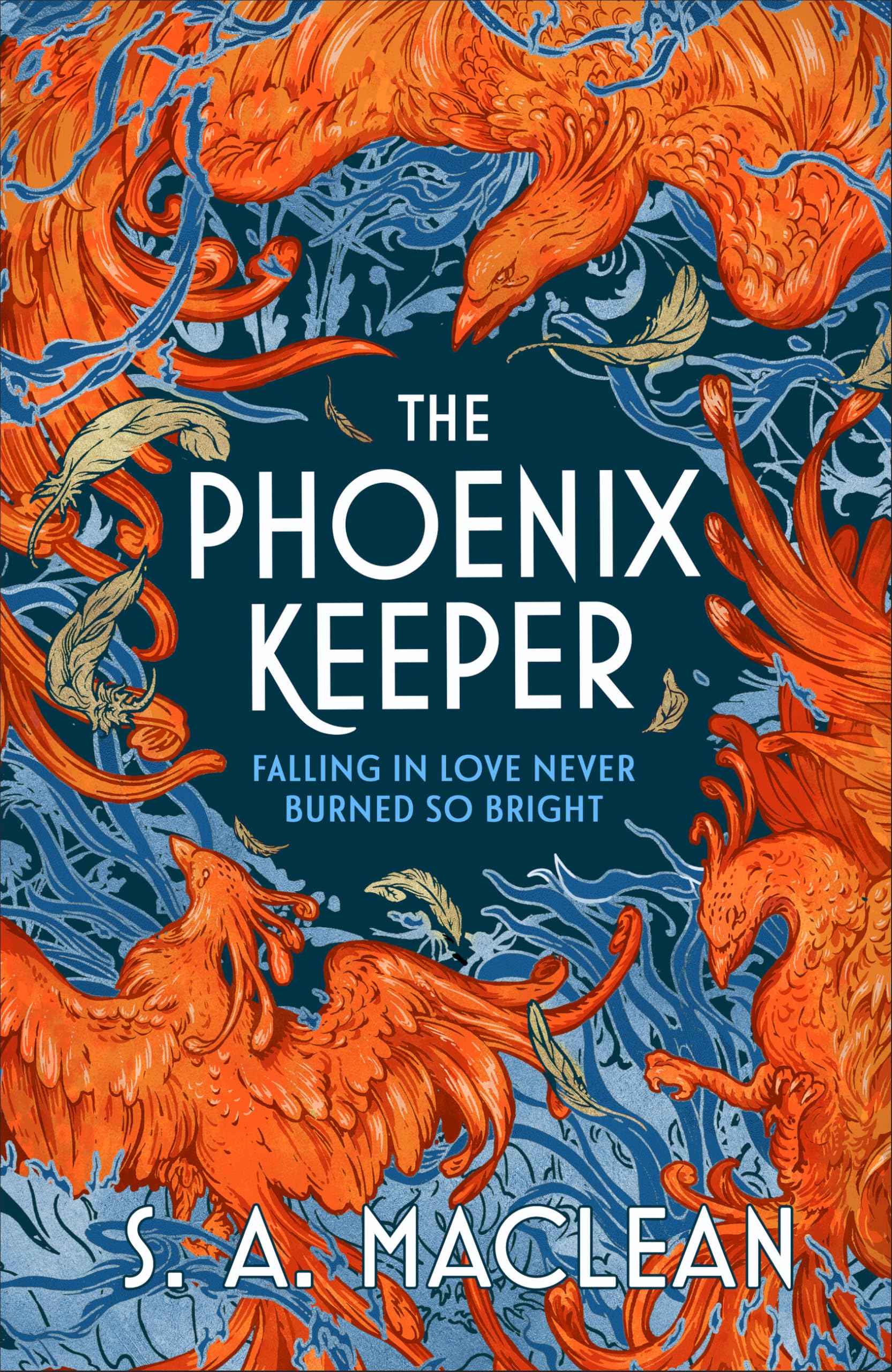
9. The Phoenix Keeper, by S. A. MacLean. Slightly less nutty (but still pretty nutty) is this book about an autistic, anxiety-riddled zookeeper in a zoo filled with fantasy animals, the first and sole representative of what the kids are calling cozy fantasy on this list. I got sent this one by Illumicrate and it wouldn’t have really crossed my radar otherwise, but I read it more or less cover-to-cover during a car trip and it was exactly the book I needed at the time. I have read more romance books than I ever expected to this year, and am reaching the point where I am heartily tired of romantasy, which is a thing, but this isn’t that; there is a bit of a romance subplot but it’s not about that, so don’t pay attention to the blurb on the cover. No, this book is about a nerd who really really wants to be the best zookeeper in the world and wants to raise phoenixes, and it’s really obviously based on the efforts zoos went to to keep the California condor from going extinct, and I absolutely loved it. There are setbacks and obstacles to be overcome but, again, this is cozy fantasy and you know everything is going to work out just fine, and this book is more about relaxing into the details and the characters than the conflict. I like zoos. I like books set at zoos. Zoos with phoenixes are better than regular zoos. This is a great book.
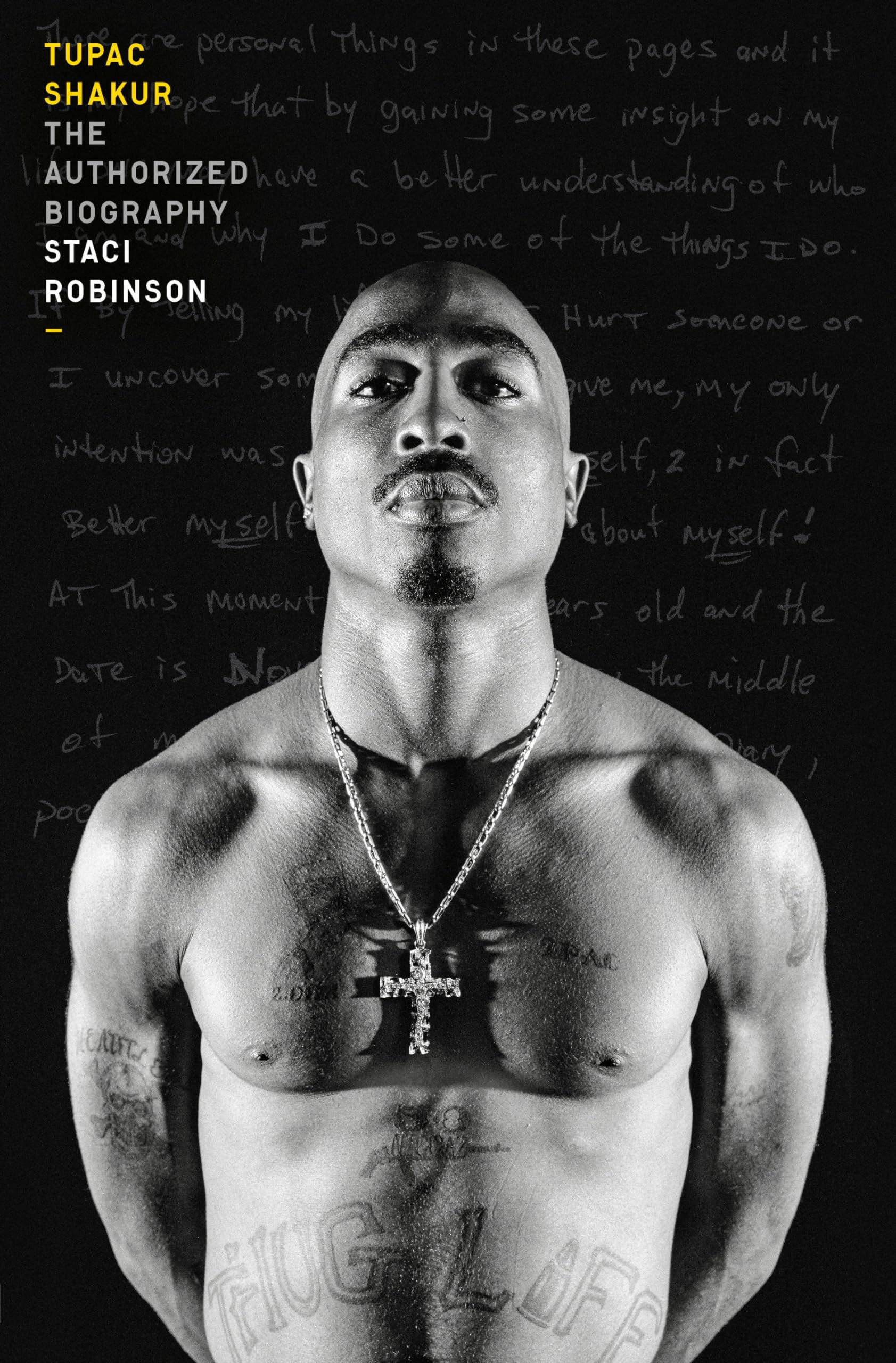
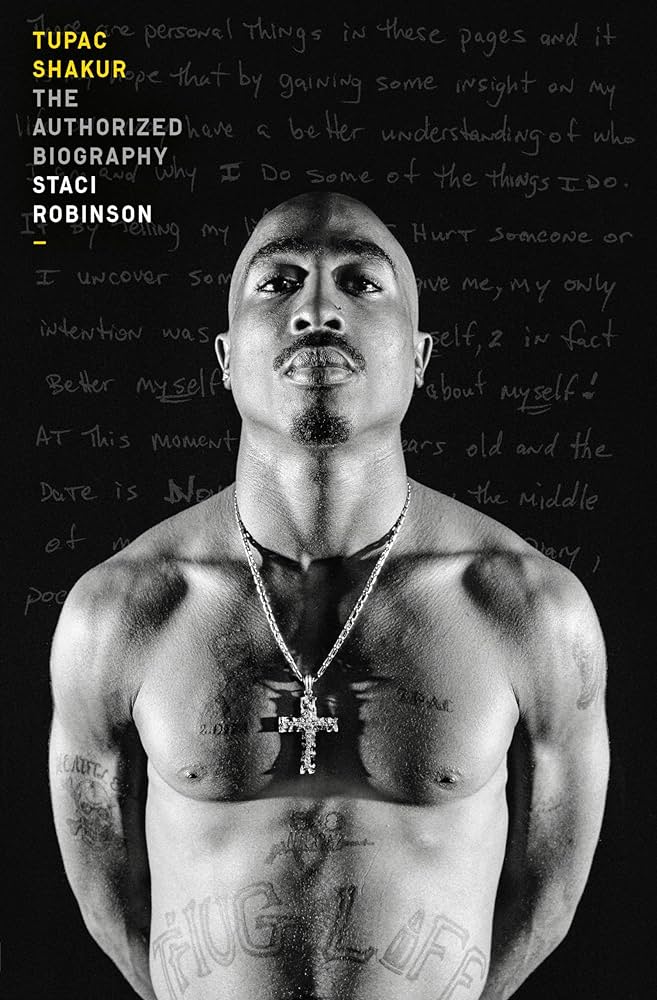
8. Tupac Shakur: The Authorized Biography, by Staci Robinson. I am tempted to say “this exists and therefore you should read it,” but that’s kind of unfair to both the book and the author even if it’s more or less completely true. I’m listening to Kendrick Lamar while I write this post, and Kendrick is one of Pac’s more obvious spiritual successors in hiphop nowadays, but it’s impossible to overstate the impact this guy had on rap music and on two or three generations of kids and still counting. I think it’s probably fair to say that there’s not another musician from the nineties (or a whole bunch of other decades, for whatever that’s worth) that still has as much influence as Tupac does, and reading a book written by someone who knew him well and was handpicked by his mother to write the book was an absolute pleasure. The guy’s life was fascinating, and while books about musicians can sometimes become formulaic (“he released this, and then he released this, and then there were the drug problems, and then he released this,”) this manages to keep away from that. The one weakness is that it literally ends with the moment of his death; I feel like another chapter about the LAPD’s investigation reaction to his murder was probably warranted and we didn’t get it. Still, I’m glad to have read this.
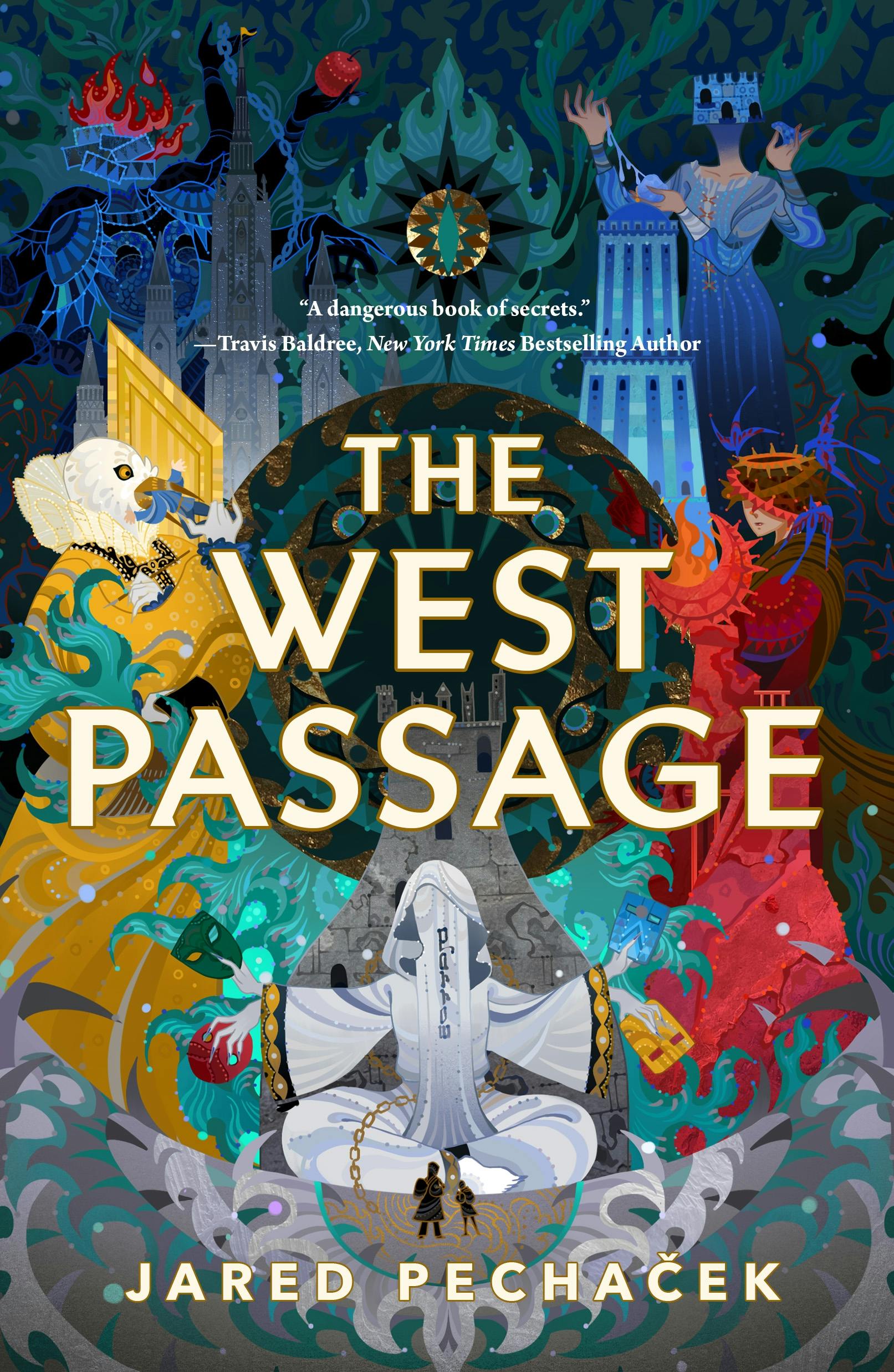
7. The West Passage, by Jared Pechaček. I still don’t know how the hell to pronounce his last name, but this book is the first one on the list that, on a different day, I easily could have called the best book of the year, and if you want to draw a line between the first eight books and the last seven and ignore the ratings completely after that, it’s entirely reasonable. The West Passage is also the second representative of the Batshit Nuts genre, drawing inspiration from Gormenghast and Shadow of the Torturer and Through the Looking-Glass and China Miéville’s Bas-Lag series and coming up with something where characters will be talking about a beehive, and you’ll think to yourself okay, I know what bees are, and I know what a beehive is, and then the beehive will walk over to the characters on its legs and extend a urethra and piss out some honey for them. The crumbling castle this book is set in is one of the wildest settings I’ve ever encountered in fantasy literature, and God damn it did I seriously read six more books this year that I thought were better than this one? That shouldn’t be possible, because this book is incredible, but … well, keep reading.
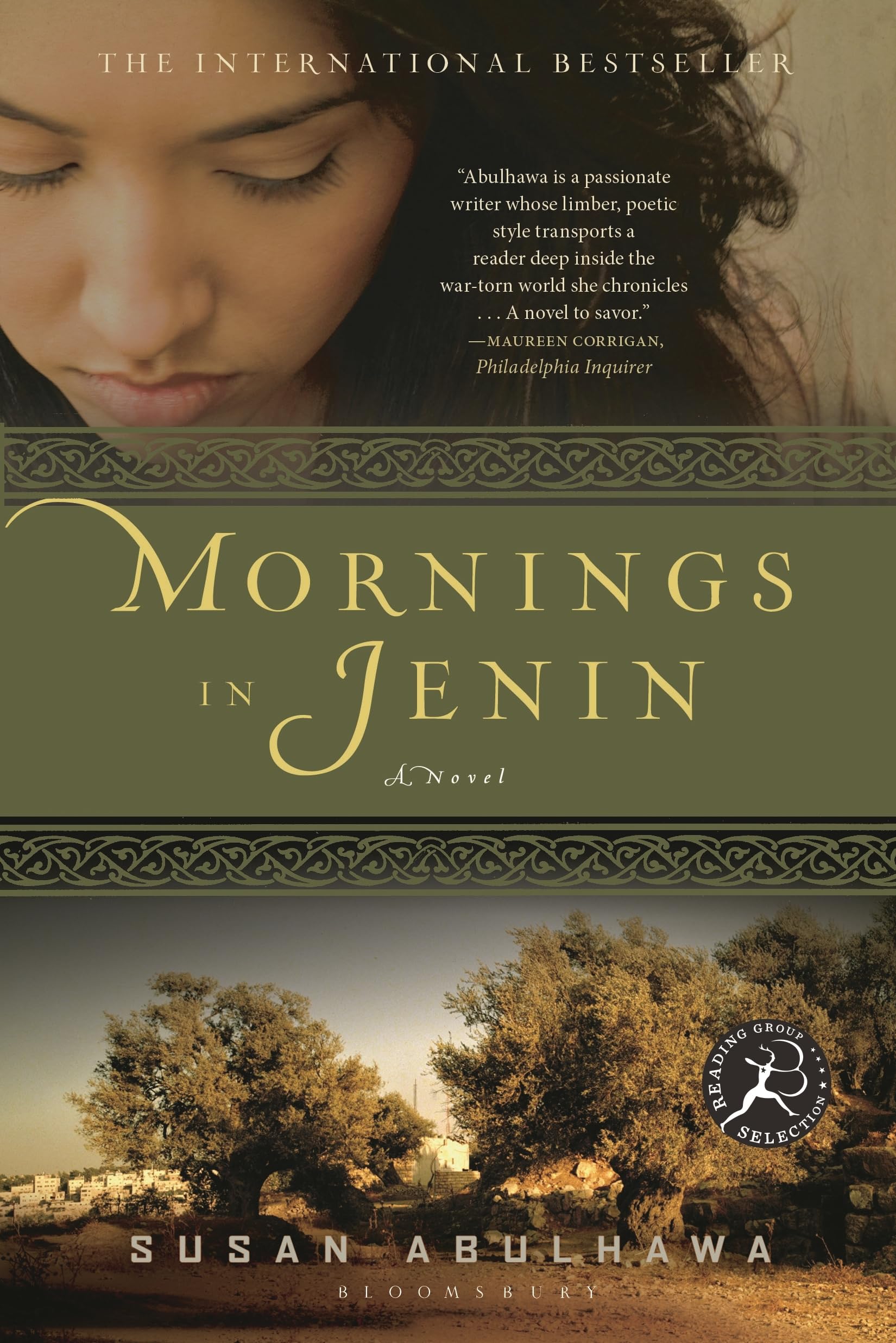
6. Mornings in Jenin, by Susan Abulhawa. I read several books this year by Palestinian authors, and two specifically by Abulhawa, whose Against the Loveless World was also on my shortlist, but Mornings in Jenin is the superior of those two books. This is not a memoir but feels like it (Abulhawa herself is Palestinian, but was born in 1970 in Kuwait, so she’s narrating events from before she was born, although I’m sure her own life experiences made their way into the book), and it begins with the creation of Israel and runs up to more or less the modern day, as it ends in 2002 or so, a few years before its release in 2006. This is easily the most important book on the list, and the main character, Amal, is a young girl at the beginning of the book and an old woman at the end of it, so you more or less get the entire history of the Palestine-Israeli conflict through her eyes. Go right ahead and make a list of all the content warnings you can think of, as this is a really hard book to read if you’re possessed of even a modicum of human empathy, but it’s something that I think most people and certainly most Americans definitely need to pick up.
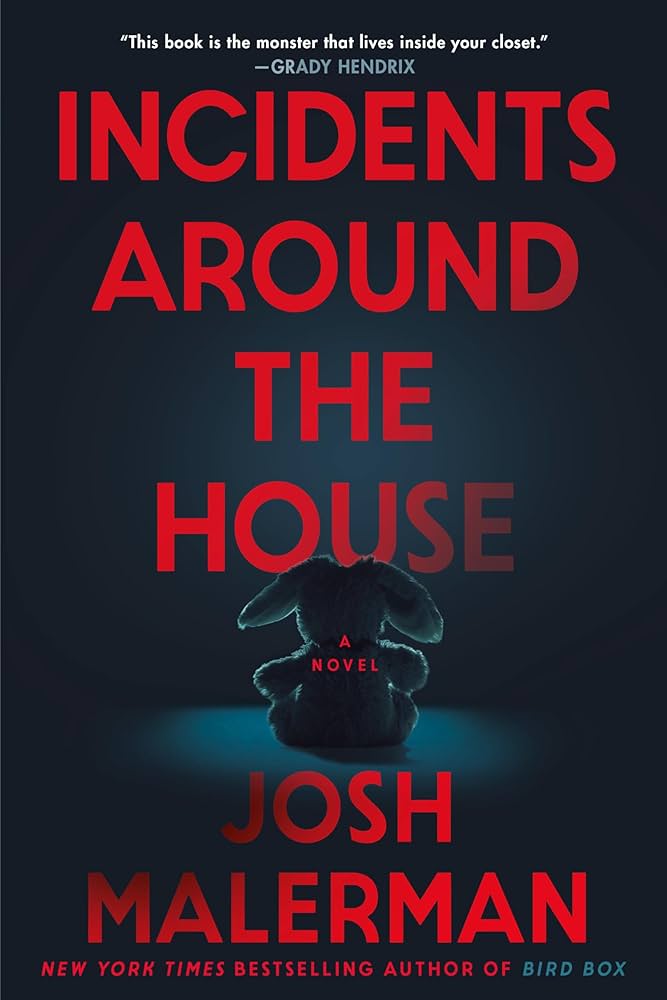
5. Incidents Around the House, by Josh Malerman. I called this the scariest book I’d ever read when I wrote about it the first time (my post cannot, in any meaningful way, be called a “review”) and while I wasn’t able to stick by that– you’ll see in a minute, and frankly parts of Mornings in Jenin are horrifying in their own way as well– it’s certainly the scariest horror novel I have read, at least in a long, long time, time having worn the edges off of some of the other books that might belong on that list.

Incidents is about Bela, an eight-year-old, who lives with her mother and father in a nice, comfortable house. But there’s also Other Mommy, who no one else in the house can see, and who asks Bela every day if she can “go inside her heart.” Bela is smart enough to realize that this is probably a Bad Idea, possibly one of the Badder Ideas in the entire history of Bad Ideas, and … well, Other Mommy isn’t very happy about that.

Don’t read this book. You don’t need it in your head. I didn’t need it in mine, but it’s there now, and the book is still in the freezer, and I have to reward how fucking effective this book is in scaring the absolute shit out of a grown man who himself lives in a nice comfortable house even if I am never letting it out of the freezer ever again.
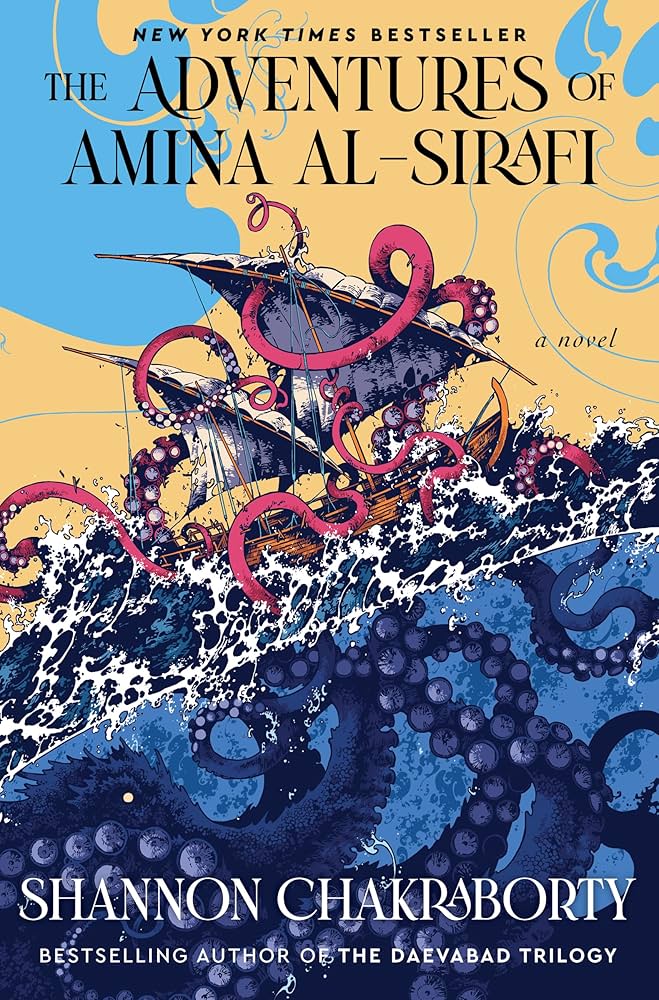
4. The Adventures of Amina al-Sirafi, by Shannon Chakraborty. I haven’t used the word delightful in this post yet because I feel like I overuse it lately, but I feel like there’s probably no way of getting through writing about this book, about a female ex-pirate captain who has retired and settled down to raise her daughter in a magical world full of djinn and treasures and adventures and her pain in the ass mom and awesome, but this was probably the most fun I had reading anything this year, and if you can look at that cover and not immediately want to read this than you and I probably can’t be friends. I’ve read several of Shannon Chakraborty’s books, and this is better than anything she’s written before– and those were all books I enjoyed! I want twelve thousand more books about Amina al-Sirafi and I want them right now. Have you ever noticed that when I get excited about things my sentences tend to get longer? Look at the first sentence of this entry. I read this book months ago. It still makes me that happy to talk about it. Go read it.
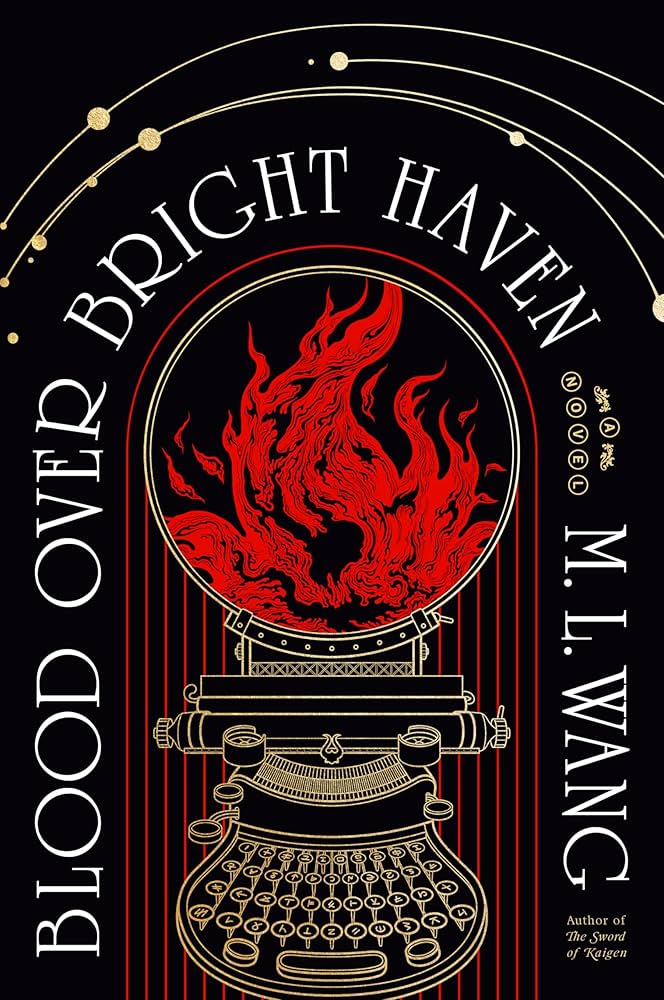
3. Blood over Bright Haven, by M.L. Wang. This is the fourth book in a row where you’re going to feel a particular emotion over and over again while reading it, and the second of the four where rage is going to be that emotion. Blood over Bright Haven has a bunch of very interesting tricks under its sleeve, and chief among them is the way it’s going to kind of blindside you partway through with what it is actually about and, even more amazingly, who its main character is. This is one of the angriest books I’ve ever read, and again, one of the books I just finished writing about is about a Palestinian refugee, so that’s a pretty high bar. I enjoyed Wang’s Sword of Kaigen but not nearly as much as I expected to, and this book sat on my shelf for a while before I got to it. It should be this book that people can’t stop talking about, not Kaigen, and the reason I’m not talking about the plot very much is that this is definitely one of those books where you need to go in knowing as little as possible. Just sit back and let it take you for a ride. And if you can, grab it soon while you can still get the cool red-stained edges. The first hardcover edition is sweet.
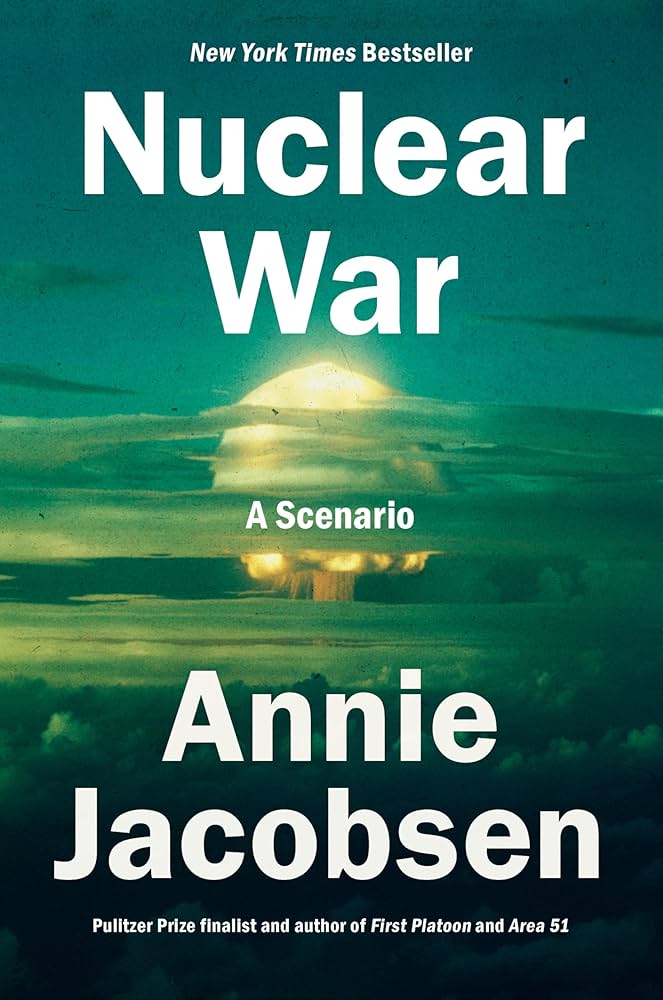
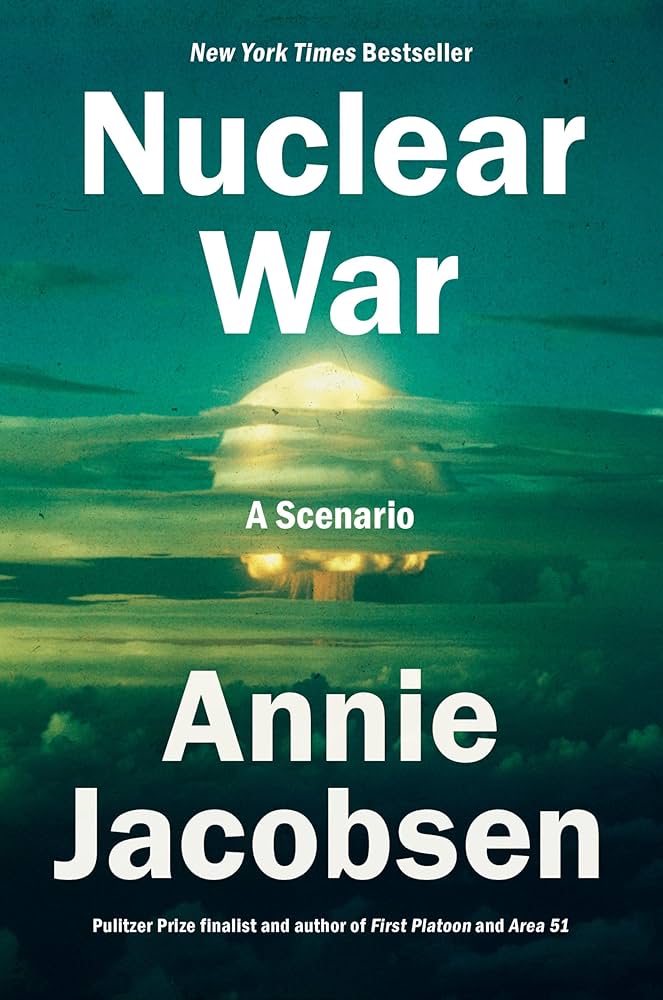
2. Nuclear War: A Scenario, by Annie Jacobsen. Remember a couple of books ago, where I called Incidents Around the House the scariest horror novel I’d ever read, and said that I’d explain in a minute? Yeah, that’s because Nuclear War: A Scenario isn’t a novel, and it is fucking terrifying on a deep, existential level that no fictional novel can really touch.

If you grew up in the eighties, you remember what living in fear every day of impending nuclear war felt like, and you might remember the occasional “hide under your desk and kiss your ass goodbye, because it’s not going to help” drill from school. Jacobsen’s book starts with North Korea detonating a one-megaton nuclear bomb over Washington DC, and ends seventy-one minutes later with more or less all of human life on Earth extinguished. It is probably best classified as near-future science fiction, as the events described have not, in fact, happened yet, but Jacobsen is repeatedly clear that the events of the book could happen tomorrow, and while there’s clearly some fictionalization happening here and there (she has to invent a US President and Vice-President, for example, and what happens with the president pro tempore of the Senate almost verges on comedy) I have shelved this with my nonfiction and history books, because all of the research that went into this puts it more firmly into the realm of those books than fiction.

I, uh, want to die in the first thirty seconds, preferably entirely unaware of what just killed me, if there’s a nuclear war. I’ve said this before about more fictional apocalypses– I also want to be patient zero if there’s ever a zombie outbreak– but it would be great if I was, say, in Chicago when the bombs hit, and if that first exchange involved more than the one bomb. I’d prefer not to die in a nuclear apocalypse, mind you, but if I’ve got to go that way, I really don’t want to see it coming.
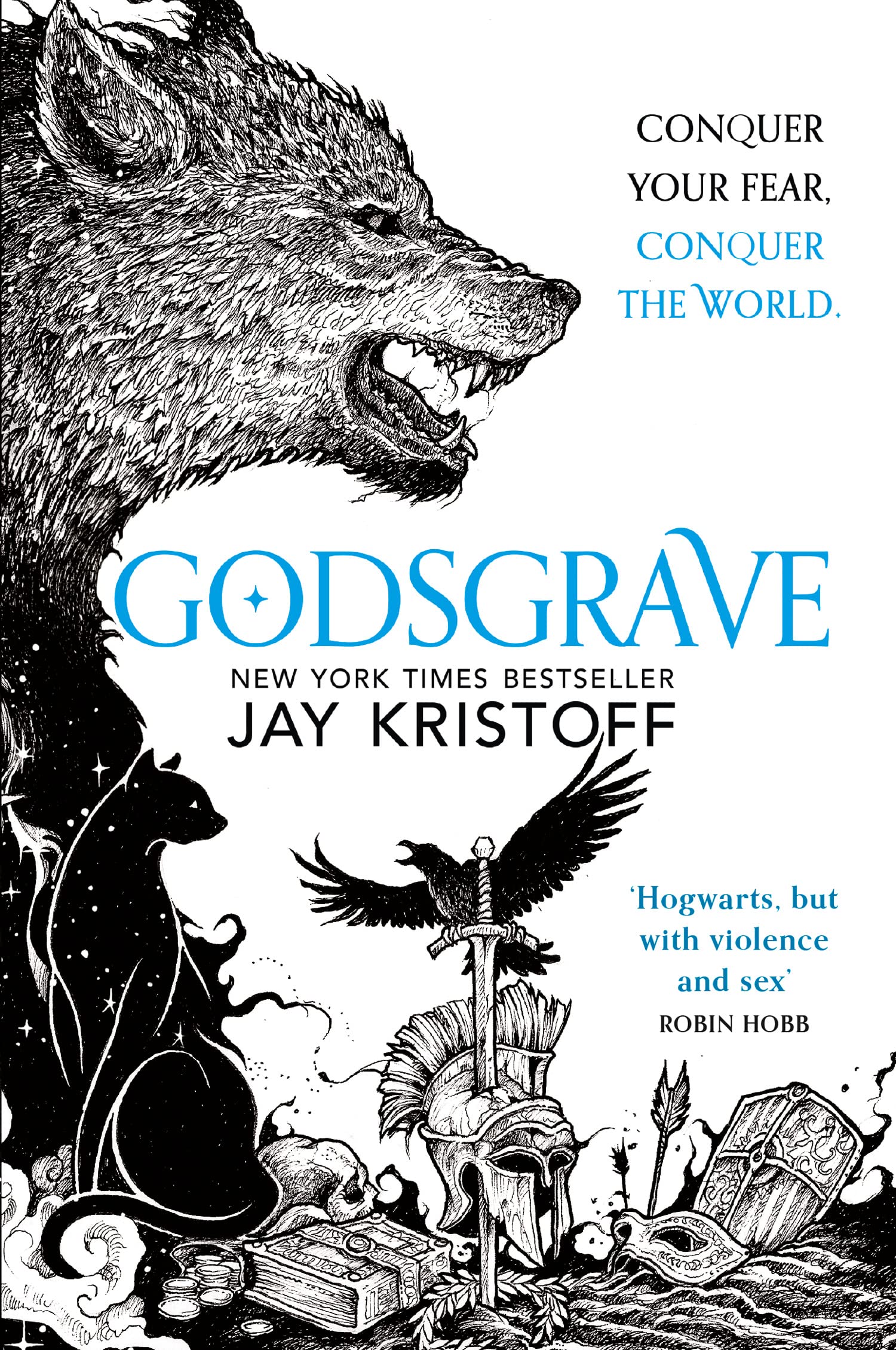
1. Godsgrave, by Jay Kristoff, is my favorite book of the year, and my annual irritation with WordPress that it will not allow me to begin a paragraph with a one and a period without indenting it automatically or Performing Shenanigans to keep it from happening. I am capable of indenting things myself if I want to, or you should at least pay attention if you automatically indent something and I delete it, dammit! But yes: this is the second single-book-as-a-stand-in-for-an-entire-series, and Kristoff’s Nevernight Chronicles is one of the most amazing series I’ve ever read. In broad strokes, the series feels like something you’ve read repeatedly– a young girl who trains to be an assassin so she can seek revenge is not on the top 10 of most original scenarios– but once you get past that original setup and the series gets moving, you’re going to be surprised over and over and over and over by the story decisions Kristoff makes, and the reason I picked Godsgrave, the second book in the series (the first and last are Nevernight and Darkdawn, respectively) is that it ends on a cliffhanger so potent that I literally screamed when I finished the book, and if I had had to wait for Book Three to come out and hadn’t had it sitting on the shelf waiting for me (I read all three books in a single gulp) I might have had to move into his Goddamned house until he finished it.

I love so many things about this series. I love what an unapologetic asshole Mia Corvere is. I love that they make her an assassin and then don’t back away from all the killing that implies. I love that Kristoff sets up what feels like a bog-standard YA love triangle and then blows it to hell. I love how much of the worldbuilding is stuck into what feels like inappropriately snarky footnotes, and I love how the footnotes suddenly make sense at the end of the book. I love how meta the series gets, and I love how no one is safe, ever, and how Darkdawn keeps you on your toes for its entire length and keeps getting more and more batshit, at one point indicating a story development with margin changes, and God Damn I want to sit down and reread this whole series before starting the Stormlight reread in a few days.

The Nevernight Chronicles is the best series I read this year, and Godsgrave is the best book of The Nevernight Chronicles. Go forth.

Honorable Mention, in No Particular Order: A Mystery of Mysteries: The Death and Life of Edgar Allan Poe, by Mark Dawidziak; The Honey Witch, by Sydney J. Shields; House of Hunger, by Alexis Henderson; The God and the Gumiho, by Sophie Kim; This is Why They Hate Us, by Aaron Acevedo; The Bone Ship Trilogy by R. J. Barker; Somewhere Beyond the Sea, by T.J. Klune; Blood at the Root, by LaDarrion Williams; The Vagrant Gods series, by David Dalglish; Morning Star, by Pierce Brown; Bookshops & Bonedust, by Travis Baldree, Moon of the Turning Leaves, by Waubgeshig Rice, and The Fury of the Gods, by John Gwynne.

2025 Reading Goals

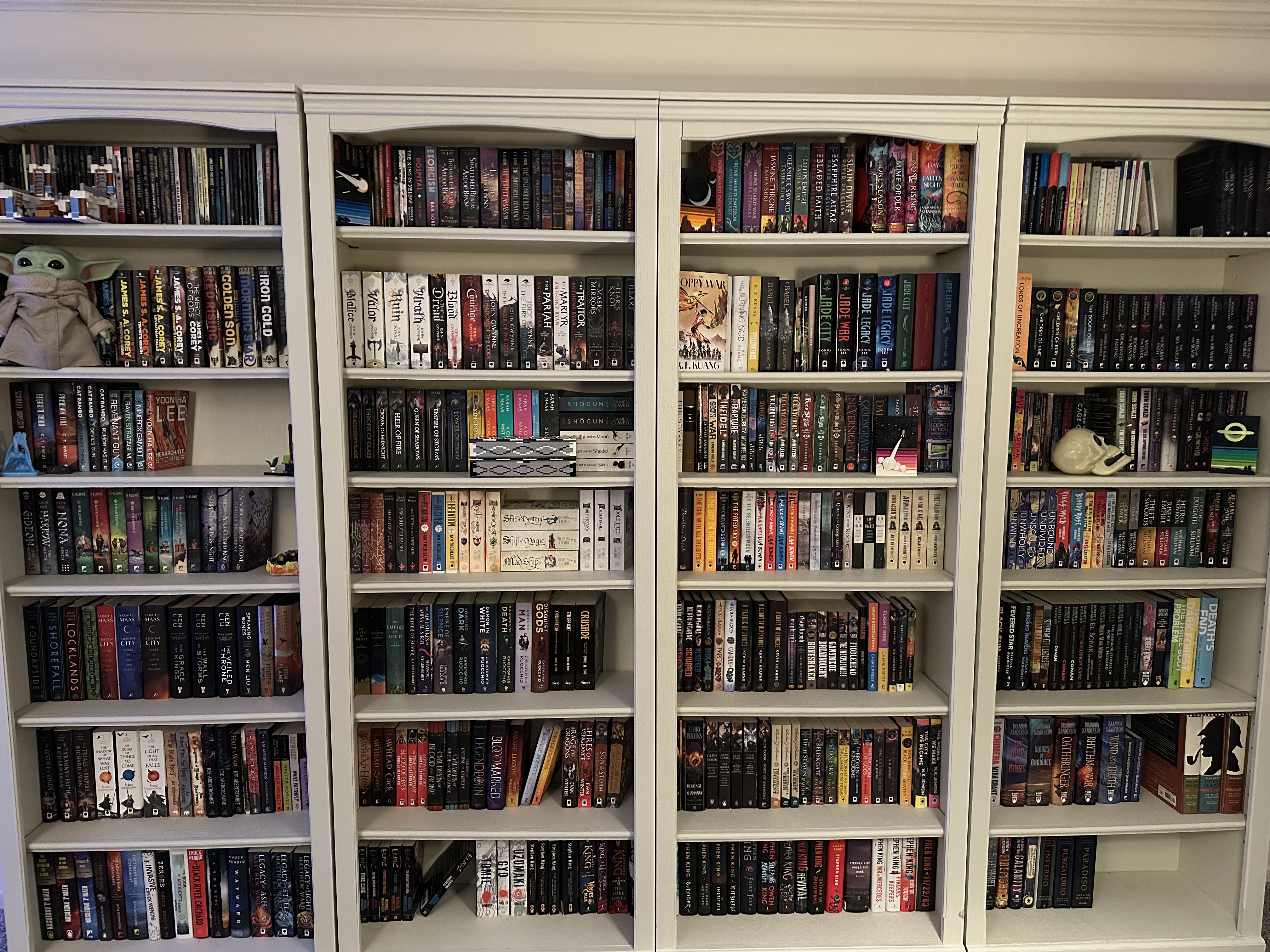
I was hoping to get to the stats nerdery post today, but I took a nap this afternoon with a cat on my chest, so it’s just going to be this. 2024 was one of the heaviest reading years of my life, and it was a year with no particular reading goal beyond “whatever I want” and “clear my TBR shelf,” which not only never happened, it never came close to happening. I want next year to have a little bit more focus, and I’m going to throw one ridiculous challenge at myself in January just for the sheer hell of it.

Reading Goal the First: In January 2025, I will read all five of Brandon Sanderson’s Stormlight Archives books, plus the two supplemental novellas. That is, according to Wikipedia, 6,335 pages. I have read the first two books and part of the third. My guess is that if I can get through Oathbringer this time without the issues I had the last time I picked it up, I’ll be fine; 204 pages a day during a month where I have one three-day weekend and don’t have work until the 6th is not even a particularly demanding pace. That said, shit happens. We’ll see if I can pull this off.

Reading Goal the Second: Setting a number of books goal is almost meaningless at this point, but let’s go with 100 again. Most years I don’t have to push too much to hit that number, and unless I rediscover some other hobbies I’ll blow it away again, but I don’t want to set it so high that I start adjusting what I’m reading to hit a number. That said …

Reading Goal the Third: At least 22 nonfiction books over the course of the year. Why 22? That’s two a month if you ignore January. I may adjust this after I look a little bit more closely at what I read in 2024; I’m pretty sure I didn’t read that many nonfiction books this year and I want to up the number somewhat.

Reading Goal the Fourth: At least six of those 22 books must be about teaching and, ideally, teaching math. I joined the National Council of Teachers of Mathematics this year and one of the benefits of that membership is deep discounts on their professional library, which is good; that said, these books tend to be hellaciously dry so I’m not going to commit to too much. Six is one every other month. That’s not bad at all.

Oh, and one more thing: Starting with January 1st, I’m going to start looking into moving away from housing everything at Goodreads. I’m going to start simultaneously recording my reading on Goodreads, Storygraph and Bookly, and we’ll see which app wins out. Right now Storygraph looks pretty cool because it appeals to the numbers nerd in me and there appear to be a thousand ways to generate charts and spreadsheets and such from your reading, and really, if you can’t make a spreadsheet out of something, is it even worth doing? I’ll report back on this as I get into what the different apps can do.

That’s what I’ve got for right now. Do you have any plans for your reading next year?

On Arabic, pedagogy and my new life goal

Something happened at work today that rarely happens in a middle school: I, the teacher, was bored. This is dangerous. I’d finished my grades, my kids were all quietly working on something or another, and other than randomly wandering around and talking to people, I didn’t have anything in particular that needed doing. Somehow I got thinking about Arabic again, and that led to me downloading a book called All The Arabic You Never Learned The First Time Around. This book is by James Price, but you’ll never know that from looking at the .pdf I downloaded, which never mentions the author’s name.

Y’all.

I need a print copy of this book, and I think I’m probably going to have to make one by going to Kinko’s (does Kinko’s still exist?) and printing all 564 pages and then binding the damned thing myself. Amazon wants over seven hundred dollars for the sole used copy they have, which also looks home-printed, and if there’s another copy out there on a legit site I can’t find it.

I have never encountered a bitchier textbook in my life, and I love it.

There will be a lot of images in the rest of this post. They are all from the first two chapters of, again, a .pdf that is five hundred and sixty-four pages long.

In general, this man despises all human life. It’s glorious.

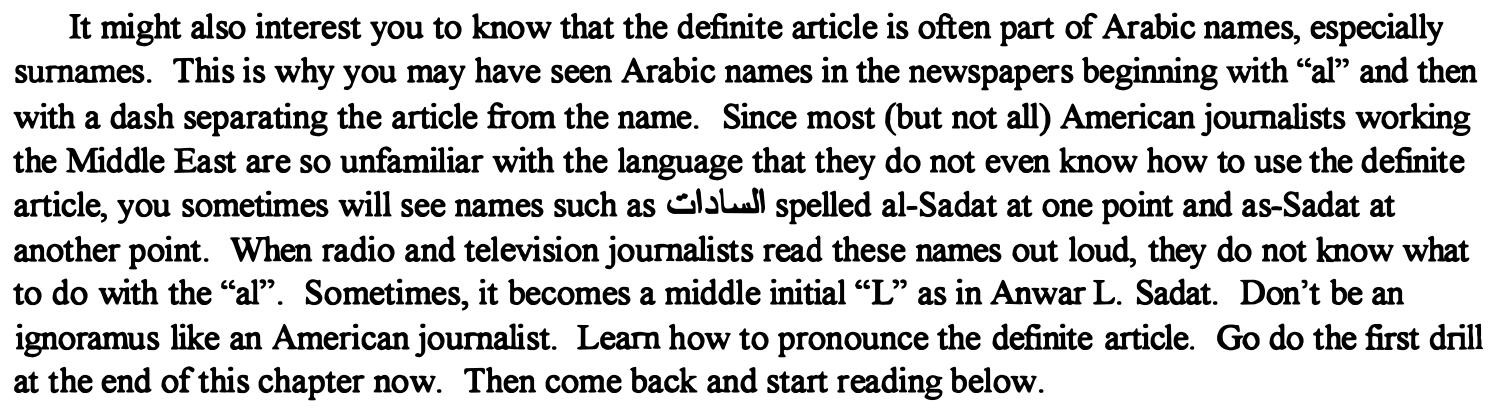
Who does he despise the most? American journalists. Oh my God does James Price hate journalists.

You know how most language textbooks pick a few basic words and use them for examples over and over? And how lots of times those are simple, easy words that everyone uses all the time? You will never guess the first three sample words this guy picks. Not if you try for a thousand years.

I’m not kidding. This is going to happen over and over again:

Any hint of confusion is met with immediate scorn, which is something all good teachers do:

This is the last paragraph of the first chapter:

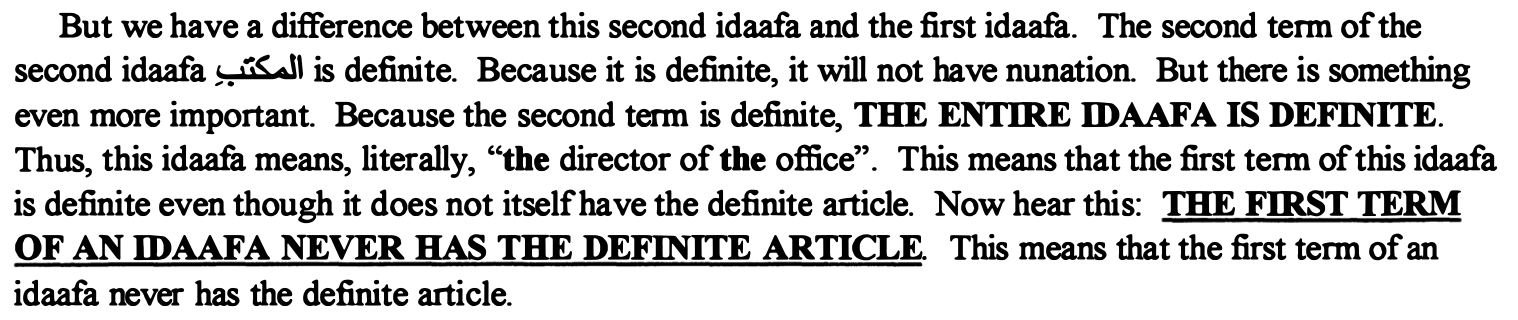
Chapter Two starts getting into case endings and something called “Idaafa,” which I cannot explain just yet. I can tell you that James Price thinks idaafa is very simple and easy and does not have a whole lot of patience for people who do not understand it, to the point where this chapter starts using typesetting for emphasis along with the usual heavy doses of sarcasm:

I am going to start modeling all of my teaching after the last two sentences in this paragraph, including the use of all-caps, underlined bold text:

Shit, is that what it means? I understand now!

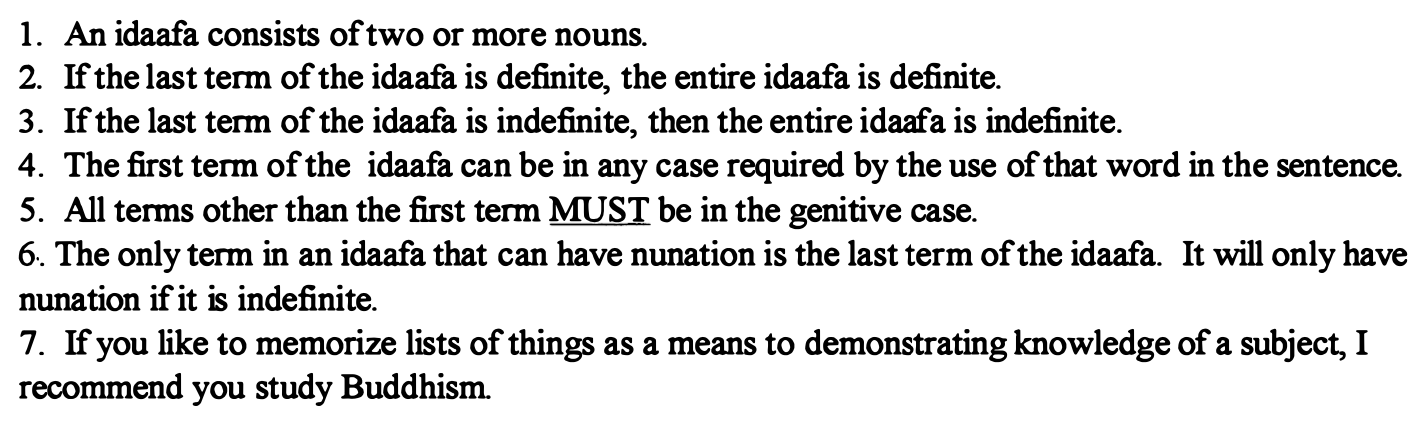
Toward the end of the chapter, we get this gem, where he makes fun of the reader for studying the text he wrote:

I’ve only read two chapters, remember, and I haven’t really thoroughly studied them, but I think I’m starting to detect a theme here, as this is how he ends chapter two:

This is the best textbook I have ever seen, and James Price is my new educational idol. Please, please, let someone find me a print copy of this, or I swear to God I’m making a leather-bound copy myself.

#REVIEW: Nuclear War: A Scenario, by Annie Jacobsen

I’ll not bury the lede: this is the scariest fucking thing I’ve ever read.

My regular readers might be protesting already. Didn’t I just post a “review” of Josh Malerman’s Incidents Around the House that more or less boiled down to “Nope”? And then I named it Book of the Month? And, like, a week later, this book is the scariest fucking thing I’ve ever read?

Here’s the thing: Incidents Around the House is scary as hell. If you enjoy horror as a genre you should read it. But it’s absolutely, indisputably, fictional horror. None of that stuff is going to happen in the real world and you’re not going to learn anything terrifying about the real world while you’re reading it.

I am, meanwhile, not even sure whether I can classify Nuclear War: A Scenario as fiction or nonfiction.

I mean … okay, technically it’s near-future science fiction. And by “near-future” I mean “could, in theory, happen tomorrow.” But the book is so heavily researched and so thoroughly grounded in the world as it exists today that it feels nonfictional, and if you look at the categories it’s trending in on Amazon none of them are fiction categories. There are elements, of course, that are more fictionalized than others; some specific things that happen to, say, the President are not exactly likely to unfold in that exact manner, and there’s an unintentionally (I think) hilarious throwaway detail about the President pro tempore of the Senate that is a clear invention.

But this book starts off with the all-too-possible launch of an ICBM carrying a one-megaton nuclear bomb toward Washington DC, and the next 300 pages covers the next seventy-two minutes in more or less second by second detail, and by the end of the book human civilization is over and everyone you know and care about is either dead or wishes they were and reading about it is not fun. I had to force myself to put it down and go the fuck to sleep Monday night, and got home from work yesterday and sat down and finished it before doing anything else. It’s a propulsive, compelling read but Jesus fuck is it going to give me nightmares.

I will make one small complaint: by the end of the book– spoilers, I suppose, but whatever– Europe, Russia, the Korean Peninsula and the United States are smoking wastelands. However, it might not surprise you to discover that Australia, Africa and South America are more or less entirely unmentioned. There are no nuclear powers in Africa or South America, to start, and Australia just doesn’t get involved. Here’s the thing: I don’t really have a sense of how much of a literally global problem that amount of fallout would be, or whether the inevitable nuclear winter’s effects would possibly be mitigated somewhat in the Southern hemisphere. Jacobsen is clear that she thinks human civilization is fully past-tense after a multination nuclear exchange, but, like, would pockets of civilization be able to survive in, say, Brazil or sub-Saharan (and thus farther from fallout) Africa? Is it possible that the currently inhabitable parts of Australia would stay habitable? Or is everyone literally fucked from the fallout in the atmosphere? Maybe the jet stream keeps it in the northern hemisphere, or, like, something. I don’t know, and I’d like to.

You don’t want to read this book, because it’ll fuck you up hard. But you may want to read it anyway. I dunno. You do you. I’m gonna go crawl under the bed for a week.

#REVIEW: How to Say Babylon, by Safiya Sinclair

It won’t actually take all that long for me to dispense with the “review” part of writing about Safiya Sinclair’s How To Say Babylon. You should check it out. There you go. Sinclair grew up in Montego Bay, Jamaica, the daughter of a Rastafari reggae musician, and the book is partially about her escape from grinding poverty to ultimately achieve a Ph.D in the United States and become a celebrated poet, and partially about trying to grow up female in a home dominated by an abusive misogynist. Sinclair, as one might expect from an award-winning poet, is a beautiful, lyrical writer, and her story is fascinating. I can’t imagine someone picking this up and not at least finding it tremendously interesting. I don’t recall how it crossed my radar, but I jumped on it, and it’s a pretty fast read.

That said, the book itself isn’t why I’m writing about the book, which ended up fascinating me but perhaps not for the reasons Sinclair intended. All the dialogue in the book is rendered as spoken, meaning that 90% of the dialogue is in Jamaican English, and I want to take a deep dive into Jamaican English grammar rules now that I’ve read this book. The dialect’s use of pronouns is kind of fascinating, and it was endlessly entertaining to me the way I was hearing anything her father said throughout the book. And, actually, after doing a light bit of Googling just now, it’s possible that there is some translation going on, because Jamaican patois is significantly more difficult for an American English speaker to understand than the dialogue in this book, which is unfamiliar but not incomprehensible. So maybe she pulled back a bit to simplify what people were saying, or perhaps conversation in their house was closer to American English than it might have been in other places. All four of the Sinclair kids ended up with university educations, so it’s clear that education was highly prized in the house– by their mother, as the book makes clear– so it’s entirely possible that a certain level of code-switching was taking place from the beginning.

The other thing is reading through this book and realizing I didn’t know anything at all about Rastafari. I went through a heavy Bob Marley phase in late high school and early college that was more or less responsible for everything I know about it, and I hadn’t appreciated just how unusual the … religion, and I’m using that word under some small amount of protest, really is. Rasta is wholly decentralized, for starters; it recognizes the Bible as Scriptural but there is no Rasta text to rely on and it emphasizes individuality to a degree where concepts like “orthodoxy” can barely even exist. In other words, Safiya Sinclair’s father was a devout Rasta, but that doesn’t mean that his practice of Rastafari lined up with anyone else, and while Jamaican culture as a whole tends toward the patriarchal, it wouldn’t be strictly accurate to say that Rasta was the reason her father turned out to be the man he did, or that it was responsible for how he treated his children and, particularly, his daughters.

(Also interesting: there are pages devoted to all four of the women in Sinclair’s family deciding to cut off their dreadlocks. There is not a similar scene for her brother, although there is a poignant moment where he declares his newborn child is going to decide on their own whether to follow Rastafari or not.)

On top of that, I absolutely wasn’t aware that Haile Selassie had traveled to Jamaica and explicitly rejected Rastafari’s belief that he was, in some way, God. Sinclair’s father appears to have believed that he was literally God on Earth; some of Marley’s lyrics lean that way as well, and Selassie straight-up said it wasn’t the case, at which point a whole lot of Rastas turned around and said that only God would be humble enough to deny he was God.

Which … wow.

And, like, think about this, right? Selassie was Emperor of Ethiopia. He was not, himself, a Jamaican, and there are no Rastafari in Ethiopia, or at least there weren’t when Selassie was alive. So this guy is Emperor of one country, and this group of people halfway across the globe decide that he is either literally God or at least the Messiah (and, again, no orthodoxy, so each individual Rasta might have a different idea about how this works) and form an entire-ass religion around him. And then he goes there, and he’s like, “No, I’m not God,” and it doesn’t work, and then eventually he dies and … Rastafari just keeps on truckin’.

There was also a lot of oppression of Rastas early on, including a couple of events that qualify as massacres and/or pogroms, and I wasn’t aware that had happened either.

I need to know more, and I want to read a formal academic history of this belief system, is what I’m saying, and not just a memoir. I feel like I’m overusing the word fascinating in this piece but it’s mind-blowing to me that this developed the way it did.

Anyway, read the book.

#REVIEW: Tupac Shakur, the Authorized Biography, by Staci Robinson

I’m not generally the type to gatekeep, but it’s not hard to find out whether someone is a Tupac fan or not. Ask them his birthday.

June 16th, 1971/ Mama gave birth to a hell-raising heavenly son/ See the doctor tried to smack me but I smacked him back/ my first words was thug for life, and Papa pass the Mac

That’s the first lines of Cradle to the Grave, the penultimate track from his album Thug Life, and … okay, you can be a Pac fan and not know that line right off, but I think more of us do than don’t. And I’ve taken a moment to myself on more June 16ths than not, since he passed away. Not a big thing, mind. Just a moment. But he made sure we all knew his birthday so I figure it’s worth remembering.

There have been a lot of words written about this man since his death. Take a look at Amazon; a search for “Tupac books” will provide you with half a dozen self-published books about him, mostly full of conspiracy theories, and any number of other works written by more, uh, authoritative entities. It was the words Authorized Biography on the cover that got me to pick this one up; turns out Tupac’s mother Afeni Shakur hand-picked Staci Robinson to write this book, which immediately gives it a hell of a lot more authenticity than the usual.

Part of me didn’t want to read it, to be honest. Pac is one of a very small number of people whose deaths made me cry. I don’t remember exactly where I was when I found out Kurt Cobain had killed himself. I don’t remember where I was when I found out Christopher Reeve or Stan Lee had passed. I remember where I was when I found out about Chadwick Boseman, but there were no tears. I remember exactly where I was and what I was doing when I found out Tupac was gone. I wasn’t completely certain I wanted to revisit everything, to be honest.

And the thing is, it’s not going to be that difficult to write a biography of Tupac Shakur that doesn’t properly respect him, “authorized” or not. Afeni Shakur died in 2016 so it’s not as if she was around to review the manuscript. A whole lot of people he was close to are gone, as a matter of fact. And … well, let’s be real. Pac was messy. At best. He wasn’t the violent, unrepentant criminal that the news media portrayed him as, but he had a hell of a self-destructive streak that was showing itself very early in his life and that he never really got control of as an adult, particularly in his last few years. If he hadn’t been shot in Vegas in 1996, the cops would have gotten him by now. There was never a universe where Tupac Shakur lived to die of old age, and he knew it.

It was a moment, the day when I realized I’d outlived him.

This is a worthy memorial to him, I think. Robinson had access to what must have been an enormous volume of Pac’s own writings dating back to his childhood– one thing I’ve heard about him from every single person who ever knew him is that the man was never without a notebook close to hand, and could shut out the rest of the world when he got something in his head that needed to be written down. I’m not going to dig up the video right now, but Shock-G tells a great story about Pac disappearing for a while, walking around looking for him, and finding him in the bathroom, sitting on the toilet, buck naked, and writing lyrics in a notebook.

The book is stuffed full of poems and fragments of lyrics and drawings and other writings, so many that I’m pretty confident that I’d recognize Tupac’s handwriting if you put it in front of me. It’s difficult to write biographies of writers and musicians, honestly, especially when they died young– it’s easy to fall into a rhythm of and then he wrote THIS, and then he wrote THAT, and sales charts and blah blah blah, and the book ends up in a lot of ways being a history of his intellectual development as much as anything else. He could have been one of history’s greatest intellects, born at a different time and in different circumstances. Robinson talks about his voraciousness for reading and his compulsive need to write in a way that, fifteen years ago, would have put me in mind of Thomas Jefferson and nowadays can’t help but remind one of Alexander Hamilton.

I never knew that he’d gotten married while he was in jail. Never knew that he’d dated Madonna, either, which I find hilarious. And I fell down a hell of a rabbit hole this afternoon when I realized that the book never mentioned Juilliard– I knew that he’d attended, but not graduated from, the Baltimore School for the Arts, which was where he met Jada Pinkett, who became a lifelong friend, but I thought that he’d attended Juilliard at least briefly. This story turns out to be false, and I’d love to know where the hell it came from– if you search for “Tupac Shakur Juilliard” you’ll find dozens of people confidently revealing that he’d gone there, often under a full scholarship, but Juilliard doesn’t seem to know about it, and it’s not mentioned on Wikipedia, and it wasn’t mentioned in the book. Pac never graduated high school, as it turns out, although he did eventually get his GED. I know I’ve told people that he went to Juilliard. I really do wish I had a way to track down the source of that story.

If I have a criticism of the biography, it’s that the book ends as abruptly as Tupac’s life did; he dies on the literal last page, and while I don’t think Robinson had any responsibility to get into any of the rumors and wild conspiracy theories about his death, especially once The Don Killuminati: The 7 Day Theory(*) came out posthumously, I feel like something about the police (lack of) investigation and his legacy would have been warranted. His ashes are buried in Soweto, in South Africa. I didn’t know that, and I found out from Wikipedia today, not from this book. The man has released more albums since he died than he did when he was alive; I feel like one chapter in his book after his death isn’t asking too much.

That’s what I’ve got, though. No other real criticisms, and while I wasn’t initially sure I wanted to read this, in the end I’m glad I did. I haven’t taken the time to listen through his discography in a while, and I’ve been bobbing my head to Me Against the World while I’ve been writing this. All Eyez On Me is next, and that one needs to be LOUD, so I may need an excuse to take a drive for a couple of hours. We’ll see. In the meantime, this is well worth your time and money.

(*) If you really want to gatekeep Tupac fandom, ask somebody what the actual name of this album is, as I think most people just call it “The Makaveli album,” and I admit I just typed out The 7 Day Theory and had to stare at it for a minute to figure out what I’d left out.

The Top 11 New(*) Books I Read in 2023

A confession: I am, for no clear reason, less enthusiastic about writing this post than I usually am. I’ve done this every year that this blog has been in operation, and it’s a post that I look forward to all year long. For most of this year, that has been true! And right now I’m looking at a mostly-blank screen and God, I’m so tired.

The really weird thing: the quality of these books, and my enthusiasm for them, is as high as it usually is and frankly the differential between book #1 and book #11 is lower than it has ever been; most of these books could have been top three, at least, in any other year, and more than ever this is a “don’t pay too much attention to the specific rankings” type of year. I went to 11 this year because I couldn’t leave either of those two books off of the list, and as always there’s an Honorable Mention at the end.

Also, as always, that asterisk up there means “new to me,” a lot of these books did come out in 2023 but not all of them and coming out this year was not a criteria for making the list.

In case you’re curious, previous years:

Let’s do this.

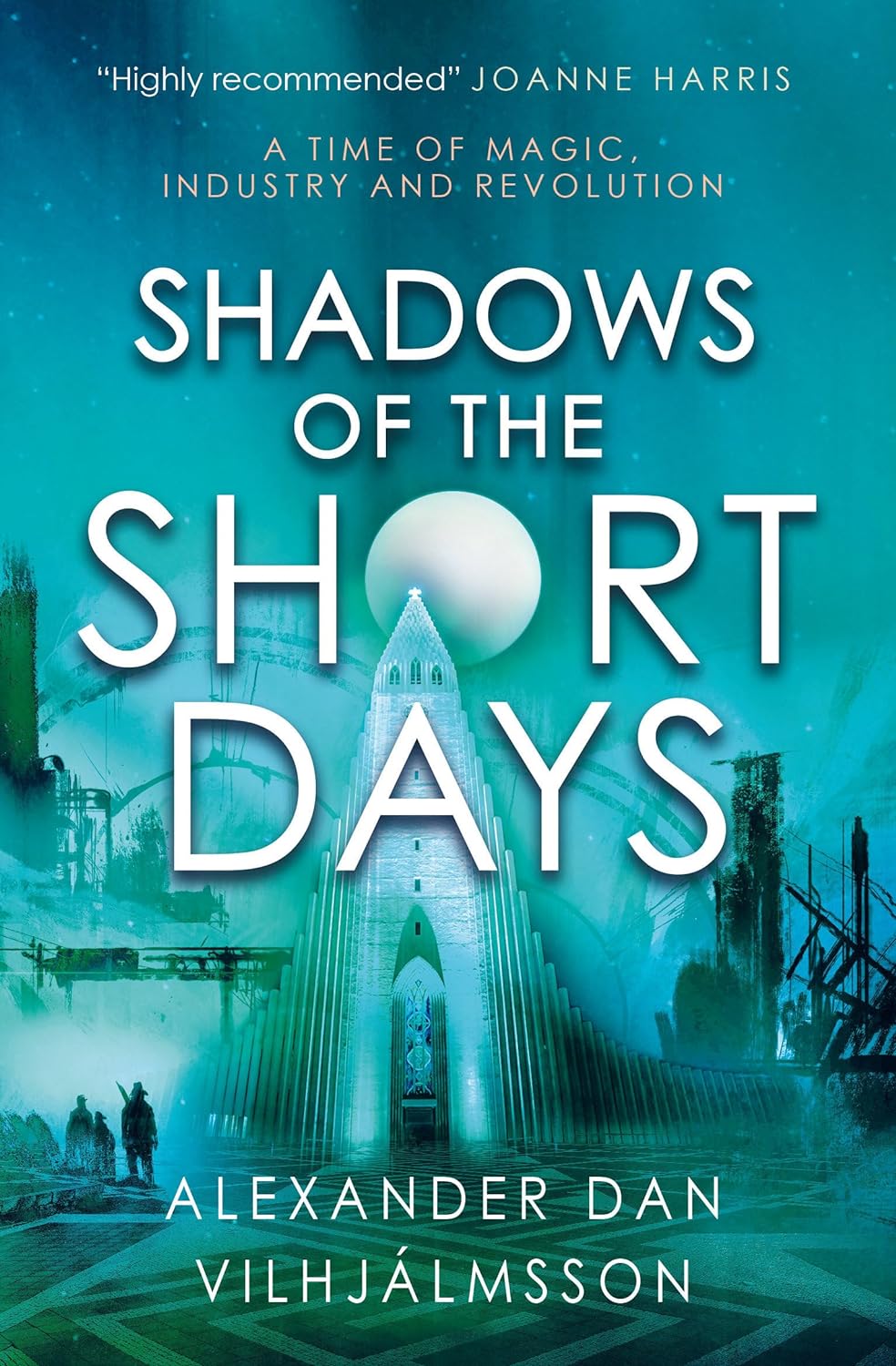
11. Shadows of the Short Days, by Alexander Dan Vilhjálmsson. You’re going to see a little bit of a theme with several of these books, which is spectacular worldbuilding and really cool magic set in places and/or times that I typically don’t see people using for fantasy books. In this case, Shadows of the Short Days is set in Iceland– Reykjavik, specifically– but not remotely an Iceland that matches the real world’s. The book sets you up nicely with a six-page glossary of terms that you cannot pronounce with letters you’ve never seen before, and it is not going to be nice to you with the vocabulary, but the end result– a dark urban fantasy with sorcerers and fascist governments and what looks like a bog-standard “brilliant wizard gets kicked out of school because he’s reckless” subplot that upends itself when the scholarly authorities turn out to have been one hundred percent correct— is just an absolute joy to read. This has a sequel sitting on my TBR shelf right now but I think it’s one of those sequels set in the same world but with unrelated characters; one way or another Shadows stands on its own very well. There are 11 books on this list because it came down to this book and the next one and I couldn’t leave either of them off.

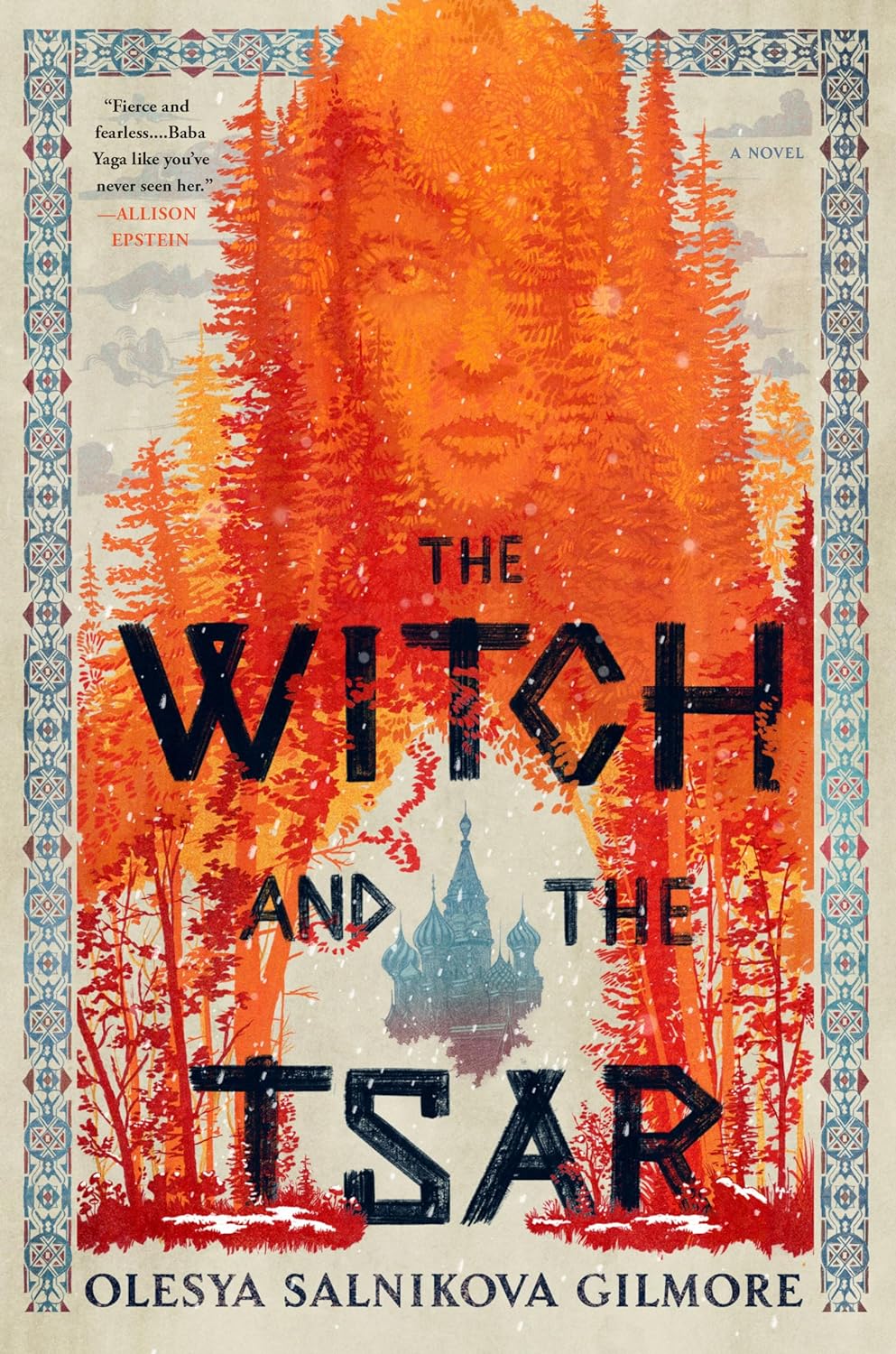
10. The Witch and the Tsar, by Olesya Salnikova Gilmore. Here’s another mini-theme: books that are sort of historical fiction, or at least feel that way, but aren’t. Also, books where I have to double- and triple-check the spelling of the author’s name. In this case, the titular witch is Baba Yaga, and the tsar is Ivan the Terrible. This can’t be historical fiction, because Baba Yaga rather inconveniently isn’t real, but it does its damnedest to feel like it; there’s a lot of Madeline Miller’s DNA in here, if that comparison helps any. At any rate, the book is from Baba Yaga’s perspective, but there’s a lot of real or at least real-feeling Russian history in here, and Russia during the sixteenth century is something I’m happy to read about to begin with, and once you throw in magic and the slow waning of Russian pagan gods in favor of Christianity (and, oh, those pagan gods are real, and they’re pissed) it ends up becoming a really interesting story. It does sort of fill the same niche as Shadows of the Short Days, but again, I just couldn’t convince myself it was okay to leave either of them off of the list.

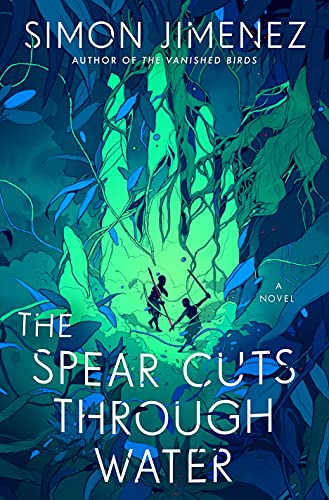
9. The Spear Cuts Through Water, by Simon Jimenez. Did I mention pagan gods? Well, okay, maybe not pagan, because this is a second-world fantasy and Christianity isn’t a thing, but this is probably the weirdest book on the list, and I absolutely mean that as a compliment. I didn’t mean pagan, I meant edible. Sorry about that.

What?

No, seriously, there are multiple places in this book where gods are eaten, and the book veers between first person, third person, and second person narrative, and apparently it’s all a play? Until it’s not? And the story is at least outwardly about a pair of warriors escorting the body of a goddess to her final burial place while alternately dodging and defeating her sons, who are known as the Three Terrors, only I’m pretty sure it’s about a few dozen things the than that. It’s inventive as hell and I loved it, and the interesting thing about it is you twist it a little bit and I’m talking about my least favorite book of the year, because this book makes a lot of choices that most of the time will kill my interest in reading something, but man, this was amazing.

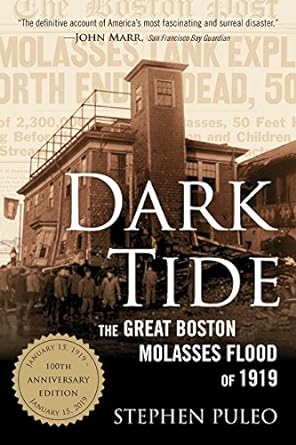
8. Dark Tide: The Great Boston Molasses Flood of 1919, by Stephen Puleo. There’s always a couple of nonfiction pieces on the list, and this is the first of two and a half (you’ll see when I get there) and I think perhaps the most broadly interesting of the three, if not specifically the most interesting to me. I only learned that Boston had had a molasses flood this year, and ordered this book within about ten minutes of making that discovery, because how can you not want to know more about that? It can be very tricky to write a micro-history like this of a very specific event, because if you just write about the event the book is ten pages long, and it’s really important to pick starting and ending points that make sense and stay interesting to the reader. This book does an exceptional job of that, and ends up being a history not only of the flood itself but of capitalism and manufacturing in New England, as well as being a half-decent courtroom drama as well. It also managed to add a brand new way that I really don’t want to die to what was already a long list; there are probably less pleasant ways to die than drowning in a literal tidal wave of molasses, but I could do without the bit where once the flood is over it hardens and everyone has to be literally chipped out of the sea of frozen sugar left behind. No thank you. Read the book, though. 

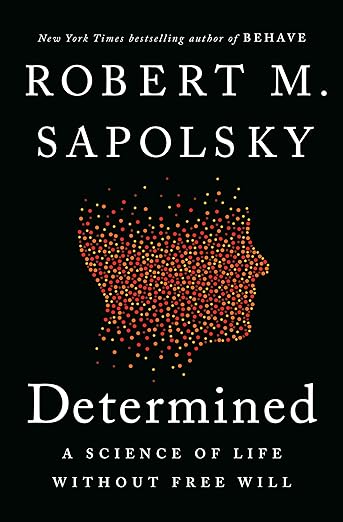
7. Determined: A Science of Life Without Free Will, by Robert M. Sapolsky. I said when I first wrote about this book that I really wanted someone else I knew to read it so that I would. have someone to discuss it with, and thus far, unfortunately, that hasn’t happened yet, although I convinced one friend to pick it up and bought it for my brother as a Christmas present, so hopefully it’ll happen soon enough.

At any rate: Sapolsky is a neuroscientist, or maybe a neurobiologist, or maybe both; I have to admit I’m not a hundred percent clear on the distinction between the two, and he’s convinced there is no such thing as free will. Entertainingly, he’s not happy about this conclusion, and his hangdog insistence that everyone is going to hate him for the arguments he’s making echo through every page of this book, which wouldn’t be half as much fun to read were it not for Sapolsky’s sense of humor. Now, I am no kind of neuro-anything, and have no especially relevant expertise to this book, so all I can say is that I read the first half without ever going “Wait, what about …” at any point and without spotting anything that felt like an obvious hole in his reasoning, and he’s exceptionally talented at making complex scientific concepts feel understandable. The second half of the book, about the societal implications of free will’s nonexistence, are not as airtight but that’s why I want to talk to somebody about the book. Please go read it and get back to me?

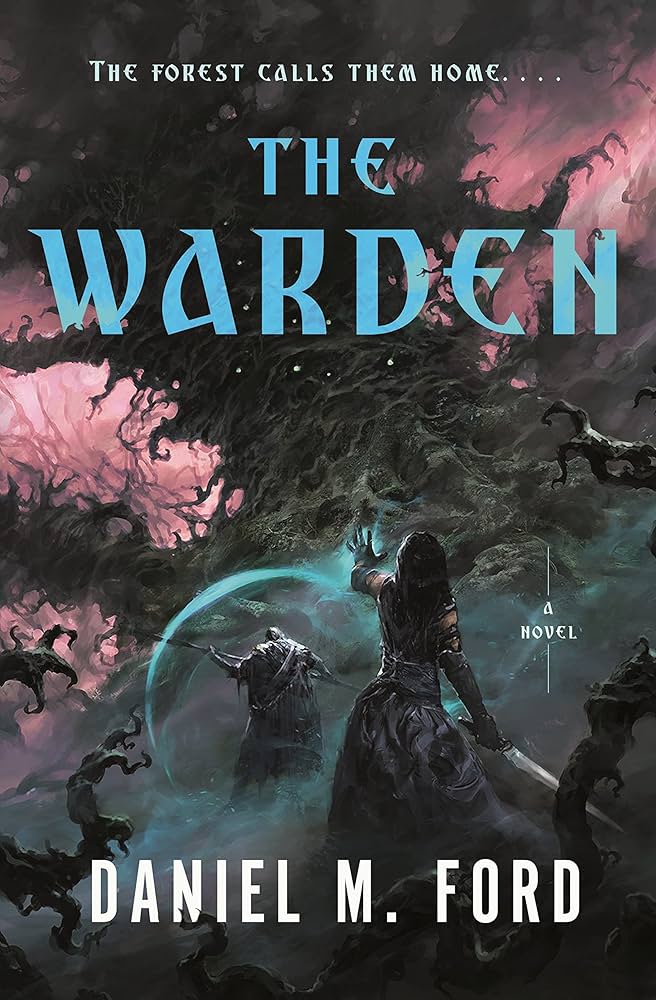
6. The Warden, by Daniel M. Ford. I always feel the need whenever I talk about Dan’s books to mention that I know him in the sort of parasocial “he let me into his Discord and knows my real name but we’ve never met” way that the Internet allows, but it’s also fair to point out that this is the sixth of his books that I’ve read and the first time one of them has shown up on my end-of-year list. 

One way or another, though, The Warden is delightful, one of only two books on this list I’d apply that word to, and it is strongest in its worldbuilding and its characters. Aelis de Lenti, the titular Warden, is an absolute slam dunk of a character and one of the best arrogant assholes I’ve encountered in print in a long time. A Warden is a sort of combination of a cop, a governor, and an ombudsman, and Aelis graduates fresh from her training and gets more or less banished to a little village in the middle of nowhere with a crumbling tower to live in and a very persistent goat as a roommate. The book has a very old-school D&D feel to it without feeling like an adaptation of someone’s campaign, and there are at least two more in the series coming. I will also say that if you’re going to read one book from this list, I actually want you to pick this one up, as Tor kinda fumbled the rollout of the book and I feel like it needs more attention. Another reviewer called it “the most underrated book of the year,” and I really feel like it deserves a look. 

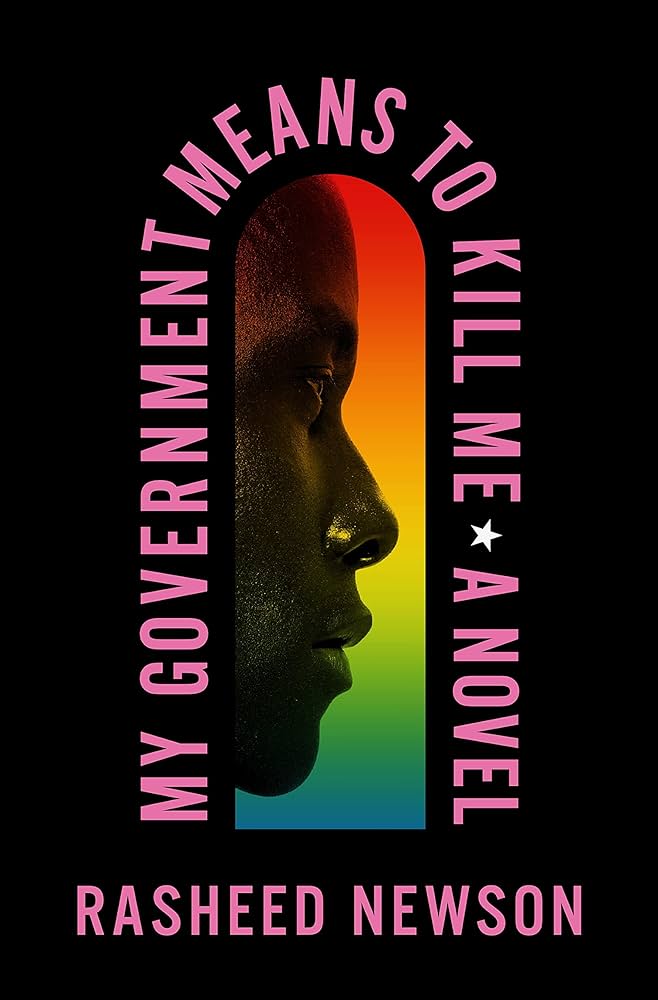
5. My Government Means to Kill Me, by Rasheed Newson. Another book from the “sorta historical fiction, I guess,” genre, Government has the words “a novel” right there on the cover in big letters and I still had to look into the author to confirm that he wasn’t old enough to have lived through the AIDS epidemic in New York in the 1980s. I get into more details in my initial write-up for the book, but this really feels like a personal memoir, and the inclusion of a number of actual historical figures as characters does nothing at all to diminish that feeling. The main character, Trey, moves to New York from Indiana and more or less immerses himself in gay bathhouse culture for the first half of the book, doing what he can to get by from day to day and filling his nights with anonymous sex, and then the epidemic hits and he begins working in an unlicensed AIDS hospice, caring for men who have fallen victim to the disease. It’s a hard book to read on a lot of levels, and there are trigger warnings galore for it, but it feels important in a way that a lot of other books I read this year didn’t, and Newson is an author I’m going to be keeping a close eye on in the future. Honestly, this book is perhaps the best example of “don’t let the rankings matter too much,” as it and basically everything that comes afterward could easily have been #1 on a different day. I’d particularly recommend it if you’re in your mid- to late forties or older and remember at least some of what was going on during that time. 

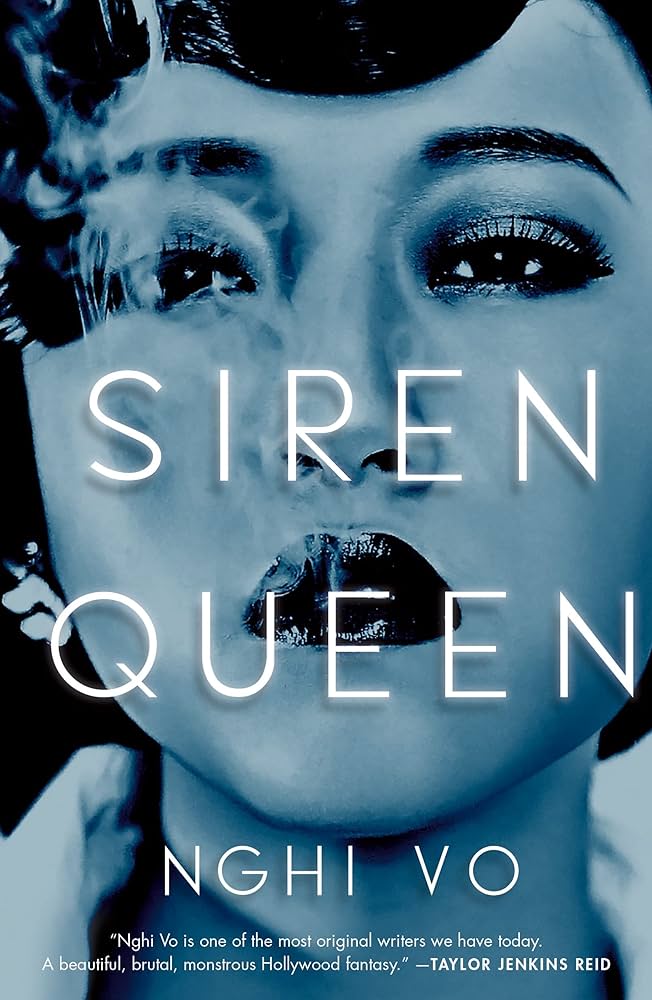
4. Siren Queen, by Nghi Vo. Third of the “Historical fiction, but …” genre, this is the second year in a row that a book by Nghi Vo has made the top 10, and in a lot of ways Siren Queen feels like it could be a loose sequel to The Chosen and the Beautiful. It’s set in the Golden Age of Hollywood, during the transition between silent films and “talkies,” and the main character is a Chinese-American actress named Luli Wei, who is willing to do nearly anything in order to break into acting, and this is a book where selling your soul for fame and fortune is literal. Much like The Chosen and the Beautiful, Siren Queen puts you into a world absolutely pregnant with magic without going to any real lengths to explain any of it– at one point in Wei’s youth a ticket-teller lets her and her sister in to a movie without paying for tickets in exchange for an inch of her hair, and the book gives you nothing to help you figure out why that might be important– and, again, much like TC&TB, the big selling point of this book is Vo’s incredibly atmospheric and immersive writing. She can do a million of these books and I’ll read all of them. I loved it.

This is where it got really, really hard to rank the books, by the way, and if you want to just call all three of them #1, I won’t bet mad about it.

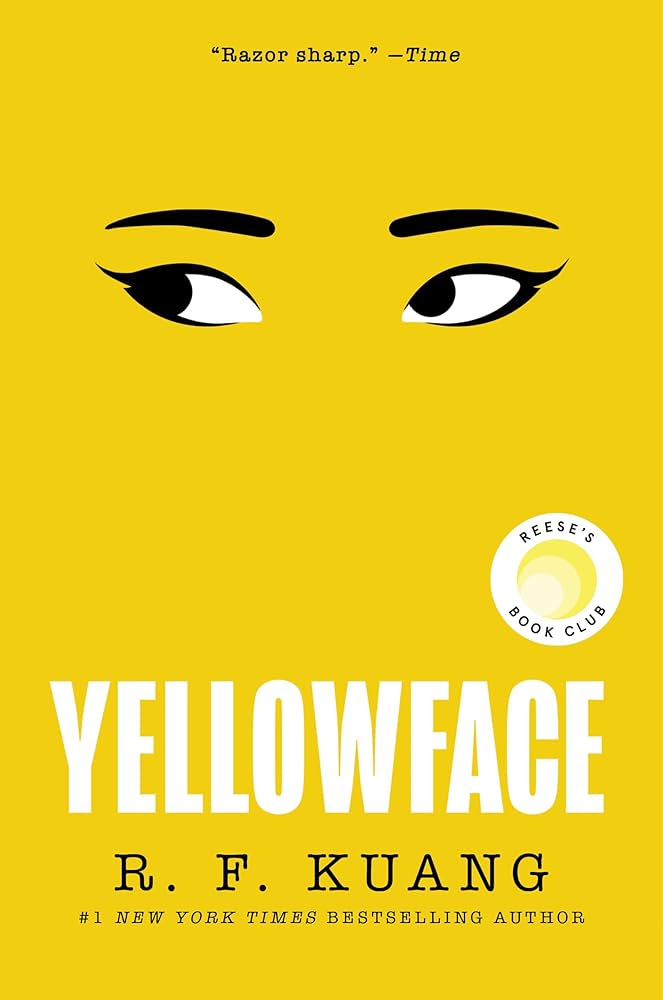
3. Yellowface, by R.F. Kuang. Speaking of selling your soul to the devil, R.F. Kuang has now written five books across three very different genres, all five of which were absolutely fucking spectacular, and she is somehow still only eight years old. Yellowface might be my least favorite of her books and it’s the third-best book I read this year! How the fuck is that even possible? I don’t know. She’s clearly a deity of some sort, and as soon as I finish this post I’m going to start working on getting the cult started.

At any rate, after writing a three-book fantasy reimagining of the war between China and Japan and a work of dark academia set at Oxford, Kuang has now written a brutal work of satire about the publishing industry, set in the modern world, with not a trace of magic or fantasy to be found, because that’s fair and one author should definitely be talented enough to be magnificently fucking good at all three of those things. It’s about a white woman who literally steals a manuscript from a dead friend and publishes it under her own name to immense acclaim and success, and even as someone who doesn’t really have a dog in this particular fight I was wincing at some of the events in this book. It’s so, so good, and Kuang is so, so good, and the notion that she’s still in her 20s and has decades of work still to come actually gives me a little bit of hope for the future. 

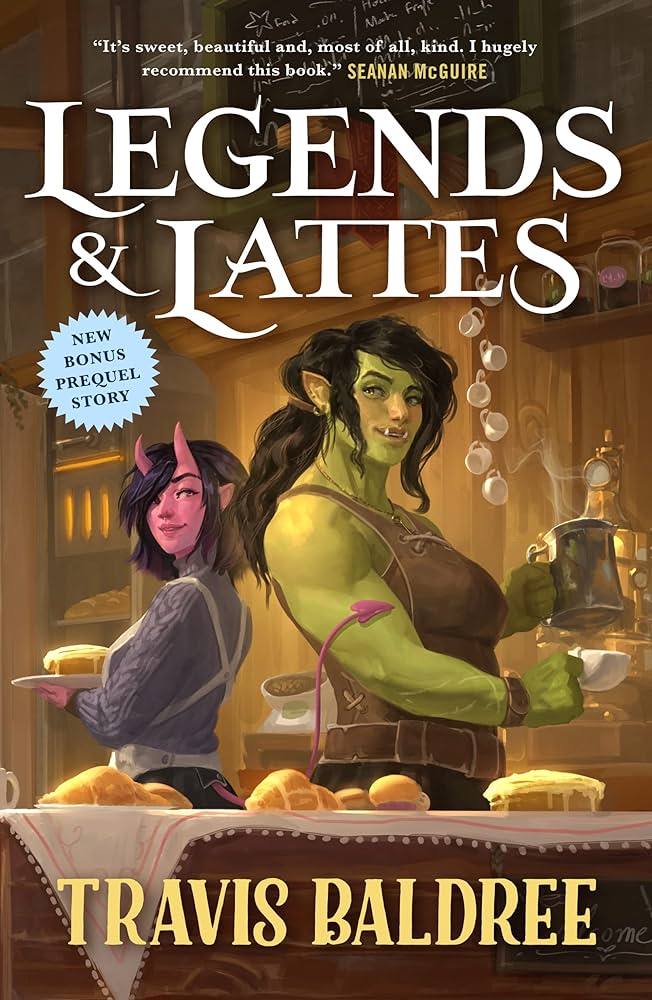
2. Legends & Lattes, by Travis Baldree. Okay, I’ll be honest: on a technical level and even on a lot of non technical levels, Legends & Lattes isn’t necessarily as good as a lot of the other books on this list, particularly after the amount of praise I just directed toward Yellowface. But for a large chunk of the year I was thinking of this as the best book I’ve read all year, or at the very least my favorite book of the year, and the reason for that is how I felt while I was reading this. Remember a thousand words ago when I said that The Warden was one of two books I’d apply the word “delightful” to on this list? This is the other one. This book is delightful. It delights. And if you’re reading that and thinking “Didn’t he say that about TJ Klune at some point?” you’re right, and yes, I mean it as that high level of praise.

Legends & Lattes is about an orc named Viv who puts down her sword and opens up a coffee shop. She hires a succubus as her barista and some sort of nonverbal rat-thing bakes scones and cinnamon rolls for her. And I loved it. The sequel is on my shelf right now and I haven’t read it yet because it’s set before Viv opened the shop and I’m not sure I’m nearly as interested in her as an adventurer. I want more of the coffee shop. I will read about Viv and Tandri making delicious coffee and being quietly and happily in love for a hundred years, and I will love every second of it. I mean, stuff happens, there’s some conflict, it gets resolved, blah blah blah. This book’s strength is in evoking emotion, and it does so magnificently, and I loved it. 

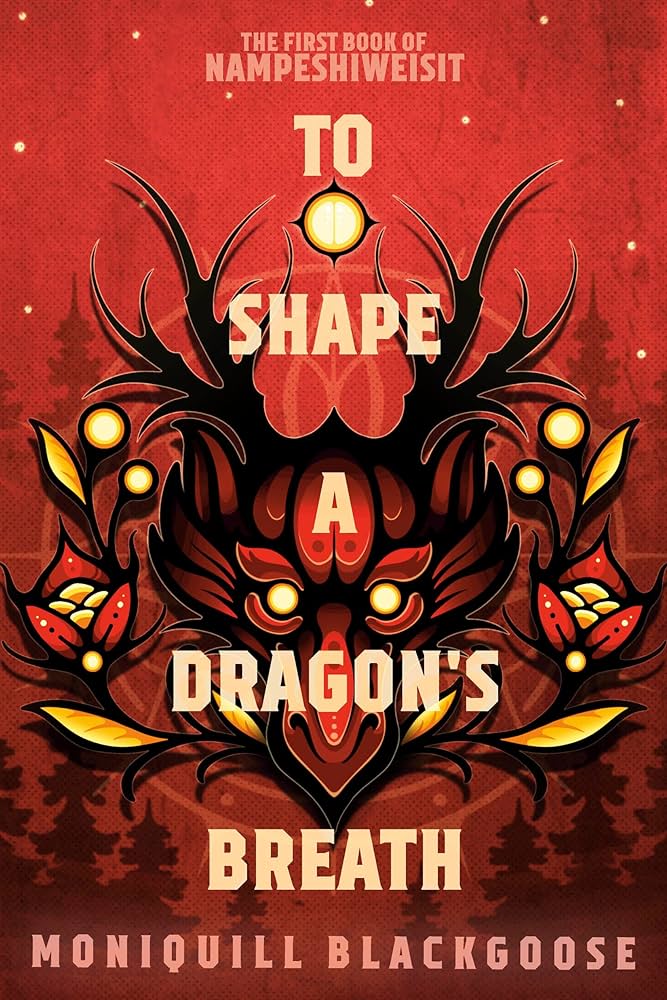
1. To Shape a Dragon’s Breath, by Moniquill Blackgoose. I really wasn’t sure, when I wrote my initial review of this book, if it was going to hold up against the initial high I was on after I read it. I used the phrase “book-drunk” in the review, and I’ll stand by that; this book is intoxicating in the best way and it is the best book I read this year. It also fits into a few of the sub-themes I had going on this list; it feels like historical fiction, as it’s set in Canada during the … 1700s, I’ll say? Colonial era? Only the English are the Ainglish, and while it doesn’t get into a ton of detail that I hope is coming later in the series, because I love nothing more than I love thorough worldbuilding, but it feels like the real world, only the Norsemen took over the world instead of the English, and also there are dragons. And dragon school. The main character is Anequs, a young First Nations girl who more-or-less accidentally bonds herself to a dragon egg early in the book, and then gets swept off to an Ainglish dragon school to legitimize her connection to her dragon in the eyes of the government.

Did you read Fourth Wing and Iron Flame? I did, and I liked them both. In a lot of ways To Shape a Dragon’s Breath is a very similar book to both of those, and if you read and liked them you absolutely need to read this book, as it’s better in nearly every imaginable way, from the characters (I compared Anequs to Rey Skywalker, and now that I’m thinking about it she has a lot of Aelis in her as well) to the nature of the school to the actual writing itself. Oh, and there’s chemistry. No, not between the main characters– actual chemistry, only magic-tinged, and at the end of the book the author manages to connect magic and chemistry and dancing in a way that is absolutely inventive as hell and when does the sequel come out again because I want it right now. 

This was a great year for reading, and To Shape a Dragon’s Breath is the best book I read this year. Go buy it.

HONORABLE MENTION, in NO PARTICULAR ORDER: Ocean’s Echo by Everina Maxwell, Hell Followed With Them by Andrew Joseph White, Gender Queer by Maia Kobabe, Untethered Sky by Fonda Lee, The Daughters of Izdihar by Hadeer Elsbai, In the Lives of Puppets by TJ Klune, Into the Light by Mark Oshiro, the entire The Faithful and the Fallen series by John Gwynne, Cage of Souls by Adrian Tchaikovsky, The Dead Take The A Train by Cassandra Khaw and Richard Kadrey, and Black River Orchard by Chuck Wendig.

WHAT THE FUCK WAS THAT AWARD: Hospital, by Han Song. 

#REVIEW: The Last Days of the Dinosaurs: An Asteroid, Extinction, and the Beginning of Our World, by Riley Black

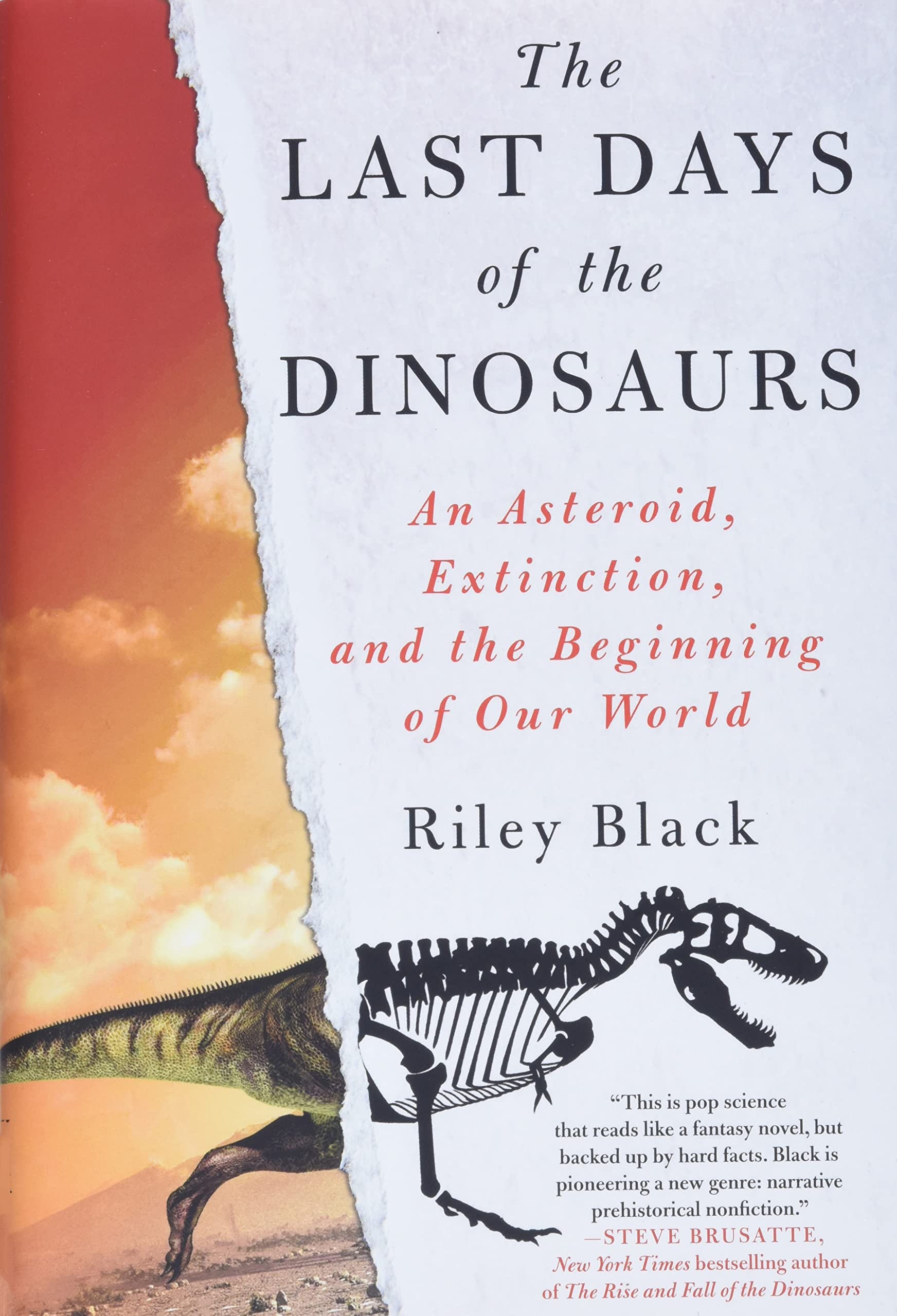
I say this a lot, but it’s as true now as it’s ever been: I don’t need to review this book, because you already know if you want to read it or not, so really, my job here is just to make sure that you know it exists. And did you know that Riley Black’s The Last Days of the Dinosaurs existed? Yes? Then you have it already. No? Go buy it. I was about to say “It’s about dinosaurs!,” which actually isn’t quite true, because the book begins on what Black quite reasonably refers to as the worst day in the history of the entire world: the day that a 6-mile-wide object, possibly an asteroid, possibly a fragment of a much larger asteroid, and possibly even a comet, slammed into the Chicxulub region of what is now the Yucatán and basically killed every living thing on Earth. Including all the dinosaurs, except for the ones lucky enough to be living underground or underwater when the object hit. She goes into some pretty intense detail about what happened in the immediate aftermath and then skips ahead a bit in each subsequent chapter– the next day, the next year, 100 years later, and so on. “That sounds fascinating!,” you think, if you’re the type of person who would be reading this blog in the first place.

Yup.

I like the description on the cover, there, that refers to the book as “narrative prehistorical nonfiction.” This is definitely a work of pop science; there are notes, but they’re confined to the back; Black is not citing sources or arguing with specific paleontologists during the text, because it’s not that type of book, but neither is she engaging in wanton speculation. Where things are fuzzy, she says so, but she talks about the different changes on Earth after the explosion through narrative, fictionalized stories about the various creatures that would have been alive (or could have been alive, at least) during whatever time period she’s discussing. In other words, we might not have uncovered the fossils of the specific Triceratops with bone cancer in the Hell Creek formation in what is now Montana that she discusses in the first chapter, but there were definitely Triceratops there and we’ve uncovered evidence of some that appear to have had cancer. Do we know for sure that this particular turtle might have been in this river at that time, staying alive partially by breathing through its cloaca? Nope! But they can do it now, so it’s reasonable to project that ability backwards given other trends in the evolution of prehistoric turtles.

You get the idea. This book tells stories; the stories are not specifically true, necessarily, but they are carefully fictionalized, and there’s forty pages of extra “stuff” in the back past the official end of the book if you want to read in more detail. Which I do, of course. What you need to be able to pull off a book like this is a fine grasp of the detail, a good journalist’s instinct for getting your story straight, and a novelist’s flair for storytelling, which is a rare combination, but one Black (an amateur paleontologist but not, I believe, a Ph.D) has in spades. This is a great read for anyone who thinks deep history and dinosaurs are cool, and if you’re not one of those people, you’re not here anyway, so everybody else go buy it.

(Oh, and also: I found out about it on Twitter, and bought it on the spot, so those of you who don’t think Twitter can sell books are doo-doo heads.)