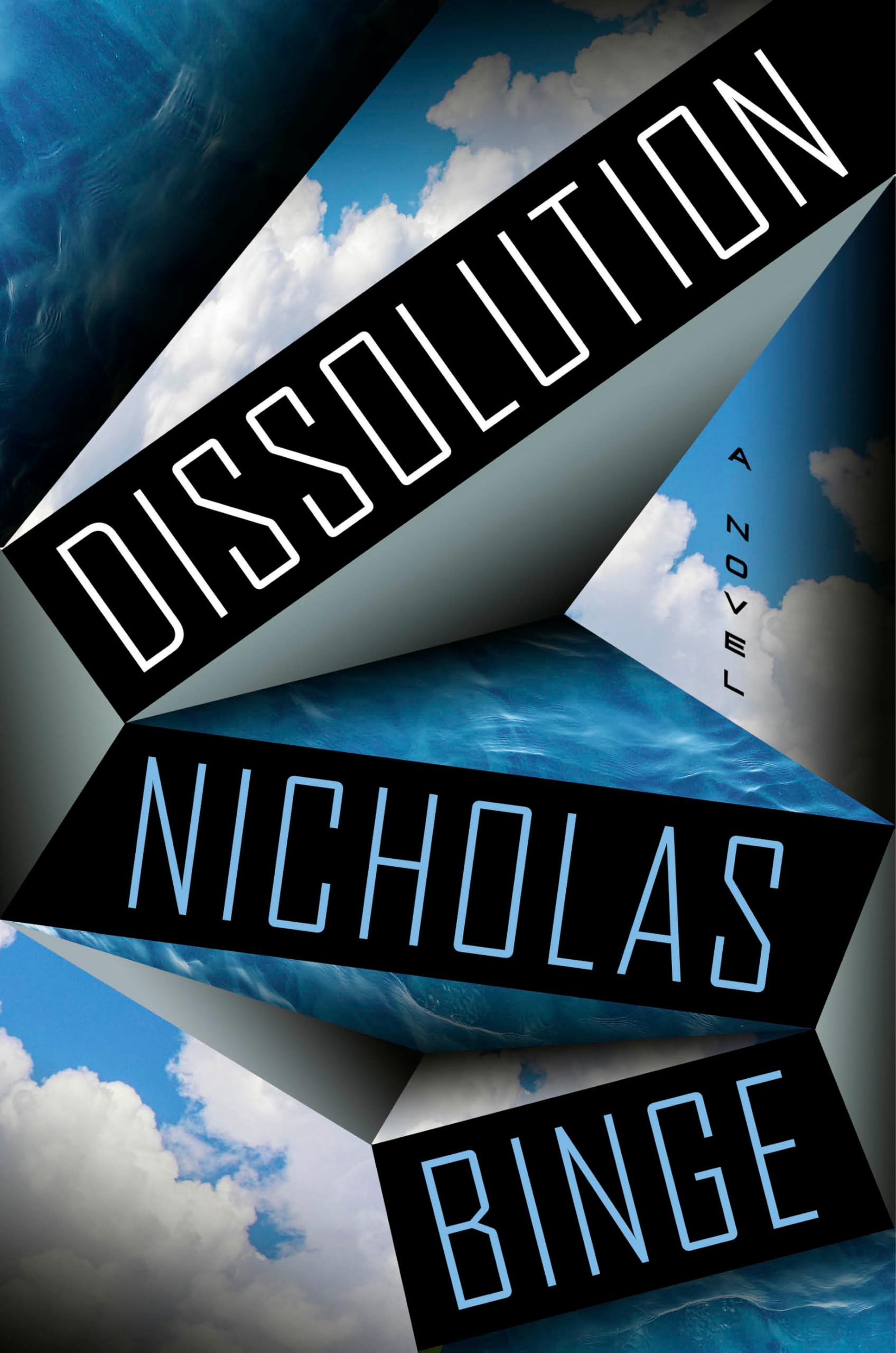
Are you familiar with Aardvark Book Club, by any chance? For $17.99 a month, assuming you’re in the US, you’ll have a choice of one of six different new (and sometimes unreleased) books across a bunch of genres. The books will be hardcover and are generally of solid quality, so you’re already getting a decent deal, because you can’t sneeze at a hardcover for $18 anymore. Then you can order up to two more from the current month or any previous month for $10 each. I’ve been a member since January, and I have yet to have a month where I didn’t order three books. Most of the time they’ve been from new-to-me authors and there have definitely been more hits than there have misses. I ordered Nicholas Binge’s Dissolution in June basically just because I could.
And … damn.
I’m going to let you know now: this is one of those “trust me” books, because it’s all about the mysteries and twists and turns, and I ain’t spoilin’ nothing. The main character is Maggie Webb, an 84-year-old woman whose husband of fifty years, Stanley, has been disappearing to Alzheimer’s over the past several years. Only one day a Mysterious Stranger (TM, pat. pending) shows up at her door, and, uh, it turns out that maybe it’s not Alzheimer’s. Someone is actively and deliberately removing Stanley’s memories.
And, uh, that person might be Stanley.
Like, you already know, right? You know if you want to read this or not, and if you’re somehow still on the ledge, maybe if I told you that this book was a bizarre combination of the modern-day parts of Assassin’s Creed, the “insane professor” bits of The Poppy War, the movie Memento, and a self-help book about the memory palace, would that help?
Yeah. I picked this up before bed last night, it kept me up until midnight, and I was reading again by 8:30 this morning. You should check it out.
One good thing about being sick is that in between naps, coughing fits, randomly snotting all over my pillow and light hallucinations, I can get a fair amount of reading done. I was really hoping not to lose two more days this week but this is legitimately the sickest I’ve been since the last time I had COVID and right now I’m just hoping to be functional enough to go in on Monday.
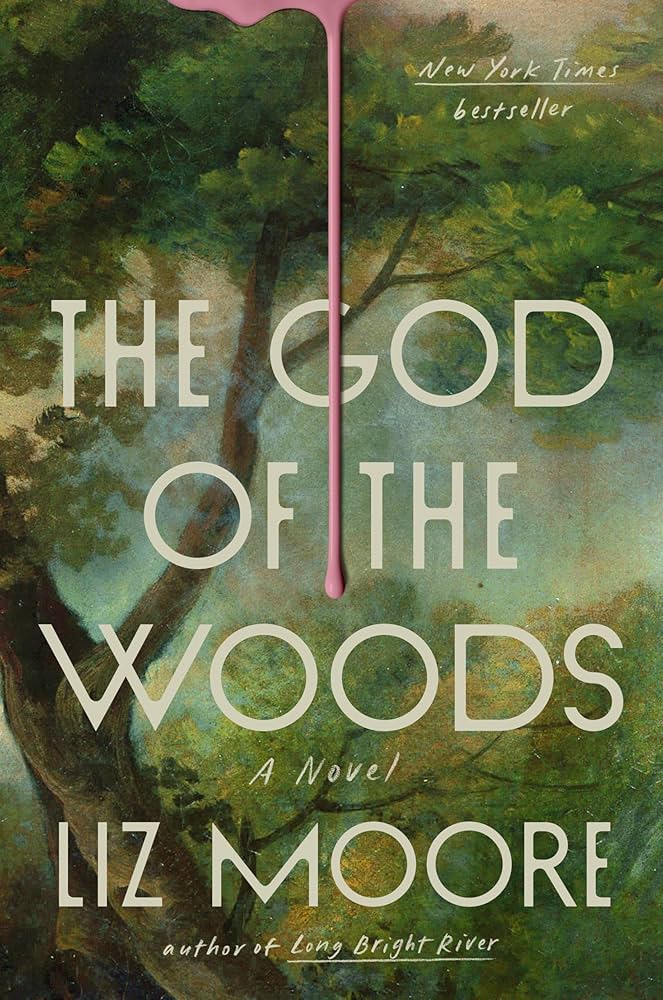
Anyway, The God of the Woods is real real good, a missing persons story worthy of Tana French at her best, and you ought to read it. The story bounces around from the 1950s to the end of 1975, set mostly at a summer camp in the Adirondacks, a camp run by a multigenerational wealthy family that appears to own or employ most of the town it’s set in. The twist here is that while Barbara Van Laar has gone missing in 1975, her brother Peter Van Laar (the fourth, no less) also disappeared at the same camp fourteen years prior. The book bounces around several different timelines, giving a host of characters both inside and outside the family and inside and outside the investigation time as POV characters, and does a great job of both juggling multiple mysteries and character arcs and tying them all up in a satisfying fashion at the end. I have said this before; I am not the world’s most careful reader, unfortunately, and I’m further impaired by this bastard of a head cold I’ve got going on right now, so the fact that I was able to keep up with a mystery novel that was jumping around between three different timelines and half a dozen characters without completely losing track of what was going on is a testament to the author’s skill. I wasn’t aware of Liz Moore before this, and buying the book was a bit of a dice roll (to be honest, the title had me thinking there were going to be some spec fic/ horror elements, and … I admit, having finished the book, I’m not sure I get the title) but it’s one I’m glad I made and I’ll be checking out more books by her in the future.
Short and sweet, I know, but as I said, I’m kind of dying here, so just trust me on this one. You’ll like it.
A touch of housekeeping first– I have parent/teacher conferences after school tomorrow and Tuesday, and am expecting to get home a shattered wreck of a human being both nights, so I’m going to do my damnedest to get three book reviews written today so that I don’t have to get home and scribble something down after 13-hour days at work. In accordance with prophecy, this means that I absolutely will get home and scribble something down after both of those 13-hour days, but still.
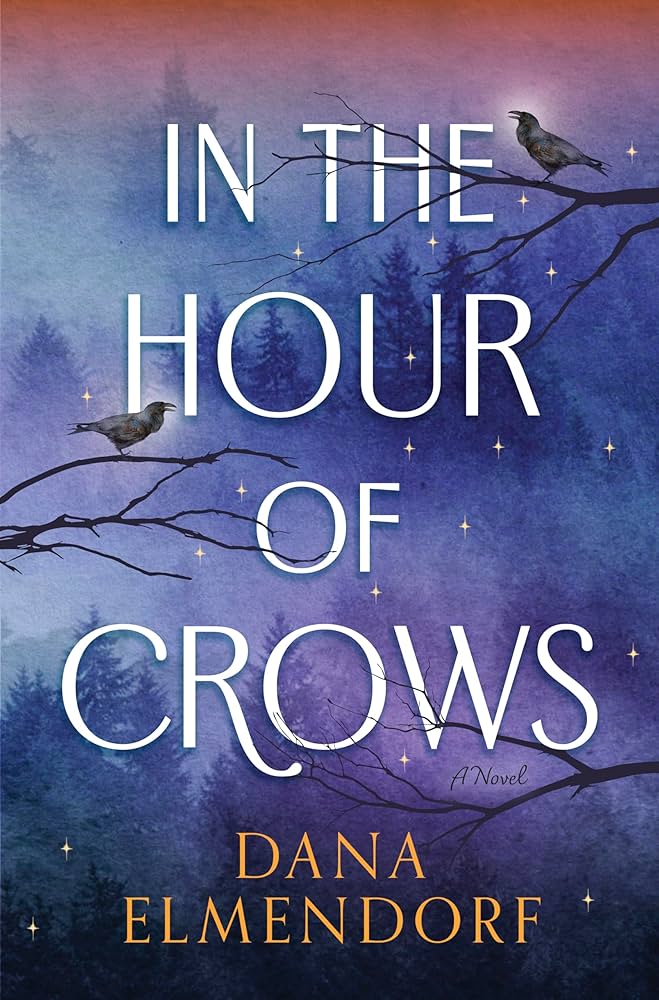
Dana Elmendorf’s In the Hour of Crows is one of those books where I heard about the premise and then suddenly had the book; I don’t recall spending money or making an active decision that I needed to own it, but I heard “Appalachian gothic horror about a young woman who can raise the dead” and then it was on my unread shelf somehow. It’s a quick read at only 288 pages, and I started it before bed one night and finished it the next morning. The main character, Weatherly, has the ability to raise the dead by “talking the death out of them,” which I can imagine being the premise for something utterly ridiculous and instead ended up being this cool Christian/aboriginal syncretistic thing where she starts by whispering secret Bible verses into a dead or dying person’s palm and ends with her absorbing their deaths and literally spitting the substance of their deaths out into a nearby vessel, one that can never have contained alcohol before she uses it. She can only do this once for any person; if she tries it again, it won’t work, and her powers must be deliberately passed on to someone else before she dies.
Like, right away, yup, I’m in, and let me remind everyone again that part of the reason I like most of the books I read is that I have years of practice in determining what I like to read and what I don’t. And I was utterly on-target on this one; between the setting, the approach to magic, and the characters (Weatherly’s grandmother, who despises her, is a standout) I ended up really enjoying this one. The book actually ends up being a murder mystery, as Weatherly attempts to save someone and fails, leading everyone to assume that she did it on purpose, and her cousin Adaire’s death in a car accident ends up being wrapped up in that death. Weatherly herself is a bit of a hellion, or at least recovering from her hellion years– she’s in her early/mid twenties in the “now” of the book, but it jumps around in time quite a bit– and her utter lack of concern for what the law might want in any particular set of circumstances is occasionally kind of hilarious. Pretty much every move she makes makes her look more guilty of murder, and she … just does shit anyway, because she wants to. She’s great.
The book also features the single most disrespectful and petty funeral service I have ever seen in print; it’s probably only a couple of pages in total, but it’s the thing I’ll remember the most about this book after the details have faded on the rest of it.
I think this is Elmendorf’s debut, and I kind of hope she stays with this wider setting and style of book in the future, as I’d love to read more of it. More books about Weatherly probably aren’t super likely, but if she wants to write an actual sequel of sorts, I’d love to see something about the grandmother. Definitely give it a look.
I was gonna go see Deadpool & Wolverine today and life intervened, so let’s review a whole bunch of books.
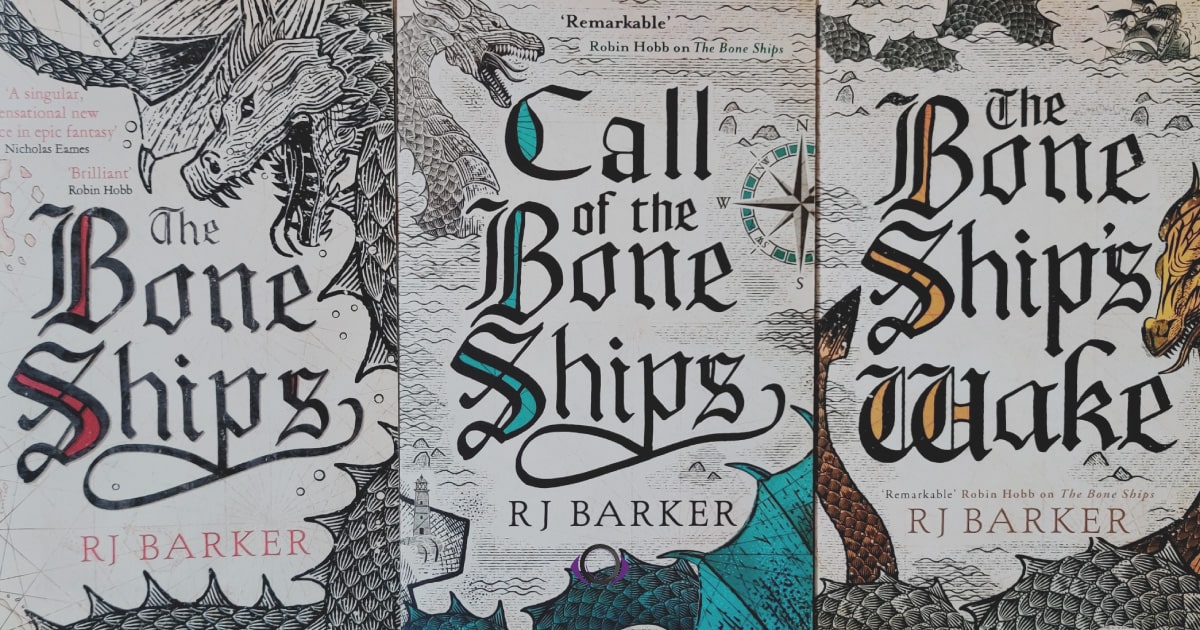
The Tide Child Trilogy, by RJ Barker: Excellent, although it took me fifty pages or so of the first book to get used to RJ Barker’s writing style. Nautical fantasy is a sorely underexploited subgenre, and damn near the entire trilogy takes place on a boat. Now, it’s a boat made from dragon bone, and it’s sailed with the help of a walking bird-thing who can magically create wind, but outside of that I can’t imagine anyone who enjoys historical fiction would want to pass on this, and the fantasy elements are not as extensive as a lot of the other books I have read this year. Combine that with some lovely, subtle world building and a feminist perspective that is omnipresent and will still fly over the heads of some readers and you have something I really enjoyed.
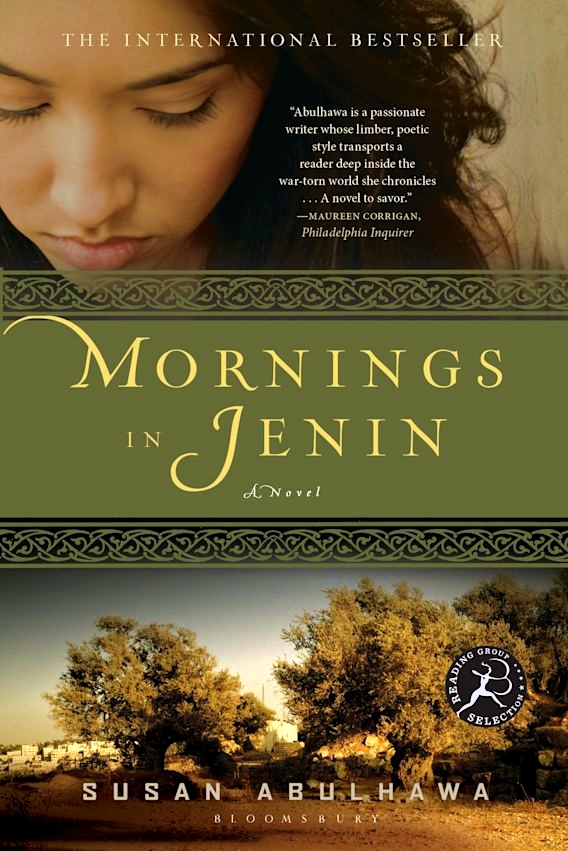
Mornings in Jenin, by Susan Abulhawa. This is the second of Abulhawa’s books I’ve read this year and is actually her debut novel, but in all honesty it’s superior to Against the Loveless World in nearly every respect, and Against the Loveless World is a book I enjoyed quite a lot. Abulhawa is a Palestinian author and this book begins with the creation of Israel and follows a small handful of characters up to, more or less, present day (the book came out in 2006, and ends … 2002-ish, maybe? So close enough.)
All of the trigger warnings, and if you’re remotely human this book will leave you incandescent with rage at several different points. I need to do a whole bunch of research and then read it again. It might be the most important book I’ve read this year; everyone needs to read this one.
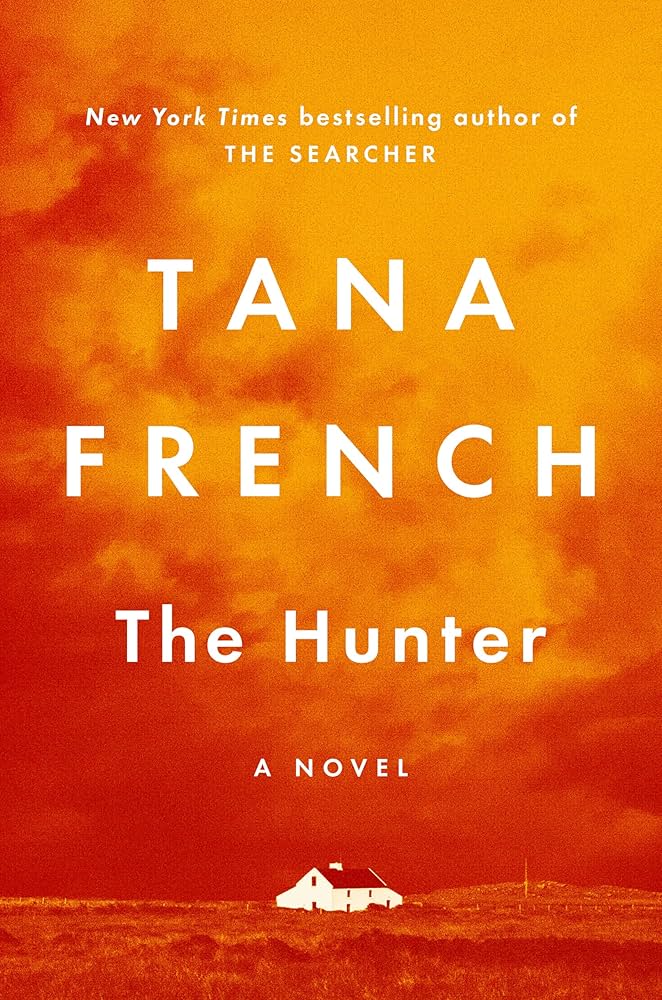
The Hunter, by Tana French, is the second book she’s written about Cal Hooper, the main character of her previous novel The Searcher. I don’t have a lot to say about it that I didn’t have to say about the first book she wrote about this guy; Cal is an American ex-cop who moves to Ireland in search of a slower, calmer life and ends up in the tiny (fictional) town of Ardnakelty, where he quickly forms a bond with Trey, a local teenager with some trauma in her background. In the first book, Cal got pulled into the disappearance of Trey’s brother, and in this book, her father reappears for the first time in years and brings all sorts of pain with him. This book is less about the central mystery (it’s technically a murder mystery, but the murder doesn’t take place until about the 60% mark) and more about the relationship between Cal and Trey and what it’s like to be an outsider in a small town, and I really feel like this and The Searcher are both triumphs. I’d love to see more about these two.
the book of elsewhere, by Keanu Reeves and China Miéville. I was super excited about this one, so I’m sad to say that this is quite easily the single most disappointing reading experience I’ve had this year. I don’t have any idea how the co-writing process worked between Reeves and Miéville; Reeves also “co-writes” the comic book series that this book builds upon, but I can say that the only thing in this book that felt like Miéville was the vocabulary. Had those two names not been on the cover, I’d not have made it past the prologue, which is so choppy and poorly-written that I can barely believe it made it to publication. I made it through about 120 of the book’s 340 or so pages before deciding I had other things to do, and I don’t see myself picking this back up. You should avoid this unless you’re a huge fan of BRZRKR, the comic it’s based on … and I don’t really think BRZRKR has any “huge fans.” Definitely stay away if you are a fan of Miéville; just pretend this book never happened.
I first encountered this book through Twitter, and I’ve completely lost track of how; I’m not even sure if it was specifically recommended to me or whether I just happened across someone being enthusiastic about it. At any rate, I’m mad at everyone else who has read it. Why? Because all of you should have recommended this book to me– yes, to me specifically, whether you know who the hell I am or not– because I’m pretty sure this book was written for me and me alone.
This is another “tell you the premise, and then I’m done” sort of book. The Affair of the Mysterious Letter is a Sherlock Holmes pastiche, starring a bisexual, amoral sorceress named Shaharazad Haas in the Holmes role and a transexual gay man(*) named John Wyndham in the role of Watson. The book starts off as a clear homage to A Study in Scarlet, as Wyndham arrives in the city of Khelathra-Ven as a wounded veteran of a war in another dimension, in need of a job and housing, and ends up answering an ad for a place at 221B Martyrs Lane, where he meets Haas.
Who immediately attempts to shoot him.
You may have noticed the word sorceress. Wyndham is very Victorian British in his comportment and his morals, and Alexis Hall’s ability to mimic the writing style of the Holmes stories is flat-out uncanny, but the rest of the book is pure eldritch horror, where I want to compare it to Lovecraft but the simple fact is that I think Alexis Hall out-Lovecrafts Lovecraft. He does forbidden knowledge Man is not meant to taste very, very well, and Haas might be the single most memorable practitioner of magic I’ve ever encountered. They end up in Carcosa for a while. There are byakhees. And vampires. And Wyndham fights a shark. Their landlady is an intelligent swarm of bees inhabiting a corpse. Well, two, actually, as one rots away enough to become useless over the course of the book and she needs to acquire another.
It’s absolutely delicious.
So, yeah, while it goes without saying that this book gets one of my highest recommendations; I will admit I have some slight criticisms of the overall structure of the story. Affair starts off with five suspects for a blackmail and then has basically five sub-quests where people are progressively ruled out; it sounds weird to both say that I loved a book and that it could have been a bit shorter, but any time you build in that structure where there are Five Things to Be Accomplished, you end up with a book that sort of has the feel of a video game and by the end of it the reader kind of wants to get to the point. I combatted this by reading the book somewhat more slowly than I might have expected from something I was enjoying as much as I was; I actually dragged this one out a bit rather than devouring it at a sitting, which is my normal move.
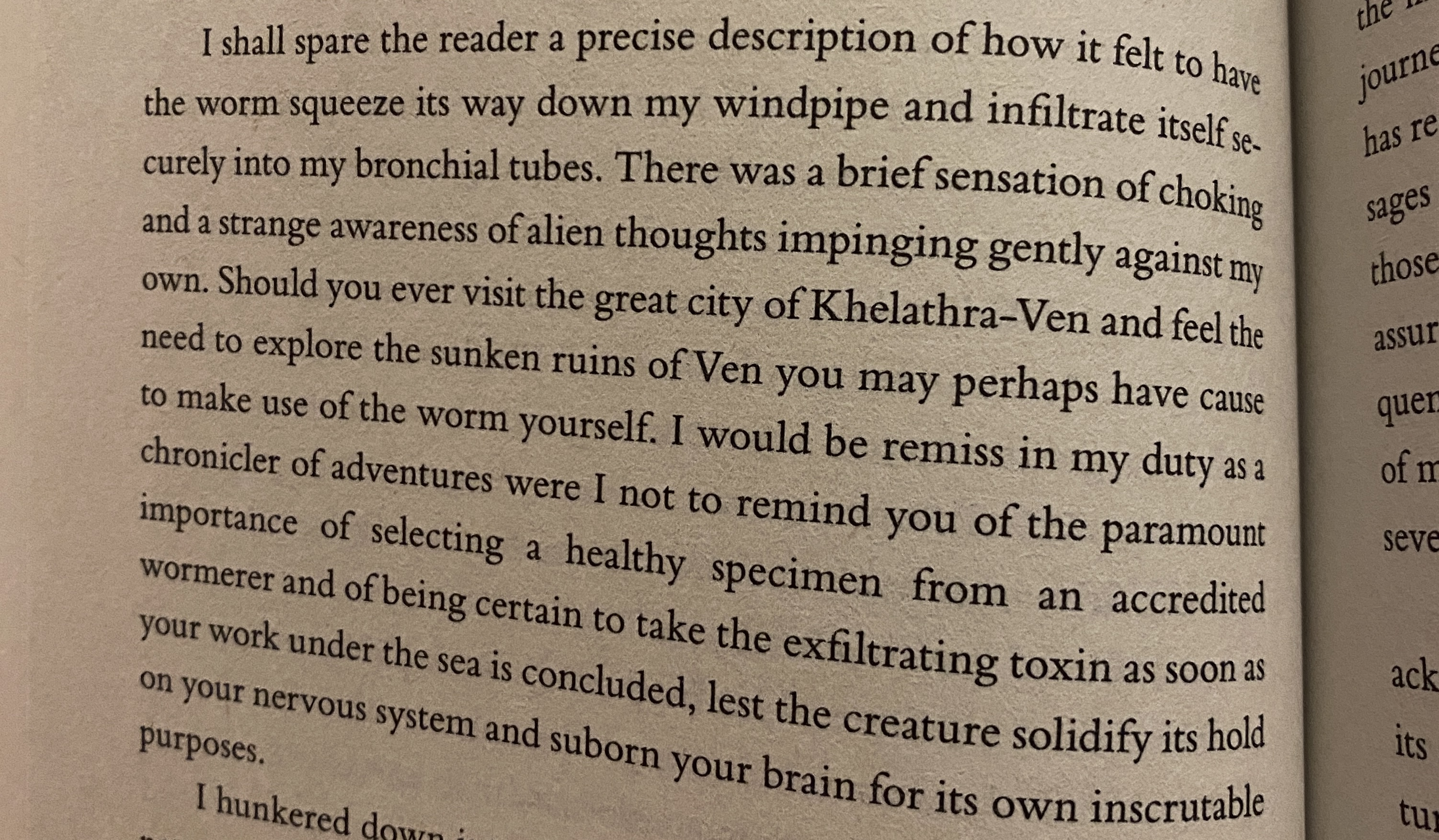
But … God, you need to read this. I think right now it’s planned as a one-shot, which is a damned shame if it’s true, because (much like Watson) Wyndham is writing this story from the perspective of twenty years in the future, when Haas is actually dead, and there are tons of references to other mysteries and other adventures. I want to read these stories; I have got to have more of Shaharazad Haas in my life, because she is utterly fascinating as a character. Another thing I haven’t mentioned is the humor; there’s more than a little of Douglas Adams’ DNA in this book. In fact, I took this picture and sent it to a friend of mine who I was pitching the book for, and I might as well include it here as a quote:
Wyndham’s unwillingness to swear or repeat profanity in the text of the story, and his squeamishness around women, and his frequent asides to his editor are all fantastically dry humor, and I laughed out loud several times while reading the book, once loud enough that my son emerged from another room to ask me what was so funny. The boy notices nothing, so this is quite an achievement.
Anyway, yeah, you want this one. Go pick it up.
(*) I actually need to have a conversation with someone about the trans angle, because, I admit, I completely missed it on my first read, and upon seeing some references to it on Goodreads went back and reread the first chapter, where a single sentence refers to Wyndham “becoming himself for the first time,” or something very similar. I don’t think I missed a ton of references, and that sentence strikes me as something that’s going to have immediate salience for a trans reader that it might not for a cisgendered one. Then again, I read Gideon the Ninth twice and Harrowhark the Ninth once before realizing that Harrowhark was Harrowhark and not Harrowhawk, so occasionally I am absolutely a blinkered idiot.
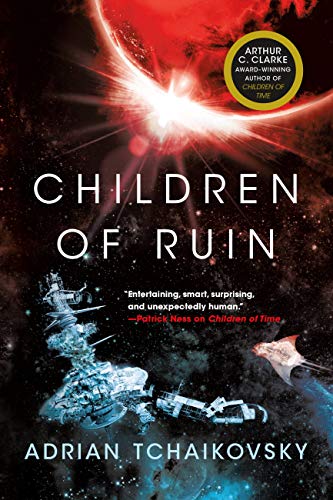
I never got around to writing a post yesterday, at least partially because I spent damn near the entire day with a book in my hand. First off: Adrian Tchaikovsky’s Children of Ruin, which I started a few days ago and finished the last 200 pages or so of yesterday. I’ve already reviewed the first book in this series (I don’t know if there are more planned; they are stand-alone enough that there doesn’t have to be, but sci-fi and fantasy writers tend to think in terms of trilogies or longer, so…) and Children of Ruin is every bit as strong of an effort as the first book. I read a lot, y’all know that, as this year the blog has really morphed into a book review site, and if there is another author out there who writes genuinely alien cultures better than Adrian Tchaikovsky does I’m going to need you to let me know who they are right now. As it is, the guy’s got another book on my shelf and a ten-book series that I’ve never read and another trilogy, so I’ve got enough books by him out there to last me a while, and believe me, I’ll be getting to them. This book adds two different alien species, one an octopus-based intelligence and the other … well, there’s another, and I feel like discussing it is a spoiler, to the human and spider cultures from Children of Time, and it’s amazing how differently each of them feel. He’s got a great knack for the little stuff, and I’m glad that I sort of cheat with my end-of-year list and put sequels and main books on the same spot on the list, because otherwise that job would be even harder than it’s going to be already.
(An example: at one point one of the octopodes makes reference to 6/8 as a fraction. At first the math teacher in me was mildly annoyed by the fact that he didn’t reduce the fraction, and then it hit me– the damn things have eight legs, so of course they use base-8 mathematics. He could have just used percentages and left this out, but he didn’t. That kind of thing.)
Anyway, if for some reason you haven’t read this series yet, get on it.
Meanwhile, don’t ever tell me that Twitter doesn’t sell books. I don’t know off the top of my head how long Daniel M. Ford and I have been mutual follows, but it’s been a while, and for some reason one of his tweets caught me at the exact right moment a few weeks ago and I ordered one of his books. Now, this is always a tricky thing for authors, and I think most of us have learned that even if we find out that a fellow writer has ordered one of our books, you never, ever ask if they’ve read it yet or what they thought. I absolutely hate it when I don’t like the books of writers I know, particularly indie writers (Dan writes for an independent publishing house, but I don’t know that he’d style himself an “indie author,” at least not the same way I do) and there’s always some trepidation whenever I start to read the book because of that, especially since I record everything I read on Goodreads and people tend to notice. Another issue in this case was that the book is a detective/procedural mystery, a genre I dabble in from time to time but am not generally a huge fan of.
I, uh, read the book in a single sitting, starting it around 8:30 last night and finishing it just after midnight, and I’ve already preordered the sequel and ordered a copy of the first book of his fantasy Paladin trilogy. So, yeah, I guess I liked it. The real victory here is the main character himself, Jack Dixon, who lives on a houseboat and thinks apples and protein-infused peanut butter measured precisely by the tablespoon counts as a meal, and yet who somehow felt like a real person who I knew within a chapter or two of the start of the book. I am typically more story-focused than character-focused as a reader, but Jack’s persona is compelling and clearly-drawn enough that I want to know more about him. Ford’s lean-and-clean, no-frills prose is perfectly suited to writing a detective novel, too; it’ll be really interesting to see how he handles a fantasy novel, which tend a bit more toward the flowery. My only gripe is that the ending felt a bit abrupt to me– the actual mystery is solved around the 80% mark and the end of the book is more like a coda and setup for the next book than anything else, but as there is another book coming it’s not as big of a weakness as it might be as a pure standalone.
I spent a lot of time reading this weekend, which is the best way to spend a weekend; I managed to read two complete books cover to cover basically before even getting into the shower yesterday, and knocked out another one this afternoon. I know I keep saying it, but it’s nice not working weekends. I didn’t even put my watch on today! That’s how awesome this weekend has been.
At any rate, seeing as how I really enjoyed all four of the books I’ve finished, but I don’t want to write four full book review posts, y’all get some quick reviewlets instead of a solid week of book posts.
We’ll start with Into the Drowning Deep,by Mira Grant, who is also Seanan McGuire. I’m a big goddamn fan; I know I’ve talked about her under both pen names around here repeatedly, so I’ll cut to the chase on this one: it’s her best book. ITDD is kind of a book designed to push my buttons in a lot of ways; all of the characters are scientists (and damn near all of them are women scientists, which is even better) and the book is a great mix of research-intensive oceanographic geekery, cryptid speculation, and gut-wrenching horror. It takes a lot for a book to scare me, to the point where I can only recall praising one book in the past for how scary it is. This is right up there. It’s also insanely movie-friendly. I want to see this movie on the big screen so bad I can taste it, and some Hollywood bastard needs to shovel a ton of money at Seanan and get this on screen now.
My love for Tor.com’s novella line continues to grow with every book they release. I have damn near an entire shelf of them by now, and I’m at the point where I’m putting them on my Amazon wish list the second I find out about them regardless of who the author is or the subject matter. That said, P. Djèli Clark’s The Black God’s Drums is a perfect exemplar of what I love about the line: an author I’ve never heard of (I have found so many good authors through these novellas!) writing an alt-history featuring characters that are generally underrepresented in genre literature. In this case, the book is set in an antebellum, independent New Orleans, in an America that is split into at least three or four different factions, with airships and steampunk and, oh, right, orisha magic. The main character, a young girl named Creeper, is possessed by Oya, an African god of wind and storms, and occasionally is able to manifest magic powers.
Oh, and there are nuns who are basically spymasters, which kinda rocks.
I have actually already read most of Walter Mosley’s Easy Rawlins mysteries, but it’s been a really long time and I’ve been slowly working my way through his books over the course of this year. This is the third one I’ve read and the second of the Rawlins mysteries. It’s weird; the last time I read a lot of Mosley was in college, and for years I’ve been telling people that he was an author where I was really fond of his sentences and paragraphs but that I didn’t necessarily love his books.
College Luther was kinda dumb, I guess. Or he was half right, at least, since Mosley remains a brilliant craftsman as far as the beauty of his writing goes, but I really wasn’t giving his skills with plot and story enough credit. I’ve been enjoying these books much more on the second pass-through than I did when I first read them, and even back then I recognized how good the guy was. There will be more Mosley to come this year, that’s for sure.
I encountered Ismail Kadare’s The Traitor’s Niche through Twitter, and specifically through my friend Anne Leonard, who Tweeted out a link to this New York Times profile of the book. It caught my interest as well, and when Barnes and Noble actually had the damn thing when we popped in on Saturday I took it as a sign and bought it. Kadare’s book is the one I’m most conflicted about out of everything I read this weekend, mostly because I feel like I didn’t quite get everything that was going on: the book was written in 1978, and only recently translated into English, and while it’s supposedly about the nineteenth-century Ottoman Empire, it’s actually about Albania in the 1970s. Albania in the 1970s was a client state of Russia and controlled by a dictator. This is therefore not only literally translated from the Albanian it was written in, but is metaphorically complicated as well; the book demands to be read on a couple of different levels and the simple fact is that I’m not in possession of the necessary background knowledge (I just told you everything I know about Albania) to be able to read the book with the understanding and background knowledge that it probably deserves. I four-starred it on Goodreads, but it could have been a five and it might end up in my 10-best list at the end of the year anyway. It’s just kind of a rough book to form a snap opinion on.
I have, I think, read all of Tana French’s books, or at least I’ve read all of her Dublin Mystery Squad books, and if I find out she’s got novels outside of that series I’ll be picking them up with a quickness. The series is interesting; each book follows a different detective in the Murder division of the Dublin police force across a single case, frequently introducing the protagonist of the next book along the way. Folks keep showing up, of course, and one of the key witnesses in this book is the daughter of the protagonist of the third book in the series.
THE SECRET PLACE is set at an exclusive girls’ boarding school in Dublin, and the entire book takes place across a single day, when a clue from a cold case ends up on Detective Stephen Moran’s desk. Moran takes the evidence to the investigating detective on the Murder squad and the story heads off from there.
It’s a murder mystery, of course, so I’m not going to get into details, but what fascinated me about this book is that the detectives spend the day interrogating high school girls about a murder that took place on the school’s grounds the year before. There are eight different kids in two separate cliques that occupy the bulk of the book’s attention, and as a teacher who has spent a lot of time having to question young women about how some particular incident of bullying or meanness or boyfriend-stealing went down, I can say with some degree of authority that French captures the shifting alliances and web of lies one can run into in these circumstances perfectly. I read probably the last 300 pages of this in two big gulps last night and this morning because I didn’t want to put the book down. All of French’s previous books have been good– there’s a reason I’ve kept buying them– but this one upgrades her to “buy in hardback” status, I think.
(The other thing, by the way, is that one of the books rattling around in my head is a murder mystery– there’s a sci-fi twist to it, of course, this being me, but I was trying to read this as a writer too, to try and dissect how she does things. The book has convinced me that I should never try to write a mystery because this is too goddamned good and I can’t touch it. Frustrating to me, great for French.)
At any rate, this is the first entry on the shortlist for 2016’s best new reads. You should check it out.




 I spent a lot of time reading this weekend, which is the best way to spend a weekend; I managed to read two complete books cover to cover basically before even getting into the shower yesterday, and knocked out another one this afternoon. I know I keep saying it, but it’s nice not working weekends. I didn’t even put my watch on today! That’s how awesome this weekend has been.
 My love for Tor.com’s novella line continues to grow with every book they release. I have damn near an entire shelf of them by now, and I’m at the point where I’m putting them on my Amazon wish list the second I find out about them regardless of who the author is or the subject matter. That said, P. Djèli Clark’s The Black God’s Drums is a perfect exemplar of what I love about the line: an author I’ve never heard of (I have found so many good authors through these novellas!) writing an alt-history featuring characters that are generally underrepresented in genre literature. In this case, the book is set in an antebellum, independent New Orleans, in an America that is split into at least three or four different factions, with airships and steampunk and, oh, right, orisha magic. The main character, a young girl named Creeper, is possessed by Oya, an African god of wind and storms, and occasionally is able to manifest magic powers.
 I have actually already read most of Walter Mosley’s Easy Rawlins mysteries, but it’s been a really long time and I’ve been slowly working my way through his books over the course of this year. This is the third one I’ve read and the second of the Rawlins mysteries. It’s weird; the last time I read a lot of Mosley was in college, and for years I’ve been telling people that he was an author where I was really fond of his sentences and paragraphs but that I didn’t necessarily love his books.
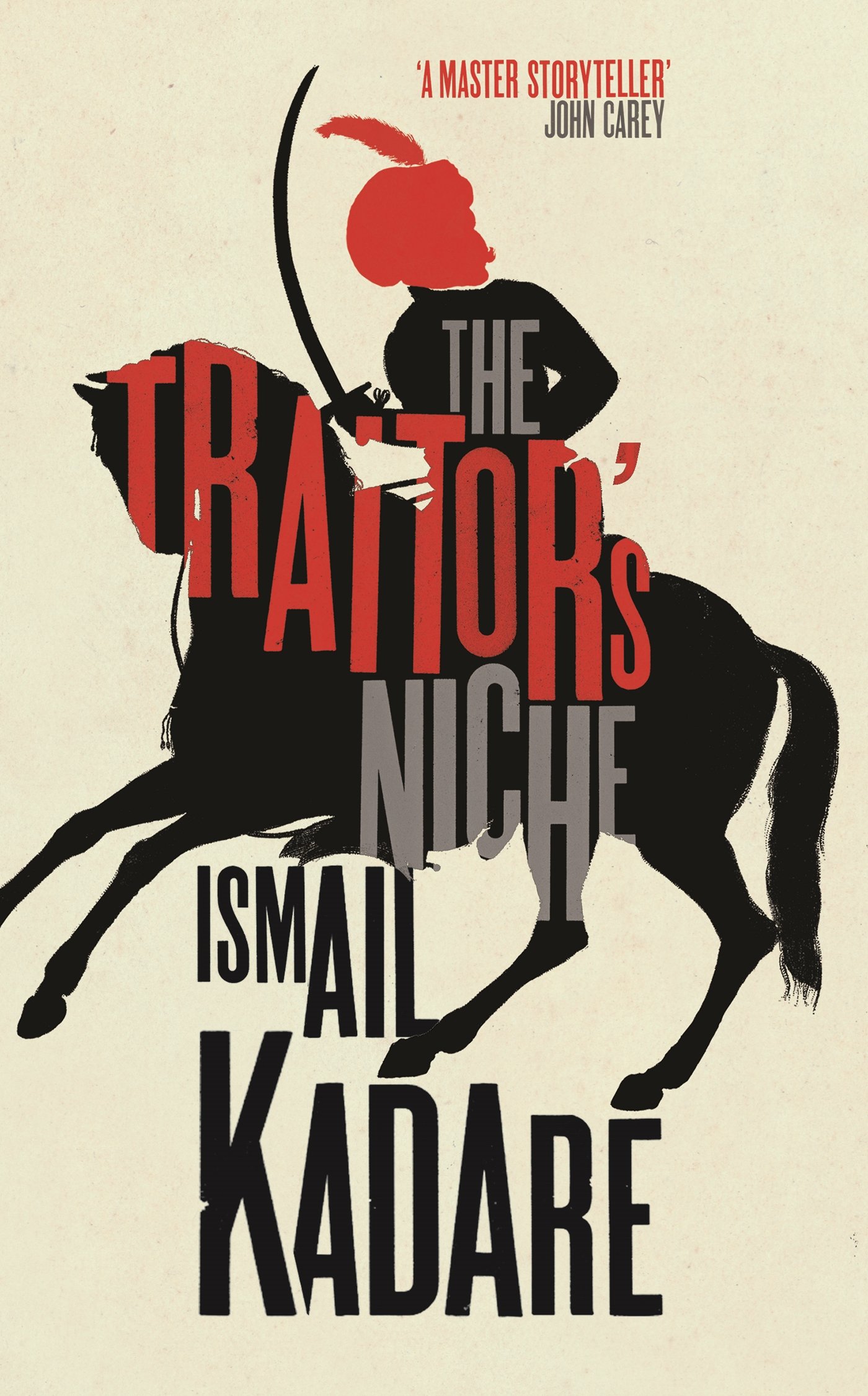 I encountered Ismail Kadare’s The Traitor’s Niche through Twitter, and specifically through my friend
  I have, I think, read all of Tana French’s books, or at least I’ve read all of her Dublin Mystery Squad books, and if I find out she’s got novels outside of that series I’ll be picking them up with a quickness. The series is interesting; each book follows a different detective in the Murder division of the Dublin police force across a single case, frequently introducing the protagonist of the next book along the way. Folks keep showing up, of course, and one of the key witnesses in this book is the daughter of the protagonist of the third book in the series.
 Welcome to infinitefreetime dot com