
I posted this the other day, intending for it to be a shitpost:
And something interesting has happened: I can’t stop thinking about it, and on top of that I’ve started thinking about the connection between UBI and veteran homelessness. I did get a suggestion in comments that I alter the criteria from “one year” to simply “honorable discharge,” which I’m not necessarily upset about and makes pretty good sense.
But here’s the thing: is there a pathway to getting progressive ideas in place for everyone by applying them to the military first? America loves its soldiers, or at least likes to pretend that it loves its soldiers; the fact that veteran homelessness is such a big problem in the first place is a sign that we don’t live up to our ideals here any more than we do anywhere else, but that’s a whole different post. All the same, I’m imagining a situation where a politician runs for office with a major plank of her campaign being to end homelessness among veterans. And what, pray tell, is the mechanism for this plan? A solid UBI and guaranteed housing.
(Side note: You may recall, accurately, that I despise Andrew Yang; one of the reasons I do so is that he seemed entirely unaware that the people who needed his $12,000 the most would see their money immediately gobbled up by their landlords. UBI without some sort of control over the housing market makes no sense at all.)
Don’t get too caught up in the details right now; this is entirely hypothetical and I don’t plan to run for office anyway. But let’s play a game here: if said politician was able to push into law a plan where honorable service in the military earned you a livable wage and a place to live for the rest of your life– so that there was no way for a veteran to end up homeless short of deciding to do so– is there also a hypothetical world where a few years down the road that logic gets extended to, say, service professions, like cops and firefighters and teachers and whoever, and then maybe later on gets extended to everyone if it works?
There’s a ton of room, obviously, to quibble around the details of The Plan, and how guaranteed housing would work, and of course there’s tons of room for such a thing to be done poorly, because this is the world, and I get that. I’m just wondering about the strategy of it all, and I’m trying to imagine the reactions of people who would want a UBI but who would also prefer no further money gets spent on the military at all. Would it be worth even trying such a thing, counting on American lip service to venerating their military to carry the plan through? (Who’s going to be the politician arguing that veterans should be homeless? Good luck.)
Is the existence of the VA and the lack of universal healthcare a guarantee already that this is a pipe dream?
I dunno. But I’m thinking about it.
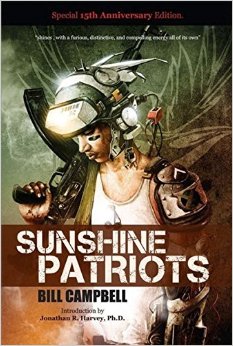 This book, right here, you should read it.
 Welcome to infinitefreetime dot com