#REVIEWS: No Longer Human and The Setting Sun, by Osamu Dazai

My lovely wife has returned from her long sojourn, and all is right with the world again. After lazing about and whining all day yesterday, I was a veritable dervish this morning, managing to tidy, vacuum and dust every room in the house other than the office, which still got a lick and a promise. I read two books today and built half a Lego set on top of everything else. I think I can call the last Saturday of break a success.
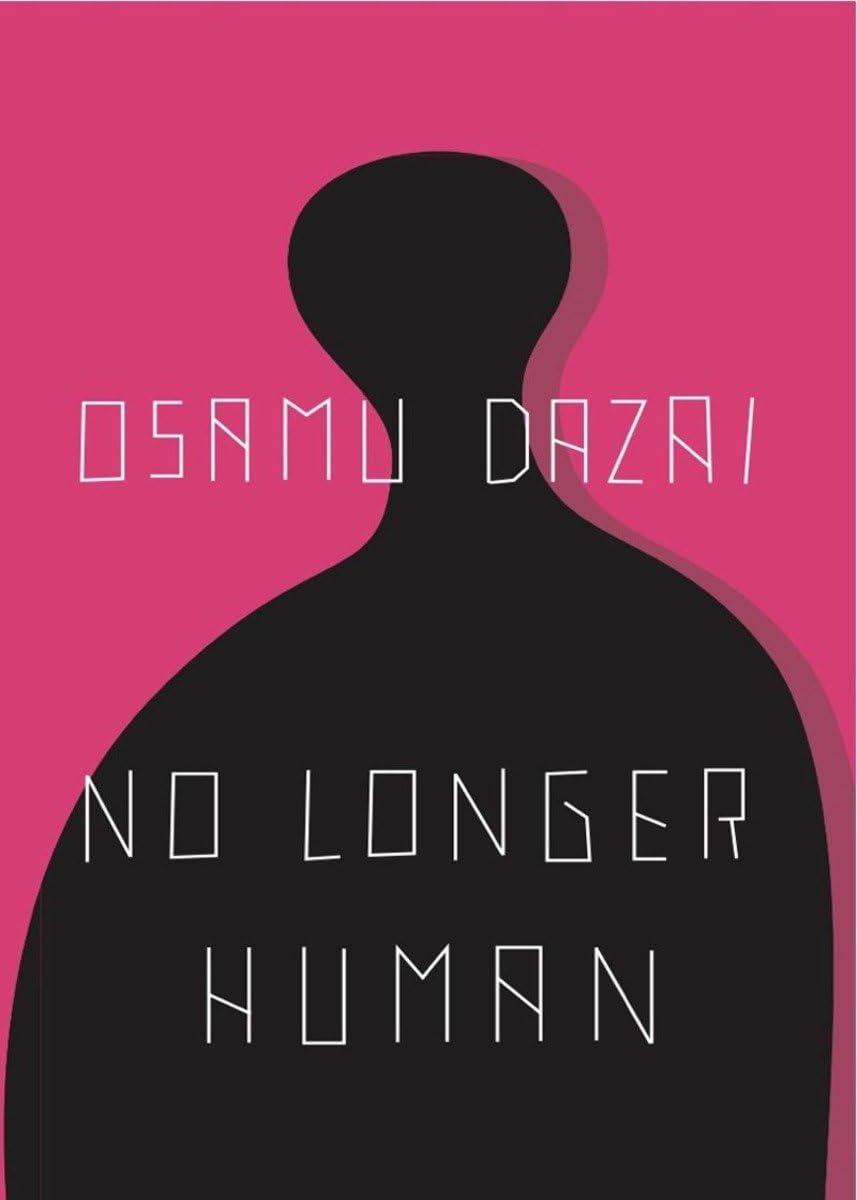

Reading two books in a day isn’t the accomplishment it might sound like, because both of them were novellas. I’ve seen a bunch of students over the last couple of years reading these two books, and because the covers are striking (and I pay attention to what they’re reading regardless) I asked a couple of kids about them last year, and was greeted with enthusiastic recommendations. I didn’t get around to it last year and then when I recently found another couple of kids reading them before Spring Break decided to jump on them.

I … don’t get it.

So, Osamu Dazai was born in Japan in 1909, which already places him well outside of anything my students are usually willing to read. His books are obviously translated, and both of these books were written post-war, in 1947 and 1948, right before Dazai died of suicide at 38, in a scenario that appears (I haven’t done a ton of research other than reading a Wiki article) to precisely match a suicide attempt described in No Longer Human. The books sound like they were written in the late forties, frankly, which isn’t a criticism but is another reason why I’m surprised that my students are reading them, because the style of a novel from the 1940s and 1950s is wildly different from the modern YA or romantasy that I catch them with most of the time, and that’s before you have to deal with the cultural unfamiliarity of being translated from Japanese.

The closest analog to No Longer Human that I can think of is that it feels like a Japanese Catcher in the Rye. It’s about a young, profoundly alienated man, and it’s casually misogynistic in the way work from that era frequently is. It’s written in first person and is semi autobiographical; the framing device is that it’s written as three notebooks by the narrator, covering a couple decades of his life, and there’s another unnamed individual in the preface and epilogue who talks about how the notebooks were given to him. I read The Setting Sun cover to cover in a single sitting and I can’t tell you what the hell its deal is. I mean, I can describe the plot, that’s simple enough– it’s another first-person narrative, this time of a woman named Kazuko in her late twenties, a member of a formerly aristocratic family that has fallen apart after World War II. Her mom dies. Her brother is a drunken mess who eventually kills himself. She tries to have some love affairs. Then she gets pregnant and the book ends. There’s some obvious symbolism scattered throughout– a bit about burning snake eggs, and snakes constantly showing up around moments of despair– but it’s mostly a pretty straightforward narrative.

So, yeah, I get the plot. I just can’t tell you why it’s a book, if that makes any sense. I feel like I get No Longer Human, and part of me can sort of see why it might appeal to teenagers, who respond to alienation narratives. I don’t know why the hell there’s a copy of Setting Sun in our school library or why the kids are professing to enjoy it as much as Human. There are strong themes of addiction and alcohol abuse through both books and a ton of suicidal ideation and successful suicides along with some genuinely terrible family situations. I dunno; I’m gonna ask some questions on Monday and maybe send an email to the kid who was most interested in me reading these last year. Don’t misunderstand me; neither are bad books, and No Longer Human is genuinely good, but I don’t see the appeal to 14-year-olds in 2025. I need answers here, y’all.

#REVIEW: How to Say Babylon, by Safiya Sinclair

It won’t actually take all that long for me to dispense with the “review” part of writing about Safiya Sinclair’s How To Say Babylon. You should check it out. There you go. Sinclair grew up in Montego Bay, Jamaica, the daughter of a Rastafari reggae musician, and the book is partially about her escape from grinding poverty to ultimately achieve a Ph.D in the United States and become a celebrated poet, and partially about trying to grow up female in a home dominated by an abusive misogynist. Sinclair, as one might expect from an award-winning poet, is a beautiful, lyrical writer, and her story is fascinating. I can’t imagine someone picking this up and not at least finding it tremendously interesting. I don’t recall how it crossed my radar, but I jumped on it, and it’s a pretty fast read.

That said, the book itself isn’t why I’m writing about the book, which ended up fascinating me but perhaps not for the reasons Sinclair intended. All the dialogue in the book is rendered as spoken, meaning that 90% of the dialogue is in Jamaican English, and I want to take a deep dive into Jamaican English grammar rules now that I’ve read this book. The dialect’s use of pronouns is kind of fascinating, and it was endlessly entertaining to me the way I was hearing anything her father said throughout the book. And, actually, after doing a light bit of Googling just now, it’s possible that there is some translation going on, because Jamaican patois is significantly more difficult for an American English speaker to understand than the dialogue in this book, which is unfamiliar but not incomprehensible. So maybe she pulled back a bit to simplify what people were saying, or perhaps conversation in their house was closer to American English than it might have been in other places. All four of the Sinclair kids ended up with university educations, so it’s clear that education was highly prized in the house– by their mother, as the book makes clear– so it’s entirely possible that a certain level of code-switching was taking place from the beginning.

The other thing is reading through this book and realizing I didn’t know anything at all about Rastafari. I went through a heavy Bob Marley phase in late high school and early college that was more or less responsible for everything I know about it, and I hadn’t appreciated just how unusual the … religion, and I’m using that word under some small amount of protest, really is. Rasta is wholly decentralized, for starters; it recognizes the Bible as Scriptural but there is no Rasta text to rely on and it emphasizes individuality to a degree where concepts like “orthodoxy” can barely even exist. In other words, Safiya Sinclair’s father was a devout Rasta, but that doesn’t mean that his practice of Rastafari lined up with anyone else, and while Jamaican culture as a whole tends toward the patriarchal, it wouldn’t be strictly accurate to say that Rasta was the reason her father turned out to be the man he did, or that it was responsible for how he treated his children and, particularly, his daughters.

(Also interesting: there are pages devoted to all four of the women in Sinclair’s family deciding to cut off their dreadlocks. There is not a similar scene for her brother, although there is a poignant moment where he declares his newborn child is going to decide on their own whether to follow Rastafari or not.)

On top of that, I absolutely wasn’t aware that Haile Selassie had traveled to Jamaica and explicitly rejected Rastafari’s belief that he was, in some way, God. Sinclair’s father appears to have believed that he was literally God on Earth; some of Marley’s lyrics lean that way as well, and Selassie straight-up said it wasn’t the case, at which point a whole lot of Rastas turned around and said that only God would be humble enough to deny he was God.

Which … wow.

And, like, think about this, right? Selassie was Emperor of Ethiopia. He was not, himself, a Jamaican, and there are no Rastafari in Ethiopia, or at least there weren’t when Selassie was alive. So this guy is Emperor of one country, and this group of people halfway across the globe decide that he is either literally God or at least the Messiah (and, again, no orthodoxy, so each individual Rasta might have a different idea about how this works) and form an entire-ass religion around him. And then he goes there, and he’s like, “No, I’m not God,” and it doesn’t work, and then eventually he dies and … Rastafari just keeps on truckin’.

There was also a lot of oppression of Rastas early on, including a couple of events that qualify as massacres and/or pogroms, and I wasn’t aware that had happened either.

I need to know more, and I want to read a formal academic history of this belief system, is what I’m saying, and not just a memoir. I feel like I’m overusing the word fascinating in this piece but it’s mind-blowing to me that this developed the way it did.

Anyway, read the book.

#REVIEW: Split Tooth, by Tanya Tagaq

Content warning: Split Tooth contains rape, sexual assault, child abuse, infanticide and a really weird and explicit erotic dream sequence involving a fox god.

I don’t really know how the hell to write this. I’m 20 books into my planned 52 books by women of color in 2020 project, and in all honesty I came across this and basically bought it blind upon realizing that Tanya Tagaq was a Canadian Inuit and I’m fairly certain I’ve made it through 43 years and have never read a book by a Canadian Indigenous author. Split Tooth really straddles and/or defies genre categorization; I saw it referred to as a “mythobiography” in one interview with the author and I like that word so let’s go with that. It’s partially memoir, but with one foot firmly in mythic fantasy (the main character is impregnated by the Northern Lights late in the book, for example) and probably 15% of the total wordcount is poetry. It tells the story of a young Inuk girl growing up in Nunavut in the 1970s, and while there are moments of carefree joy and childhood scattered here and there it is safe to assume that there are a lot of things about growing up in that place and time as an Indigenous person that are, frankly, terrible, and Tagaq’s depiction of the sexual abuse that her main character has to endure are unflinching and harrowing. She’s not going to sugarcoat anything in this book; the content warning at the beginning of this piece is as necessary as anything else I’ve ever written.

But here’s the thing, and you need to realize as you’re reading that I’m saying this about a book with poetry in it: the writing in this book is beautiful, and while under normal circumstances I am the type of reader for whom “it’s 15% poetry” would cause me to not pick up the book in the first place, the way the book slides from explicit, brutal realism to naturalistic fantasy sequences to the poetic sections (which can contain elements of either) is just astounding. I haven’t ever read anything like Split Tooth before, and I’m super glad I went with my gut and just ordered the damn thing without thinking about it too much, because it really isn’t a good match with most of the stuff I usually read and thinking about it too much would probably have led to me not purchasing it. Sometimes my tendency to impulse-buy books works in my favor; this is definitely one of those times. Take the content warning seriously– while, at 190 pages, this is a quick read, it’s definitely not an easy one, but it’s absolutely worth it.


3:11 PM, Thursday May 7: 1,244,119 confirmed cases and 74,844 American deaths.