
A couple of nonfiction reviews

I’ve been on a little nonfiction kick lately, and I want to talk about two of the books. One of them I can pretty much recommend without reservation, and the other … well, you’ll see.

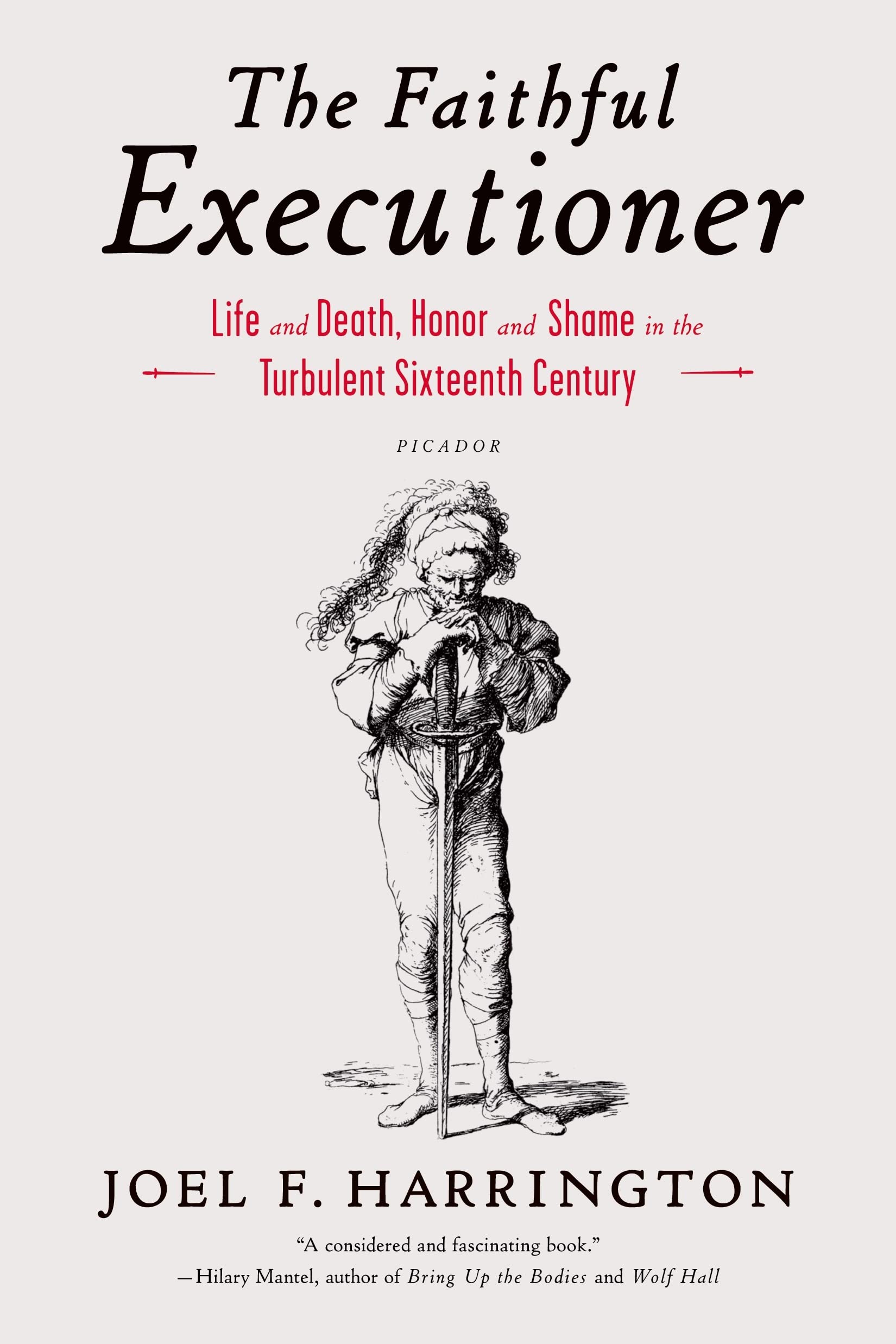
Anyway, The Faithful Executioner: Life and Death, Honor and Shame in the Turbulent Sixteenth Century is pretty Goddamned interesting. The book covers will take up more space than the words on this post, as this is very much a “you already know if you want to read this” book, but if reading a history book based on the journal of a Nuremberg executioner over the 45 years that he killed people for the state is interesting to you? Go forth. Right now.

Author Joel Harrington literally found this man’s journal in a bookstore, by the way, so this whole book came by almost by accident. The text was effectively lost; he was able eventually to track down an earlier (and thus, presumably, somewhat more reliable) version of it, but the whole book starts with this historian just literally stumbling upon a copy of this manuscript in a store. Meister Franz Schmidt executed people from 1573 to 1618, and kept records of varying detail of every execution or punishment he undertook on behalf of Nuremberg and several smaller towns in the area. At first the journal is more or less a dry record, but eventually Schmidt began recording the executions in greater and greater detail, eventually including his own feelings and opinions about the crimes committed by his … is victims the right word here? Clients? The poor bastards who got got at his hand. Those people.

I learned a lot from this book, and it feels like something I’ll be rereading in the future, which isn’t something I do very often with nonfiction. There’s lots of myths and nonsense attached to executioners, and this book does a great job of being a history of this one specific profession in this one specific place in time. Definitely check it out, if you think you can stomach it– the book isn’t gory, necessarily, but when beheadings are a big part of someone’s job, there’s no way to avoid some gross bits.
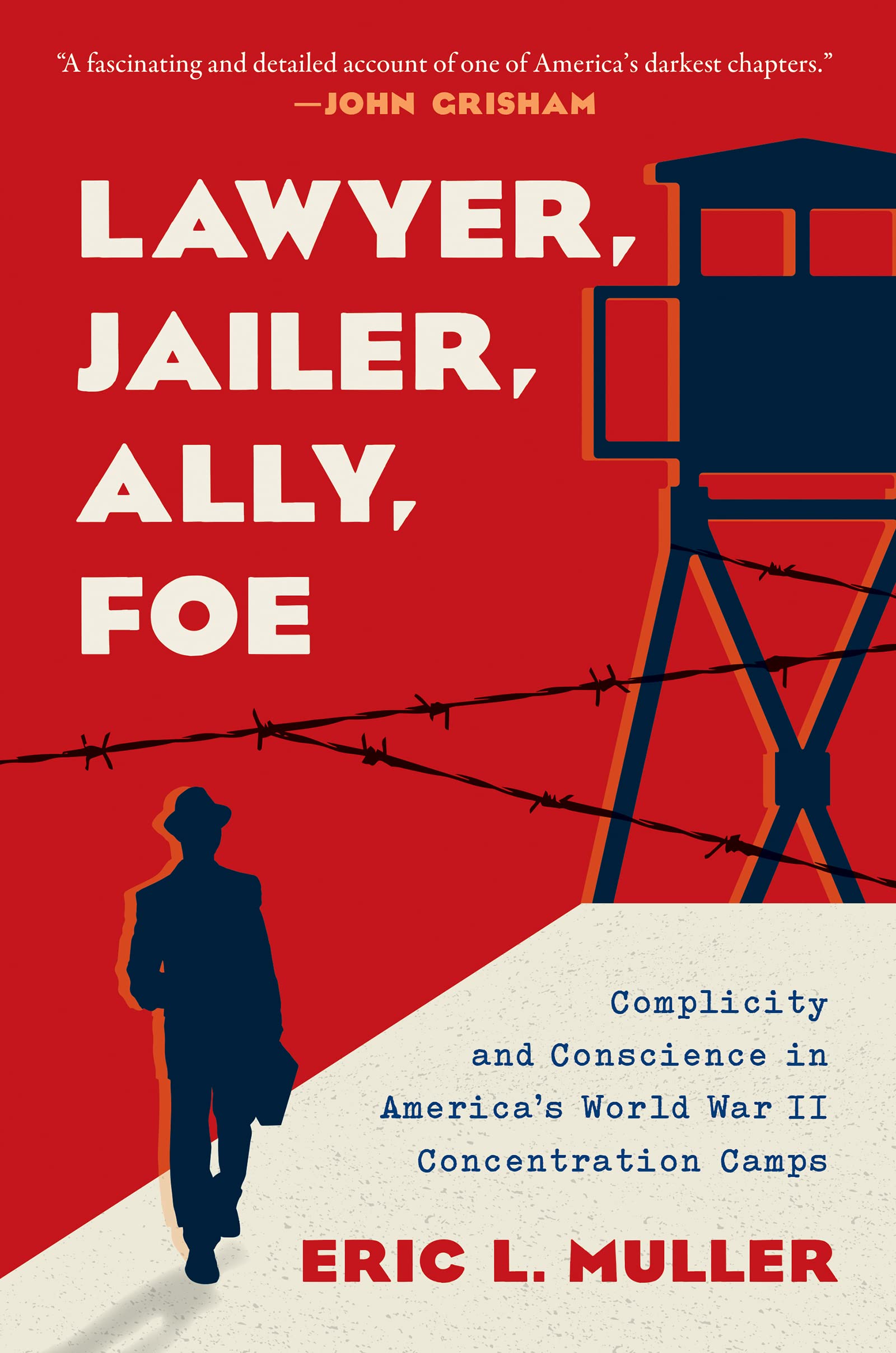
Notice how the lead quote on this book is from John Grisham, a novelist, and not from a historian? That’s kind of right on point. I’ve had this book on my Unread Shelf for way longer than it deserved, but having finished it, I’m kind of dissatisfied. Muller’s book follows three men who worked as “Project Attorneys” for the WRA– the War Relocation Authority– during World War II, acting as chief legal counsel at three of the concentration camps relocation centers that we herded Japanese Americans into. All three men are white, of course, and there’s a fourth who is himself “relocated” but is a trained and barred lawyer who works closely with the Project Attorney at his … uh … center.

Muller is a law professor, not a historian, and you can tell. The book is less pure history than historical fiction, as only one of the four men who are covered in the book was alive when Muller was writing, and it doesn’t look like he interviewed him intensively. The book repeatedly commits the cardinal sin of getting into the private, internal lives of these men with no particular documentation, and Muller freely admits that some of the events in the book are invented, but “consistent with his understanding” of the kinds of men these were. There’s an Author’s Note at the end that gets into what happened and what didn’t; the way he puts it is that nothing “of historical significance” was made up, so if he says a hearing took place, the dialogue is probably based on transcripts, but the bit where the white guy brings his Japanese colleague a pie is made up.

This isn’t a bad book by any stretch of the imagination, but I feel like it’s a bit too generous to its subjects. I’m willing to believe that at least some of these guys took these jobs out of a sincere if misguided belief that they could make a bad situation better, but when half of one guy’s narrative is him trying to cut the legs out from underneath a Japanese attorney who he thinks is developing too much influence in the camp, y’know, I’m comfortable with saying these were not good people!

On top of that, centering the feelings and experiences of the white lawyers who had the option (which some of them took) of simply walking away from this bullshit just doesn’t feel right. I’d love to have known more about Thomas Masuda, the Japanese attorney who gets about half of one of the chapters, or Kiyoichi Doi, who gets treated like a bad guy in a book where he is unquestionably in the right. And Muller doesn’t seem to have spoken to any actual internees while writing this.

I dunno. I didn’t hate the book, but it’s misguided.

Thoughts and questions

I’ve got a few things rattling around in my brain, none enough for a whole post, so let’s just toss all three of them together. Why not, right?

FIRST: That game up there? Was crafted deep in the bowels of Hell, on the lower foothills of Mount Sonofabitch. I just beat the game’s third major boss tonight, after, no shit, probably five or six hours of attempts and farming over the last few days. The recommended level for his area? Seventeen. My level when I finally took him down about half an hour ago? Forty-five. And the next area promptly beat the shit out of me again.

SECOND: You may have heard the godawful fucking story about the people Trump effectively sold as slaves to El Salvador, including a number of them who were accused of no crime at all other than being brown. Now, before I ask this, I want to be crystal fucking clear that this is horrible and the people responsible should rot in Hell. Okay? We’ve got that? Everybody understand? Good. Because while I’m having some trouble untangling the court cases, what with not being a lawyer and all, it looks like a judge ordered the government to produce one of the men involved by midnight tonight? And there may or may not be a temporary stay on that order, or maybe SCOTUS just overturned it, I dunno, it looks like things changed while I was playing video games. But here’s my question: Does the court, any court, have the ability to order other entities to do literally impossible things? Because part of the whole point of selling these men to El Salvador was to put them beyond the reach of US courts. Short of invasion, which Trump obviously isn’t going to do, we don’t really have a way to compel El Salvador to return any of these people, and certainly not to do so in the next three hours and eighteen minutes. The judge has no jurisdiction. Again, yes, I recognize that there’s something horrible about taking the situation these human beings are in and reducing it to a legal hypothetical, which is part of why I’m doing it on my blog and not, say, BlueSky– but does anyone actually have any authority to compel this to happen right now? The courts can order the government to do shit all they want. What happens if they just … can’t?

THIRD: I don’t remember the goddamn third thing. Fuck. I’ve had this post in the back of my head all day and now that it’s time to write it Thing Three is gone.

Right, shit, the economy went to hell today too. So I, personally, with very modest investments in, until yesterday, the low (very low) five figures, have lost about a thousand bucks in the last few days. I do not expect things to get better anytime soon, for obvious reasons. I have been contributing a couple hundred a month to an account managed through MetLife that I deliberately rarely look at, and $100 a week to an Acorns account that I monitor perhaps more carefully than I ought to. Yesterday I reset a bunch of stuff on Acorns so that now that $100 a week goes directly to my savings account and is not invested in anything. My understanding of how this works is even if the value of individual shares of a given stock are falling, buying more of them means a faster theoretical recovery later on, since I’ll own more stock, assuming that the companies I’m investing in don’t go under, in which case that money is just gone. But if I think it might be years before the market recovers– and I do– isn’t there more value in socking that money away into a savings account, where it’s not going to just vanish? Or at least is much less likely? The interest rate is going to be a lot lower but at least it’ll be positive.

Help me out if you know anything about investments. I’m sure there are better ideas than the binary I’ve set up here, but if you’re going to give advice at least tell me which of those two is a better idea right now before telling me about your third thing, okay? Thanks.

On HB 1608, Indiana’s “Don’t Say Gay” bill, and being a teacher

Because the place I live is terrible, the state legislature has passed, and our governor has signed, a “Don’t Say Gay” bill inspired by the recent bullshit in Florida. I’ve been thinking hard about how I want to deal with this bill as an educator and I think my thoughts are formed enough that I can write about it.

First and foremost: I refuse to out any student to their parents under any circumstances, my teaching license be damned. I simply won’t do it. Any parents who needs their kids’ teachers to let them know that their kid is trans does not need to be notified that their kids are trans. If you could be trusted with that information, you’d already have it.

That said, there’s noncompliance and then there’s noncompliance, and this bill is so sloppily written that one wonders why they even bothered.

(That’s not true. They bothered because they wanted to make it clear to a vulnerable minority that they hate them and think they should be dead. That’s the reason this bill passed. It’s the only reason.)

Anyway, here’s the text of the law:

Chapter 7.5. Parental Notification Regarding Identification

Sec. 1. As used in this chapter, “school” has the meaning set forth in IC 20-30-17-1.
Sec. 2. (a) A school shall notify in writing at least one (1) parent of a student, if the student is an unemancipated minor, of a request made by the student to change the student’s:
(1) name; or
(2) pronoun, title, or word to identify the student.
(b) Not later than five (5) business days after the date on which a school receives a request described in subsection (a), the school shall provide notification to a parent as required by subsection (a).

I can think of two ways to deal with this law. The first relies on a close reading of the text itself. Note the usage of the words “request” and “change” in the first line of Sec. 2, and the repetition of “a school receives a request” in subsection b.

This does not describe a situation that ever happens.

First of all, I, a teacher, am not a school as defined by the law, and the word “teacher” does not appear in the law. There is not a form that a kid fills out when they decide that they want to be Ryan and not Sophia, nor is there anywhere at all where someone can file to have their pronouns changed. I find out that a kid wants to use different pronouns or a different name when they tell me, generally right after they’ve met. It strains credulity to call that a “request” to “change” anything. It’s them telling me what they want to be called, and it’s not a “request.” I have gone by my middle name for my entire life and have had to tell every teacher I have ever had to call me something other than what was written on the attendance form in front of them. By this law, even a diminutive or a nickname– going by “Andy” instead of “Andrew” or “DJ” instead of “Denise Jane”– requires notification.

There are, plain and simple, no “requests” being made here as the law seems to envision, and even if they are, they are being made to teachers, not to a school, and the law does not state who needs to make said requests and makes no requirement that I, for example, pass on said request to an administrator.

So that’s the first possibility; simply ignore the law, because as written it genuinely doesn’t appear to me to require me to do anything and does not bother to make itself clear enough to make it possible to figure out how to comply. It doesn’t even define “provide notification” in any coherent form other than saying that it should be by writing.

The second option is some form of malicious compliance. Again, the law does not specifically mention trans students, and as such it seems to apply to all of them. Which means that every “Andrew” who wants to be “Andy” or “Emmanuel” who wants to be “Manny” triggers the law, and if Bill wanting to be Bella gets a notification, that means that Robert wanting to be Bob gets one too. The law makes no distinction. It also– and this is potentially important– makes no requirement that the actual new name or pronouns be identified.

So I can either:

  1. literally send a letter to every single parent I have at the beginning of the year stating that I will call every student I have by the names and pronouns they prefer; or
  2. put said policy into something distributed to every parent (or at least accessible to them) at the beginning of the year, such as a syllabus or parent letter or my class website.

When you consider that the law also says that notification is required for any “word” used to identify the students? Shit. Granted, no kid is making a “request” to be called “you in the green hoodie” by anyone, but again, I don’t think “call me Evan” is a request either by the normal definition of the term. So am I notifying every single parent in the building? Because it is entirely within the realm of possibility that I might be using a “word” to refer to literally every kid in the building on any given day that school is in session, and given that I don’t know most of them those references will almost certainly not be using their names as spelled out on their birth certificates or school registrations.

And can I find a way to get every teacher in the building to notify every parent in the building, thus leading to an utter flood of mail and a nice little bit of civil malicious compliance designed to demonstrate how fucking stupid this law is?

Maybe.

Some crazy nonsense that just happened

Two things, neither of which are within my usual sphere of experience:

  1. I got a solicitation from a marketer for a blog post.  Like, “Hey, this thing is happening, would you mind writing about it?”  I’m trying to decide if I’m offended that I wasn’t offered any money for it.
  2. I just sent a contract to a lawyer for his review.  Don’t get too excited about this; it sounds cooler than it is.   But it’s still weird.  But I seriously got to type the words “I’ll run this by my attorney and see what he thinks” in an email message.  The guy’s not actually my attorney, he’s just an attorney that I know, but still.  🙂

So, yeah.  Toddler birthday party, here I come.