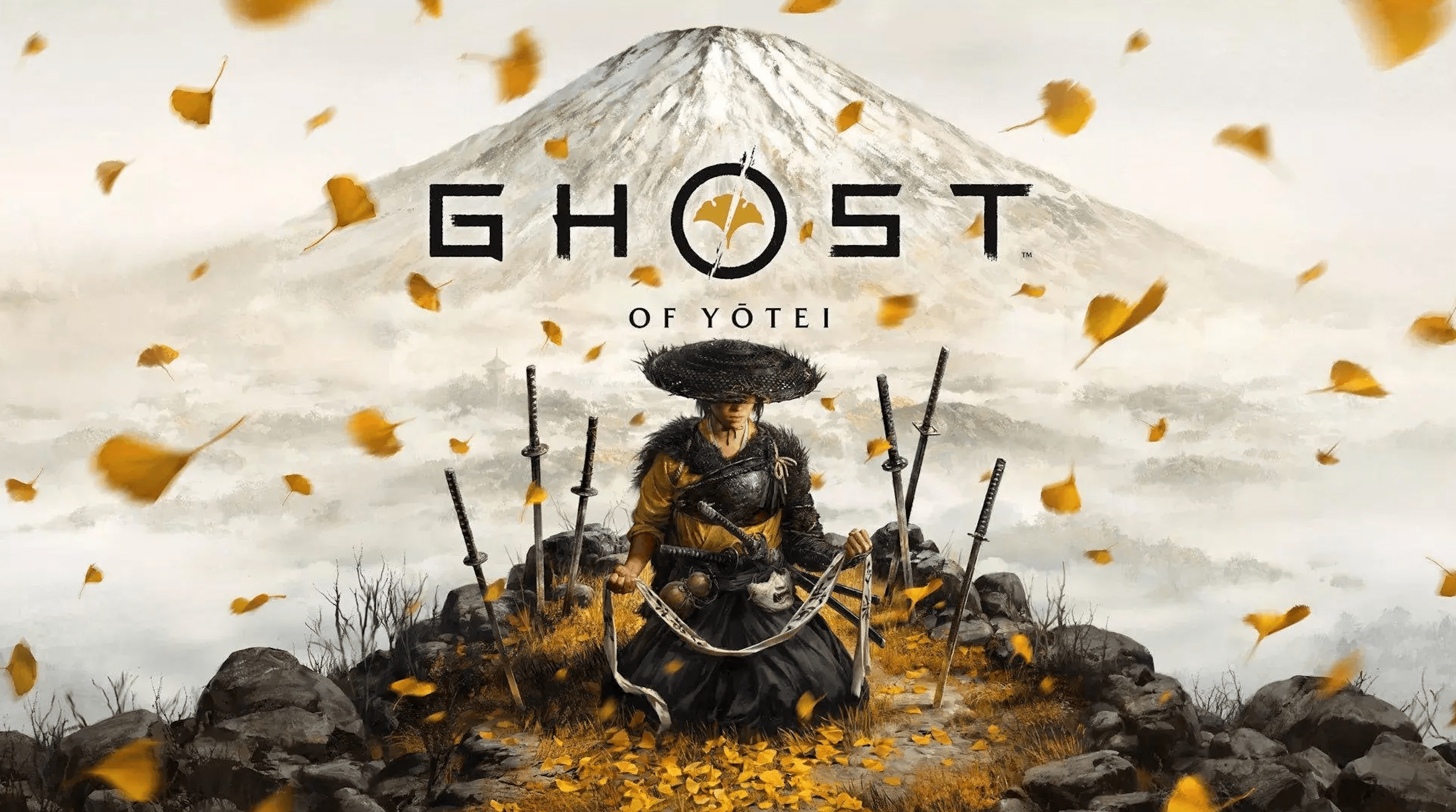
I mean, come on. This year had some slight competition, but there was no way that the sequel to Ghost of Tsushima wasn’t going to be my GOTY. It’s not close. This was the sequel to one of the best games I’ve ever played and was at least of equal quality. The only thing holding it back from being obviously better than the original was I had some idea what to expect going in.
Absolutely fucking amazing. Fifty-eleven stars out of five.
I’ve been on a little nonfiction kick lately, and I want to talk about two of the books. One of them I can pretty much recommend without reservation, and the other … well, you’ll see.
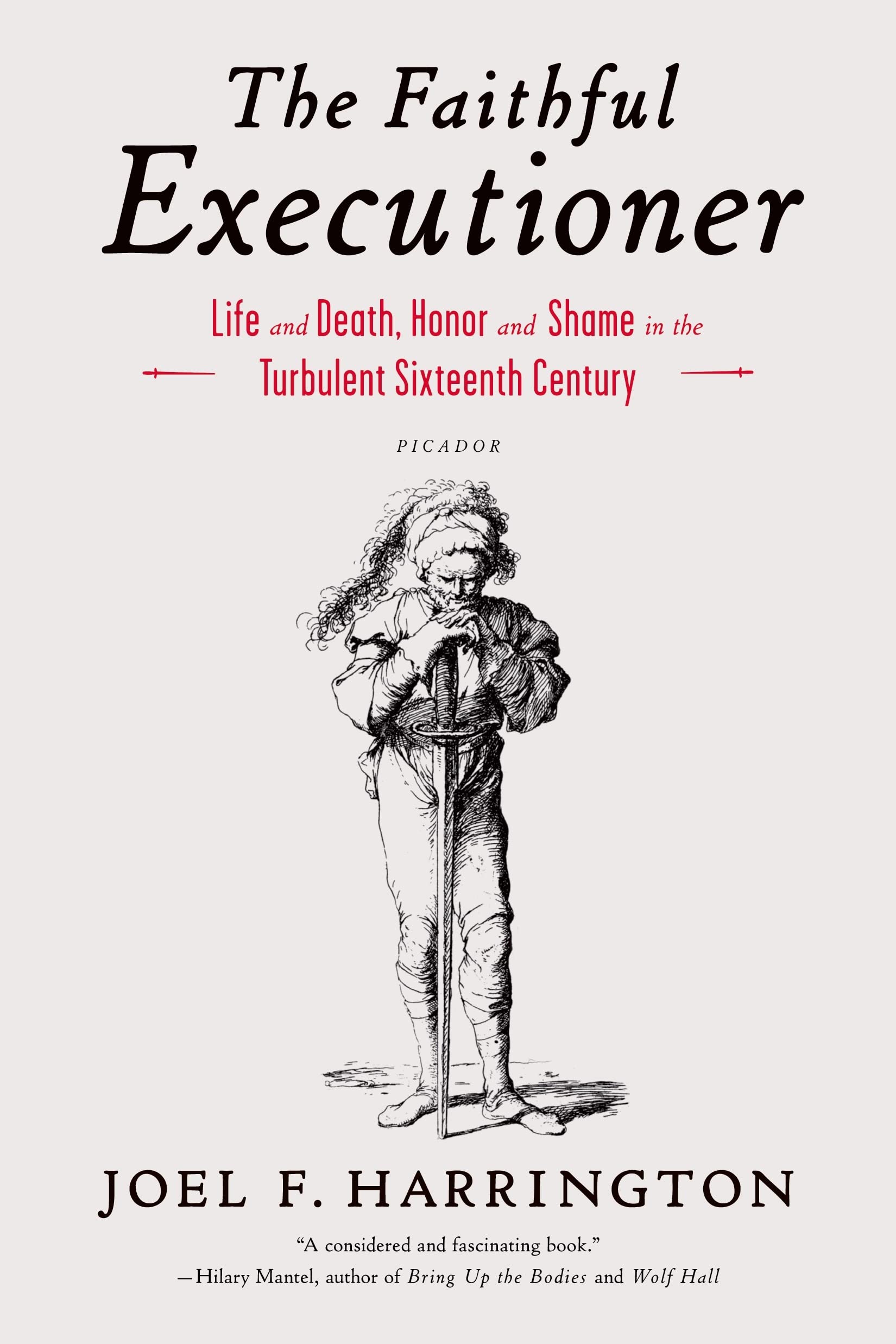
Anyway, The Faithful Executioner: Life and Death, Honor and Shame in the Turbulent Sixteenth Century is pretty Goddamned interesting. The book covers will take up more space than the words on this post, as this is very much a “you already know if you want to read this” book, but if reading a history book based on the journal of a Nuremberg executioner over the 45 years that he killed people for the state is interesting to you? Go forth. Right now.
Author Joel Harrington literally found this man’s journal in a bookstore, by the way, so this whole book came by almost by accident. The text was effectively lost; he was able eventually to track down an earlier (and thus, presumably, somewhat more reliable) version of it, but the whole book starts with this historian just literally stumbling upon a copy of this manuscript in a store. Meister Franz Schmidt executed people from 1573 to 1618, and kept records of varying detail of every execution or punishment he undertook on behalf of Nuremberg and several smaller towns in the area. At first the journal is more or less a dry record, but eventually Schmidt began recording the executions in greater and greater detail, eventually including his own feelings and opinions about the crimes committed by his … is victims the right word here? Clients? The poor bastards who got got at his hand. Those people.
I learned a lot from this book, and it feels like something I’ll be rereading in the future, which isn’t something I do very often with nonfiction. There’s lots of myths and nonsense attached to executioners, and this book does a great job of being a history of this one specific profession in this one specific place in time. Definitely check it out, if you think you can stomach it– the book isn’t gory, necessarily, but when beheadings are a big part of someone’s job, there’s no way to avoid some gross bits.
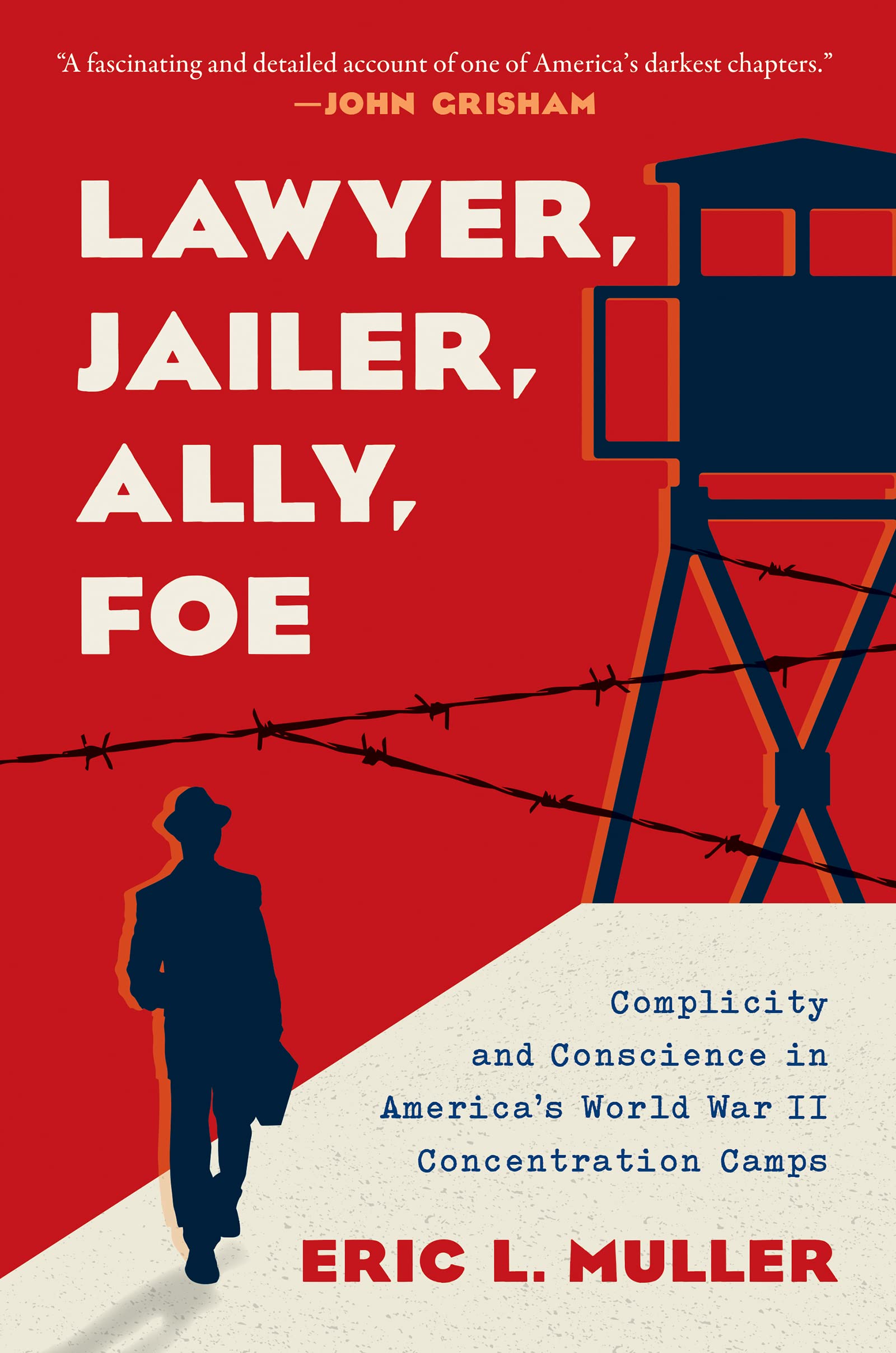
Notice how the lead quote on this book is from John Grisham, a novelist, and not from a historian? That’s kind of right on point. I’ve had this book on my Unread Shelf for way longer than it deserved, but having finished it, I’m kind of dissatisfied. Muller’s book follows three men who worked as “Project Attorneys” for the WRA– the War Relocation Authority– during World War II, acting as chief legal counsel at three of the concentration camps relocation centers that we herded Japanese Americans into. All three men are white, of course, and there’s a fourth who is himself “relocated” but is a trained and barred lawyer who works closely with the Project Attorney at his … uh … center.
Muller is a law professor, not a historian, and you can tell. The book is less pure history than historical fiction, as only one of the four men who are covered in the book was alive when Muller was writing, and it doesn’t look like he interviewed him intensively. The book repeatedly commits the cardinal sin of getting into the private, internal lives of these men with no particular documentation, and Muller freely admits that some of the events in the book are invented, but “consistent with his understanding” of the kinds of men these were. There’s an Author’s Note at the end that gets into what happened and what didn’t; the way he puts it is that nothing “of historical significance” was made up, so if he says a hearing took place, the dialogue is probably based on transcripts, but the bit where the white guy brings his Japanese colleague a pie is made up.
This isn’t a bad book by any stretch of the imagination, but I feel like it’s a bit too generous to its subjects. I’m willing to believe that at least some of these guys took these jobs out of a sincere if misguided belief that they could make a bad situation better, but when half of one guy’s narrative is him trying to cut the legs out from underneath a Japanese attorney who he thinks is developing too much influence in the camp, y’know, I’m comfortable with saying these were not good people!
On top of that, centering the feelings and experiences of the white lawyers who had the option (which some of them took) of simply walking away from this bullshit just doesn’t feel right. I’d love to have known more about Thomas Masuda, the Japanese attorney who gets about half of one of the chapters, or Kiyoichi Doi, who gets treated like a bad guy in a book where he is unquestionably in the right. And Muller doesn’t seem to have spoken to any actual internees while writing this.
I dunno. I didn’t hate the book, but it’s misguided.
My lovely wife has returned from her long sojourn, and all is right with the world again. After lazing about and whining all day yesterday, I was a veritable dervish this morning, managing to tidy, vacuum and dust every room in the house other than the office, which still got a lick and a promise. I read two books today and built half a Lego set on top of everything else. I think I can call the last Saturday of break a success.
Reading two books in a day isn’t the accomplishment it might sound like, because both of them were novellas. I’ve seen a bunch of students over the last couple of years reading these two books, and because the covers are striking (and I pay attention to what they’re reading regardless) I asked a couple of kids about them last year, and was greeted with enthusiastic recommendations. I didn’t get around to it last year and then when I recently found another couple of kids reading them before Spring Break decided to jump on them.
I … don’t get it.
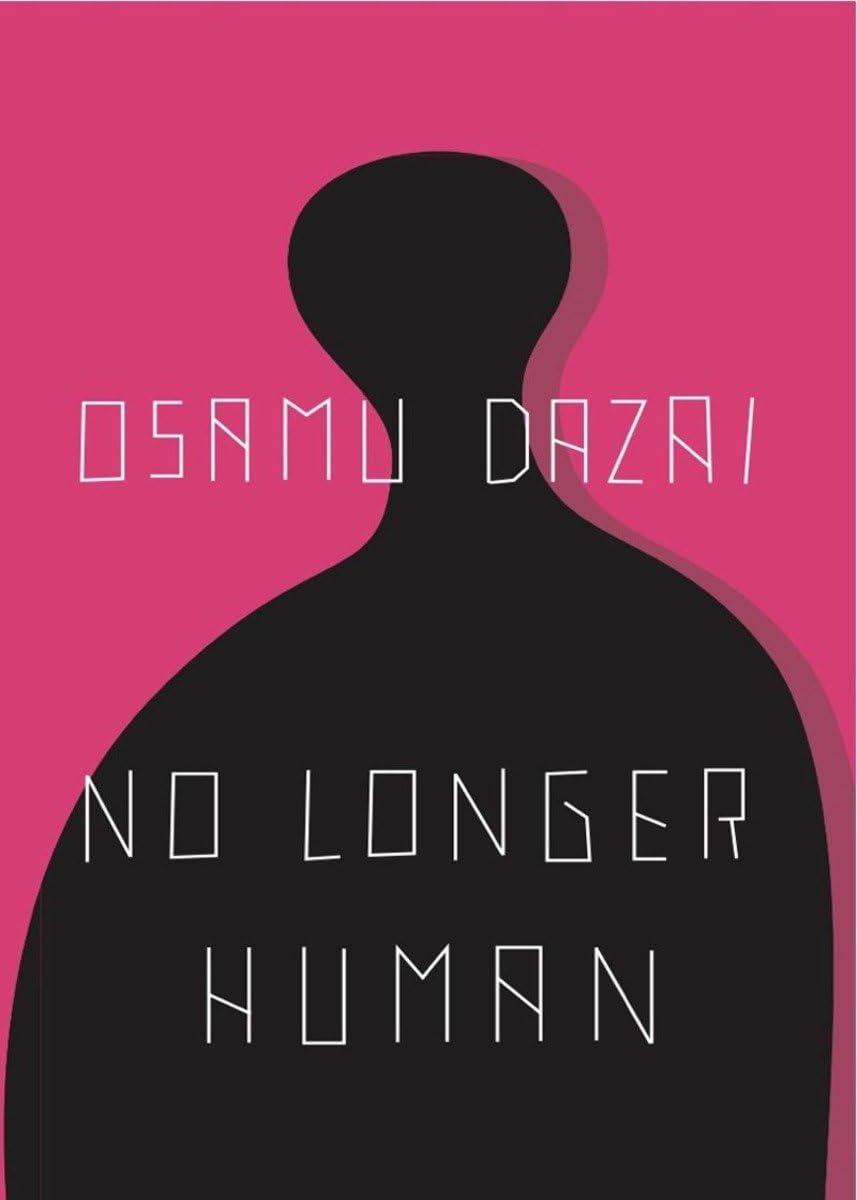
So, Osamu Dazai was born in Japan in 1909, which already places him well outside of anything my students are usually willing to read. His books are obviously translated, and both of these books were written post-war, in 1947 and 1948, right before Dazai died of suicide at 38, in a scenario that appears (I haven’t done a ton of research other than reading a Wiki article) to precisely match a suicide attempt described in No Longer Human. The books sound like they were written in the late forties, frankly, which isn’t a criticism but is another reason why I’m surprised that my students are reading them, because the style of a novel from the 1940s and 1950s is wildly different from the modern YA or romantasy that I catch them with most of the time, and that’s before you have to deal with the cultural unfamiliarity of being translated from Japanese.
The closest analog to No Longer Human that I can think of is that it feels like a Japanese Catcher in the Rye. It’s about a young, profoundly alienated man, and it’s casually misogynistic in the way work from that era frequently is. It’s written in first person and is semi autobiographical; the framing device is that it’s written as three notebooks by the narrator, covering a couple decades of his life, and there’s another unnamed individual in the preface and epilogue who talks about how the notebooks were given to him. I read The Setting Sun cover to cover in a single sitting and I can’t tell you what the hell its deal is. I mean, I can describe the plot, that’s simple enough– it’s another first-person narrative, this time of a woman named Kazuko in her late twenties, a member of a formerly aristocratic family that has fallen apart after World War II. Her mom dies. Her brother is a drunken mess who eventually kills himself. She tries to have some love affairs. Then she gets pregnant and the book ends. There’s some obvious symbolism scattered throughout– a bit about burning snake eggs, and snakes constantly showing up around moments of despair– but it’s mostly a pretty straightforward narrative.
So, yeah, I get the plot. I just can’t tell you why it’s a book, if that makes any sense. I feel like I get No Longer Human, and part of me can sort of see why it might appeal to teenagers, who respond to alienation narratives. I don’t know why the hell there’s a copy of Setting Sun in our school library or why the kids are professing to enjoy it as much as Human. There are strong themes of addiction and alcohol abuse through both books and a ton of suicidal ideation and successful suicides along with some genuinely terrible family situations. I dunno; I’m gonna ask some questions on Monday and maybe send an email to the kid who was most interested in me reading these last year. Don’t misunderstand me; neither are bad books, and No Longer Human is genuinely good, but I don’t see the appeal to 14-year-olds in 2025. I need answers here, y’all.
My usual line on Beyoncé is that I’m a big fan of Beyoncé as an entertainer and maybe not such a big fan of her music. I buy everything pretty religiously as it comes out but what usually happens is that there are a few tracks from any given album that I like a lot and I can take or leave the rest of it. Her collaboration with her husband was an exception, and I liked her live album a lot, but Cowboy Carter is the first studio release from her where I genuinely feel like every single track is a banger. It is emphatically not a country album, despite the existence of maybe three country-ish songs (Protector, Jolene, and Texas Hold ‘Em) and Willie Nelson and Dolly Parton both doing short spoken cameos. I don’t know what the hell it is. She calls it “a Beyoncé album,” and that’s just gonna have to be good enough for us mere fucking mortals. There’s opera on this damn thing. She’s doing whatever the hell she wants, and it’s amazing, and sooner or later I’m going to have to reconsider that disclaimer because she’s starting to stack up exceptions.
Oh, and speaking of the Jolene cover: it slaps. It’s a great update to the song and I love it. I love the original too. I love other updated versions of it. Music is good.
Shōgungetting a new Hulu miniseries somehow led, not to me not actually watching the miniseries, which for the record I’ve not heard a single bad thing about, but ordering the books, which are currently only being printed in two volumes because the motherfucking thing is 1500 pages long. I’m not even sure why I did it, to be honest, because I broke my current “don’t buy new shit” reading rule to do it, and even once they got here I was convinced that I was going to read a hundred pages and quietly put them away because they were going to turn out to be super fucking racist.
So naturally I blew through the first (700-page) volume in about a day and a half. I have not picked up the second yet, but I’ll have it read by the end of Spring Break. And it’s interesting– I kind of want to compare it to Gone with the Wind, except Gone with the Wind is a really amazing story that was written by a racist who wanted to promote racist ideas and is chock-full of racist characters, but Shōgun is a really amazing story chock-full of racist characters (basically every person in the book thinks everyone of a different ethnicity or religion from them is a subhuman, and some of them don’t even extend humanity to all of “their” people depending on their economic status) but I don’t think the book itself is racist, nor does reading the book make me want to look askance at James Clavell. If anything, I think Clavell would land on the side of the Japanese if he had to, and while I’m only halfway through the book it’s not remotely as white-savior as I was expecting it to be. Like, this would be a fascinating book even if Blackthorne wasn’t in it at all; the book doesn’t really revolve around him at all.
There’s an interesting article on Vox about how historically accurate the show is; the condensed version is “good enough,” and while I’m hardly an expert I certainly haven’t hit anything that had me looking twice. One way or another, I think I can probably recommend this pretty whole-heartedly, with a caveat that, again, I’m only halfway through right now and who knows what the next 800 pages will bring.
Fuck this game.
I finally deleted it today, after giving it way too many chances over the last, what, ten days? two weeks? since it was released; I was ready to fight Sony for a refund after twenty minutes, and while with a couple more hours of gameplay I’m willing to admit that the game does get better after a completely fucking inexcusably bad first half hour, the bug I ran into today where every NPC everywhere was constantly hostile for no reason at all and nothing I could do would fix it was the last straw. The game is just deeply fucking mediocre, riddled with bugs and a ton of absolutely bewildering gameplay decisions that I refuse to defend, and it’s not getting any more of my time, I give up. I’m not going to fight with anyone who enjoys it because there’s a kernel in there that could be fun under the right circumstances, and I think I was starting to get into it before the bug, but after a couple of hours of experimenting and looking at message boards and trying workarounds, I am not about to start over and I’m done.
I really feel like I ought to throw a movie review in here too, but I haven’t seen anything new in forever. Oh well. Let’s pretend Shōgun counts for both.
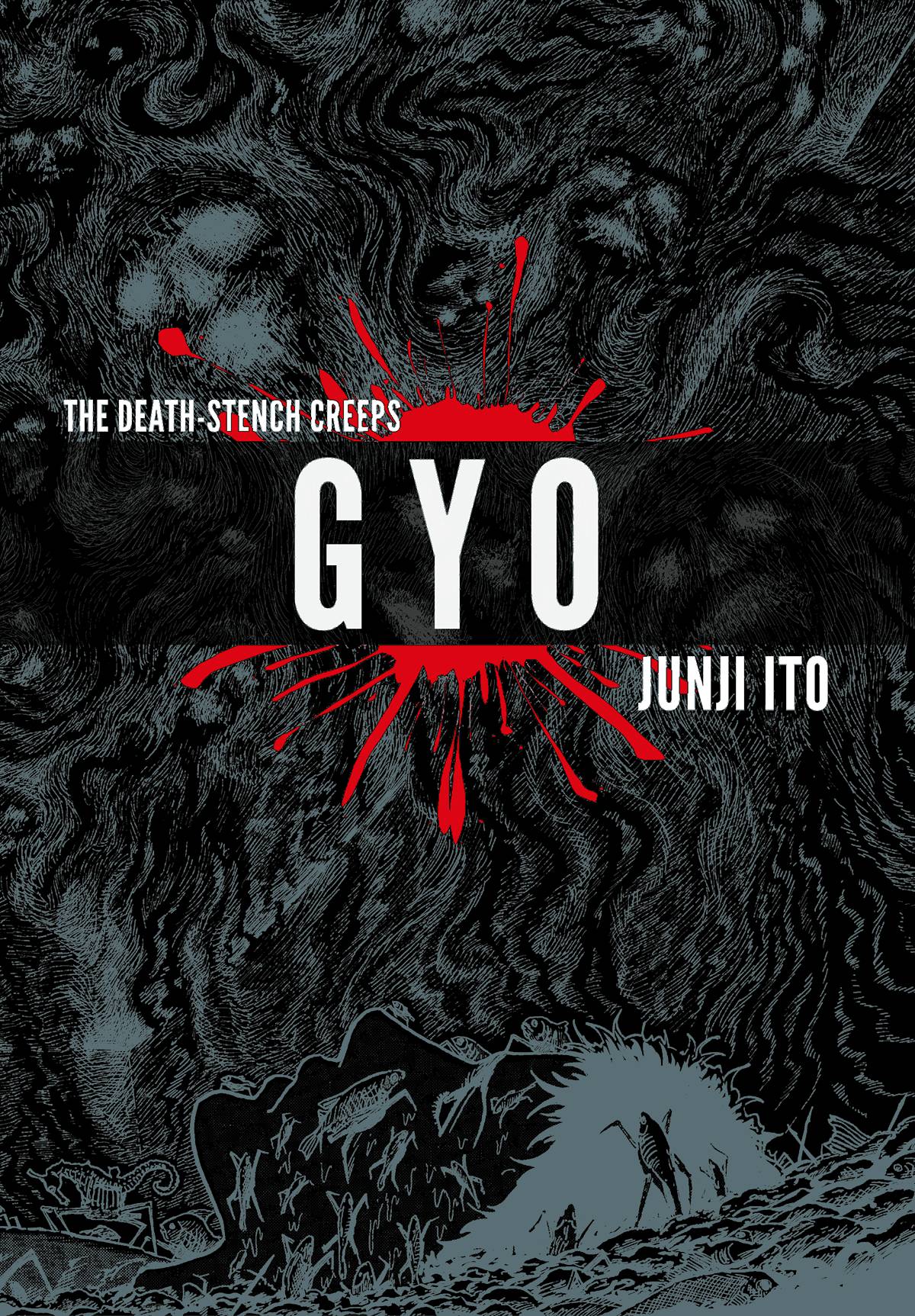
I talked about my experiment with, and affection for, Junji Ito’s Uzumaki a few days ago, and that led to me ordering two more collected editions of his work, including the above, called Gyo. And … uh … well, I have one more left and I guess we’ll see how it goes, because Gyo is … kinda bad? Like, “about fart monsters” bad. The big scary beasts in the book are literally fart monsters. There are lots of lovingly detailed drawings of fish, people, and various other living things with tubes implanted into their asses to harvest their internal gases. That’s not a joke. It’s not even a humorous exaggeration. They’re fart monsters. Their farts might be sentient. It’s unclear.
Fart monsters are not scary, no matter how you try.
Now, there’s definitely some creepy shit in here, and Ito’s art is awesome, particularly the way he ramps up the detail whenever he’s drawing anything particularly horrific, but the problem is that the creepy pictures are connected by story and words and talking, and the words ruin the cool pictures. Not the least because I hate the font this book is lettered in, which makes everyone look like they’re shouting, all the time. And a lot of time they are! There is quite a bit of shouting in this manga. Not always for a good reason.
It also features one of the worst female characters and one of the worst romantic relationships I’ve ever encountered in literature, period. Kaori is terrible in every imaginable way, and is a collection of every misogynist stereotype about women one could write down, and her boyfriend Tadashi is also terrible although not in an especially gendered way. You never for a second understand why these two even like each other because they are both insufferable and their relationship is toxic as hell, and I’m not sure if the book was deliberately written that way, but I don’t actually think it was. Like, she’s worse than him because her shittiness is so explicitly gendered, but they’re both terrible characters.
So, yeah, I didn’t like this one, although I’m still three-starring it, mostly on the strength of the artwork and the two amazing stories at the end of the book. They are both maybe the length of a standard Western comic book, so we’re talking two ten-minute reads, maybe, but the second one in particular, called The Enigma of Amigara Fault, is spectacular. The other suffers from a little bit of The Dumb; there will be some who won’t like it because it’ll fail the smell test right away and it isn’t long enough to win your trust back, but if you get past that it’s a great little short horror story. It also suffers a little bit from being translated into English; I assume the phrase “principal post,” meaning the main support column of a house, doesn’t sound quite as ridiculous when repeated in Japanese as it does in English. Amigara Fault, though, is great, from start to finish. It’s just that I’m not sure those two stories are enough to justify purchasing the entire volume, since Gyo itself is so Goddamned goofy.
One more, though, and then I’ll have to decide if I’m looking for more to read or retreating back into my superhero comics where I belong.
I’ve said this before— the clearest line of distinction between people who are very late Gen Xers and people who are very old Millennials is Pokémon. If Pokémon played a role in your childhood (or a role in the childhoods of people your age) chances are you’re a Millennial. If you made it to college without ever having heard of Pikachu, you’re Gen X. Along with this comes the idea of being into manga. I can assure you that I was into every nerdy hobby available in the Midwest in the 1990s and I never even heard the word “manga” despite being deeply into Western comic books. It just wasn’t a thing over here yet. Anime, much the same. And while I’ve had plenty of opportunities, I’ve never really gotten into either. Something about the style of most anime (and the weirdly wordy way Japanese seems to translate into English a lot of the time) has always just sort of repelled me, and I’ve never had a good explanation for why I don’t like the stuff, I just don’t.
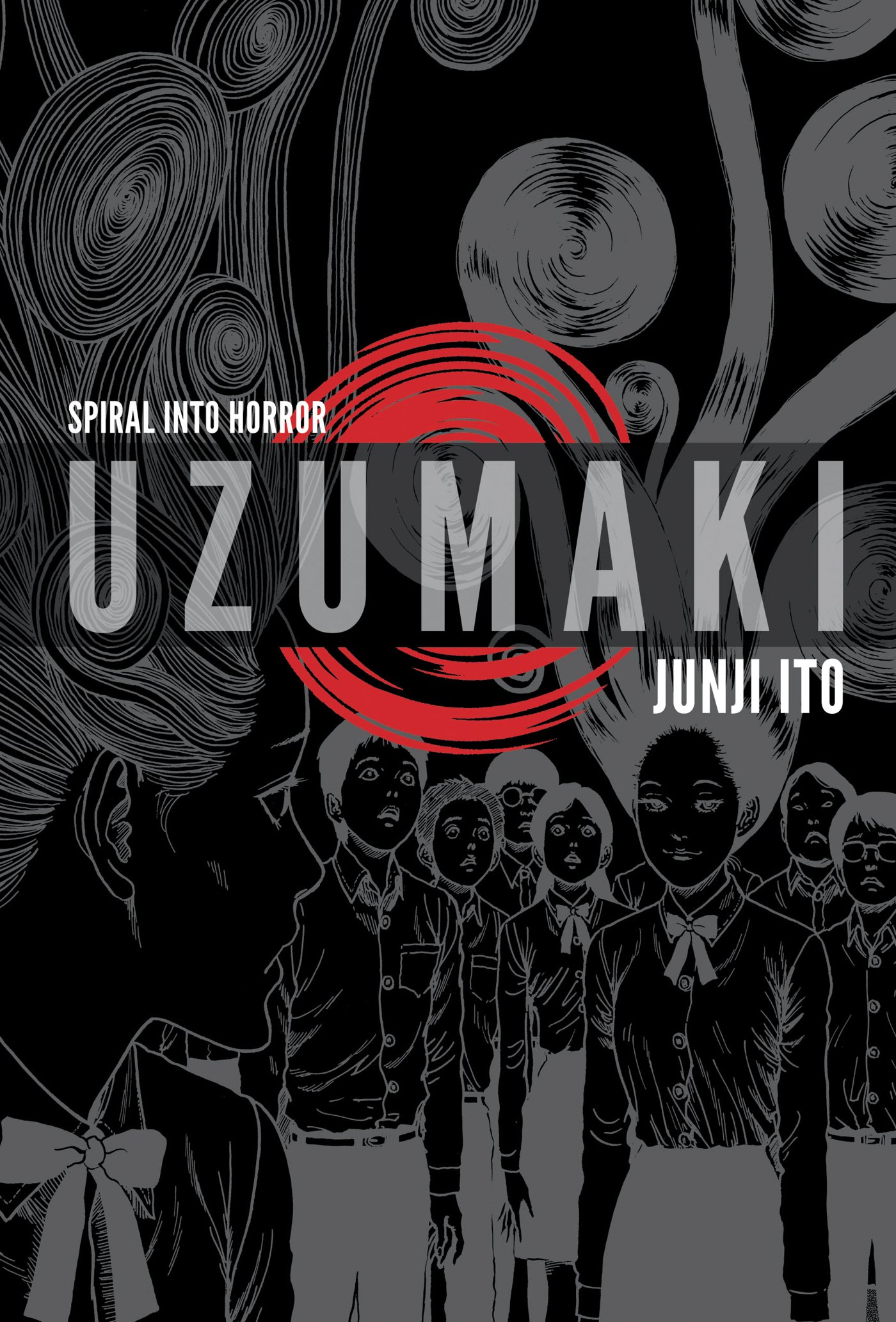
I bought the collected edition of Junji Ito’s Uzumaki earlier this week for no clear reason– like, I learned it existed and that it was “horror manga” and I bought it, and I’m not sure why– and I seem to have broken that streak finally, to the point where last night I ordered the collected editions of this dude’s other two series. Or, at least, two of his other series? I’m not sure how much he’s actually done. Uzumaki is kinda random and goofy in parts but it’s creepy as hell throughout, and it reminds me of Scary Stories to Read in the Dark in the absolute best way possible and I thoroughly enjoyed it. The idea– and this is kind of a “roll with it” scenario– is that a town is cursed, and the curse manifests itself in spirals. The first eight or ten chapters are all standalone, where some character or another is affected by the spiral psychosis in some way, and then everything knits itself together very satisfyingly over the last several chapters. The whole thing is six hundred pages plus, so it’s pretty beefy, and it’s big enough that the art has space to shine and for all that it’s a quick read anyway. If you’re a manga person you’ve probably already encountered this, but if you’re not and you want an entry point in the genre, this one roped me in, so give it a look.
I didn’t post yesterday, breaking a 200-plus day streak. Why? No good reason, I just didn’t feel like it, and after a while I get tired of the ceaseless WordPress notifications that I’ve blogged X days in a row. My cold isn’t quite gone yet although today was better, so hopefully this will be gone in the next day or two. We’ll see.
I have talked a couple of times about how recent trends in my video game habit have led to a minor fascination with the Japanese language and Japanese history. Specifically, I have the Nioh games and Ghost of Tsushima to blame for this, both of which hang very fictional video game storylines on top of actual people and actual events in Japanese history. Yasuke, a (real) African who rose to be a samurai in the service of the (real) sixteenth-century warlord Oda Nobunaga is actually someone you fight in both of the Nioh games. The real Yasuke did not have lightning powers or a magical bear spirit that fought with him, but he was a real dude who actually existed.
I’ve gone looking a couple of times for a recent biography of Nobunaga in English, a book that does not seem to actually exist, but during one of those searches I happened upon this book, and it languished on my Amazon wish list for quite a while until it finally came out in paperback a bit ago and I ordered it. And considering what the book turned out to be, it’s really interesting that I only know about Yasuke through heavily fictionalized accounts of parts of his life– because while African Samurai is definitely a history book, it’s not at all like any of the books about historical figures that I have read in the past.
Thomas Lockley, one of this book’s two authors, is an American historian currently living in Japan. Geoffrey Girard, on the other hand, is a novelist, and while I didn’t delve into his background too deeply it doesn’t seem that he has any particular academic training in either history or Japan. While there are contemporary sources that attest to Yasuke’s existence– he is depicted in artwork and there are a handful of letters from a very prolific Jesuit monk who lived in Japan that discuss him, among a small number of other sources– there really isn’t enough information about him out there to fill up a 400+ page book without finding some way to provide more detail. And this book handles that dearth of source material in two ways: one, by making this a book that is nearly as much about Oda Nobunaga as it is Yasuke (which was a treat for me, since that’s what I was originally looking for) and two, by making the book almost more a piece of historical fiction than it is a traditional history. It is clear, in other words, that a novelist had his hand in writing this, and if I had to guess I’d suggest that the majority of the words on the page are Girard’s and not Lockley’s– although, to be clear, I would be guessing.
How is it historical fiction? Because far more of the book is about Yasuke’s thoughts and feelings and day-to-day life than the extant evidence we have about him would ever allow. For example, we know, because the Jesuit monk talked about it, that Nobunaga granted Yasuke a house on the grounds of his home and provided him with a short sword and a couple of servants. That’s factual, or at least as factual as a single secondhand account from five hundred and some-odd years ago can be presumed to be. But that’s all we know, and the two-page scene where Nobunaga summons Yasuke and then surprises him with the house, and Yasuke falling asleep on his new tatami in his home and awakening to find his new servants bowing at his feet, is pure invention. It’s not necessarily unreasonable invention– there was no point in the book where I thought that the authors were going too far in constructing a narrative out of what they had, and they only very rarely go so far as to utilize actual dialogue anywhere, but the simple fact is that that whole sequence is fictionalized, and the book is riddled with things like that. Yasuke is traveling with Nobunaga, and he reflects upon something-or-another that allows the authors to inject a piece of necessary historical background. We know that at one point Yasuke fought with a naginata, and so there’s a paragraph at one point where he’s thinking about buying one. That sort of thing.
So it’s necessary to be aware of what you’re reading while you’ve got this book in front of you– it never quite crosses over to the fabulism of, say, Dutch, Edmund Morris’ “memoir” of Ronald Reagan that actually literally inserted the author into Reagan’s life and pretended he was a witness to events that he wasn’t there for, but it’s absolutely not a straight work of history. (And while I’m comparing African Samurai to other books, I want to mention Ralph Abernathy’s And the Walls Came Tumbling Down, which is another book that is supposed to be about one person and ends up being someone else along the way.) And there are several places where the authors are forced to bow to simple historical uncertainty: we lose track of Yasuke in the historical record at some point, and we don’t know how or where or when he died, so the authors actually mention multiple possibilities about what might have happened to him after the brief Nobunaga era ended; stories about enormous African warriors (Yasuke was 6’2″, and would have been easily a foot taller than anyone around him in Japan) in places where such people usually weren’t found, but they explicitly paint them as possibilities, of varying levels of likelihood, rather than picking one and ending the “story” with it.(*) But once you internalize that lightly-fictionalized aspect of the book, it’s a hell of an entertaining and informative read on a whole bunch of levels, and I’m really glad I ended up picking it up. I don’t know how big of a group of people I’m talking to when I say something like If you’ve ever wanted to know anything about sixteenth-century Japan, pick this up, but … yeah. Go do that.
(*) I wish they’d gotten more deeply into his name rather than relegating it to a footnote, but as you might have guessed, “Yasuke” almost certainly wasn’t his actual name; it’s likely that “Yasuke” is “Isaac” filtered through Japanese pronunciation, and “Isaac” almost certainly wouldn’t have been his African birth name either, for obvious reasons. So just because we see a story of a similarly large and skilled African warrior somewhere near Japan in the right time frame, knowing that other person’s name doesn’t automatically exclude it from being Yasuke, because Yasuke wasn’t Yasuke, and might have abandoned that name after leaving Japan.
I have now watched the entire first season of this … show. This program. This anime. And while I’m neither in love with the program itself nor the format, there are some interesting things going on here.
The premise of Attack on Titan is that the human race, under assault of giant man-eating humanoids called Titans, has withdrawn behind three concentric walls that, for hundreds of years, have protected them from Titan attacks, but also prevented humanity from going anywhere outside the safety of their walls. In the very first episode, a Colossal Titan, one larger than any ever seen before, shows up and basically wrecks the outer wall, allowing the Titans inside. A full 20% of humanity perishes in the events that take place over the next several months, as the Titans have feasts and the humans try to fight back.
Good stuff:
This show does action really well. All of the Titan fights were really cool, and the Spider-Man-esque way the characters get around, via waist-mounted cable guns, never looks anything short of amazing.
The designs for the Titans are uniformly awesome. None of them look like any others, but they all really skate up to the uncanny valley and they are all really creepy. None of them move quite right, although some of them move much more strangely than others, and the way some of them have faces that would look perfectly normal on a banker or a grocer when they’re actually man-eating monsters is really something.
The actual story itself is pretty cool; I want to know more about these things and more about the world.
Bad stuff:
This may be a manga thing or an artifact of how Japanese translates into English– and I should point out that I watched about 80% of the season dubbed, not subtitled– but my God, the dialogue was terrible, and the melodrama off the charts. There was no set of circumstances perilous enough (or exciting enough) that they could not be interrupted for a lengthy philosophical conversation, even if the characters were, say, on horseback and fleeing from a giant, when you wouldn’t expect them to be able to talk. The voice acting in both languages has one volume: screaming. And any individual sentence would always be 20 times as long as it needed to be, with lots of recursive clauses. Even if this is how Japanese sounds to an English speaker when translated literally, you solve that problem by not translating it literally. If you’re going to do a dub, try and make the dialogue sound natural to an English speaker.(*)
Character design for the human characters could be better, especially since they tend to be wearing uniforms and thus dressed the same all the time. I had trouble differentiating between a lot of the characters.
The flashbacks. My God, the flashbacks. Again, nothing is too exciting that you can’t interrupt it with a five-minute flashback to people talking.
Pacing. The episodes are short, at about 22 minutes each, but there’s a couple of minutes of recap and credits at either end of that, so the actual episode length is maybe sixteen to eighteen minutes? I am not exaggerating when I say that most episodes are 14 minutes of talking about what is happening right in front of the characters and carping about philosophy and then four minutes of something actually happening, then a cliffhanger.
So, it sounds like I hated this, but the positive stuff is actually interesting enough to me that I’m probably still in for the second season– especially since the things that are crappy about it lend well to making fun of the show while watching it, which … is a way to enjoy TV, I suppose. I may try out a season of My Hero Academia before I go into S2 of Attack on Titan just to see what things are in common across the two shows and maybe recalibrate my expectations a little bit.
Also, my wife brought home the first two volumes of the manga from the library, and I read the first one, and the anime really does appear to be a scene-for-scene translation of the manga. I have not read the second volume yet and really am not feeling much of an itch to do it, so I think I’ll stick with the series for now.
(*) This may be a good time to remind people that my academic background is in Biblical Studies, and the Hebrew Bible in particular, so I have a lot of Opinions about how to translate things. My lack of facility with Japanese hurts me a bit, but I can go on for a while about this sort of thing.








 Welcome to infinitefreetime dot com