#REVIEW: Black Shield Maiden, by Willow Smith & Jess Hendel

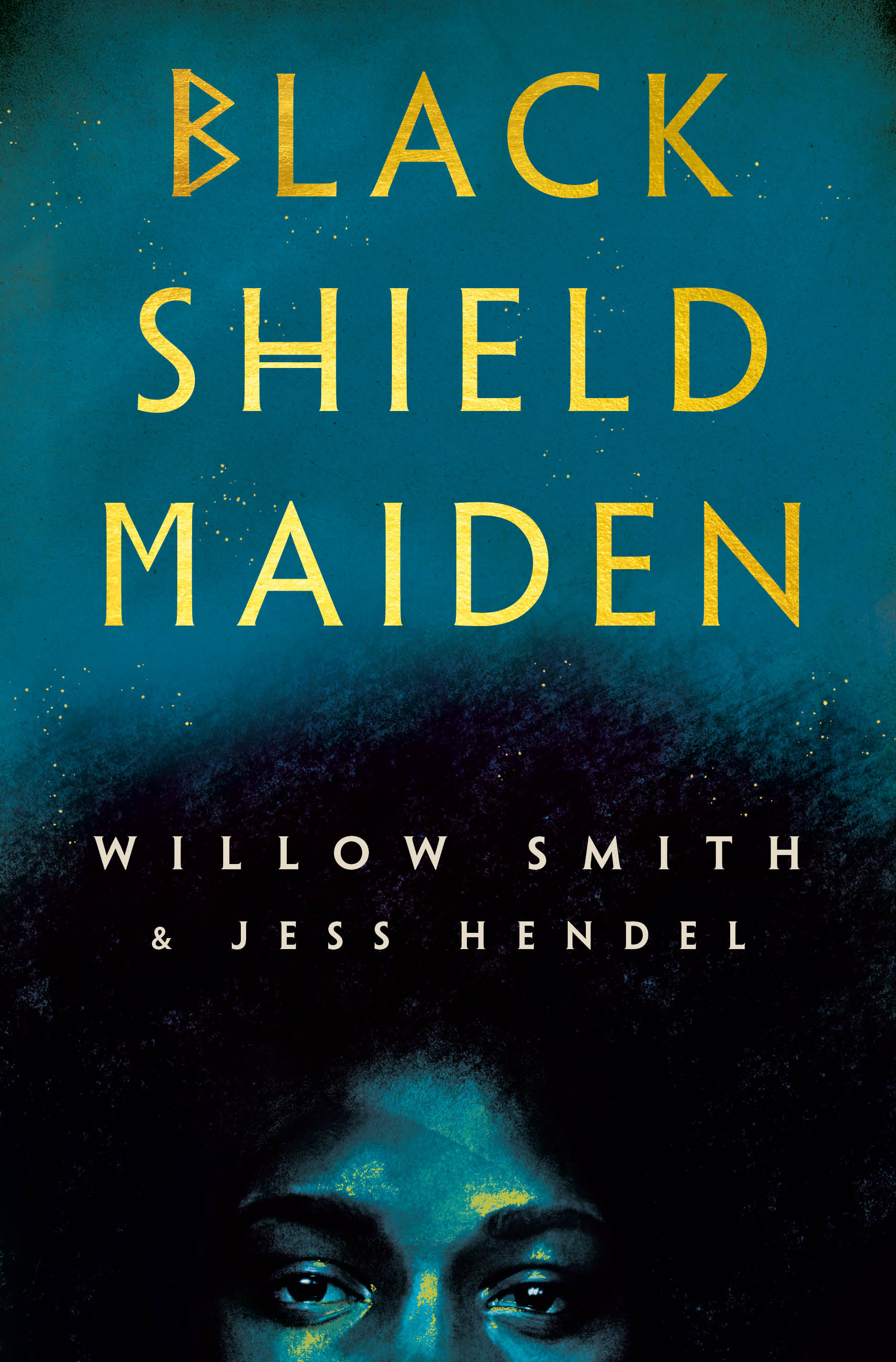
I waited too long to write this– life, getting sick, and various other dramas intervened– so I admit my ardor has cooled a bit, but my admiration for Willow Smith continues to grow with every project she releases. It’s impossible to really know how much of Black Shield Maiden is her work and how much is Jess Hendel’s, of course, although I do find it interesting that Hendel is more or less given co-author credit here. Her name’s smaller than Smith’s, as one might expect, but not that much smaller, and I can easily imagine a world where this is simply ghostwritten and only Smith’s name appears on the cover.

Also, I found it at Target, of all places, which is not somewhere I’m accustomed to discovering books. I didn’t actually buy it there, but that was where I noticed it for the first time. The cover’s striking as hell, and it took me a second to actually realize who the author was.

Anyway, Black Shield Maiden is the story of Yafeu, a Ghanaian warrior who is kidnapped and sold into slavery, then rescued during a Viking raid on the camp where she’s being held. She’s more or less still a slave in the frozen north, but the Viking concept of slavery was quite different from American chattel slavery, and she serves as a handmaiden to the princess Freydis and ultimately becomes a mentor of sorts to the girl as well. I won’t spoil the story, but I can safely tell you that she ends the story in a very different place than she starts it, both literally and figuratively, and the book doesn’t quite end on a cliffhanger but the last fifty pages or so make me really interested to see what’s coming next. This is book one of what I think is a trilogy; the final page promises a forthcoming book two but doesn’t give a name or a date yet.

I don’t have a ton of criticisms of this; it’s a really solid book the whole way through, and not only am I onboard for more collaboration between these two women but I’m probably going to look into Jess Hendel’s work as a solo author– this book was my first exposure to either of them. The way Yafeu is integrated into Viking society doesn’t quite go the way you think it’s going to; she learns the language perhaps a bit quicker than she ought but I’ll forgive it because her being unable to understand anyone would have gotten annoying quickly, and it really seems like most of the people around her just literally decide she’s a dark elf and roll with it. The cultural differences and her outsider’s view on Viking society is neat to read about, too, and Yafeu and Freydis and a handful of others are compelling characters with interesting arcs over the course of the story. I don’t know that I liked it enough that it’s going to end up on my end-of-year list or anything, but it’s a well-written, action-packed, enjoyable read with lots of interesting female characters and if the plot tickles your fancy I’d recommend picking it up.
Sunday night book reviewlets

I was gonna go see Deadpool & Wolverine today and life intervened, so let’s review a whole bunch of books.

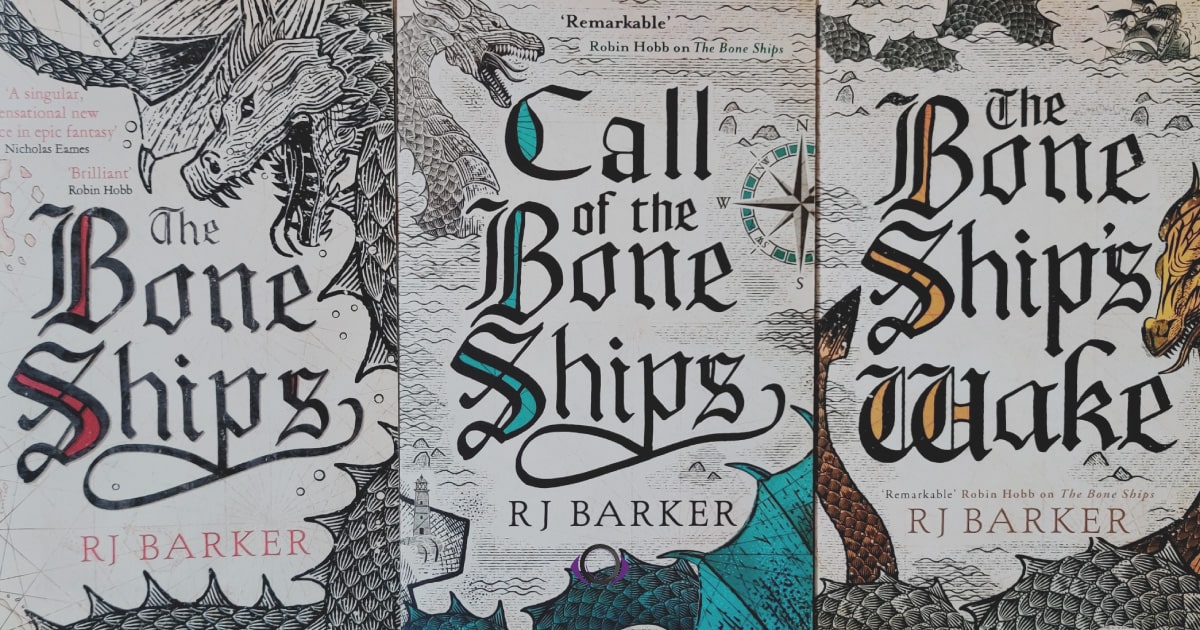
The Tide Child Trilogy, by RJ Barker: Excellent, although it took me fifty pages or so of the first book to get used to RJ Barker’s writing style. Nautical fantasy is a sorely underexploited subgenre, and damn near the entire trilogy takes place on a boat. Now, it’s a boat made from dragon bone, and it’s sailed with the help of a walking bird-thing who can magically create wind, but outside of that I can’t imagine anyone who enjoys historical fiction would want to pass on this, and the fantasy elements are not as extensive as a lot of the other books I have read this year. Combine that with some lovely, subtle world building and a feminist perspective that is omnipresent and will still fly over the heads of some readers and you have something I really enjoyed.

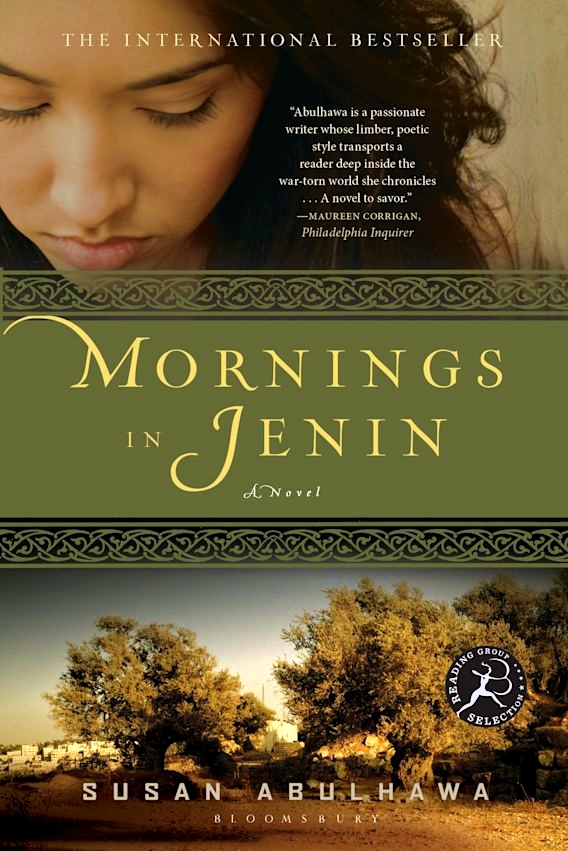
Mornings in Jenin, by Susan Abulhawa. This is the second of Abulhawa’s books I’ve read this year and is actually her debut novel, but in all honesty it’s superior to Against the Loveless World in nearly every respect, and Against the Loveless World is a book I enjoyed quite a lot. Abulhawa is a Palestinian author and this book begins with the creation of Israel and follows a small handful of characters up to, more or less, present day (the book came out in 2006, and ends … 2002-ish, maybe? So close enough.)

All of the trigger warnings, and if you’re remotely human this book will leave you incandescent with rage at several different points. I need to do a whole bunch of research and then read it again. It might be the most important book I’ve read this year; everyone needs to read this one.

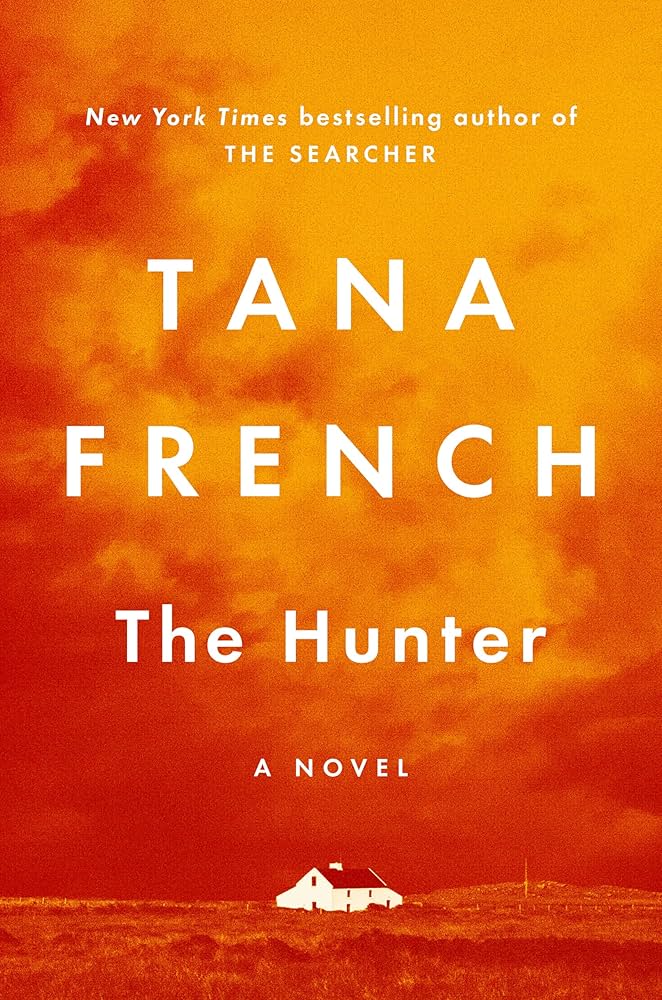
The Hunter, by Tana French, is the second book she’s written about Cal Hooper, the main character of her previous novel The Searcher. I don’t have a lot to say about it that I didn’t have to say about the first book she wrote about this guy; Cal is an American ex-cop who moves to Ireland in search of a slower, calmer life and ends up in the tiny (fictional) town of Ardnakelty, where he quickly forms a bond with Trey, a local teenager with some trauma in her background. In the first book, Cal got pulled into the disappearance of Trey’s brother, and in this book, her father reappears for the first time in years and brings all sorts of pain with him. This book is less about the central mystery (it’s technically a murder mystery, but the murder doesn’t take place until about the 60% mark) and more about the relationship between Cal and Trey and what it’s like to be an outsider in a small town, and I really feel like this and The Searcher are both triumphs. I’d love to see more about these two.

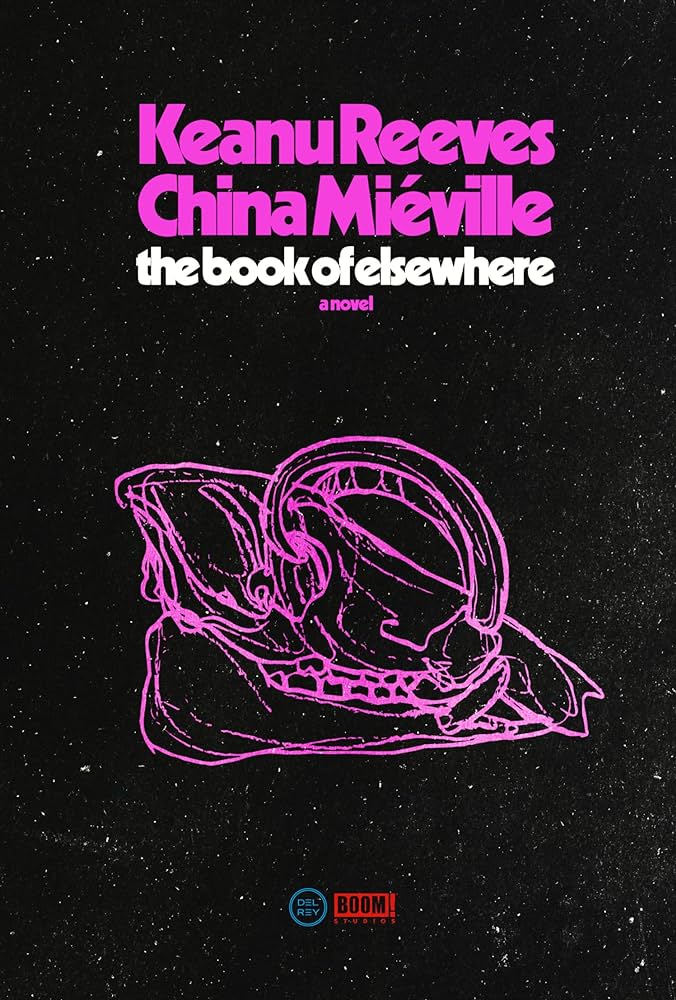
the book of elsewhere, by Keanu Reeves and China Miéville. I was super excited about this one, so I’m sad to say that this is quite easily the single most disappointing reading experience I’ve had this year. I don’t have any idea how the co-writing process worked between Reeves and Miéville; Reeves also “co-writes” the comic book series that this book builds upon, but I can say that the only thing in this book that felt like Miéville was the vocabulary. Had those two names not been on the cover, I’d not have made it past the prologue, which is so choppy and poorly-written that I can barely believe it made it to publication. I made it through about 120 of the book’s 340 or so pages before deciding I had other things to do, and I don’t see myself picking this back up. You should avoid this unless you’re a huge fan of BRZRKR, the comic it’s based on … and I don’t really think BRZRKR has any “huge fans.” Definitely stay away if you are a fan of Miéville; just pretend this book never happened.

#REVIEW: The Honey Witch, by Sydney J. Shields

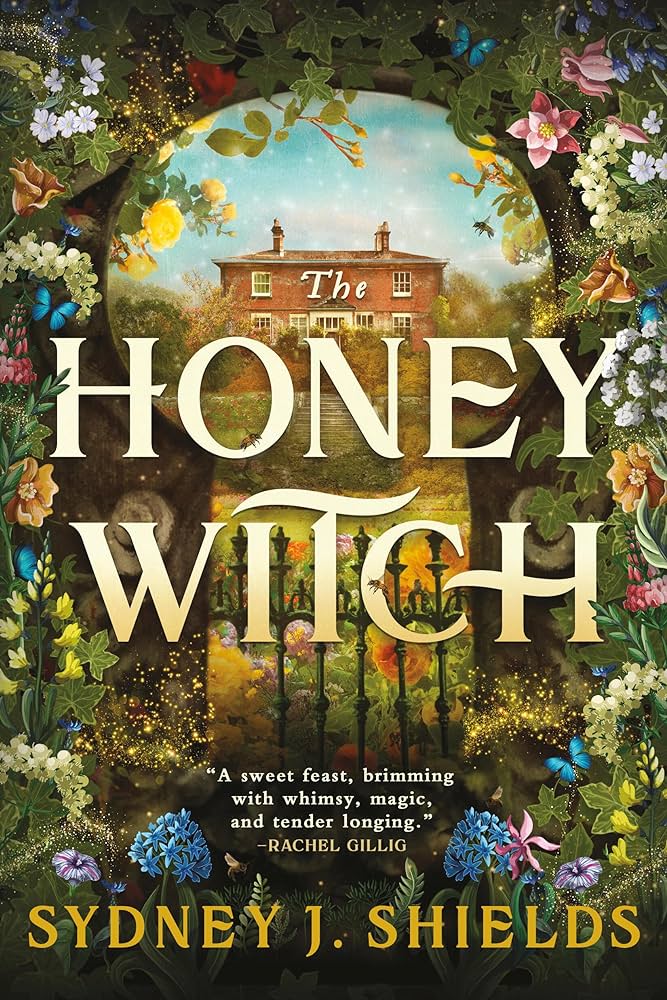
This will be my second post in a row that is about a book but which I’m not calling a “review,” mostly because in the case of Sydney J. Shields’ The Honey Witch I’m not convinced I know how I feel about it yet. It is also the second book in a row where the thing about it that grabbed me was the title. I don’t know what a honey witch is, or at least I didn’t before I picked the book up, but for some reason I found the idea immediately intriguing– so intriguing, in fact, that I decided to overlook the fact that nearly everything else about it indicated that it was likely to be something I wasn’t necessarily going to enjoy. I mean, take a look at that pull quote. Those of you who have been here a while– have you ever heard me recommend a book with the phrase “sweet feast”? “Tender longing”? Okay, I’ve been reading a fair amount of romantasy lately, and I’m pretty sure if I went through my books in the last couple of years and counted up the ones with gay relationships in them versus the ones that were primarily hetero, the gay stack would be quite a bit taller. But everything about this just kinda feels like Not Me. I mean, this is the blurb:

The Honey Witch of Innisfree can never find true love. That is her curse to bear. But when a young woman who doesn’t believe in magic arrives on her island, sparks fly in this deliciously sweet debut novel of magic, hope, and love overcoming all.

(And see that “deliciously sweet” bit there again? All the pull quotes have honey- or tea-related puns in them and they’re excruciating.). But yeah. Honey Witch. The concept sold the book. Fuck it, I got it on sale for nine bucks. Who cares about nine bucks? I don’t care about nine bucks.

The first 80% was, indeed, sweet and whimsical and I might be starting to overuse this word lately but delightful and also, I dare say, cozy, another word that is maybe a sign of Not for Me sometimes. And it’s a fast read; 340 pages and I was reading about a hundred pages an hour while going through it.

And then after that first 80%, it gets really dark going into the ending, and I don’t want to spoil anything but I either loved this book or the ending ruined it, and as I’m sitting here I honestly can’t tell you which it is yet. I five-starred this and even put it on my shortlist for the end of the year, and it’s either going to end up at, like, number nine or something or it’s going to be a book that I quietly pull off the list in October. And it’s really going to depend on whether the first part of the book sticks with me more than the ending.

(At this point, I’m changing the title to my standard “Review” template, because screw it, this is a review. “I loved it up until the ending and I’m not sure about the ending” is a review. #myblogmyrules)

(And it occurs to me that, while this feels pretty standalone and as far as I know is not intended to be part of a series, but if a sequel were to come out, I’d pick it up, mostly because I like the characters so much. That, in and of itself, may seal the “review” part of the review.)

Free writing advice

I am going to deliberately not use the name of the book I just finished, either in the title or in the body of the review itself. I have sprinkled clues here and there, however! I didn’t like this book at all, and I feel like talking about what the book did wrong, but I don’t just want to shit all over it. It has this weird enthusiasm to it that got me through 740 pages in, like, two days. It’s not entirely shit! It’s just … not very goddamned good.

So. Let’s provide some advice to authors.

  • Don’t base your magic system on dragon shit. That’s not a fucking joke. The magic system in this book series is based on gunpowder made from dragon shit. Gunpowder made from certain different kinds of dragon shit has different magical effects. None of them make any fucking sense. Gunpowder made from dragon shit doesn’t make things float. Other gunpowders made from dragon shit don’t make light or darkness or Jesus Christ the magic system is so fucking dumb.
  • If you’re going to load a fuckton of exposition in the first chapter, don’t put it in the middle of a chase scene. Because for fuck’s sake you guys are running for your lives please stop fucking explaining things to each other that you already know. This was shitty anime levels of overexplaining and while the dialogue was at its worst in the first chapter it never really got much better.
  • Your main character should have a personality.
  • Your main character’s long lost love that he’s obsessed with should be interesting. Imagine having someone built up for hundreds of pages as your MC’s Lost Eternal Love and then when she shows up she’s, like, a cashier or something. And “cashier” is her personality, not just me taking a shot at a job that for the record I have had.
  • Don’t introduce fucking time travel into your plot with just a hundred pages left. Because that happened. The entire resolution to the book suddenly involved time travel. Fucking stupid dragon-shit-based time travel.
  • If you spend half the book worrying about who betrayed you, the betrayer has to have been mentioned in the book. Two of the three MCs suspect each other or the third MC of betraying them and feeding information to the king. It turns out to be some random shopkeeper who overheard them and — get this — set up a listening device in the chimney so she could feed information to the king. Bullshit.
  • Pick an adversary. You can have an evil king or a zombie disease or a big heist but if you’re going to try and cram all of those things in you probably ought to decide who the big bad actually is. It was never clear what the big heist was for– mainly because the guy behind the heist refused to tell anyone– and then he died and the payoff just fucking sucked all around.
  • Did I mention the dragon shit. There is a hundred pages dedicated to feeding a dragon some stolen dragon shell that used to be part of the king’s crown and “regalia” and then following it around and waiting for it to take a shit.
  • You can only say “ruse” so many times before it loses all meaning. The main character apparently doesn’t like being called a con artist? So it’s a “ruse”? His cunning attempt to trick me becomes annoying after the 3,000th use.
  • Your title should make sense. Does that title imply anything to you? That thing doesn’t happen. Not once, not a thousand times. There is one reference late in the book to a thousand people, specifically, dying, but if that is what the title is based on an editor should have stepped on it. It’s a great title! Has fucking nothing whatsoever to do with the book.
  • Your love relationships should make sense. They all suck. You can only lie to someone, directly to their faces, so many times before they refuse to put up with your shit any longer.
  • No one spends as much time thinking about their own name as the main character of this book does. It’s like the author was really, really proud of the name and felt the need to repeatedly explain what it means. It’s a noun! I know what it means!
  • If you aren’t writing a Star Wars book, you don’t get to use Star Wars names. I have never read anything with stupider names, front to back. Absolutely awful. I’m not going to go into the other room and get the book to find examples but literally just put some clumps of letters together and you’ll have a name from this book. Unk Sphyz. Worx Bormfork. Shibble Knif. Goddamned awful.
  • Put the story in the story. The number of times that a chapter would end with the characters going off to Do Something and then jump, at the beginning of the next chapter, to after they had done that thing was fucking unacceptable.
  • Dragon. Shit.

God, there’s more, but I two-starred this on Goodreads and the more I think about it the more I want to go back and change it to one. That second point is just for enthusiasm. If this book made a whole bunch of right turns where it chose to make left turns it might have been a good book, and I can almost see where this author might be writing stuff I like in the future. But Christ, this book was a Goddamned mess.

Pfah.

On Bullshit

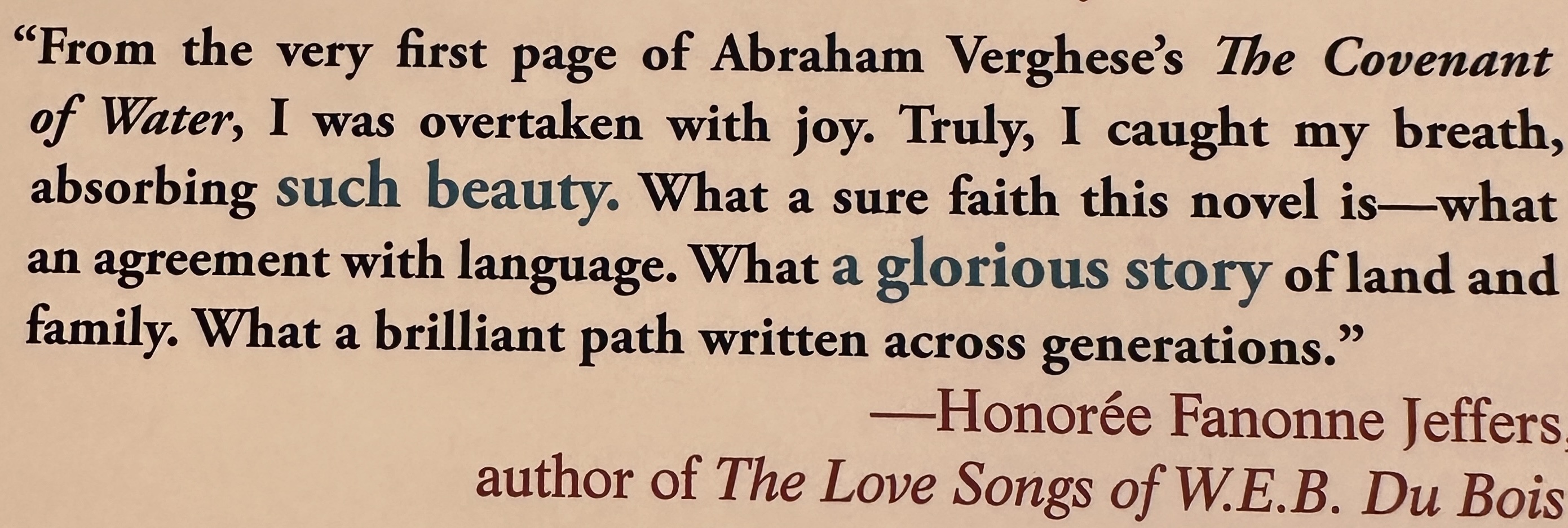
This post has the feel, to me, of something that has the potential to go viral in all the wrong ways, so let me be a hundred percent clear before I get started: Abraham Verghese’s The Covenant of Water isn’t a bad book. It is not a book I especially enjoyed, and now that I’ve finished it I don’t find it especially likely that I’ll ever pick it up again, but that’s on me: literary fiction is not my thing, and this was a rare example of a book that just sort of grabbed me out of nowhere and made me buy it, knowing full well at the time that I was likely to have … well, precisely this reaction to it. It’s 715 pages long and it took me nine days to read, which is a fucking eternity for me, and I wouldn’t have mentioned it at all on the site were it not for the fact that I happened to take a good look at the blurbs on the back cover and, my God, they are completely out of control. I know what blurbs are supposed to do; they are to sell the book, and whatever editor is in charge of such things is likely to choose the most heavily enthusiastic bits out of the entire blurb to highlight. I get all that. But this level of praise is bordering on unhinged, and I think you need to see it.

That’s … really high praise! Really, really high! I don’t think I’ve ever been “overtaken with joy” even once in my entire life, and I’ve never “caught my breath” while reading a book, or at least if I have I don’t remember it. I am genuinely unsure what the hell the third sentence means; it has the feel of something that was translated from some other language, but the author of the blurb is a fellow Hoosier, born in Kokomo and currently teaching at the University of Oklahoma, of all the Godforsaken places on the planet. One assumes, then, that this was not translated, and thus it’s just incomprehensible. Or at least uncomprehended. One of my problems with literary fiction is the lingering feeling, while I’m reading it, that I’m just not smart enough to understand why it’s good. Like, I read genre fiction, and the people who read literary fiction openly look down on us, and we just accept it and move on with our lives; our shit isn’t as Good or as Important as theirs is … for some fucking reason that I’m also too dumb to have ever figured out. To start an entirely unrelated argument here, if I can get over this bullshit with Christians and morality you’d think I’d be able to get over it with literary fiction and intelligence, but apparently not yet. The gaslighting continues unabated.

(Again, not complaining about the book. It’s not a bad book. It’s just very much a Not for Me book. I three-starred it, and I could be convinced to raise that to four, especially since I really felt the book stuck the ending. But I was never going to love this.)

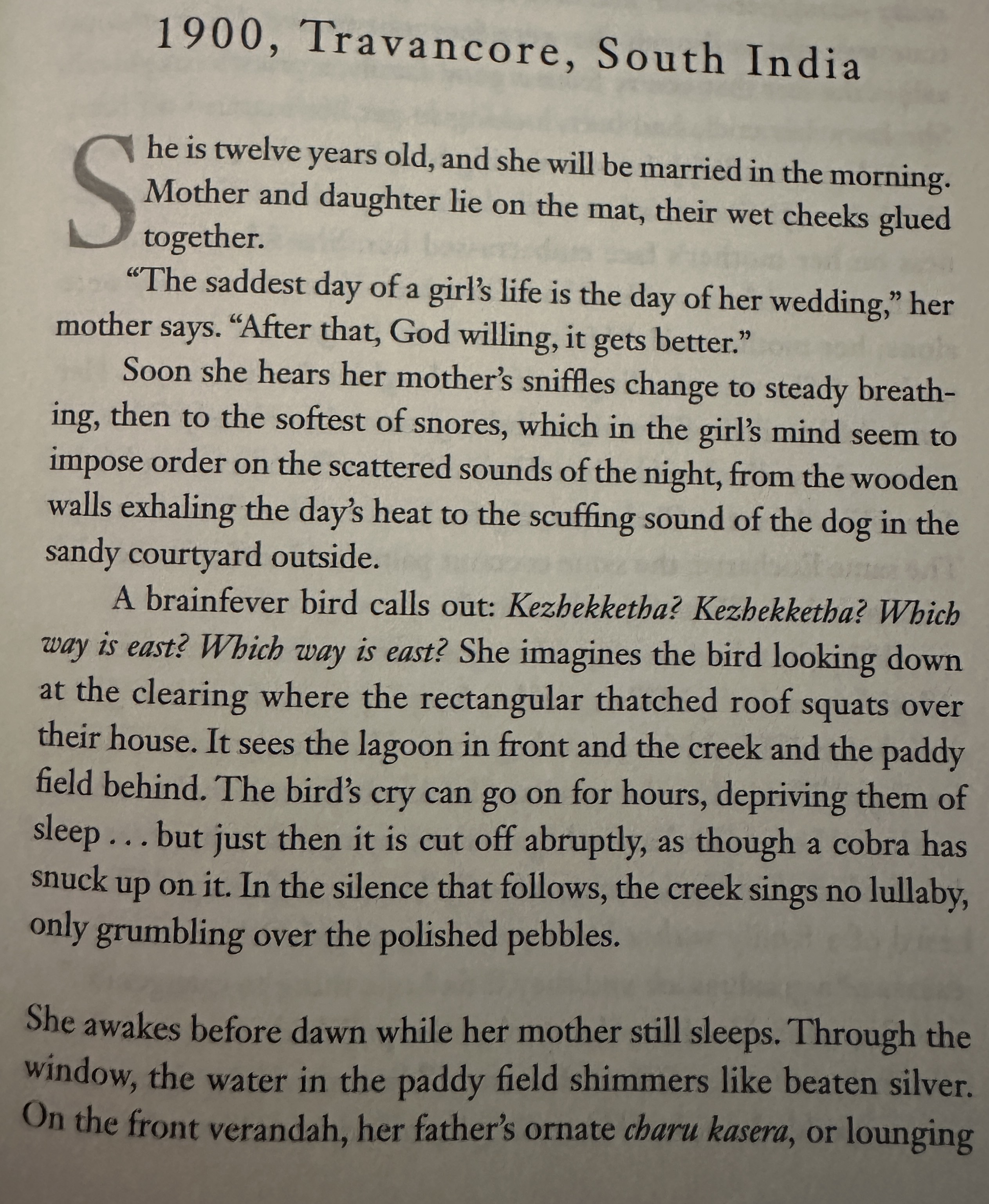
But, okay. She was overtaken with joy from the first page of the book. Again, maybe I just don’t get it! Let’s look at that first page. Surely fair use allows me to pull out 1/715 of the entire book, right? That’s .13%. I’m good:

Be honest: are you overtaken with joy right now?

To me, the most significant thing about this first page is that I genuinely have nothing to say about it. I’ve certainly read first pages and first paragraphs and first sentences that grabbed me by the shorthairs and didn’t let go, and I’ve read first pages that let me know in no uncertain terms that I was in for some godawful bullshit and I should either put the book down or buckle the fuck in. But … this is just a page of writing, to me. It’s certainly not bad writing and I have no complaints; the imagery is nice, but let’s be real, you could lose the paragraph about the bird and no damage would be done. Or would it? Maybe the bird is symbolic or some shit; I have no idea. But one way or another, I don’t feel anything in particular from having read this. I wouldn’t put the book down, but if you handed me just the first page and asked me if I was excited to read the rest, I’d shrug.

You tell me; I’ll believe you: what’s your reaction to this first page? What am I missing here?

The rest of the quotes on the back are not much better, by the way. Let me know if you want to see more.

On cultural memory

Interesting discovery earlier this week: I do a trivia question for my kids every week, right? Usually something connected to history, but not always. It’s completely optional and not for a grade; the people who get it right get a piece of candy on Friday and that’s really it. Just a little fun thing.

This month’s questions have all been about women, since it’s Women’s History Month, and this week’s was Who is the highest-selling woman author in the world? I was pretty certain I knew the answer, but I needed to double-check it before posting the question, because if I was wrong and it turned out to be She Who Shall Not Be Named, I was going to have to come up with a different question.

And I found a list— not perfect, Wikipedia admits– of the top-selling authors of all time. And it’s shocking, because of the number of authors on it that I have never heard of. Now, granted, people have been writing books for a long time, and I can’t read or know about all of them, but given how much of my life I have dedicated to reading and books, even given that several of them aren’t close to being in my genre, the fact that I haven’t ever heard of half of the top ten– half!— frankly blows my mind. Here’s the list:

  1. William Shakespeare. And, okay, yeah. I feel like there’s an argument to be made that Shakespeare doesn’t belong on the same list as the rest of these people, since he was a playwright and not a novelist or actual prose author, but I’m not going to make that argument right now. At any rate, I’ve heard of and read Shakespeare.
  2. Agatha Christie, meaning that my guess about the best-selling woman author was correct. Somewhere between two and four billion books sold. I have read three of them.
  3. Barbara Cartland, who I have never heard of in my entire life despite the fact that she has written seven hundred and twenty-three books and sold a billion copies of those books. I don’t read romance, granted! But how the hell have I never heard of her??
  4. Danielle Steel. Wouldn’t have guessed that she was this big-time, but okay. I haven’t read anything by her but at least I’m familiar with her.
  5. Harold Robbins. No idea. 23 books, American, around 750 million sales. Never heard of him.
  6. Georges Simenon. I’ll cut myself a bit of slack because he wrote in French and is Belgian, but there are 700 million copies of his 570 books out there and I’ve never seen one in translation? Fucking seriously? HOW??
  7. She Who Shall Not Be Named. Whatever.
  8. Enid Blyton. I think that maybe if you’d asked me who Enid Blyton was before I saw this list I might have been able to say she was an author. Maybe. I certainly wouldn’t have been able to provide more detail than that, and I’m willing to toss her on the “never heard of” pile.
  9. Sidney Sheldon. Between 370 and 600 million books sold. A suspense author, so his(?) books are probably much more aligned to my tastes. No clue.
  10. Eiichiro Oda. I’ll call him a .5, because I’ve never heard his name, but he’s the One Piece guy and I’ve heard of One Piece.

I have also never heard of #11, Gilbert Patten, #13, Akira Toriyama, but see Oda because it’s a similar situation, or #15, a Spaniard named Corin Tellado who supposedly has written four thousand books. Weirdly, after that, you have to roll through a couple dozen before I hit someone I’m unfamiliar with, and there are no American or English authors on the rest of the list who I’ve never heard of.

(Also, I just went and checked dates, and there are only three in the top 10 whose lives didn’t overlap with mine: Shakespeare, of course; Blyton, who died in 1964, and, ironically, Christie, who died six months before I was born. These are not nineteenth-century authors or anything, with the obvious exception of Shakespeare. They are all relatively modern.)

How the hell do you sell a billion books and you leave so small (or so specific) a cultural footprint that I, a person who has been reading constantly for his entire life, have never heard of you? I know I’m edging toward– if not trampling on– the idea that Nothing I Haven’t Heard Of Is Important, which I don’t believe, but books are kind of my thing, and the notion that I don’t know half of the top 10 writers who ever lived is weird, right? And not weird in a “something is wrong with me” type of way, but in a “something’s going on here” sort of way? Is romance that sequestered from every other genre of writing that this is normal?

I dunno. How many of these ten authors have you heard of? Is there anybody reading this who knows all ten of them?

The final piece

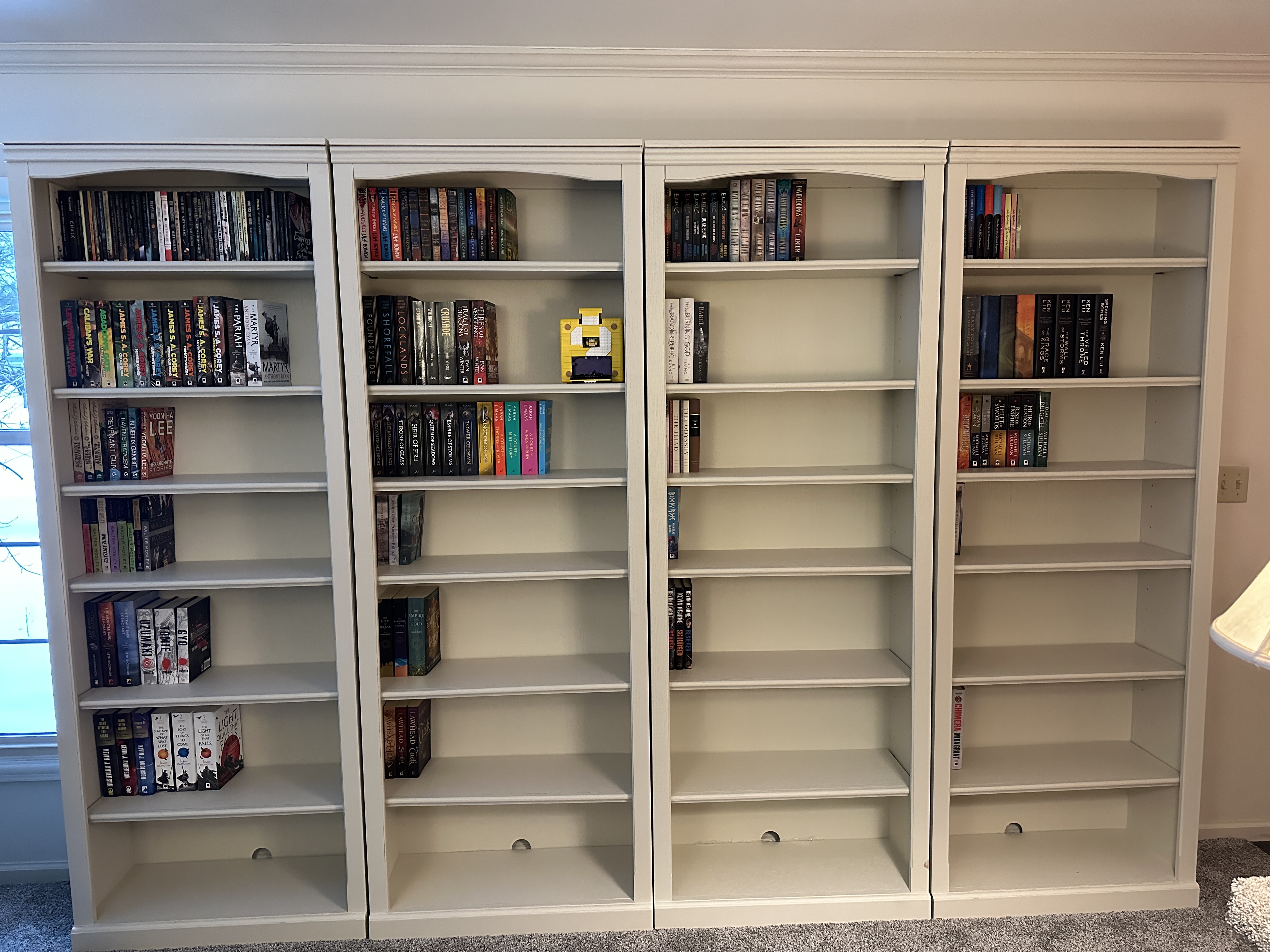
I have had a plan to replace the bookshelves in the living room— now, if you’ll recall, in the room that used to be the dining room– with higher-quality, real wood, 7 foot bookshelves for literally as long as I’ve lived in this house, and 2022 has been the first year in a long time that wasn’t utter shit, so we finally have the money to invest in something that’s going to last: thus these four new shelves, which magically match the paint in the living room perfectly and are finally going to give my books some breathing room.

Goal for 2023: write shorter fucking sentences. Christ. At any rate in the last couple of months we’ve recarpeted, bought a new sectional, and now put in the new shelves, so the living room looks completely different. And much awesomer.

I’m not close to being done to shelving these– that’ll take a day or two at least, and there’s a bunch of books I need to find, as the old shelves didn’t exactly get moved in careful order– but that can be my project for the next couple of days. I’ll post again when they’re done.

That Lego set on the second shelf was one of my son’s gifts and it’s there because we’re guarding it from the cats until he’s done building it. I’m going to need to find cool bookends in the meantime; I don’t want these to end up covered in knickknacks but I also want to leave some space on all of them. That’ll be a fun Amazon/Etsy search, I think.

The typical assortment of end-of-year posts will start soon; I think the book I just finished is going to make it to the best-of list, though, so that one probably won’t be for a while. I find myself in the odd position of having not hit my reading goal for the year, so I need to finish two books at least before I can write anything about what I read this year. I’ll find something else to talk about in the meantime.

REVIEW: The Weight of Ink, by Rachel Kadish

Every so often, a book scratches an itch that you didn’t even know was there, and Rachel Kadish’s The Weight of Ink is such a book. Those of you who have either been around for a minute or know me in the real world are aware that an earlier version of me wanted to be a college professor. I triple majored at IU, in Religious Studies, Jewish Studies, and Psychology, and then went on to earn a Master’s degree in Biblical studies, which is where I hit a wall when I realized that I liked being in class a hell of a lot more than I liked independent research. But I still have a couple of bookshelves about religion, and along with that is a fair number of volumes about Jewish history.

The Weight of Ink tells two parallel stories about two women scholars, a young, unmarried Jewish woman in the mid-1600s, when women knowing how to read and write much less participate at the highest levels of scholarship was forbidden, and a modern-day scholar of seventeenth-century Judaism, suffering from Parkinson’s and nearing retirement. A cache of documents is found in a seventeenth-century home, and the owner calls his former professor in to look at them, and the book takes off from there. Ester and Helen’s stories are interwoven throughout the book, along with Helen’s assistant Aaron, a postgraduate who she more or less grabs at random because he is able to read the right languages to help her with her research.

Mix in some Shakespeare, some Spinoza, a blind rabbi, the Inquisition, Sabbatai Zevi, and a little bit of fire and plague and you’ve got yourself a hell of a book. I’m making this sound a bit more like a detective novel than I probably should; this is indisputably capital-F Fiction, and may indeed be a litratcher, as (I hope) Hilary Custance Greene described it when she recommended it to me. But … yeah, if you’re going to drag me away from nonfiction and genre fiction, writing a book about seventeenth-century Jewry, making translation a bigger part of the action than one might expect, and making the two modern-day figures scholars is a key with a very specific shape that nonetheless opens one of my locks.

Or something; that may be too overwrought of a figure of speech, I’m not sure. At any rate, while it’s a bit slow-moving, which may not be surprising to those of you who just read the description, and it’s a bit on the dense side– it took me over a week to read, which is really rare for a 560-page book– I loved this book a whole lot. Kadish writes about seventeenth-century London like she lived there, and everything about this really worked for me. I hope to hell it actually was Hilary who recommended I read it, because I can’t find the comment anywhere, but I owe her one.