#REVIEW: Katabasis, by R.F. Kuang

In retrospect, this is probably my fault.

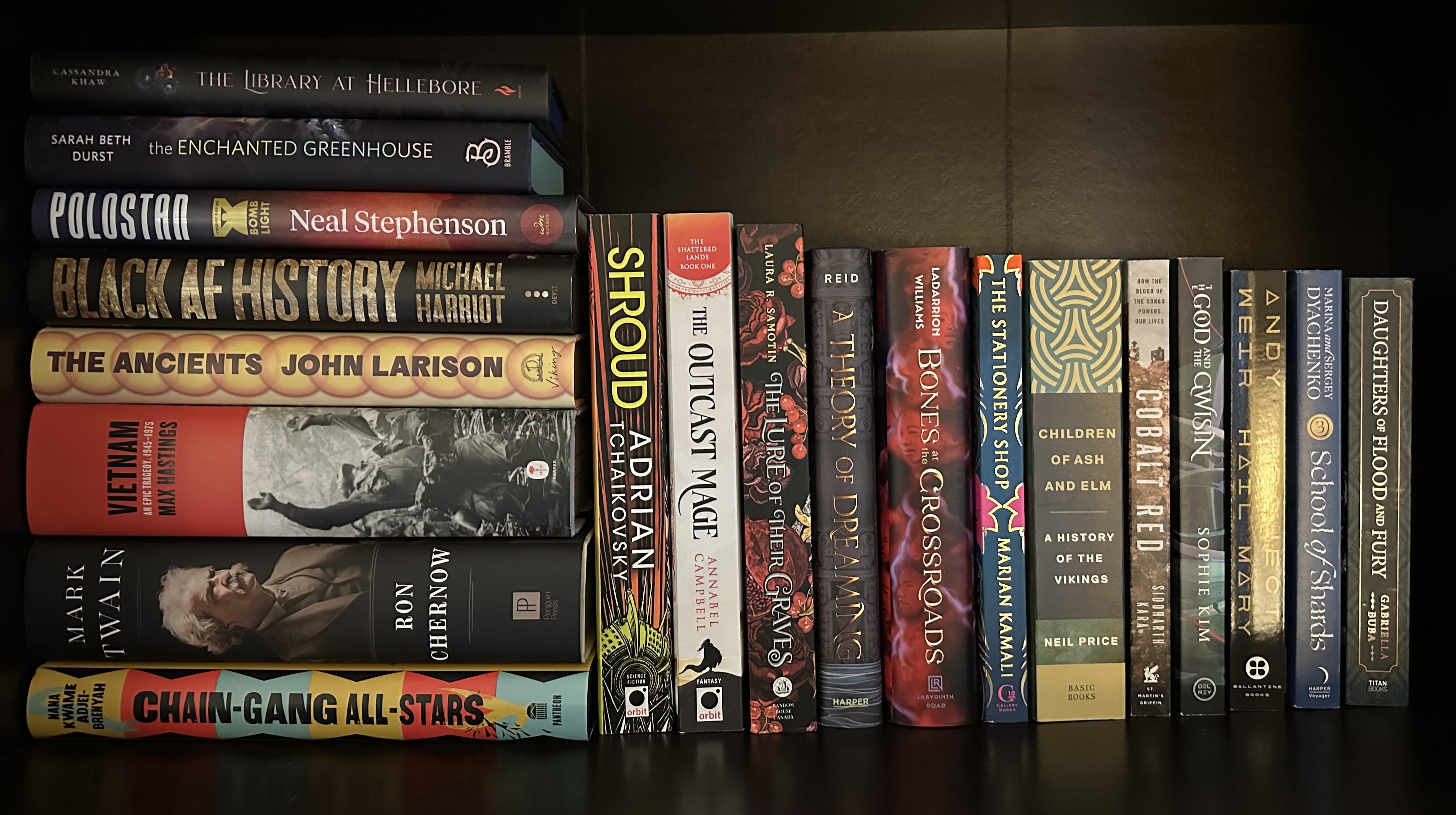
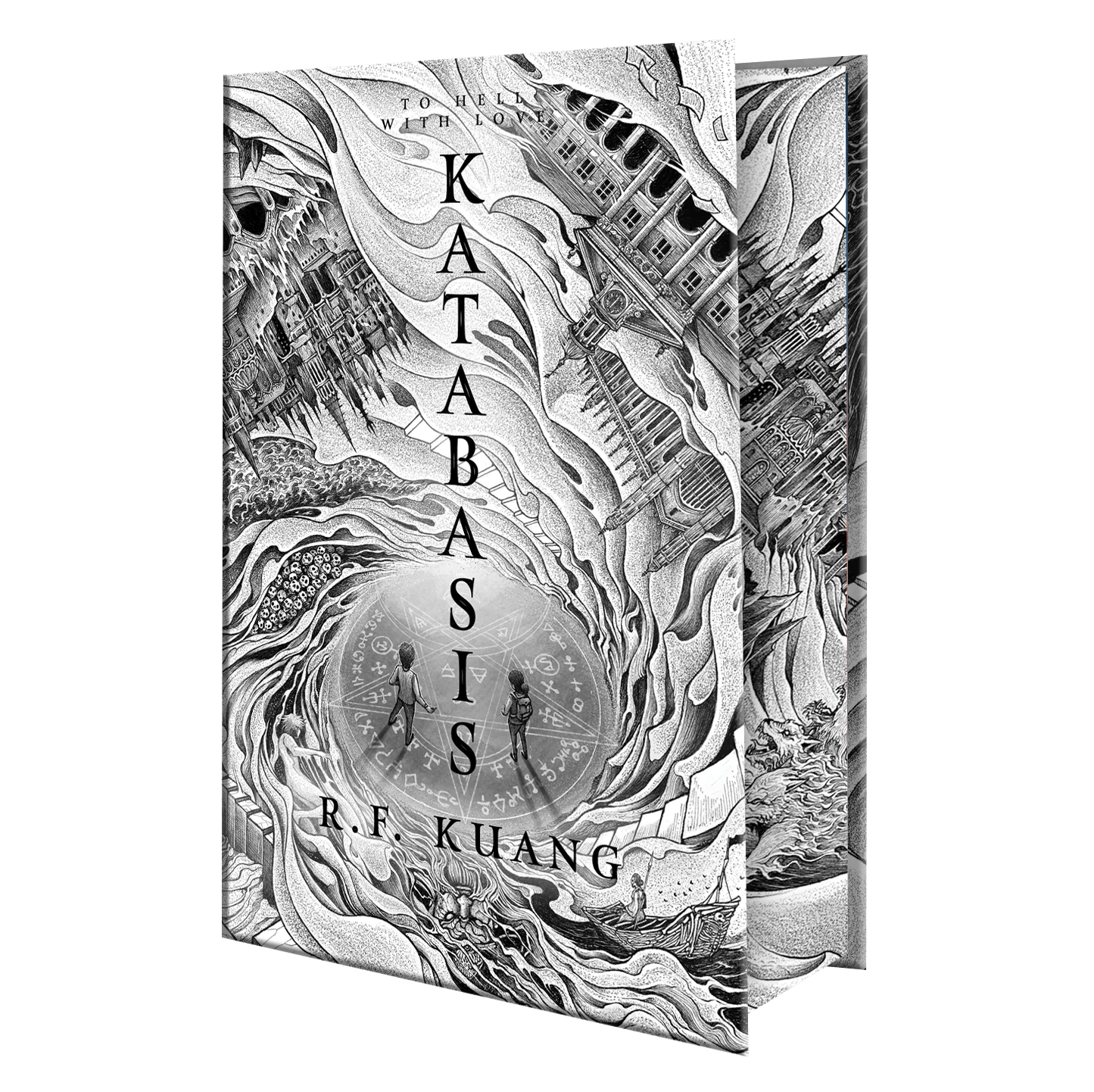
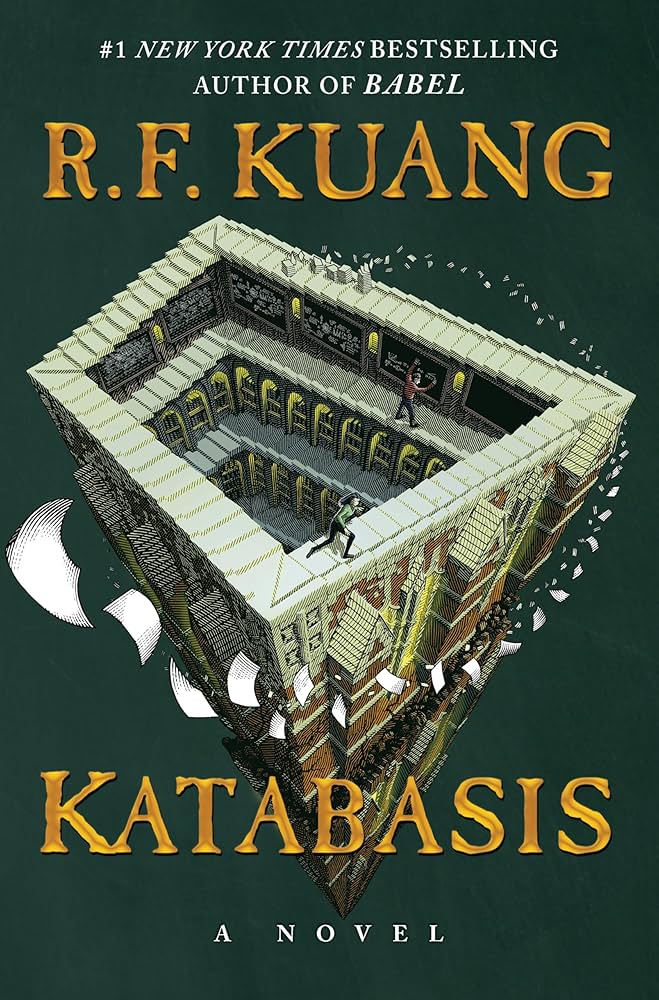
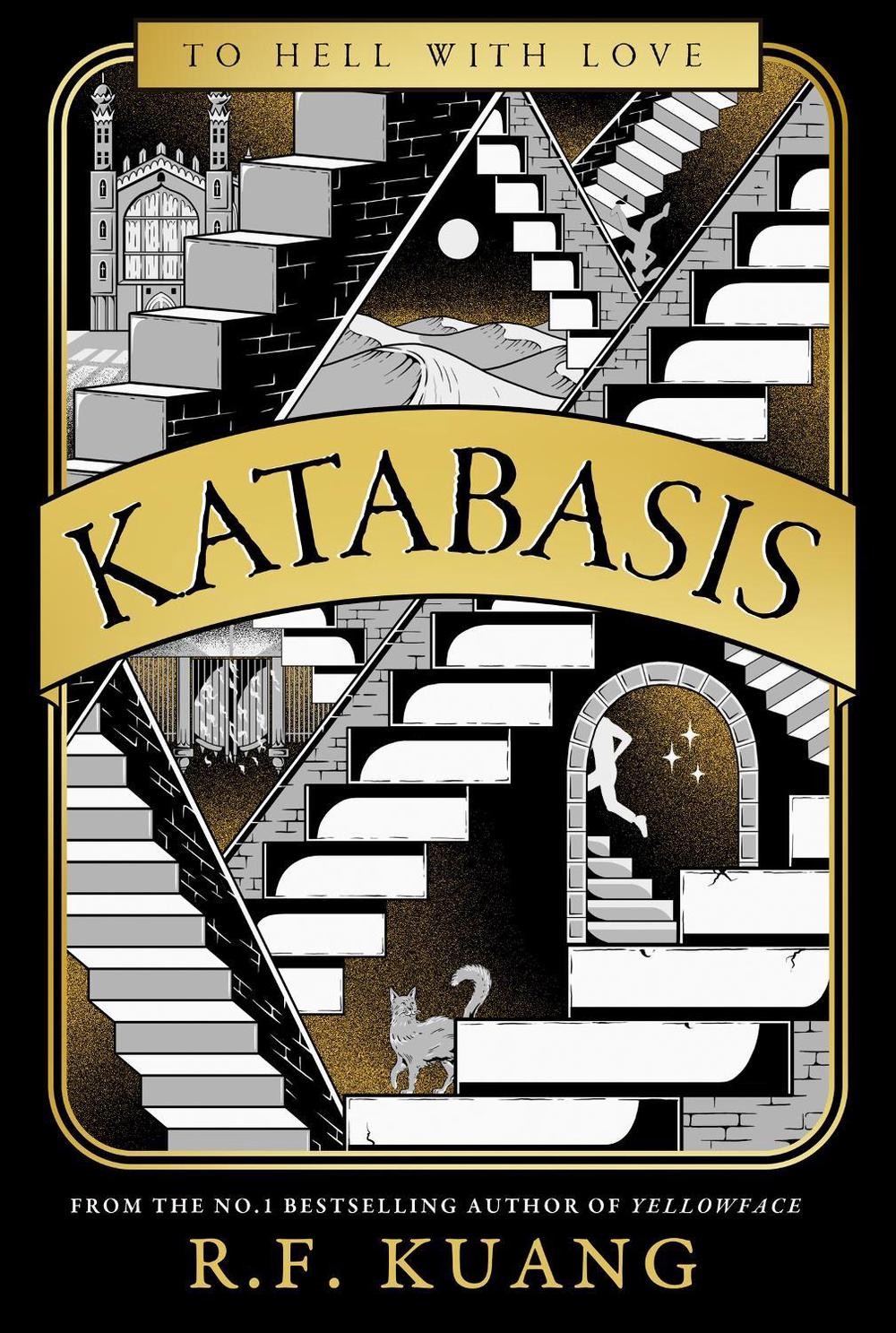
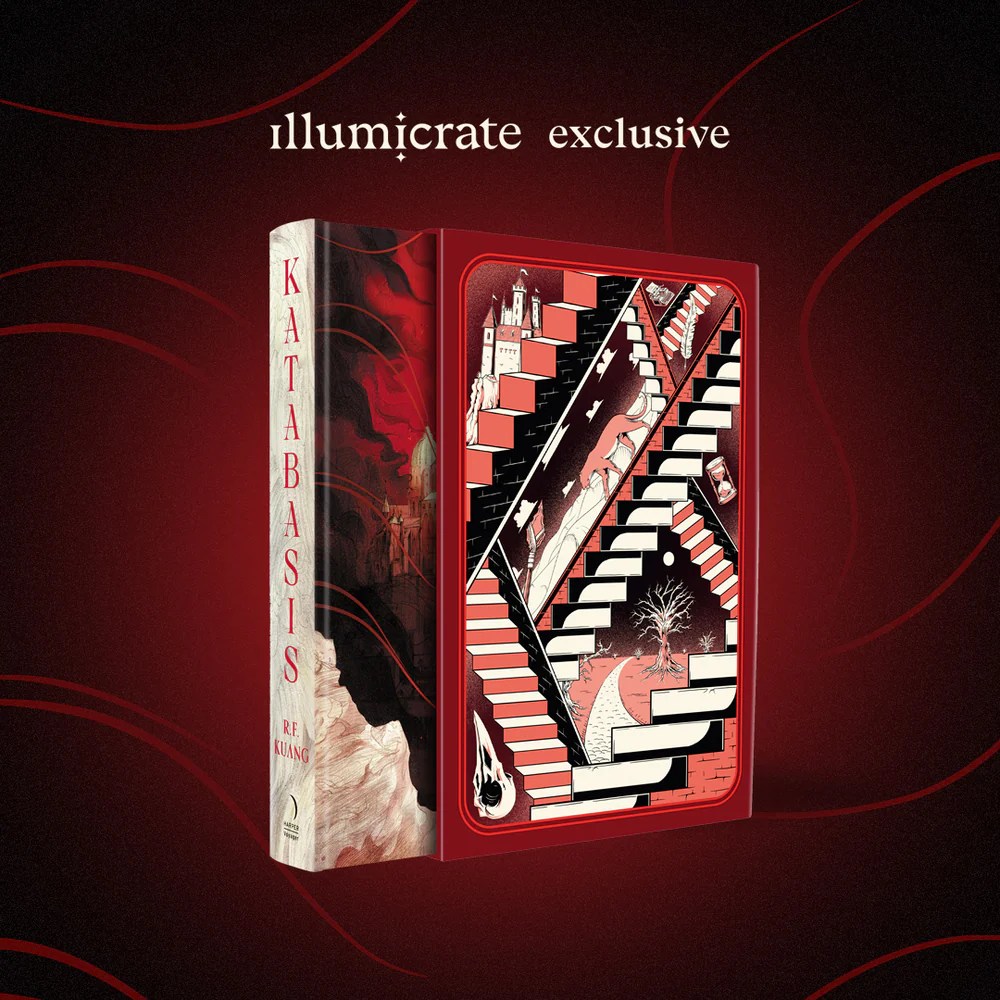
Up there are four of the seemingly unlimited Special Editions of R.F. Kuang’s new book Katabasis. I own three of them; two are currently in my house and I believe one is on the way. The fourth is the UK edition and despite everything I’m about to say it is still a maybe. Perhaps it wasn’t the wisest decision to order three expensive hardbacks of a book I hadn’t read yet, even if it was by one of my favorite authors! But as we’ve firmly established by now, I cannot be trusted with adult money.

Katabasis is the sixth book Kuang has written; I have read them all, and previously my least favorite of her books was one that was ranked third on my end of year Best Books list. My least favorite, mind you. Least. And part of me really thinks that I should sit with this for a minute and not write the review just yet, because part of the problem is that this book did not match the expectations I had set for it, and because I’ve enjoyed Kuang’s work so much in the past, I feel a need to be fair to it that I might maybe not feel with other authors. Then again, maybe not. Maybe, much like main character Alice Law about her mentor and Ph.D advisor Jacob Grimes, I’m making excuses so that I’m not disappointed.

Katabasis, somehow, has made Hell boring.

But let’s back up. Katabasis is the story of two graduate students (in theoretical Magick, of course) who travel to Hell to rescue the soul of their doctoral advisor, not because he doesn’t belong in Hell– he clearly does, and they’re both fully aware of this– but because their careers will be damaged by him being dead, and they need him for recommendation letters and such. I feel like this aspect of their motivation could perhaps have been explored a bit more; sadly, it was not. Katabasis (kuh-TAB-uh-sis, the word is Greek for “descent”) was supposed to be this dense, deeply literary work, heavily reliant on previous let’s-traipse-off-into-Hell books; there were pre-Katabasis reading lists floating around, and while I’m not actually completely certain Kuang was behind any of them, they were kinda intense!

And … well. Kuang is an academic writer; most of her books have at least partially involved schooling in some way and Babel was literally about a group of Oxford students who powered the world with magic based on translation, so this isn’t exactly a road untread for her. But this book is no more complicated than Babel was and no more academic; I was expecting a challenging read, and just didn’t get it. This is also the book that showed Kuang’s youth (she is still, somehow, not even 30) the most, I think; what she knows best is academia and grad school and I think that finally caught up to her with this book. And I get it! I’m not exactly a stranger to pretentious/prestigious graduate experiences; I hold an AM from the Divinity School at the University of Chicago, after all, which probably left me better prepared for going to Hell than most people’s educations, and I “hold” an “AM” rather than “have” an “MA” or a pedestrian “Master’s Degree” because, well, University of Chicago gotta University of Chicago. Those letters being reversed mean something. To somebody. I don’t know what, but they do.

Anyway, Alice (and is that name an accident, no, it is not) and her friend/fellow genius/academic rival Peter Murdoch head off to Hell to drag Grimes back into the world with them, and the book spirals (I see what you did there) back and forth between the past and the present as they argue about the map of Hell and, for the sake of argument, descend down to the final level to find him. They go in without much of a plan, and “no plan” really never gets better; they have a couple of never-ending water bottles and a sackful of, this is really what it’s called, Lembas bread with them so that they don’t starve to death or have to drink anything in Hell, and they mostly just wander around for five hundred pages, occasionally interacting with some of Hell’s shockingly small number of denizens. Most of Hell is an empty wasteland. They eventually arrive at the city of Dis, and I feel like if we’re going to start with a pre-reading list, maybe one of the New Crobuzon books, or Gormenghast, or the Shadow of the Torturer, or something like that should have been on there, because I have definitely read better infernal cities before.

It’s not … bad? Or at least I’m not willing to admit it was bad yet? And if you are someone who reads books for character development, this probably is right up your alley, as Alice Law and Peter Murdoch really are two of Kuang’s more completely drawn characters. But I don’t really read for character; I read for story and setting, and the story and setting here are both far too thin for my tastes. I probably owe this book a reread in a year or two regardless, just to let the expectations clear and to go into it with a better idea of what I’m about to read. But right now I’m deeply disappointed in it. The extra copies are still going to look great on my shelf, and Kuang is still an insta-buy author, but this one really didn’t do it for me.

#REVIEW: London: The Biography, by Peter Ackroyd

I’m going to review this book by writing a bunch of sentences that will all, individually, be true. “But wait,” you might be thinking to yourself. “Isn’t that how reviewing things usually works? You don’t often tell lies in reviews.”

True! However, in this case, what you need to understand is that some of those sentences are going to contradict other sentences. As it works out, this is quite appropriate for this very, very odd book. You are simply going to have to live with the fact that while each individual sentence of this review is true, the entire review may, somehow, not be.

Roll with it, is what I’m saying.

So, the following are true:

  • I gave this book five stars on Goodreads and Storygraph. (Follow me on Storygraph!)
  • This book is not currently on my Best Books of 2025 shortlist.
  • I wouldn’t be surprised if it ends up on the list anyway.
  • It is nearly eight hundred pages long, and I did not finish reading it. I put it down with about 75 pages left and I have no real intention of going back to those 75 pages anytime soon.
  • Insofar as such a thing is possible in the first place, this book is not a biography of London, much less The biography of London.
  • It is only barely a history of London.
  • London is 2,000 years old and that’s only if you don’t count the even older civilizations that lived there, deep into prehistory. Writing a single book about all of this is ludicrous.
  • This book is divided into multiple themed sections. The themes will be broken down into some variable number of chapters. Some chapters are only a couple of pages long, some are much longer.
  • The themes may sound like they’re historical, or they might be things like “Night” and “Day,” where the author is more or less just riffing. There are sections on prostitutes and violence and war and walls and food and prostitutes and noise and commerce and clothes and jail and medicine and asylums and kings and prostitutes and children and the Great London Fire of 1666, which is distinct from the other dozen or so times the city has burned down over the years.
  • So, so many prostitutes.
  • Any given chapter might quote anyone, from any time period, in any language. If that author was writing in French the quote is going to be in French. If he was writing in Medieval English, you might be in some trouble. If he was writing in Old English, Þu scealt hopian þæt þu miht witan hwæt hi secgað.
  • This means that occasionally you’ll see things like Dickens and some Roman historian you’ve never heard of or some English writer from the 13th century quoted together within a few paragraphs.
  • Peter Ackroyd is an engaging, immensely erudite author.
  • There is very much such a thing as “too much of a good thing.”
  • It took me a week to read seven hundred pages after spending the whole summer devouring 700-page books in a day or two. This book must be approached in bite-size pieces.
  • I am, almost certainly because of the style in which the book was written, genuinely not sure that I learned much of anything. The author’s intent was not to present you with carefully organized information about London. It was to spend hundreds of pages coasting on vibes.
  • If you want to read this, go ahead, but I’m never just going to casually recommend that anyone read it. Like, if you told me “I want to learn more about London’s history,” I would never give you this book.
  • English nouns sound dumb to Americans in a way that I’m never able to clearly elucidate, and I wonder what they think of our place names. I can’t take locations called Cheapside or Marylebone or, I am not fucking with you, Gropecunt (prostitutes!) seriously.
  • So many prostitutes.

So yeah. Maybe you’ll read this. I’m glad I did. I think.

On setting my money on fire

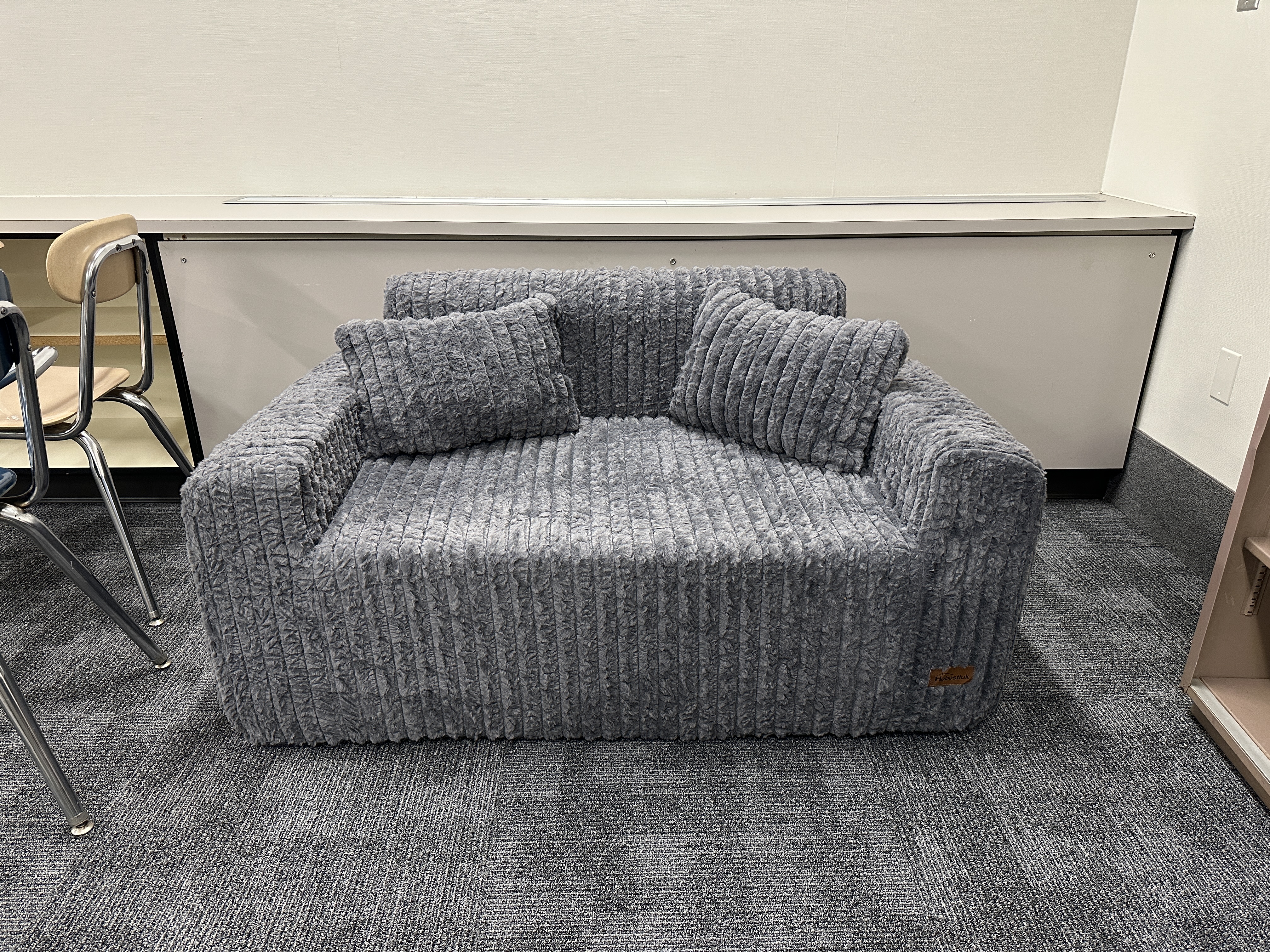
Witness my latest addition to my classroom, a “boneless loveseat,” that shipped compressed into a very tiny rectangular solid and expanded rapidly into that once I took it out of the packaging. It can supposedly support 600 pounds of humanity; I can say that when I sat on it the back did not feel especially comfortable but the seat held me up just fine and I didn’t have trouble getting out of it. I’m considering a matching chair to go with it. Supposedly this thing needs 48 hours in order to completely decompress and it was almost unsettling to look at it after the first batch of expansion was done; the damn thing always looked like it was moving, but in this weirdly imperceptible way. I’m going to take another picture of it tomorrow from as close to the same angle as I can and see if it looks bigger.

This is, as you all well know, my greatest hypocrisy; I genuinely think that teachers should not spend money on their classrooms and yet I lavish hundreds of dollars on mine for fun new shit every year even before we get to the school supplies. Remember, I already bought myself a new Goddamn desk chair. That loveseat was pretty cheap as such things go, but still.

(Donated supplies have begun arriving, by the way; my deepest thanks to those of you who have contributed. The link is here if you haven’t yet and want to; if you don’t, that’s absolutely fine.)

In accordance with prophecy, our new textbooks have not arrived yet; at this point I’m fully expecting to not see them before October. I hope I’m wrong. We should’ve had the damned things before school let out so that we could familiarize ourselves with them over the summer. I wouldn’t have done it, mind you, but at least I’d have spent the summer feeling guilty like I should have and not waiting for the opportunity to feel guilty.

Anyway, I got my desk beaten into shape; tomorrow we’ll look at starting to get things up on the walls. I also got a bunch of clothes shopping done today, so I can stop stressing about that for a while. Whee!

Also, here’s what the loveseat looked like before I opened it up. Note the bankers’ box next to it, for scale.

And I’m putting this at the bottom because I’m hoping no one notices it. I’m also considering this, because I’m an idiot:

I’m not even sure where I would put it. I’m running out of floor and wall space at this point.

Unread Shelf: July 31, 2025

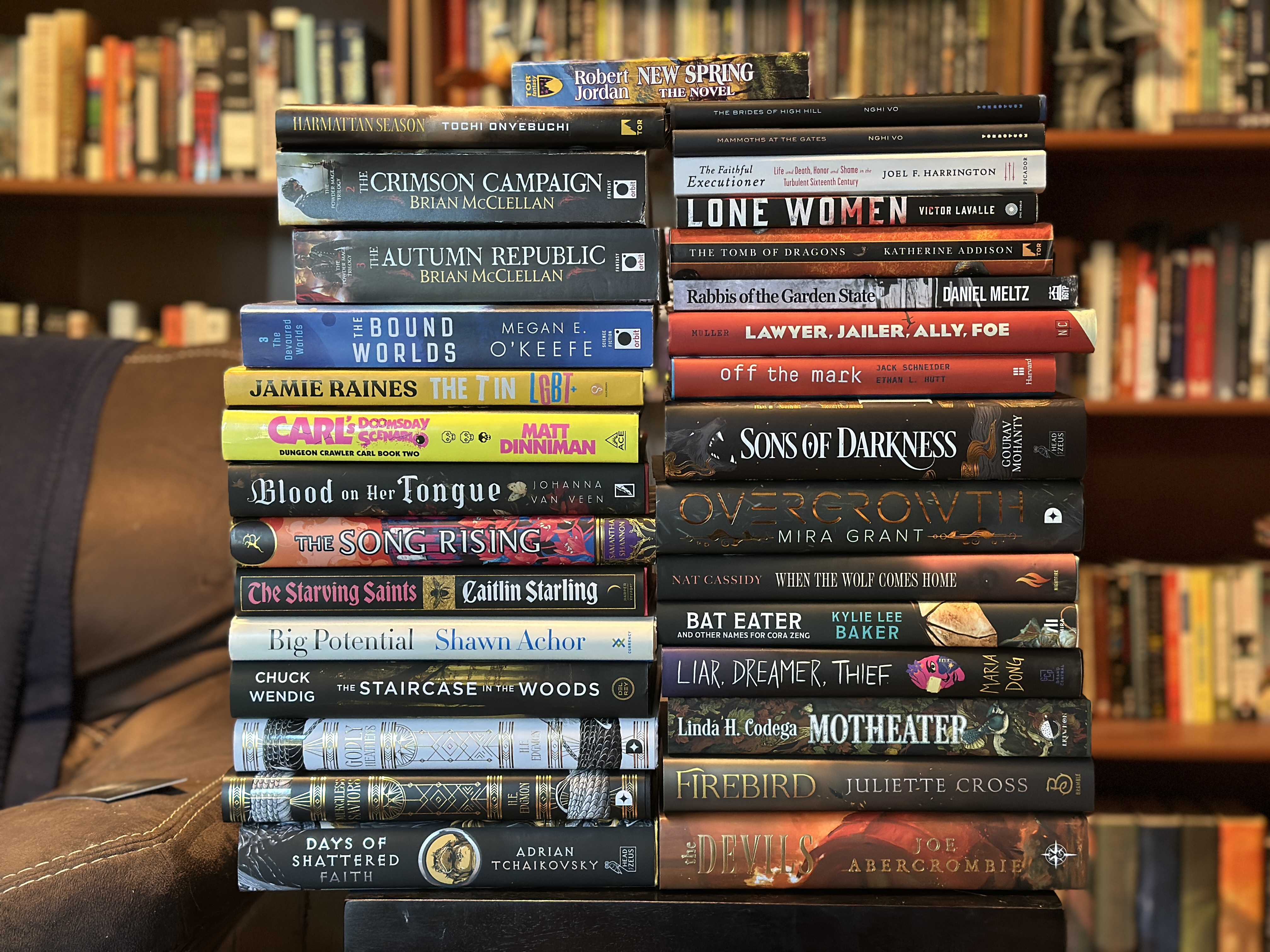
Did I rearrange this shelf hoping to hide the fact that there are more books on it than there were last month?

…maybe. I might have done that.

Down, down, to Goblin town

There’s this weird thing going on with my incoming students where a ton of them have the same last names as people I either went to high school with or was otherwise friends with as a kid. I actually have never independently known a kid’s parents, or if I did I never had to have any contact with them.

Maybe?

That’s true, I think. Definitely never had to talk to any of them. Maybe I had one guy’s nephew, but he definitely never came to PTCs. At any rate, I’ve done a fair amount of cyberstalking this week and so far I haven’t uncovered any connections of any of these kids to anyone I know; that most likely means that there’s no relation, as none of the names are terribly unique, but I suppose I could have some distant cousins or something. I did find out that one of my mom’s oldest friends died at the end of April from breast cancer, and I’m in this weird place where I’m not actually surprised that the family didn’t get ahold of my brother or I, not least because I make it my mission in life to make myself hard to find on the internet (you can find my teaching license if you know my real name, but even that’s under a slightly unexpected combination of my name and initials), but also just because at this point I’m like a third-removed acquaintance of any of her kids and it’s just not reasonable to expect a call. I called her when Mom died, but I don’t think that necessarily transfers to them having to call me, y’know?

Anyway, point is, I’d have gone to the service. Which may actually not have happened yet, as the obituary says “at a later date.” Yeah, let me talk to you about putting “at a later date” in an obituary; it showed up in my mom’s and then Covid hit, and as of right now my mother has never had a funeral.

That, uh, isn’t quite where I meant this post to go, but sometimes the words do what they want.

Anyway, I’ve begun the annual Spending Money For My Classroom Unwisely spree, and there’s a surprisingly small box in my garage with a a vacuum-packed and possibly dehydrated Boneless Loveseat in it, and– amazingly, at my wife’s suggestion– I solved my desk chair conundrum by ordering a new desk chair for my office, with the plan to move the old one to my classroom once the new hotness shows up. I’m going to try to avoid ordering any new lighting this year, and I shouldn’t need any posters or anything, so hopefully these two big-ish purchases will be all I need this year.

(Teachers: don’t spend money on your classrooms. Don’t be like me. I make bad decisions.)

(The old chair is this chair, which I ordered a year before that post and I’ve now had for four and a half years, and if I took the time to clean the cat hair off of it, it would look brand fucking new despite me having spent at least an hour or two a day in it every day since I got it. So the new one is also a Secret Lab chair. They’re expensive, but fuck it; I’m clearly getting my money’s worth.)

(They also made my desk, which is this desk. I don’t seem to have ever reviewed it, but I love the desk too. These people own my soul.)

I finally beat Clair Obscur: Expedition 33 last night, and I’m trying to decide if I’m going to review it or not. I think I probably will do a full review, as the game’s failures are all of a very specific kind and I think it’s interesting. So maybe tomorrow.

#REVIEW: His Face is The Sun, by Michelle Jabès Corpora

Finally.

I’ve read some really good books this year– 108 total, with 17 good enough that they’ve made my end-of-year shortlist. But the story this year has been the nonfiction— I have five nonfiction books on the list so far, and all of them have been tremendous. And there are three or four novels that have been really, really fun, but I’m pretty sure Michelle Jabès Corpora’s His Face Is The Sun is the first “#1 with a bullet” novel of the year. I mean, I just finished it twenty minutes ago (it’s 500 pages and I basically read it in one sitting) so standard disclaimers for early enthusiasm, but … yeah, this is real real good.

Oh, and this is also the second book in a row that I’ve bought mostly on vibes? I was wandering through B&N, having just given myself permission to buy another book on top of whatever else I was carrying around, and I picked it up because of the pretty edges. Then I saw the word “Egyptian” on the back and money flew out of my wallet.

The setting is second world Egypt– in other words, it’s Egypt, even keeping the names of the Egyptian gods, but they call it Khetara and the rest of the world hasn’t impacted upon anything. There are four rotating POV characters and one cat. I absolutely love the cat. The book starts with triplets being born to the Pharaoh, delivered by three goddesses when the expected nursemaid is held up in an unprecedented storm. One of the POV characters is Sitamun, the middle child of the triplets and the only daughter. The others are Raetawy, a farmer’s daughter and political revolutionary; Karim, a tomb robber (and his dog); and Nefermaat, the daughter of a spell merchant who sees visions and eventually becomes a priestess.

Throw in a prophecy or two, the living dead, a ton of political maneuvering and fate slowly drawing the four together over the course of the book and you have something I really, really liked. This is my second review in a row where I don’t really want to spoil anything, but the way these four end up interacting with each other and the way all of them have pieces of the larger story happening around them but no one can see the whole picture yet is fantastic, and Jabès Corpora does an excellent job of keeping all the plates spinning and revealing just enough in each chapter to make the book really hard to put down.

This is the first book of a planned trilogy, and Goodreads claims the sequel is coming out in May of 2026, which is too Goddamned far away and I want it right now. You should read it.

Monthly Reads: June 2025

Storygraph tells me this is 11,505 pages. That’s not completely accurate as there are a handful of DNFs in there, so let’s say 10,500. Either way, can you tell I did nothing but read in June?

Book of the Month is gonna be The Faithful Executioner, by Joel F. Harrington.

All right, let’s do this, damn it

Well, that was a fun little rabbit hole to fall into at 10:00 in the morning.

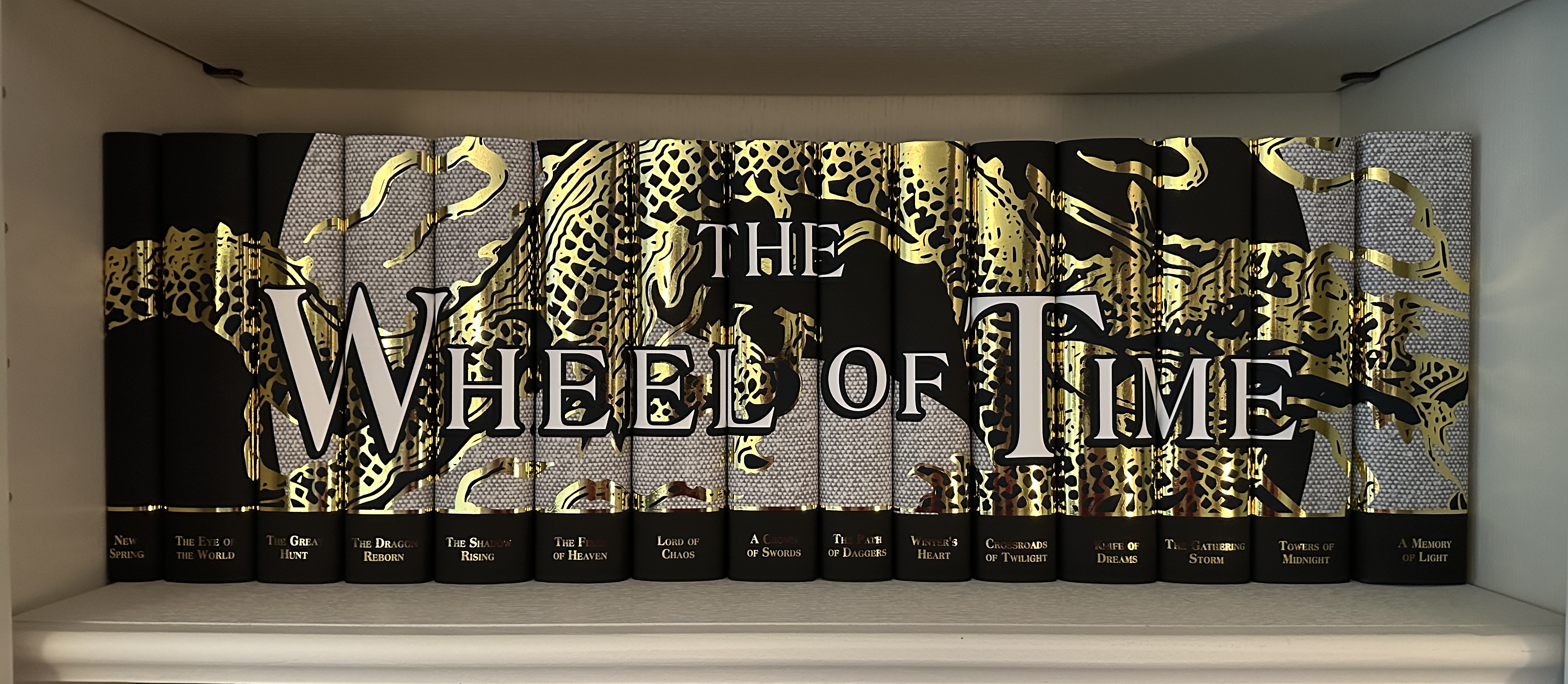
I posted these beauties not long after buying them, and they make me happy each and every time I walk past them, which was how I justified the $Jesusdon’task cost. The problem: despite their status as one of the non-negotiable canon series of fantasy literature, I haven’t finished the damn series. I’ve read the first … five? Six? and tried to reread/finish them a few years ago and had to tap out after the second book.

I’m doing this, damn it. I’ve spent a lot of money on this damn series and I’m stuffing it into my brain whether I want it there or not. I’m not stupid enough to try and read them straight through, though; I’ll commit to one a month (still over a year!) and try to go at least a little faster than that in practice.

(I plan to start with New Spring, the prologue, which I haven’t actually read yet. If you have strong feelings about whether I should hold off until later, let me know, but do keep in mind that I’ve read the first two books twice each already. You have, like, an hour or two until I’ve started it and can’t be stopped.)

I recognize that “I started a book!” maybe isn’t the most compelling blog content ever, but I wanted to mark the first date in something less ephemeral than Bluesky. So.

Anyway, that rabbit hole: I thought that I had posted about these books when I got them, and I couldn’t find the post at first. It took me a minute to track the post down, because the words “Wheel of Time” didn’t actually show up in the post title. I went to Google and searched “infinitefreetime wheel of time” and this bullshit happened:

Other than the first half-sentence of the second paragraph, none of that is fucking true. Those quotes? Not real. The AI made the whole thing the fuck up. I hate this fucking useless-ass, destructive-ass technology with every fiber of my being and I cannot wait for it to die, hopefully taking a large chunk of the stupider element of our tech sector along with it.

So, yeah. I’m starting up on Wheel of Time again, and fuck GenAI straight to Hell.