
#REVIEW: The Neurodiversiverse: Alien Encounters; Anthony Francis & Liz Olmstead, eds.

And now the third review in a row of a book I got sent as a free ARC, thus discharging all of my current review obligations. I feel kind of bad about how long it took me to get to this; I didn’t get a release date when they sent me the book, and I put it on a sort of mental “find out when this is coming out” list, only to discover it had already been released when they sent it to me. So this is not timely; my apologies.

This is a hell of a concept for an anthology, really; the back cover describes it as “a hopeful, empowering science fiction anthology filled with own-voices stories from neurodivergent creators”– in other words, stories about neurodivergent people encountering aliens, written by people who are themselves neurodivergent but presumably have not encountered aliens. I find the word “neurodiversiverse” immensely fun to say, and while anthologies aren’t always my thing, there are certainly some gems to be found in here. Cat Rambo’s Scary Monsters, Super Creeps is about a young woman with an anxiety disorder who discovers it gives her superpowers, and Ada Hoffman’s Music, Not Words is about an autistic girl who is the first contact for an alien race.

Most of the authors in the collection are people I’m not familiar with, though; I sort of jumped around rather than reading the collection straight through (how do people usually read anthologies? Is that weird?) and Lauren D. Fulter’s The Cow Test is probably the standout of the rest of the anthology, for me at least. It involves cows. It’s a short story, I’m not spoiling the details. 🙂 There are art pieces and poetry as well. Some of the aspects of neurodivergence that get explored here are really interesting; Jody Lynn Nye’s A Hint of Color is about synesthesia, for example, and Keiko O’Leary’s Close Encounter In the Public Bathroom is the only poem I’ve ever read that combines being about OCD and aliens.

No, seriously, this anthology made me recommend a poem. That’s worth picking up, right?
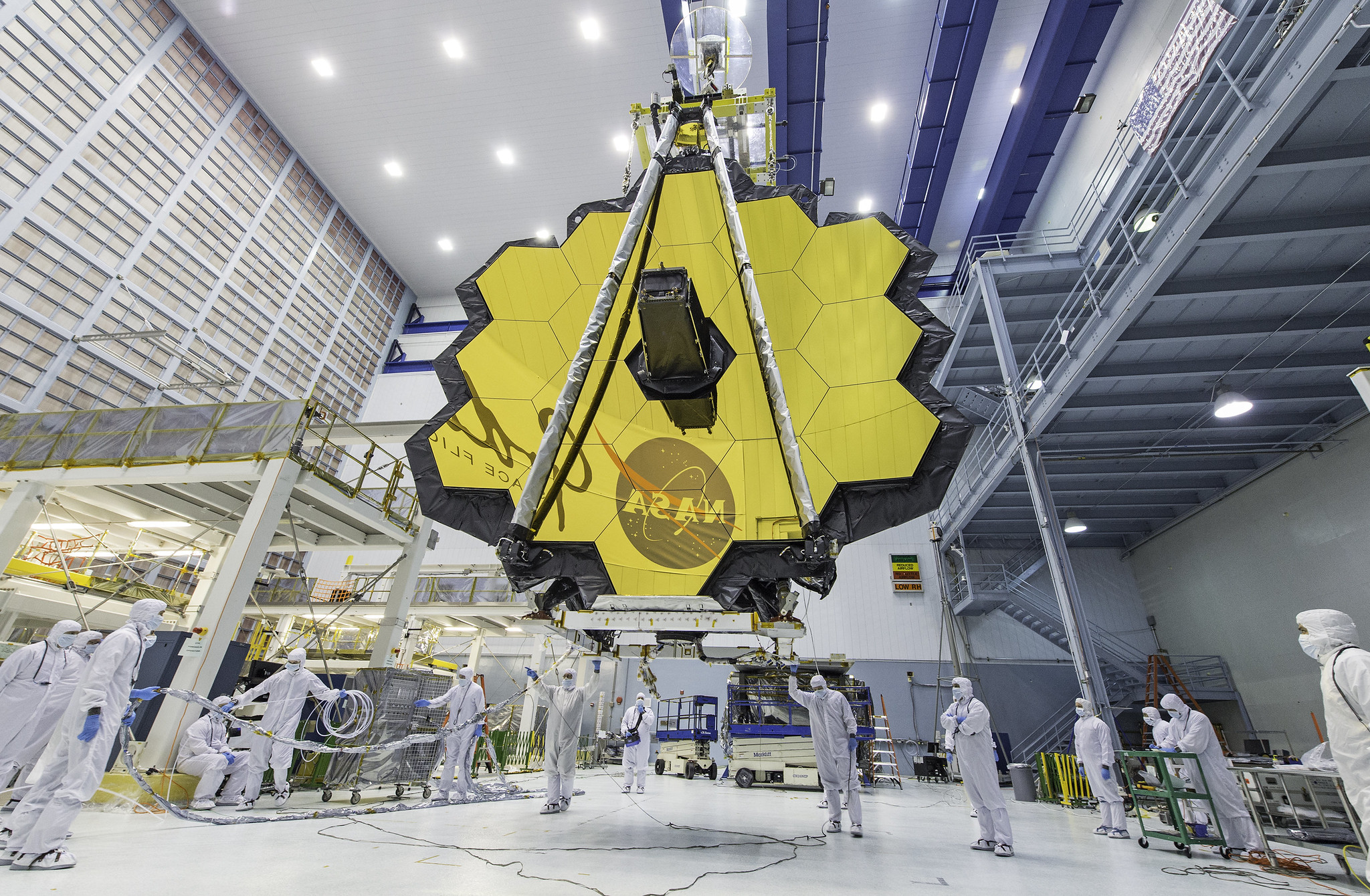
In which I predict the future

I’m putting this in print now, so that I can point at it later: Assuming it makes it to its Lagrange point fully functional and successfully accomplishes all the various complicated unfoldings and such necessary to start receiving data and transmitting it to Earth, the James Webb Space Telescope is going to discover evidence of extraterrestrial life at some point, and probably at many points, during its lifetime. A slightly inaccurate story about NASA hiring a bunch of theologians to discuss the possibility of alien life blew up on Twitter over the weekend, which led to everyone speculating that NASA already knew about alien life Out There Somewhere and was scrambling to figure out how it presented it.

To be clear, when I say “life,” I’m talking about microbial life, although discovering evidence of intelligent life would be a lot easier, relatively speaking, especially post-the-alien-equivalent-of-the-Industrial-Age life, which would involve a planet emitting a lot of light from its dark side on a tight band of wavelengths and would be difficult to explain as anything other than artificial life. Microbial life is going to involve lots of hypothesizing about chemical analysis and will have people arguing about it for decades, if not longer.

I have actually said this part in print before: I think that ultimately we’re going to discover that there’s a pretty high probability of life anywhere liquid water exists, and I think there’s probably half a dozen or so places just in our solar system where life exists or existed at some point outside of Earth.(*) Remember, 20 years ago we didn’t even know if planets existed outside our solar system– one of my finest moments in Divinity School involved an argument with an actual astrophysicist about the Drake equation, where I argued that we would eventually discover planets would be common, something I was absolutely right about– and I have the same level of certainty that 20 years from now we’ll have had the same sea change about extraterrestrial life.

(*) Including, but not limited to: Mars, Io, Enceladus, Europa, Venus and Titan.

Go ahead, bookmark the page. Y’all can come back and laugh at me in 2027 if I’m wrong.

I’ll just leave this here

The article doesn’t say “Dyson sphere,” and the whole idea is ridiculous, but holy shit they found a Dyson sphere.

Morning linkeration

…go ahead, lose half an hour staring at these.