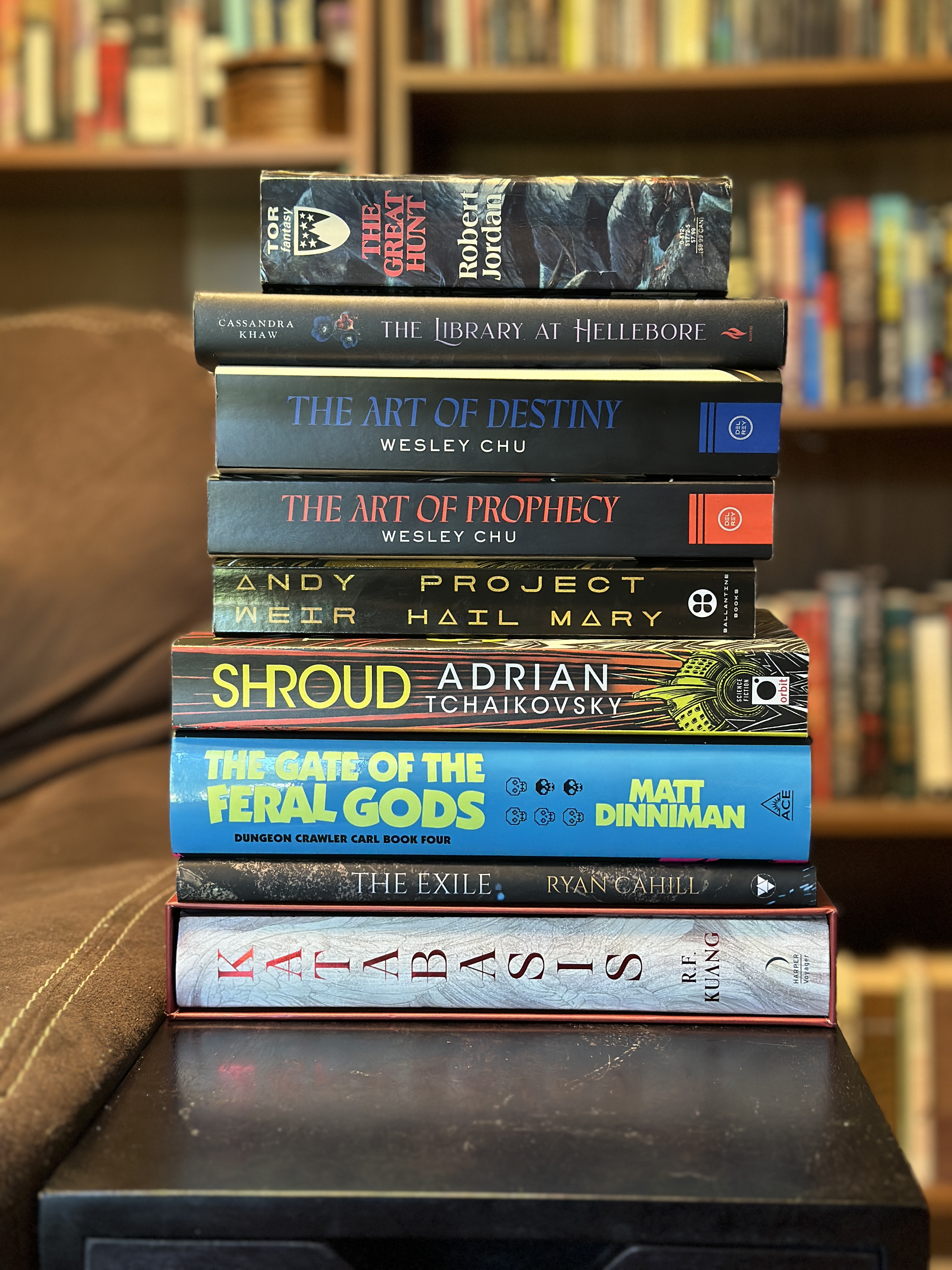
Depressing, I know, but remember I stared an 800-page history of London on July 31 and school started this month, so it’s not quite as depressing as it looks.
Book of the Month is Shroud, which I guess I should have reviewed.
The blog of Luther M. Siler, teacher, author and local curmudgeon

Depressing, I know, but remember I stared an 800-page history of London on July 31 and school started this month, so it’s not quite as depressing as it looks.
Book of the Month is Shroud, which I guess I should have reviewed.
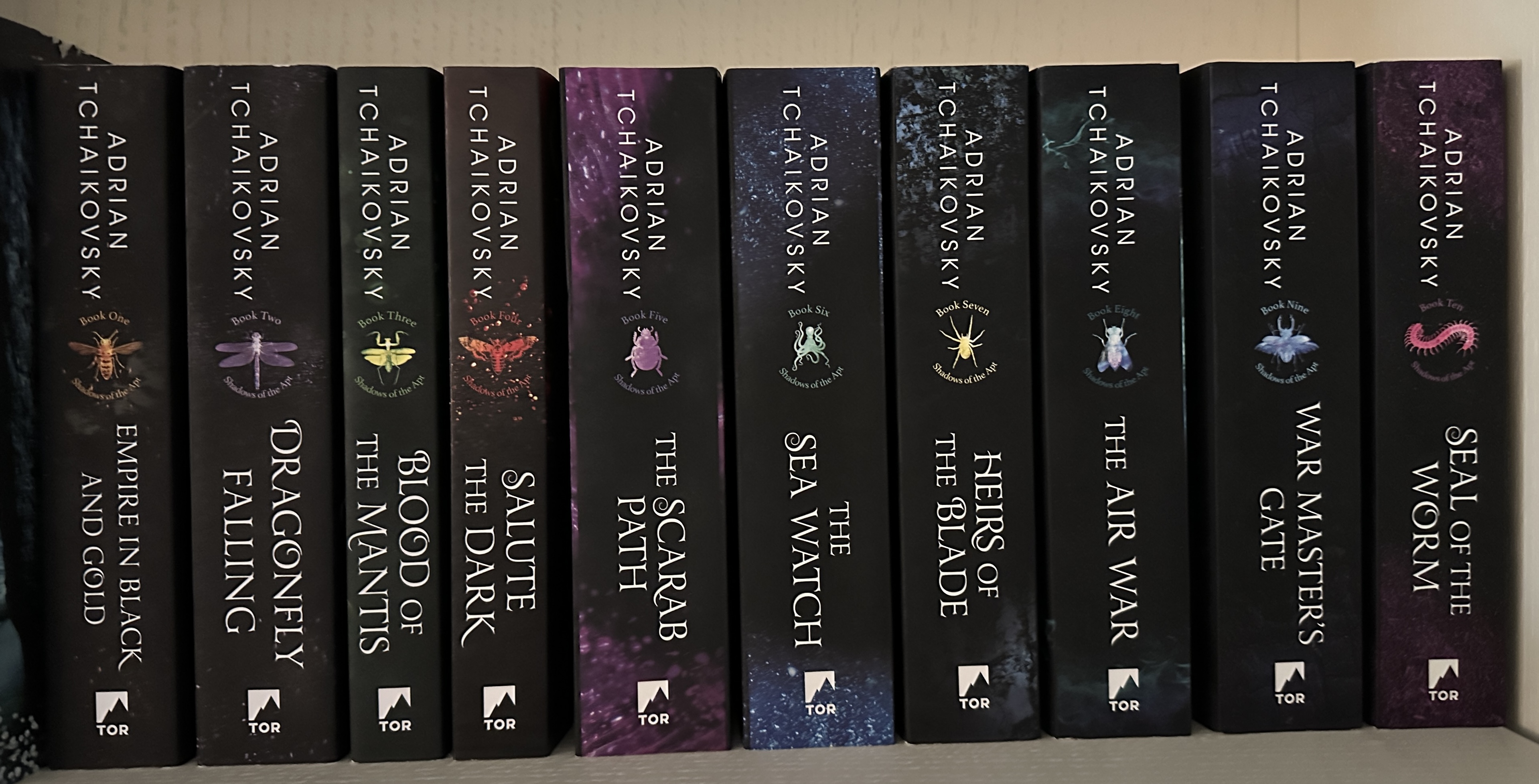
I am tempted, in writing about Adrian Tchaikovsky’s ten-book, 6000+ page, nearly two million word series Shadows of the Apt, to be terse: read it.
But, like, that’s kind of a big ask, y’know? The series is 1.924 million words long. As a comparison, the Wheel of Time series is 4.36 million words. A Song of Ice and Fire is currently at 1.749 million, with two imaginary books left to go. James S.A. Corey’s Expanse series is 1.493 million words. The entire length of this blog: 1.563 million words. The King James Bible is around 785,000, depending on how you count and who you ask.
Oh, and there are apparently four volumes of short stories outside the main story? I just found out they existed, finding out they existed made me want to die, and I don’t know how much they add.
It’s a lot. And what fascinates me is that Shadows of the Apt has got to be the least well-known of all the big fantasy megaseries. Tchaikovsky writes seventeen books a year (he has, no joke, released five new books since I’ve been reading this series. I mean it. I’m not kidding.) and I don’t feel like the guy gets nearly enough credit for being as amazing as he is. Shadows was written between —
— you may want to sit down, as this is ridiculous —
— 2008 and 2014. All of those books came out in six years, and I’d bet money that he released books unrelated to SotA during that time, plus, remember, those four extra books.
I do not know a single other person who has read this series, and I never see anyone talking about it. I can’t explain this.
I picked up Empire in Black and Gold in October, and I finished Seal of the Worm earlier this week, obviously with a lot of detours. The series breaks down rather nicely into a four-book series, Empire through Salute the Dark, and I took a decent-size break in between that and picking up The Scarab Path. Path and Sea Watch feel pretty stand-alone, as they do a Two Towers sort of thing and don’t share a lot of characters, and then the last four books go in a big gulp, but they follow pretty closely on the events of Path and Sea Watch.
I haven’t said a single word about the actual fuckin’ story yet.
Adrian Tchaikovsky likes bugs. Outside of John Irving he may be the most “Oh, there it is” author I’ve ever read. Every John Irving book is going to include weird sex, an amputation, a bear, a hotel, and wrestling. Adrian Tchaikovsky books without bugs are rare. And in Shadows of the Apt, every character is a bug. Every single one.
Well. Sorta. The human race is divided into something called kinden, and each kinden has the characteristics of a type of bug, which somehow sounds weirder than it is. They’re all still human, mind you, and kinden can interbreed, but there are Beetle-kinden and Wasp-kinden and Mantis-kinden and … let’s see, spiders, flies, bees, ants, moths, mosquitoes, scorpions (there’s a reason I said “bug” and not “insect”), dragonflies, woodlice, and, uh, Mole Crickets.
I admit it, I burst out laughing the first time a Mole Cricket-kinden showed up in the book. That’s not an exhaustive list by any means, especially since a handful of the kinden are spoilers, and I never got the feeling that Tchaikovsky had sat down and written out an exhaustive list that he was never going to break away from. I’m pretty sure there’s a stick bug kinden in there somewhere that only gets mentioned a handful of times, and there’s exactly one butterfly-kinden in the entire series. I think if he got an idea for a character with a new kinden, he just put them in and rolled with it.
oh my god I just googled mole cricket for the first time oh my god OH MY GOD WHAT the FUCK
Anyway, most of the main characters are Beetles and Wasps, with a few significant Mantises and Spiders, but by the end of the series the list of characters is like eight pages long. Some kinden have, effectively, powers– Wasps have a sting that is basically a force blast they can shoot from their hands, several kinden can fly, and Ants are effectively a hive mind, and not all of them are completely human-shaped– Mole Crickets (brrrr) are ten feet tall, for example, and Mantis-kinden have some spiky bits that the rest don’t have. Some can see in the dark. Some can dig basically as fast as they can walk. You get the idea. There are cultural differences as well, although the series does take some pains to not be completely “orcs are like this, and elves are like that,” if you know what I mean. Spiders are gonna be Like That, but then he’ll throw a Spider at you that isn’t Like That, just to make sure you realize there’s diversity in the kinden.
So yeah, the first four books are the Wasps basically trying to take over the world. That war ends in book four. In the back six they basically consolidate what they lost in the first war and then try again, and the entire tenth book is a spoiler. The big problem with maxiseries like this is that there can be a lot of filler– I will never get tired of pointing out that the entire second book of The Wheel of Time could be a ten-page prologue to book three without losing anything– and it’s amazing how well this series keeps the plot moving. If anything, I felt like Book Ten could be broken into two books with another 300 pages and I’d have been fine with it, as some of the developments in that book feel like they come kind of out of left field. The flabbiest part of the series is The Sea Watch, which is the only book that’s remotely skippable, and even that one is stuffed full of tons of crazy cool ideas. It’s just that they don’t pay off sufficiently in subsequent books, which is part of why I feel like Seal of the Worm could be two books.
The different kinden are broken into two categories, the Apt and the Inapt. Apt kinden can use technology, and the work various groups of Apt artificers do over the course of the series to forge new ways to kill each other is genuinely impressive. Inapt kinden simply cannot use technology, and I’ll admit that figuring out what this exactly meant was one of my few complaints about the series. What is meant by that is that you can literally hand a crossbow, powered by a trigger, to an Inapt Mantis-kinden and they will be unable to figure out that pulling the trigger will shoot the thing. Most of the races that have major characters are Apt, and you don’t really get into the head of an Inapt character until really late, so it takes a while for it to sink in that Tchaikovsky really means it when he says at one point that if a door is opened by a button, an Inapt character will not be able to figure out how to open that door or understand how it works even if someone else shows them. Ultimately, this is a fantasy series, with swords and armor and such, but the artificers and the Apt kinden give a nice soupçon of science fiction to go with it.
(Yes, I wrote that sentence just so I could say soupçon.)
There is also magic, but … Christ, that’s a whole thing, and it’s practically a spoiler just to say that, but let’s say that the back part of the series is more about magic and the Apt vs the Inapt than the first part is, where that distinction is really in the background.
So much for being terse.
Please read this series. Come back in two years and let me know when you’re done. I need someone to talk to about it.
I have a hundred pages left in Book 8 of Shadows of the Apt, and I want that series done and dusted by the end of next week. Two more to go after this one. So.
What are you reading?
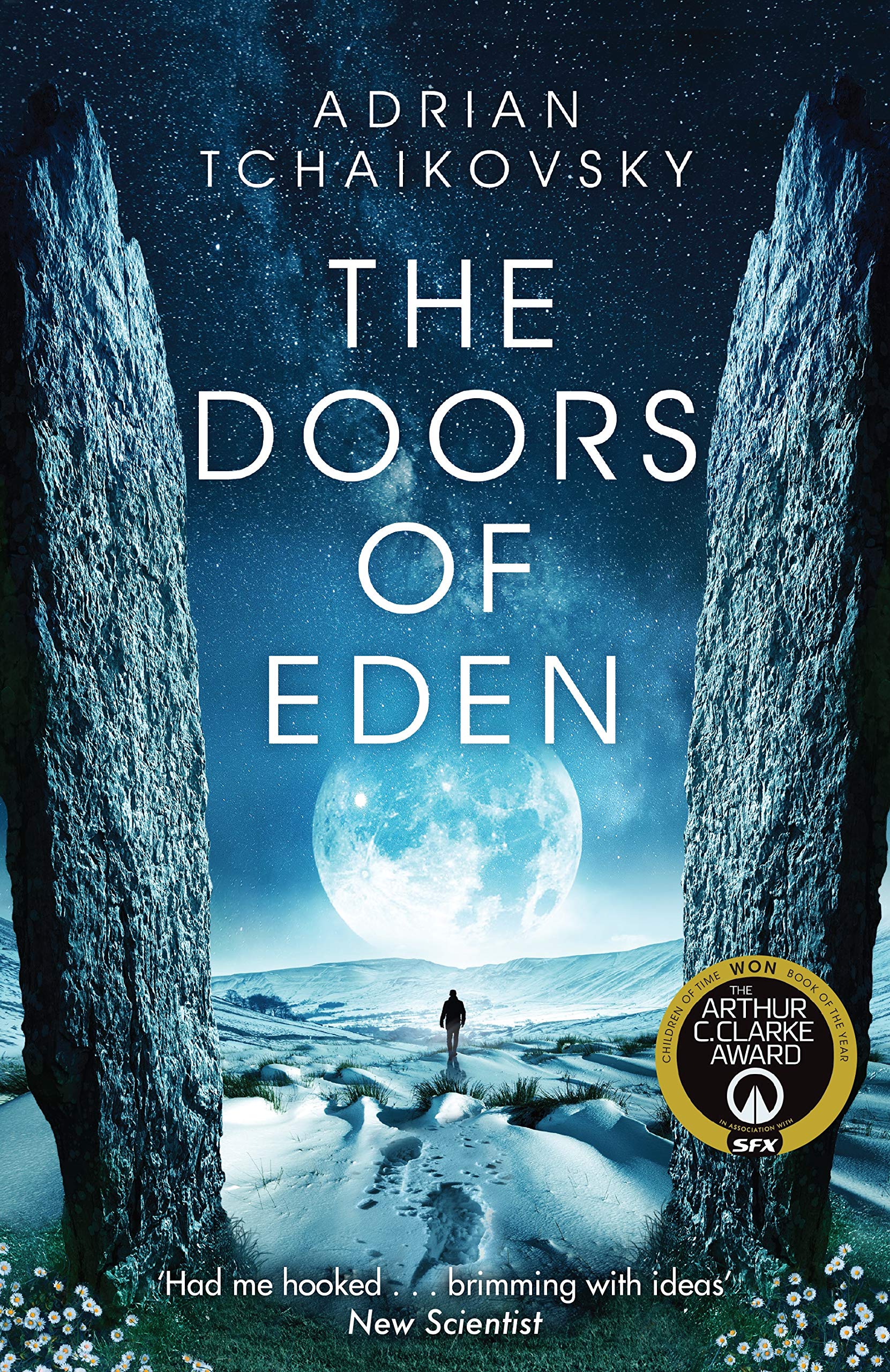
The headline to this post is a lie; this is not going to be a review, not even by my standards. This is just, like, me waving this thick-ass paperback around and squeeing at people. I love Adrian “Spiders” Tchaikovsky a hell of a lot, and he approaches if not exceeds Brandon Sanderson levels of prolific, so there is an awful lot of him out there to read, only I don’t feel like I talk about him in this space all that often.
The reason for that is simple: his books are batshit insane, from start to finish, all of them, and it makes him kind of hard to write about, because when you try to describe what happened in a Tchaikovsky book the tendency is to wave your hands around and, like, make gurgling noises and say “trust me” an awful lot. I actually fooled myself on this one; it actually starts off in the real world, and for the first hundred pages or so you could be fooled into thinking it was either a book about cryptids or a murder mystery, and while I enjoy both of those kinds of books they would end up feeling awfully pedestrian coming from Tchaikovsky.
Yeah, by the end of the book there are sentient, human-sized rats in plague doctor costumes, a computer the size of a planet made entirely from ice, giant spacefaring trilobites that communicate via manipulating piles of centipedes into an approximation of a human face, technologically advanced Neanderthals, and something like a dozen timelines all collapsing into each other including a part where you get section one of chapter seventeen something like eight times in a row only it makes sense and it’s cool, and oh okay it’s a fucking Adrian Tchaikovsky book after all.
Note that, despite looking like a perfect match to Children of Time and Children of Ruin, this book is not connected with those books in any way that I was able to figure out. I’ve got it on the shelf next to them because it looks like Volume 3 of a trilogy, but it’s not. And, looking on Google to see if I can find an image of the three books next to each other, I just discovered that there actually is a third book from that series coming in November, called Children of Memory, and I’ve already got another book by him in a different series on my unread shelf, meaning that by the end of the year it’s not unreasonable to believe I’ll have read four Adrian Tchaikovsky books, which will probably easily top 2000 pages between the four of them. He’s also got a (completed) seven-book fantasy series out there that I haven’t even touched yet, and he also writes three hundred novellas every year.
Christ, dude. I love you, but … slow the fuck down.
Today was a bad day, probably the worst mental health day I’ve had since … well, since before Mom died, honestly, because for most of the time since then I’ve been busy and it’s been keeping the demons away, so to speak. But everything hit me like a ton of bricks this morning as I was getting ready for work and I just couldn’t cope today. I’ve spent most of the day either asleep or staring mindlessly at TikTok, which isn’t something I should ever be doing.
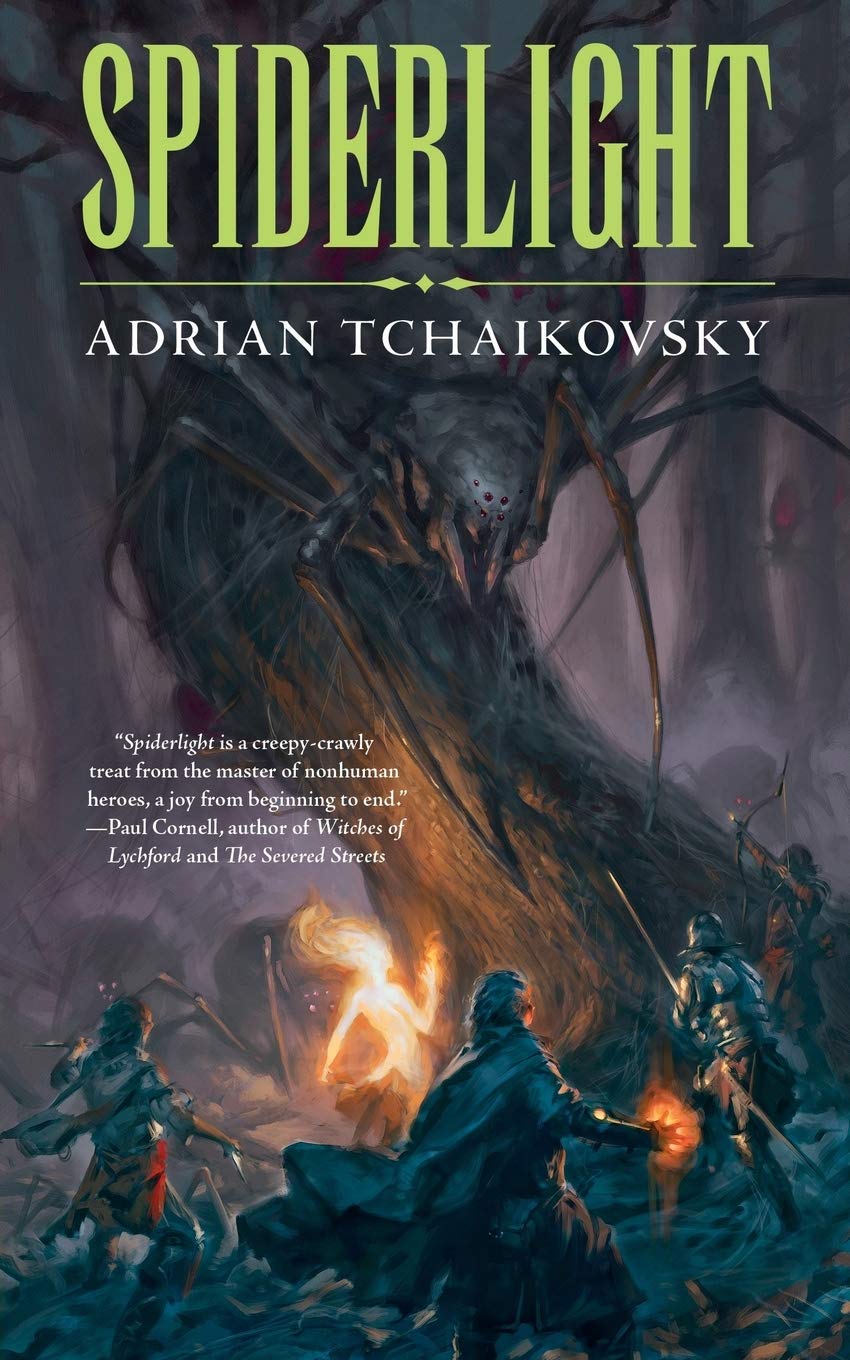
I don’t have the headspace for a full review right now, but if you’ve been paying attention you know what a fan of Adrian Tchaikovsky I’ve become since discovering his work last year. I finished his book Spiderlight (dude loves his spiders) yesterday. It’s high fantasy as opposed to the hard sci-fi of Children of Time and Children of Ruin, and it’s … really different. Bits of it almost come off as parody, particularly chapter titles, but there is some really interesting character work and examination of the typical fantasy dark vs. light trope going on in there that makes the whole book absolutely worth checking out. This is going to start off looking really straightforward and then by the end of it is something very different, and I liked it a lot, but not for the same reasons I liked his other books. I know he has a several-book megaseries out there somewhere; I should probably get around to reading that soon. The guy’s the real deal.
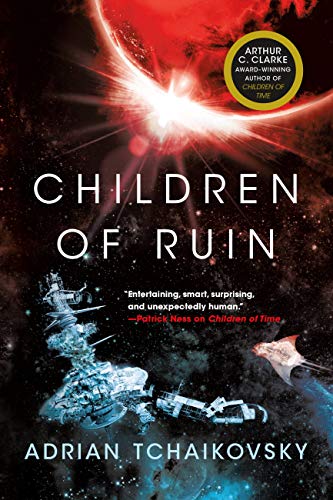
I never got around to writing a post yesterday, at least partially because I spent damn near the entire day with a book in my hand. First off: Adrian Tchaikovsky’s Children of Ruin, which I started a few days ago and finished the last 200 pages or so of yesterday. I’ve already reviewed the first book in this series (I don’t know if there are more planned; they are stand-alone enough that there doesn’t have to be, but sci-fi and fantasy writers tend to think in terms of trilogies or longer, so…) and Children of Ruin is every bit as strong of an effort as the first book. I read a lot, y’all know that, as this year the blog has really morphed into a book review site, and if there is another author out there who writes genuinely alien cultures better than Adrian Tchaikovsky does I’m going to need you to let me know who they are right now. As it is, the guy’s got another book on my shelf and a ten-book series that I’ve never read and another trilogy, so I’ve got enough books by him out there to last me a while, and believe me, I’ll be getting to them. This book adds two different alien species, one an octopus-based intelligence and the other … well, there’s another, and I feel like discussing it is a spoiler, to the human and spider cultures from Children of Time, and it’s amazing how differently each of them feel. He’s got a great knack for the little stuff, and I’m glad that I sort of cheat with my end-of-year list and put sequels and main books on the same spot on the list, because otherwise that job would be even harder than it’s going to be already.
(An example: at one point one of the octopodes makes reference to 6/8 as a fraction. At first the math teacher in me was mildly annoyed by the fact that he didn’t reduce the fraction, and then it hit me– the damn things have eight legs, so of course they use base-8 mathematics. He could have just used percentages and left this out, but he didn’t. That kind of thing.)
Anyway, if for some reason you haven’t read this series yet, get on it.

Meanwhile, don’t ever tell me that Twitter doesn’t sell books. I don’t know off the top of my head how long Daniel M. Ford and I have been mutual follows, but it’s been a while, and for some reason one of his tweets caught me at the exact right moment a few weeks ago and I ordered one of his books. Now, this is always a tricky thing for authors, and I think most of us have learned that even if we find out that a fellow writer has ordered one of our books, you never, ever ask if they’ve read it yet or what they thought. I absolutely hate it when I don’t like the books of writers I know, particularly indie writers (Dan writes for an independent publishing house, but I don’t know that he’d style himself an “indie author,” at least not the same way I do) and there’s always some trepidation whenever I start to read the book because of that, especially since I record everything I read on Goodreads and people tend to notice. Another issue in this case was that the book is a detective/procedural mystery, a genre I dabble in from time to time but am not generally a huge fan of.
I, uh, read the book in a single sitting, starting it around 8:30 last night and finishing it just after midnight, and I’ve already preordered the sequel and ordered a copy of the first book of his fantasy Paladin trilogy. So, yeah, I guess I liked it. The real victory here is the main character himself, Jack Dixon, who lives on a houseboat and thinks apples and protein-infused peanut butter measured precisely by the tablespoon counts as a meal, and yet who somehow felt like a real person who I knew within a chapter or two of the start of the book. I am typically more story-focused than character-focused as a reader, but Jack’s persona is compelling and clearly-drawn enough that I want to know more about him. Ford’s lean-and-clean, no-frills prose is perfectly suited to writing a detective novel, too; it’ll be really interesting to see how he handles a fantasy novel, which tend a bit more toward the flowery. My only gripe is that the ending felt a bit abrupt to me– the actual mystery is solved around the 80% mark and the end of the book is more like a coda and setup for the next book than anything else, but as there is another book coming it’s not as big of a weakness as it might be as a pure standalone.
So, yeah. ‘Twas a good day for reading yesterday.
It is hyperbole, but only by a little bit, to state that I have hated every second of 2019. I won’t go into the details; if you’ve been reading here for a while and especially if you follow me on Patreon you know a lot of them by now, but this has been the single worst year of my life by a wide margin and there are still four fucking months of it left.
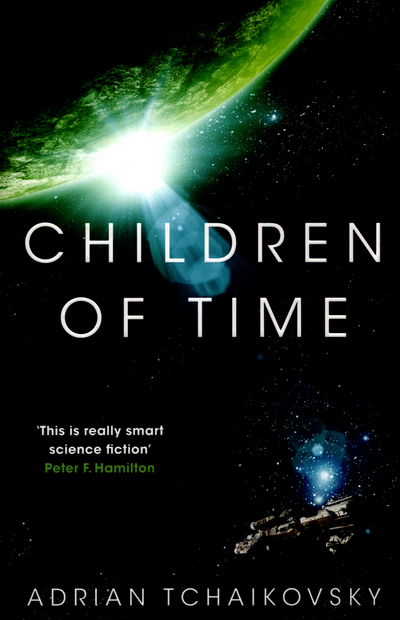
The one shining bright spot of 2019 has been the books I’ve been reading. Adrian Tchaikovsky’s Children of Time was number ninety, I believe, and it is the book that convinced me that my traditional end-of-year top 10 list is probably going to have to be pushed to fifteen this year. It was effectively a random buy; we took my son to Barnes and Noble to spend some money on him for his birthday and it jumped off the shelf at me. I will own the sequel by the end of the weekend.
Children of Time is a post-apocalyptic, more or less post-human novel set in two places: a green planet far from Earth and an ancient, decaying generation ship containing what are, as far as the occupants know, the last few thousand members of the human race. It takes place over centuries if not actual millennia– the time scale is kept fuzzy, and the human characters’ ability to put themselves into cryogenic storage until the next event that causes them to need to wake up allows the timeline to be pushed well beyond the human lifespan. At the very beginning, a human scientist attempts to seed the green planet with primate life and with a nanovirus that will tailor their evolution over the years to produce sentient life on the level of human beings. Something goes terribly wrong, and the proto-primates are lost, but the nanovirus is not … and it settles into a species of spider instead. The book tells two parallel stories: the slow evolution of the spider species and their eventual rise to supremacy on their planet, a story that takes place over many generations and thus has many different “main” characters for each part of the book, most of whom are named “Portia,” basically for narrative convenience, and the remaining humans on a generation ship called the Gilgamesh, a cultural reference they have long since forgotten the meaning of. Eventually, the two discover each other’s existence, and while there is conflict, it doesn’t work out the way you think it will, and the final resolution was so simple and elegant that it blew me away.
It is– and this is the entire review, so pay attention– one of the most fantastically inventive things I have ever read. That should be clear just from the plot summary, right? You already know you need to read this book, and you should go get it right now and get started. I know, I know, I’m prone to hyperbole, I start the review off with hyperbole and I mention my tendency toward hyperbole in damn near every positive review I write. But this book is really something special, y’all. You owe it to yourself to read it.
 Welcome to infinitefreetime dot com