
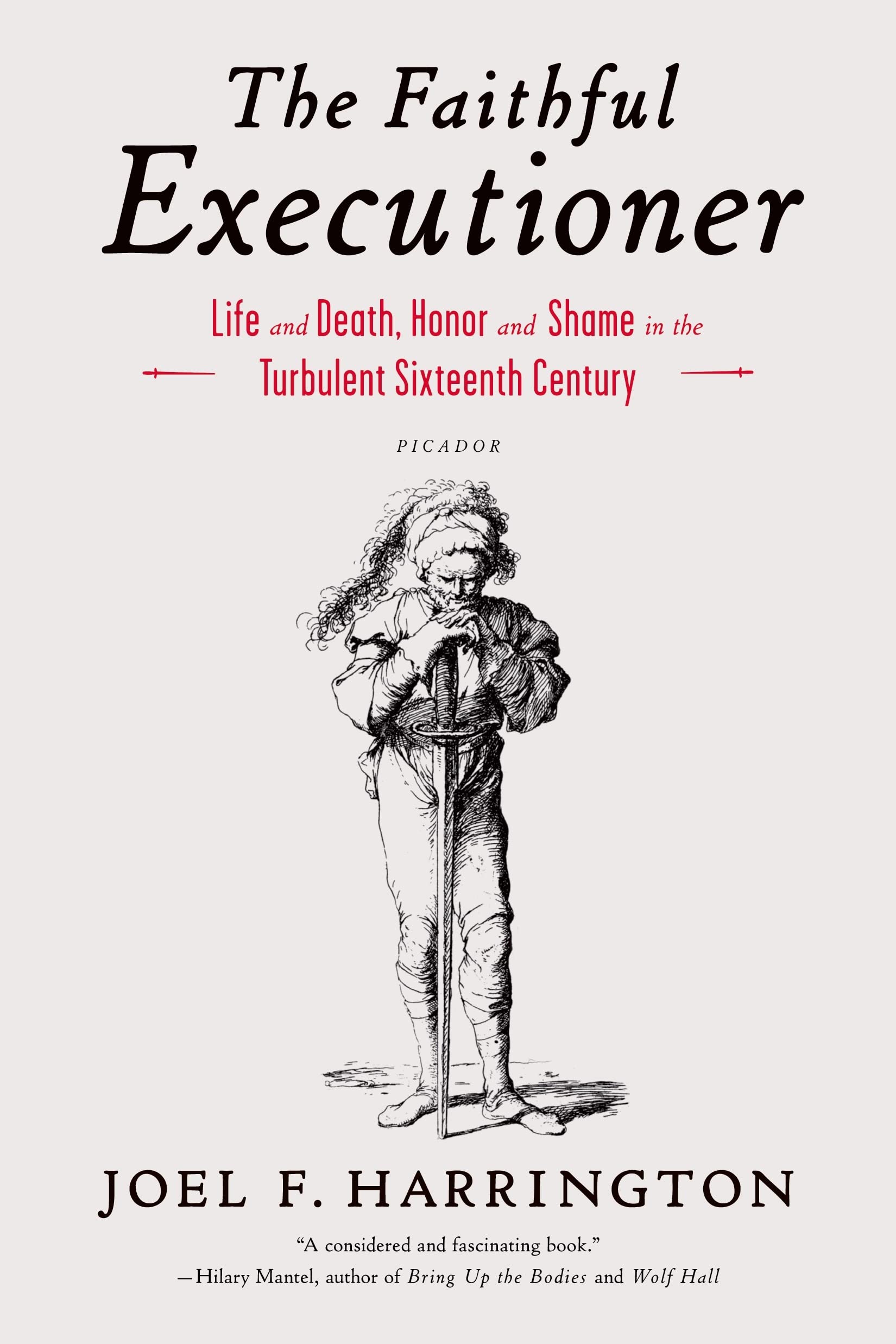
I’ve been on a little nonfiction kick lately, and I want to talk about two of the books. One of them I can pretty much recommend without reservation, and the other … well, you’ll see.
Anyway, The Faithful Executioner: Life and Death, Honor and Shame in the Turbulent Sixteenth Century is pretty Goddamned interesting. The book covers will take up more space than the words on this post, as this is very much a “you already know if you want to read this” book, but if reading a history book based on the journal of a Nuremberg executioner over the 45 years that he killed people for the state is interesting to you? Go forth. Right now.
Author Joel Harrington literally found this man’s journal in a bookstore, by the way, so this whole book came by almost by accident. The text was effectively lost; he was able eventually to track down an earlier (and thus, presumably, somewhat more reliable) version of it, but the whole book starts with this historian just literally stumbling upon a copy of this manuscript in a store. Meister Franz Schmidt executed people from 1573 to 1618, and kept records of varying detail of every execution or punishment he undertook on behalf of Nuremberg and several smaller towns in the area. At first the journal is more or less a dry record, but eventually Schmidt began recording the executions in greater and greater detail, eventually including his own feelings and opinions about the crimes committed by his … is victims the right word here? Clients? The poor bastards who got got at his hand. Those people.
I learned a lot from this book, and it feels like something I’ll be rereading in the future, which isn’t something I do very often with nonfiction. There’s lots of myths and nonsense attached to executioners, and this book does a great job of being a history of this one specific profession in this one specific place in time. Definitely check it out, if you think you can stomach it– the book isn’t gory, necessarily, but when beheadings are a big part of someone’s job, there’s no way to avoid some gross bits.
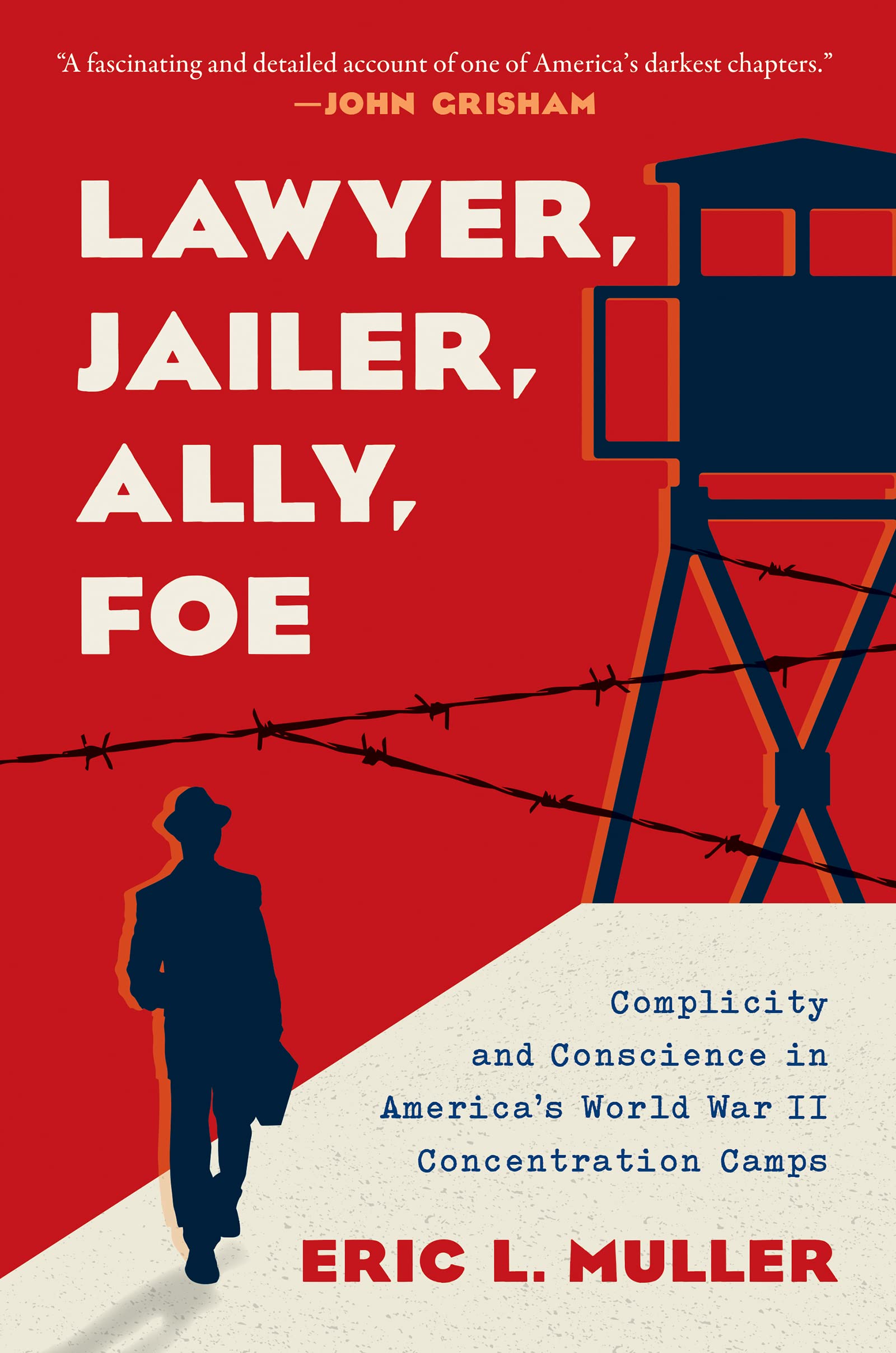
Notice how the lead quote on this book is from John Grisham, a novelist, and not from a historian? That’s kind of right on point. I’ve had this book on my Unread Shelf for way longer than it deserved, but having finished it, I’m kind of dissatisfied. Muller’s book follows three men who worked as “Project Attorneys” for the WRA– the War Relocation Authority– during World War II, acting as chief legal counsel at three of the concentration camps relocation centers that we herded Japanese Americans into. All three men are white, of course, and there’s a fourth who is himself “relocated” but is a trained and barred lawyer who works closely with the Project Attorney at his … uh … center.
Muller is a law professor, not a historian, and you can tell. The book is less pure history than historical fiction, as only one of the four men who are covered in the book was alive when Muller was writing, and it doesn’t look like he interviewed him intensively. The book repeatedly commits the cardinal sin of getting into the private, internal lives of these men with no particular documentation, and Muller freely admits that some of the events in the book are invented, but “consistent with his understanding” of the kinds of men these were. There’s an Author’s Note at the end that gets into what happened and what didn’t; the way he puts it is that nothing “of historical significance” was made up, so if he says a hearing took place, the dialogue is probably based on transcripts, but the bit where the white guy brings his Japanese colleague a pie is made up.
This isn’t a bad book by any stretch of the imagination, but I feel like it’s a bit too generous to its subjects. I’m willing to believe that at least some of these guys took these jobs out of a sincere if misguided belief that they could make a bad situation better, but when half of one guy’s narrative is him trying to cut the legs out from underneath a Japanese attorney who he thinks is developing too much influence in the camp, y’know, I’m comfortable with saying these were not good people!
On top of that, centering the feelings and experiences of the white lawyers who had the option (which some of them took) of simply walking away from this bullshit just doesn’t feel right. I’d love to have known more about Thomas Masuda, the Japanese attorney who gets about half of one of the chapters, or Kiyoichi Doi, who gets treated like a bad guy in a book where he is unquestionably in the right. And Muller doesn’t seem to have spoken to any actual internees while writing this.
I dunno. I didn’t hate the book, but it’s misguided.
Discover more from Welcome to infinitefreetime dot com
Subscribe to get the latest posts sent to your email.
 Welcome to infinitefreetime dot com