And here. We. Go.
I am currently on book 137 for 2020, and depending on how much time I spend reading over the next several days I’ll likely be on 138 or maybe 139 by the time the year ends, but one of those is going to be a reread and the other is not super likely to set the world on fire, so it is officially Safe to Put the List Together, and write what has consistently been my favorite post of the year during the time I’ve been writing here. This is the second year I’ve gone to 15 books; it didn’t feel quite as necessary as last year but I figure honoring 11% of my favorite books at the end of the year instead of 7% isn’t going to end the world or anything.
As always, these are books that are New To Me, not necessarily new releases, although a lot of them did come out this year. Also, don’t take the rankings too seriously– if I did this again tomorrow they’d probably be in a slightly different order– and in particular the top five or so were tough. Basically, I know you got some gift cards for Christmas, hie thee to a local bookstore and pick something up; they’re all good.
Here are the last seven years’ worth of lists:
- The Top 15 New(*) Books I Read in 2019
- The Top 10 New(*) Books I Read in 2018
- The Top 10 New(*) Books I Read in 2017
- The Top 10 New(*) Books I Read in 2016
- The Top 10 New(*) Books I Read in 2015
- The Top 10 New(*) Books I Read in 2014
- The Top 10 New(*) Books I Read in 2013

15. THE EMPEROR OF ALL MALADIES: A BIOGRAPHY OF CANCER, by Siddhartha Mukherjee. This is both the oldest of the books on the list, dating all the way back to the hoary days of 2010, and the first book on the list that I actually read. In fact, I started it in 2019, after last year’s list was written, but didn’t finish it until the first week of January. Siddhartha Mukherjee has shown up on this list before, with The Gene: An Intimate History coming in at #14 last year, and despite their relative positions I think Emperor is a stronger book. It is, as the title states, a history of cancer, or rather a history of cancers, as the book makes repeatedly clear that part of what makes this disease so difficult is that there are so many different types of cancer and it affects the body so differently depending on where and when it appears. It’s a fascinating piece of work; a little less technical (and thus a touch more accessible) than The Gene, which was already impressively accessible, and frankly everyone knows someone who has passed of cancer, so you’re going to feel a personal connection to this book while you’re reading it whether you want to or not.

14. DOCILE, by K.M. Szpara. There are a couple of books on this list that need to come with content warnings, and part of me kind of feels like Docile needs to come wrapped in brown paper with a big sticker on the back that says Are You Sure? on it. It’s a book about free will and brainwashing and capitalism and sex slavery, set in a future where debt has been made inheritable and people are literally signing decades of their lives (and sometimes their entire lives) over to the few remaining ultrarich to act as their servants in order to erase their family’s debts. They are given a drug that makes them into a Docile, which is basically a pliant, personality- and free-will-less drone who exists only to do the will of their masters. When they are released from their contracts, they remember nothing from their time as a Docile. And they don’t always come back right. The main character is Elisha, a young man who becomes a Docile but refuses to take Dociline, meaning that he is expected to perform exactly as the other Dociles but actually feels and remembers everything he is experiencing.
It’s a hard book to read, on a lot of levels, but this was another real early read in the year and it’s really stuck with me. I don’t know that I want a sequel or anything but I’m definitely in for whatever Szpara comes up with next.
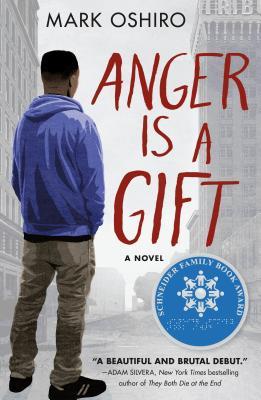
13. ANGER IS A GIFT, by Mark Oshiro. I read two different books by Mark Oshiro this year, this and Each Of Us a Desert, and I went back and forth several times on which one deserved to be on this list more. I feel like Desert is a better book on a technical level, so to speak, but Anger is a Gift affected me emotionally far more than Desert did, so it gets the nod. This is another book that’s going to kind of beat the hell out of you while you read it; it’s the story of Moss Jefferies, a young man from Oakland, California who lost his father to police violence six years before the events of the book begin, and is still struggling with panic attacks and PTSD from the aftereffects of his dad’s murder. Now a high school sophomore, Moss is forced to deal with the increasing militarization of his urban high school and, as he finds himself drawn further into demonstrations and protests, has to reckon with police violence again. There is a sequence in this book that made me so angry I nearly tossed the book across the room, and it was harder to read it as a teacher than I think it might be for most people, because I spent a substantial amount of time very, very angry with the adults who are supposed to be protecting the kids in this school. This book is technically YA, the first of several on this list (I read a lot of YA this year) and it’s probably the most adult-feeling of the books on the list. I’m greatly looking forward to seeing what he comes up with next.
(Disclaimer: Mark read, and enjoyed, The Benevolence Archives: Vol. 1 for his Mark Reads Stuff series on YouTube. I wasn’t familiar with him before this happened– someone else got him to read my book– and while I’m not going to lie and pretend that that series wasn’t the reason I picked up Anger in the first place, it’s not the reason Anger is on the list.)
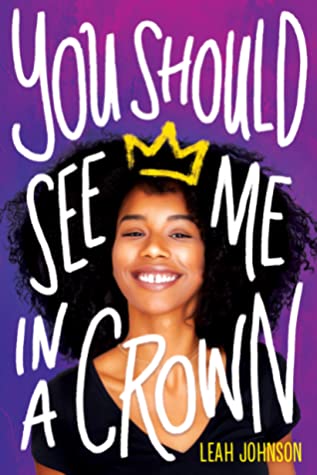
12. YOU SHOULD SEE ME IN A CROWN, by Leah Johnson. So, uh, compared to the rest of the books on the list, this one is maybe going to stand out a little bit? Y’all know me. I like speculative fiction, stuff with dragons and wizards and ghosts and unspeakable evils and laser guns and exotic alien worlds. Even when something is set in the “real world,” I like to see a tinge of the supernatural here and there.
You Should See Me in a Crown is basically a Disney movie set to prose. It’s the story of Liz Lighty, who ought to be a superhero, a young nerdy Black girl attending an ultra-rich Indianapolis high school. She has her entire life planned out– the college, the extracurricular activities, the careers afterwards– and then critical financial aid falls through and throws the whole thing into doubt.
So she decides to run for prom queen, which for some reason comes with a massive scholarship award at her high school, and she and her friends basically Voltron up to marshal the forces of all the not-traditionally-popular kids at the school and make Liz the prom queen.
It’s fucking delightful. Like, this book ought to have a giant blinking NOT FOR LUTHER sign on it, and it was bloody delightful. I loved Liz, I loved her fumbling, tender relationship with Mack, her girlfriend, and I even managed to buy into the high school being a real place by the end of the book. (Every so often I wonder if my high school was really weird or if every other portrayal of high school is nonsense. I was on the prom committee in high school. The “popular kids” were largely also the geeks and the nerds. It was a weird place.)
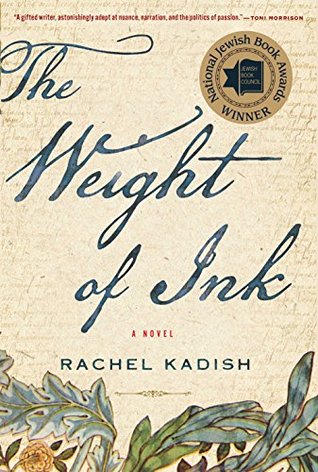
11. THE WEIGHT OF INK, by Rachel Kadish. Now, this book, on the other hand, should have come with a giant blinking FOR LUTHER sign on it. I was a Jewish Studies and Religious Studies major in a previous life, and have a Master’s Degree in Hebrew Bible, so if you hand me a book that’s basically about a couple of historians digging through a recently-discovered treasure trove of documents written by a female Jewish scholar and philosopher in London in the 1660s, I’m going to be halfway done with the damn thing before you actually get finished handing it to me. The book bounces back and forth between the two historians reading the documents in the modern day and the blind rabbi and the woman who is scribing for him (and, later on, writing her own treatises and corresponding with the likes of Spinoza) in the seventeenth century, and it’s probably the densest read on the list but Damn is it rewarding. This was recommended to me after a post where I complained about not really appreciating Literature, and this is the closest to Literature of everything I read this year, but don’t hold that against it. If you’re into history or really any kind of scholasticism at all this book will have something for you in it. Beautifully done.
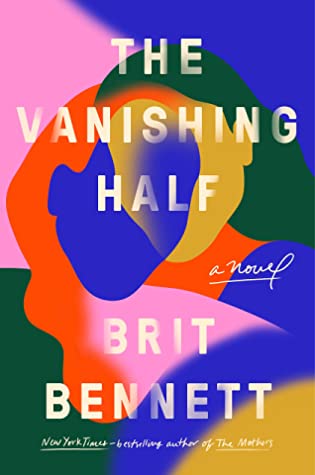
10. THE VANISHING HALF, by Brit Bennett. We’re on a bit of a roll here, as both this book and the next one could probably be termed Literatures as well, but don’t hold that against any of them. The Vanishing Half is a multigenerational family saga, the story of a pair of inexplicably light-skinned Black twin sisters, born in a Southern town so small that it doesn’t appear on any maps.
On their sixteenth birthday the twins flee their home together, heading to New Orleans, and several years later one of them abandons her sister and runs again– to marry a white man who has no idea of her race or her background, and to disappear into wealthy white society. The other sister marries the darkest-skinned man she can find and eventually ends up back at home again.. Both women have daughters, and their daughters’ lives interact at various points throughout the story, neither of them having any idea who the other is or even that they have any cousins in the first place. The book starts in the Deep South and as it moves from the 1950s to the 1990s it widens its scope across the country. Bennett’s writing is lovely, and her characters feel like real people even when they’re placed into a setting that can at times feel a little metaphorical.
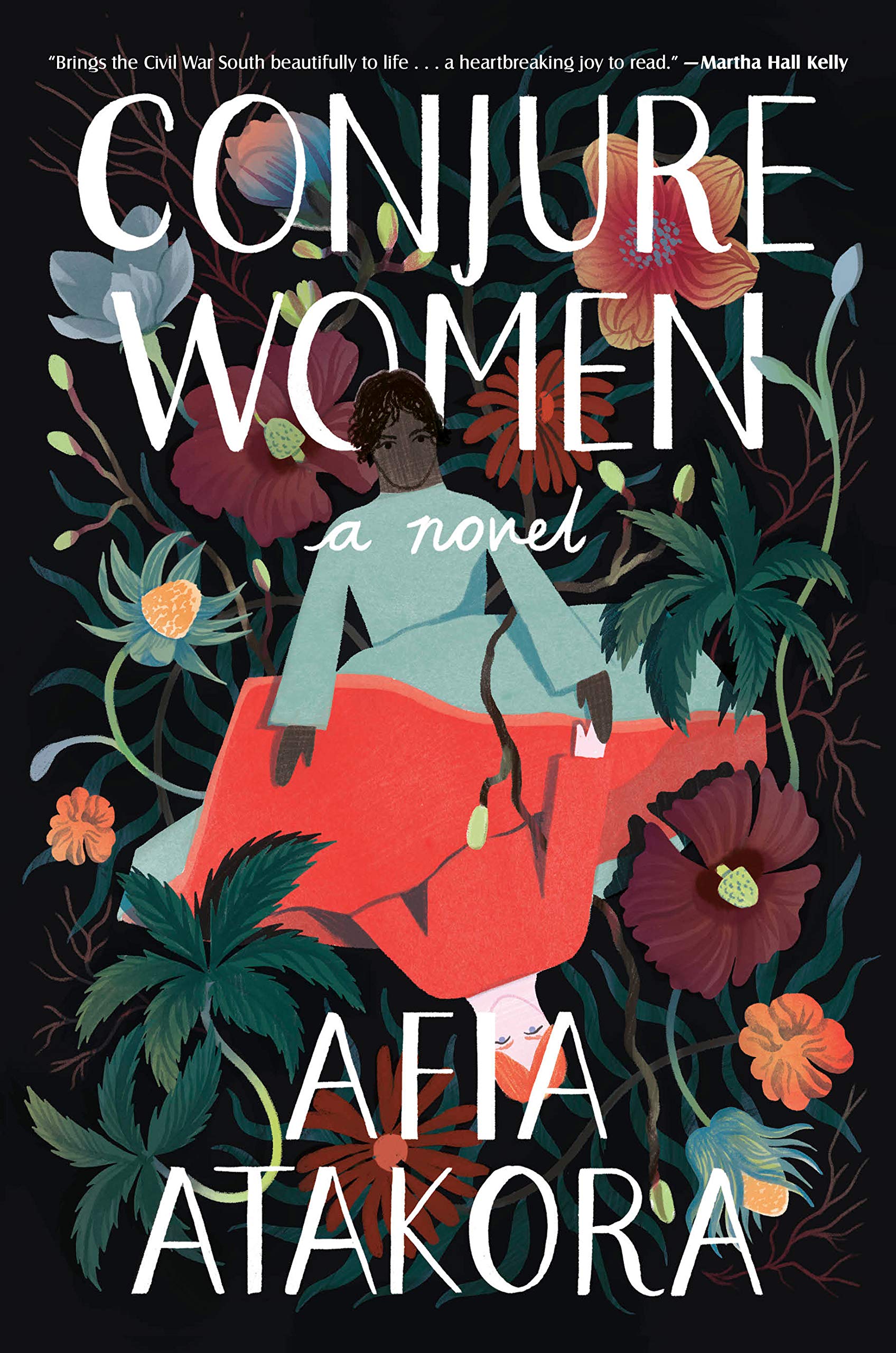
9. CONJURE WOMEN, by Afia Atakora. This book is a great example of something I was talking about earlier, a book that is mostly rooted in the real world and classy enough to be a Literature but works in just enough of the supernatural to keep weirdos like me interested. I read Conjure Women and The Vanishing Half pretty close to back-to-back, and they have a lot of similarities– both are family sagas to one extent or another, although this one doesn’t have literal twins in it, setting the relationship between an enslaved woman, her daughter, and their master’s daughter as the relationship it explores. The mother is a midwife and a healer, and her daughter Rue is reluctant about following in her footsteps, and is assigned as a playmate to the master’s daughter, Varina. Then the Civil War hits, and … well, things get interesting.
Take a close look at the cover, there, which isn’t initially as striking as some of the covers to books I enjoyed this year (random note: 2020 was a great year for book covers!) but is probably among the best covers of the year once you read the book and realize what you’re looking at. This and Vanishing Half are definitely an example of a situation where if I put the list together tomorrow they might flip places on the list. If you liked one, you’ll likely enjoy the other so get ’em both with that gift card I know you have.
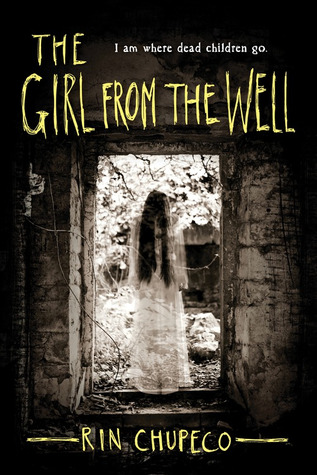
8. THE GIRL FROM THE WELL, by Rin Chupeco. LOL, this one is about an angry murder ghost in case you thought I’d forgotten what kinds of books I usually read. You might look at the cover to this and think to yourself wait, isn’t that the girl from The Ring? And, well (heh), you wouldn’t be entirely wrong, as the ghost in The Ring and the ghost in The Girl from the Well are both based on the same Japanese myth. This book wins the Can I Eat This Author’s Brain and Claim Their Powers award for this year, as it’s the book I’d most like to have written myself of everything on the list. It’s actually told from the perspective of the angry murder ghost, and Chupeco’s prose is creepy and alien in a really remarkable way; the ghost really doesn’t feel human at any point in the book, and that’s something that I feel could get out of control and ruin the book really easily if the author isn’t careful and skilled enough. I also read the sequel to this this year, The Suffering, which does have the ghost as a main character but is told through the perspective of another (human) character from this book. I enjoyed it quite a bit but it didn’t floor me as effectively as this one; Chupeco’s voice in this book is outstandingly well-done, and this was easily the scariest thing I read all year.

7. THE BURNING GOD, by R.F. Kuang. Right about here is where it started getting really difficult to rank the books, by the way, and if anything this book got downrated a little bit by being the third book in a trilogy, making it a little tricky to recommend on its own. I loved the first book in the trilogy, The Poppy War, and had some trouble with the second, The Dragon Republic, at least in part because I didn’t remember the events of the first book as well as I should have. So I reread the first two books before reading this one, and … damn, y’all.
This series is another one that could stand for a trigger warning or two. One of the central events in the first book is modeled on the Rape of Nanking, and it’s absolutely horrible, and none of the characters are ever the same afterwards. The first book ends with a literal genocide, as an entire nation is set aflame. PTSD, rape and drug abuse and addiction are major themes of the series. But, my God, R.F. Kuang, who is somehow only in her early twenties, is a hell of a writer, and if you’re not someone who feels like they will suffer lasting psychological effects from reading this kind of book, in the final evaluation it’s one of the finest fantasy trilogies I’ve ever read. I didn’t give Dragon Republic enough credit when I first read it– which was exactly why I did the reread– and while placing seventh on this list might seem like a drop-off in quality when The Poppy War was third the year it came out … like I said, don’t read too much into the specific rankings. But read the books. Definitely read the books.
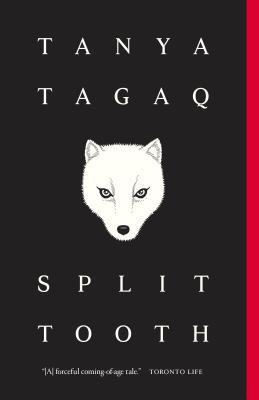
6. SPLIT TOOTH, by Tanya Tagaq. Okay, I promise after this one I won’t use the phrase “trigger warning” again, and I won’t make fun of myself for being bad at Literature again either, but I’ve gotta do both for this book. Tanya Tagaq is a Canadian Indigenous author, and I read an interview with her where she describes this book, set in Nunavut in the 1970s, as a “mythobiography,” and that’s as good of a description of it as I can imagine. It’s not precisely a memoir, and it’s not precisely an autobiography either– I don’t imagine that Tagaq thinks she was impregnated by the Northern Lights, which happens to the protagonist in this book– but the mythical and supernatural elements of the book somehow manipulate the “real” events of the book into being more shocking than they might have been otherwise. This book is beautifully written– the prose is among the best I’ve ever encountered and probably 15-20% of the wordcount is actually poetry and I loved the hell out of it anyway. Growing up poor and indigenous in Nunavut in the 1970s was no picnic, and this is another one to be careful with, as child abuse and neglect and sexual assault are definitely themes, but this is an amazing book and among the best surprises of 2020, as I effectively bought it blind when I realized I hadn’t read anything by indigenous women yet in my #52booksbywomenofcolor project and more or less grabbed it at random. I love it when that works out.
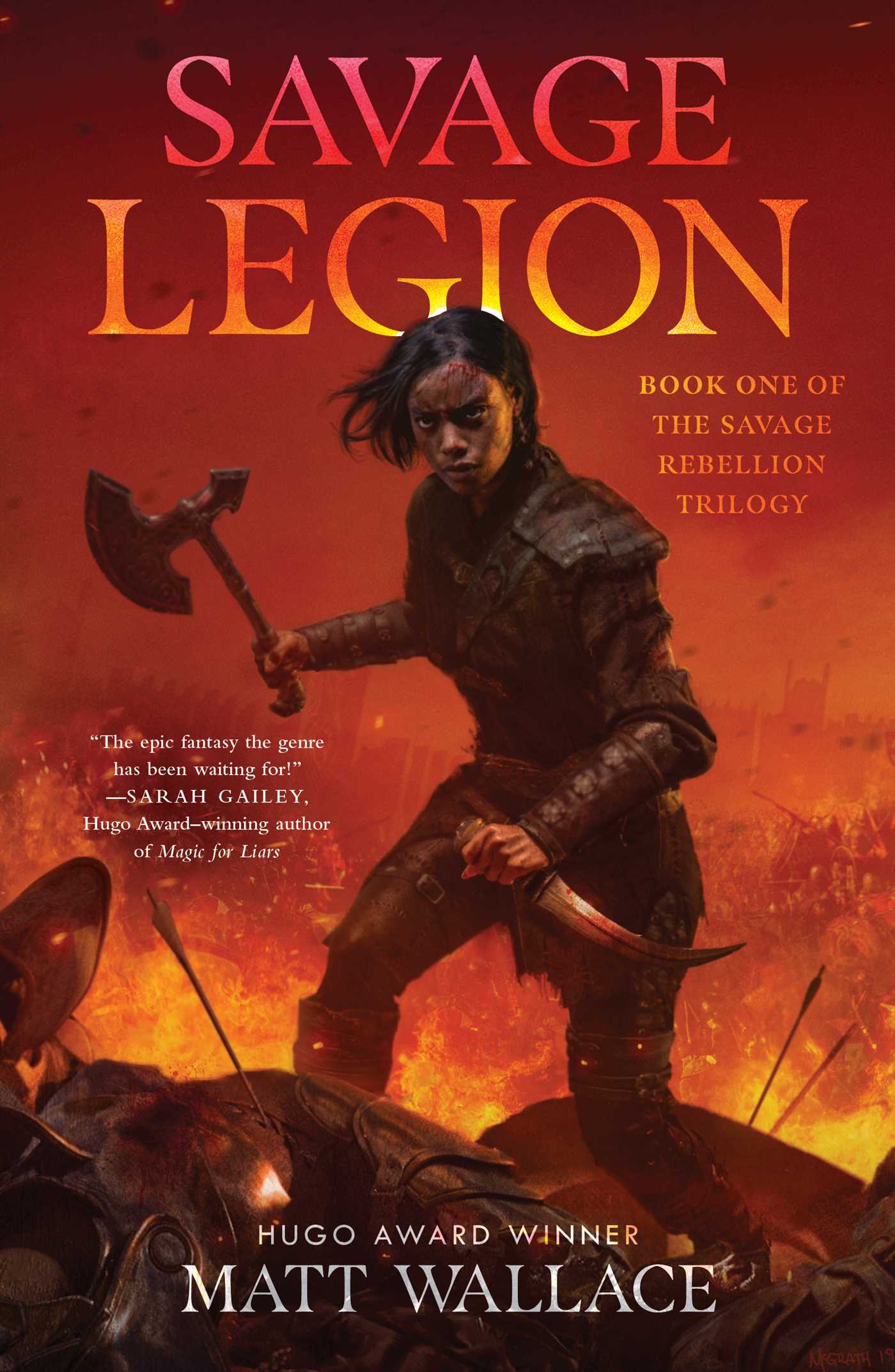
5. SAVAGE LEGION, by Matt Wallace. We are about to enter into a series of “first books of fantasy series,” as four of my top five books this year are Volume 1 of what will turn out to be at least trilogies if not, in some cases, longer. I just took a break for lunch, as I’ve been working on this post for three hours, and I swear to you that I sat back down and again considered rearranging the next set of books, so call all of them the best book of the year if you want. I won’t tell anybody.
At any rate, Matt Wallace’s Savage Legion is a hell of a book, and what was the most fascinating thing about it for me was the way it somehow manages to simultaneously absolutely bathe itself in tropes and cliches of the genre and come off as something fresh and new, and frankly that’s a hell of a trick to have pulled off. Legion employs the rotating-third-person-POV construct that’s become popular since Game of Thrones came out, but the really interesting thing about it is that you don’t figure out that several of the characters you’re reading about are the bad guys until everything starts slowly knitting itself together at the end. His characters are definitely modern, as he manages to knit together an interesting, diverse cast of POVs without succumbing to The Nation To The South Is Like This and The Dwarves Are Like That sorts of tropes. Also worth pointing out: one of the POV characters is in a wheelchair, which I think is the first time I’ve seen that in a fantasy novel. Generally when fantasy interacts with disability it’s to cut off a limb in combat or sometimes to have a character who is Blind But Not Blind, and I swear I wrote that before realizing that GoT does both. This is not that, and this book deserves a lot more attention than it got.

4. LEGENDBORN, by Tracy Deonn. Let us first take a moment to appreciate that cover, please.
Legendborn is not only the first of a series, it’s author Tracy Deonn’s debut as well, and … man, I loved it. I loved it. Much like Wallace’s Savage Legion and Kuang’s Poppy War, this book starts off feeling very familiar and very tropey. YA can get away with that to a slightly larger degree than books that are supposedly aimed at adults, but it’s still there nonetheless. The main character is not quite off at college, as she’s in high school, but she’s participating in a program that is located at a college and she lives in a dorm. And she’s off at a party and she Witnesses Something She Shouldn’t Have Seen, and then there are Secret Powers that Must Be Hidden, and there’s a Secret Society, and then like thirty pages into the book Tracy Deonn starts pinpointing exactly what you think is going to happen and gleefully curb-stomping the hell out of all of it, and yes eventually there’s a Powerful Boyfriend and a Smolderingly Sexy Antagonist who is the Boyfriend’s protector and best friend but hates the main character because of Secret Reasons, and this is one of those books that is difficult to describe properly because it sounds so clichéd but you just have to trust me that Tracy Deonn knows exactly what she’s doing and everything is going to be delightfully subverted by the end, and there’s even a Big Twist at the very end that I absolutely did not see coming and led to a fun bit of self-examination where I had to decide if I’d missed it because I’m white.
This is the third YA book to appear on this list, and as I’ve already said I read a lot of YA this year, but you absolutely should not let that get in the way of your reading this. Go get it and put it in your head now, please.

3. LEONARDO DA VINCI, by Walter Isaacson. There’s always at least a couple of nonfiction books on this list, but Leonardo da Vinci was the first one that was in serious contention for the top spot. This book is a combination of a biography of Leonardo himself and a book about art history, and it is filled with pictures of his artwork and detailed analyses of his paintings. This is the second book of Isaacson’s I’ve read, his first being a biography of Benjamin Franklin, and I will likely read his biography of Einstein sometime this year. Isaacson’s thing is that he really likes writing about geniuses, and the most notable thing about this book, above and beyond the fact that Leonardo himself is endlessly fascinating, is the sheer enthusiasm that Isaacson brings to discussing his subject. Art history is one of those things that I don’t personally know a whole lot about, but I love listening to and reading people who do know a lot about art talk about it, and both parts of the book were done exceptionally well. Descriptions of art can slide into the sort of half-gibberish that music reviews can turn into if the author isn’t careful, and I have to admit that a lot of the time I’m taking his word for it when he does things like describe facial expressions of the various subjects of a painting and such, but this is an amazing book about an amazing person and I very strongly recommend it even if you don’t necessarily think Leonardo is someone you want to spend 600 pages with. Because, seriously, you don’t want to read about Leonardo da Vinci? Quit being weird and go pick this up.
(Also, one more thing: this book wins for the best book as a physical artifact for the year. The paper is creamy and thick and the book feels great, and since it’s full of artwork that is begging for analysis the print itself is of a really high quality. I only spent like $12 on it brand new, and that’s ludicrous.)
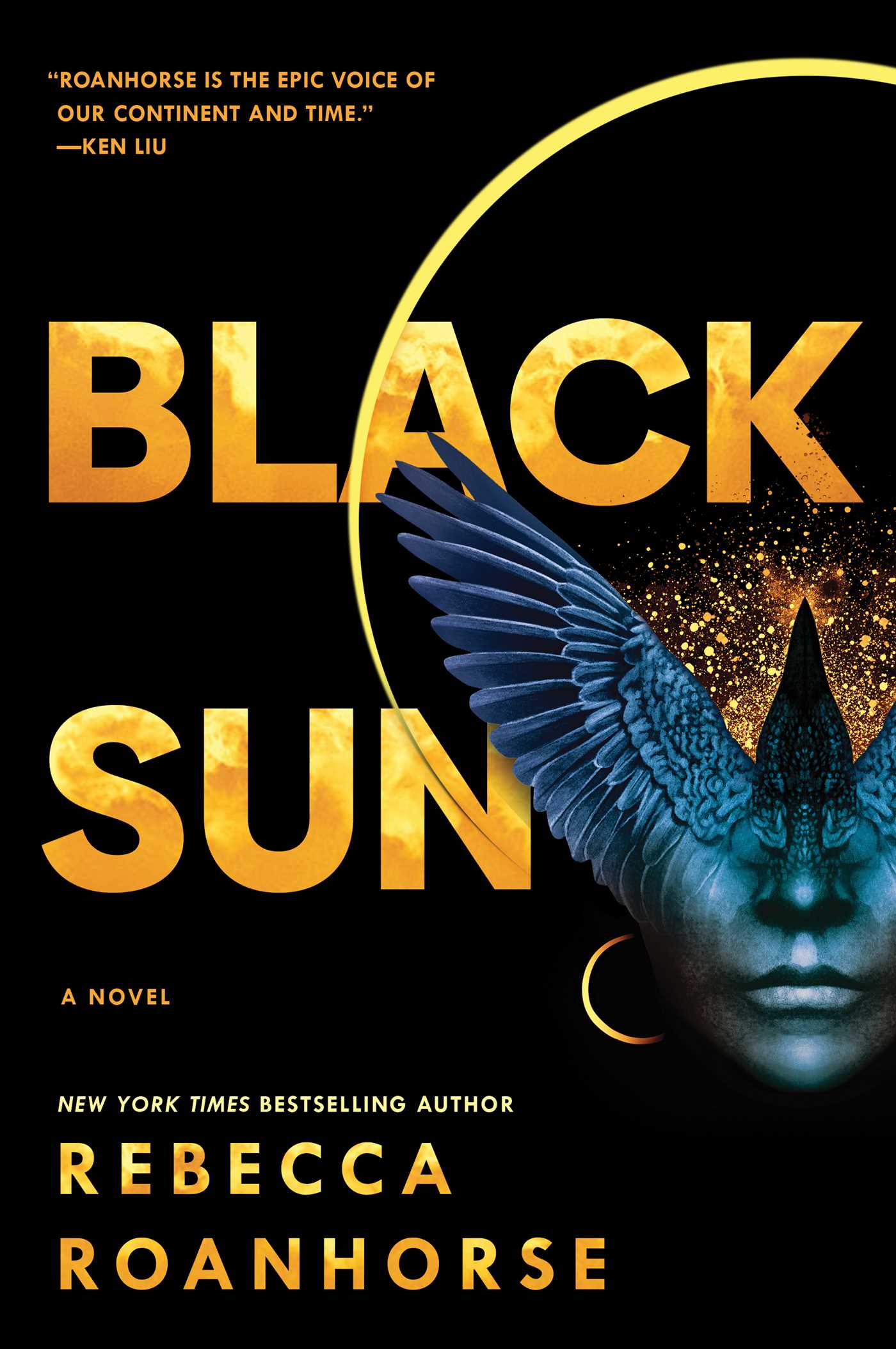
2. BLACK SUN, by Rebecca Roanhorse. We’re back to Volume One of A Fantasy Series territory here, and Rebecca Roanhorse has become one of my favorite authors over the last several years, someone whose books get bought on release day and leapfrogged over whatever else happens to be in the queue at the time.
Anyway, let’s stare at the cover for a moment.
Black Sun is second-world fantasy, heavily influenced by Mesoamerican history and culture in much the same way that The Burning God is influenced by Japanese and Chinese culture. And you’re about to see another theme between this and the book that ended up being my favorite of the year, because the thing I loved the most about both books was the worldbuilding. I don’t know how many books are planned for this series but I hope it’s a million, because I could read about this world forever. It’s also one of those books where the ending kind of upends the status quo that’s been set up throughout the book, so we’ll see where Roanhorse goes with the second volume, which hopefully will be out really soon.
1. SCARLET ODYSSEY, by C.T. Rwizi. This has been the frontrunner for most of the year, and I did go back and forth a couple of times on whether I was going to have it or Black Sun as the top book of the year, but in the end it won out. And, well, there are some definite similarities between the two: second-world fantasy inspired by a culture that you typically don’t see a lot of in fantasy literature, this time being Central Africa rather than Mesoamerica, and absolutely outstanding worldbuilding. What ended up giving Odyssey the edge was slightly stronger characters and a more detailed (and math-based!) magic system, existing alongside multiple detailed religious systems and a complicated politics to boot. This book also features rotating 3rd person POVs, although it’s clear that 18-year-old Musalodi, a mystic who achieves a place of power and influence among his people and is immediately sent forth on an Important Quest, the actual purpose of which is to get rid of him, because men aren’t supposed to be Mystics and no one in his home really wants to deal with him. Genderflipping traditional roles is kind of a thing throughout this book, and Salo’s journey and the people he encounters along the way are all fascinating. There are also hints at another culture, possibly much more technologically adept, sort of on the outside of the events of the story but watching closely, and I can’t wait for the sequel, Requiem Moon, which comes out in March and which I’ve already pre-ordered. It is the best book I read in a year full of good books, and you need to read it.
HONORABLE MENTION, in no particular order: TERRA NULLIUS, by Claire G. Coleman, A SONG OF WRAITHS AND RUIN, by Roseanne A. Brown, THE VANISHED QUEEN, by Lisbeth Campbell, MOON OF THE CRUSTED SNOW, by Waubgeshig Rice, THE FIVE: THE UNTOLD LIVES OF THE WOMEN KILLED BY JACK THE RIPPER, by Hallie Rubenhold, SPIDERLIGHT, by Adrian Tchaikovsky, THE YEAR OF THE WITCHING, by Alexis Henderson, and DEATHLESS DIVIDE, by Justina Ireland.

 Welcome to infinitefreetime dot com