
Sunday night book reviewlets

I was gonna go see Deadpool & Wolverine today and life intervened, so let’s review a whole bunch of books.
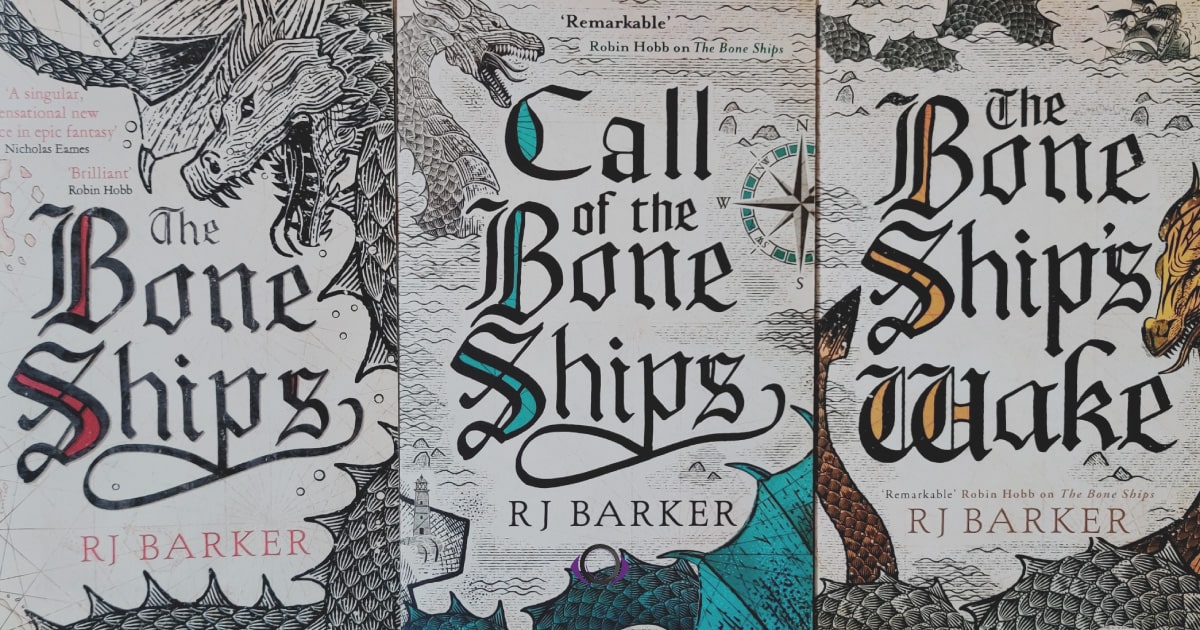
The Tide Child Trilogy, by RJ Barker: Excellent, although it took me fifty pages or so of the first book to get used to RJ Barker’s writing style. Nautical fantasy is a sorely underexploited subgenre, and damn near the entire trilogy takes place on a boat. Now, it’s a boat made from dragon bone, and it’s sailed with the help of a walking bird-thing who can magically create wind, but outside of that I can’t imagine anyone who enjoys historical fiction would want to pass on this, and the fantasy elements are not as extensive as a lot of the other books I have read this year. Combine that with some lovely, subtle world building and a feminist perspective that is omnipresent and will still fly over the heads of some readers and you have something I really enjoyed.
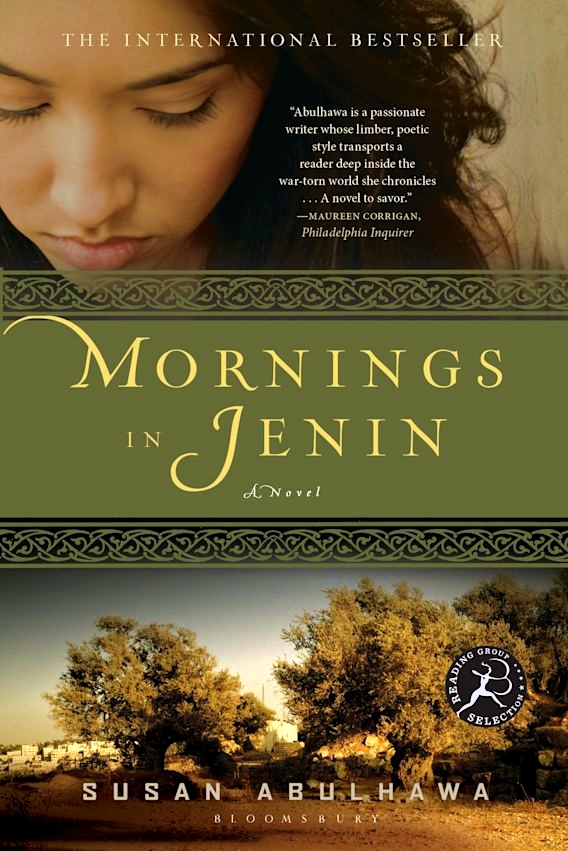
Mornings in Jenin, by Susan Abulhawa. This is the second of Abulhawa’s books I’ve read this year and is actually her debut novel, but in all honesty it’s superior to Against the Loveless World in nearly every respect, and Against the Loveless World is a book I enjoyed quite a lot. Abulhawa is a Palestinian author and this book begins with the creation of Israel and follows a small handful of characters up to, more or less, present day (the book came out in 2006, and ends … 2002-ish, maybe? So close enough.)

All of the trigger warnings, and if you’re remotely human this book will leave you incandescent with rage at several different points. I need to do a whole bunch of research and then read it again. It might be the most important book I’ve read this year; everyone needs to read this one.
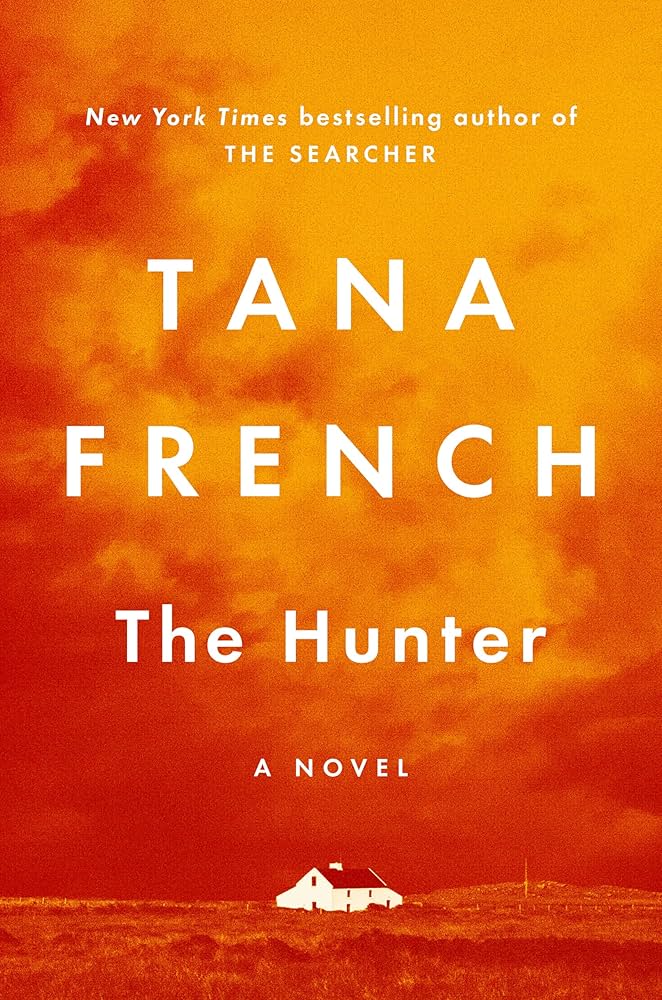
The Hunter, by Tana French, is the second book she’s written about Cal Hooper, the main character of her previous novel The Searcher. I don’t have a lot to say about it that I didn’t have to say about the first book she wrote about this guy; Cal is an American ex-cop who moves to Ireland in search of a slower, calmer life and ends up in the tiny (fictional) town of Ardnakelty, where he quickly forms a bond with Trey, a local teenager with some trauma in her background. In the first book, Cal got pulled into the disappearance of Trey’s brother, and in this book, her father reappears for the first time in years and brings all sorts of pain with him. This book is less about the central mystery (it’s technically a murder mystery, but the murder doesn’t take place until about the 60% mark) and more about the relationship between Cal and Trey and what it’s like to be an outsider in a small town, and I really feel like this and The Searcher are both triumphs. I’d love to see more about these two.

the book of elsewhere, by Keanu Reeves and China Miéville. I was super excited about this one, so I’m sad to say that this is quite easily the single most disappointing reading experience I’ve had this year. I don’t have any idea how the co-writing process worked between Reeves and Miéville; Reeves also “co-writes” the comic book series that this book builds upon, but I can say that the only thing in this book that felt like Miéville was the vocabulary. Had those two names not been on the cover, I’d not have made it past the prologue, which is so choppy and poorly-written that I can barely believe it made it to publication. I made it through about 120 of the book’s 340 or so pages before deciding I had other things to do, and I don’t see myself picking this back up. You should avoid this unless you’re a huge fan of BRZRKR, the comic it’s based on … and I don’t really think BRZRKR has any “huge fans.” Definitely stay away if you are a fan of Miéville; just pretend this book never happened.
In which the kids are doing great

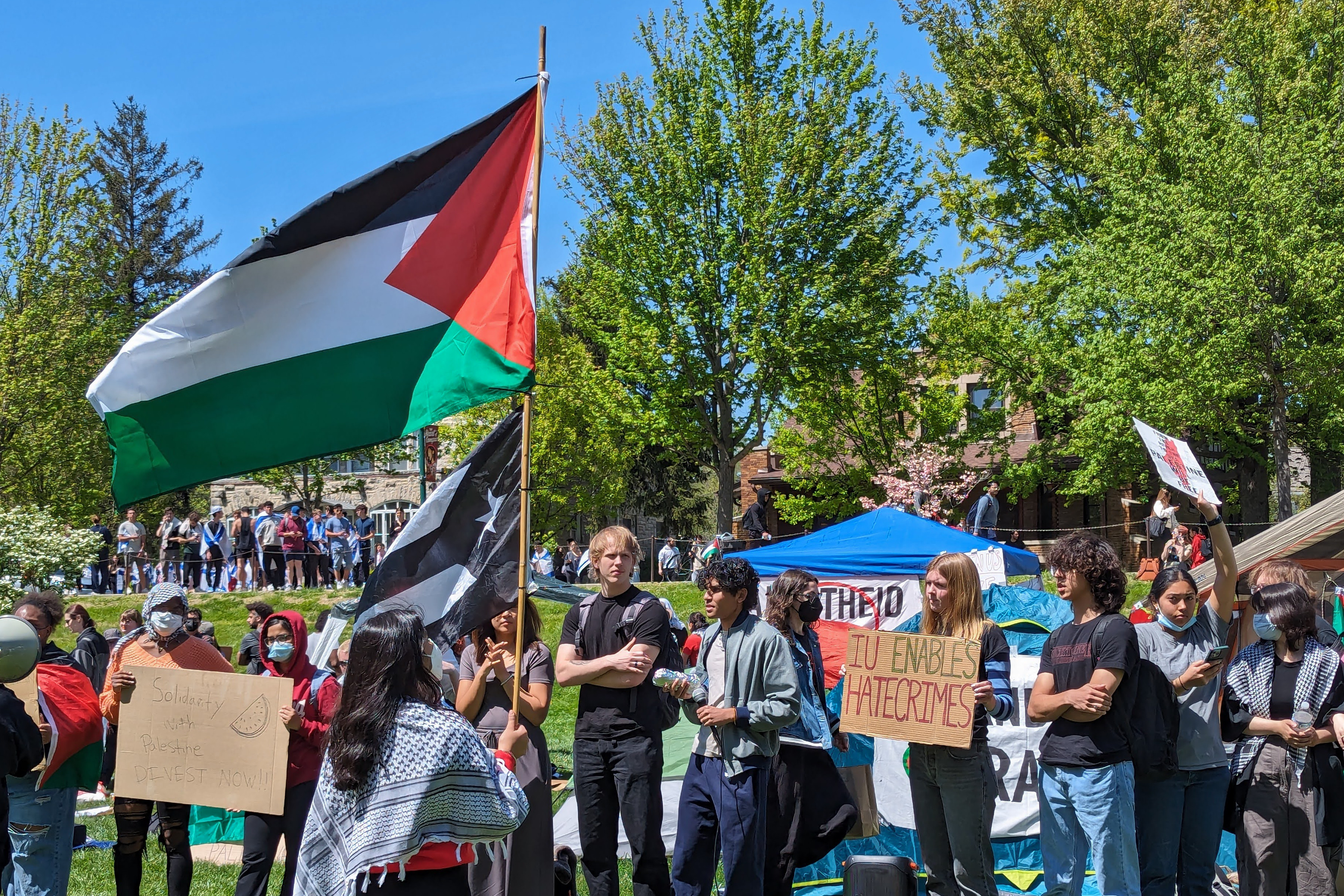
It warms my ancient, withered heart to see the news of all the campus protests popping up around the country lately, nowhere more than at my alma mater, Indiana University. I continue to stand by the position I held when this most recent disaster started back in October: I have absolutely no idea how to solve the problem of Israel/Palestine, but I am absolutely certain that Benjamin Netanyahu should be nowhere near it, and while I don’t know what we should do, carpet bombing Gaza and murdering 30,000 people, half of which are children, is absolutely and unequivocally not what should be done.

Are there people at, and around, these protests who are advocating other policies that I am going to disagree with? Yep. I’m sure there are. I’m also capable of enough nuance to recognize that one guy screaming “Death to Jews” or whatever does not cancel out hundreds of other people suggesting peacefully that maybe their university ought not to invest their tuition money in apartheid regimes. Being anti-Zionist does not equate to antisemitism, but it doesn’t mean that there aren’t some out there.

But, one way or another, this is an example of people using their power to bring attention to an issue that has a chance of achieving the goals that they want. The more pressure that can be brought upon US institutions in general, not just the government, to put pressure on the Israeli government to stop acting like fucking monsters, the better. And the great thing is that it’s clearly working– you didn’t hear squat about any kind of anti-Zionist movements a few years ago, and being openly pro-Palestinian was virtually unheard of. They’re moving their position into the mainstream with these protests, which is what needs to be done in order to effect any kind of systematic change. Good for them. I’m proud.

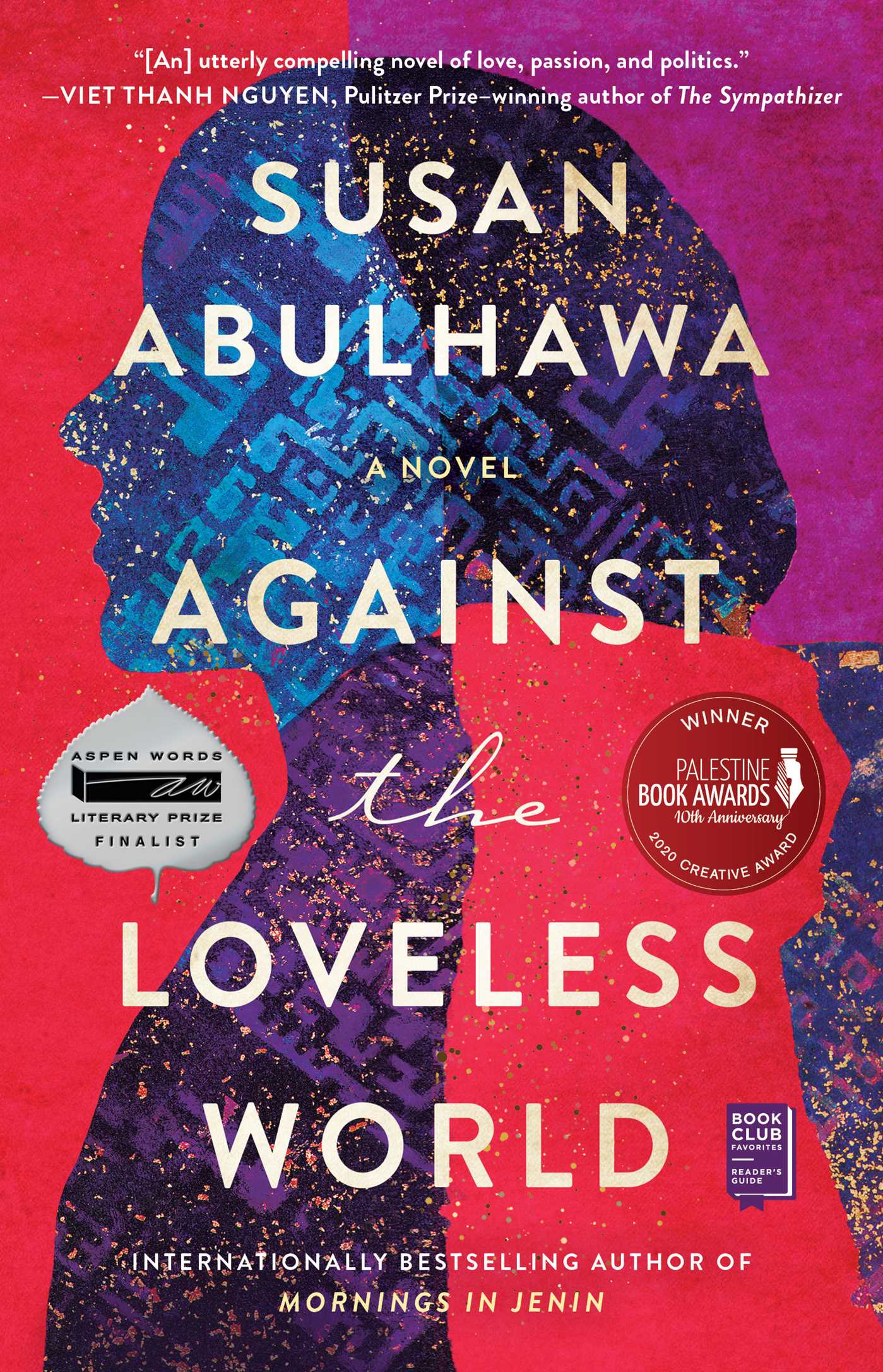
#REVIEW: Against the Loveless World, by Susan Abulhawa

You might remember a few years ago that I did a project called Read Around the World, where I read one book from every US state and from as many countries as I could manage in a year. The final-final-final update never got published, and has a few more countries on it than the “final” 2021 update did, but I never managed to read anything from Israel during that time. I can remember thinking about what to do if I read something from a Palestinian author during the project– would I count that as Israel? Should Gaza and the West Bank count as their own place, and leave, for lack of a better word, Israel Israel untouched? Well, I never had to decide, because I wasn’t about to try rereading the biography of David ben-Gurion I bought when I was in Israel on a dig after college, and nothing else ended up dropping into my lap.

I haven’t really worried about geographical diversity too much since 2021. Or, at least, I didn’t until October 7 happened, and I decided to make a stronger effort to find some books by Palestinian authors to read. I don’t think I talked much, if at all, about Rashid Khalidi’s The Hundred Years’ War on Palestine, which I read in … December? I think? But Susan Abulhawa’s Against the Loveless World has been sitting on my shelf for way too long, and since I wanted something different after three straight Red Rising books, I decided it was time to dig into it.

So, I just wrote a post where I told you to read Red Rising because it was good. I still stand by that post, obviously. But you need to read Against the Loveless World because it is important, which is not quite the same thing. Don’t misunderstand me– it is also good; I would not have, for the second day in a row, read an entire book in less than 24 hours if it was not a good book– but it is a story that Americans in particular need to hear.

Against the Loveless World is a novel, not a memoir, but it is written in the style of a memoir and both Abulhawa and the main character, Nahr, are Kuwaiti-born Palestinian refugees. Abulhawa has lived in America since she was 13 and Nahr narrates her book from solitary confinement inside an Israeli Supermax prison, so this is clearly not a self-insert. It feels a lot like My Government Means to Kill Me in that respect. Nahr grows up more or less happily in Kuwait, but the Iraqi invasion leads to persecution of Palestinians and her family is forced to move to Jordan. She and her family spend the rest of the book moving back and forth between Jordan and Palestine; I don’t know for sure that the word “Israel” is ever used in the book; when it is grammatically necessary to refer to it the phrase “the Zionist entity” is often used. The book takes its time with her radicalization, saving the events that put her in prison for the last fifth or so of the book, but from the moment Saddam invades it becomes clear over and over that by virtue of being a Palestinian and in particular a Palestinian woman she is considered to be less than nothing by everyone with any power around her. When her husband abruptly abandons her and disappears things get even worse and she is forced(*) into prostitution for a while, she manages to provide for her family but at the cost of not being able to admit to anyone how she is doing it.

Her first trip to Palestine is so that she can obtain a divorce, which of course she can’t do without permission of her husband, the guy who abandoned her and prompted the need for a divorce in the first place. He more or less signs power of attorney over to his brother, and it is when the two meet that the book really takes off. She’s able to meet some members of her family for the first time as well, family members who were never able to come visit in Jordan or Kuwait because leaving the country would have led to the Israeli government stealing their homes out from underneath her. At one point she visits her mother’s childhood home, which is occupied by a colonizer at the time. It’s … quite a moment.

At any rate, the book is marvelous, and I don’t want to spoil a lot of it. But I will read more by Susan Abulhawa, and I think I’m going to try to find a few more Palestinian fiction authors to read work by, which I’ll be able to get to in a million years, since I am so far behind. You really, really, really ought to strongly consider picking this one up. It’s cheap. Do it.

(*) It’s more complicated than that word implies, and Nahr’s relationship with her, uh, procuress is incredibly layered and frankly one of the highlights of the book. If you’re thinking you might need a trigger warning about this book, though, you’re right.