A couple of nonfiction reviews

I’ve been on a little nonfiction kick lately, and I want to talk about two of the books. One of them I can pretty much recommend without reservation, and the other … well, you’ll see.

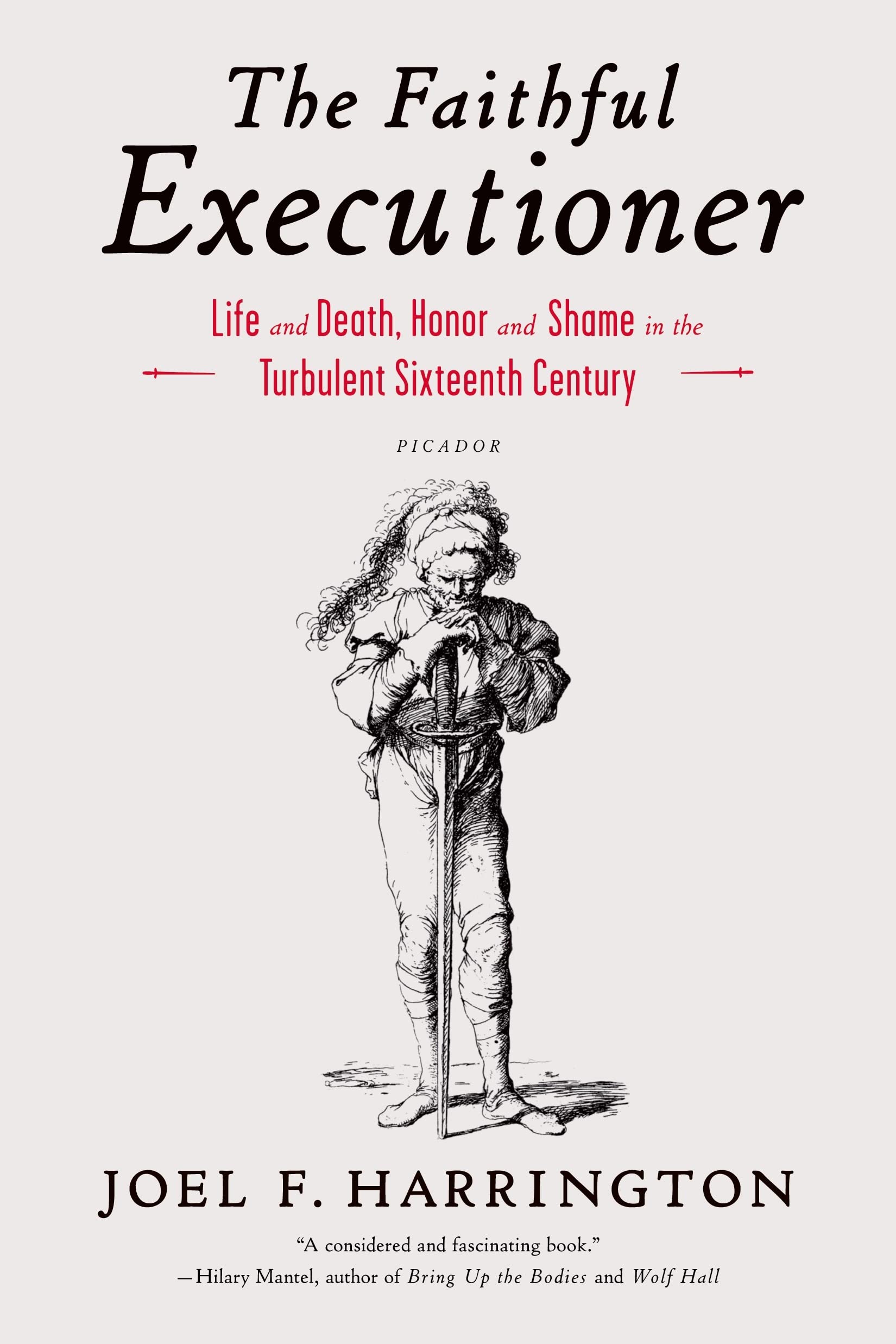
Anyway, The Faithful Executioner: Life and Death, Honor and Shame in the Turbulent Sixteenth Century is pretty Goddamned interesting. The book covers will take up more space than the words on this post, as this is very much a “you already know if you want to read this” book, but if reading a history book based on the journal of a Nuremberg executioner over the 45 years that he killed people for the state is interesting to you? Go forth. Right now.

Author Joel Harrington literally found this man’s journal in a bookstore, by the way, so this whole book came by almost by accident. The text was effectively lost; he was able eventually to track down an earlier (and thus, presumably, somewhat more reliable) version of it, but the whole book starts with this historian just literally stumbling upon a copy of this manuscript in a store. Meister Franz Schmidt executed people from 1573 to 1618, and kept records of varying detail of every execution or punishment he undertook on behalf of Nuremberg and several smaller towns in the area. At first the journal is more or less a dry record, but eventually Schmidt began recording the executions in greater and greater detail, eventually including his own feelings and opinions about the crimes committed by his … is victims the right word here? Clients? The poor bastards who got got at his hand. Those people.

I learned a lot from this book, and it feels like something I’ll be rereading in the future, which isn’t something I do very often with nonfiction. There’s lots of myths and nonsense attached to executioners, and this book does a great job of being a history of this one specific profession in this one specific place in time. Definitely check it out, if you think you can stomach it– the book isn’t gory, necessarily, but when beheadings are a big part of someone’s job, there’s no way to avoid some gross bits.
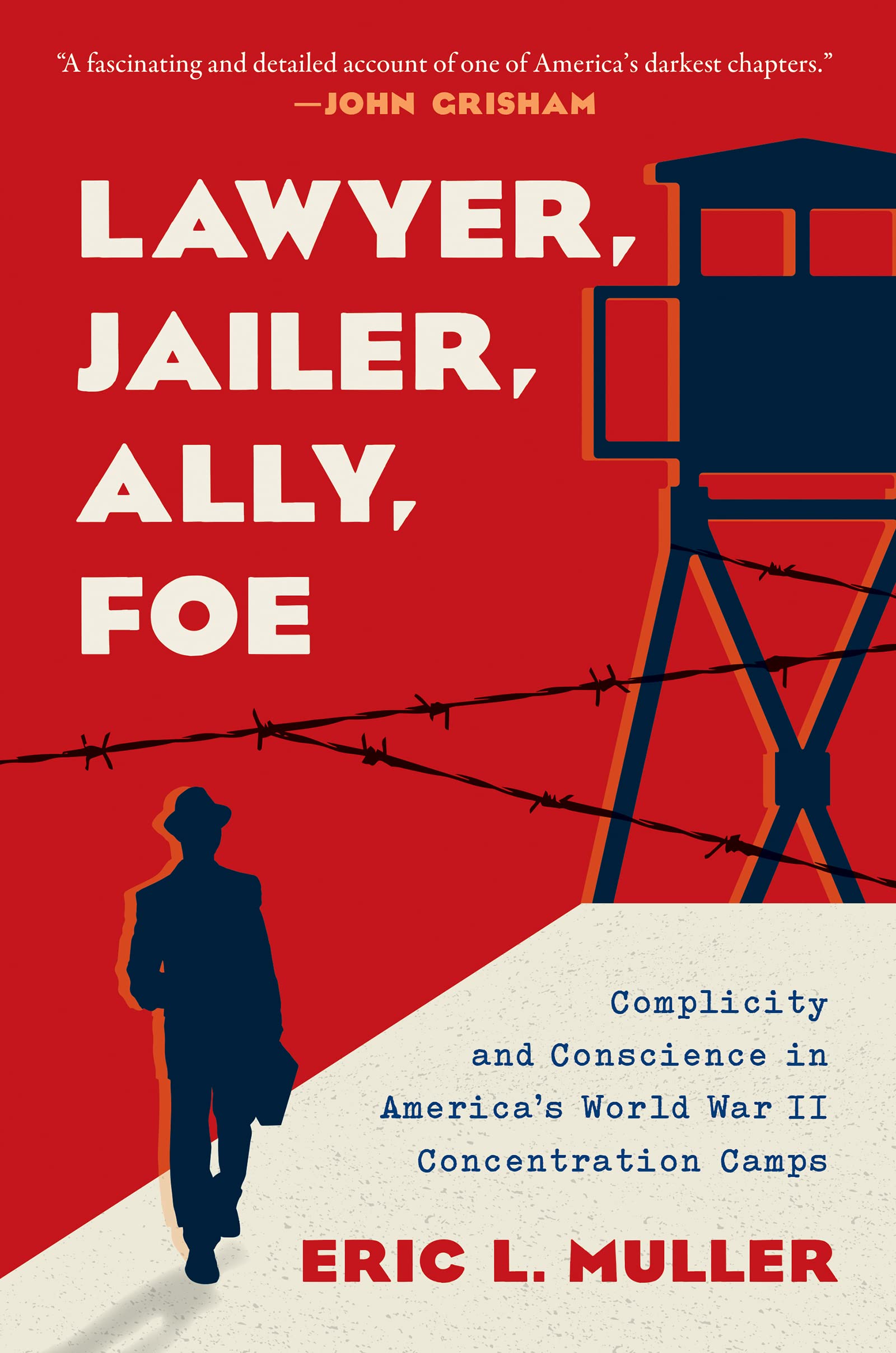
Notice how the lead quote on this book is from John Grisham, a novelist, and not from a historian? That’s kind of right on point. I’ve had this book on my Unread Shelf for way longer than it deserved, but having finished it, I’m kind of dissatisfied. Muller’s book follows three men who worked as “Project Attorneys” for the WRA– the War Relocation Authority– during World War II, acting as chief legal counsel at three of the concentration camps relocation centers that we herded Japanese Americans into. All three men are white, of course, and there’s a fourth who is himself “relocated” but is a trained and barred lawyer who works closely with the Project Attorney at his … uh … center.

Muller is a law professor, not a historian, and you can tell. The book is less pure history than historical fiction, as only one of the four men who are covered in the book was alive when Muller was writing, and it doesn’t look like he interviewed him intensively. The book repeatedly commits the cardinal sin of getting into the private, internal lives of these men with no particular documentation, and Muller freely admits that some of the events in the book are invented, but “consistent with his understanding” of the kinds of men these were. There’s an Author’s Note at the end that gets into what happened and what didn’t; the way he puts it is that nothing “of historical significance” was made up, so if he says a hearing took place, the dialogue is probably based on transcripts, but the bit where the white guy brings his Japanese colleague a pie is made up.

This isn’t a bad book by any stretch of the imagination, but I feel like it’s a bit too generous to its subjects. I’m willing to believe that at least some of these guys took these jobs out of a sincere if misguided belief that they could make a bad situation better, but when half of one guy’s narrative is him trying to cut the legs out from underneath a Japanese attorney who he thinks is developing too much influence in the camp, y’know, I’m comfortable with saying these were not good people!

On top of that, centering the feelings and experiences of the white lawyers who had the option (which some of them took) of simply walking away from this bullshit just doesn’t feel right. I’d love to have known more about Thomas Masuda, the Japanese attorney who gets about half of one of the chapters, or Kiyoichi Doi, who gets treated like a bad guy in a book where he is unquestionably in the right. And Muller doesn’t seem to have spoken to any actual internees while writing this.

I dunno. I didn’t hate the book, but it’s misguided.

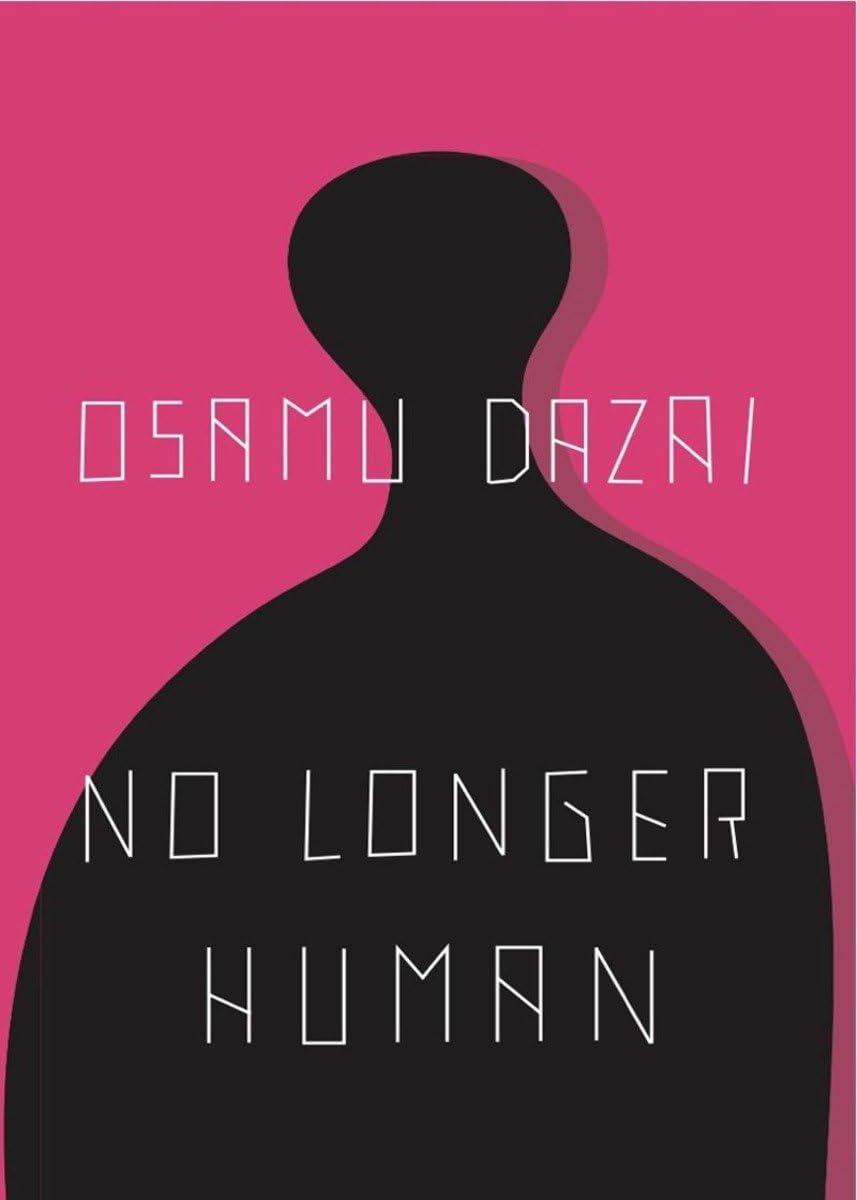
#REVIEWS: No Longer Human and The Setting Sun, by Osamu Dazai

My lovely wife has returned from her long sojourn, and all is right with the world again. After lazing about and whining all day yesterday, I was a veritable dervish this morning, managing to tidy, vacuum and dust every room in the house other than the office, which still got a lick and a promise. I read two books today and built half a Lego set on top of everything else. I think I can call the last Saturday of break a success.


Reading two books in a day isn’t the accomplishment it might sound like, because both of them were novellas. I’ve seen a bunch of students over the last couple of years reading these two books, and because the covers are striking (and I pay attention to what they’re reading regardless) I asked a couple of kids about them last year, and was greeted with enthusiastic recommendations. I didn’t get around to it last year and then when I recently found another couple of kids reading them before Spring Break decided to jump on them.

I … don’t get it.

So, Osamu Dazai was born in Japan in 1909, which already places him well outside of anything my students are usually willing to read. His books are obviously translated, and both of these books were written post-war, in 1947 and 1948, right before Dazai died of suicide at 38, in a scenario that appears (I haven’t done a ton of research other than reading a Wiki article) to precisely match a suicide attempt described in No Longer Human. The books sound like they were written in the late forties, frankly, which isn’t a criticism but is another reason why I’m surprised that my students are reading them, because the style of a novel from the 1940s and 1950s is wildly different from the modern YA or romantasy that I catch them with most of the time, and that’s before you have to deal with the cultural unfamiliarity of being translated from Japanese.

The closest analog to No Longer Human that I can think of is that it feels like a Japanese Catcher in the Rye. It’s about a young, profoundly alienated man, and it’s casually misogynistic in the way work from that era frequently is. It’s written in first person and is semi autobiographical; the framing device is that it’s written as three notebooks by the narrator, covering a couple decades of his life, and there’s another unnamed individual in the preface and epilogue who talks about how the notebooks were given to him. I read The Setting Sun cover to cover in a single sitting and I can’t tell you what the hell its deal is. I mean, I can describe the plot, that’s simple enough– it’s another first-person narrative, this time of a woman named Kazuko in her late twenties, a member of a formerly aristocratic family that has fallen apart after World War II. Her mom dies. Her brother is a drunken mess who eventually kills himself. She tries to have some love affairs. Then she gets pregnant and the book ends. There’s some obvious symbolism scattered throughout– a bit about burning snake eggs, and snakes constantly showing up around moments of despair– but it’s mostly a pretty straightforward narrative.

So, yeah, I get the plot. I just can’t tell you why it’s a book, if that makes any sense. I feel like I get No Longer Human, and part of me can sort of see why it might appeal to teenagers, who respond to alienation narratives. I don’t know why the hell there’s a copy of Setting Sun in our school library or why the kids are professing to enjoy it as much as Human. There are strong themes of addiction and alcohol abuse through both books and a ton of suicidal ideation and successful suicides along with some genuinely terrible family situations. I dunno; I’m gonna ask some questions on Monday and maybe send an email to the kid who was most interested in me reading these last year. Don’t misunderstand me; neither are bad books, and No Longer Human is genuinely good, but I don’t see the appeal to 14-year-olds in 2025. I need answers here, y’all.

In which it’s weird that I enjoy this so much

Okay, so this time it’s really-really the first day of spring, the calendar says so, so instead of 70 degrees and beautiful like it’s been who knows how many days recently, we had fucking snow. Again. And there’s more expected later this week.

That said? This wasn’t a bad day at all. Work was productive– actual teaching happened in all of my classes, which is always nice, especially after how messy yesterday was. I bought tickets to a Counting Crows show in June, meaning that I’ll be seeing both the Counting Crows and Weird Al Yankovic at the same facility within three weeks this summer, and to be honest I can’t decide which show I’m more excited about. I’m seeing Weird Al with my family and the Crows with one of my oldest friends, which is going to be super cool.

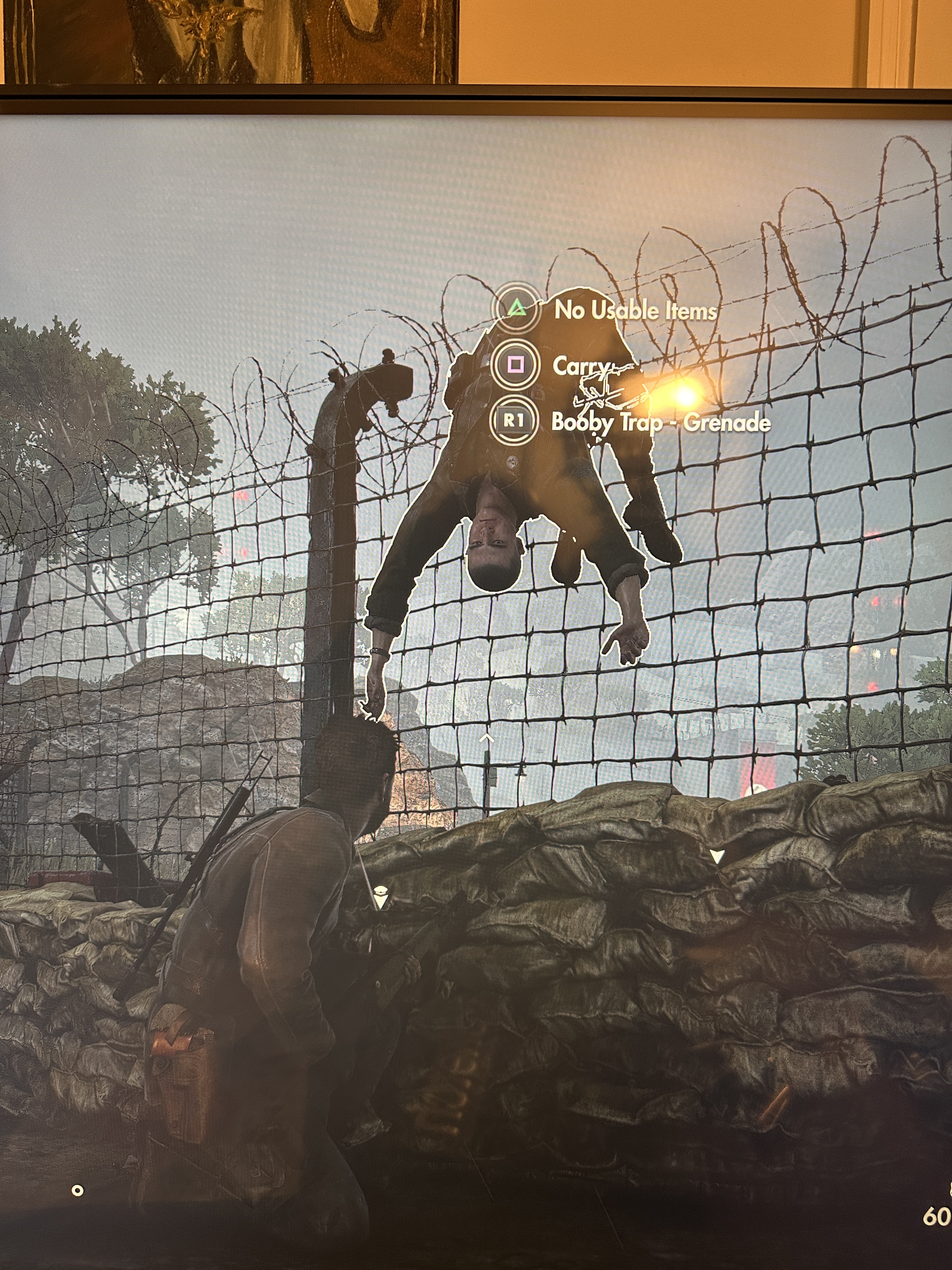
And then I came home and since I got tomorrow’s planning done at work (!!!) I had time to shoot some Nazis. This poor bastard up here got killed with a grenade, dropped neatly at his feet from a bush a dozen meters away, and blew up both him and his friend. He ragdolled into the barbed wire, which I find incredibly hilarious for some reason. I never found the other dude’s body, which I assume was blown directly to Hell.

There’s probably something really creepy about how relaxing I find WWII-based sniper games; there is something incredibly cathartic about blowing a Nazi’s face off (in high-definition, bullet-cam, slow-motion detail) from 300 meters away with no one the wiser about where you were or where the bullet came from. It’s okay, see, not because it’s a video game, but because Nazis aren’t human beings.

I really shoulda booby-trapped that guy’s body, though. Maybe I’ll go back. I left a trail of destruction behind me so who knows if there’s even anyone alive to find him (no one heard the grenade) but they’d cut back to it if something happened. It would be worth it. There are always more grenades, right?

On Nazis and pregnancies, but not at the same time

I’ve been playing Sniper Elite 5 on the PlayStation 5 lately, because setting the difficulty to something obscenely low and shooting Nazis in the face from a hundred yards away has been about where my brain has been at lately. I like this series, but not as anything I take seriously; I don’t want to be challenged in Sniper Elite 5. I want to be an invincible force of death. I want the Nazis to tell their children that I’ll find them if they’re not quiet and well-behaved, and then I want those kids to tell me where their parents are, because their parents are Nazis and that means I can shoot them in the face.

Also, it’s the anniversary of D-Day. Also also, any time the anniversary of D-Day rolls around, I start thinking about my grandfather, who wasn’t actually at D-Day but joined the Allied assault in France a bit later, eventually being wounded in the Battle of Nancy, being handed a Purple Heart, and rotated back Stateside with a piece of a mortar shell in his ankle that, presumably, is still in his coffin with him, since the surgeons never bothered to remove it.

And today something hit me: I have an aunt named Nancy. And I tried to think about the timeline, and ended up calling another one of my aunts, the one I can bother relatively early in the morning with nonsense like this, and asked her about the timeline between Grandpa getting home and Nancy being born and named. Had my grandfather named my aunt after the battle in which he’d been wounded? It seemed possible, at least; I had to know.

No, as it turns out. Grandma was pregnant with Nancy when Grandpa shipped out, and she was born while he was overseas and named him herself. Tantalizingly, though, apparently my grandmother named Nancy herself and wrote Grandpa and told him the name, and my aunt tells me that his response was that she should “take it (the name, not my aunt) out and bury it, because it stinks.”

It is perhaps indicative of the type of woman my grandmother was– this is the one the name Siler comes from, by the way– that she ignored his, uh, suggestion, and her second daughter kept the name that she gave her. It’s also possibly an indication that Grandpa knew when he wrote the letter where he was heading and where he was likely to see combat, but I’d have to know a lot more about timelines– they’re both gone, so who knows where those letters might be– before I could make a supposition like that.

This led, somehow, to a conversation about the timing of the conception of various and sundry of my relatives; turns out one of my cousins is the product of a “lunch quickie,” and that my grandparents were in the house when another of my cousins from her was conceived. I changed the subject as soon as the phrase “lunch quickie” came up, by the way.

(My birthday is July 5; my mom’s was October 3. I have always assumed I was a birthday present; Dad, if that was not the case, I don’t need further details.)

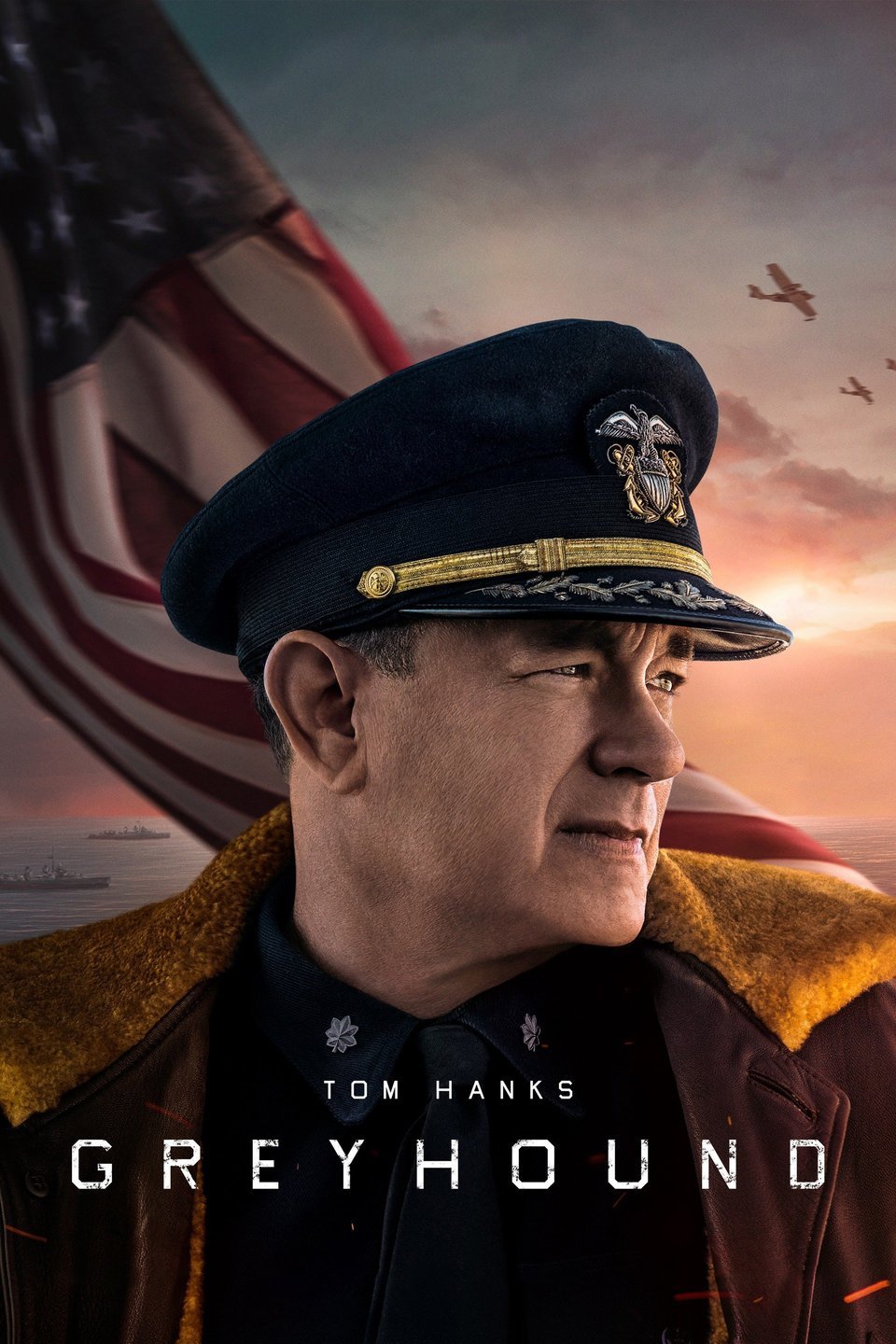
#REVIEW: Greyhound (2020)

My dad and my brother and my sister-in-law came over yesterday to celebrate the boy’s birthday– he doesn’t get a party with his friends, unfortunately, because 2020– and toward the end of the evening my brother kind of randomly noticed that Greyhound was available through the Apple TV+ subscription I got the last time I upgraded my phone. I had never heard of it and initially scoffed at the idea of watching Yet Another Tom Hanks Movie, but I either got overruled or didn’t fight the idea too hard, take your pick– and, well, the short version is that you now have another reason to have an Apple TV+ subscription beyond basking in the crazy that is See. Which, for the record, we eventually finished, and I recommend on every level except the story, which never gets less dumb. If you can buy the basic premise, you should check it out.

But this piece is about Greyhound. The premise is refreshingly simple: it is 1942, not long after the United States entered World War II, and Hanks, who also wrote the screenplay, plays Naval Commander Ernest Krause. Krause commands a destroyer that, along with another four combat-capable ships, is escorting a convoy of troop carrier, supply and merchant ships across the Atlantic to England. It is Krause’s first such command.

The problem with that trip was the period of time– about three or four days– where the convoy is out of range of Allied air cover, being too far from both North America and England for planes to be able to make a round trip. This made convoys like this, if not easy prey for German U-Boats, at least a lot easier. And the Greyhound’s convoy catches more grief than most, first sinking a single U-Boat and then encountering a Wolfpack of six of them. The convoy takes multiple losses over the course of the film’s surprisingly terse and compact 90 minutes, and Krause neither sleeps nor eats at any point during the film– in fact, the movie makes a point of repeated attempts by the mess crew to get him to eat something, all of which are interrupted.

If you’re into World War II films, you could do an awful lot worse than this movie, and honestly for my money it’s better than Saving Private Ryan in every way except for the action scenes– this movie clearly didn’t have a Spielberg-level budget. The action’s not bad by any means, but the interesting thing about a movie entirely about fighting submarines is that so much of the threat is imaginary. There’s something lurking out there, trying to kill you, and these guys are literally trying to track submarines by listening real hard and keeping track of where they are and where they think the Germans are by using grease pens on glass. I know little about naval warfare and can’t really vouch for accuracy, but it feels right, for lack of a better word.

The simple fact is, in the hands of a lesser director or a lesser actor this movie could have been a serious mess. The movie only leaves Hanks’ perspective for very brief scenes, occasionally cutting to the sonar operator or a couple of other characters, but never for more than a minute or two, and we never see a single German soldier or have a single scene shot inside a U-Boat, although we do get to hear the German commander taunting the Greyhound over the radio a couple of times. Even Hanks’ dialogue is largely incomprehensible beyond pure function— I mean, I can imagine what “Full rudder right!” means, but I don’t know, and that’s the most comprehensible of his orders. I would say easily 75% of his dialogue is either barking orders or reacting to positional data relayed to him from sonar or radar. I feel like it shouldn’t work, but it does.

This probably isn’t worth actually picking up an Apple TV+ subscription for– but if you’re one of the people who, like me, upgraded your iPhone and got a free year of the service, definitely set aside an hour and a half on a Saturday night and give it a look. It’s suspenseful, well-directed, powerfully acted, and generally a solid and well-crafted piece of filmmaking. Give it a shot.

Happy Veterans Day

I plan on spending the day staring at my phone and using my prodigious mental powers to make it ring.  Hopefully your day is a bit more reverential.

john-jane-couch

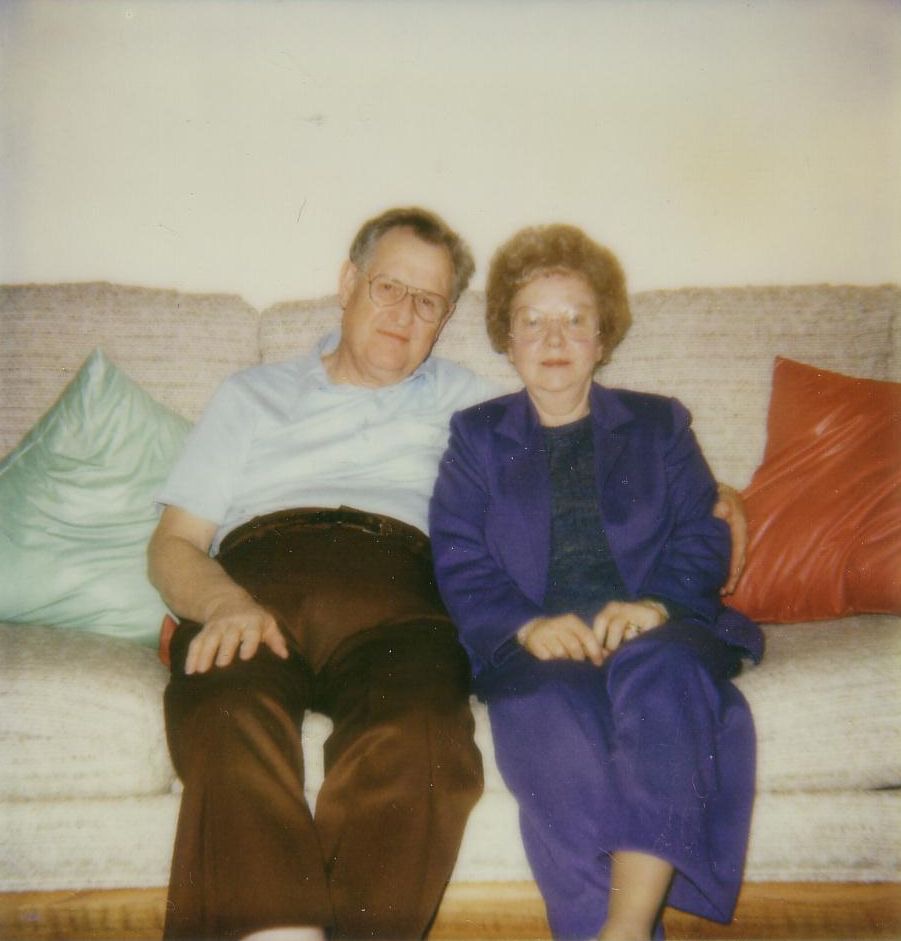
Also, I miss my grandparents.  I miss all four of my grandparents, but to the best of my knowledge my paternal grandfather (the source of the “Luther” in my pen name) wasn’t ever in the service, and my maternal grandfather (the pair pictured above are my mom’s parents) was in Patton’s Third Army, so he’s never far from my thoughts on Veterans Day.

IMPORTANT EDIT:  I am informed by reliable sources that my paternal grandfather was in the Navy, although I believe he remained Stateside.  His rank on his discharge papers is listed as Hospital Apprentice First Class, and he was discharged in April of 1946.