I take no pleasure in this.
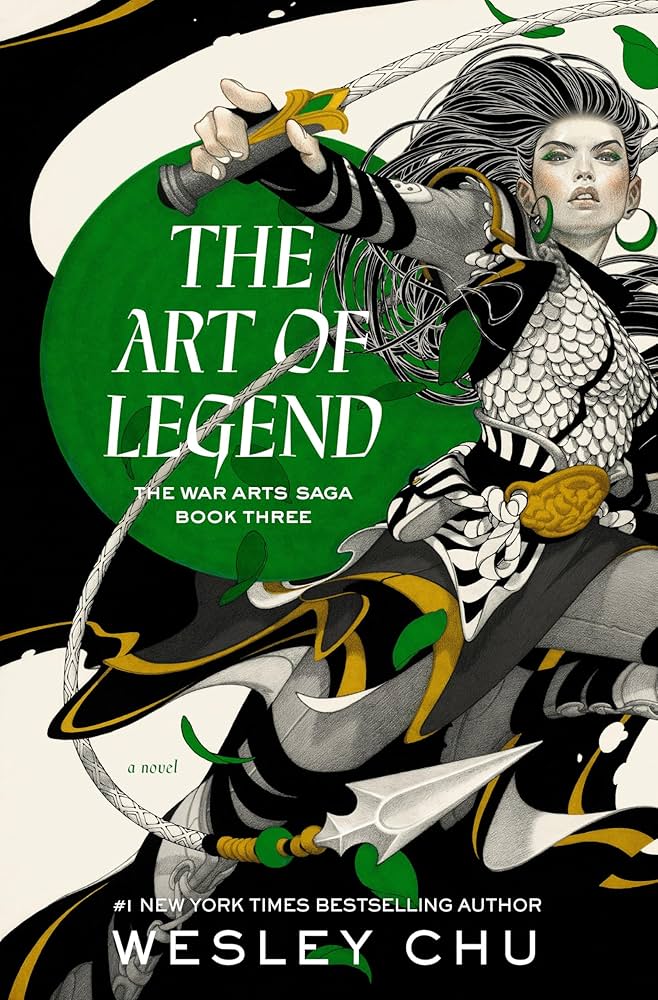
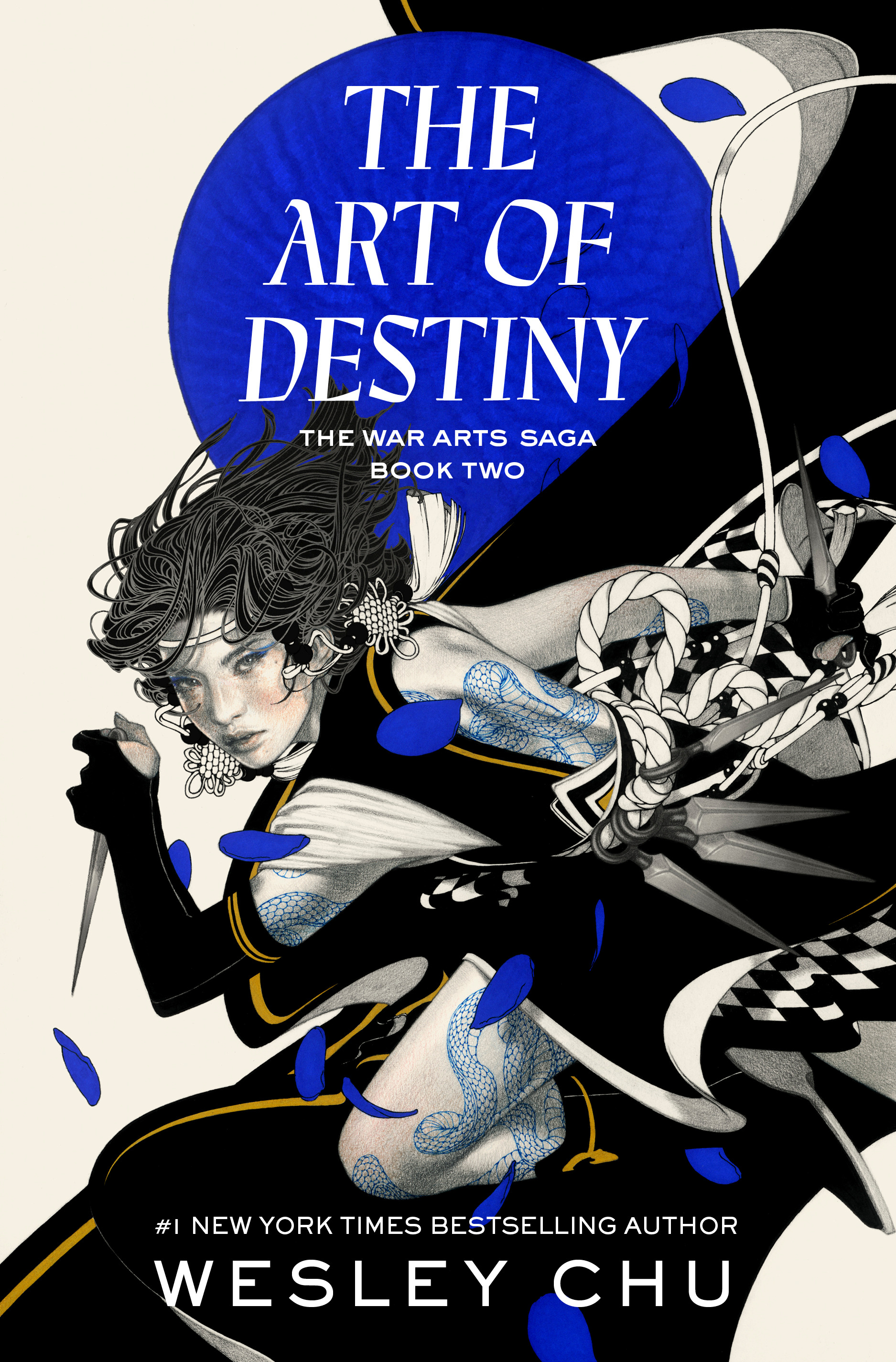
I write negative reviews infrequently enough that almost every time I do I start with a disclaimer like this. Under any circumstances other than “The publisher sent me the entire trilogy because I asked for it,” I would simply not review this book. It feels ungrateful to make other people go to trouble to send me books for free and then say bad things about them. But while I really liked the first book in Wesley Chu’s War Arts Trilogy, I was mixed on the second and unfortunately I have to report that the series’ ending really ends up unsatisfying.
The problem is writing this without massive spoilers. I mean, in one sense I don’t really have to worry about that, I can just say “Hey, spoiler alert,” and then go about my day, but I don’t want to do that either. So we’re going to go the “mild spoilers” route; a lot of what you will see in the next few paragraphs could have been reasonably guessed going into the book, but I’m not going to completely reveal the story.
The Art of Prophecy begins with Jian, the Prophesied Hero of the Tiandi and the Champion of the Five Under Heaven. Jian has been prophesied since birth to be the one who kills the Eternal Khan, ending his dominion over the Tiandi people. And then the Khan goes and gets killed on his own, leaving Jian with no more destiny and setting the events of the whole trilogy in motion. In the second book, elements of the Tiandi decide that Jian is actually their betrayer, and he spends the entire series either running from capture or escaping it one way or another.
So, we all know that in Book Three the Khan is coming back, right? Of course we do. And he does. And then he confirms something that I had been wondering about since the first book: he was going to come back anyway. It’s even straight-up stated that even if Jian kills him he’s going to return in a decade or so. Now, one of the POV characters spends the whole first book trying to find out where the Khan has been resurrected and the second book trying to get a chunk of his soul peeled out of her body, so it’s clear that he’s “Eternal” because he keeps getting resurrected. But I had the idea that Jian killing him would be permanent, and … not so much? He’d have come back anyway? Really? What the hell was the point of making such a big deal about Jian, then?
Jian is a problem, honestly, and he’s at the middle of what I didn’t like about the book. The series can’t really decide if if he’s powerful or not– even during the inevitable final battle with the Khan the text itself bounces back and forth between “he’s ready, and this is a real fight” and “the Khan is obviously toying with him and the four other people he brought to the fight” and while Taishi talks about how much he has grown over the years she has known him, I kind of feel like the book doesn’t realize how annoying he is?
A brief diversion: did you watch Smallville or Buffy the Vampire Slayer? You know how Lana was actually really fucking annoying and Xander was kind of a creep, or to use another example, Barney Stinson was a predator and Ted Mosby was a huge loser in How I Met Your Mother, but the TV shows didn’t seem to realize that? That’s Jian. He started off as a pampered, callow youth, and for me, at least, he never improved– he actually faints when he is told the Khan is back. And this is as close as I’m going to come to a huge spoiler, but for a whole series about a prophecy about a dude, that dude has much less to do with the ending of the series than you might expect.
Some of my other gripes are artifacts of having read the trilogy more or less back-to-back-to-back; the bit where Qisami talks like an overenthusiastic memelord and her speech doesn’t remotely match anyone else in the book, or the fact that every insult in the series is inexplicably egg-based, wouldn’t have annoyed me as much had I not devoured 1600 pages of it over a few weeks. Seeing “Let them cook” in dialogue would still have been distracting as hell, though, or the way people keep “eating” punches and kicks.
I dunno, guys. I still stand by enjoying Prophecy, but given where it ends up I can’t really recommend the whole trilogy. I wouldn’t go so far as to call it bad— I three-starred it on Goodreads and Storygraph, and I feel like that’s about right– but it’s not something I’d have talked about had I not been sent the books, and I’d likely have DNFed the final book. I feel bad about it, but there you have it.
 Welcome to infinitefreetime dot com