
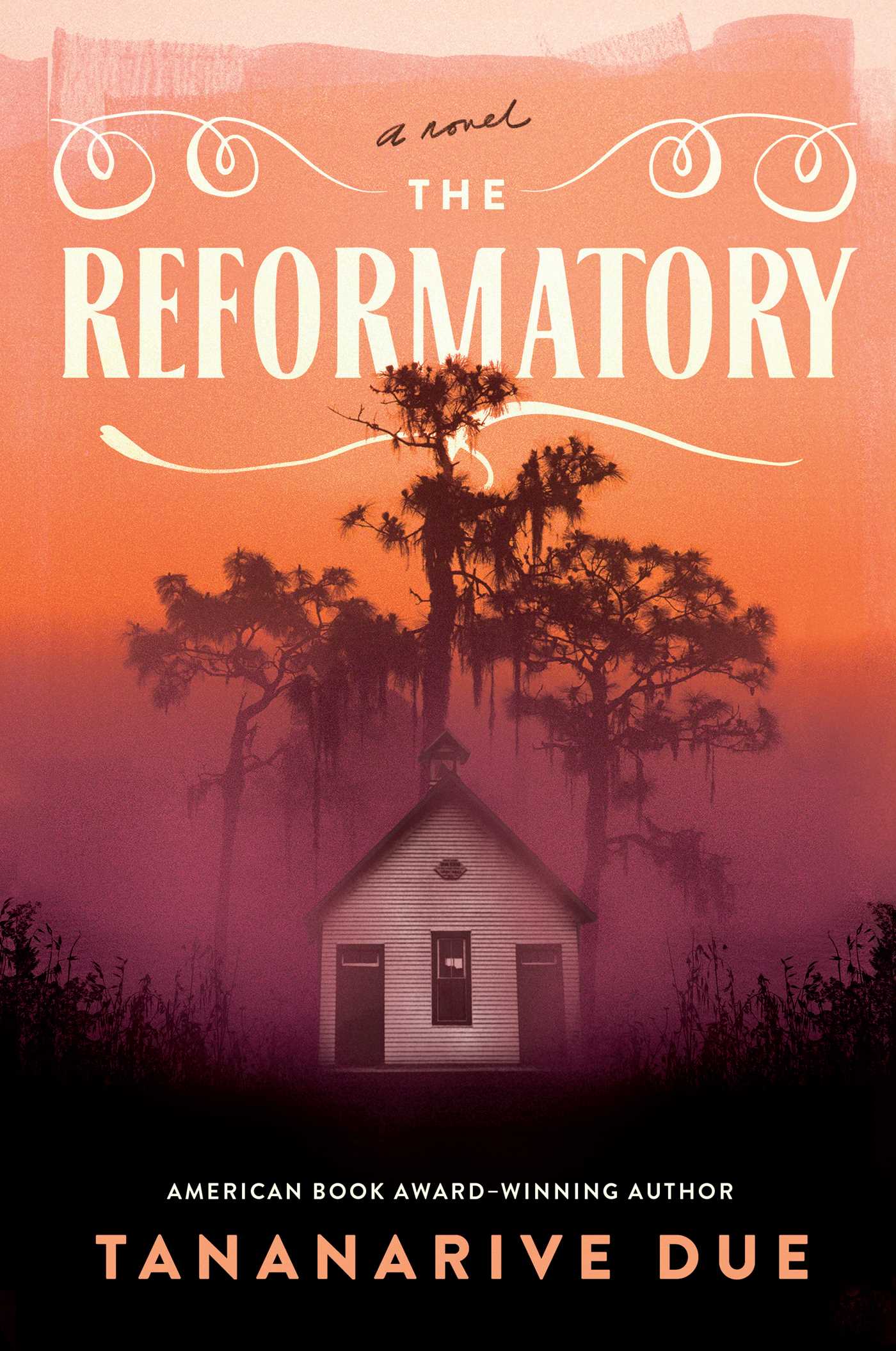
#REVIEW: The Reformatory, by Tananarive Due

I feel like I haven’t treated Tananarive Due with enough respect.

The Reformatory is the third of her books that I’ve read. I did not know that until just now! I remember reading her book My Soul To Keep way back in 2016, and at the time I really liked it, but for some reason every time I think of it now I feel like it wasn’t something I enjoyed. And I just discovered that I read her debut novel, The Between, in 2020.

When I tell you that I don’t remember anything about that book, I need you to understand that not only do I not remember any details about the story, I did not even remember the book existed. That cover looks unfamiliar. I cannot picture where my copy of it is in my house, and I surely read a print copy. I don’t know what the spine looks like. If you had asked me ten minutes ago what the name of Tananarive Due’s debut novel was, I would not have been able to tell you. My recall of books from years ago is not always great, I admit that, mostly because I read 100+ books a year. But forgetting a book existed or that I ever read it at all is not a thing that I do.

And that after my weird about-face on My Soul to Keep? I have no explanation for this phenomenon.

Anyway, The Reformatory is really good, and if six months from now I find that I’ve turned on it too, I’m gonna need someone to come get me.

The Reformatory is the story of Robert Stephens Jr., a 12-year-old boy who is sent to the Gracetown School for Boys for a supposed six-month sentence after kicking the son of a wealthy white man in the knee. The book is set in 1950 in Florida, thick in the middle of Jim Crow, and the Gracetown “school” is a segregated, haunted nightmare, run by a grotesque abomination of a man. It is widely understood that Robert won’t be getting out in six months, as the warden is renowned for finding excuses to hold on to any boy sent to him until their 21st birthday regardless of their original sentence. Beatings and torture are commonplace and the inmates prisoners “students” are encouraged to turn on each other at any opportunity.

The book bounces back and forth between Robert’s story and his sister, who Robert was defending when he kicked the other boy. She is trying her best to get him released, which is easier said than done in any number of ways. Their father has fled to Chicago after his attempts at unionization upset the Klan, and it’s fairly clear that part of the reason Robert is being treated as poorly as he is is because the authorities can’t get at his father.

The book would be scary enough without the haints, is what I’m saying, and the presence of a large number of ghosts at Gracetown becomes almost a distraction from all of the more grounded evil taking place there. Of course, a number of them are ghosts of children who were murdered or otherwise died while incarcerated there, and, well, a whole bunch of them bear quite a serious grudge against the warden.

I won’t go into much more detail, because (as usual for books I enjoyed) you deserve to experience the twists and turns on your own, but this really is a hell of a book, and I’ve not heard a lot of people talking about it. Give it a read.
On HAMILFILM, and a quick book review

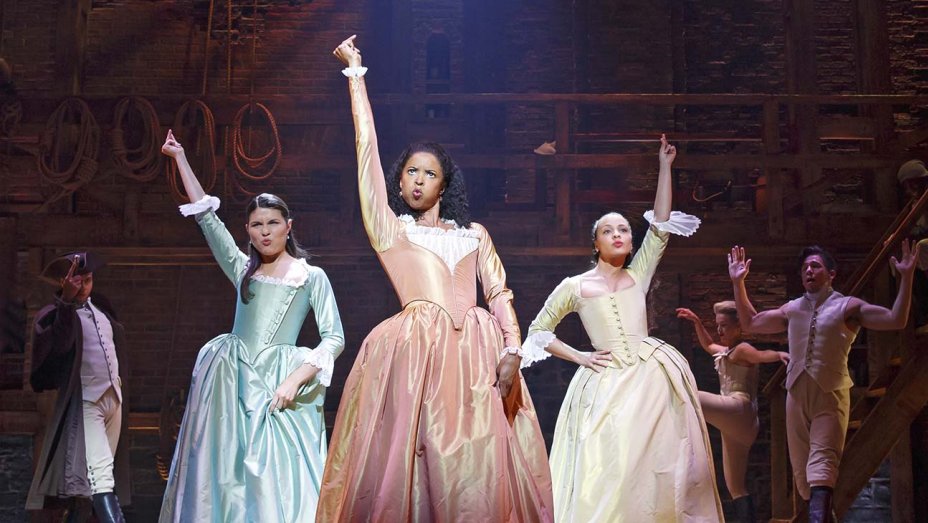
I have already discussed my deep affection for Hamilton at least once on this site; my wife and I went to see the show in Chicago for our 10th anniversary a couple of years ago, and while that wasn’t with the original cast, I also have the soundtrack, which I have more or less memorized. We waited for the boy to go to bed last night before watching the filmed version in order to avoid fifteen thousand questions while we watched it, so I didn’t get to bed until after midnight and didn’t manage to get to sleep for a good hour and a half after that.

Worth it.

No surprises here, really; there are bits where cadence and inflection differs a bit from the soundtrack but it’s all the same people performing that I was used to, and this time I got the benefit of close-up camera shots so you can see facial expressions and the like much better. I feel like this really benefited Leslie Odom Jr.’s performance as Aaron Burr the most; I felt like I could really feel his emotions throughout the play and connected to him in a way that I didn’t quite manage in Chicago. I also still find myself preferring Tamar Greene’s George Washington to Christopher Jackson; he just seemed to physically fit the role better for me.

Either way, I’d just consider a month’s worth of Disney+ the cost to pay to rent this and watch it over and over for a while; it’s well worth it, especially if you’ve never seen the show in person before.


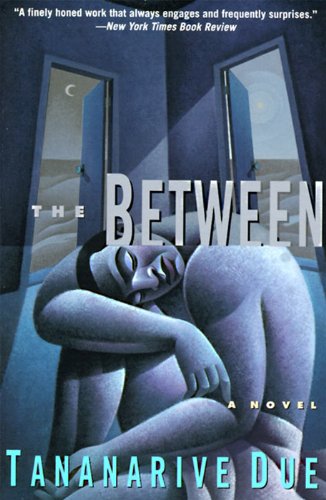
I’ve read one Tananarive Due book before, and really wasn’t hugely fond of it; it wasn’t necessarily bad so much as it didn’t really make an impact. I picked up her debut novel, The Between, as part of my 52 Books by Women of Color project, and I was happy to discover that I liked it a hell of a lot more than I did My Soul to Keep. I don’t necessarily want to do a full review of it, especially since I think it’s probably a good book to go into pretty blind, but this one is an unapologetic horror novel, and while it did take me a few days to get through it it also lost me some sleep on a couple of nights, so that’s a good thing. This is book 33 of the 52, and it’s the second book 33, because after reading an interview with Akwaeke Emezi after finishing Pet I discovered that they don’t identify as a woman and so that book (which is still really good, and well worth a read) shouldn’t count any longer.

(EDIT: Interesting, I apparently liked My Soul to Keep much more when I read it than my memory serves; it made my honorable mention list for 2016.)

I think I’m probably going to finish 52 books fast enough to be able to turn this into 52 authors, by the way; we’ll see where I’m at once I’ve finished 52 books and how many authors I’ve read more than one book from. I’ll probably be at four or five books just by N.K. Jemisin by the end of the year, so it might be several people, but something makes me think I can manage it.

At any rate, The Between is an effective, scary horror novel. It’s a good read.

Primaries and a quick book #review

white-privilege-350.gif.pngTwo primaries today, Kentucky and Oregon.  Both states are 88% white, therefore Sanders will win both.  I’ve seen a couple of reports of a poll out of Oregon that shows Clinton in the lead but I can’t actually find it anywhere and the reports were on Twitter and didn’t include links.  I came across an article on NPR this morning that discusses whiteness in our politics in an interesting way, but while it talks about the astonishing reluctance of most mainstream punditry to even mention racism in connection with Trump’s support, there’s nary a word of the 85% rule.
(Oh, and also: there’s nothing from keeping Trump’s supporters from being both idiots and racists.  Half the problems Republicans see with this country literally do not exist.  There is plenty of room for these people to be stupid and racist at the same time.)

But anyway.

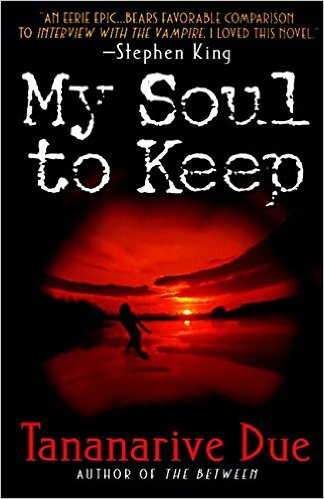
51czyF4FFRL._SX322_BO1,204,203,200_.jpgI finished Tananarive Due’s My Soul to Keep yesterday, a book I read in three big gulps over just a couple of days.  It’s the first book of her four-book African Immortals series, and I think it’s probably the most unapologetic horror novel I’ve read in quite some time.  It’s further evidence that “horror” isn’t really a genre on its own anymore so much as something that infiltrates other genres; the book is equal parts paranormal romance, urban fantasy, and horror, and Due’s writing appears to be what would happen if Anne Rice and Stephen King wrote a book together.

That’s a compliment.

The book I read before this one was Sofia Samatar’s A Stranger in Olondria, and I wrote a rare Goodreads review for it to explain my star-rating.  Samatar is a gorgeous writer; her prose is something I couldn’t equal if my life depended on it, but the story in Olondria kind of left me cold.  Due’s prose is much less flowery and lyrical than Samatar’s is (I could have written My Soul to Keep, which sounds like shade but isn’t; I just think Tananarive Due and I are similar writers) but it’s in service of a much stronger story, one that got in my head and fucked with me something fierce while I was reading it.  As a reader I’m much more likely to respond to strong story and utilitarian writing than I am lyrical writing and a serviceable story– I am, myself, a pretty utilitarian author.  As such I loved the hell out of My Soul to Keep and only enjoyed Stranger in Olondria.  You may feel free to adjust the amount of salt you take with my review if your own preferences are different.

I continue to believe that “no more than 25% books by white dudes” was a great way to structure my reading this year, by the way.  I would never have found this book had I not gone looking for it.  Feel free to check out my Goodreads shelves if you want to see some of the other books I’ve read this year.