
In which I KNEW IT

Seven years ago, in 2018, this man’s debut novel jumped off a shelf at me at Barnes and Noble. It looked satisfyingly chunky and as a science fiction book that was obviously going to be Part One of a substantial series, it was something that was immediately Aligned with My Interests.

I opened it and flipped through it and looked at this author picture. And thought Jeez, that guy looks like a prick. I bet he’s a conservative.

And then I put the book down.

And, standing there in Barnes and Noble, I googled this man to see if I could find evidence of him being a prick. And, indeed, I couldn’t find any, and the closest I came was him claiming he “doesn’t talk about politics” on Twitter, which is something that only conservatives say.

And after a few minutes I started feeling bad about it! This is not how I usually work. My rule for politics in my reading has always been Don’t Want None Won’t Be None, and how it is supposed to work is you can believe whatever you want so long as you don’t go out of your way to make that information available to me, but as soon as you do I will judge you accordingly. And, to be completely clear, I’m perfectly fine with people applying that same line of reasoning to me. You can choose to not read a book– which, most of the time, costs you money— for literally any reason you want. Refuse to read a book with a blue cover. Spend a year reading only books with blue covers. I don’t care. There are way more books out there than anyone has time to read in an entire lifetime, with more coming out literally every day, so you use whatever filter you want. I don’t have anything to say about it.

Feeling guilty and kind of stupid, I bought his book. And brought it home, and read it, and really didn’t like it all that much. And it sat on the shelf for five or six years while four sequels came out, and sometime in the last couple of years I looked at it again and thought oh, what the hell, and for whatever reason the second time around I liked it a lot more, and the sequels quickly followed, along with the sixth book, on release day. The series wasn’t world-changing or anything, but it was solid and interesting, and it was also clear that barring some sort of car accident or something it was going to be finished soon.

So how do I feel about the fact that a 2018 interview has come to light recently where not only does he piss and moan about how every YA book nowadays is about a girl who “wants to be an assassin for some reason” and there aren’t any books for boys, and about his affection for Jordan Peterson?

I am, to be clear, almost certainly going to buy the last book of his series when it comes out, which should be this year or early next year. This isn’t JK Rowling or Neil Gaiman territory, where the books are forever consigned to the pit. He’s just a conservative Catholic, and frankly the fact that the interview lurked in the depths for years before exploding onto TikTok in the last couple of weeks for whatever reason means that he actually does seem to be following my DWNWBN rule. But I likely won’t bother with whatever he does next, and next time I’m gonna trust my gut when I take a look at an author and get a vibe. Because, again, there’s lots of books out there, and I don’t need a good reason not to buy one.


This is kind of awkwardly stapling two posts together (and there will be an addendum at the end featuring even more stapling) but I’ve been thinking a lot lately about how weirdly gendered reading seems to be getting. I have never believed that there was any such thing as “girls’ books” or “boys’ books”– I’ve told the story here a few times before about my aunt catching me with Are You There God? It’s Me, Margaret when I was ten or so, a book I picked up and read because it was there and I was bored, and her being vocally horrified, and me being completely baffled about what the problem was. But just because I don’t believe there’s any such thing as gendered books doesn’t mean that society doesn’t think so, and it feels like in the last couple of years reading has taken this weird slide into being Something Men Don’t Do, which is entirely fucking unacceptable. This is particularly clear in retail establishments that sell books but aren’t bookstores– go look at the books in Target sometime, for example, and I’ve seen pictures of Wal-Mart’s book selection and it seems to be the same thing. Target clearly doesn’t think men read.

(Do more women read than men? Sure. But that’s not the same thing as “men don’t read.”)

I think this is probably mostly BookTok’s fault, which is dominated by women, and whatever, I’m not attached enough to my own gender to be bothered if something is addressed to “my book girlies” and happens to overlap with my interests.

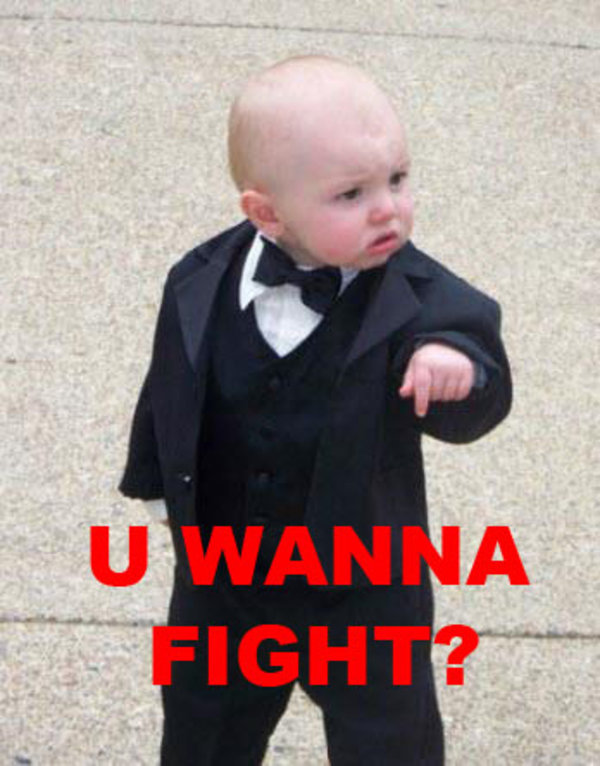
But did I kinda want to fight when I saw this? A little:

Anyway, one way or another, I’m not going anywhere. If that makes me a book girlie, I’ve been called worse.


You may remember a couple of weeks ago when my family attempted to go to a specific local Italian restaurant and, in a comedy of errors, managed to end up at the wrong restaurant, eating a meal there because we are cowards, and resulting in me not getting carrot cake, which was the entire reason I wanted to eat at that place in the first place.

Well. My birthday was yesterday, but my birthday dinner was tonight:
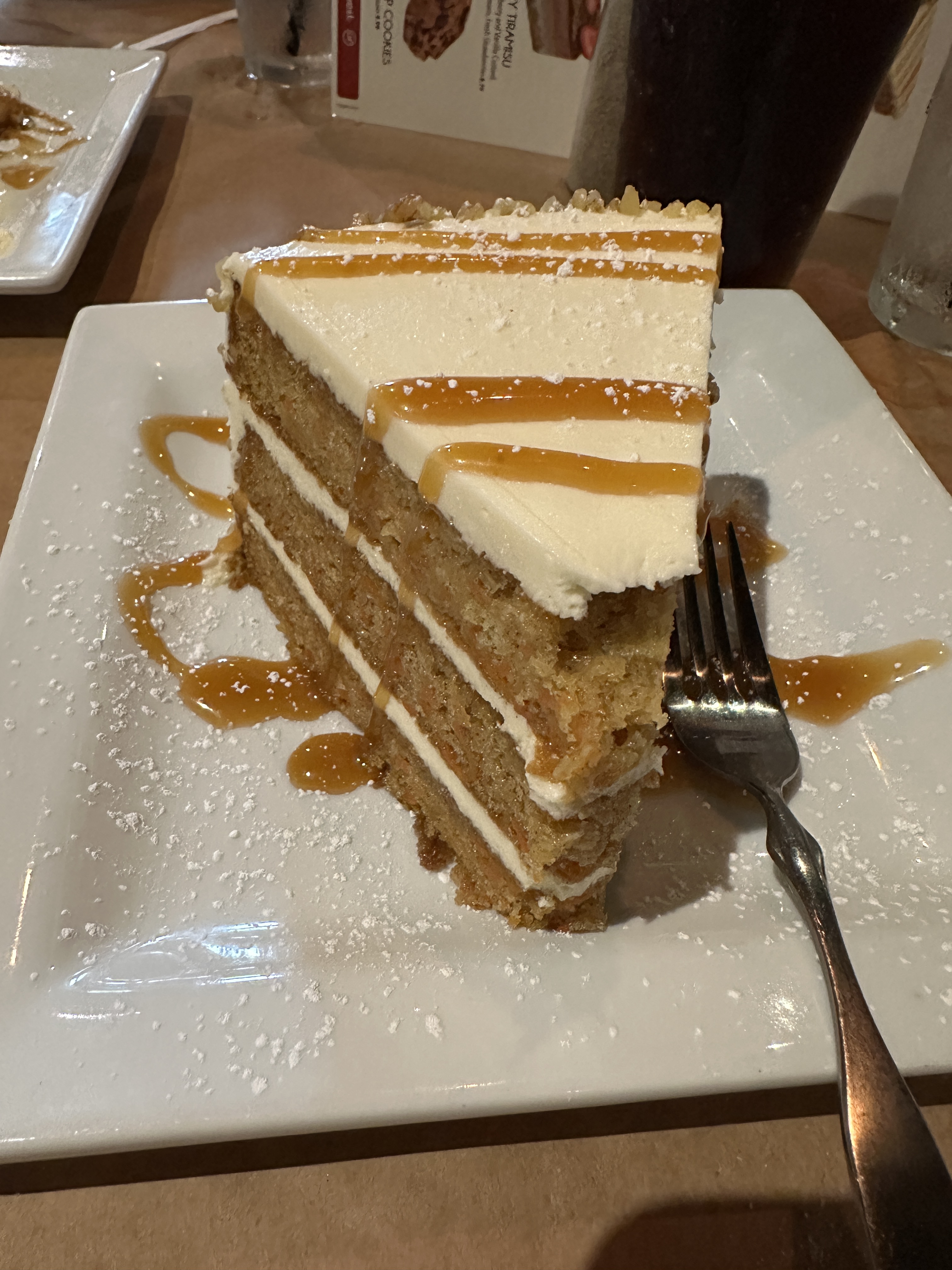
I could only finish half of that gorgeous sonofabitch. I don’t even want to know what my blood sugar is right now. I’m getting my A1C checked later this week in advance of a regular doctor visit next week, and I may just show the doctor a picture of this cake when she jumps down my throat about how I’m so diabetic I’m legally already dead.
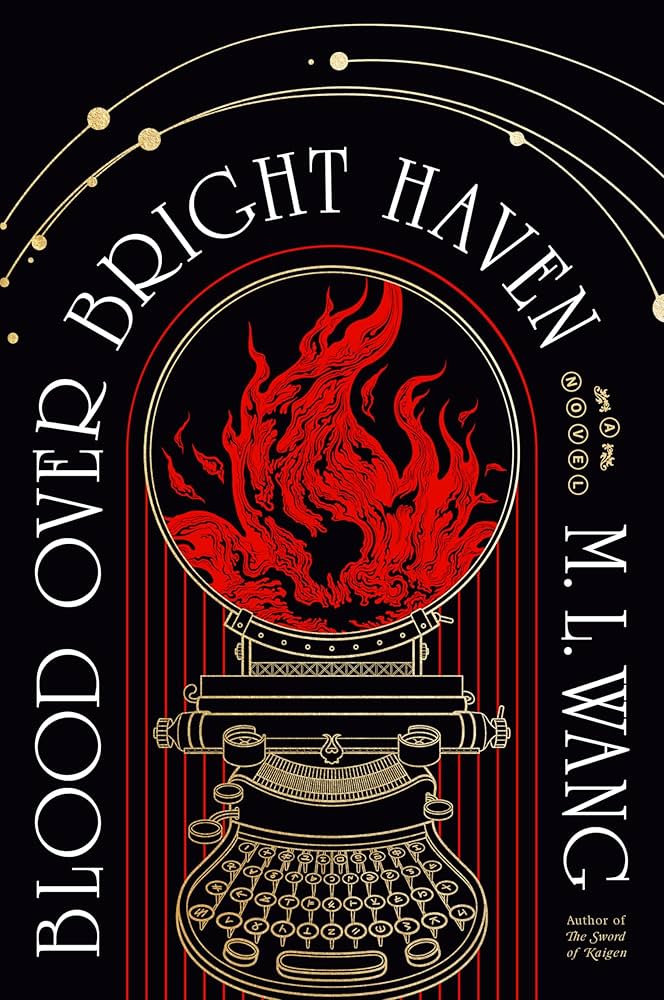
#REVIEW: Blood Over Bright Haven, by M.L. Wang

I discovered the work of M.L. Wang through BookTok, which is, by and large, convinced that her The Sword of Kaigen is one of the best books ever written. I read that one first, and … it’s not one of the best books ever written, not by a long shot, but it was good enough to get me to pick Blood over Bright Haven up and then take several months to get around to reading it. I didn’t start off well with this book either; by pure coincidence it shares a lot of plot points with Ava Reid’s A Study in Drowning, which I read immediately before it, and starting a second book in a row where the main character was a trailblazing female academic in a field where no one wanted her around and who cried all the time was a bit jarring even before it turned out that, somehow, in both books the fact that said main character was a huge fucking racist was a big plot point. Now, this is fantasy racism, which doesn’t make it a lot better,(*) mind you, but it’s a big theme of both books, so be prepared for that. Also, while we’re talking about things that might be in a content warning, Drowning has a character who is a rape survivor (although, creepily, the act in question comes off as consensual the first time it’s described) and there’s a rape attempt in Blood.

A Study in Drowning was not a great book– serviceable, but not much more– and it kind of poisoned me against Blood over Bright Haven for the first third or so. I nearly put it down. I’m glad I didn’t.

For starters, and I don’t want to get too deep into spoilers, because you deserve to experience this at the book’s pace, Sciona is very much not the main character of Blood over Bright Haven, even though it will seem like she is for most of the book.

Second, Blood over Bright Haven is one of the angriest books I’ve ever read, up there with Yellowface and Iron Widow,(**) although, again, you spend enough time in Sciona’s head that you might not realize how angry the book is at first. This is a deliberate misdirect on the part of the author and in retrospect it’s tremendously effective at prepping you for the big twist midway through the book. A bit of background: Sciona starts the book off by being named a Highmage of her home city-state of Tiran, an office that no woman has ever held before. This happens quickly; another weird similarity it has to Drowning, come to think of it; you get yourself mentally ready for her to take half the book to become a highmage and it’s, like, a chapter. Magic in this book is fascinatingly mathematical and complicated and meaty, it’s more like writing equations or geometric proofs than what for lack of a better word I’ll call “traditional” spell casting, although it’s not as explicitly mathematical as, say, To Shape a Dragon’s Breath.

Anyway, for our purposes the salient part of writing a spell is that you have to determine where the spell gets its energy from, and how much energy it might take to pull off any given magical effect. If you pull too little you’ll get partial results and if you pull too much, something is probably going to explode. Sciona is a prodigy at mapping, which is the process of figuring out where magical energy sources are and how to pull from them, and she gets put on a huge project involving pushing back the magical wall that surrounds the city, a huge … public works project, which isn’t quite what you might expect from a fantasy book but that really is what’s going on here.

Also, spells are written on magical typewriters, which is just super fucking cool.

Anyway, blah blah blah class conflict blah blah blah sexism blah blah blah plot development and then she figures out where the sources of her magic are really being pulled from, and I’m not telling you anything else, because you deserve to experience this on your own, and probably by this point if you’re like me you’ve decided you don’t like Sciona all that much. Unlikable MCs are tricky, right? First of all, you often can’t be sure if the author realizes they’ve written an unlikable main character, or if it’s just your reaction to that person (I call this “Lana Lang syndrome”) and also because the author wants you to keep reading, which can be a hard sell if you don’t like living in the head of the person you’re reading about.

I’m just going to say that it was clear quickly that M.L. Wang knew exactly what she was doing here, and that Sciona’s personality flaws are clearly intentional and are also pretty essential to the book unfolding the way it does. She has a great conversation (well, fight) with a relative late in the book where the relative just rips her to shreds and every word she says about her is true and I just kind of read it in awe of how fully in control of her characters Wang was.

Also, and I’m not going to go into details because, again, I want as few spoilers as possible, but reading this book on Thanksgiving lent the whole book a really interesting synchronicity with actual life. You’ll understand when you read it.

And, yeah, I’m about to end the second review in a row with the phrase “one of the best books of the year,” and a wish that M.L. Wang’s many fans on BookTok and elsewhere would realize which of her tradpubbed books (she has several that she published herself, and this and Kaigen were both originally indie titles) is clearly the superior one, because this book deserves the press and attention that The Sword of Kaigen has gotten. Go read it.

(*) The sole physical characteristic that the Kwen characters are given is “copper hair,” and I’m still unclear what precisely the difference between copper and red hair is, but you could take this as evidence that the despised minority in this book are white people, which is an interesting choice that ultimately doesn’t end up mattering very much since this is very much a Not Earth book.

(**) The fact that all three of the authors here are Asian women is a coincidence. It’s an interesting coincidence, but a coincidence nonetheless.

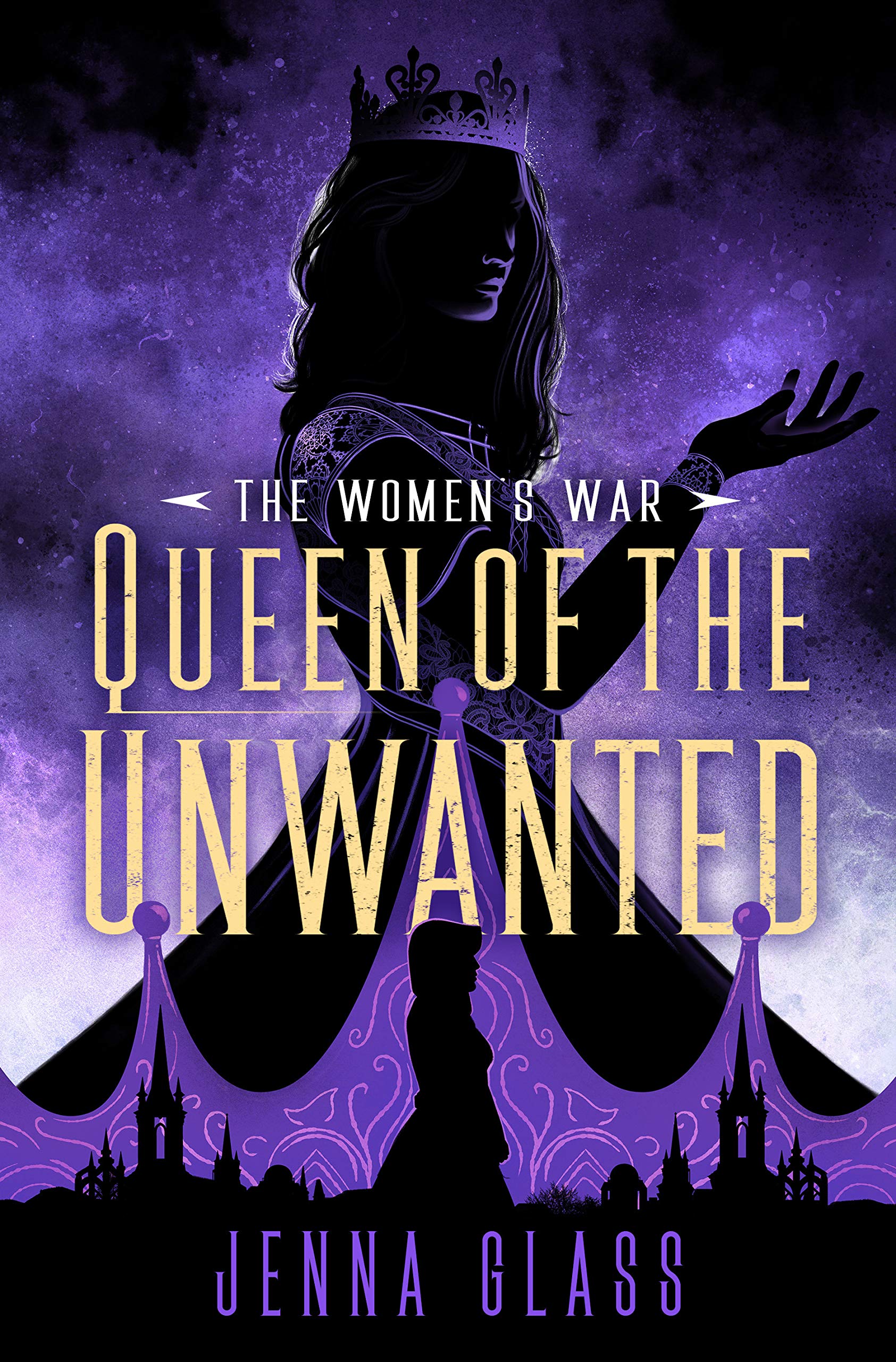
#REVIEW: Queen of the Unwanted, by Jenna Glass

So, if you’re going to make a series switch from hardcover to softcover after the first book comes out, which already guarantees the books on my shelf aren’t going to match, and then you’re going to compound not-matchiness by making sure that the cover design changes radically from the hardcover to the softcover editions, the least you can do is make the softcover editions awesome. And I have to admit it: this has me considering buying the first book again in paperback just so that they match, since the new versions look so Goddamned good.

This is one of the tricky ones. If you look at Goodreads reviews for either this book or the first book in the series, called The Women’s War, you’ll notice that they’re … we’ll say messy. The basic premise of this series, boiled way down, is that a group of women, forced into prostitution when their husbands chose to divorce them or they were deemed unnecessary in other ways, manage to make a fundamental change to the way magic works in their world to give women more agency. To wit: among other things, sexual assault now causes little bursts of magic to be released that can kill the man performing the assault. Magic is explicitly gendered in this series, and without going too deep into the weeds there is women’s magic, men’s magic, and ungendered magic, and while women’s magic has historically been suppressed and devalued, this spell also kicks women’s magic into much higher gear, also creating a wellspring of feminine magic in the middle of what was formerly a wasteland that quickly becomes a feminist kingdom. The main characters are all royalty of some stripe or another, although several of them are former royalty who have been forced to be Abigails (their word for the prostitutes,) one way or another this book is not especially concerned with regular people.

It’s also not especially concerned with gay people, or trans people, or people of color (but more on that bit in a moment,) and two of the three most evil people in the series are the only fat person (we are reminded, Bomber-like, of his fatness every time he is mentioned) and a woman with a facial disfigurement. There is also a blind woman who is One of the Good Guys, but it’s made clear very quickly that she’s not only Not Really Blind, but she’s quickly offered a cure (which, to give some credit, she doesn’t take.)

You can probably imagine that this has caused some controversy, particularly for a book that is pretty explicit about being about high-fantasy feminism. Like, when you tell me that whether you’re male or female can not only affect what kind of magic you can perform but what kind of magic you can see (magic, in this world, is performed by combining “motes” of what are basically magical elements that float around in the world, and so certain kinds of magical motes are easier to find in some places or another, and part of what determines your skill as a mage is how many different kinds of motes you can perceive in the first place,) I’m going to immediately start wondering about how trans people fit into your world, and I’d almost rather you terf it out and go strictly biologically than completely ignore that trans people exist.

And even laying aside the identity and representation concerns, there’s a persistent feeling throughout reading this book that Jenna Glass really didn’t bother thinking super hard about the aspects of her worldbuilding that she wasn’t interested in. For a book that is all about shifting alliances between rival kingdoms, a book where the phrase trade agreements shows up on nearly every page, she doesn’t seem to have much of an idea of how trade works, unless her various principalities and kingdoms are unimaginably small. One of her kingdoms is repeatedly described as the sole source of iron and gems for all the surrounding kingdoms, for example, and you get the feeling that the “trade agreements” between these countries are sometimes over a few pounds of metal. It’s surprisingly low-resolution compared to how well she brings in the political implications of, say, marriages between warring families. But trade? Just say “trade agreements” on every page or two and let the audience fill in the details. At one point after a book and a half you find out that two of the countries speak different languages, and I swear to you that she decided that on the spot so that she could have one character not quite understand what was going on around her. I’m not going to reread the first book to confirm that multiple languages hadn’t ever been mentioned, but they certainly hadn’t come up in the second until it was convenient. Stuff like that.

The thing is, though, IF you can get past all that– and I absolutely would not blame you for a single second if you declined to even try— the book that is here is pretty fucking compelling. What Jenna Glass does really well is write characters, and she’s done a good job over these two books of filling her pages with characters with competing and overlapping sets of interests and national cultures and setting them against each other. It took me forever to get the second book ordered and then to actually pick it up once I had it on the shelf, but now that I have, I feel dumb about taking so long and want to quickly order the final book of the trilogy, which is already out. So it turns out to be one of those books that I can’t really recommend, because of the various bits of sleeve and sloppiness, but I can accurately report my own reaction to the book and let y’all decide, right? So, yeah: I read this, and I enjoyed it, but it’s a mess, and it might be worth it for you to check it out and maybe it might not, so make your own call.


Let’s talk about the race thing for a second. It is interesting to me that the only characters in this book who the book takes care to describe physically are people from Nandel. Nandel is in the north– it’s the iron-and-gems country– and it’s the most openly misogynist of all the various cultures that exist in this book. Nandelites are also repeatedly described as being blonde, blue-eyed, and pale. Over and over again, in fact, and any time anyone else is referred to in terms of their skin color it’s always a shade of brown, although frequently Glass also tosses in a reference to working outside or something, so you never know just what anyone is supposed to look like. I’m going to point out real quick that a world where only whiteness is considered interesting enough to comment on might be a world where brown skin is the default, and then also point out that if everybody is brown except for these handful of characters (none of whom are primary POV characters) then Glass could certainly have been a hell of a lot clearer about it, as this is roughly akin to J.K. Rowling suddenly claiming that Hermione was always meant to be black because her hair is curly.

I will leave it as an exercise to the reader whether that makes any meaningful difference. I suspect not, but YMMV, as always.

A brief statement on Warren Ellis

TW: Sexual misconduct, not directly described.

No one has asked, and I’m certain I would be just fine were I not to say anything at all, particularly anything I’m treating seriously enough that I’m calling it a Statement, but:

I have, on many occasions in the past, recommended Warren Ellis’ comic book and novel work in this space and others. He was, for many years, my favorite comic book writer, and I have a ton of his work in my house. I consider several of his comics to be among my favorite series of all time. His newsletter was the direct inspiration for my book Skylights, and he is mentioned in the introduction to that book. I have at least two books he has autographed and may well have more, although I have never met him in person.

In June of 2020 Ellis was accused of sexual misconduct by what eventually ended up being dozens of women; far, far too many to make it remotely reasonable to question or investigate any of their stories. Eventually nearly a hundred women came forward with some sort of story involving Ellis and emotional or sexual indecency, misconduct, or assault.

Ellis responded by publishing a brief statement in which he … well, didn’t quite deny all of the allegations, but certainly denied the context in which many if not all of them took place, and issued an apology that was rapidly deemed insufficient by, as far as I can tell, everyone involved. He then closed his mailing list and his Twitter account and went away for a while. While his statement mentioned making restitution for his behavior, he has not done so in any way that anyone involved has noticed.

Image Comics has recently announced that Ellis and artist Ben Templesmith will be collaborating on a revival of Fell, a series the two worked on in the early 2000s. While I am aware that there is no one out there calling out for my opinion in this matter, and other than a vague feeling of possibly unjustifiable betrayal I am absolutely not one of the people Ellis has harmed, I will not be purchasing or reading any of his work in the future until his half-assed apology is replaced with actual definable action steps to rectify and heal some of the trauma he has caused. If you’d like to see what that might look like, I’d recommend looking at the statement from So Many Of Us that is on their front page.

Until that has happened, I am done with him and any of his future work in any medium, and I will continue to not recommend his past work either, regardless of my feelings about it at the time it was released.

On terrible people and my time & money

While I’ve been doing some DMing for my wife and son lately, the last time I spent serious time playing role-playing games was in college. I lost my group when I moved to grad school, and basically never tried to find another one after that. My college group mostly bounced back and forth between Call of Cthulhu and Dungeons and Dragons.

One of the best campaigns I was ever involved in was a published Call of Cthulhu game called Horror on the Orient Express. I have some of my best memories as a gamer from that campaign; it was a tremendous achievement in game design and, not for nothing, was expertly run by our DM as well.

I recently discovered that Chaosium, the company that owns Call of Cthulhu, was planning on updating and republishing Horror on the Orient Express in a new, two-volume, 700-page, ludicrously expensive version for their 7th edition rules. It’ll be out in a couple of months.

Did I say ludicrously expensive? I don’t care, I’m buying it anyway. This is why I have a job.

Well, it’s for the seventh edition, and while I doubt that the seventh edition is all that different from the rules I’m familiar with (and it’s not like I intend to run this; I’m buying it for nostalgia value and to reread it) it felt weird to think I was going to buy an adventure for 7th edition Call of Cthulhu without actually owning the core rulebooks for 7th edition Call of Cthulhu.

So I spent a hell of a lot of money at the Griffon yesterday. Because these damn things are pricey, even under normal circumstances.

Let’s talk about H.P. Lovecraft a little bit.

Just in case you’re not familiar with him (although I doubt that’s going to be the case for too many of you; after all, you’re here,) the Call of Cthulhu game is based on a mythos created by the works of an author named Howard Phillips Lovecraft. H.P. Lovecraft’s influence on fantasy writing and specifically the horror genre is kind of difficult to overstate. His work is a big deal, and damn near everybody who works in genre has read him. He was also an enormous, disgusting racist, and his racism bled into a lot of his work. Now, when I say that about somebody who was born in 1890, a lot of people are going to shrug. “He was a product of his time,” they’ll say. “We can’t judge people Back Then by our modern moral standards.” Nah. H.P. Lovecraft was so much of a racist that it was notable in the 1920s. Like, ordinary run-of-the-mill 1920 white people thought this guy’s ideas about race were kinda fucked up. Google the name of his cat sometime. The guy was a hell of a writer, but he was trash as a person.

Typically I do not like to spend money that will trickle into the hands of giant fucking racists. However, in the case of Lovecraft, while the overall picture is complicated, his work is mostly in the public domain by now. Furthermore, Lovecraft had no children and his wife divorced him (well, sorta) a few years before he died, so there’s not even a family that money spent on Call of Cthulhu is going to go to.

But the guy’s legacy still has to be grappled with, right? The World Fantasy Award used to literally be a bust of his head; it was remodeled in recent years to a (much better) excellently creepy full-moon-behind-a-tree version after Nnedi Okorafor, who is Nigerian-American, won the award and pointed out that the greatest award of her literary life meant that she had to look at the face of a dude who literally didn’t think she was human every day. There is a long, ongoing, and very likely never-ending conversation about whether we can separate art from artist, but we can definitely avoid literally honoring the artist when that artist turns out to have been a terrible person. If that person is still benefiting from the sale of their art, then you need to have a deeper conversation. H.P. Lovecraft has been dead for 80-some-odd years and buying his books doesn’t send money to anyone connected to him, so reading his stories isn’t as problematic as, say, reading the work of still-living garbage humans John C. Wright or Orson Scott Card.

(“As problematic,” I said. And I’m not going to spend one second trying to talk someone out of feeling otherwise; if you feel like I’m making a distinction without a difference, let me know.)

All of this may be more lead-in than this issue deserves, but I was leafing through my new rulebooks last night and, as one probably might expect, Lovecraft’s name is all over this thing. And I thought about that for a bit, and went to the first few pages of the book, looking to see what they had to say about the man himself. And I was startled to discover that the official 7th edition Call of Cthulhu rulebooks devote two sentences of a chapter called “H.P. Lovecraft and the Cthulhu Mythos” to talking about Lovecraft’s racism, and those two sentences are basically there to utterly dismiss it. The game, remember, is traditionally set in the 1920s, not exactly a great time for American race relations, to say nothing of the sexism, and the author is one of literature’s most famous racists.

I’m a little surprised and more than a little disappointed that the game doesn’t address this more directly, is what I’m trying to say here. The newest edition of the Dungeons and Dragons rulebook has a whole section at the beginning of the book about how players of all races, genders and sexualities are welcome in the game and theirs is set in an explicitly fantasy world. Call of Cthulhu is not only based on the work of a racist but is set in the 1920s, when any number of people who might be interested in the game now might face some issues playing characters who reflect them. I can easily imagine a Keeper making the life of a Black or gay or Asian or enby or hell even female player miserable because That’s How Things Were Back Then. Maybe, in our pair of oversized-hardback, two-column, 400-page rulebooks we should take at least a few paragraphs to talk about how to navigate that? Particularly in the Keeper’s Handbook, the book for the person running the games? This hobby has kind of a reputation for being a little exclusionary; can we take some time to push back on that, please? Just a little?

I dunno. I’m not– at least not without further reading, and again I’ve only skimmed these books since buying them– accusing the Chaosium writers of being racist or sexist. Right now what I’m specifically saying is that there’s a huge blind spot here, and it’s kind of made me uneasy about shoveling more money toward this company. I may feel differently once I’ve read through the rulebooks; if I discover I’ve missed something important (and there’s 800 pages of material here, so this is entirely possible) I’ll update later. But this is squicky, and I don’t like it, and I thought that was worth talking about a little bit.

In which I remove my earrings

I’ve talked a bit about the negative experience we had when applying for a home equity loan last week. What I did not mention is that at the end of the conversation my wife had new checks ordered, something she hadn’t done in so long that the address of our previous house was on her checks. We moved into this house before my son was born.

Her previous checks did not have my name on them, and the new checks do. At no point was adding my name to her checks discussed or mentioned by any of us.

I do not, in fact, want any, but it is starting to genuinely seem like certain others might in fact want some, in which case some will have to be provided. I have plenty, after all.


In other news, I actually had to chew out one of my classes today, marking the first time I’ve had to raise my voice to students in a solid year, a milestone I will almost certainly never reach again. The amazing thing is that it worked; pointing out that I was perfectly capable of writing an office referral from seven miles away if I was required to actually got the little goblins to shut the hell up and pay attention so that I could yap at them about scatter plots and correlation. The first fifteen minutes of class ended up being completely shot to hell, but I can’t pretend I haven’t lost much more than that to in-person classes before, so all told everything got sorted out well enough, I suppose.

Tomorrow’s assignment is technically open in another window and I absolutely am not interested in completing it right now; I’ve reached the point of the year where I would prefer for all of us just to sit in silence and contemplate the beauty of mathematics rather than, like, doing any work, especially if I have to write the work beforehand. Which I do.

(One of these years, I’m going to go through and organize every math lesson I’ve ever written together, and at the very least never write another math problem again, and at best actually publish a Goddamn textbook. But not this year.)

Ugh. It’s 6:05 and that assignment will probably take at last half an hour to pull together if not more, and I’m starting to slide into the point of the year where a bunch of things that I signed up for for extra money are all going to be coming due at the same time. I’m gonna go get this assignment done, so I can spend at least a couple of hours on my PS5 hanging out with my family before bed.

#REVIEW: The THRONE OF GLASS series, by Sarah J. Maas

Right around exactly a year ago, Kingdom of Ash, the final novel of Sarah J. Maas’ Throne of Glass series released in hardcover, and I found that a bunch of my friends were reading it and talking about it, and talking about it with the sort of reverence only due to the end of a major, major series. And I’d … never heard of it. I eventually bought the first book, though– any time more than a couple of my friends start talking about a book at the same time I’m going to check it out; I’m predictable that way– although I didn’t get around to actually reading Throne of Glass until February.

That was seven books and five thousand and eight pages ago. The final book came out in paperback a couple of weeks ago; I’d been spacing out my reads so that I didn’t finish the series too far away from the last book’s release, but if you click through my Monthly Reads you’ll notice I’ve read a book or two from this series most months since reading the first one in February. And I finished the final book, the thousand-page Kingdom of Ash, perhaps fifteen minutes ago.

I need y’all to understand something.

Fantasy literature is in my damn blood, kids. I first read The Lord of the Rings— the entire trilogy, plus The Hobbit— in second grade. I have been reading epic fantasy for my entire life. I am fully and entirely qualified to make the statement that I am about to make.

The fact that Sarah J. Maas’ name is not spoken among the fantasy literature community with the same reverence as Tolkien, or Eddings, or Brooks, or Sanderson, or Jordan, or Rothfuss, or Martin, or any of those motherfuckers is a Goddamned crime, and I can attribute said omission to nothing other than the purest sexism.

In fact, I would go farther: Throne of Glass is better than a lot of these men’s magnum opus megaseries are. It is, for example, undeniably better than Wheel of Time or A Song of Ice and Fire, although I admit no individual book is as good as A Game of Thrones. It is better than Sanderson’s Stormlight Archive. Better than, if not, perhaps, as beautifully written as Rothfuss’ Name of the Wind.

And because Sarah Maas is a woman, and because the series was (criminally, incorrectly) slotted into YA, a designation that I think probably hurt a couple of the early books until she was selling enough to be able to write whatever she wanted, I had never heard of the Goddamned series until my (entirely, incidentally, female) friends told me about it.

George Martin is taking literal entire generations to produce individual books. Rothfuss’ The Wise Man’s Fear released in 2011, four years after The Name of the Wind, and the third book has no release date. Sarah J. Maas released the first book of Throne of Glass in 2012 and it is 2019 and the series is done. Or, to put it another way, the entire five thousand page series has been released since A Dance With Dragons or Wise Man’s Fear came out.

When these long series come out, the tendency is to go to filler early and painfully. The entire second book of the Wheel of Time series could have been reduced to a prologue chapter of the third book. Martin’s tendency to pad out his work until it is completely out of control is legendary. And a certain other series that just launched recently managed to feature unnecessary filler material in its first book.

The series comprises six main books, a three-novella prequel novel, The Assassin’s Blade, that should be read second, and a “side novel,” Tower of Dawn, that should be read in between the fifth and sixth main-sequence books, and in that entire time the only time I felt like the series was spinning its wheels was in Heir of Fire, which spends a lot of time doing plot work before blowing a hole in the entire series and upending everything you thought you knew in the last hundred and fifty pages or so. There’s no fucking filler.

I am prone to hyperbole, I say that all the time, and I nonetheless cannot overstate what an amazing achievement this series is, and how grateful I am that so many people made sure I had seen it. If you’ve ever read a fantasy megaseries in your life, you owe it to yourself to read these. They are a highlight of an extraordinary year of reading. Go get started; it’ll take you a while.

Fuck Mel Hall, Chapter 4: Never Mind, Fuck Everybody

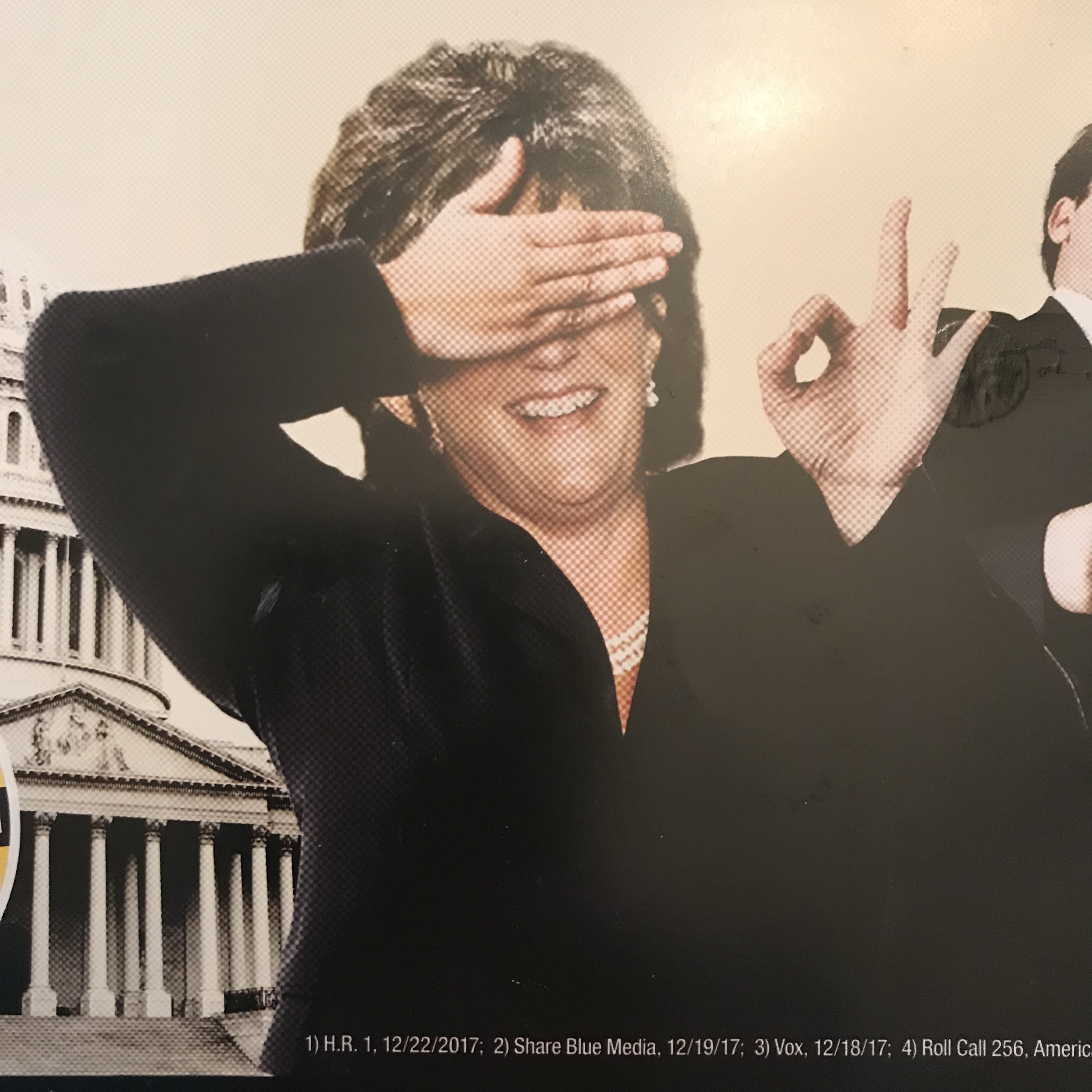
There was another anti-Jackie Walorski flyer, paid for by the Indiana Democratic Party, in my mailbox when I got home this afternoon. Once again, the flyer makes no mention of who the flyer-ers think you should vote for, only that you should not vote for Jackie Walorski.  Now, the last time this happened, I was kind of wondering just how much Hall’s people had had to do with it, since he was never mentioned.  Well, his radio ads are all about “Washington Walorski,” so even in his own stuff for his campaign he can’t avoid using Republican frames.  I’m not going to bother talking about the entire flyer.  Let’s just talk about this part of it:


IMG_7695
This is a photoshopped image.  It was photoshopped by an asshole at the behest of another asshole.

The general theme of the ad is that Walorski voted for the tax bill without knowing what was in it, so she’s “voting blindly.”  Get it?  She’s covering her face?  Or at least someone’s manly hands have been photoshopped over her face?  It’s the exact same hand in a different image on the other side, so this isn’t even a good photoshop, and don’t think that I haven’t noticed that it appears to be a man’s hand they used– rumors about Walorski’s sexuality (she’s married, to a man) have been floating around for literally as long as she’s been in office.

And then there’s that fucking gesture again.

Let me be one hundred percent clear:  that image is photoshopped.  It is not real.  Even if it is an actual image of her using that gesture and only the right arm is added on, it’s still a photoshopped image and therefore by definition the entire thing is suspect.  Which means one of two things:

  • That somebody affiliated with the Indiana Democratic Party deliberately decided to use an image of Jackie Walorski making a white power gesture in an ad and then not call attention to it, basically just doing it as a dogwhistle to both white supremacists and antiracist leftists; or
  • That they were unaware of what they were doing.  In September of 2018, just a couple of weeks (how the fucking hell has it only been a couple of weeks??) after Brett Kavanaugh’s asshole assistant caused a rather substantial brouhaha by making the same gesture behind him at his confirmation hearing.

One of these possibilities is disgustingly cynical at best and actively slanderous at worst.  The other possibility is proof of utter fucking incompetence.  And neither of them are fucking okay.  I hate these people.  I hate this fucking election, and I hate the fact that I’ve now had to spend two fucking posts defending Jackie Fucking Walorski, who is also an asshole, but who still doesn’t deserve this shit.

A pox on the lot of these fuckers.