#REVIEW: Legend (2015)

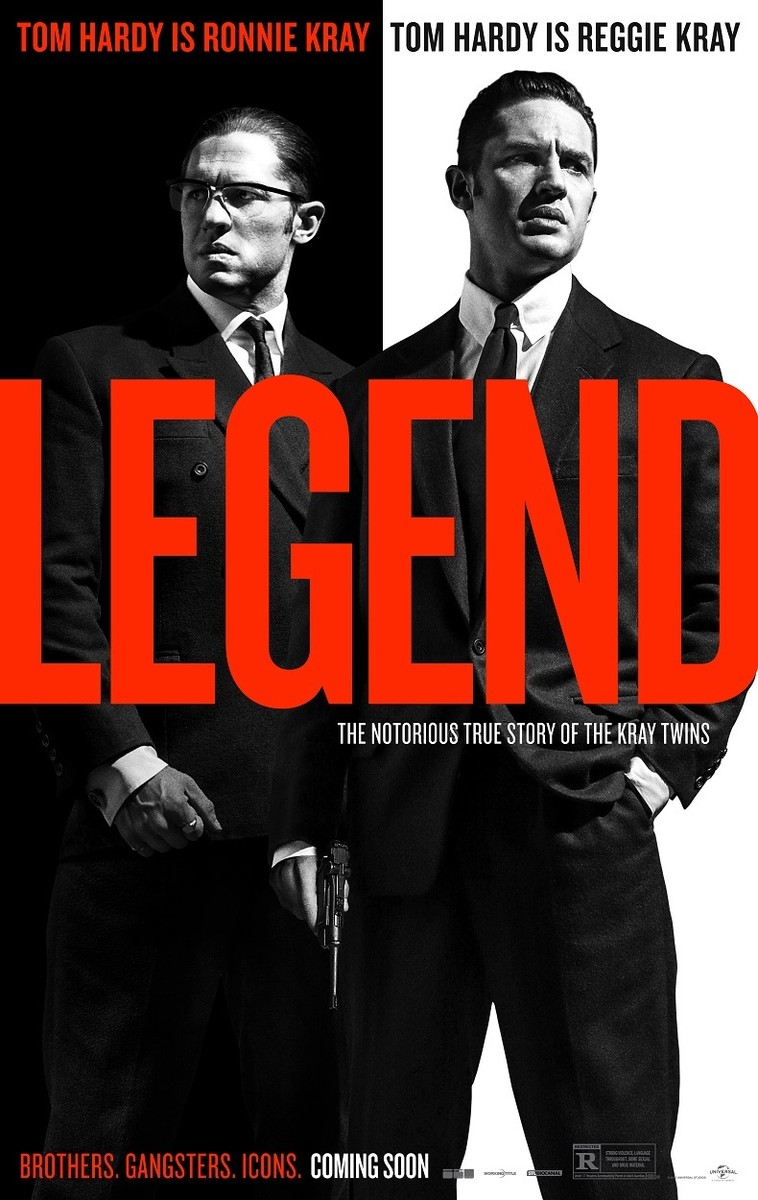
There’s a clip from this movie that I used to see on TikTok all the time, where Tom Hardy, playing 1960’s London crime boss Reggie Kray, talks shit to a bunch of rival gangsters who plan on “knocking the granny out of him” while Tom Hardy, playing 1960’s London crime boss Ronnie Kray, throws a fit that he’s not about to be involved in a gunfight, storms out, then sneaks back into the room behind everyone with a hammer in each hand. That’s where the clip ends. It’s a good clip.

I have planned to spend two hours of my weekend watching this movie for approximately nineteen straight weekends. I finally watched it this morning.

Let’s get this out of the way real quick:
Legend is the story of the Kray twins, notorious and apparently real Cockney gangsters from 1960’s London who worked out of the East End. Reggie is the levelheaded one; Ronnie is literally a dangerous psychopath who spends most of the movie off of his meds. Reggie falls in love with Emily Browning’s Frances early in the movie; Frances provides narration throughout the film, and their love story, such as it is, is the driving force behind the actual plot. She knows who she’s dating (and, eventually, marrying) and wants Reggie to go straight; Ronnie very much does not want that.

This is one of those movies that’s more about the actors than it is the plot, and … God damn, I had never really gotten Tom Hardy before, but he’s absolutely amazing in this. Ten years of development in movie effects means that Michael B. Jordan’s Smokestack twins look a little more seamless when they’re both facing the camera and talking to each other– you can tell some compositing is happening when both of their faces are in the same shot– but the distinction between the two characters is tremendous. Hardy’s wearing some prosthetics as Ronnie; his nose is broken, he’s a little heavier, and there’s something going on with his lips that I was never able to quite nail down, but what really distinguishes the two is the aura of utter malice that Ronnie radiates every single second he’s on screen. Neither of these men are nice guys, mind you, which the movie goes to great pains to remind you a few times– you are pushed away from identifying with either of them– but Reg is a scorpion and Ronnie is a pissed-off pit bull with a frayed piece of twine holding him back. Their voices are also slightly different– I have no idea what Hardy’s natural accent actually sounds like, but there’s a point in the movie where Reg does an imitation of his brother for a sentence or two and it feels like an impersonation rather than Hardy just briefly switching accents. It’s a tremendous, understated bit of acting and it was one of my favorite moments in the film.

But let’s talk about Emily Browning for a moment. I think this is the only thing I’ve ever seen her in, and she’s meant to be the stand-in for the audience– and, again, is also the narrator throughout the movie. You know from the jump that things aren’t going to end well, but unless you’re already familiar with the Krays you won’t know exactly how. Browning’s chemistry with Hardy as Reg is absolutely off the charts; their first scene together, where Reg asks Frankie out for the first time, is one of the sexiest things I’ve ever seen on-screen, and the two of them barely touch each other. The tension is crackling between the two of them; I was surprised there weren’t literal sparks. Similarly, she and Ronnie never trust each other at all; during their first encounter, he explains that he’s a homosexual but that he doesn’t “receive,” and that’s about as comfortable conversation as they’re going to have at any point in the movie.

I mean, stuff happens in the movie, but it’s ultimately about the relationships between these three characters, and how Reggie is torn between loyalty to his brother and loyalty to his wife. That’s what drives all of the conflicts in the movie; there’s a subplot about a cop chasing the two of them that doesn’t amount to much and a couple of court scenes, but everything revolves around them. Frankie’s brother works for Reggie. Frankie’s mom loathes Reggie, showing up in black to their wedding and prompting one of Ronnie’s most terrifying moments, and Reggie’s mom, who dotes on Ronnie throughout the film, doesn’t like Frankie much either. There’s a scene between the two of them where Frankie makes her a cup of tea and Violet rejects it, which is apparently the British equivalent of killing someone’s dog.

I know it came out ten years ago, but if you haven’t seen it, definitely check it out.
#REVIEW: Kindle Paperwhite, Signature Edition

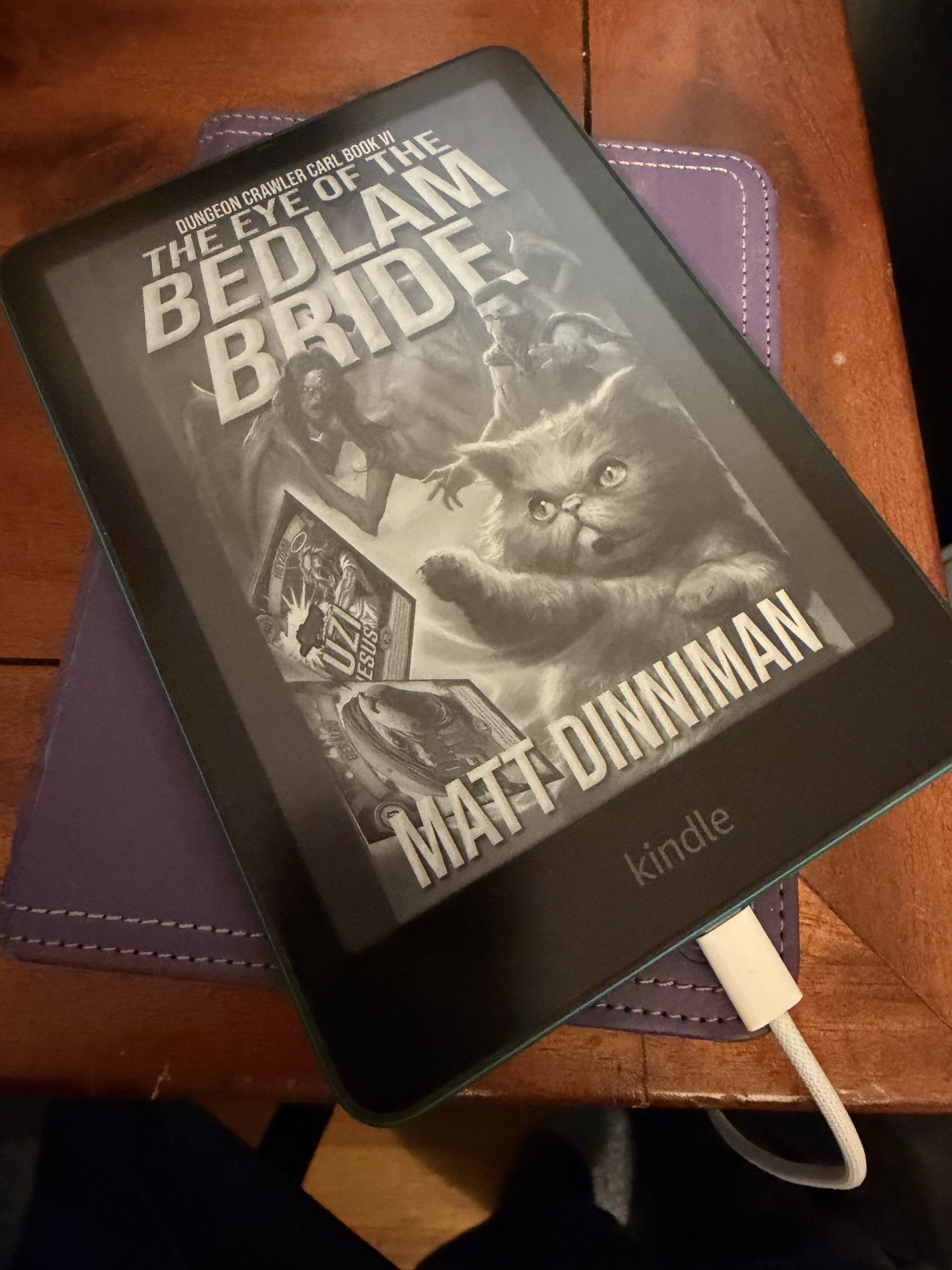
Having read an entire big-ass book on this thing (TEOTBB is 260,000 words) I can get to the meat of a review of my newest tech toy in a single sentence:

Reading a book on this thing feels like reading.

If you don’t know what I mean by that … I’m not sure how well I can explain it, to be honest. I have an earlier version of the Paperwhite– about ten years old now, so probably pretty close to the first generation– and on that device and every other Kindle I’ve ever touched, I was never able to forget I was holding a tech object with a screen and not a book. I couldn’t get into stories the same way I could with a book. I had trouble remembering details, or even keeping my place on a page. Reading short stories on the Kindle wasn’t bad, but entire books? Forget about it.

At some point in the last ten or so generations of this thing, they fixed that problem, and I’m not sure exactly what the difference is. I can say it’s tremendously faster than my old Paperwhite, which is no surprise, and since ebooks themselves haven’t really evolved all that much in that time you can really feel the speed difference in a way you might not be able to with a phone upgrade or a new laptop or something. It’s got a pleasing heft in the hand and while I wasn’t terribly happy with spending nearly $40 for a case at first, now that I have it I really like it. I got the fabric cover, and the texture is marvelous, both on the inside and the outside of the case, and the automatic wake-up/shut-off when you open and close the cover is a nice feature.

(Why did I spend $36 when I could have gotten a case much cheaper? It says “Kindle” on the cover and not some other random brand. If I’m going to put my device in a case, the case needs to be either featureless or branded for the device and not for whatever random company makes the case. Yes, I know that’s dumb. It’s how my brain works. That’s my original Paperwhite case under the new one up there, and you’ll notice there are no words on it.)

Battery life is going to be excellent– I’m not sure how long I spent reading that book, but it only ran the battery down to 81%. It says that “typical reading time” is just under 14 hours, but I don’t know if that’s how long I took in my one read or what. I was annoyed by the Kindle displaying when certain passages had been annotated by a ton of other people, but I was able to turn that off.

I spent a pleasant half-hour today rearranging my wish list on Amazon, moving fiction books by new authors into a new “Kindle Wish List” section, keeping books I know I want in print and nonfiction on my original wish list. I’m going to need to get into the habit of deciding I Shall Read A Kindle Book Now and buying the book right then from my wish list, because I still don’t like how this thing displays your library and anything I download and don’t read immediately is going to get lost. That will require a bit of an adjustment, but at least I know the reading part is going to work, and that’s good.

(Two more quick things: I just started Ron Chernow’s Mark Twain today, and it’s 1200 pages, and after holding it for a while I damn near shelled out another $17 to get a digital version that wasn’t going to torture my hands as much. I may still cave, we’ll see. Also, Bedlam Bride is unfairly fucking good; it’s the best book of the Dungeon Crawler Carl series so far, and as I’ve said repeatedly DCC already didn’t have any right to be as good as it is. I only have one book from the series left and then I have to wait for the rest of them to come out. I’m not happy about it.)

#REVIEW: Voidwalker, by S.A. MacLean

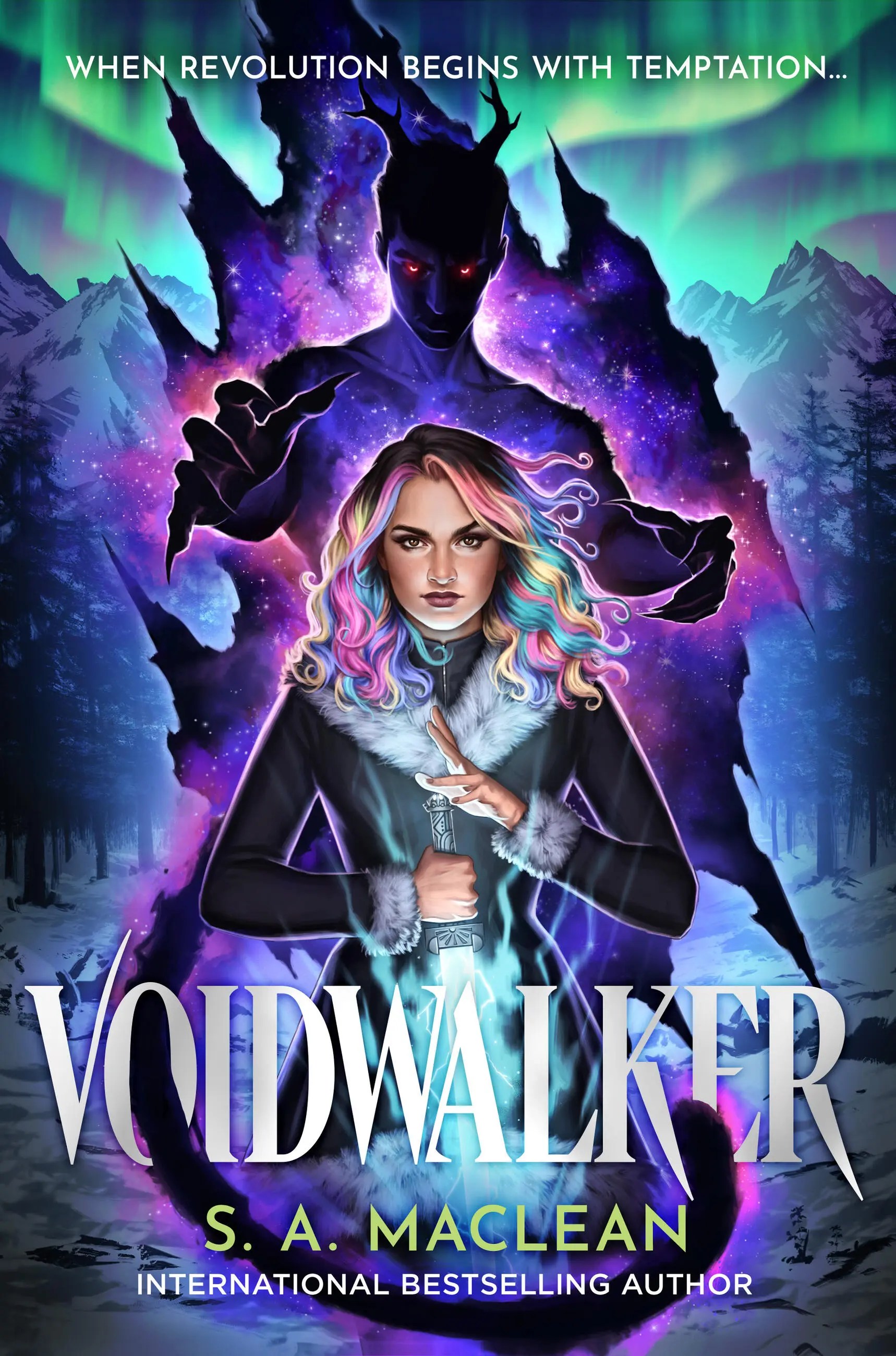
It’s nice to be surprised once in a while, although maybe this book shouldn’t have been a surprise. I’ve been losing steam with my Illumicrate book box subscriptions; I cancelled my quarterly horror box after the third book in a row that I already had, and upon reading the description of the book that turned out to be S.A. MacLean’s Voidwalker, I very nearly skipped it. To be clear, the way Illumicrate works is their boxes are semi-blind; they’ll give you a description and a theme but you’ll have to do a bit of detective work if you want to know the actual title of the book before it shows up on your doorstep. And as Illumicrate’s main subscription line has been leaning far too hard into romantasy lately for my tastes, and the brief description of Voidwalker I had felt pretty bog-standard for the genre, I was disinclined to pay for it at first. Then I learned that the author was the same person who had written the excellent The Phoenix Keeper and decided to go ahead and let it ride.

(I suddenly find myself wondering how MacLean managed to get featured in two Illumicrate boxes in less than a year; her agent may be owed a raise.)

The premise still isn’t the most original thing on the planet, even considering that romantasy is a genre ruled by the trope and its biggest fans seem to literally want a checklist of Things What Are Supposed to Happen that they can go through as they’re reading. The main character is a smuggler; there’s a turf war happening between two members of a vaguely-fascistic race of antlered and tailed humanoids who each rule a chunk of the world and, oh, also eat people; the turf war turns into a revolution, and one of the daeyari (those are the monsters; I’m picturing Nightcrawler with antlers, but not blue) turns out to be really sexy.

And … well. There’s an interesting mix of fantasy and science fiction going on here, the main character rides a Void Horse, which is a horse that is actually a lizard, possibly my favorite kind of horse; and there’s lots of hints at a wider world that I assume will pay off in future sequels. I’m being snarky, but I didn’t really expect much from Phoenix Keeper and loved it; I expected even less from Voidwalker and enjoyed it enough to write about it and recommend it. MacLean has a great grasp of character that serves this book quite well; the relationships between MC Fionamara and the other secondary characters in the book are what keeps the book interesting, and while Antal, the daeyari, initially comes off as the same Tall Dark and Scary broody big-dicked male character that I’ve read about in a thousand Sarah J. Maas books and more recently in Alchemised, he’s got enough unexpected twists to his personality that I ended up liking him by the end. And while I hate the phrase “slow burn,” MacLean takes her time with the romance angle of things, so by the time Fi and Antal start boning it feels earned and not inevitable.

Honestly, my biggest gripe is a deeply nerdy one, which is that S.A. MacLean doesn’t know the difference between antlers and horns. Do you know the difference? I didn’t until recently, but now that I do I’m going to notice every time the words are misused in books for the rest of my life. There are other differences, but antlers are shed, and horns are permanent, and what the daeyari have are horns, even though they look like what you’re probably picturing when you hear the word “antler.” This would have been less of a big deal was it not an actual plot point that daeyari horns grow throughout their entire immortal-unless-killed lives and so you can get an idea of how old one is by the number of points and bends in the horns. So they are definitely horns and not antlers.

And now you know. Even if you weren’t interested in the book, hopefully the random factoid made reading the post worth it.

#REVIEW: The Bone Raiders, by Jackson Ford

Man, this was a lot of fun.

It may be that there’s no cliché less true than “You can’t judge a book by its cover.” You not only absolutely can judge a book by its cover, you are supposed to. That’s what the cover is for! It’s to attract peoples’ attention, particularly those kind of people who are likely to enjoy the book.

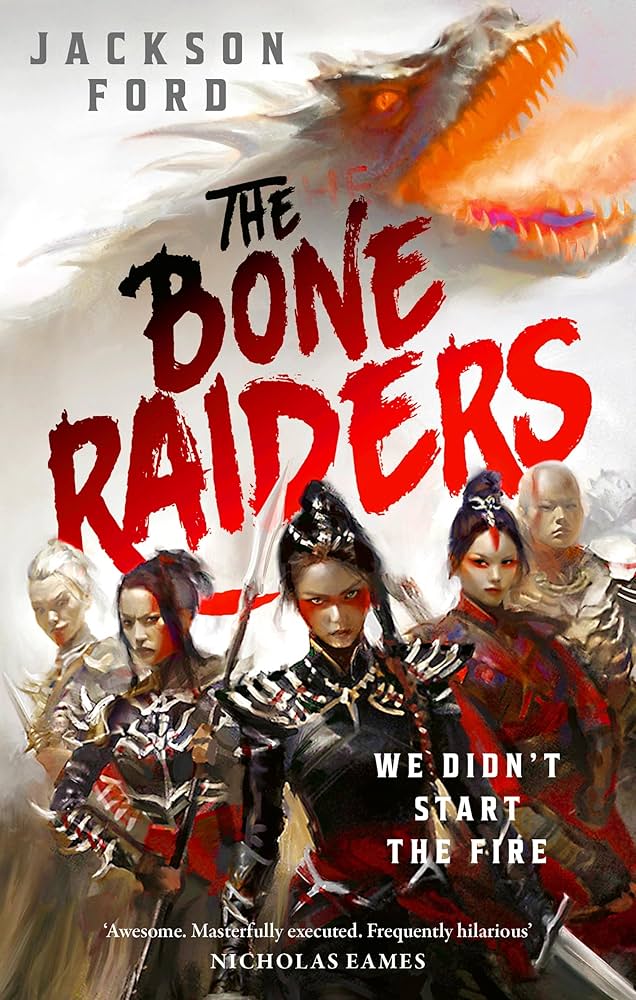
And let me tell you something: I absolutely encourage you to judge Jackson Ford’s The Bone Raiders by its cover. Five badass-looking women of color holding weapons and a fire-breathing technically-not-a-dragon in the background? Sold. Gimme. We’re done. I don’t quite get why they decided to put the Billy Joel quote on the cover, but that’s not just my biggest gripe about the cover, it’s my biggest gripe about the book. Because this book is everything that you think it is upon looking at that cover, except maybe a little smarter than you’re expecting. I’m super psyched that it’s a trilogy, because I want more of these characters and more of this world, which can be fairly boiled down to “Mongols during the time of Genghis Khan, but dragons and feminism,” and that’s really all I need.

(Every POV character is a woman except for the first and last chapters; the first chapter is an okey-doke and the last chapter is a tease for the next book. There are hardly any men with dialogue. I can’t believe a guy wrote this, to be honest.)

But yeah. This is one of those reviews where I don’t need to belabor the point at all. Violence and humor and violence and world building and violence and lesbians and violence and rebellions and violence and family drama and violence and … animal husbandry. If you’re remotely interested in a book with that cover, go grab it right now. You will be well rewarded. I want the sequel, and I want it tomorrow.

Go get it.

Two quick book reviews

I am in a horrendous mood, as the world is continuing to go to shit and nothing seems to be able to stop it or even slow it down, but there are still books out there, so I may as well talk about them. I don’t have the energy to make a full post about either of these so let’s just do a couple quick paragraphs each and call it a day.

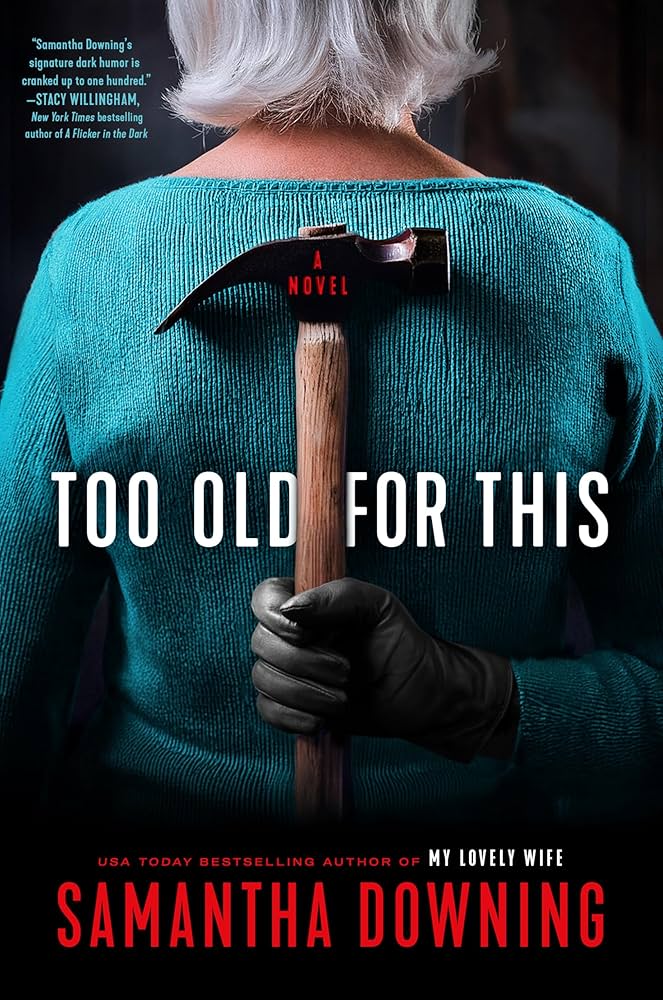
Samantha Downing’s Too Old For This is a book about a serial killer forced out of retirement when a documentarian comes calling who wants to make a series about her. She was never actually brought to trial for her crimes, but changed her name and moved across the country anyway, and she’s less than interested in someone dragging all of that back into the light again.

She’s in her seventies, by the way.

This book ended up being lightweight and quick and more fun than it probably had any right to be, as Lottie Jones’ life keeps getting upended more and more as she attempts to cover for her crimes– both the old ones before she moved away and the new ones she has to keep committing as she keeps making mistakes that wouldn’t have mattered when she was killing people decades ago but are a bit of a problem in an era of near-constant surveillance by our own possessions. I can imagine a reader who is bothered by the fact that the protagonist is an unrepentant serial killer who we’re more or less expected to like, or at least enjoy reading about, but I’m not that reader and I had fun with this. I may look into more of Samantha Downing’s work if I ever allow myself to buy books again.

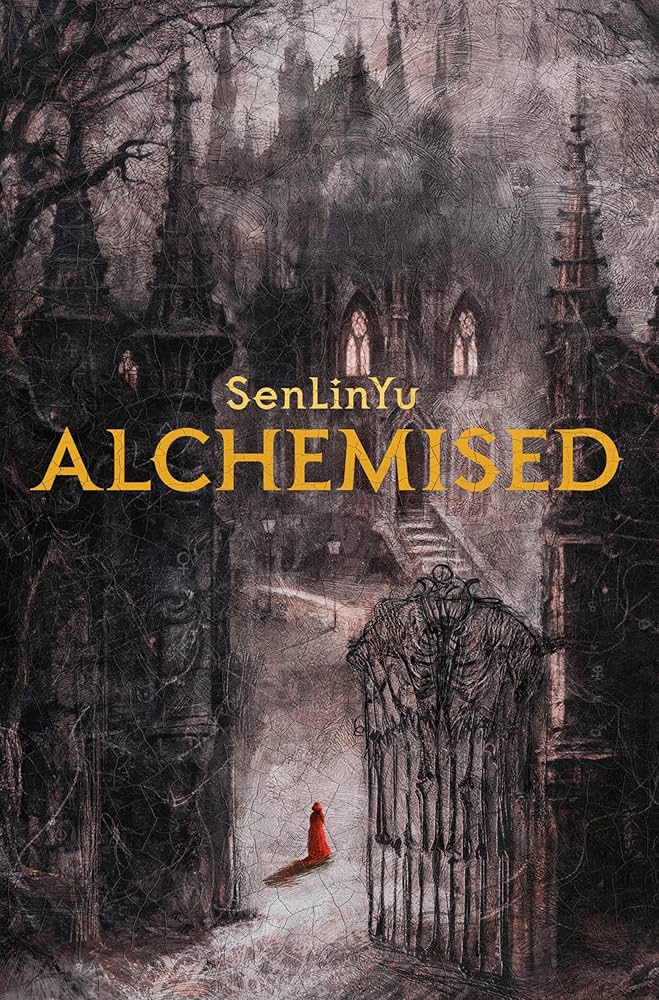
So, yeah, okay, I finished it, and it’s a thousand pages long and I have a full-time job and I still finished it in less than a week, and because of that I can’t really call it bad, but … if you weren’t going to buy this anyway, don’t let anyone talk you into it. SenLinYu is a perfectly cromulent author and no one would ever read this book and figure out on their own that it was originally brought into the world as Harry Potter fanfiction, but it’s way overhyped, at least from my perspective. I keep seeing videos about people who were in tears for the last two hundred pages or whatever, and I feel like these people need pets or significant others or something, because in the end it’s just a book and it’s being treated like a life-altering event online. I said in my first post that I was buying this out of FOMO, and I’ve got to stop doing that. I’m never going to be missing out if I don’t read a book TikTok likes.

(I deleted the app again today; we’ll see how long it lasts this time.)

Again, it’s not awful, but it’s definitely romantasy despite all the people insisting that no, it’s dark fantasy— I’m pretty sure “dark fantasy” is just romantasy with at least one rape scene to these people– and I’m tired of romantasy as a genre. It’ll look good on my shelf, and I didn’t hate it like I figured I would, but those are the best things I have to say about it.

In which I started with Pong

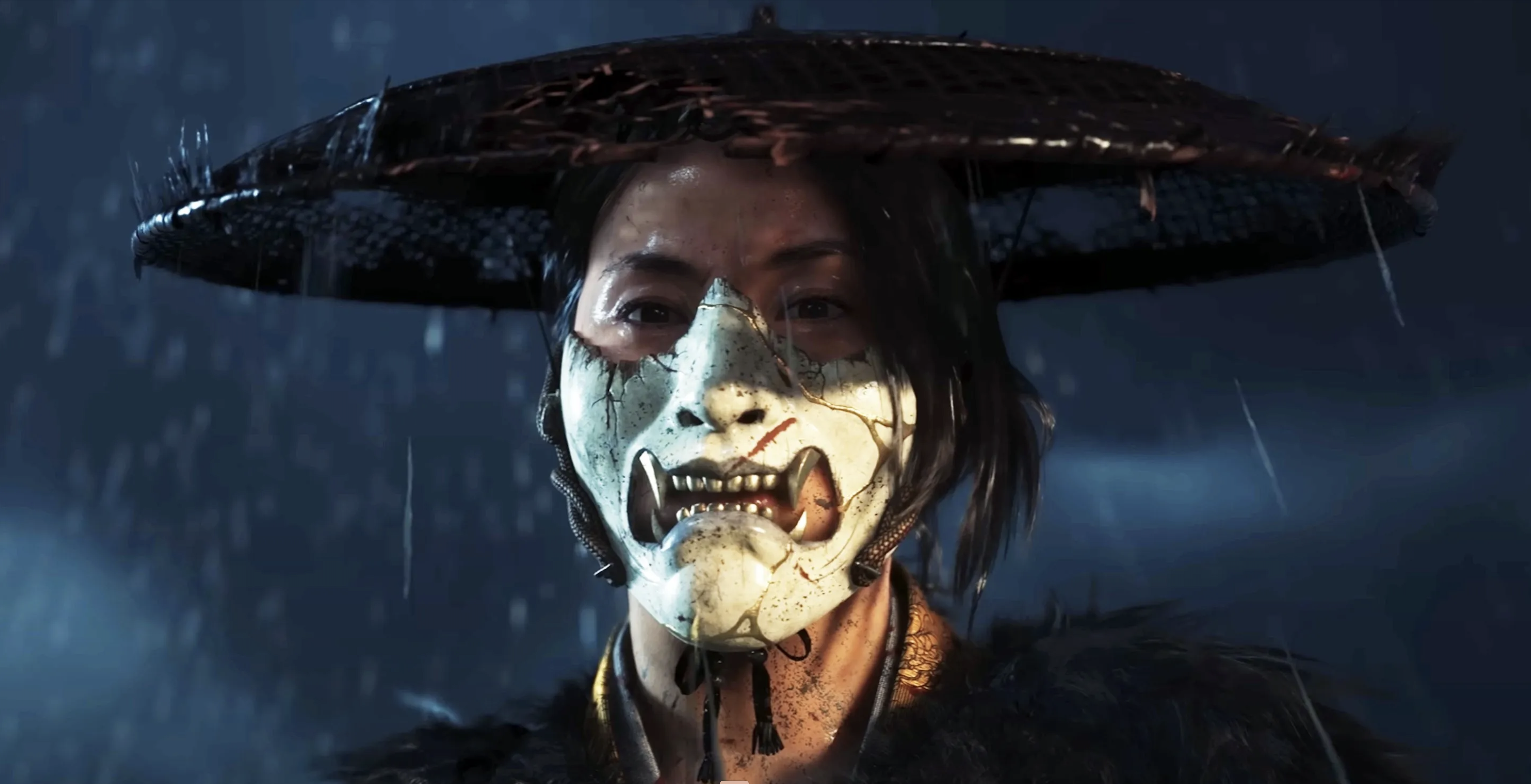
I’ve been playing Ghost of Yotei during my scant free time lately— it’s kind of nuts how busy the last couple of weeks have been, now that I think of it– and so far, about ten hours in, it’s at least the equal of Ghost of Tsushima, its predecessor, one of the best games I’ve ever played. If you go look at my review of Tsushima, you’ll notice I keep harping on how amazing the facial animation is– and, yes, I used the same line about Pong, which will keep being relevant until I stop playing video games.

I hit a moment last night that absolutely floored me, to the point where I decided I needed to be done playing for the night because there was no way anything else I was going to do in that session was going to top it. I’m going to dance around some spoilers, but I’ll do my best to be as ambiguous as possible.

There is a moment in the game where a character encounters another character who they believed was dead. And there is a good three or four seconds where you realize what is going on before either of the characters speak, just from the look in the eyes of the character realizing what is going on. Their eyes moisten, just a little bit, and the look that crawls across their face is this amazing and perfectly readable mix of disbelief, joy, relief and shame, and it is quite simply the most complex emotional moment I have ever seen a digital character convey in my entire life.

(To be clear, that’s a random screenshot above. I found some online that were from right around the moment I’m talking about and decided not to use them to avoid even that much of a spoiler.)

And this is just ten hours in. I’m sure there is more to come. That said, Sucker Punch, if you fuckers kill my horse again after what you did to me in Tsushima, we’re gonna have a problem.

#REVIEW: Making Enemies: Monster Design Inspiration for Tabletop Roleplaying Games, by Keith Ammann

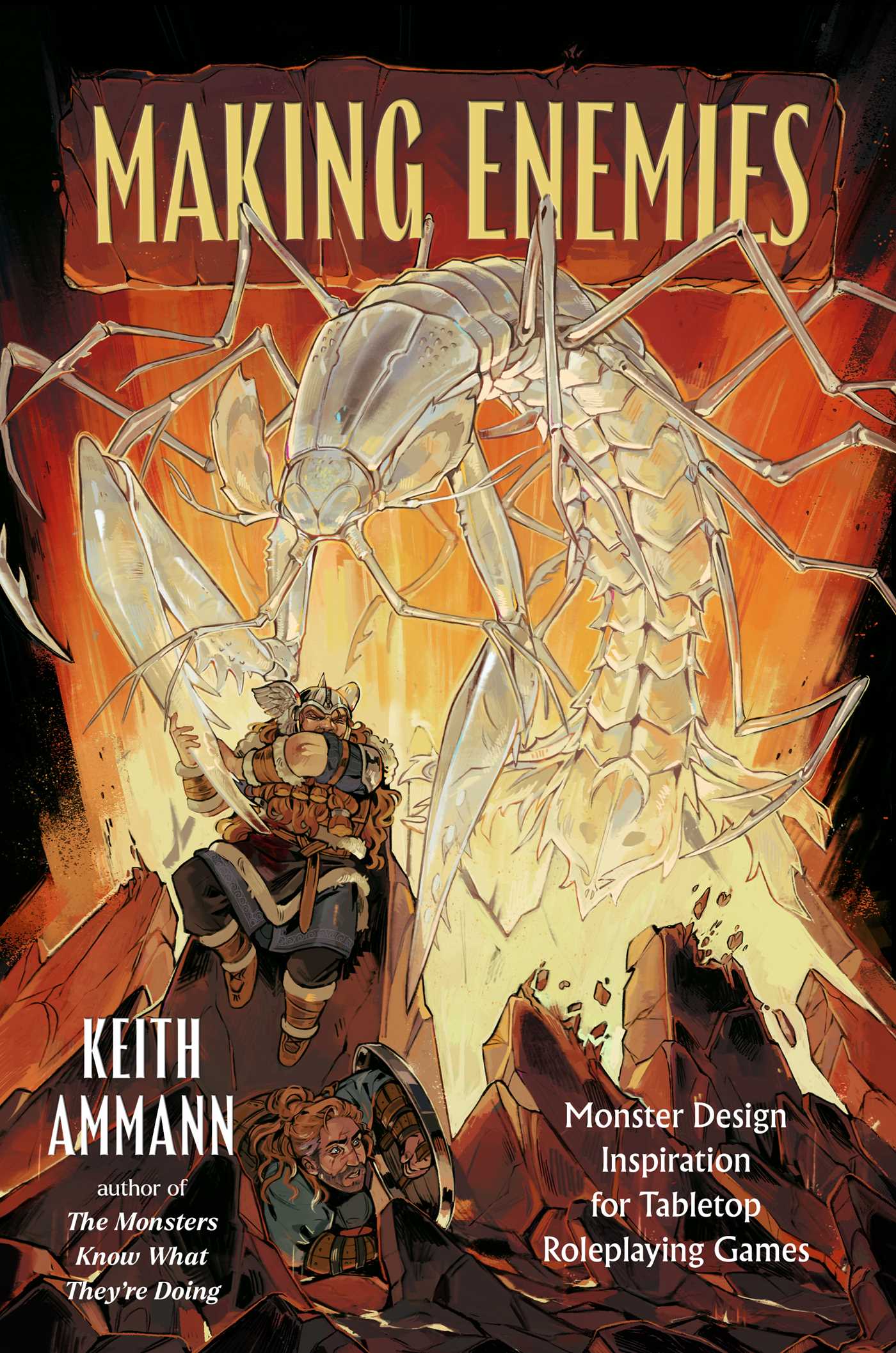
We’ll begin with my absolute favorite thing for book reviews: Disclaimers! First, that I got a copy of this book for free (it comes out on Tuesday) and second, that I’ve known the author for a vaguely shocking twenty-two years, and not in the usual parasocial Internet way that I know a fair number of authors but in a “he’s been in my apartment and we’ve worked on grad school projects together” sort of way. There’s a review of his book The Monsters Know What They’re Doing here; this is actually his fifth book, technically part of a series but, given that they’re all roleplaying sourcebooks dedicated to helping game masters for TTRPGs do their jobs better, there’s no reason to feel like you need to read them in order. I admit it; I have not read the books in between, although I intend to.

Here’s the thing about Keith, guys: Keith is one of the smartest motherfuckers guys I’ve ever met. He’s ludicrously well-read and he’s got a mind like a steel trap. If he had been born seven hundred years ago he would have been a monk and would have discovered something that we all take for granted by now; if he’d been born in the 1810s instead of the 1970s you would never have heard of Gregor Mendel. However, he was born in the 1970s, so instead of more or less inventing genetics as we know it, he writes about roleplaying games.

Making Enemies is, ostensibly, about creating home-brew monsters for your TTRPG campaign. He doesn’t limit himself to Dungeons & Dragons with this one; attention is paid to Pathfinder, Shadowdark and Call of Cthulhu, along with another system that I have to admit I’ve never heard of called the Cypher System. Each section of the book begins with a more generic introduction to/discussion of the aspect of monster design being discussed, such as morphology, abilities, size and number, quirks and weaknesses, etc; and then there will be sections afterward dedicated to the differences you’d see among each of the specific systems. I felt like Call of Cthulhu got a little shorted, as it doesn’t quite work the same way as the rest of the systems (You Are Fucking Doomed is more or less Call of Cthulhu’s entire thing, and this book is about making good enemies for your players, not killing them in seconds) and of course D&D gets a bit more attention than the others, but there’s good stuff here for everybody who plays TTRPGs.

Nothing I’ve just said is sufficient to prepare you for just how deep this book gets, over and over and over again. The chapter called Weird Nature, about monster type and morphology, could be copied and pasted into a biology textbook with barely a sentence changed. The book interrogates the entire concept of “monster” over and over again in a way that is completely fascinating and yet in some ways entirely unnecessary to a book about TTRPGs, which are generally much more lowbrow than this. There are interviews scattered throughout the book with professional game designers, and it’s stunning how high-level, no pun intended, some of these discussions get. I would love to know how much actual research went into this book that had no direct relationship to TTRPGs. My guess is: lots.

(Memo to Keith: go whole-hog on your next book. I want four hundred pages on your theory of game design. Do it.)

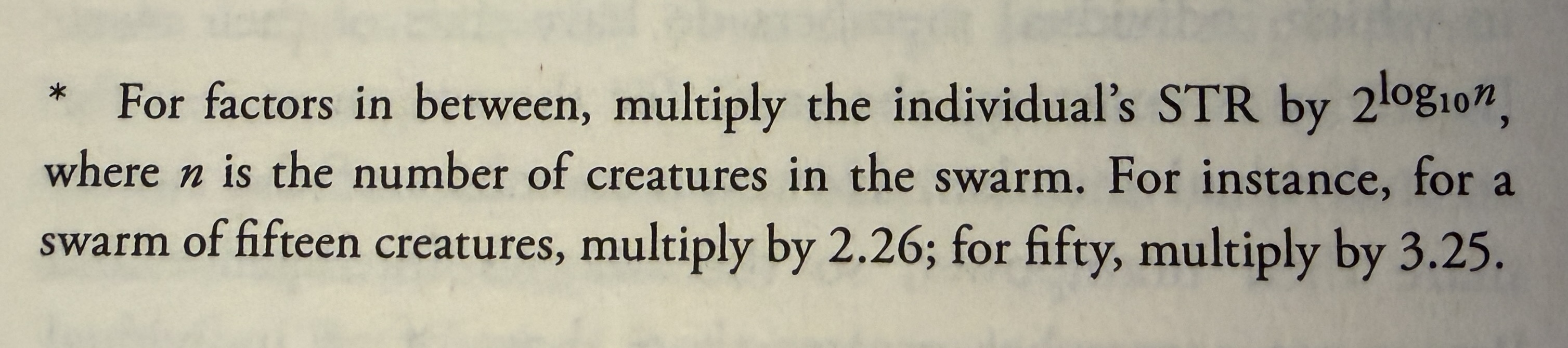
But seriously. I feel like I should have been taking notes and adding Post-Its into the book while I was reading it, and the reader of this book should be prepared to see the occasional quotes from genuine academic works of philosophy and then less than a page later an anecdote about The Muppet Show. That’s not to say that this book doesn’t have a ton of good old-fashioned in-the-weeds nerd math, because it does. Witness:

I’ve talked about this before: I love enthusiasm. My favorite thing about TikTok is how great of a vehicle it is for people to share activities they love with other people. And the reason I feel so comfortable recommending what by rights ought to be a very niche book to literally everyone I know who reads is that Keith’s incredible enthusiasm for game design and TTRPGs shines through every page of this book. I enjoyed The Monsters Know What They’re Doing quite a bit and recommended it, but I was clear (and so was the book!) that it was a book for people who ran TTRPG games. I think there are people out there who would enjoy this regardless of what they’ve done in the TTRPG space; if you consider yourself an autodidact and an intellectual (dare I say “polymath”?) you may find yourself skipping the weedier sections here and there that get into specifics about the systems, but the interviews and the beginnings of every chapter and the relentless attention to careful thinking throughout are going to bring a smile to your face.

Making Enemies comes out October 7th. Check it out.

#REVIEW: You Weren’t Meant to be Human, by Andrew Joseph White

I three-starred this. But keep reading.

Every so often, when you are in the habit of reviewing things, you encounter something that sort of breaks your review system. Most of the books I read get rated four or five stars, because I have been reading books for my entire life and I have gotten pretty good at picking books that I am going to like. Five stars is a book I really enjoyed and will recommend to people. Four stars is a book that I enjoyed but had some flaws or for whatever reason I feel less likely to talk about. Three stars is a book that was just kind of there; two stars, a lot of the time, was a DNF, and one star was a book I actively loathed and wish to punish.

You tell me: how do I star-rate a book that I personally really did not enjoy reading, but nonetheless recognize as a well-written book that may very well be appealing to other people? Because I have no damn idea, really. You Weren’t Meant to be Human is body horror. It’s about a trans man who gets pregnant. That’s already a body horror situation well before we get to the variety of mental issues that the protagonist, Crane, has. And to avoid being misunderstood, by “mental issues,” I do not mean the fact that Crane is autistic and very nearly nonverbal. No, I’m talking about the rape fantasies (as in fantasizing about being raped) and the degrading sex and the self-mutilation. If you’ve ever needed to read trigger warnings, go nowhere near this book. There are warnings at the beginning of the book, and they are extensive.

It floated through my head at one point that this is the book that TJ Klune would write if TJ Klune was KM Szpara, but I’m not convinced that makes any sense.

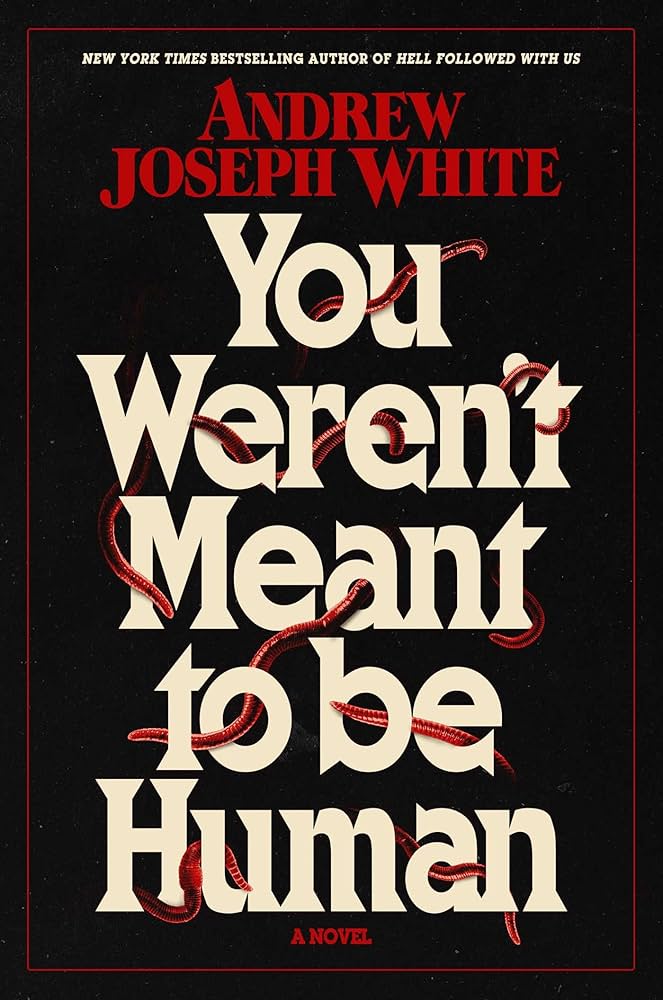
In addition to … all that, see those worms on the cover? Crane is part of (kidnapped and forcibly inducted into? Maybe.) a cult that worships, or at least … cares for? this possibly-alien hive mind intelligence that exists in our world mostly as a horrifying conglomeration of bugs and flies and worms and other grotesqueries. Crane knows who the (other) father of his baby is, but at the same time he spends most of the book convinced that he’s about to give birth to a giant slug or perhaps just a giant knot of maggots. The cult does a lot of murdering so that the hive has stuff to eat, and for most of the book Crane is protected/guarded/imprisoned by what is effectively a Frankenstein’s monster cobbled together from the people they’ve fed to the thing. The Frankenstein is named Stagger. Crane occasionally fantasizes about fucking it and there’s at least one sequence where he at least comes close. I’m not going to go back and reread to clarify my memory here.

Y’all, I’m okay with it if I never read another body horror again. I’m good. I’m happy with naming this book the pinnacle of the genre and then never touching it again. This is one of the most brutal and harrowing books I’ve ever read and has one of the most shocking and grotesque endings I’ve ever seen (which, now that I think about it, did get a bit of foreshadowing) and I did not enjoy one single second of reading it.

I’m not sure this book is supposed to be “enjoyed,” is the thing, which is why I’m not comfortable with panning it and why I more or less devoured the fucking thing in one sitting rather than putting it in the freezer and forgetting I ever saw it. A lot of the reviews I’m seeing for it are positively rapturous and the thing is I don’t necessarily disagree with them. I just …

*shiver*

Yeah. No more, thank you. That’s enough of that. But if you feel like you might be into this? I’m not mad about it.