#REVIEW: The Will of the Many and The Strength of the Few, by James Islington

I make bad decisions, guys, and it seems like James Islington’s books are just absolutely committed to proving that at their every opportunity.

Islington has written, to my knowledge, five books. I own six of his books. I have read three and a quarter of them. I have liked one of them. I bought and read The Shadow of What Was Lost, the first book of his Licanius trilogy, three years ago. I did not like it very much, but the book as a physical object was remarkable, and I bought the entire trilogy before finishing the first book. I made it, if I remember correctly, less than 25% of the way through the second book before deciding I was done and putting it away. Other than placing it on the shelf and perhaps moving it to a different shelf once or twice, I have barely touched the third book and have never opened it.

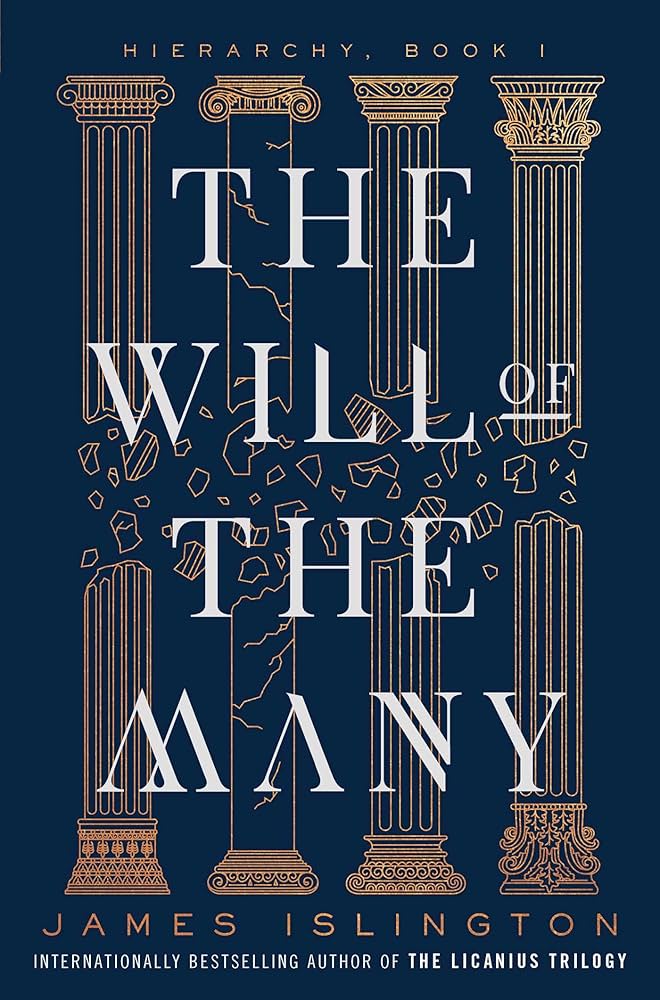
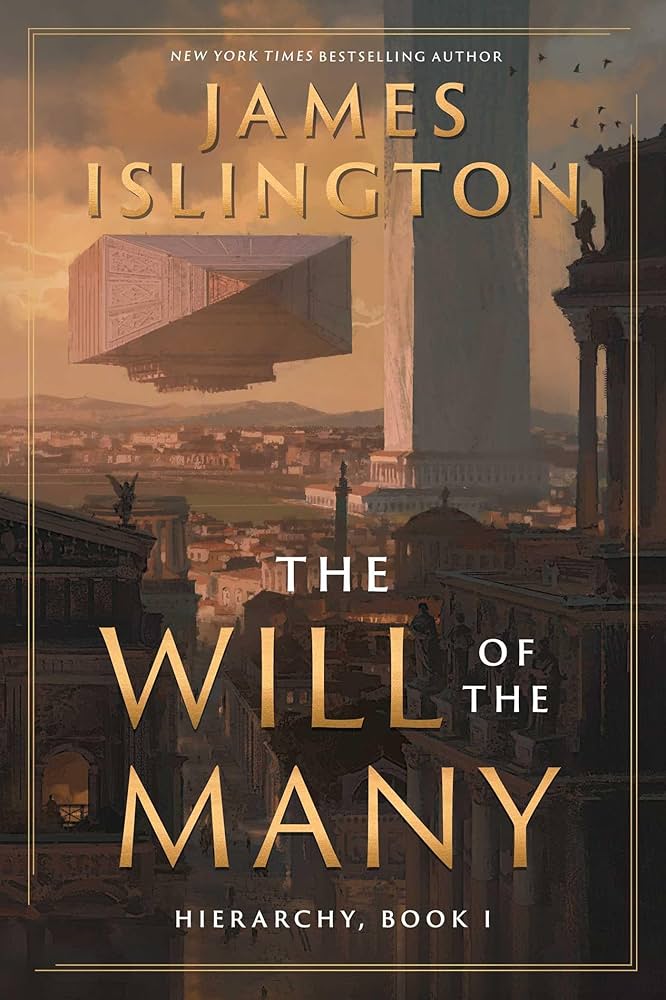
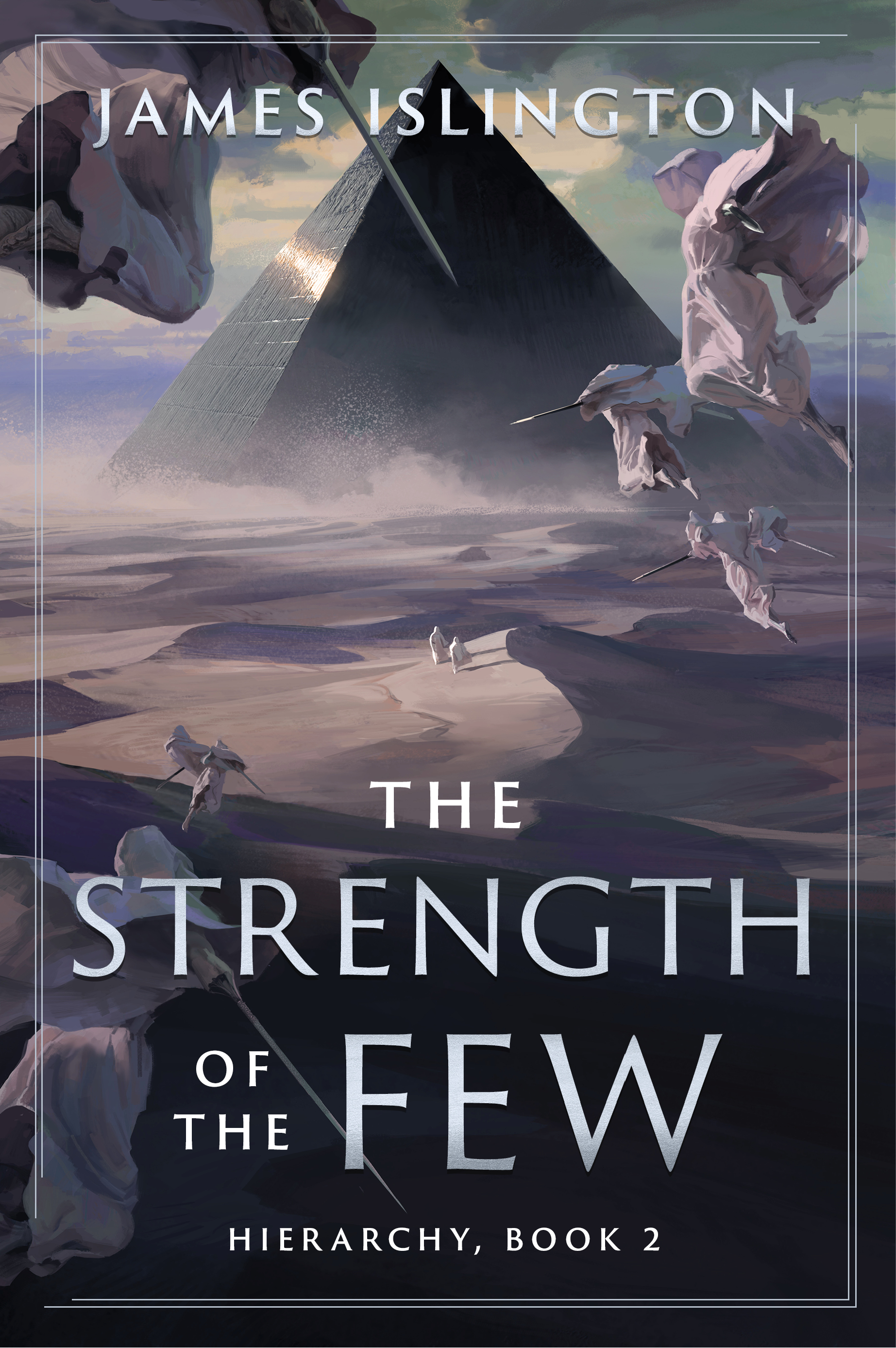
Somehow, this did not prevent me from buying The Will of the Many when it came out– and I bought the original cover, the one with the columns up there. I read it and quite liked it– the world building was a little shallow, and the plot not especially unique; every “brilliant young person goes to a Special School” book is gonna have some major similarities, but the Rome-inflected world was at least interesting if, again, not very deeply thought-out, but whatever.

Then I started seeing the book on shelves with a whole new cover. You know this about me; I like my shit to look nice and clean, and midseries changes to covers annoy me tremendously, and I didn’t want to buy a second copy of the first book just to match the second on the shelf.

And then they made an announcement that all copies of The Strength of the Few would have reversible covers, one to match each version of the original cover! My understanding is that Islington himself was behind that decision, which I both support and tremendously appreciate. My man knows his audience! Good on you.

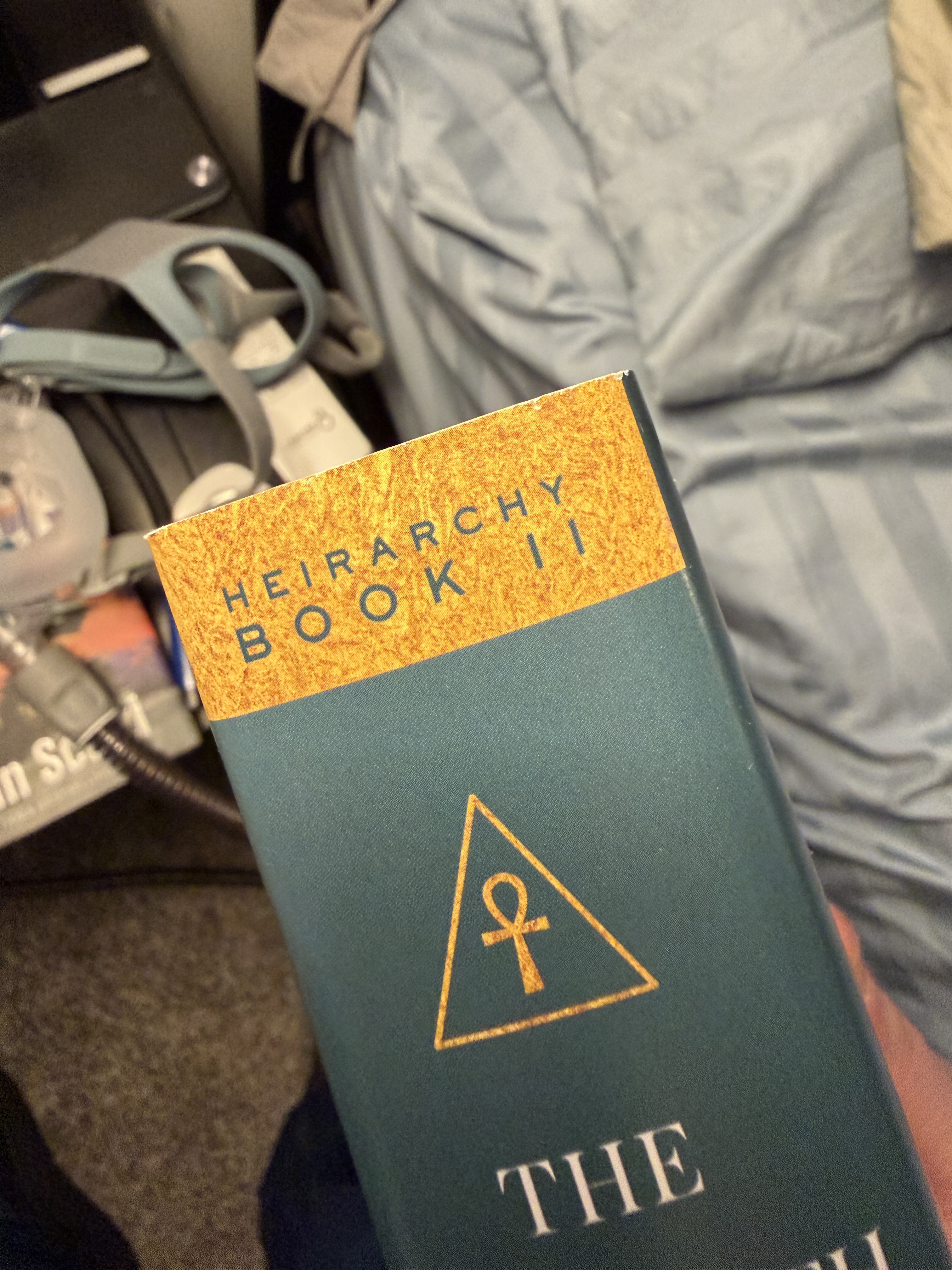
The fucking word “Hierarchy,” the title of the series, was spelled wrong on the spine.

I swore– a lot– and then said “Fuck it, this is why I have a job” and bought a new copy of the first book so that it would match. I cannot display a fucking spelling error on my bookshelves. Unimaginable.

(Right about here is where I’m going to stop reviewing myself and start reviewing the books, btdubs.)

I decided that since I was getting a new copy of the book anyway, I’d reread Will before diving into Strength. This, I feel, was the right move. I read so much that most of the time I have read literally hundreds of books in between any given book and its sequel, which means that I frequently don’t enjoy sequels as much as I should because I simply don’t recall the first book as well as I should. And I’d already had one Islington series go sour on me, and I didn’t want it to happen again.

The Will of the Many was an excellent read the second time through as well. It’s a genuinely good book. I stand behind it.

The Strength of the Few … was not. I’ve got it three-starred on the various book services right now and I genuinely might move it down to two. And the most frustrating thing is that a lot of the problems with Licanius are showing themselves again in Hierarchy. It was okay that there wasn’t a whole lot of clarity about how the wider world worked in Will, because the main character was confined to this little school on a tiny island and wasn’t really interacting with the wider world, so when you’ve split the … government? into Religion, Governance and Military and not really defined what it means to be “in Religion”, or when you have a couple of characters who are in the Senate, because this world is based on Rome somehow so there has to be one of those, but haven’t actually really said what the Senate is for, you can get away with it. But you’ve got to broaden that scope out in any sequel, especially when you end Book One, which was mostly a hunt for What Really Happened to the MC’s adoptive father’s brother, by splitting the entire universe into three parallel planes. At that point, I would like to understand how all this works. The main character exists in all three worlds in book two, only at least two of the three versions of him don’t know that he’s in all three worlds, and one of them is Egypt-except-not, and one of them is, bewilderingly, Wales-except-not.(*)

It means that the world you’ve learned about in the first book is only a third of the second book, and the other two worlds genuinely aren’t very interesting (not-Egypt is better than not-Wales, but not by much) and that’s before he starts sidelining and/or killing every interesting female character in the first book, and it’s also before you hit the No One You Thought Was Dead Is Still Dead part of the book, which is just fucking annoying.

There’s also a form of magic called Will, and an interesting setup in not-Rome where society has organized itself into pyramids where everyone pledges part of their Will to the people above them, and Will does stuff but it’s not entirely clear that Islington has figured out the parameters of what it can do, nor is it clear to me why holding someone’s hand and saying “I cede you my Will,” or whatever the code phrase is, lets them take part of your life essence away from you. It’s rigorously codified without actually making a whole lot of sense, which is not a great combination. I feel like if you poked the whole system too hard it would collapse.

(Even the school the MC attends in the first book was … kinda sketchy, as far as the worldbuilding goes. It’s also organized into tiers, and the MC moves from seventh tier to third over the course of a single semester, but everybody seems to be the same age and it’s not at all clear how often or even whether anyone graduates, or how long they’re supposed to be there, or really even what they’re studying; dude mentions that his classes are getting harder a few times but never really says why, and nothing is ever difficult for him, really.)

I damn near DNFed the second James Islington Series Volume II in a row, is what I’m saying here. It’s just not nearly as good as the first book, and again, much like the first series, I feel like the central conflict is not well defined here. The first book was a pretty straightforward “find out what happened to this guy” thing, and it got more complicated than that but that was basically what was going on. Now there’s a Cataclysm every three hundred years (what happens during a Cataclysm? Bad stuff, but … don’t ask what kind! People die, alright?(**) It’s bad!) and apparently we’re going to stop it somehow, I guess, and something something worlds got split up, and …

<spits>

Blech.

Again, I’m an idiot, so I’ll probably pick up the third volume when it comes out (I hope there are only planned to be three, but who knows) just for completeness’ sake, because it would really piss me off to have two copies of the first book, one of the second, and not have the third) but I think I probably have to be done with this guy after that unless everything really turns around.

(*) This got me thinking about how Rome and Alexandria, two massively different cultures, are only 1200 miles apart. That’s about the distance from northern Indiana to Houston.)

(**) The phrase “all right,” which is two words, not one, and I will let you get away with “alright” in dialogue but not much else, is misspelled every single time it appears in both books. I hate it.
Very quick #REVIEW: Ghost of Yotei (PS5, 2025)

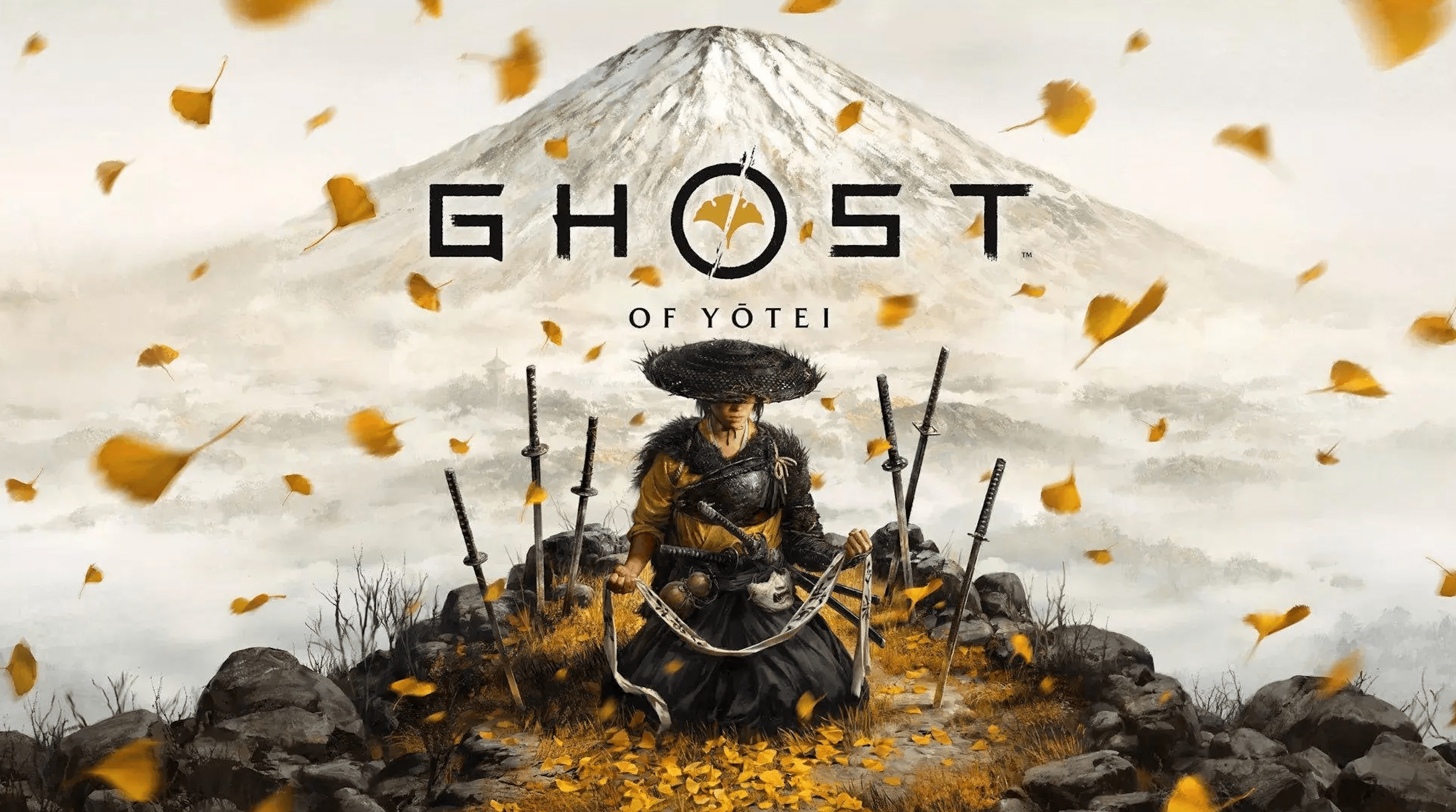
Game of the God damned year.

I mean, come on. This year had some slight competition, but there was no way that the sequel to Ghost of Tsushima wasn’t going to be my GOTY. It’s not close. This was the sequel to one of the best games I’ve ever played and was at least of equal quality. The only thing holding it back from being obviously better than the original was I had some idea what to expect going in.

Absolutely fucking amazing. Fifty-eleven stars out of five.

#REVIEW: The Place Where They Buried Your Heart, by Christina Henry

My Aardvark book box subscription scores again; the books from this service have consistently surprised me with their quality, especially the horror novels, which have produced some of my favorite books of the year– books that I’d never have come across were it not for the club.

I need to get something out of the way first, though. This is a haunted house book. It’s a pretty damn effective haunted house book. You can really stop reading here if you want! You probably already know if you like good haunted house books, and if you are that guy, go grab this.

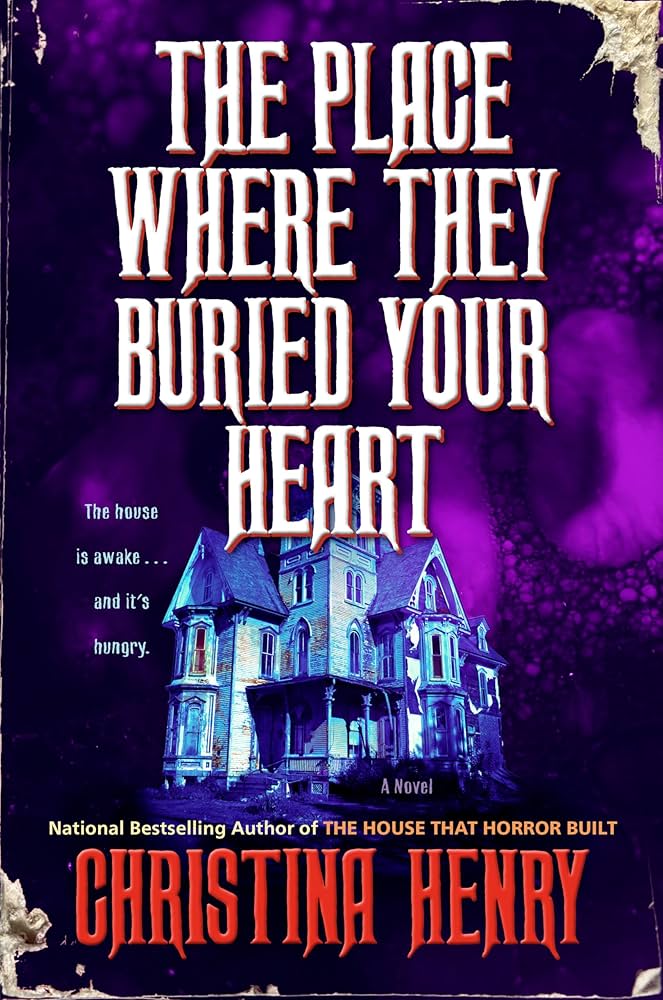
That said: the verb that keeps getting used throughout this book about what the house does to people is eats. The house eats people. The main character is Jessie Campanelli, fourteen years old at the start of the book (and living in a neighborhood near where I lived in Chicago, and in high school in 1994, which was the year I graduated, so this book hits home in a few places) and sick at home in bed, when she dares her annoying little brother to get a couple of his friends and go spend half an hour in the creepy old house down the road.

One of his friends loses an arm. Paulie is never seen again. The house ate him. And it’s immensely creepy and atmospheric in the book, but God help me, every time I saw a reference to the house eating someone, I was reminded of this:

(Forgive me, please, Christina Henry; your book is way way better than Death Bed: The Bed that Eats, which Oswalt gets the name of wrong every time he mentions it, but I couldn’t get past the eating.)

Jessie, who is an adult with an elementary-aged child by the end of the book, spends her life living in the house she grew up in, and Paulie’s death reverberates throughout the book, leaving scars that eventually rob her of her entire family and bring her one of her own. The book does a great job of capturing the kind of working-class, multi-generational families that Chicago’s neighborhoods are known for, and the relationships, bad or good, between Jessie and the rest of the characters in the book are a definite highlight. Jessie herself is kind of a mess, but she’s earned it, and her determination to better herself and keep her son safe is kind of inspiring.

I read this book in about four hours, a hundred pages before bed and the rest this morning before I was able to do anything else. It’s hard to put down, and the pacing is masterful. It’s creepy as hell throughout, and if anything I could have gone for another fifty pages or so to beef up the ending a bit. The book doesn’t quite fumble the finish, but the ending does feel a little bit rushed, which is my only real complaint.

I missed spooky season with this one– I should have read it in October– but you should check it out anyway.

(Okay, one thing: to be completely clear, there are gonna be some dying and/or threatened children in this book? Paulie isn’t the only one. If that’s not your bag, avoid. Consider this your trigger warning.)

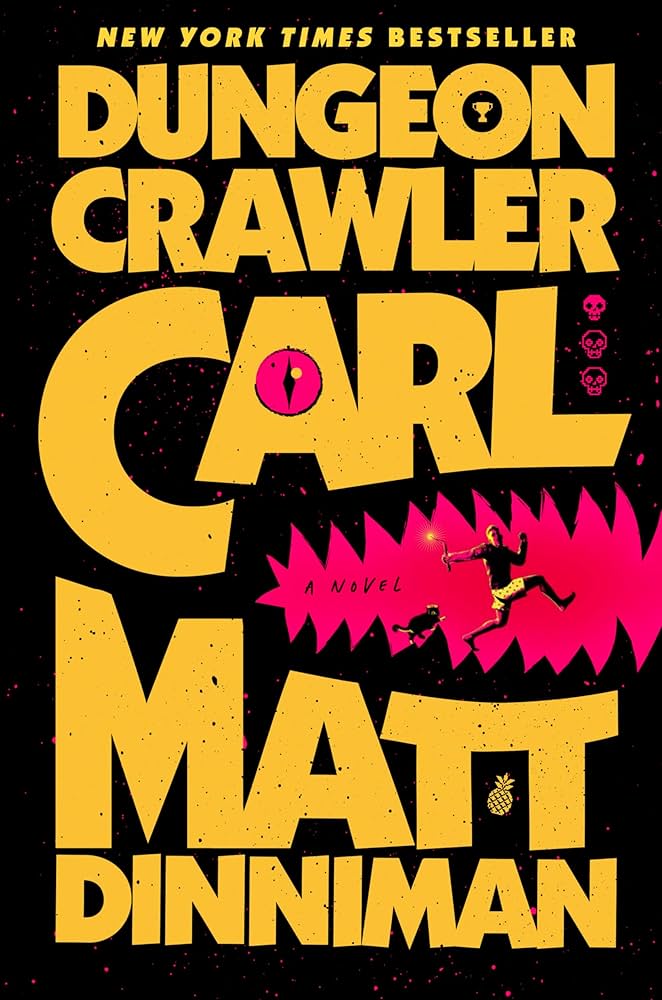
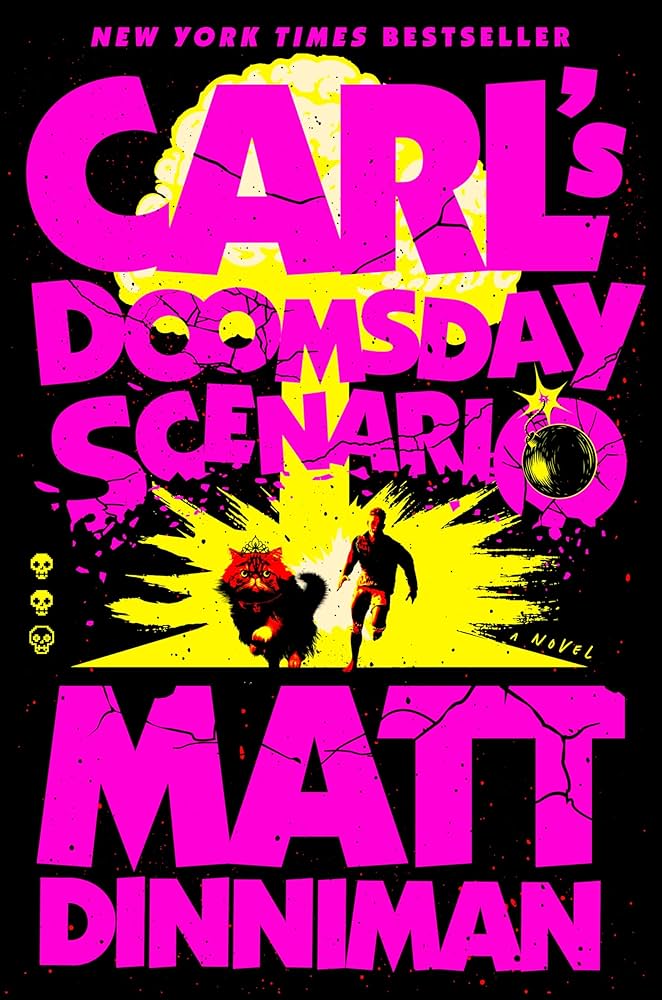
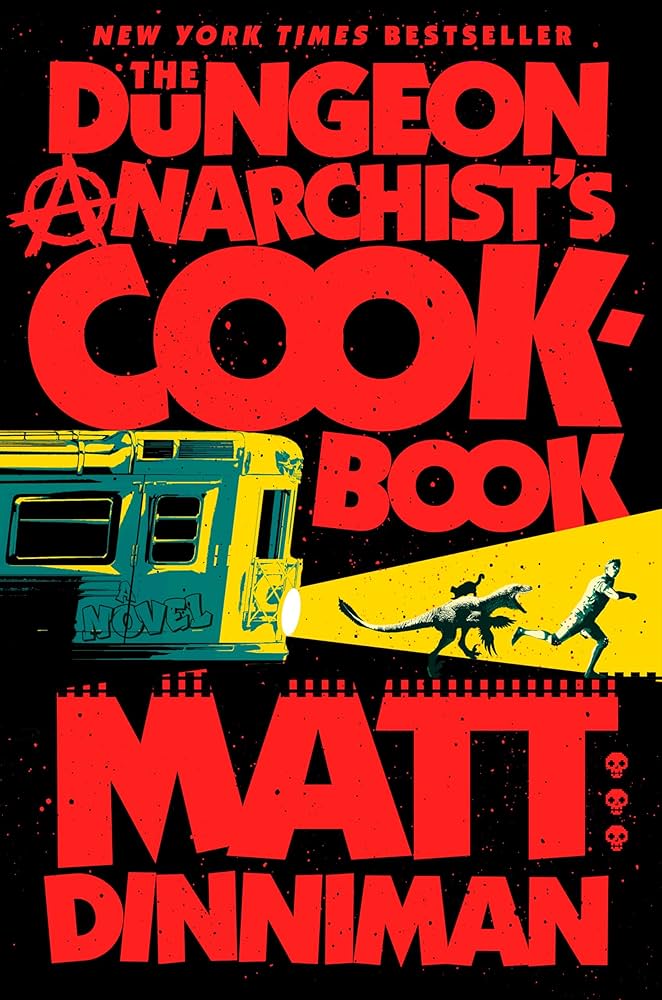
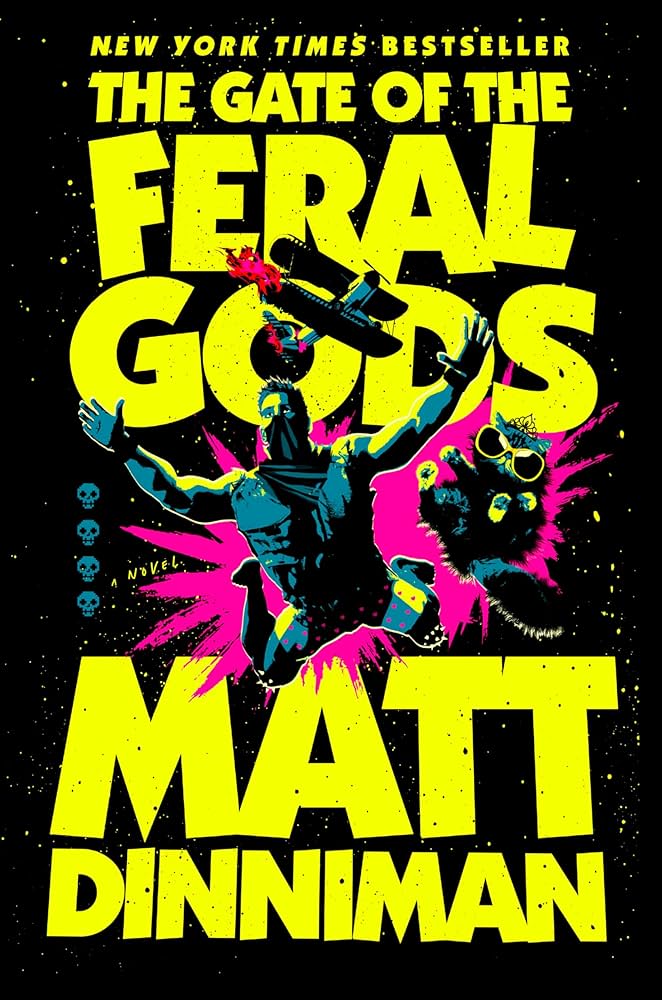
On Dungeon Crawler Carl

Wow, that’s bigger than I thought it was going to be.

Oh well. Scrolling’s free.

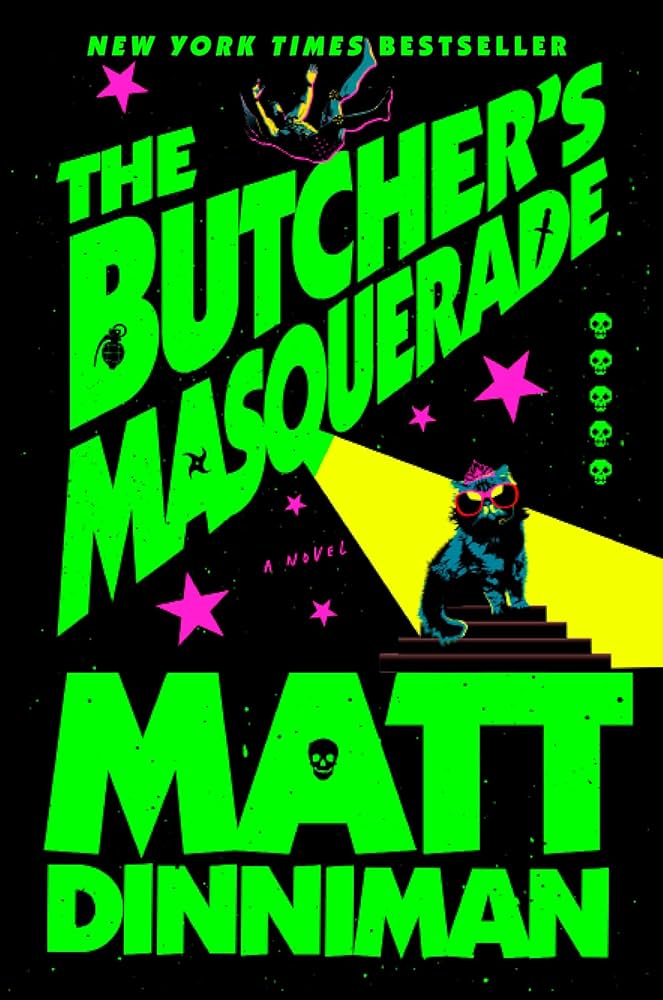
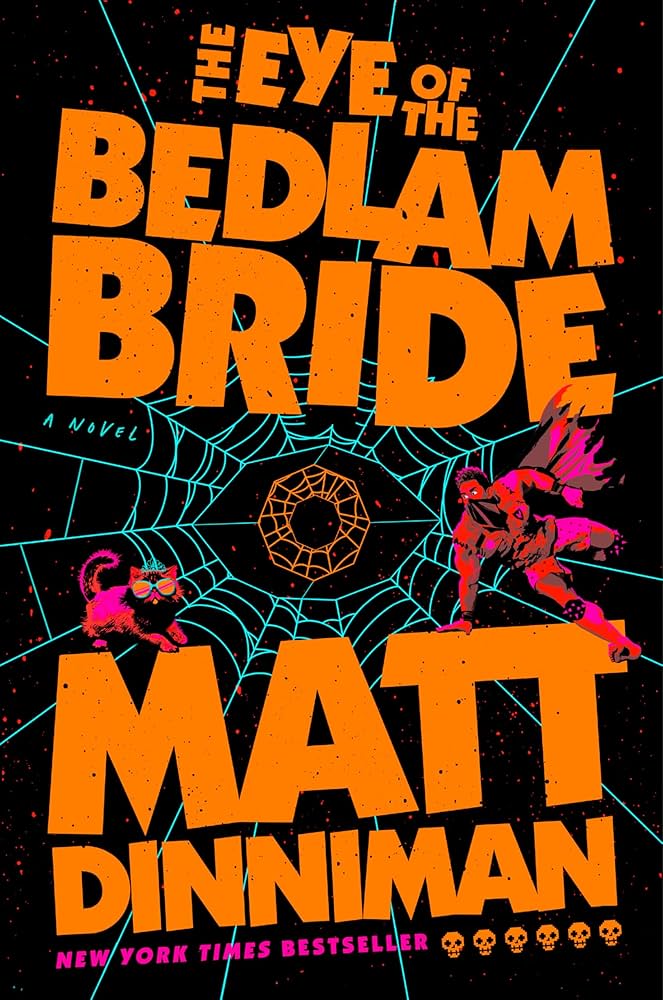
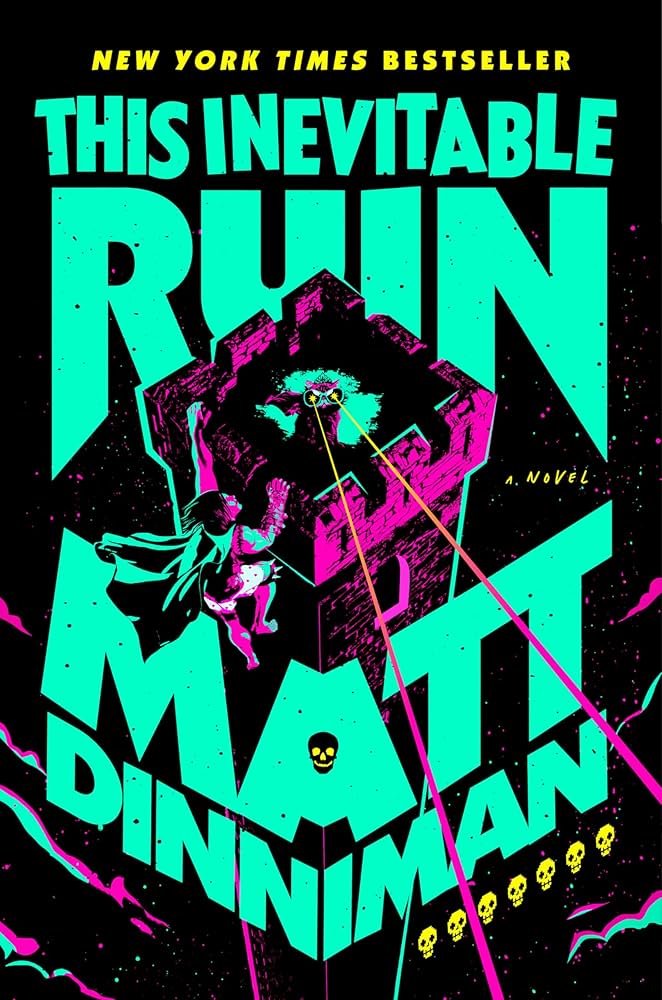
I finished the seventh and most recent book in the Dungeon Crawler Carl series last night, staying up too late to do it. The eighth book comes out in June; I pre-ordered it the literal first day it became available to do so. Dinniman has an unrelated book, Operation Bounce House, coming out in February, and I’ve preordered that as well. The series is currently expected to be ten books, and apparently might be eleven.

I don’t think I’ve reviewed any of the books as I’ve read them, and I don’t really intend for this to be a review yet either, as a multi-book review really ought to be for the whole series and even as fast as Dinniman seems to write, we’re at least two or three years away from that. I will say this, though: I started this series mostly out of FOMO, something that y’all know good and well catches me on books all the time. I don’t like not reading good books, even if their premise– aliens invade Earth and a guy and his cat get thrown into an intergalactic competition that somehow mimics the genre tropes of role-playing video games– is completely ridiculous. “LitRPG” is its own entire genre; having read and enjoyed eight books in it, other than reading more of Dinniman’s work in the future I have no plans at all to dip my toe into any other examples of it.

I’ve been reading about a book a month in this series since picking up Dungeon Crawler Carl in May. The first one was at least a little bit against my will; I wasn’t expecting to like what I was reading all that much, but again, FOMO.

I plan to restart the series in December so that I can have read it twice by the time A Parade of Horribles comes out. My wife picked up the first book on a whim a couple of months ago and is currently reading book five, and she’s read them back to back to back to back to back. Which means the same as “back to back” but sounds like more of a feat. This is not a thing she does, guys.

These books have no fucking right to be this good. They’re too ridiculous and too raunchy to be as good as they are. And yet somehow this series is the best new thing I’ve encountered in a long time, and having read four thousand pages of this series this year I am about to start over and do it again.

Plus Bounce House and the first book of another series of his called Kaiju Battlefield Surgeon, because right now Dinniman is tied with BrandoSando for the author I’ve read the most books from in 2025, and I can’t let Sanderson win that contest.

Just do it. Trust me. Put aside your reservations and pick up the first book. The whole series is on Kindle Unlimited if you happen to have Amazon Prime, so you don’t even have to pay for it. Get them from the library. I know, I know, this feels like it has to be dumb as hell. Go give them a shot anyway.

#REVIEW: The Ballad of Buster Scruggs (2018)

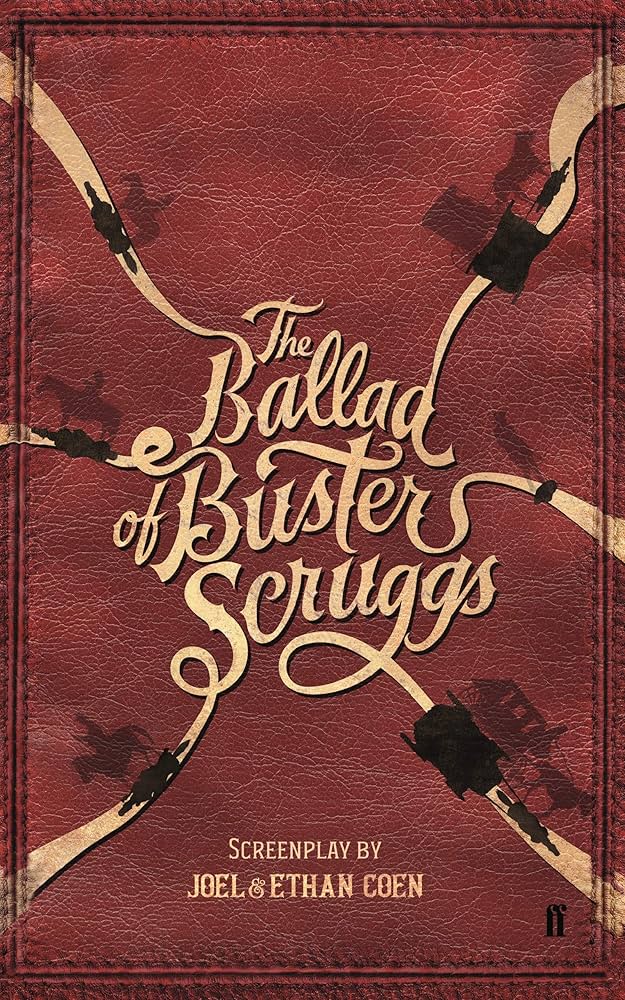
In case it hasn’t been clear, or, like a normal person, you aren’t obsessed with my media consumption, I decided recently that I was tired of complaining about how I don’t watch movies any more, and instead I was going to watch more movies. And because nothing in my life can’t be mined for blog content, I might as well review them too. I missed last week, but this weekend’s movie (or today’s, at least; maybe I’ll make up for last week tomorrow) was The Ballad of Buster Scruggs, written and directed by the Coens.

I only know this movie exists because of TikTok, which has served up numerous snippets of Tim Blake Nelson’s titular Buster Scruggs, a white-garbed, polysyllabic desperado with a penchant for murderous improvisation and bursting into song at the slightest provocation. What I didn’t realize was that this movie is actually six unrelated vignettes, all set in the Old West, with the framing device of a book of short stories called The Ballad of Buster Scruggs.

Sadly, the book itself is fictional; each vignette begins and ends with a slow pan into the first or last page of the story, and what text that’s there aroused my attention and would surely have acquired my money had the book actually existed to be bought.

The stories themselves range from the comic and musical (Scruggs) to what really feels like supernatural horror (The Mortal Remains) to a couple that are more firmly reality-based and tend toward the dark and depressing. The second, Near Algodones, is the only near-miss of the bunch; James Franco’s bank robber character is not terribly interesting, and while the visual of a deranged bank teller protecting himself from gunshots with armor made from cast-iron pans is hilarious, the story is slight enough that I couldn’t remember it just now and had to look for a list of the vignettes to get myself to six.

As it turned out, I had already unknowingly seen Scruggs nearly in its entirety on TikTok, and I was a little worried after Algodones, but the last four vignettes are uniformly fascinating and well worth the cost of a subscription to Netflix and two hours out of my Saturday. If you like Westerns or the Coens’ previous output, it’s well worth your time.

Some quick book reviews

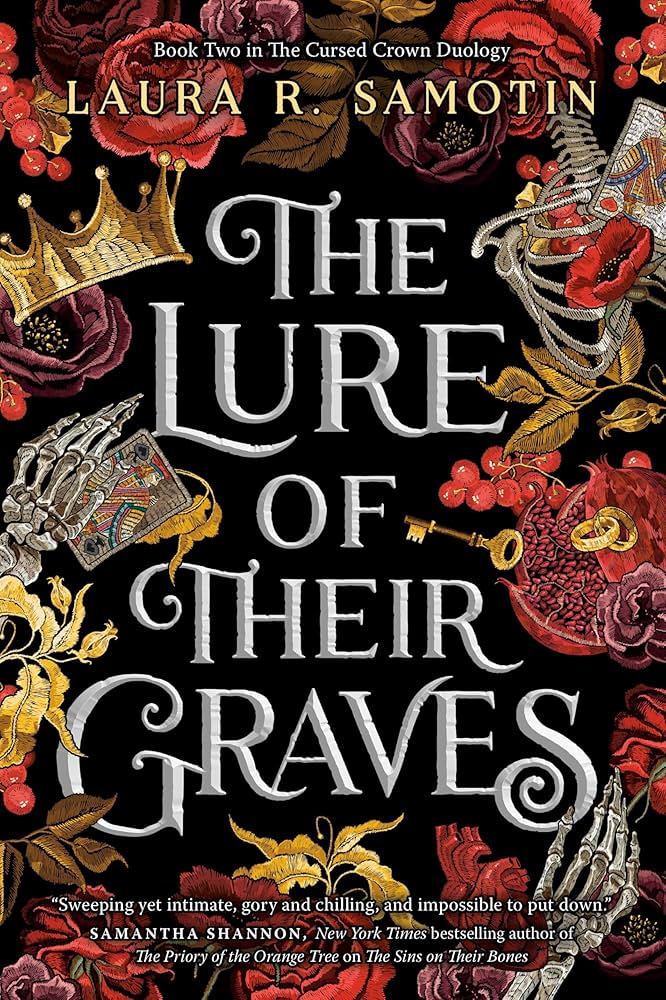
In April of last year, I reviewed Laura R. Samotin’s The Sins on their Bones, which I was sent an eArc of by a publicist. I liked it enough that I finished it in six hours and immediately ordered a physical copy of it, and while it’s been sitting on my shelves for a minute or two, I got the sequel on release day as well.

And … well, I could literally rewrite the previous review more or less word for word for this book. I finished The Lure of their Graves in an hour before going to sleep last night and a few hours across this morning and afternoon– less than a day, easily– and if I talk about it much it’s going to seem like I hated it. My gripes about the first book still apply to the sequel; everyone’s obviously Jewish but the word “Jewish” never appears; Russian only exists for the phrase moy tzar, the main character is kind of a lot, the characters in the book are supposed to be the main figures of a government but come off more like a grad school polycule, etc, etc. I’m slightly revising my initial “holy shit, this book is gay as hell” assessment; it’s gay as hell, but what it actually is is a world where literally everyone is bisexual. Sexual orientation and possibly even sexual preference effectively doesn’t exist. Dmitri Alexeyev, the Tzar from the first book (and still the tzar of the second, although he’s never going to feel like a ruler of anything at all) spends most of the book trying to decide who he should marry to keep his country and the surrounding lands stable, and the three main candidates are a man, a woman, and a nonbinary person who makes it abundantly and repeatedly clear that they are willing to swing any direction the vine can get to.

Also, I genuinely don’t get the title. It’s possible that I’m dumb, but I don’t get it.

That said, once again I enjoyed the hell out of this book and I will be reading more from Laura Samotin in the future. Yes, I know I just did nothing but complain. I contain multitudes. Deal with it.

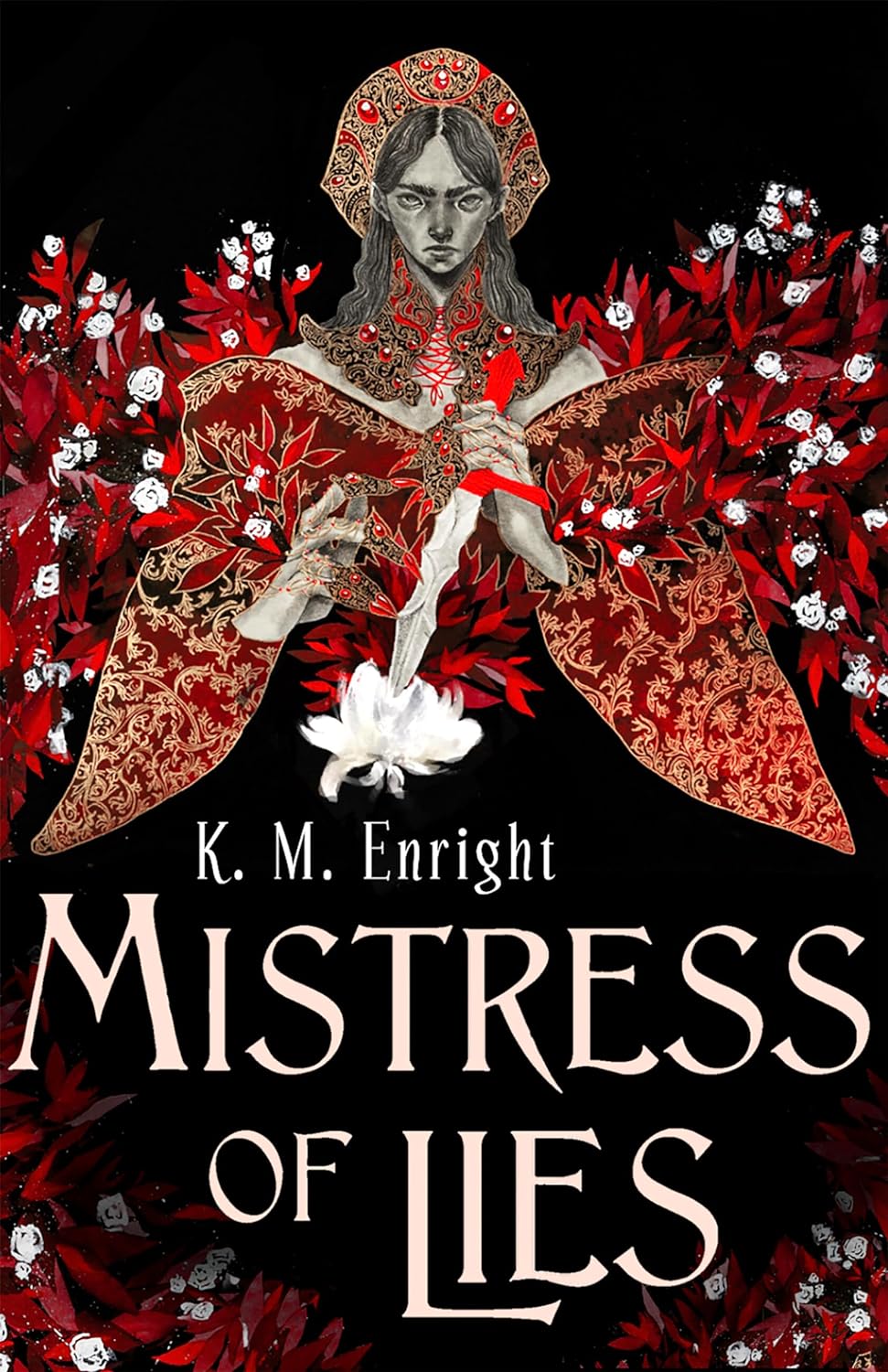
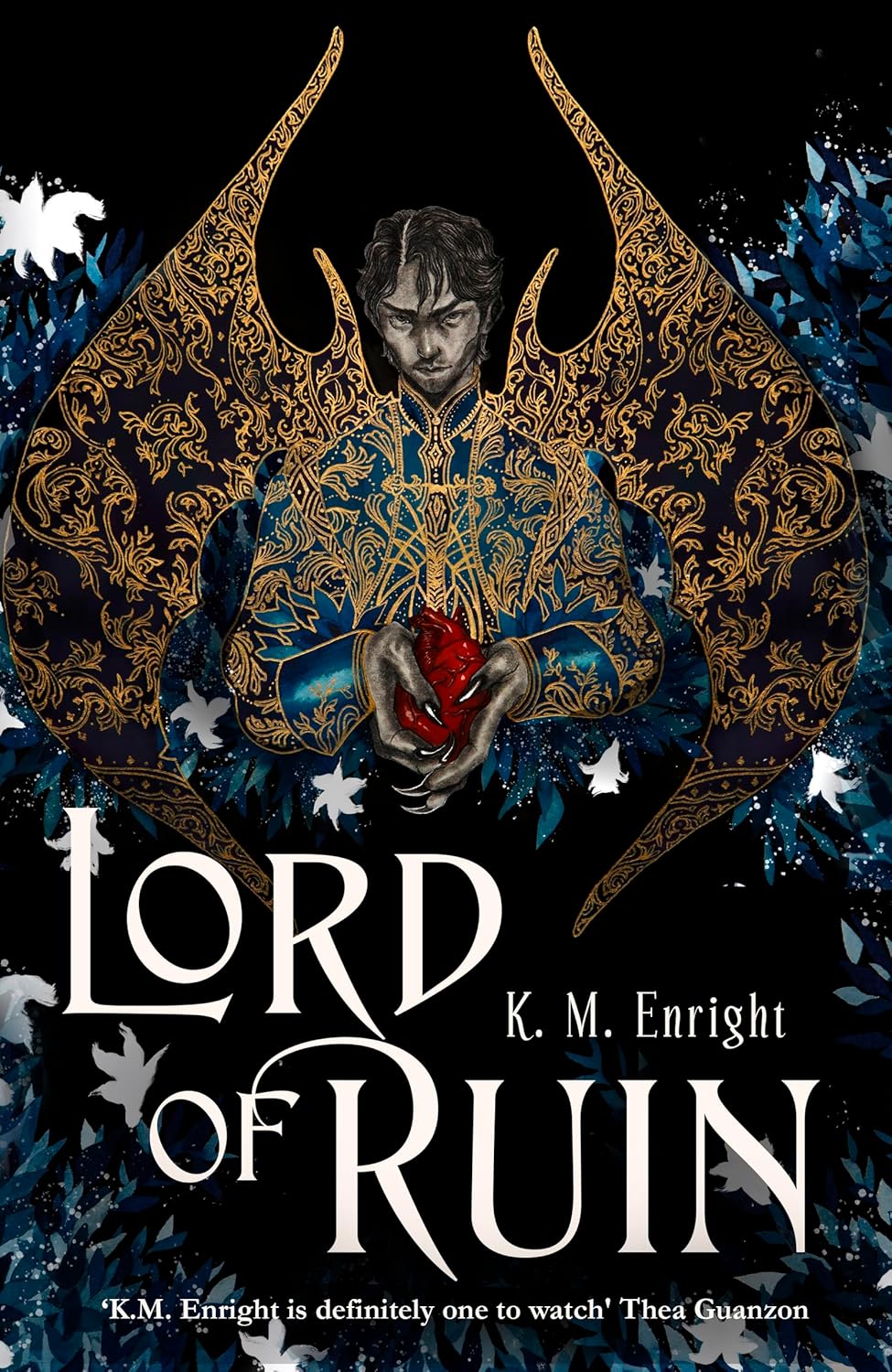
I apparently didn’t review K.M. Enright’s Mistress of Lies when I read it back in July, but I liked it quite a lot, and I finished the sequel, Lord of Ruin, yesterday, and because any time I read a Laura Samotin book I have to have weird synchronicity with the book before it, it’s also super gay and involves a spymaster and a king and an attempt at a rebellion and a fair amount of explicit sex, although this one also involves the scariest vampires I’ve ever encountered in a book (Oh, and the book before this, Coffin Moon, also involved vampires, so we’re all about the themes recently) and a Polynesian monstrosity called a manananggal that is not something that your nightmares need to be aware of in Donald Trump’s America.

Oh, and magical trans people. I’m deliberately withholding details. But transitioning at least can involve magic– it’s not clear if it has to– and you’re going to be confused at a couple of points in this book by who has what body parts, because being trans in these books does not work like it does in the real world. Just a heads-up. The Cursed Crown books are a duology that is now finished, and Enright’s series still has one more coming. I’m definitely in.

Some Sunday odds and ends

Had an enormous traffic spike the last couple of days– yesterday was the highest traffic day in years, possibly since the Syrian refugees post hit a couple hundred thousand views ten years ago. And other than the fact that most of them were from America (with a much smaller but still weird four-day pop from Chile, of all places) I don’t know anything about any of the visitors.

It was probably a bot– I’ve also been getting a lot of traffic from China lately– but I thought bot visits didn’t count? I wish I could get more detail on my views.

Today? Dead quiet.

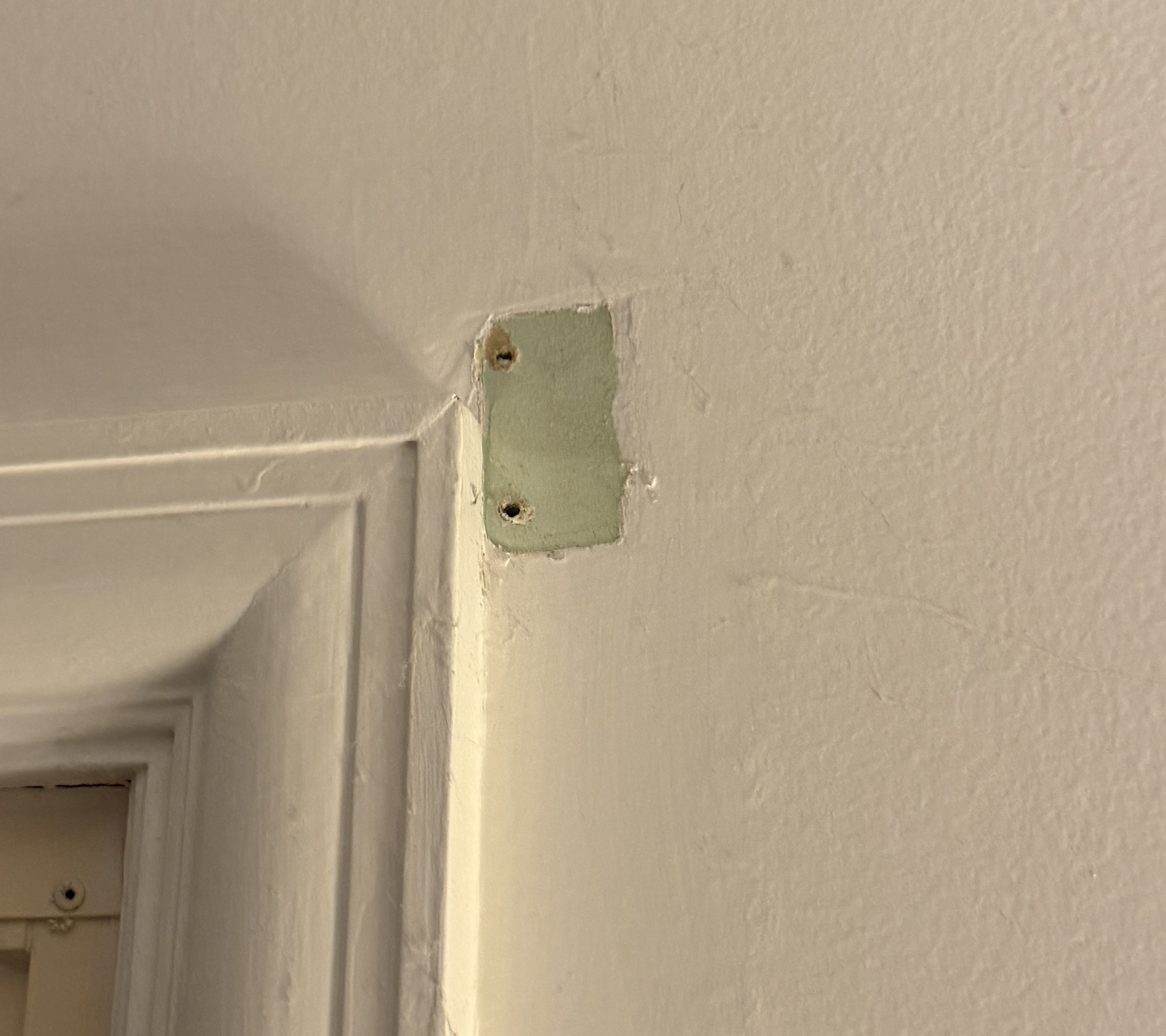
We are finally, after fourteen years of living in this house, replacing the hideous curtains in our bedroom and the gross miniblinds in our living room. I found this behind the hardware for the curtains and I would like a word with whoever built this place. I just wanna talk.

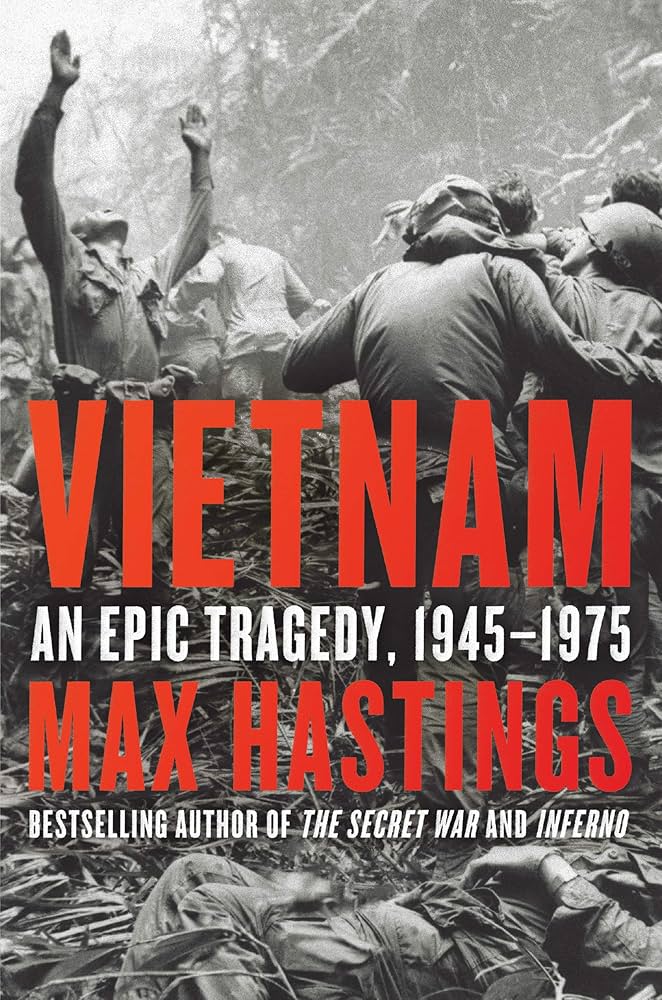
I’m not doing a full review of it, but this is a really good book. My only problem is that Hastings has a weird habit of drawing attention to the race of any American who isn’t white when it isn’t necessary– there was an actual chapter about race relations among American troops, and I’ll cut some slack on that one, but just for example, referring to the youngest soldier to die in Vietnam as “a black kid” in a weirdly flippant way really stuck out. My only problem is that now I want to read twelve other books on Vietnam that he mentioned (sidenote: are there any histories of the war written in English by Vietnamese scholars?) and my backlog is bad enough already.

This image from my email is not exactly inaccurate, but I feel like maybe Amazon is still having some tech problems.

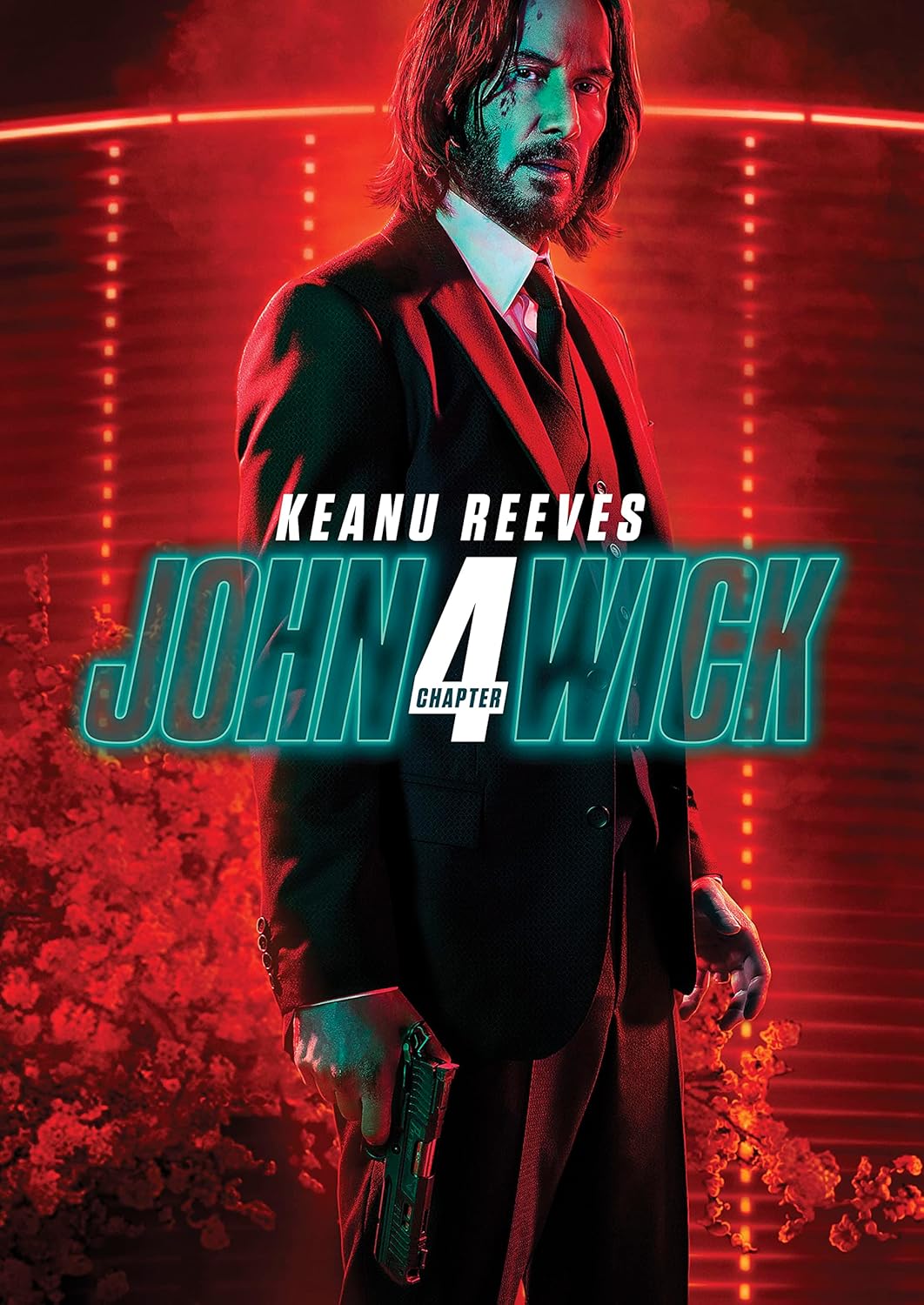
After over a year of threatening to watch it, my wife and I finally sat down to watch John Wick 4 last night, and I will forever refer to it as The Dumb John Wick. I’ve seen all of them now, and I never really loved the series, but this one takes everything that was sorta ridiculous about the first three movies and turns those up to 12, while also not adding anything of real value to the series, ignoring the cliffhanger ending of 3, and being way, way, way too long. Is there a lore reason why there are literally no cops at all in the John Wick universe, for example? Blech.

You might not be able to tell, but this picture was taken outside the window as I was removing the curtains earlier today. At 6:30. I fucking hate daylight savings time. Hate. Can we please be a society just for a little while and get rid of this bullshit? Please?

And finally, as of tonight I’ve read just over 2600 pages on my new Kindle, which means that I’ve managed to adopt the thing into my lifestyle successfully … and the battery is still at 16%, which is bloody impressive.

#REVIEW: Mark Twain (1835-1910)

No, no, not a review of Ron Chernow’s book that happens to be called “Mark Twain.” I’m reviewing Mark Twain. And reading Book Mark Twain has caused me to lose a surprising amount of respect for Person Mark Twain. He gets three stars out of five.

Y’all, this dude was weird.

The person Twain is pictured with up there is Dorothy Quick. She is eleven years old in that picture. She and Twain were not related, and they literally met on an ocean voyage in 1907 and Twain, a man in his seventies, just decided to treat her like she was his best friend. They exchanged letters until he died, and he occasionally arranged for her parents to bring her for visits at his home. Multi-day visits.

And she wasn’t the only one. At two different points in his life Twain started a club for girls between ten and sixteen years old, and both times he was the only male member. He called the second group of girls his “angelfish.” They had membership pins. Chernow is quick to point out that there was never any kind of contemporary accusation that Twain’s relationships with these girls were sexual or predatory, but it becomes clear after a while that he recognizes how Goddamn weird the whole thing is and genuinely isn’t sure what to do about it. There’s lots of talk about substitute granddaughters– only one of Twain’s four children survived past her twenties, and his only grandchild was born after he died– but do you really need enough substitute grandchildren to call it a club? And do you stop talking to your substitute grandchildren after they get to be too old for you? Because that happened too. Once his angelfish got into their late teens he lost interest in them. This is not a joke.

Don’t even ask me about Lewis Carroll. Chernow talks about him in a throwaway sentence at one point (literally something like “at least he wasn’t drawing naked pictures of his preadolescent girlfriends, like Carroll was”) and oh my god I hate to talk about falling down a rabbit hole when literally discussing Lewis Carroll, but … yeah.

Twain was terrible at business, prone to falling for outrageous scams, deeply in debt for most of his adult life despite his royalties and his wife being ultra-rich, and held onto a grudge like Kate Winslet on a floating door. There was something vaguely Trumpian about him, where all his friends and business associates were brilliant, salt-of-the-earth, wonderful people until the moment they were no longer useful or Twain felt the need to blame them for something and then they were the worst poltroons and scofflaws in the history of poltroonery and scofflawism.

Like, I’ve read dude’s books. The fact that he was a sarcastic, irascible motherfucker is one of the things I like about him. But I feel like Chernow would have been a lot happier had he just had a chapter called “Look, this guy was a prick,” and gotten everything off of his chest.

There’s nothing genuinely damning in there. I’m never reading anything by any number of authors ever again because of their assorted bastardries and nothing Chernow reveals about Twain rises to that level. Even the angelfish thing is more of a massive ongoing WTF than something that was immoral or should have been illegal. But the last time I came out of a biography or autobiography feeling like I had less respect for its subject than I did going in was Ralph Abernathy’s And the Walls Came Tumbling Down, which I read nine years ago. The only other example I can think of is Jefferson Davis’ memoirs, and I didn’t exactly have warm feelings about that guy going into those books. It doesn’t happen all that often.

Chernow’s book is still a five-star read. Twain still has a ton of five-star books out there for you to read. Twain himself? Three. At best.