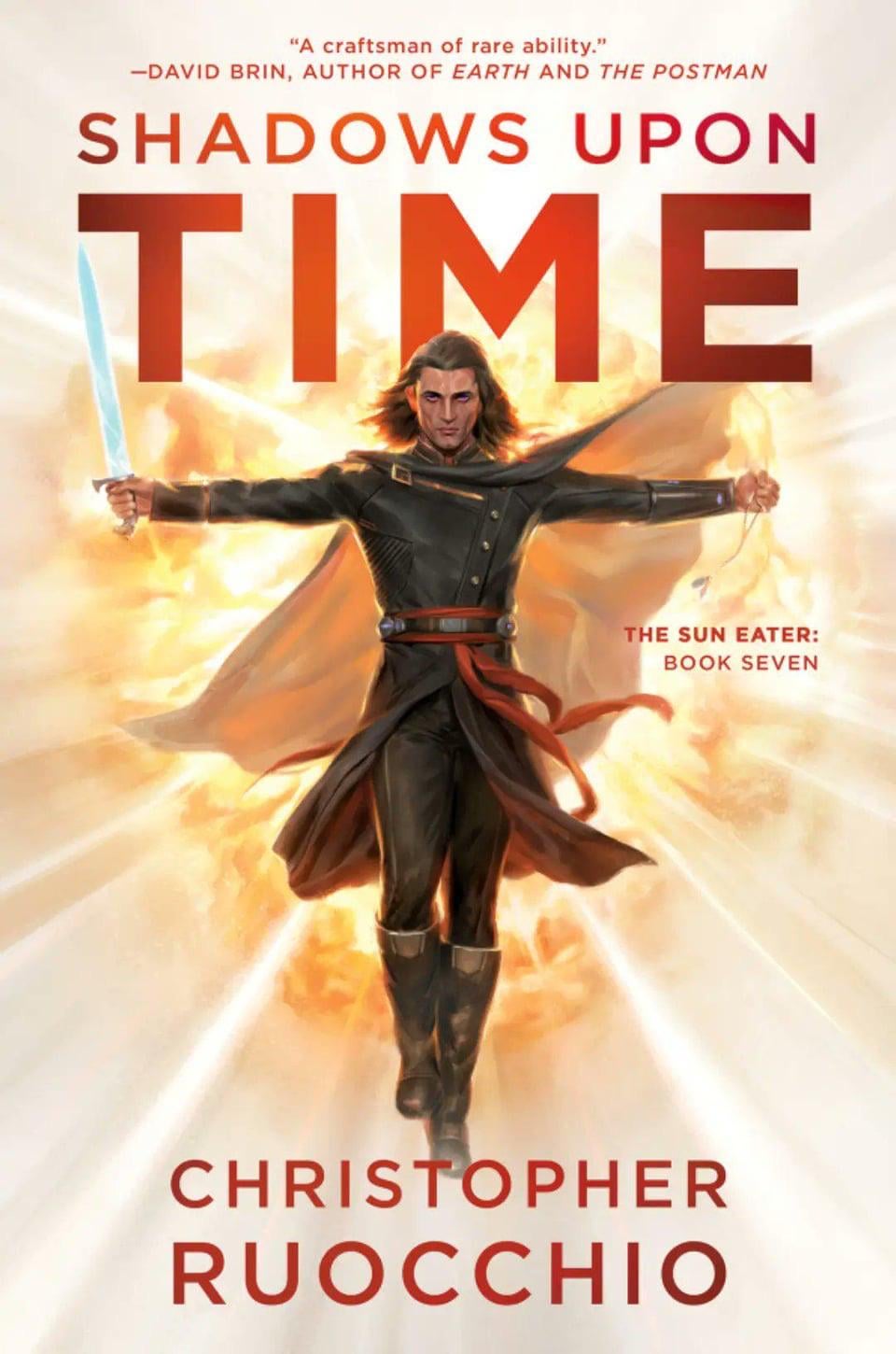
I finished Shadows Upon Time, the seventh and final book of Christopher Ruocchio’s Sun Eater series, about half an hour ago, and I’ve been going back and forth on whether to review either the book itself or the entire series, or whether I should post about something else tonight and let the book marinate for a little bit before posting it. The draft that I had started in my head was probably going to start with the sentence I’m surprised that Christopher Ruocchio resisted the urge to have Hadrian Marlowe crucified. Marlowe, the POV character of the series, is executed by hanging at the end; this isn’t a spoiler, as I’m pretty sure it’s revealed in the literal first page of Empire of Silence, the first book of the series, and if it’s not the first page it’s absolutely in the first chapter. But before then, he’s stabbed in the side and one of his very last spoken lines of dialogue is “It is finished.”
And then I downloaded the cover, because I needed that, and I really looked at it, and for fuck’s sake, dude:
For some reason, it’s the position of his legs that really gets to me.
Anyway, when Marlowe isn’t being Jesus, he’s Obi-Wan Kenobi. This is a quote:
“You’ll never be rid of me,” I said, “even if I do truly die this day. You’ll fear my ghost in every shadow, every whisper. I will be with you, Alexander — all the days of your life.”
I might be being a little unfair, as this makes the book, and by extension the entire series, really feel like hackwork, and it’s not. In fact, I kind of want to do a reread now that the whole thing is out. When Ruocchio is at the top of his game, he’s remarkable; when he’s not … you get that, and any given book in the series can whipsaw back and forth more than once between those two extremes of quality. Ultimately, after really disliking Empire of Silence the first time I read it, I’m glad that I decided to go back and give the series another chance and honestly I think it probably deserves more attention than it’s gotten over the years.
I dunno. There may still be a review coming, as I really don’t feel like this is one, but guys, it’s okay to be subtle when you’re comparing your main character to Jesus. At least a little bit.
Defiantly unraptured, as of yet; we shall see if TikTok Jesus takes me tomorrow, as my understanding is that the end of the world has been rescheduled. Again.
I had one girl show up to school today in what I very well might have called a wedding dress on an older human; I decided not to ask any questions, and by afternoon she was in a cheerleading T-shirt and shorts, so … I still didn’t ask any questions. I don’t know if Jesus having child brides is a thing, or if he’s okay with his child brides going to school on the day he marries them? I have degrees in religion but I’m not as up to date on the fever swamps of evangelical Christianity at the moment, and unless someone starts paying me for it I have no intention of venturing any further than I already have. They are wrong, again; it is the only thing that they have ever been. What an immense surprise.
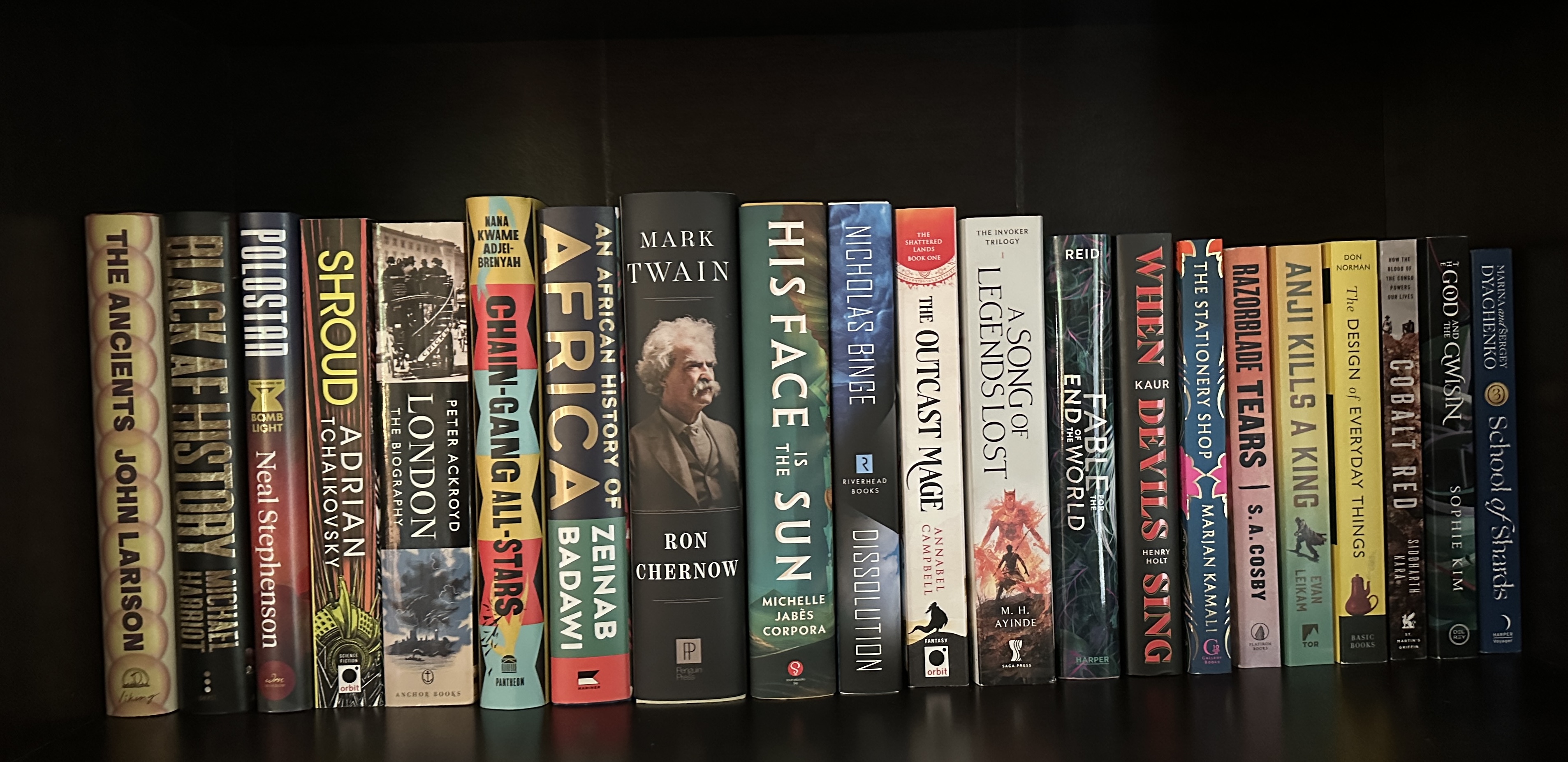
Pretty sure this is the lightest the shelf has been in months (EDIT: It’s been a year.) I can make a significant dent in this next month if I’m disciplined about not spending a ton of money. LOL.
Tomorrow’s Monthly Reads is going to be insane.
Picking on church billboards is such low hanging fruit that it’s not even worth it most of the time, but I drove past this … message on my way home today, and I needed to preserve it. I may have the verbs slightly wrong (I was driving, after all) but the weird part is preserved correctly:
Trust in The Lord Delight in “ Commit to “
… with fucking quotation marks, just like that. The quotation marks were red, though.
Okay, no, not really, but as soon as I thought of the headline I couldn’t not use it. I was already going to Hell anyway; it’s not like that can get worse.(*)
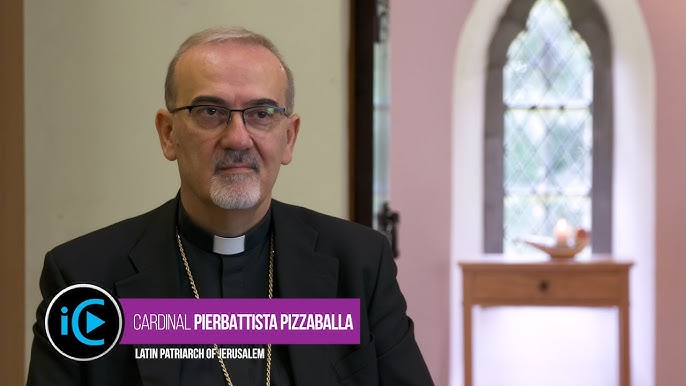
Despite having been an atheist for literally my entire life, I frequently refer to myself as biologically Catholic; my parents both attended Catholic schools for at least part of their childhoods and while we were never regular churchgoers or even “Easter and Christmas” Catholics, I attended the occasional service with my grandparents and, of course, any weddings or funerals in the family were inevitably Catholic services, to say nothing of how religion affects a family’s general culture even when that family stops practicing the religion. I taught at a Catholic school for three years at the beginning of my career, and hung around at a part-time job at the parish for another year or so after that. One way or another, the Church fascinates me, with all of its plentiful warts, and Francis in particular has been a fascinating Pope, especially after his odious predecessor. I look forward to everyone on the Internet becoming an expert in the Conclave over the next week or two (note that I am already an expert on the Conclave, as someone who has been opining on religion in public for over a decade) and I am tantalized at the idea that this guy has a nonzero chance of becoming the next Pope:
I saw a decent article a few weeks ago, while Francis was hospitalized, about five or six of his most likely successors, and my recollection was that Cardinal Pizzaballa was actually one of the more progressive possibilities. Anything can happen once they head into that room; I’m fairly certain that Francis himself was a dark horse when he was named Pope, but I may be misremembering. It’s hard to imagine how the same crew of people that named Benedict XVI, plus eight years of cardinals he named, might have chosen someone nearly Benedict’s complete opposite, but it happened. Anyway, if I can find the article I’ll post it. The same part of me that enjoys reading about old-school political party conventions back when they actually chose the Presidential candidate rather than simply coronating him loves to read people speculating about the Conclave, which obviously doesn’t happen in public, so there’s a lot more people wantonly making shit up out there. Maybe I’ll pretend I’ve got an inside source! We’ll see.
At any rate, it would be nice if something happens in 2025 that doesn’t make things worse, so even if you aren’t a Catholic we can all hope that someone sane emerges after the smoke turns white. Onething not swinging further to the right this year would be great.
Really, the phrase “bisexual nun” was all I needed.
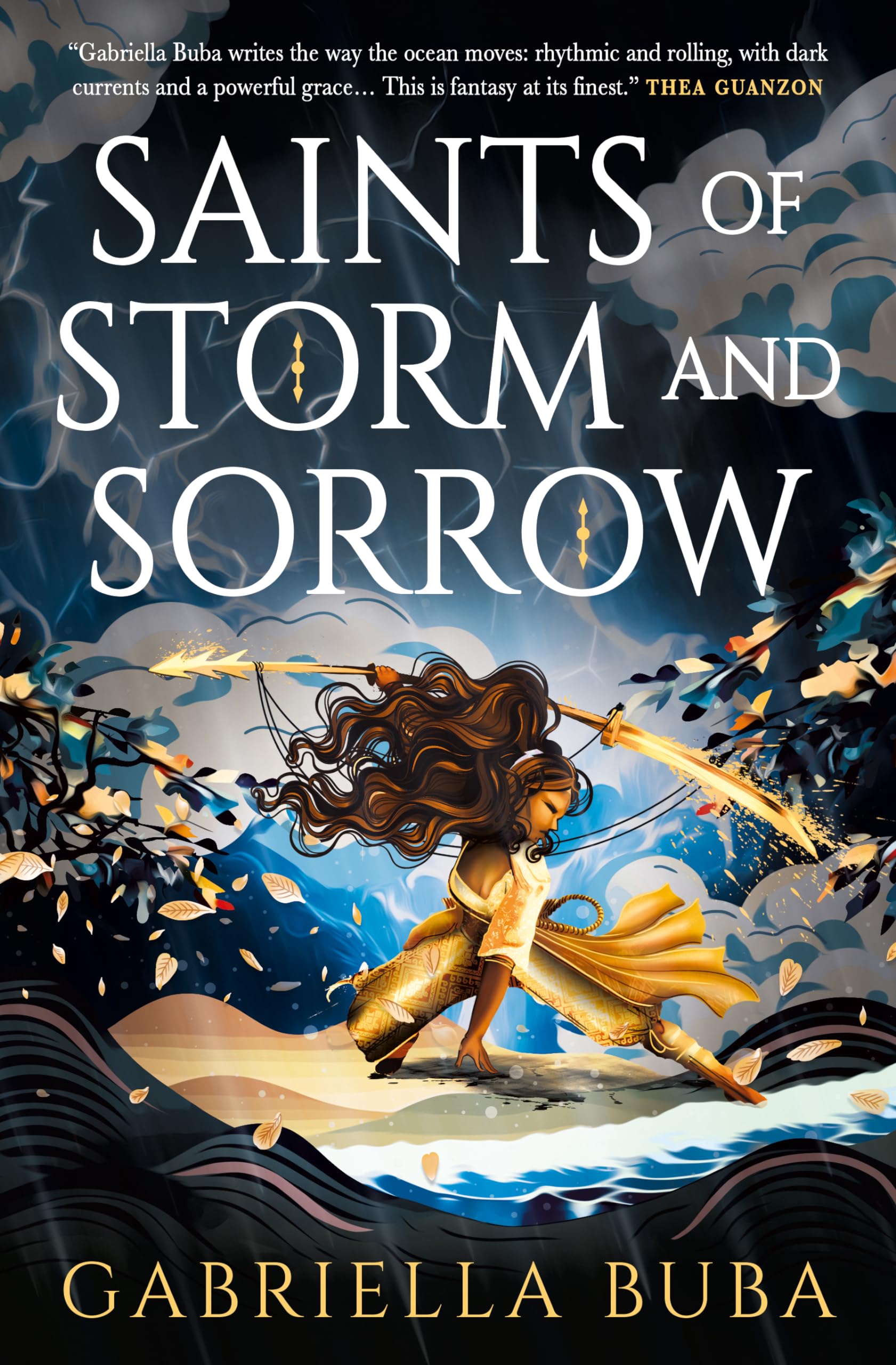
Here’s the thing about Gabriella Buba’s Saints of Storm and Sorrow: it’s one of those books where a lot of what I have to say about it is negative, but I’ve already pre-ordered the sequel, out this summer, and I’m genuinely looking forward to reading it. I lost some sleep to reading this book, and several times I had to force myself to put it down at the end of the night to go to bed. There’s something compelling and propulsive about Buba’s writing that ended up outweighing some of the things about this book that didn’t make sense or didn’t quite work, and I guess I just need you to keep that in mind while you’re reading this, because I want to talk about the weird stuff. I ended up four-starring this, but in a different mood I could have been talked into a three, and for most of the first half it was going to be a five. So one way or another it’s kind of all over the place, but the tl;dr to this whole post is that the book is well worth the time to read it even if there are some issues.
So here’s the thing. The main character, Lunurin, is a nun. She is also a priestess, quite possibly against her will, of a storm goddess called Aman Sinaya. Now, when I first read this in whatever blurb or online review I saw that caused me to order this, along with the phrase “bisexual nun” and the phrase “Filipino-inspired,” I assumed that this meant that this book wasn’t set on Earth.
And … technically, it isn’t? But it totally is. Lunurin is a Catholic nun. The bad guys are the Spaniards. They speak Spanish. They’re in the Philippines. I’m pretty sure the word “Catholic” never shows up, but … there is no attempt to be subtle here. Lunurin and her female love interest are both Catholic nuns, biracial and despised for being so, in a colonial atmosphere that is more or less identical to the Spaniards colonizing the Philippines. (Do you know any Filipinos? Ever notice how they all have Hispanic-sounding last names? There’s a reason for that.) And the book wants to get into the syncretism that happened whenever Catholicism ran into indigenous religion, which is a fascinating and complex subject, but if the colonized people can literally call down typhoons while being literally possessed by their gods, and Jesus … doesn’t do any of that? It kind of wreaks havoc on your worldbuilding. Christianity toppled, say, Norse religion, sure. But you know who the Norse didn’t have? Actual fucking Thor. And Lunurin can call down lightning by letting her hair down. And everyone just acts like Christianity is a reasonable alternative to that, just because the priests say so?
Nah.
I would kind of love for a book where Christian missionaries run into a religion that literally grants powers to its priesthood, but this isn’t that book and that’s not the story that Buba is interested in telling. She wants to start a book that is already past the colonization phase and so that’s what she gives us, and it’s not exactly the book’s fault that it sent my brain down all sorts of other pathways once I realized what was going on. There’s something to be said about having trouble accepting the basic premise, of course, but I’m a lifelong fantasy/sci-fi reader and suspending disbelief is something I’m good at. But I’m not going to pretend it wasn’t an issue.
Let’s see, what else? This is something that’s going to get fleshed out better in the sequels, I’m sure, but I never quite understood the relationships between any of the main characters. Two of them end up married, and I’m not sure either of them wanted it except one of them kinda did and the other sort of shrugs and rolls with it, and the nun female love interest is an absolute mess of a character, which is yet another complaint that may or may not represent a problem with the book. Messy people exist! But holy shit is Catalina a mess. She’s inconsistent, jealous and a religious fanatic (nun, remember) and there’s also a healthy degree of self-loathing going on as well as some internalized racial hatred, and … she’s realistic, in a lot of ways, I think, maybe? But that doesn’t automatically make her fun to read about.
There are a couple of explicit sex scenes that tonally really do not match the rest of the book, too, so be aware of that. This is not a romantasy by any stretch of the imagination, and I let that fool me into thinking that at no point would glistening cocks be involved. Or, well, one cock that glistens at least once. And, again, I’m not convinced that the people fucking actually like each other, or whether they’re trying to play each other, and it’s okay for the characters to not know each other’s motivations, and it’s okay for the characters to be inconsistent in their motivations, but I definitely don’t get them and I’m not convinced the author did either. The problem is that in this particular scenario complicated characters come off exactly the same as characters with no actual arc and no planning, and I genuinely can’t tell which one this is.
So yeah. Again, I’ve bought the sequel. Lunurin’s relationship with her actual goddess– as opposed to Jesus, who doesn’t seem to be real and doesn’t occupy a lot of her time despite the nunnery going on– is fascinating, and again, she doesn’t appear to like her very much, and while I have my problems with the setting as it currently exists, it’s got its positives just out of sheer originality. It may be that I’ll read book two and tap out for what I’m presuming will be a third book in the future (this may be a duology, I’m not sure) or I might shift into full-throated approval. We’ll see. But I’m giving this one a thumbs-up regardless, now that you’ve read all the caveats and quid pro quos and such.
It won’t actually take all that long for me to dispense with the “review” part of writing about Safiya Sinclair’s How To Say Babylon. You should check it out. There you go. Sinclair grew up in Montego Bay, Jamaica, the daughter of a Rastafari reggae musician, and the book is partially about her escape from grinding poverty to ultimately achieve a Ph.D in the United States and become a celebrated poet, and partially about trying to grow up female in a home dominated by an abusive misogynist. Sinclair, as one might expect from an award-winning poet, is a beautiful, lyrical writer, and her story is fascinating. I can’t imagine someone picking this up and not at least finding it tremendously interesting. I don’t recall how it crossed my radar, but I jumped on it, and it’s a pretty fast read.
That said, the book itself isn’t why I’m writing about the book, which ended up fascinating me but perhaps not for the reasons Sinclair intended. All the dialogue in the book is rendered as spoken, meaning that 90% of the dialogue is in Jamaican English, and I want to take a deep dive into Jamaican English grammar rules now that I’ve read this book. The dialect’s use of pronouns is kind of fascinating, and it was endlessly entertaining to me the way I was hearing anything her father said throughout the book. And, actually, after doing a light bit of Googling just now, it’s possible that there is some translation going on, because Jamaican patois is significantly more difficult for an American English speaker to understand than the dialogue in this book, which is unfamiliar but not incomprehensible. So maybe she pulled back a bit to simplify what people were saying, or perhaps conversation in their house was closer to American English than it might have been in other places. All four of the Sinclair kids ended up with university educations, so it’s clear that education was highly prized in the house– by their mother, as the book makes clear– so it’s entirely possible that a certain level of code-switching was taking place from the beginning.
The other thing is reading through this book and realizing I didn’t know anything at all about Rastafari. I went through a heavy Bob Marley phase in late high school and early college that was more or less responsible for everything I know about it, and I hadn’t appreciated just how unusual the … religion, and I’m using that word under some small amount of protest, really is. Rasta is wholly decentralized, for starters; it recognizes the Bible as Scriptural but there is no Rasta text to rely on and it emphasizes individuality to a degree where concepts like “orthodoxy” can barely even exist. In other words, Safiya Sinclair’s father was a devout Rasta, but that doesn’t mean that his practice of Rastafari lined up with anyone else, and while Jamaican culture as a whole tends toward the patriarchal, it wouldn’t be strictly accurate to say that Rasta was the reason her father turned out to be the man he did, or that it was responsible for how he treated his children and, particularly, his daughters.
(Also interesting: there are pages devoted to all four of the women in Sinclair’s family deciding to cut off their dreadlocks. There is not a similar scene for her brother, although there is a poignant moment where he declares his newborn child is going to decide on their own whether to follow Rastafari or not.)
On top of that, I absolutely wasn’t aware that Haile Selassie had traveled to Jamaica and explicitly rejected Rastafari’s belief that he was, in some way, God. Sinclair’s father appears to have believed that he was literally God on Earth; some of Marley’s lyrics lean that way as well, and Selassie straight-up said it wasn’t the case, at which point a whole lot of Rastas turned around and said that only God would be humble enough to deny he was God.
Which … wow.
And, like, think about this, right? Selassie was Emperor of Ethiopia. He was not, himself, a Jamaican, and there are no Rastafari in Ethiopia, or at least there weren’t when Selassie was alive. So this guy is Emperor of one country, and this group of people halfway across the globe decide that he is either literally God or at least the Messiah (and, again, no orthodoxy, so each individual Rasta might have a different idea about how this works) and form an entire-ass religion around him. And then he goes there, and he’s like, “No, I’m not God,” and it doesn’t work, and then eventually he dies and … Rastafari just keeps on truckin’.
There was also a lot of oppression of Rastas early on, including a couple of events that qualify as massacres and/or pogroms, and I wasn’t aware that had happened either.
I need to know more, and I want to read a formal academic history of this belief system, is what I’m saying, and not just a memoir. I feel like I’m overusing the word fascinating in this piece but it’s mind-blowing to me that this developed the way it did.
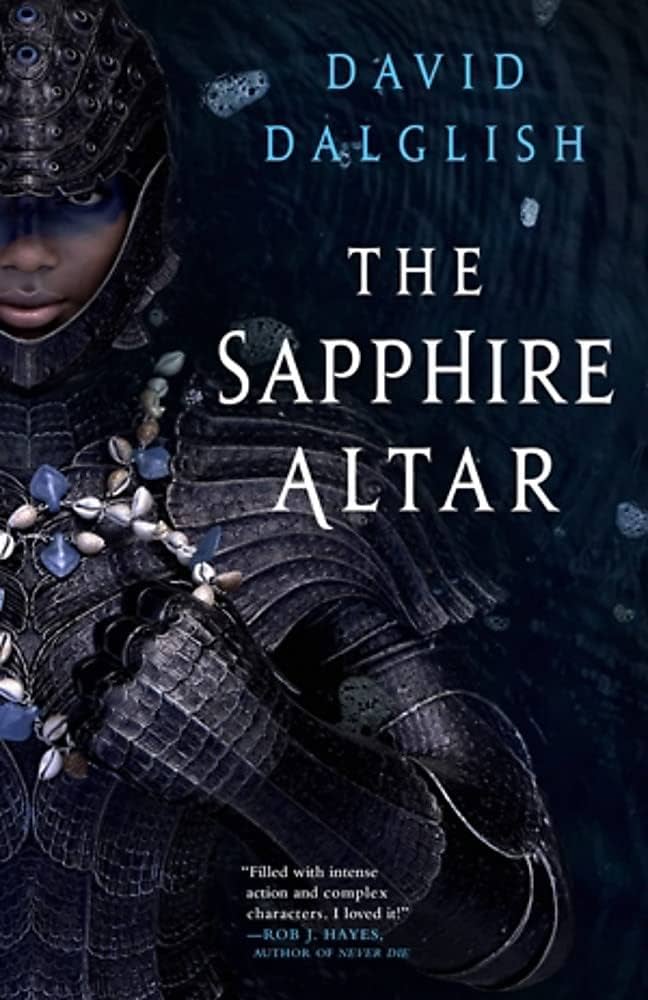
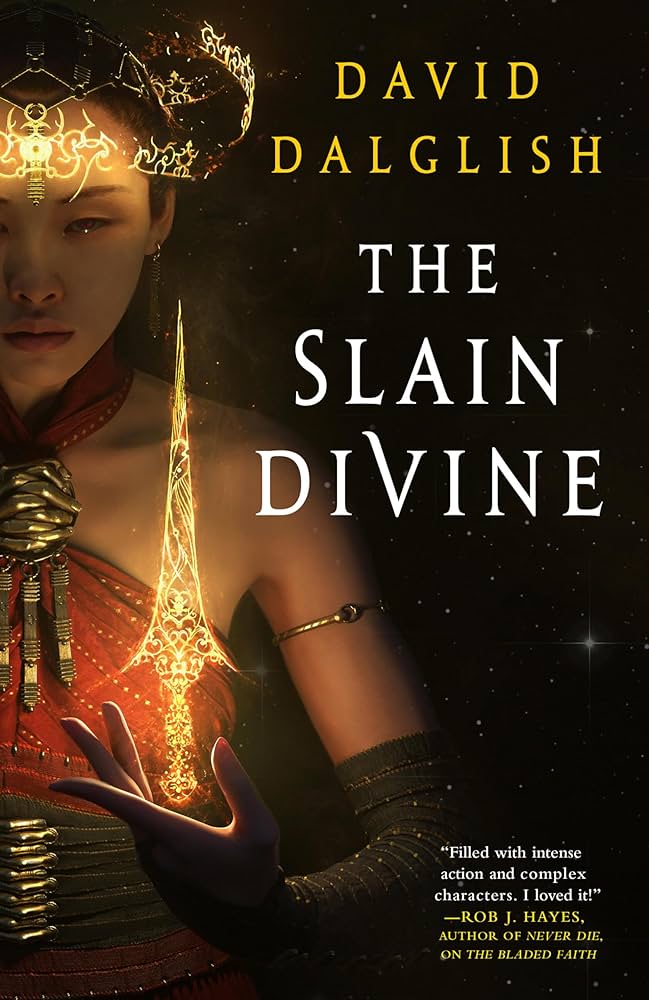
It took me eight days to read through David Dalglish’s three-volume, 1500-page Vagrant Gods series, the covers of which ought to be clickable above. I don’t recall what drew my attention to this series initially, but I bought all three in a fit of consumerism before reading any of them, and they’ve been sitting on a shelf for perhaps longer than they should have before I finally got to them. I’m not about to go back and look to find out how long; it’s been a while.
Shoulda read ’em earlier, because they’re awesome, and they manage the rare feat of starting off pretty good (I four-starred the first book) and then getting better with each successive volume. The series tells the story of Cyrus, a young (initially, at least) prince who not only witnesses his parents’ executions in front of him during an invasion but also literally witnesses the death of one of his gods. Cyrus is held in captivity as a puppet regent for a few years, and ultimately is able to escape with the help of a small band of revolutionaries, who forge him into the Vagrant, a vicious assassin whose one and only goal is to drive the Everlorn Empire from his native island of Thanet.
It is possible you are rolling your eyes right now; the word “assassin” is used way too much in fantasy literature nowadays, and a whole lot of assassins don’t really do a lot of assassinating because the authors want them to be relatable, and it’s harder to do that with somebody who is killing people all the time. You will possibly be pleased to learn that Cyrus does an immense amount of assassinating in Vagrant Gods. Holy crap, does he do a lot of assassinating, and his body count by the end of the series is horrifying. He’s practically the PC of a first-person shooter out there; this is a series that does not shy away from violence and is really not at all interested in a relatable main character. (It’s also, for what it’s worth, rotating-POV third person, but Cyrus is absolutely the main character for all that.) The books also do a pretty good job of making even the ultimate big bad guy of the series feel, if not relatable, at least understandable; the Everlorn Emperor is (mostly) immortal but the previous emperors live in his head, and he’s really only about half-sane during the book his POV shows up in, which makes him a fascinating character.
But the most interesting thing about this series is the way it handles divinity. Gods can be killed, and in fact are killed, and resurrected and sometimes killed again after resurrection, all over the place in this series, and the Everlorn Empire’s drive for, well, empire is due mostly to the need of the Divine Emperor for more worshippers. I’d call it an analogue of Christian imperialism, but only if Jesus was, like, still alive, but on his fifth or sixth body, and if he literally got more powerful with every new worshipper. One character ends up channeling one of the deceased gods for most of the series, and she can literally transform back and forth like the world’s most awesome lycanthrope between her form and the god’s. The crew that Cyrus amasses around himself is uniformly very cool, with a lot of interesting abilities, some of which are divinely inspired and some of which aren’t. Basically everything magical can be traced back to some god or another; this isn’t a world where mages, per se, exist, but the gods are generous with their followers.
Also, for what it’s worth, nearly everyone in the series is brown to some degree or another, and there’s a handful of prominent gay characters. Thanet is clearly more friendly to the LGBTQIA spectrum (not that they call it that, and the words “gay,” “lesbian” and “transgender” are never actually used) than Everlorn is, and some of the most noteworthy revolutionary activities are triggered by Everlorn trying to mess with Thanet’s rules about who can marry who.
Again, I don’t remember what brought me to this series, but it turns out David Dalglish has written a lot of books, so I’ve got a nice back catalogue to dip into if I want. I’m pretty sure this series is the only one set in this world, but I’m looking forward to seeing more of what he has to offer. If you’re looking for a series with a lot of political intrigue, great action, and a fascinating perspective on fantasy religion, you’ll love these books.
I am, by any reasonable standard, a grown-ass man. Furthermore, by most reasonable standards I’ve been a grown-ass man for a couple of decades or more. You would think, after all this time, I would have some idea of what I was like. In fact, it’s not unreasonable to suggest that of all the available topics for me to know things about, “what I’m like” should really be at least in the top five or so in terms of how much I know about that topic compared to other people.
And yet.
I am an atheist. I have been an atheist for my entire life; there has never been even a single minute where I believed in God. My family is Catholic on both sides; my Mom actually attended Catholic schools for at least most of her pre-college education, and I think my Dad went to Catholic schools before high school. I could be wrong about that, but he’ll see this, so he can let me know. They made no attempt to raise me in the Church– I wasn’t baptized, never attended confirmation or anything like that, and we never went to church except for very rare occasions with my grandmother on Dad’s side. That said, I have referred to myself as “biologically Catholic” on any number of occasions– look, I just did it again right there— and I can fake Catholicism way better than I can fake other religions. My first teaching job was at a Catholic school– that’s the church right there, in that picture– and while I didn’t participate in prayers or anything like that I got along with everyone just fine and I was never aware of anyone being upset (or, frankly, aware) of the heathen in their midst.
Why do I mention this? We went to a funeral on Thursday, and said funeral was at a white Protestant church. And when I say “Protestant,” I don’t mean, like, Lutherans or something, where their Protestantism is basically Catholicism with some of the edges sanded off, I mean, like, there were chairs and shit, and there was a fucking drum set behind the altar. At one point a man got up to sing, and that man who was singing was wearing blue jeans and a plaid shirt at a funeral.
The Lord’s Prayer cannot be made into a song, by the way. He tried. He tried mightily. And he was talented! But that prayer is not a song.
Now, I feel the need to make something clear here: I have spent plenty of time in my life attacking religion. I’ve mellowed out a lot about it as I’ve gotten older, but I’ve done it. This isn’t that. Everyone at that church was perfectly nice, the service was fine other than the singing-the-Lord’s-prayer bit, and other than basically thinking the entire thing is fundamentally ridiculous I don’t give much of a shit how people practice their religion so long as it doesn’t affect me, and that drum set on the stage did not affect me one bit. But I’ve got to admit something: I was really surprised at how strong my reaction to seeing the actual sanctuary was. That picture up there is what I’m used to, y’all. And I had twenty or thirty oh what the fuck moments within my first fifteen minutes or so inside that place. I’m not necessarily comfortable in Catholic churches but at least I understand them, right? This? This I don’t get. Like, I know most Christian denominations don’t really go for robes and stoles and collars and such but apparently I really like being able to pick the pastor out in a crowd? And this guy was just, like, a dude in a suit, like a dozen other people in the building.





 Welcome to infinitefreetime dot com