

It won’t actually take all that long for me to dispense with the “review” part of writing about Safiya Sinclair’s How To Say Babylon. You should check it out. There you go. Sinclair grew up in Montego Bay, Jamaica, the daughter of a Rastafari reggae musician, and the book is partially about her escape from grinding poverty to ultimately achieve a Ph.D in the United States and become a celebrated poet, and partially about trying to grow up female in a home dominated by an abusive misogynist. Sinclair, as one might expect from an award-winning poet, is a beautiful, lyrical writer, and her story is fascinating. I can’t imagine someone picking this up and not at least finding it tremendously interesting. I don’t recall how it crossed my radar, but I jumped on it, and it’s a pretty fast read.
That said, the book itself isn’t why I’m writing about the book, which ended up fascinating me but perhaps not for the reasons Sinclair intended. All the dialogue in the book is rendered as spoken, meaning that 90% of the dialogue is in Jamaican English, and I want to take a deep dive into Jamaican English grammar rules now that I’ve read this book. The dialect’s use of pronouns is kind of fascinating, and it was endlessly entertaining to me the way I was hearing anything her father said throughout the book. And, actually, after doing a light bit of Googling just now, it’s possible that there is some translation going on, because Jamaican patois is significantly more difficult for an American English speaker to understand than the dialogue in this book, which is unfamiliar but not incomprehensible. So maybe she pulled back a bit to simplify what people were saying, or perhaps conversation in their house was closer to American English than it might have been in other places. All four of the Sinclair kids ended up with university educations, so it’s clear that education was highly prized in the house– by their mother, as the book makes clear– so it’s entirely possible that a certain level of code-switching was taking place from the beginning.
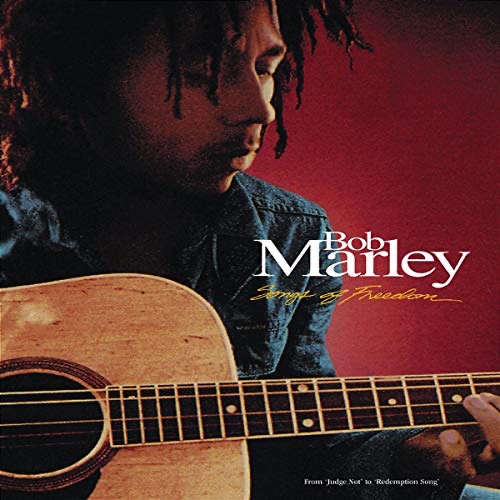
The other thing is reading through this book and realizing I didn’t know anything at all about Rastafari. I went through a heavy Bob Marley phase in late high school and early college that was more or less responsible for everything I know about it, and I hadn’t appreciated just how unusual the … religion, and I’m using that word under some small amount of protest, really is. Rasta is wholly decentralized, for starters; it recognizes the Bible as Scriptural but there is no Rasta text to rely on and it emphasizes individuality to a degree where concepts like “orthodoxy” can barely even exist. In other words, Safiya Sinclair’s father was a devout Rasta, but that doesn’t mean that his practice of Rastafari lined up with anyone else, and while Jamaican culture as a whole tends toward the patriarchal, it wouldn’t be strictly accurate to say that Rasta was the reason her father turned out to be the man he did, or that it was responsible for how he treated his children and, particularly, his daughters.
(Also interesting: there are pages devoted to all four of the women in Sinclair’s family deciding to cut off their dreadlocks. There is not a similar scene for her brother, although there is a poignant moment where he declares his newborn child is going to decide on their own whether to follow Rastafari or not.)
On top of that, I absolutely wasn’t aware that Haile Selassie had traveled to Jamaica and explicitly rejected Rastafari’s belief that he was, in some way, God. Sinclair’s father appears to have believed that he was literally God on Earth; some of Marley’s lyrics lean that way as well, and Selassie straight-up said it wasn’t the case, at which point a whole lot of Rastas turned around and said that only God would be humble enough to deny he was God.
Which … wow.
And, like, think about this, right? Selassie was Emperor of Ethiopia. He was not, himself, a Jamaican, and there are no Rastafari in Ethiopia, or at least there weren’t when Selassie was alive. So this guy is Emperor of one country, and this group of people halfway across the globe decide that he is either literally God or at least the Messiah (and, again, no orthodoxy, so each individual Rasta might have a different idea about how this works) and form an entire-ass religion around him. And then he goes there, and he’s like, “No, I’m not God,” and it doesn’t work, and then eventually he dies and … Rastafari just keeps on truckin’.
There was also a lot of oppression of Rastas early on, including a couple of events that qualify as massacres and/or pogroms, and I wasn’t aware that had happened either.
I need to know more, and I want to read a formal academic history of this belief system, is what I’m saying, and not just a memoir. I feel like I’m overusing the word fascinating in this piece but it’s mind-blowing to me that this developed the way it did.
Anyway, read the book.











 Welcome to infinitefreetime dot com