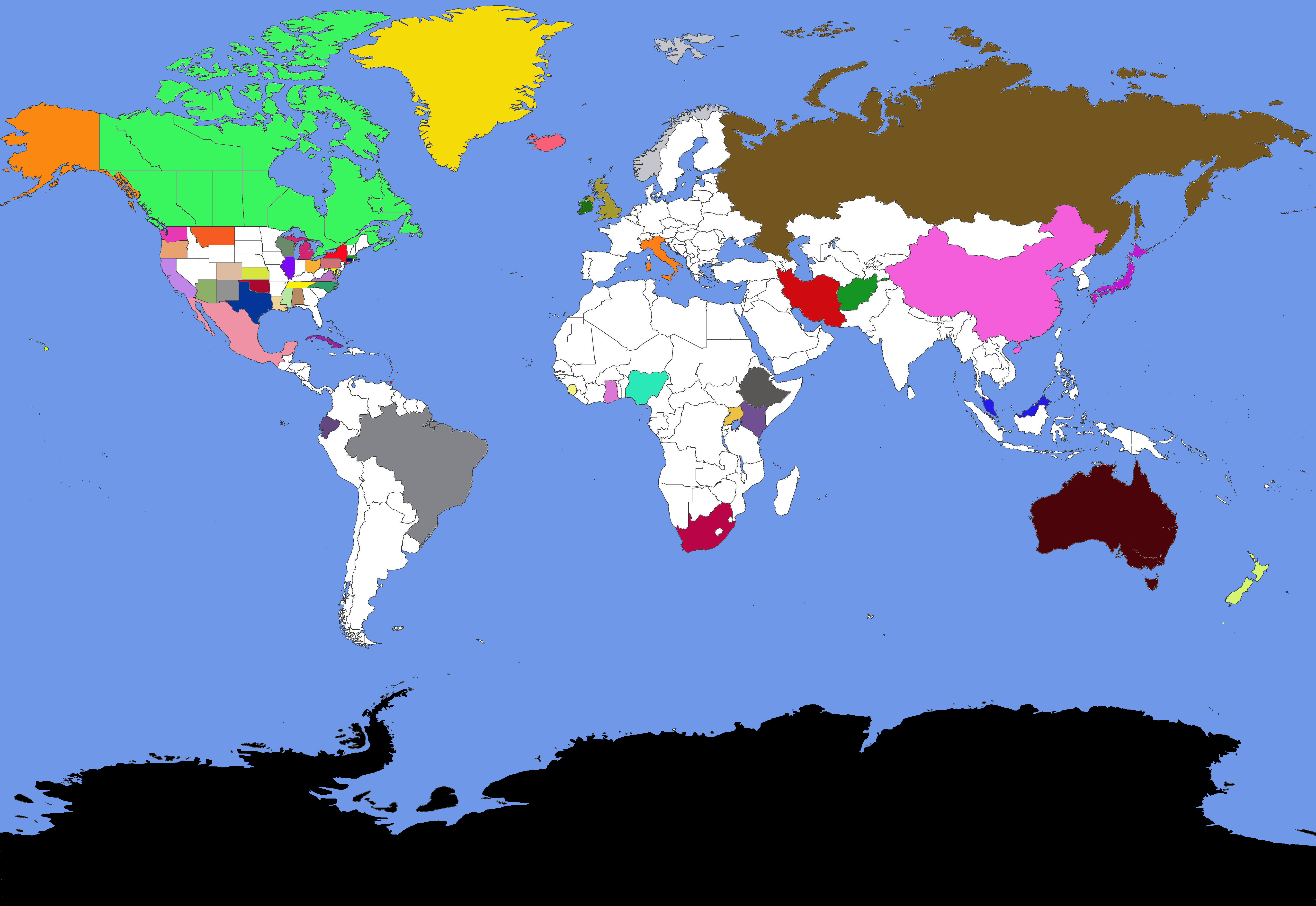
I was never especially worried about being able to complete this project, but at this point I’m certain I’m going to be able to do it. I currently have, of the 52 Identified US Places that I intend to read books from (all 50 states, Puerto Rico, and DC, and I’ll totally throw Guam in there if I can find a book,) 36 states that I have read books from. For ten more– Florida, Idaho, Kentucky, New Hampshire, Puerto Rico, South Carolina, Vermont, West Virginia, Missouri, and Rhode Island– I physically have the books I’m going to read and just need to actually read them. That leaves six states that I’ve yet to identify an author from: Arkansas, Delaware, Nebraska, Nevada, South Dakota, and Wyoming, and for Nebraska I’ve actually got two possible authors. I own a couple of Alex Kava books already, and Chigozie Obioma looks interesting, but he’s a Nigerian who happens to live in Nebraska, and his books are set in Nigeria. Now, I’ve said many times that everyone should be reading more work from Nigerian authors, but I kind of want the book to be a touch more Nebraska-centered than his work seems to be. I’ll get to him eventually, because interesting, but maybe not for this project. The others? At the moment, no idea, but I feel like I have plenty of time. Feel free to make recommendations.
As far as countries: 37 currently represented, with a few more (without going and looking at my unread shelf: Poland, Kyrgysztan, Argentina, Saudi Arabia, Madagascar, Sri Lanka, Saint Thomas, and North Korea) on the shelf somewhere. I’m going to focus on finishing the states in October, or at least getting as close as I can, and then I’ll keep checking countries off until I get bored with it or literally hit a point where I can’t find anything from any place left on the map without translating it myself.
Next year’s reading project: Read Whatever The Fuck I Want and Don’t Worry About It. I’ve had projects for several years running and I feel like I need a year off.
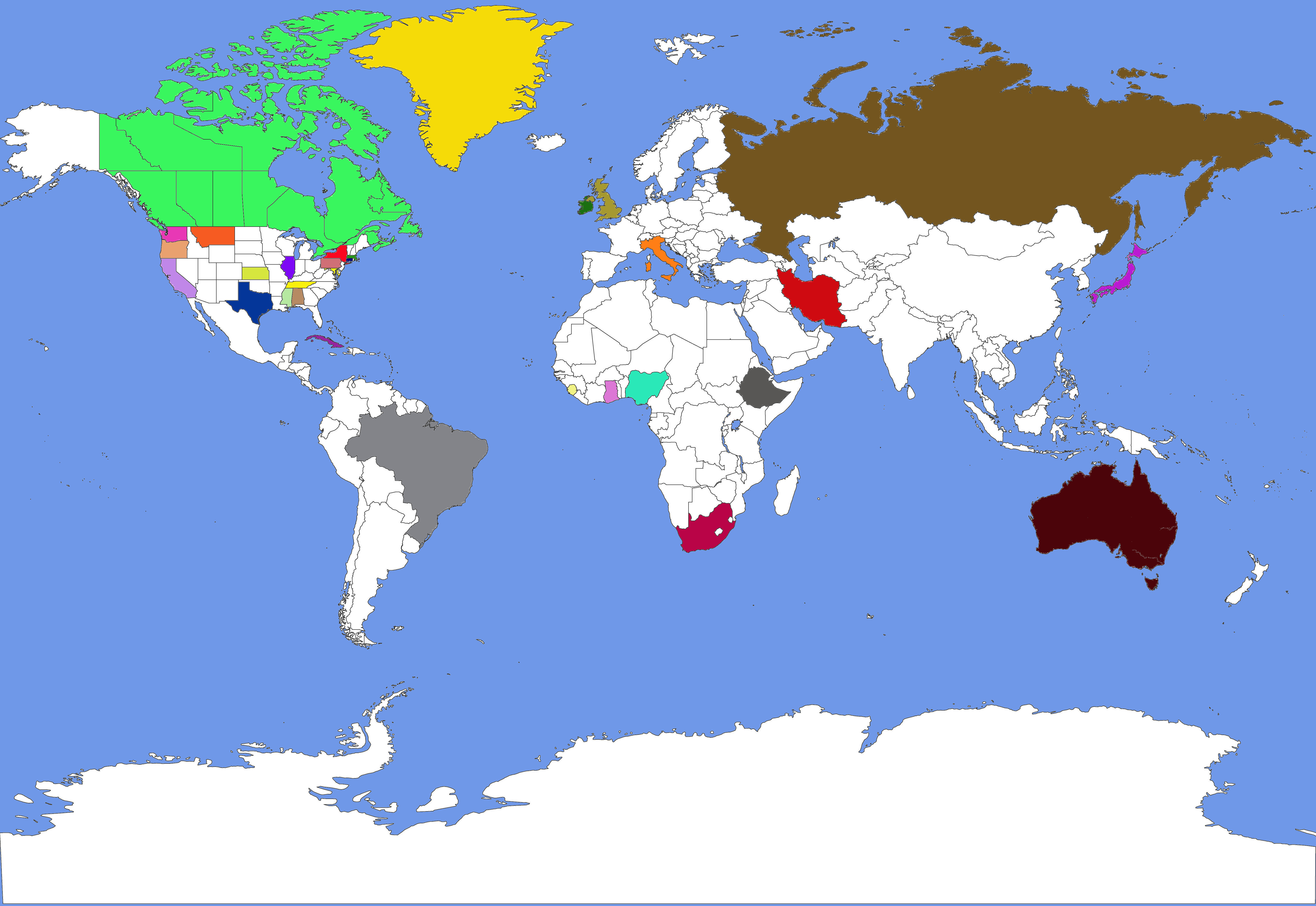
The Project is continuing apace, and since I doubt I’m going to finish reading the book I’m working on right now by the end of the month, I may as well go ahead and do this update now. The numbers are always kept up-to-date on the spreadsheet to the right there– because nothing good can exist without a spreadsheet, but let’s take a halfway-through-2021 (no, seriously, we are) snapshot of the numbers:
Twenty-nine separate countries, counting Antarctica as a country (I read a book by Ernest Shackleton; it counts because I say so)
Twenty-eight different US states, which includes Washington DC, again because I say so
Which accounts for 33,628,900 square miles, or 58.47% of the Earth’s land surface.
This means that technically I’m on pace– slightly ahead, in fact– to complete all 50 states by the end of the year, but it’s definitely getting more difficult across the board. I was at 17 countries and 15 states at the end of March, so you’ll notice neither of those numbers have doubled; I’ve pretty well plucked all the low-hanging fruit by now, and while there’s a few new countries represented on my Unread Shelf right now I don’t think there are any new states. More authors than I would have guessed live in Texas, and while there’s at least a couple of easy states left (I can always read a Stephen King book to get Maine, and, well, I live in Indiana) most of what’s left are going to have to be states that I specifically Google “authors from XXX” to find something to read.
I’m also starting to run low on countries where it’s easy to find authors whose work has been translated into English. This, in turn, leads to me ordering books that it’s less likely that I’m going to enjoy, simply because a lot of the time I’m just grabbing what I can find, and while there have definitely been some exceptions, I’m not finding that I’m discovering a huge number of hidden gems with this particular project the way I might have wanted to. I’m also backlogging books that “don’t count,” and probably 3/4 of my Unread Shelf right now is books that are repeat states or repeat countries. I got a lot of new places done in June, but July is going to have to be a month with not a lot of progress.
That said, filling in the map is still super fun. Ultimately I am going to finish this, because I’m that guy, it just remains to be seen how much of a slog those last few states create. I’m hoping for 40 countries right now, which actually ought to be manageable since I’ll be at 32 or so just with the books I’m due to read right now. And I’ve still got a solid six weeks of summer left, when my reading rate shoots way up. We’ll update again in September, but you can always check the links to the right if you’re curious.
You want me to nerd out about my little reading project, right? Sure you do. We’re roughly 1/4 of the way through 2021 already somehow, and I’ve read books from 15 US states and 17 countries so far, putting me on track to successfully read books from all 50 states and 68 different countries over the course of the year. Now, realistically, this first three months has been pursuing low-hanging fruit, and I’ve already read multiple books from several different states as well as the UK, and I have at least one other book by a Nigerian on my shelf waiting for me, so as the year goes on it’s going to get more and more difficult to find books that “count” for the series. I’m sure I’ll be able to get the US done one way or another, but the fact is books from Canada and Russia and Australia and the UK weren’t exactly hard to find, and I’m at the point already where I’m picking a country and Googling “Authors from XXX” to find books. There’s several easy ones left (and I have several books on my unread shelf that will fill in some spaces) but these first few months were definitely going to be the fastest ones.
I have been keeping track of the square mileage this has covered, because of course I am, and thus far, excluding the water, 21,418,356 square miles are filled in, which is 37.24% of the world’s surface. This will also be increasing much more slowly, as I’ve got Australia, Canada, Brazil and Russia done already. I’ll be filling in Antarctica and China next month, which are the biggest two chunks left, and after that it’s all smaller countries. Russia was 11.5% of the world’s surface all by itself, so I’m not going to be getting any more big jumps like that.
(How do I plan to fill in Antarctica’s 5.483 million square miles when no one lives there? I’ve decided Ernest Shackleton counts. My game, my rules.)
This has been a fun project so far, although for the most part my international “discovery” authors haven’t really set my world on fire yet, and a lot of the books I’ve really enjoyed this year from authors outside the US have been people I’m already familiar with. There’s also been a touch of strategic rereading going on; I filled in Italy by picking up The Name of the Rose for the first time in forever, and I’ll probably reread A Confederacy of Dunces at some point this year to take care of Louisiana. I might go back to Dumas to get France filled in. But for the most part it’s going to be authors I’m not familiar with, since that’s sort of the point of the entire exercise.
Remember, if you look at the top of the sidebar on the right there, you can follow along with me as I’m doing this if you’re so inclined. I should be done with Requiem Moon in a couple of days, and my next book after that will be another Rachel Caine, so I figured this was a good time to do an update.
I’m making it official today: having finished Tiffany D. Jackson’s Grown, which I might still review, and as such having read 62 books by 53 different women of color over the course of 2020, I find myself with no books by women of color on my unread shelf. As such, and since there’s only six days left in 2020, I’m declaring that project officially closed.
I’m calling my reading project for next year #readaroundtheworld. It will last through the entirety of 2021, and may in fact continue beyond that, because there’s no earthly way I manage to complete the globe next year, so we’ll see how much fun I’m having with it and move on from there.
The goal is to read one book from as many countries as I can, plus one book from each of the 50 states.
Now, the rules for the #52booksbywomenofcolor project were pretty simple: if the author considered herself a woman of color, she was. There was one author I ended up removing after initially counting them– Akwaeke Emezi is transgender and gender fluid, and actually removed their name from consideration for a women’s fiction prize in 2019, so their book Pet was removed from the list when I learned a bit more about them, and Rivers Solomon is included but is … also complicated. As far as I know the other 52 women would have no issues describing themselves as such.
This one’s going to be a little bit more formal in terms of what counts and what doesn’t, mostly because my choices for languages are 1) English, and 2) kids’ books in Spanish. So I’m going to have to read either a lot of work in translation or I’m going to have to play around a bit with what from means.
Therefore:
Authors who are at least second-generation Americans (ie, not immigrants or the children of immigrants) will count for either their current state of residence or the state of their birth. Expat Americans do not count for their current country of residence.
Americans who are immigrants or the children of immigrants can count for either their current state or the country they immigrated from. In other words, Ilhan Omar can count as an American from Minnesota or a Somali. It is preferable but not required that if a second-generation American is counted for their country of ancestry that the book being read be heavily influenced by or concerned with that country. For example, Daniel José Older and Malka Older, who are brother and sister, are both New Yorkers, and are half Cuban. Malka has, to my knowledge, written no books concerned with Cuba, but Daniel’s book The Book of Lost Saints, which is explicitly about being Cuban-American, would be OK to represent Cuba.
No book can count for more than one place. No author can either.
Authors from outside of the United States, in general, will count for their country of residence, with exceptions occasionally made for political refugees. For example– and I just discovered he lives in New York now but roll with this anyway– Salman Rushdie would be a perfectly cromulent Indian author, and Shokoofeh Azar, who is an Iranian refugee currently residing in Australia, would be legal as a choice for Australia but would probably better count as an Iranian.
Only the identity of the author counts. I don’t expect this to come up, but if I read something in translation it doesn’t matter where the translator is from.
Where possible, diversity in gender, sexuality and ethnicity will be deliberately sought out.
Any other cases will be adjudicated at that time. I may ask the Internet for advice but it’s my game so I make the rules, and if I can come up with a way to decide Stephen King is from Malawi then dammit he’s from Malawi.
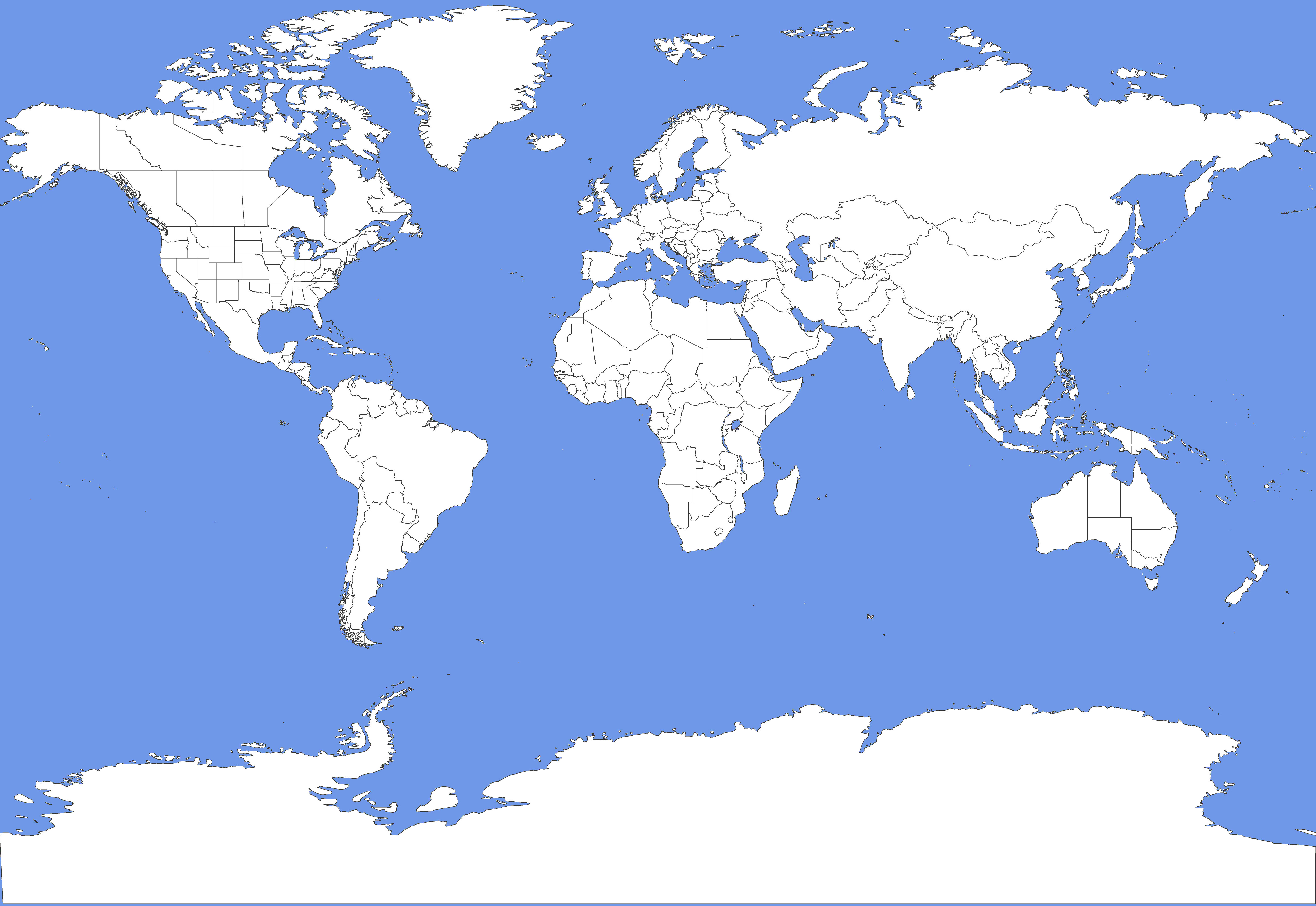
I will keep track of my books via a spreadsheet (I love projects involving spreadsheets!) that I may actually perma-link in the sidebar of the blog and via coloring in countries and states as I read books on the map above, which will be updated on the site periodically. Despite Australia and Canada being divided into provinces/states on the map I’m using, I intend to treat them as unitary countries, so once I read a book by a Canadian the entire country’s getting filled in. I will also probably continue posting individual book entries on Instagram and I’ll keep a shelf for them on Goodreads. You should add me on both places, if you haven’t already.
In the meantime, who are your favorite authors from outside the United States? Give me some names! I’ve got reading to do!

 Welcome to infinitefreetime dot com