
I swear to you that I did not read these two books back-to-back as part of any sort of June/Pride Month … thing, but once I realized what I had done I decided that the Mark Oshiro book on my shelf had to be next, and I’ve got a book about the Stonewall uprising that is probably going to get moved up in the queue. At any rate, let’s talk.
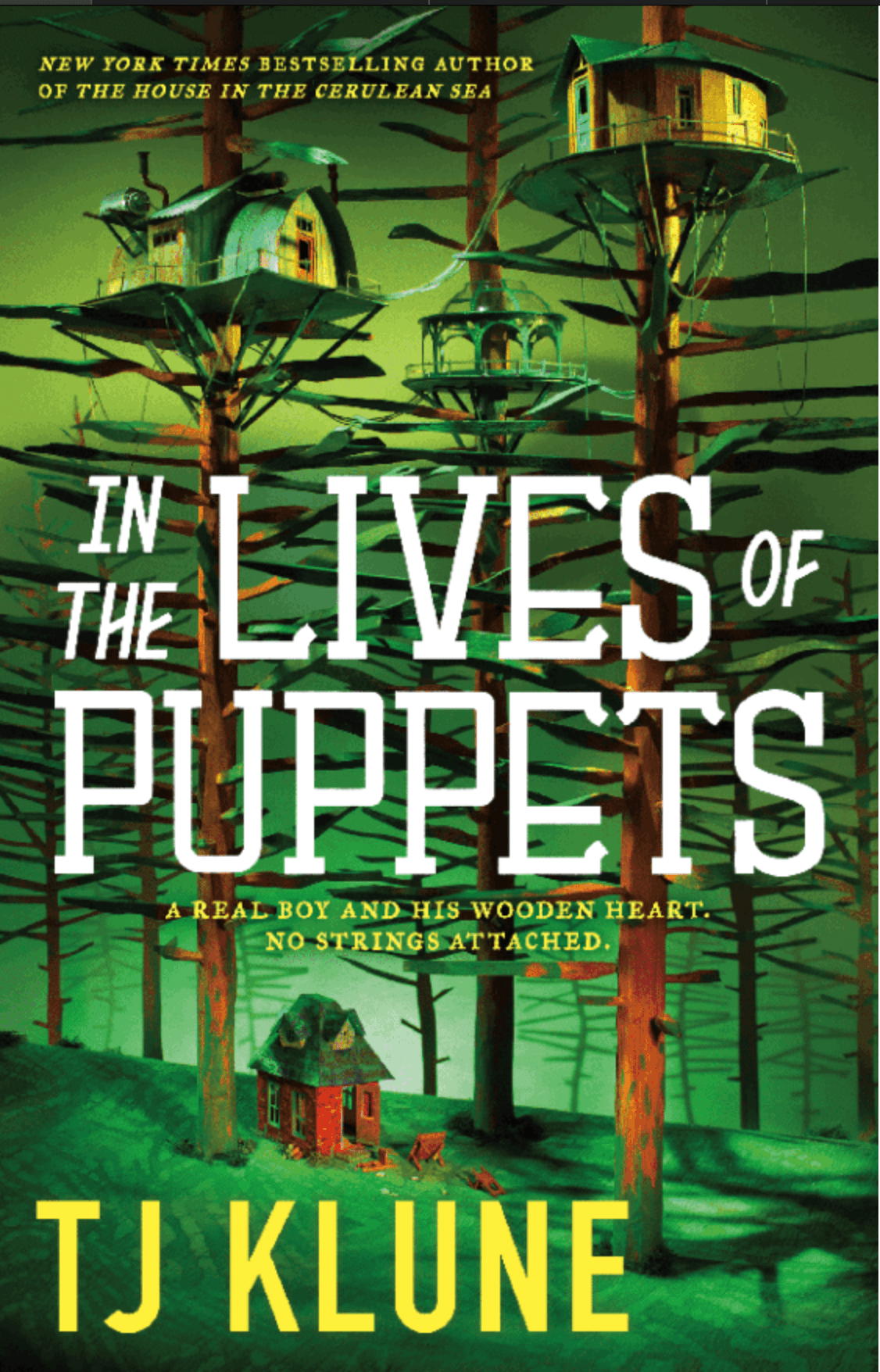
TJ Klune has written three books for adults so far, with a fourth coming out in July, and I’ve read all three of them. My piece about his debut novel, The House in the Cerulean Sea, is, somewhat inexplicably, the most popular post I’ve written in the last several years, although I don’t know if people are reading it and enjoying it or reading it and calling me an idiot somewhere I can’t find, because I can never figure out what the source of all the traffic is. The House in the Cerulean Sea was very nearly my favorite book of the year, and while I didn’t enjoy his second novel as much as the first, Under the Whispering Door was still an Honorable Mention for the year it came out.
I liked In the Lives of Puppets a lot, but it still doesn’t quite hit the heights of Cerulean Sea. I am starting to see themes across Klune’s books; he loves fantastical, magical settings where the main character is somewhat of an outsider to the culture or at least the immediate environs of the book, and there is always a strong element of found family and a delightfully understated, shy queer relationship that develops over the course of the books. His stories are predictable but they are the comfortable sort of predictable; I don’t really want to use the word “cozy,” but fuck it, the shoe fits and he’s putting it on. The conceit in this book is not an orphanage for magical children or the waiting room for the dead but instead the literal last boy on Earth and his friends, all of whom are robots and one of whom is a literal Roomba named Rambo. I love Rambo. You will love Rambo. The characters in this book are the best thing about it; Rambo and the medical bot named Nurse Ratched (which is actually an acronym, and I’m not spoiling it) are just wonderful characters. Rambo can be in every book I read from now on. I love him.
Klune’s next project is a four-book fantasy series; Book One is out in July and Book Two is in August, so I’m wondering if all four are already written and they’re planning on pushing them all out that fast or what, but it will be interesting to see what he does in a setting that will need to be more robust in its worldbuilding than what I’ve seen from him so far. At any rate, this is a strong recommend.
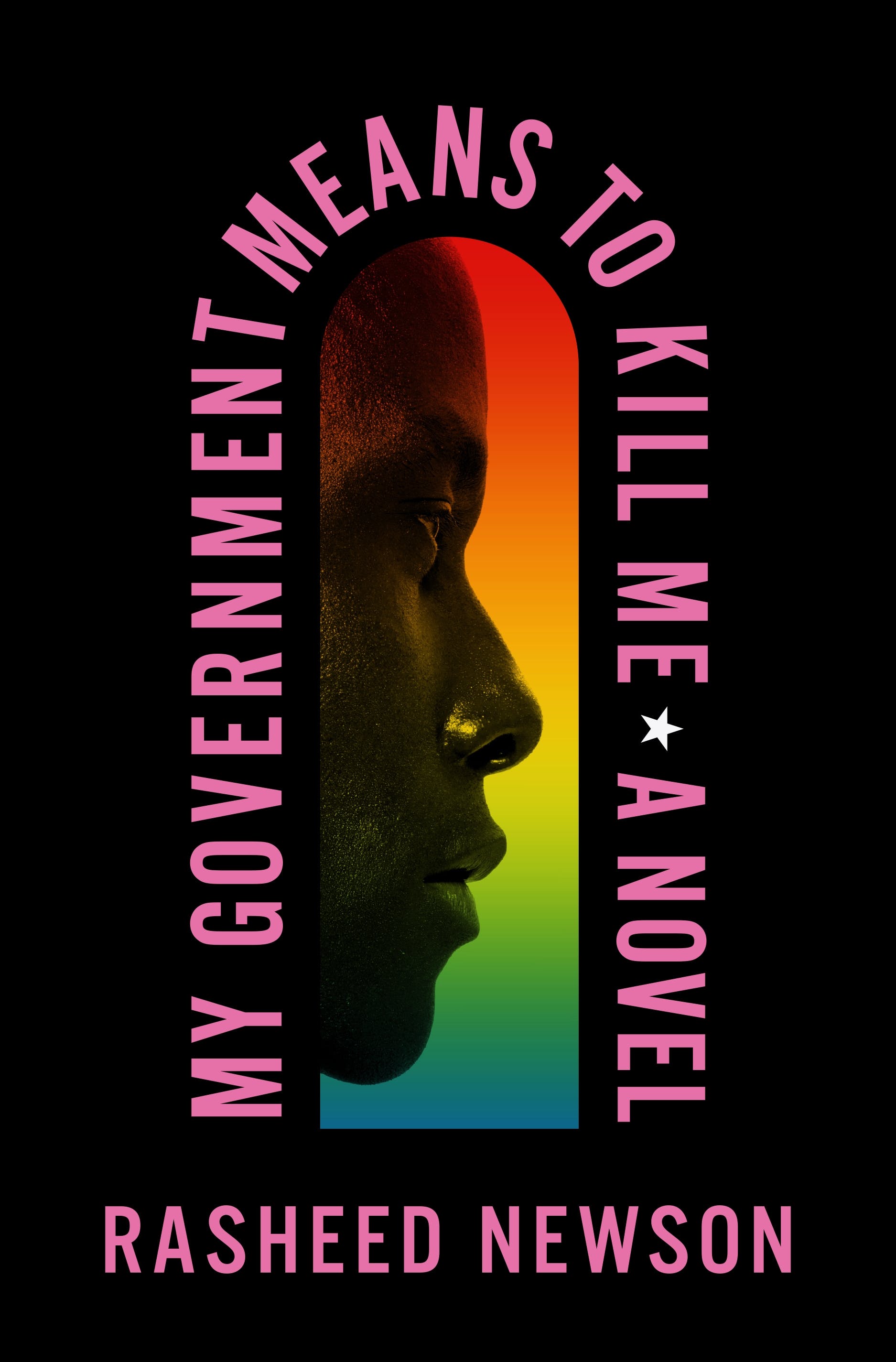
I picked up Rasheed Newson’s My Government Means to Kill Me almost at a whim off of a table at Barnes and Noble, and it sat on my Unread Shelf for longer than it ought to have, because it was really fucking good. It reads like a memoir, and there were points while reading it where I genuinely forgot that the whole thing was fictional and the author was not actually the person he was writing about in the book. And he’s not doing something cute and thinly fictionalizing his own life, either; the main character of the book is a young (late teens; the book takes place over a few years) gay Black man living in New York during the early part of the AIDS epidemic in the 1980s, and while Newson is Black, male, and gay, he’s also 43, which is much too young for the book to be based on his own experiences.
For what it’s worth, I’m 46, and I remember when AIDS was simultaneously treated as a “gay disease” and generally horrifying, as no one really knew how it was spread. I remember watching the 1990 Golden Girls episode where they thought Rose might have gotten AIDS, and Sophia marking all of her coffee cups. I remember Ryan White, who lived in Kokomo, Indiana, only about an hour and a half south of me.
Being gay and in New York during the height of the epidemic is, uh, a rather different experience than being a white straight kid in Indiana, of course (and, entertainingly, the main character is from Indiana, although he is estranged from his family and really seems to think of Indianapolis as a leper colony, which … well, is maybe slightly overstating things.
I should toss in a content warning; Trey is essentially feral for the first half of the book or so, which features an extended look at New York’s gay bathhouse culture, and really doesn’t hold anything back. It’s more clinical than provocative; Newson isn’t trying to write erotica, but there’s lots and lots and lots of anonymous gay sex, although nearly all of it is consensual and the few nonconsensual things that happen do not rise to the level of rape scenes. Trey’s roommate is essentially a whore for wealthy white men and Trey himself works a series of menial jobs.
Then, right around the halfway point, Trey starts working in an unlicensed AIDS hospice– which was not a thing I knew existed prior to reading this– and the book morphs into a history of the earliest days of the gay rights movement. There’s an interesting historical undercurrent to the entire thing, as just about any time any real person or place is mentioned it gets a footnote explaining context and providing some additional detail, and I was pleased to discover that Bayard Rustin was an important secondary character. Trey ends up getting involved with the earliest days of ACT-UP, and gets beaten up by the cops at a protest– if you scroll down on that Wikipedia link to “Wall Street”, it’s that one– and the FBI makes an attempt to turn him into an informant.
This one, I think, is going to end up on my 10 Best list at the end of the year. Know what you’re getting into- if you’re squeamish about sex in books, you’re gonna have a bad time with parts of it– but it’s absolutely a worthy read, both as a piece of fiction and a piece of often neglected American history. I look forward to Newson’s next project.
 Welcome to infinitefreetime dot com