On dead assholes

I rejected a number of possible image choices for this post, one of which was a photo of the shitgibbon from today where it is very, very clear that half of his face is drooping in a way that absolutely screams “I’ve had strokes recently, and might be having one now.” I never ended up posting about the weird collective hysteria of a couple of weekends ago where the Internet all at once decided he’d died, and conspiracy theories and other forms of nonsense absolutely abounded for a few days. I myself got drawn into a conversation about whether a bunch of closed roads around Walter Reed Army Medical Center meant anything (answer: no) although I managed to avoid most of the really nutty shit.

Anyway, I wanted to take a moment to make what ought to be a really obvious point clear: that it is perfectly okay to be happy when absolutely fucking terrible people die, especially if said really terrible people die in the exact method that they have long suggested that it is perfectly acceptable for other, non-them people to die. My wife and I had a nice little moment together when it was confirmed that Charlie Kirk was dead, and accidentally viewing the video of him being killed a few minutes later (I don’t recommend looking, if you haven’t seen it) made it really clear that he’d been alive for maybe a few seconds after being shot and no longer than that. He could have been in the hospital with the trauma team standing next to him and already prepped for surgery and that shot would have killed him.

I feel bad for his kids. That’s it. And the truth is, I don’t even feel that bad for his kids, because they’re 3 and 1 and they will be better off without his awful influence in their lives, as will the entire rest of the world. I felt bad for them when he was alive, too. He literally died in a way that he had said was just fucking fine for other people to die. He had just said something racist and obnoxious seconds before dying. And he thought empathy was a personality flaw. So, cool. Fuck you, Charlie, I hope you’re in Hell.

(I’m having to be careful, as I’ve discovered that Kirk and Ben Shapiro are more or less the same person in my head. Shapiro is the one whose wife has never had an orgasm. Kirk is the “your body, my choice” guy, and someone else made a choice about his body today. I don’t care.)


And now, let’s engage in wanton speculation. No doubt me writing this and putting it on the internet will lead to being proved wrong immediately on most counts, so you can all look forward to that.

This was clearly an assassination; that’s not the speculative part. This was a deliberate and targeted shooting and was obviously planned carefully in advance. The shooter fired once, from a distance indicating at least some skill with his weapon, killed his target, and escaped completely undetected. Apparently the rifle has been found, but I genuinely don’t think Kash Patel’s FBI has enough institutional competence left to catch this guy and I’m also not convinced they’re trying very hard.

I do not have any trouble believing (which is not quite the same as saying “I believe”) that someone set this guy up to 1) give a nice little excuse for even more right-wing violence and fascism and 2) as much as I hate to say it, continue to try and knock the Epstein Files out of the news. Trump? Maybe not. Stephen Miller? Absofuckinglutely.

Dude got shot in Utah, which is not well-known as a bastion of liberalism, at a college that had not only invited him to speak in the first place but got what looks like a nice-sized crowd to hear him. It’s difficult to imagine why someone would deliberately target Charlie Kirk absent a specifically political motive, but I also have no trouble believing that he was killed because he wasn’t batshit enough for the shooter. I’m not interested enough in the rabbit hole this will take me down to do much research, but apparently he wasn’t super popular with some of the further reaches of the fever swamp for some reason. Feel free to enlighten me if you like.

And finally, if it was a leftist of any stripe who shot him, Kirk is not going to be the only one, and I’ll bet it’ll be no more than a few weeks until there’s at least another attempt. If you decided to start killing right-wing figures and were as successful as this guy was, would you stop with one? I kinda doubt it. I can’t wait to see the fucking nickname the press drops on the shooter if it happens again.
A couple of nonfiction reviews

I’ve been on a little nonfiction kick lately, and I want to talk about two of the books. One of them I can pretty much recommend without reservation, and the other … well, you’ll see.

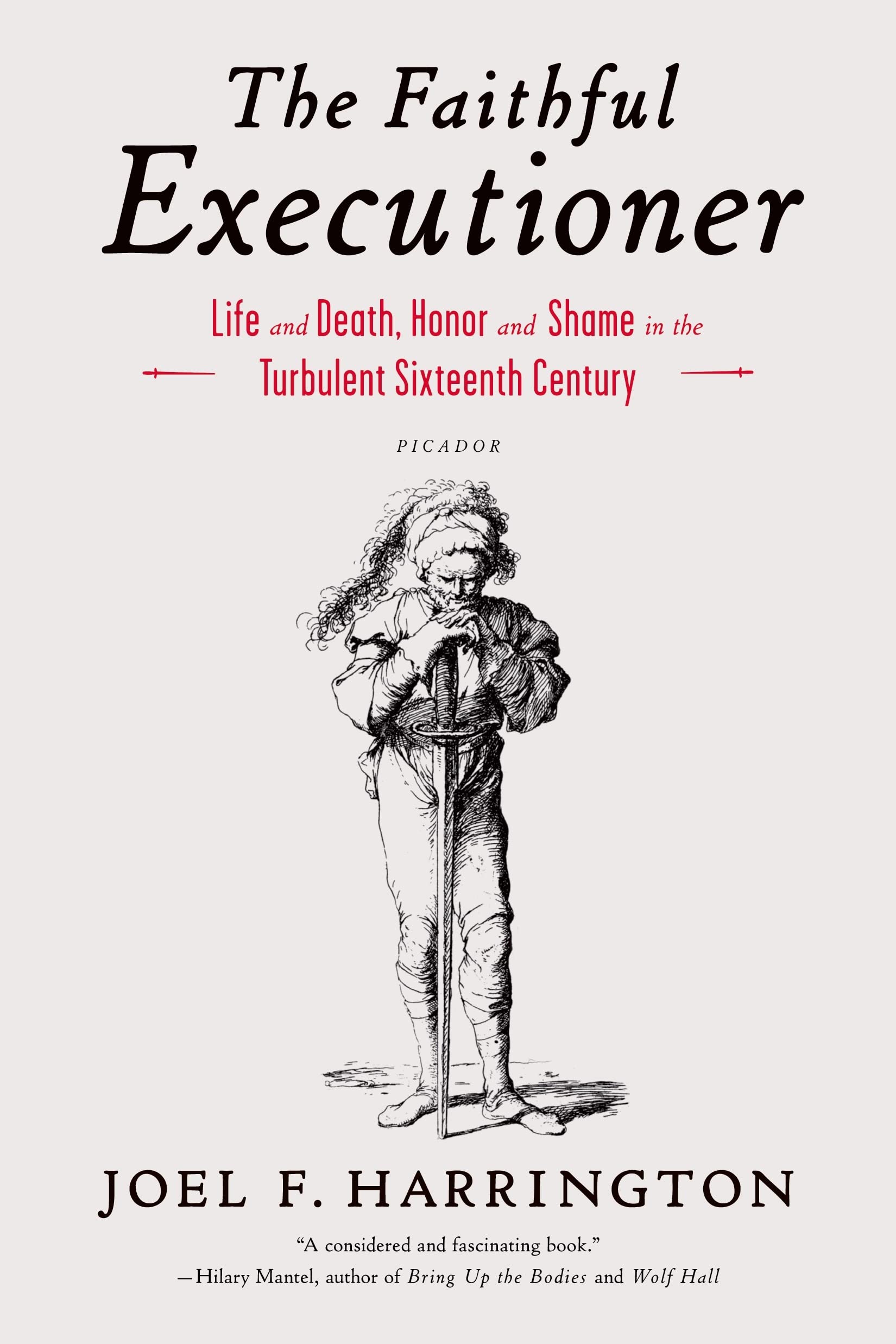
Anyway, The Faithful Executioner: Life and Death, Honor and Shame in the Turbulent Sixteenth Century is pretty Goddamned interesting. The book covers will take up more space than the words on this post, as this is very much a “you already know if you want to read this” book, but if reading a history book based on the journal of a Nuremberg executioner over the 45 years that he killed people for the state is interesting to you? Go forth. Right now.

Author Joel Harrington literally found this man’s journal in a bookstore, by the way, so this whole book came by almost by accident. The text was effectively lost; he was able eventually to track down an earlier (and thus, presumably, somewhat more reliable) version of it, but the whole book starts with this historian just literally stumbling upon a copy of this manuscript in a store. Meister Franz Schmidt executed people from 1573 to 1618, and kept records of varying detail of every execution or punishment he undertook on behalf of Nuremberg and several smaller towns in the area. At first the journal is more or less a dry record, but eventually Schmidt began recording the executions in greater and greater detail, eventually including his own feelings and opinions about the crimes committed by his … is victims the right word here? Clients? The poor bastards who got got at his hand. Those people.

I learned a lot from this book, and it feels like something I’ll be rereading in the future, which isn’t something I do very often with nonfiction. There’s lots of myths and nonsense attached to executioners, and this book does a great job of being a history of this one specific profession in this one specific place in time. Definitely check it out, if you think you can stomach it– the book isn’t gory, necessarily, but when beheadings are a big part of someone’s job, there’s no way to avoid some gross bits.

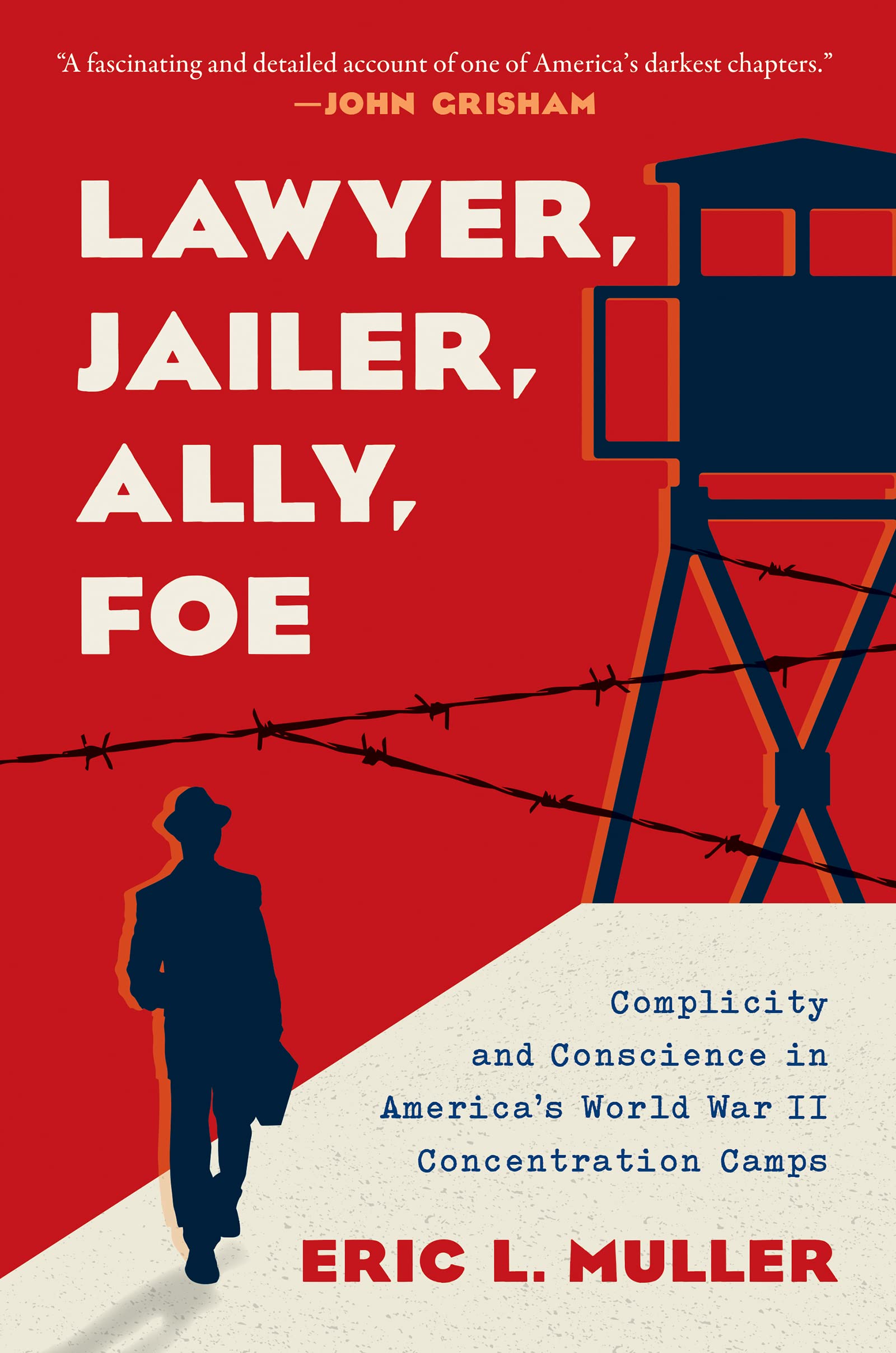
Notice how the lead quote on this book is from John Grisham, a novelist, and not from a historian? That’s kind of right on point. I’ve had this book on my Unread Shelf for way longer than it deserved, but having finished it, I’m kind of dissatisfied. Muller’s book follows three men who worked as “Project Attorneys” for the WRA– the War Relocation Authority– during World War II, acting as chief legal counsel at three of the concentration camps relocation centers that we herded Japanese Americans into. All three men are white, of course, and there’s a fourth who is himself “relocated” but is a trained and barred lawyer who works closely with the Project Attorney at his … uh … center.

Muller is a law professor, not a historian, and you can tell. The book is less pure history than historical fiction, as only one of the four men who are covered in the book was alive when Muller was writing, and it doesn’t look like he interviewed him intensively. The book repeatedly commits the cardinal sin of getting into the private, internal lives of these men with no particular documentation, and Muller freely admits that some of the events in the book are invented, but “consistent with his understanding” of the kinds of men these were. There’s an Author’s Note at the end that gets into what happened and what didn’t; the way he puts it is that nothing “of historical significance” was made up, so if he says a hearing took place, the dialogue is probably based on transcripts, but the bit where the white guy brings his Japanese colleague a pie is made up.

This isn’t a bad book by any stretch of the imagination, but I feel like it’s a bit too generous to its subjects. I’m willing to believe that at least some of these guys took these jobs out of a sincere if misguided belief that they could make a bad situation better, but when half of one guy’s narrative is him trying to cut the legs out from underneath a Japanese attorney who he thinks is developing too much influence in the camp, y’know, I’m comfortable with saying these were not good people!

On top of that, centering the feelings and experiences of the white lawyers who had the option (which some of them took) of simply walking away from this bullshit just doesn’t feel right. I’d love to have known more about Thomas Masuda, the Japanese attorney who gets about half of one of the chapters, or Kiyoichi Doi, who gets treated like a bad guy in a book where he is unquestionably in the right. And Muller doesn’t seem to have spoken to any actual internees while writing this.

I dunno. I didn’t hate the book, but it’s misguided.

To be completely clear: On immigration

photo by Mario Tama/Getty Images

I have said this, or variations on this, before. But this is the type of message that bears repeating.

No human being is illegal.

I favor completely unrestricted immigration to the United States. I don’t care if you get here on a private jet or by walking across the border. I don’t care if you have “papers” or not. If you think a better life can be had by coming to America, I think you should be allowed to live here.

Immigrants are not taking anyone’s jobs. The way I know this is the kinds of jobs immigrants work are always hiring, and I don’t see anybody lining up to work them.

Immigrants are significantly less likely to be criminals than US citizens, and frankly I don’t give a fuck if we end up bringing a statistically insignificant handful of criminals along with all of the honest immigrants. We have plenty of home-grown assholes and criminals as is, and I’ll happily trade that Nazi trash creature Stephen Miller for a dozen Mexican murderers anyway. They can move into my fucking neighborhood. We’re still better off. This is the “poisoned M&M” question all over again. If the M&Ms represent human lives, I’ll eat the whole fucking bowl. I don’t give a shit.

ICE should be abolished immediately, and anyone who still works for that agency could be dropped into an active volcano with no actual loss to humanity.

Let anyone who wants to come here in, and give them a path to citizenship. If they break the law along the way treat them like anyone else who broke the law.

Immigration is an unconditional societal good. We are better off because of these people, and the people most opposed to immigration are reliably the worst among us.

I know who I stand with, and I will not apologize.

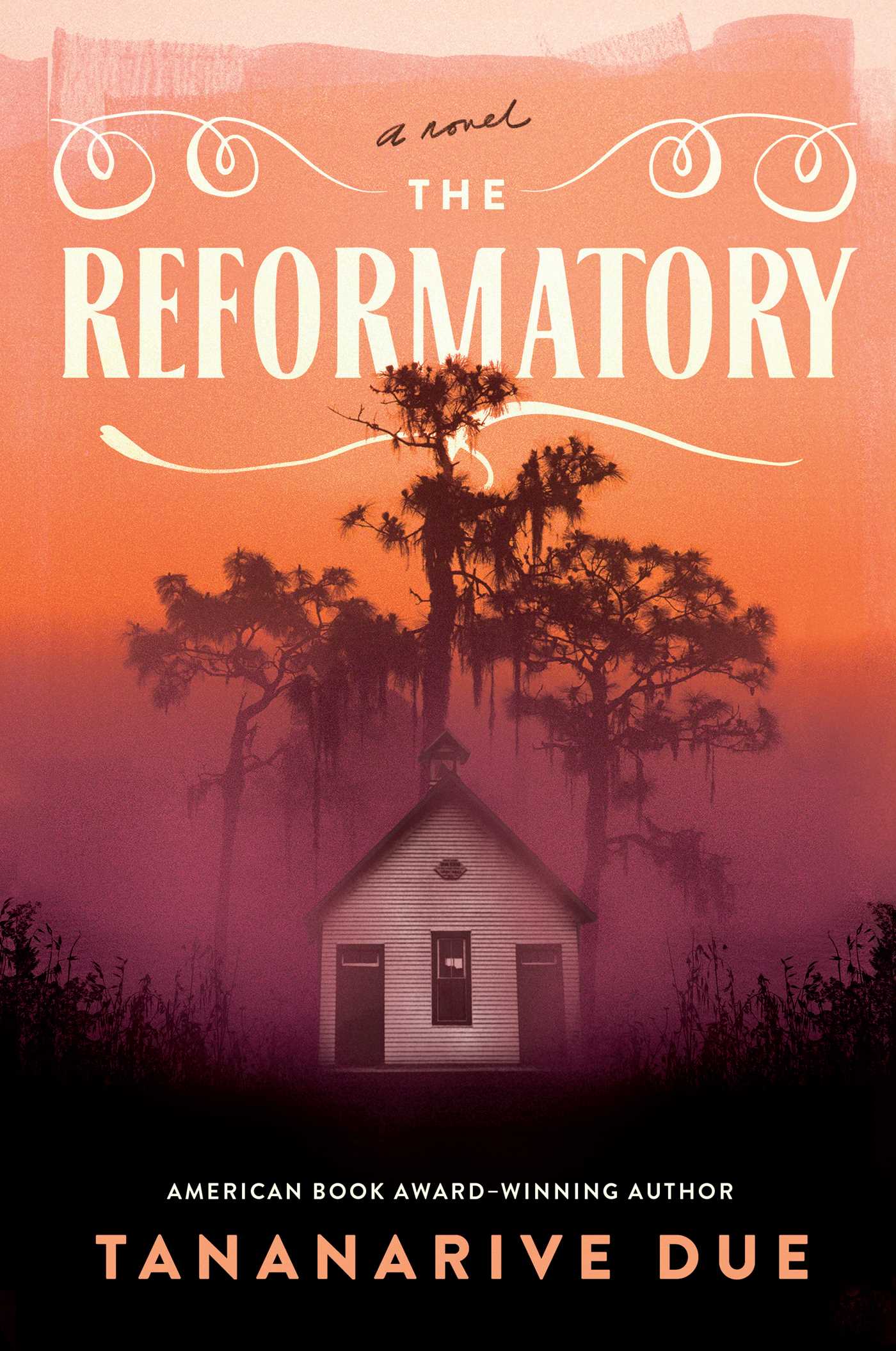
#REVIEW: The Reformatory, by Tananarive Due

I feel like I haven’t treated Tananarive Due with enough respect.

The Reformatory is the third of her books that I’ve read. I did not know that until just now! I remember reading her book My Soul To Keep way back in 2016, and at the time I really liked it, but for some reason every time I think of it now I feel like it wasn’t something I enjoyed. And I just discovered that I read her debut novel, The Between, in 2020.

When I tell you that I don’t remember anything about that book, I need you to understand that not only do I not remember any details about the story, I did not even remember the book existed. That cover looks unfamiliar. I cannot picture where my copy of it is in my house, and I surely read a print copy. I don’t know what the spine looks like. If you had asked me ten minutes ago what the name of Tananarive Due’s debut novel was, I would not have been able to tell you. My recall of books from years ago is not always great, I admit that, mostly because I read 100+ books a year. But forgetting a book existed or that I ever read it at all is not a thing that I do.

And that after my weird about-face on My Soul to Keep? I have no explanation for this phenomenon.

Anyway, The Reformatory is really good, and if six months from now I find that I’ve turned on it too, I’m gonna need someone to come get me.

The Reformatory is the story of Robert Stephens Jr., a 12-year-old boy who is sent to the Gracetown School for Boys for a supposed six-month sentence after kicking the son of a wealthy white man in the knee. The book is set in 1950 in Florida, thick in the middle of Jim Crow, and the Gracetown “school” is a segregated, haunted nightmare, run by a grotesque abomination of a man. It is widely understood that Robert won’t be getting out in six months, as the warden is renowned for finding excuses to hold on to any boy sent to him until their 21st birthday regardless of their original sentence. Beatings and torture are commonplace and the inmates prisoners “students” are encouraged to turn on each other at any opportunity.

The book bounces back and forth between Robert’s story and his sister, who Robert was defending when he kicked the other boy. She is trying her best to get him released, which is easier said than done in any number of ways. Their father has fled to Chicago after his attempts at unionization upset the Klan, and it’s fairly clear that part of the reason Robert is being treated as poorly as he is is because the authorities can’t get at his father.

The book would be scary enough without the haints, is what I’m saying, and the presence of a large number of ghosts at Gracetown becomes almost a distraction from all of the more grounded evil taking place there. Of course, a number of them are ghosts of children who were murdered or otherwise died while incarcerated there, and, well, a whole bunch of them bear quite a serious grudge against the warden.

I won’t go into much more detail, because (as usual for books I enjoyed) you deserve to experience the twists and turns on your own, but this really is a hell of a book, and I’ve not heard a lot of people talking about it. Give it a read.

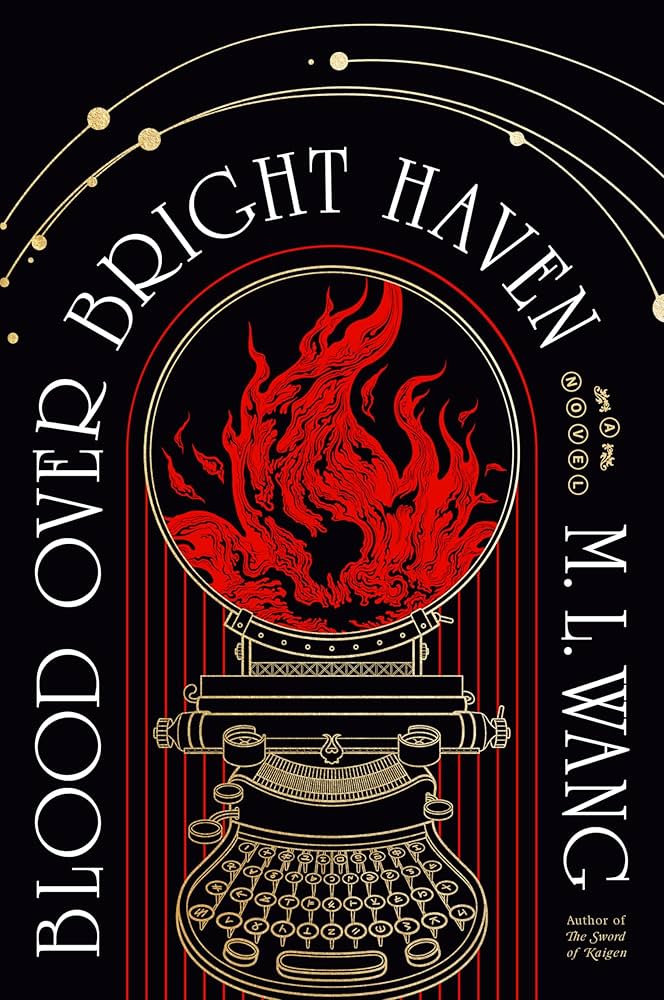
#REVIEW: Blood Over Bright Haven, by M.L. Wang

I discovered the work of M.L. Wang through BookTok, which is, by and large, convinced that her The Sword of Kaigen is one of the best books ever written. I read that one first, and … it’s not one of the best books ever written, not by a long shot, but it was good enough to get me to pick Blood over Bright Haven up and then take several months to get around to reading it. I didn’t start off well with this book either; by pure coincidence it shares a lot of plot points with Ava Reid’s A Study in Drowning, which I read immediately before it, and starting a second book in a row where the main character was a trailblazing female academic in a field where no one wanted her around and who cried all the time was a bit jarring even before it turned out that, somehow, in both books the fact that said main character was a huge fucking racist was a big plot point. Now, this is fantasy racism, which doesn’t make it a lot better,(*) mind you, but it’s a big theme of both books, so be prepared for that. Also, while we’re talking about things that might be in a content warning, Drowning has a character who is a rape survivor (although, creepily, the act in question comes off as consensual the first time it’s described) and there’s a rape attempt in Blood.

A Study in Drowning was not a great book– serviceable, but not much more– and it kind of poisoned me against Blood over Bright Haven for the first third or so. I nearly put it down. I’m glad I didn’t.

For starters, and I don’t want to get too deep into spoilers, because you deserve to experience this at the book’s pace, Sciona is very much not the main character of Blood over Bright Haven, even though it will seem like she is for most of the book.

Second, Blood over Bright Haven is one of the angriest books I’ve ever read, up there with Yellowface and Iron Widow,(**) although, again, you spend enough time in Sciona’s head that you might not realize how angry the book is at first. This is a deliberate misdirect on the part of the author and in retrospect it’s tremendously effective at prepping you for the big twist midway through the book. A bit of background: Sciona starts the book off by being named a Highmage of her home city-state of Tiran, an office that no woman has ever held before. This happens quickly; another weird similarity it has to Drowning, come to think of it; you get yourself mentally ready for her to take half the book to become a highmage and it’s, like, a chapter. Magic in this book is fascinatingly mathematical and complicated and meaty, it’s more like writing equations or geometric proofs than what for lack of a better word I’ll call “traditional” spell casting, although it’s not as explicitly mathematical as, say, To Shape a Dragon’s Breath.

Anyway, for our purposes the salient part of writing a spell is that you have to determine where the spell gets its energy from, and how much energy it might take to pull off any given magical effect. If you pull too little you’ll get partial results and if you pull too much, something is probably going to explode. Sciona is a prodigy at mapping, which is the process of figuring out where magical energy sources are and how to pull from them, and she gets put on a huge project involving pushing back the magical wall that surrounds the city, a huge … public works project, which isn’t quite what you might expect from a fantasy book but that really is what’s going on here.

Also, spells are written on magical typewriters, which is just super fucking cool.

Anyway, blah blah blah class conflict blah blah blah sexism blah blah blah plot development and then she figures out where the sources of her magic are really being pulled from, and I’m not telling you anything else, because you deserve to experience this on your own, and probably by this point if you’re like me you’ve decided you don’t like Sciona all that much. Unlikable MCs are tricky, right? First of all, you often can’t be sure if the author realizes they’ve written an unlikable main character, or if it’s just your reaction to that person (I call this “Lana Lang syndrome”) and also because the author wants you to keep reading, which can be a hard sell if you don’t like living in the head of the person you’re reading about.

I’m just going to say that it was clear quickly that M.L. Wang knew exactly what she was doing here, and that Sciona’s personality flaws are clearly intentional and are also pretty essential to the book unfolding the way it does. She has a great conversation (well, fight) with a relative late in the book where the relative just rips her to shreds and every word she says about her is true and I just kind of read it in awe of how fully in control of her characters Wang was.

Also, and I’m not going to go into details because, again, I want as few spoilers as possible, but reading this book on Thanksgiving lent the whole book a really interesting synchronicity with actual life. You’ll understand when you read it.

And, yeah, I’m about to end the second review in a row with the phrase “one of the best books of the year,” and a wish that M.L. Wang’s many fans on BookTok and elsewhere would realize which of her tradpubbed books (she has several that she published herself, and this and Kaigen were both originally indie titles) is clearly the superior one, because this book deserves the press and attention that The Sword of Kaigen has gotten. Go read it.

(*) The sole physical characteristic that the Kwen characters are given is “copper hair,” and I’m still unclear what precisely the difference between copper and red hair is, but you could take this as evidence that the despised minority in this book are white people, which is an interesting choice that ultimately doesn’t end up mattering very much since this is very much a Not Earth book.

(**) The fact that all three of the authors here are Asian women is a coincidence. It’s an interesting coincidence, but a coincidence nonetheless.

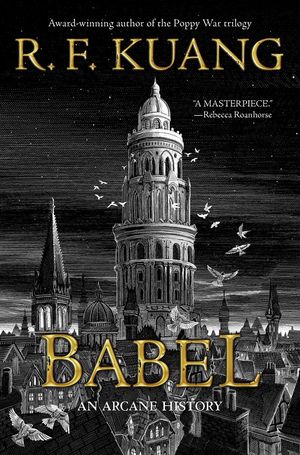
REPOST #REVIEW: Babel, or The Necessity of Violence: An Arcane History of the Oxford Translators’ Revolution, by R.F. Kuang

8/28/22 addendum: This book finally came out last week, and despite pre-0rdering it months ago it took until Thursday for my copy to show up, because Amazon is buttheads. I may actually end up with three copies of it eventually because the UK cover is absolutely amazing. At any rate, I still love this book, and you still need to read it, so reread my original review in case you missed it.


I admit it: I thought about just putting Babel in as the name of the book for the headline there, but really, when a book has this grandiose of a title and more especially when it earns this grandiose of a title, you really need to lean into it. So you get the whole thing.

First things first: this book does not come out until August 23rd. I have had absolutely incredible luck lately with getting advanced reader copies of books I was frothing at the mouth to read– first getting a copy of Jade Legacy several months early, and now lucking out and getting my hands on Babel by winning a Twitter drawing. I have reviewed all three books of her series The Poppy War, and two of the three ended up on my Best Of list at the end of the year. To be brief– because this book has nothing to do with those books except for some overlapping themes– they are an astounding achievement in fantasy, particularly when you take into account that even now, four books into her career, R.F. Kuang is somehow only 26 years old, meaning that I was in college when she was born.

Christopher Paolini, eat your fuckin’ heart out.

Anyway.

Babel is set between 1826 and, oh, the mid-1830s or so, primarily at Oxford, and is at least mostly a historical fiction novel. Why “mostly”? Because in the real world there wasn’t a gigantic tower in the middle of campus that housed the Royal Institute of Translation, which kept the British Empire afloat via a translation-and-silver-based magic program. That’s … new. And it’s weird to say that Kuang mostly adheres to real history other than this thing that literally touches every aspect of the British Empire, but she does. And this is where I’m kind of perfectly situated for this to be my favorite of her books: you might recall that at one point I was working on a Ph.D in Biblical studies– the Hebrew Bible, specifically– which means that while intellectually I can’t hold a candle to any of the four students who form the main cohort of this book, it does mean that I’ve had a lot of the same conversations that they have at various points in the book, and that I’ve spent lots of time thinking hard about a lot of the same issues that are inherent to the concept of “translating” something from one language to another, even before you get to the part where one of the things being translated is literally considered holy Scripture.

Also, one of my buddies from that graduate program is now an actual professor at Oxford, so while I’ve never set foot on the campus I know people who work there, which … doesn’t mean anything at all, actually, but I’m happy to bask in Bill’s reflected glory– and if you’re reading this, my dude, you must find a copy of this book when it comes out. And then send me one, too, because the UK cover is way better than the US one and books with sprayed edges make my jibbly bits feel funny.

The main character of the book is called Robin Swift, a Chinese orphan who is taken as a ward by a professor at the Institute of Translation and brought back to London, eventually to become a student at Babel himself. Why “called” Robin Swift? Because Dr. Lowell tells him that his actual name– never revealed in the text– is no fit name for an Englishman, and makes him choose another one. When Robin arrives at Oxford, he meets the rest of his cohort, composed of two women, one of which is Black, and a young Muslim from India. You may perhaps be raising an eyebrow at this, and you’d be right to, as Oxford didn’t admit women or anything other than white people in the 1830s, but Babel has different standards and different rules than the rest of the university. The book follows Robin and his friends through their first four years at the university, as they learn more about Babel’s workings and about how the silversmithing that underlies so much of Britain’s power works, all while living in Britain and attending a university while, for three of them at least, being visibly Not British.

So in addition to being another really good R.F. Kuang book about a young scholar in over their head (no uterus-removals in this one, though) this book is also about racism and colonialism. In fact, I’d say it’s mostly about racism and colonialism, and specifically the way both manifest themselves in the university, and about what it’s like to be complicit in the oppression of your own people, and what “your own people” even really means if you were raised away from them. And all of that sounds really deep, and it is, but it’s also a hell of a good story, with fascinating characters and lots of worldbuildy magic stuff that may as well be serotonin injected directly into my brain.

I loved the Poppy War books. I loved this more than any of them, and if R.F. Kuang wasn’t one of my favorite writers before, she absolutely is now. Pre-order this, immediately. You can have it in August.

#REVIEW: Babel, or The Necessity of Violence: An Arcane History of the Oxford Translators’ Revolution, by R.F. Kuang

I admit it: I thought about just putting Babel in as the name of the book for the headline there, but really, when a book has this grandiose of a title and more especially when it earns this grandiose of a title, you really need to lean into it. So you get the whole thing.

First things first: this book does not come out until August 23rd. I have had absolutely incredible luck lately with getting advanced reader copies of books I was frothing at the mouth to read– first getting a copy of Jade Legacy several months early, and now lucking out and getting my hands on Babel by winning a Twitter drawing. I have reviewed all three books of her series The Poppy War, and two of the three ended up on my Best Of list at the end of the year. To be brief– because this book has nothing to do with those books except for some overlapping themes– they are an astounding achievement in fantasy, particularly when you take into account that even now, four books into her career, R.F. Kuang is somehow only 26 years old, meaning that I was in college when she was born.

Christopher Paolini, eat your fuckin’ heart out.

Anyway.

Babel is set between 1826 and, oh, the mid-1830s or so, primarily at Oxford, and is at least mostly a historical fiction novel. Why “mostly”? Because in the real world there wasn’t a gigantic tower in the middle of campus that housed the Royal Institute of Translation, which kept the British Empire afloat via a translation-and-silver-based magic program. That’s … new. And it’s weird to say that Kuang mostly adheres to real history other than this thing that literally touches every aspect of the British Empire, but she does. And this is where I’m kind of perfectly situated for this to be my favorite of her books: you might recall that at one point I was working on a Ph.D in Biblical studies– the Hebrew Bible, specifically– which means that while intellectually I can’t hold a candle to any of the four students who form the main cohort of this book, it does mean that I’ve had a lot of the same conversations that they have at various points in the book, and that I’ve spent lots of time thinking hard about a lot of the same issues that are inherent to the concept of “translating” something from one language to another, even before you get to the part where one of the things being translated is literally considered holy Scripture.

Also, one of my buddies from that graduate program is now an actual professor at Oxford, so while I’ve never set foot on the campus I know people who work there, which … doesn’t mean anything at all, actually, but I’m happy to bask in Bill’s reflected glory– and if you’re reading this, my dude, you must find a copy of this book when it comes out. And then send me one, too, because the UK cover is way better than the US one and books with sprayed edges make my jibbly bits feel funny.

The main character of the book is called Robin Swift, a Chinese orphan who is taken as a ward by a professor at the Institute of Translation and brought back to London, eventually to become a student at Babel himself. Why “called” Robin Swift? Because Dr. Lowell tells him that his actual name– never revealed in the text– is no fit name for an Englishman, and makes him choose another one. When Robin arrives at Oxford, he meets the rest of his cohort, composed of two women, one Black, and a young Muslim from India. You may perhaps be raising an eyebrow at this, and you’d be right to, as Oxford didn’t admit women or anything other than white people in the 1830s, but Babel has different standards and different rules than the rest of the university. The book follows Robin and his friends through their first four years at the university, as they learn more about Babel’s workings and about how the silversmithing that underlies so much of Britain’s power works, all while living in Britain and attending a university while, for three of them at least, being visibly Not British.

So in addition to being another really good R.F. Kuang book about a young scholar in over their head (no uterus-removals in this one, though) this book is also about racism and colonialism. In fact, I’d say it’s mostly about racism and colonialism, and specifically the way both manifest themselves in the university, and about what it’s like to be complicit in the oppression of your own people, and what “your own people” even really means if you were raised away from them. And all of that sounds really deep, and it is, but it’s also a hell of a good story, with fascinating characters and lots of worldbuildy magic stuff that may as well be serotonin injected directly into my brain.

I loved the Poppy War books. I loved this more than any of them, and if R.F. Kuang wasn’t one of my favorite writers before, she absolutely is now. Pre-order this, immediately. You can have it in August.

In which I need to be clear

Fuck, and I cannot express this any more sincerely, Cuphead.

I’m just kind of screwing around with my various video game systems while I’m waiting out the Elden Ring series, and after five years of sitting on the fence about it I finally downloaded Cuphead.

Two reasons for the delay: one, the game’s visual aesthetic borrows extensively from 1930’s era Fleischer cartoons, with all the racist history that that era and that style of animation brings with it. And if I’m being 100% honest I feel kind of dirty about it. I dropped $20 on the game; I may make an equal or larger charitable donation somewhere appropriate and see if that eases my conscience at all. (To be clear, I haven’t noted anything directly problematic with the game itself, and you should read the articles I linked to, both of which make a nicely nuanced case about the game, but … it’s squicky. That’s a scientific term.)

Also, not for nothin’, it’s hard as hell, and that’s coming from me, a certified Fromsoft Guy. Worse, it’s hard as hell with short chapters, so there’s tons of swearing and immediately jumping back in going on, all the while insisting that I’m going to quit after this fucking stage kills me one more time. I mean, you win a stage in like a minute and a half if you’re playing well, probably faster once I get better at it. But I’m not going to get better at it if I end up throwing the Series X out a window, now, am I?

(Subject for a later post: I hate the Xbox Series X’s UI, a whole fucking lot.)

I devoured John Scalzi’s new novel, The Kaiju Preservation Society, over the last couple of days, and it was exactly what I wanted from it. Kaiju might be the John Scalziest book that John Scalzi could possibly write, and given his description of how the book happened (he spent 2020 beating his head around a novel that was decidedly out of his comfort zone and ended up bailing on it, and then this novel jumped into his head more or less in its final form and he wrote it in barely two months) it’s not hard to see how it ended up that way. Now, I love Scalzi’s style– my writing at its very best approaches Scalzi’s command of his tone, and I think I’m flattering myself by saying that, to be clear, but this is someone I look up to– but it’s turned up to 12 here, to the point where he almost feels like he’s parodying himself a little bit. Like, not every single conversation needs to be quippy. Sometimes people can just talk. If you’re not already a fan this isn’t going to be the book that convinces you (I’ll hand you Redshirts for that) and if you’re a fan you’re going to enjoy it. The rest of y’all? Smart, sarcastic, accessible science fiction and giant monsters. The word Kaiju is right there in the title; you know what you’re going to get. Go grab it up.