On YA, genre and litratcher

I was originally going to write a review of this book and discuss this in the review, but I took a nap this afternoon and still have 60-some pages left. Why did I just say “this book” and not the name of the book? Well, I’m doing that thing where I don’t want this post necessarily showing up in search results for the book, especially since this post is going to be pretty critical and it’s important for you to know that I’m really enjoying the read. I’m going to be a little sneaky about which title I’m talking about, though. Let’s see if you can figure it out.

I am a lifelong genre reader, and for most of that time I’ve been fairly open about my disdain for what people call Literary Fiction. Feel free to blame it on me being too dumb for Literary Fiction. That’s fine. I have an ego but for some reason it doesn’t extend to being bothered by that particular allegation. I don’t get most of the examples of the genre I’ve read; I usually don’t understand why anyone bothered to write the book in the first place and I understand even less what anyone is talking about when they praise them. In particular, use of the word “comic” can be a red flag. One guarantee is that any time a book reviewer I’ve never heard of describes a book as “comic” is that it will not, in any way, be funny. In fact, for the most part, it won’t even be trying to be funny and failing. “Comic” means something else to Literature People. I don’t know what it means and I’m not going to bother finding out.

This particular book has a bunch of pull quotes by people I’ve never heard of who wrote books I’ve never heard of on the back. The sole exception is George Saunders; I’ve heard of him and I know he’s fancy but that’s all I can tell you. The blurbs aren’t as bad as they can get; none of them appear to be random collections of words, and none of them use words that should not be used to describe books (“deliciously turquoise and refreshing prose”– HARPER’S) in them. But this was on the New York Times’ 10 Best Books list, which usually means only ten people read it, and it was a National Book Award finalist. Here is the list of every National Book Award winner. I admit, I have read five of them– interestingly, all but one nonfiction winners– and I have never heard of considerably more than five.

Anyway, this book should have been YA and nothing, nothing will convince me otherwise.

If the exact same book had been written by a woman, it would be shelved with YA. It’s The Hunger Games with a more complicated vocabulary, more swearing, and footnotes about the American carceral system. The premise is the most YA-coded thing I’ve ever seen; the idea is that incarcerated criminals can get their sentences commuted if they agree to engage in gladiator combat to the death every so often; if they make it three years and are still alive, they get to go free. They earn something called, no shit, Blood Points as they work their way through the combats; Blood Points can be cashed in for food, weapons, armor, better accommodations, shit like that. There’s this weird color-coded & scientifically implausible technology built into their wrists so that their captors can torture them for talking.

And partway through the book the main character finds out that she’s going to have to fight her girlfriend in her final fight– the convicts are loosely organized into teams, and a rule change means people on the same team have to fight if they’re at the same rank– and predictable angst occurs.

Come the fuck on.

Now, I’m not done with the book, so I don’t know whether the two characters are actually going to fight or not, but this is one hundred percent a science fiction dystopia that would have been shelved with YA with a different author. That’s not necessarily a bad thing! I’m thoroughly enjoying the book, and I’ll finish it tonight, having burned through its 360 pages in less than a day. Unless it completely blows the ending, it’s gonna be a five-star review. But looking at these blurbs and a couple of other pieces about it, it’s hilariously obvious that most of the people reading it have never touched dystopian literature in their lives and haven’t read any YA at all, because … one thing this book is very much not is especially original. I could have sketched out a broad outline of the plot within ten pages of the start of the book. So could anyone who has read any YA in the last fifteen or so years. I’m not going to look up how long ago Hunger Games came out because I don’t feel like being old. But there are a ton of “blabla has to fight to the death, because Reasons, plus fascism” books out there and while this is an excellent example of one, that’s still exactly what it is.

I’ve got lesson planning to do and then I really do want to finish this book tonight, so I’m going to leave this here– I probably will do a second post once I’ve finished the book, though. But come on, guys. Somebody got chocolate in your peanut butter and peanut butter in your chocolate and you’re doing your level damn best to not admit that you’ve got a Reese Cup in front of you. It’s a Reese Cup. We love Reese Cups. Just admit what it is and eat the damn thing.
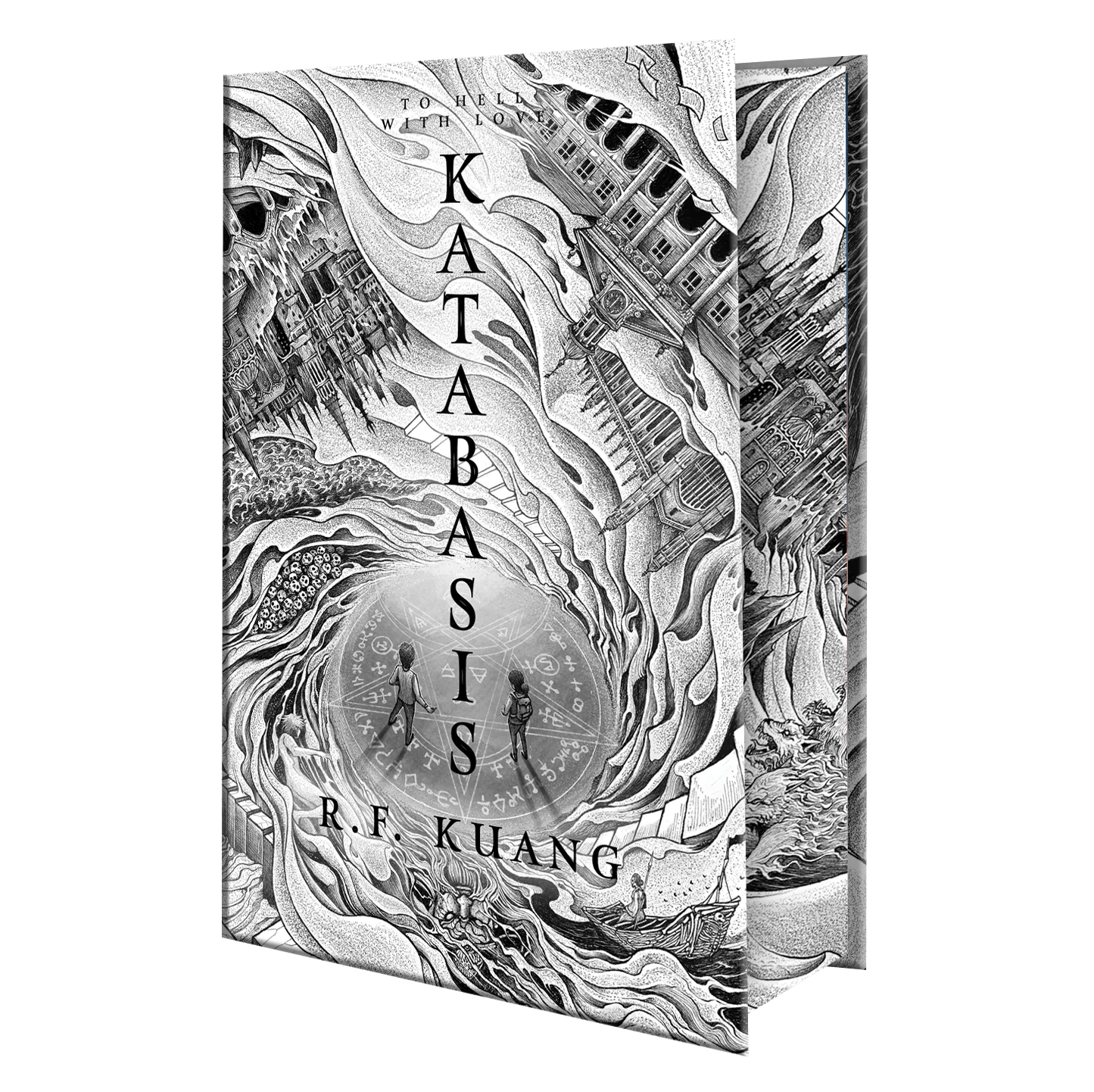
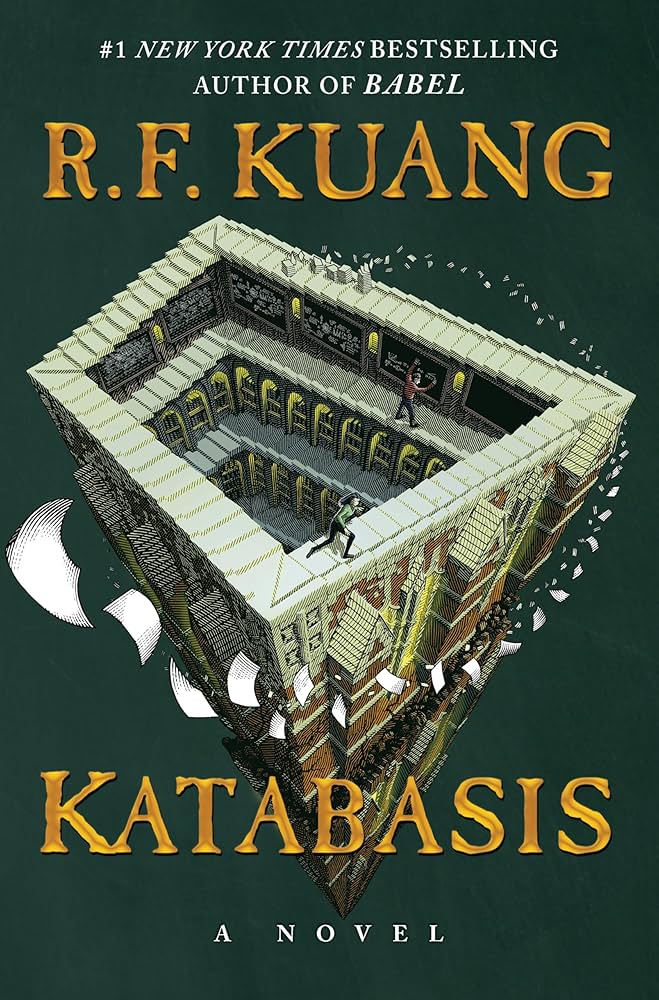
#REVIEW: Katabasis, by R.F. Kuang

In retrospect, this is probably my fault.

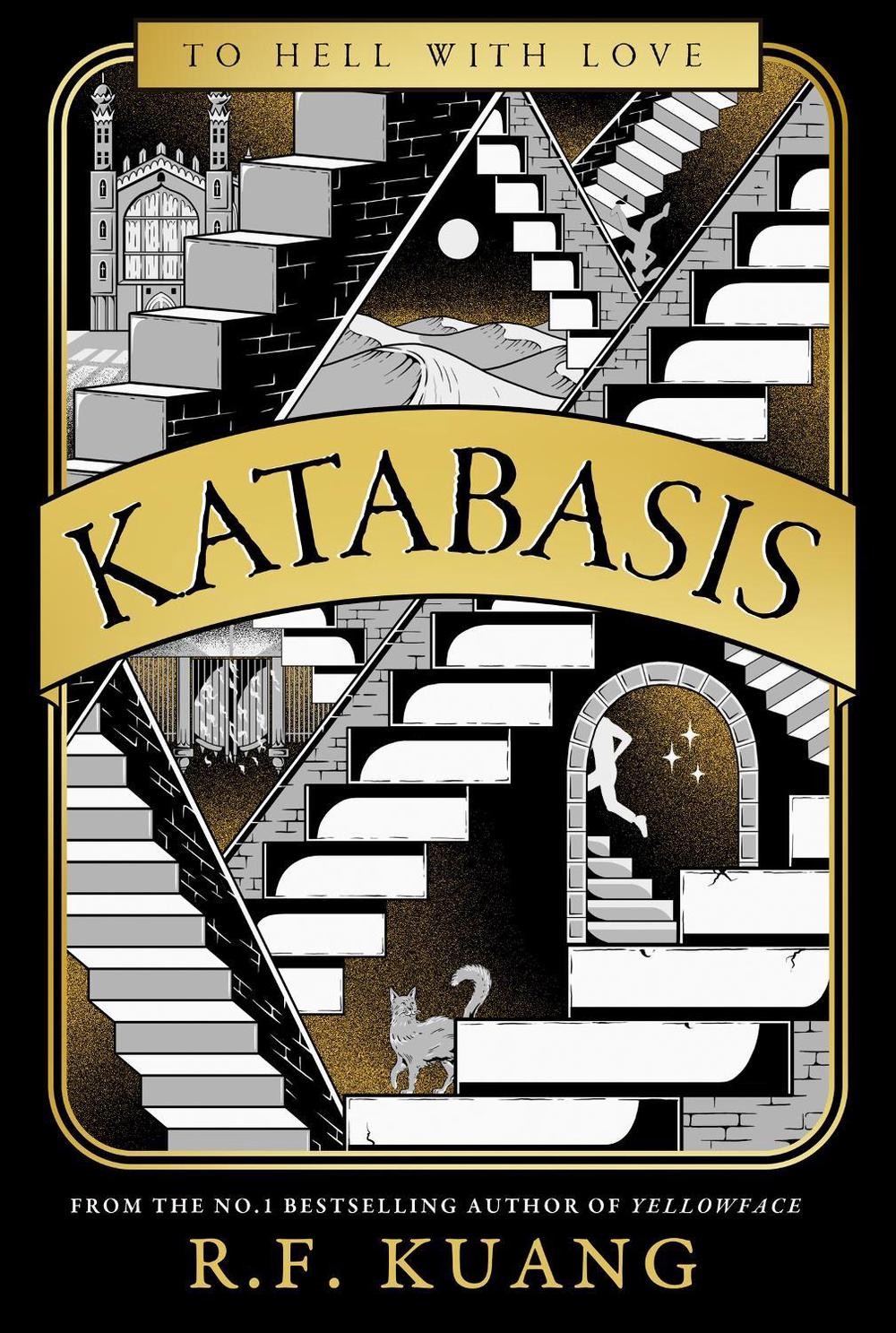
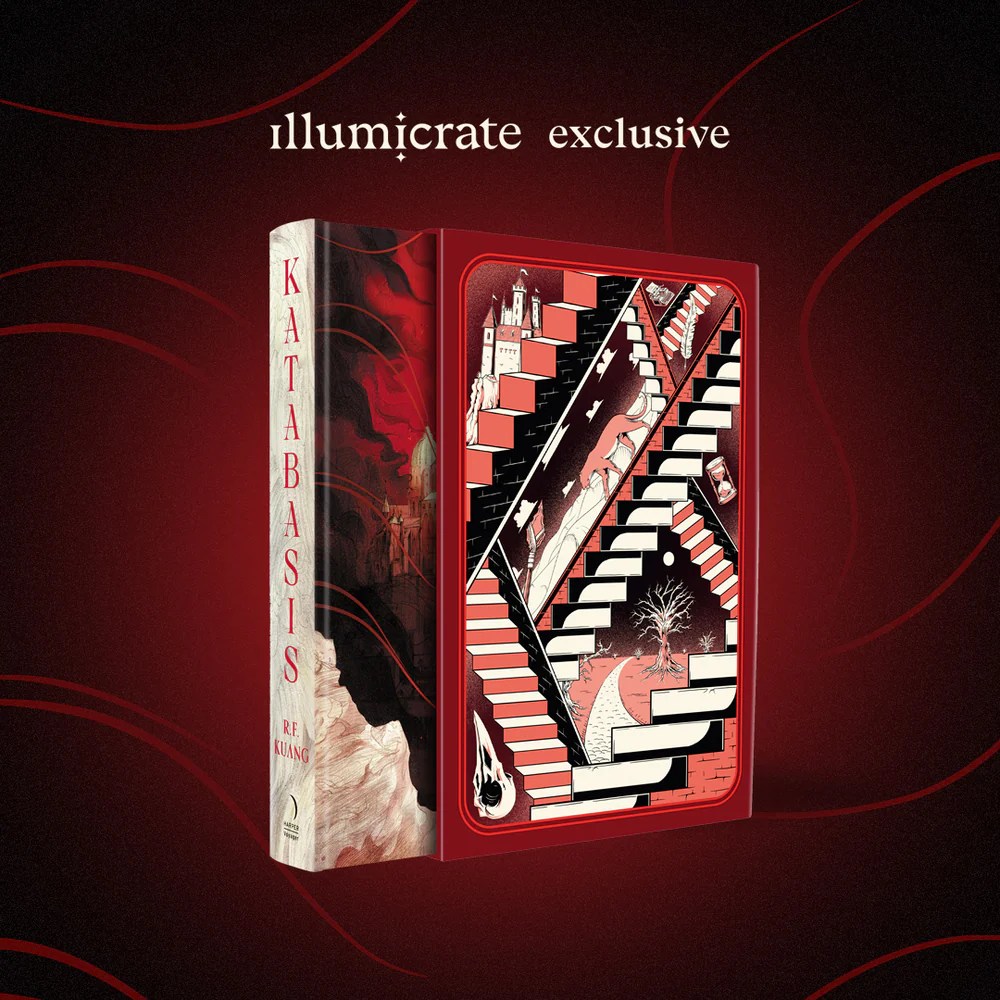
Up there are four of the seemingly unlimited Special Editions of R.F. Kuang’s new book Katabasis. I own three of them; two are currently in my house and I believe one is on the way. The fourth is the UK edition and despite everything I’m about to say it is still a maybe. Perhaps it wasn’t the wisest decision to order three expensive hardbacks of a book I hadn’t read yet, even if it was by one of my favorite authors! But as we’ve firmly established by now, I cannot be trusted with adult money.

Katabasis is the sixth book Kuang has written; I have read them all, and previously my least favorite of her books was one that was ranked third on my end of year Best Books list. My least favorite, mind you. Least. And part of me really thinks that I should sit with this for a minute and not write the review just yet, because part of the problem is that this book did not match the expectations I had set for it, and because I’ve enjoyed Kuang’s work so much in the past, I feel a need to be fair to it that I might maybe not feel with other authors. Then again, maybe not. Maybe, much like main character Alice Law about her mentor and Ph.D advisor Jacob Grimes, I’m making excuses so that I’m not disappointed.

Katabasis, somehow, has made Hell boring.

But let’s back up. Katabasis is the story of two graduate students (in theoretical Magick, of course) who travel to Hell to rescue the soul of their doctoral advisor, not because he doesn’t belong in Hell– he clearly does, and they’re both fully aware of this– but because their careers will be damaged by him being dead, and they need him for recommendation letters and such. I feel like this aspect of their motivation could perhaps have been explored a bit more; sadly, it was not. Katabasis (kuh-TAB-uh-sis, the word is Greek for “descent”) was supposed to be this dense, deeply literary work, heavily reliant on previous let’s-traipse-off-into-Hell books; there were pre-Katabasis reading lists floating around, and while I’m not actually completely certain Kuang was behind any of them, they were kinda intense!

And … well. Kuang is an academic writer; most of her books have at least partially involved schooling in some way and Babel was literally about a group of Oxford students who powered the world with magic based on translation, so this isn’t exactly a road untread for her. But this book is no more complicated than Babel was and no more academic; I was expecting a challenging read, and just didn’t get it. This is also the book that showed Kuang’s youth (she is still, somehow, not even 30) the most, I think; what she knows best is academia and grad school and I think that finally caught up to her with this book. And I get it! I’m not exactly a stranger to pretentious/prestigious graduate experiences; I hold an AM from the Divinity School at the University of Chicago, after all, which probably left me better prepared for going to Hell than most people’s educations, and I “hold” an “AM” rather than “have” an “MA” or a pedestrian “Master’s Degree” because, well, University of Chicago gotta University of Chicago. Those letters being reversed mean something. To somebody. I don’t know what, but they do.

Anyway, Alice (and is that name an accident, no, it is not) and her friend/fellow genius/academic rival Peter Murdoch head off to Hell to drag Grimes back into the world with them, and the book spirals (I see what you did there) back and forth between the past and the present as they argue about the map of Hell and, for the sake of argument, descend down to the final level to find him. They go in without much of a plan, and “no plan” really never gets better; they have a couple of never-ending water bottles and a sackful of, this is really what it’s called, Lembas bread with them so that they don’t starve to death or have to drink anything in Hell, and they mostly just wander around for five hundred pages, occasionally interacting with some of Hell’s shockingly small number of denizens. Most of Hell is an empty wasteland. They eventually arrive at the city of Dis, and I feel like if we’re going to start with a pre-reading list, maybe one of the New Crobuzon books, or Gormenghast, or the Shadow of the Torturer, or something like that should have been on there, because I have definitely read better infernal cities before.

It’s not … bad? Or at least I’m not willing to admit it was bad yet? And if you are someone who reads books for character development, this probably is right up your alley, as Alice Law and Peter Murdoch really are two of Kuang’s more completely drawn characters. But I don’t really read for character; I read for story and setting, and the story and setting here are both far too thin for my tastes. I probably owe this book a reread in a year or two regardless, just to let the expectations clear and to go into it with a better idea of what I’m about to read. But right now I’m deeply disappointed in it. The extra copies are still going to look great on my shelf, and Kuang is still an insta-buy author, but this one really didn’t do it for me.

In which I’m getting dumber

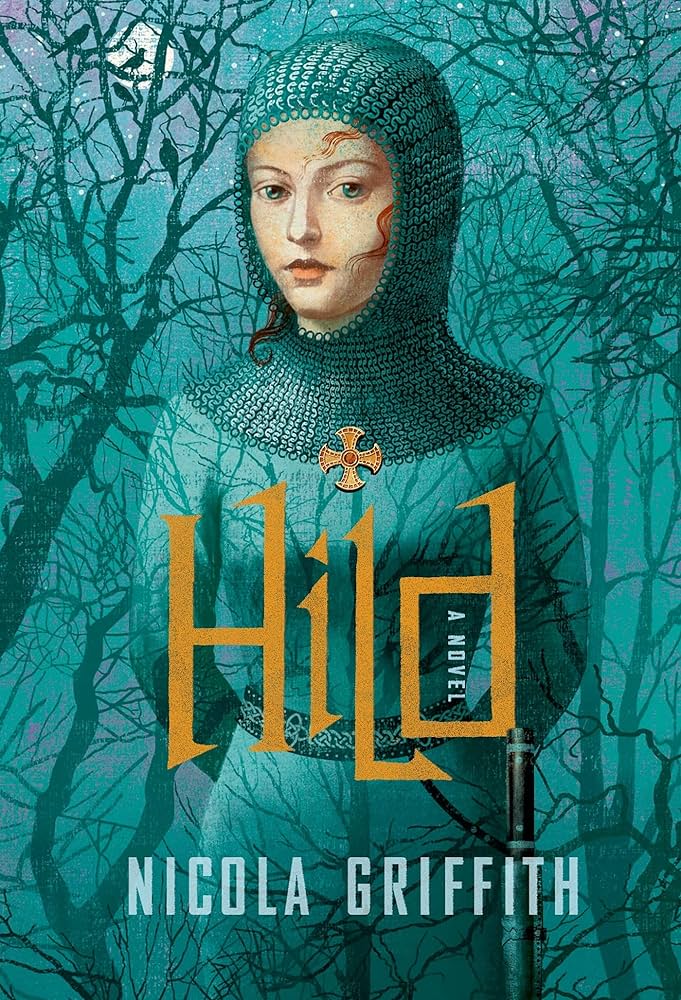
Man, I don’t know if I should blame my phone or the Current Unpleasantness or what, but my powers of concentration have been significantly diminished lately. I may deliberately abandon the “20% of my books this year should be nonfiction” goal because I keep bailing on nonfiction books halfway through, and the novel whose cover up there and whose title I am deliberately not going to use anywhere in this post is an objectively good book— shut up, that’s a thing– and I’m halfway through it and I am suffering, y’all. And it is 100% because this book demands you pay attention to it and I am currently not capable of paying sufficient attention to complicated texts to have any real idea of what’s going on. It’s making me nuts.

I dunno, man. I don’t want to quit this book but I also don’t want to be miserable when I’m reading and it’s not like I can’t pick it up again later. That’s the good thing about books; you put them on the shelf and they stay there for as long as you want them to. They don’t grow legs and walk away. If you have even the slightest interest in juuuuust barely pre-Christian Britain and aren’t currently brain-rotted like me, you should check this book out because you’ll like it. But right now I just don’t have my shit together enough to properly appreciate it. I’m giving it one more day and if something doesn’t click I’m going to put it away and pretend it’s a temporary choice. Again, this is completely on me. I want my brain back, dammit.

2025 Reading Goals

I was hoping to get to the stats nerdery post today, but I took a nap this afternoon with a cat on my chest, so it’s just going to be this. 2024 was one of the heaviest reading years of my life, and it was a year with no particular reading goal beyond “whatever I want” and “clear my TBR shelf,” which not only never happened, it never came close to happening. I want next year to have a little bit more focus, and I’m going to throw one ridiculous challenge at myself in January just for the sheer hell of it.

Reading Goal the First: In January 2025, I will read all five of Brandon Sanderson’s Stormlight Archives books, plus the two supplemental novellas. That is, according to Wikipedia, 6,335 pages. I have read the first two books and part of the third. My guess is that if I can get through Oathbringer this time without the issues I had the last time I picked it up, I’ll be fine; 204 pages a day during a month where I have one three-day weekend and don’t have work until the 6th is not even a particularly demanding pace. That said, shit happens. We’ll see if I can pull this off.

Reading Goal the Second: Setting a number of books goal is almost meaningless at this point, but let’s go with 100 again. Most years I don’t have to push too much to hit that number, and unless I rediscover some other hobbies I’ll blow it away again, but I don’t want to set it so high that I start adjusting what I’m reading to hit a number. That said …

Reading Goal the Third: At least 22 nonfiction books over the course of the year. Why 22? That’s two a month if you ignore January. I may adjust this after I look a little bit more closely at what I read in 2024; I’m pretty sure I didn’t read that many nonfiction books this year and I want to up the number somewhat.

Reading Goal the Fourth: At least six of those 22 books must be about teaching and, ideally, teaching math. I joined the National Council of Teachers of Mathematics this year and one of the benefits of that membership is deep discounts on their professional library, which is good; that said, these books tend to be hellaciously dry so I’m not going to commit to too much. Six is one every other month. That’s not bad at all.

Oh, and one more thing: Starting with January 1st, I’m going to start looking into moving away from housing everything at Goodreads. I’m going to start simultaneously recording my reading on Goodreads, Storygraph and Bookly, and we’ll see which app wins out. Right now Storygraph looks pretty cool because it appeals to the numbers nerd in me and there appear to be a thousand ways to generate charts and spreadsheets and such from your reading, and really, if you can’t make a spreadsheet out of something, is it even worth doing? I’ll report back on this as I get into what the different apps can do.

That’s what I’ve got for right now. Do you have any plans for your reading next year?

On translations

Let’s put a quick trigger warning for sexual assault here; it’s an unavoidable plot point of a book I’ll be discussing several paragraphs into the piece, and it won’t be dwelled upon.


I’m on my third book in a row that I’m reading in translation, and my fourth in a row that wasn’t written in especially modern English, since the Ernest Shackleton book was published in 1909. I haven’t loved any of the three that I’ve finished, but I’m not far enough into the fourth one to really have an opinion of it yet– maybe 40 pages deep on a 600-page novel. And the bit that I’m having trouble wrapping my head around is that I’m not sure how to discern between a book that I didn’t enjoy and a translation I didn’t enjoy. I can think of one particular series where the first book was translated by one person was great and the second was translated by someone else and it was so bad that I couldn’t get even a third of the way through it; that I can blame on the translator. But when it’s the only book I’ve read by a given person, or sometimes the only book by that person available in English, it’s a lot harder to tease that apart and it may actually not be a difference worth bothering to tease apart in the first place.

It’s the most recent book that’s really got me thinking about this, honestly– and if you’re wondering why I’m not specifically naming the book, it’s because this is pretty clearly running into my Don’t Shit on Books Without a Good Reason rule, and my Goodreads is right there anyway– because this book was very clearly deliberately written in a certain way, and I’m not sure it survived translation into English very well.

(Let me reiterate the trigger warning)

The book is about a woman whose father sexually abused her for several years when she was a child, and she is, as a result, estranged from her family, most of whom don’t believe her. She is very much not over her trauma, and in fact dwells upon it more or less constantly. The book is told entirely from her perspective, and, well, she’s not in an especially mentally healthy place; the entire book is about disputes over inheritance, and her father passes away partway through the narrative. Now, I think what’s going on here is that the author is trying to mimic in text what is going on in this person’s head, and as a result the entire text is very very repetitive, constantly circling back to the same events and the same conversations, and also with insanely long sentences that can sometimes take up a page or more. The text is never pauses for breath, never slows down, and constantly loops back to retread the same material, sometimes phrased differently and sometimes repeating the exact same language several times in a (paragraph-length) sentence.

I made fun of this on Twitter while I was reading it, and the fact is this isn’t that far off from what’s going on:

So, like, I can see what the author is trying to do here, and I even appreciate the technique, but the unfortunate result is that, in English and to me at least, the book is really damn difficult to read. Imagine a book where every sentence was like that Tweet, and each sentence in the book was similar to the Tweet in a way that was very like the Tweet, and not like things that are not like that Tweet, that’s what you’re trying to imagine right now, you’re imagining a book where every sentence is like that Tweet, because the sentences in this book are all like that Tweet and you’re imagining them.

I am not kidding. Like, I’ll post examples if I have to.

And the thing is, I didn’t dislike the book, I just didn’t enjoy it at all, if that’s something that makes any sense. I mean, I finished it instead of putting it down, and I don’t think I regret buying and reading it, and it made a big splash in its country of origin when it came out so it even remains a good choice that way. But I wish I could read it in its original language to see behind the scenes, so to speak, on how the translator did her job, because this book must have been a nightmare to translate.

I need to be able to read all of Earth’s languages, is what I’m getting at here. Is that the Moderna shot, maybe?

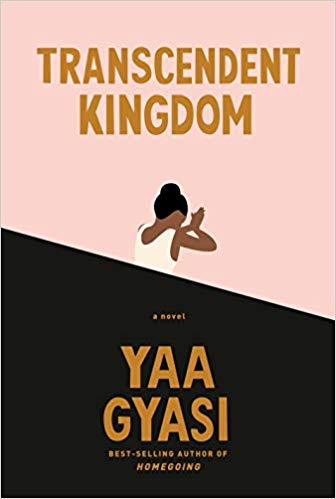
#REVIEW: Transcendent Kingdom, by Yaa Gyasi

This is going to be kind of a difficult post to write, because Yaa Gyasi’s Transcendent Kingdom is not like most of what I read, and it’s messing with my ability to talk about it in a coherent sense. Y’all know me by now; I prefer plot-driven books, and my enjoyment of a book is more often focused on what happens in the book rather than concerns about theme and character and highfalutin literary stuff. But this book is enormously character-driven. You know everything that’s going to “happen” in the book within the first few pages (and, to complicate things, I don’t really want to reveal any of it) and there are no big twists or plot reveals; it’s all about listening to Gifty, the main character, tell you about her life.

But, God, it’s beautiful, and I read it cover-to-cover between around 6:00 yesterday evening and 11:00 this morning, and I woke up this morning knowing that I wasn’t doing anything until I’d finished it. Transcendent Kingdom is about grief, and loss, and neuroscience, and addiction, and family, and it’s about being a Ghanaian immigrant in America when America isn’t always a good place to be. It’s also about Christianity and atheism in a way that got straight past all of my filters; in a weird way this book made me wish I were more religious, and that is not a thing that happens, like, ever.

And I really think that’s all I’m telling you, other than to also point out that this is another one of those “this book is amazing as a physical artifact” types of books as well; definitely get it in hardback. I’ve read 24 books so far in 2021 and I’ve read several that I really enjoyed but this is the first one that has ended with me feeling absolutely certain it will be on my end-of-year list. Grab it up, and while you’re at it pick up Gyasi’s Homegoing from a couple of years ago as well.

REVIEW: The Weight of Ink, by Rachel Kadish

Every so often, a book scratches an itch that you didn’t even know was there, and Rachel Kadish’s The Weight of Ink is such a book. Those of you who have either been around for a minute or know me in the real world are aware that an earlier version of me wanted to be a college professor. I triple majored at IU, in Religious Studies, Jewish Studies, and Psychology, and then went on to earn a Master’s degree in Biblical studies, which is where I hit a wall when I realized that I liked being in class a hell of a lot more than I liked independent research. But I still have a couple of bookshelves about religion, and along with that is a fair number of volumes about Jewish history.

The Weight of Ink tells two parallel stories about two women scholars, a young, unmarried Jewish woman in the mid-1600s, when women knowing how to read and write much less participate at the highest levels of scholarship was forbidden, and a modern-day scholar of seventeenth-century Judaism, suffering from Parkinson’s and nearing retirement. A cache of documents is found in a seventeenth-century home, and the owner calls his former professor in to look at them, and the book takes off from there. Ester and Helen’s stories are interwoven throughout the book, along with Helen’s assistant Aaron, a postgraduate who she more or less grabs at random because he is able to read the right languages to help her with her research.

Mix in some Shakespeare, some Spinoza, a blind rabbi, the Inquisition, Sabbatai Zevi, and a little bit of fire and plague and you’ve got yourself a hell of a book. I’m making this sound a bit more like a detective novel than I probably should; this is indisputably capital-F Fiction, and may indeed be a litratcher, as (I hope) Hilary Custance Greene described it when she recommended it to me. But … yeah, if you’re going to drag me away from nonfiction and genre fiction, writing a book about seventeenth-century Jewry, making translation a bigger part of the action than one might expect, and making the two modern-day figures scholars is a key with a very specific shape that nonetheless opens one of my locks.

Or something; that may be too overwrought of a figure of speech, I’m not sure. At any rate, while it’s a bit slow-moving, which may not be surprising to those of you who just read the description, and it’s a bit on the dense side– it took me over a week to read, which is really rare for a 560-page book– I loved this book a whole lot. Kadish writes about seventeenth-century London like she lived there, and everything about this really worked for me. I hope to hell it actually was Hilary who recommended I read it, because I can’t find the comment anywhere, but I owe her one.

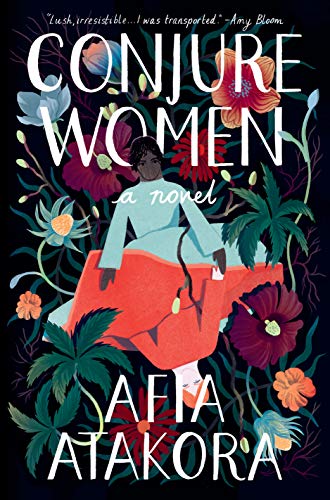
In which you should read this: CONJURE WOMEN, by Afia Atakora

Something you may not know about me: despite my fairly high degree of confidence in my own intellect in many domains, I actually don’t think I read very well. Which may sound really. strange, coming from someone who regularly reads well over a hundred books a year. The thing is, my greatest weakness as a reader is that I’m a very surface-level guy. While I can handle complex narratives, I have to be in the right mood for them, and the fact that I read so fast can really hurt my comprehension if I’m not deliberately paying careful attention to what I read. This means that I tend to stay away from anything that, broadly classed, might be literature, which I nearly spelled litratcher in order to convey a sort of condescension toward the entire concept. If a novel feels the need to tell me it’s a novel on the cover, that’s a sign that it may not be for me. You know what never says “a novel” on the cover? A book with a dragon or a space ship in it. Not once. Not never. The closest to an exception I can come up with is John Scalzi’s Redshirts, which some editions of declare to be “a novel with three codas,” and which I think Scalzi put on the cover more as a lark than anything else.

In short, whenever I read literature, I always feel like I’m missing something; that there is some theme or some Hidden Meaning or some Deeper Symbolism that I’m not seeing, either because I’m being sloppy or the book is just smarter than I am. Is it there? No idea. But I’m convinced it’s there and I just can’t see it. This may be a sign that I’ve been poorly served by my English teachers; I have a copy of A Tale of Two Cities from high school that has a big chunk of the first page circled and the word “foreshadowing” written next to it, and as someone who has read that book as an adult I have no idea what I thought the foreshadowing was or what it might have foreshadowed. I still can’t handle Jane Austen.

Afia Atakora’s Conjure Women needs to become part of The Canon, because it belongs next to books by Toni Morrison and Zora Neale Hurston. That’s it. That’s the review. The book is magnificent. You should read it. I took my time with this one, because I wanted to savor it; normally it’s a good sign if I read a book in a day, and this one took several because I didn’t want it to be over with too quickly. It’s set in and around the Civil War, on a plantation, and the two main characters are mother and daughter, so the book alternates between the two of them, jumping back and forth between just before the war to just after it. A third significant character is Varina, the daughter of the former landowner, who has a bond with Rue, the daughter of the pair, and her story weaves in and out through theirs in a way that isn’t really typical of– here’s that word again– literature set in this time and place. Both Rue and her mother are … well, the title Conjure Women does the job to some extent; they are healers and midwives, and while Rue in particular is generally at some pains to think of her work as entirely natural and (though she doesn’t use this word) scientific, those around them generally don’t, and the book does have just a tinge of the supernatural around it to keep genre-obsessed dopes like me interested. Everything’s just a little better with a little hoodoo sprinkled on it, as my mom never once said in her life.

Every so often someone will ask me, generally not in especially good faith, why I do things like decide I think I’ll read 52 books by women of color this year, when I could … not, I guess. Well, this is part of it; I might not have looked at this book were I not focusing on a certain kind of author, and I’ll freely admit that had Afia Atakora been Ahmad Atakora I probably wouldn’t have bought it. (That said … a man couldn’t have written this book, but that’s not quite the point I’m making.).

In other words, the reason I work on diversifying my reading is that when you go looking for new and/or different reading experiences, you get them, and this book all by itself kind of pays off the whole experiment. Go read it.