I’ve been doing this thing over on BlueSky all month, and while, okay, there’s technically one more day left in Pride, I already know what I’m going to post for tomorrow. Since the last day of the month is reliably preprogrammed and I’m still feeling sickish, I figured I’d take all thirty posts (so you can get a sneak peek for tomorrow, if you’ve been paying attention) and put the books here for posterity. I’ve read all but two of these, and I may have one of them finished by the end of the month anyway. The 30th is on its way here. Check ’em out:
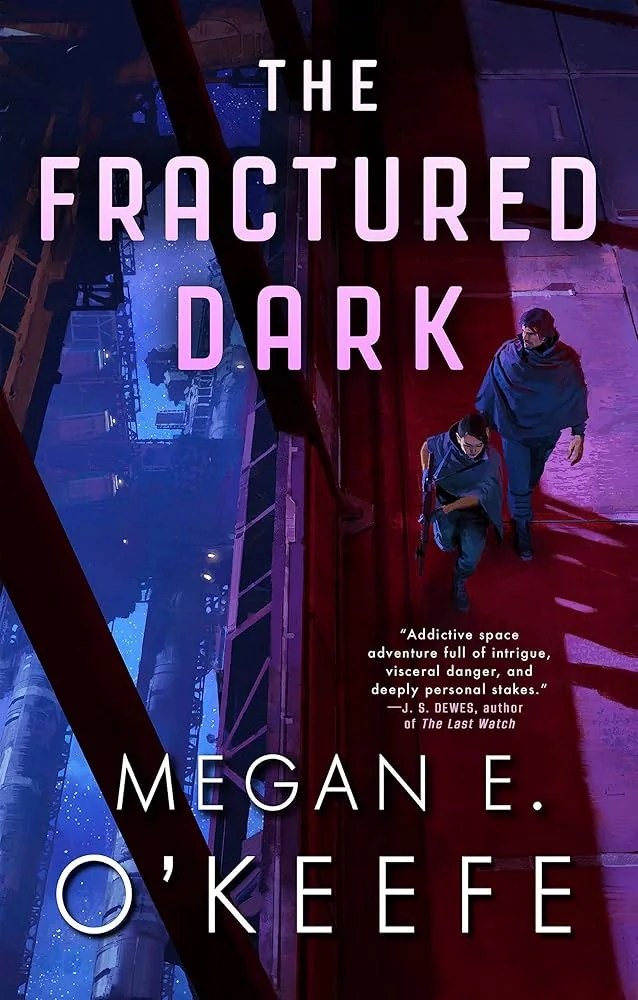
The first book of this trilogy sat on my Unread Shelf for way too long, mostly because I knew it was book one of a trilogy and if I read it and liked it I was locking myself into the next two books. And, well, yeah, in accordance with prophecy, I ordered The Fractured Dark and The Bound Worlds within the first couple hundred pages of The Blighted Stars, and … well, yeah. This is real good stuff.
The Blighted Stars starts off as a combination of a corporate espionage book (it’s one of those worlds where five big ultra corps control basically everything, and the leaders of those corporations are basically royalty) and an eco-disaster book. The Mercator corporation holds a monopoly on mining a material called relkatite, which is more or less completely essential to human civilization; it powers starship drives, for one thing, and it’s essential in printing human bodies as well.
… yeah, roll with that for a minute, I’ll come back around, I promise.
The two main characters are Tarquin Mercator, the scion of the family, who would prefer to not actually have anything to do with the family business and just study geology for a living, and Executor Naira Sharp, a monstrous badass who acts as a personal bodyguard, more or less, to Tarquin’s father. She’s also a revolutionary who wants to tear down the entire system from the inside. The Mercators are battling a major problem on their mining planets; a fungus that they’re calling the Shroud has begun appearing anywhere relkatite is mined, and it’s been overwhelming entire planets, rendering them more or less biologically sterile and preventing further mining from taking place. There are not many planets where humanity is actually able to live and thrive (the Earth has been rendered inhabitable a long time ago by the start of the series) and so the Shroud’s spread poses a genuine threat to the further existence of humanity.
That’s where it starts. It gets really fucking wild after a while, trust me.
For me, though, the most interesting thing about the series is the whole “human printing” thing. Basically nobody is in the body they are born in; if I understand the process correctly, once a kid comes of age they can be reprinted into new bodies that are more to their tastes, and people back up their own minds with some regularity, so that if they die the body they get reprinted into will have memories that are as close to “up to date” as possible. This isn’t necessarily unlimited; for one, it’s quite expensive, and especially traumatic deaths (or too many of them) can lead to a psyche being “cracked,” which basically drives the person irretrievably insane. The same will happen if someone is accidentally (or deliberately, as it turns out) double-printed, so that their mind is in more than one body at the same time. The fact that a cracked mind cannot simply be restored from a backup sounded like a weird sort of cop-out at first and ended up being really important later on.
The thing I like the most about this plot device is that O’Keefe really appears to have carefully though through its implications on society, to the point where I spent the whole first book trying to poke holes in this idea and make it retroactively dumb and every time I came up with something she’d anticipated it and dealt with it. Society is completely queernormative, for one thing; when you can simply reprint yourself into another body any time you want it’s hard to be against trans or gay people, and it’s heavily hinted that Tarquin was not born into a male body. There are a couple of prominent gay married couples as side characters as well.
The second thing, and I suspect some people might really be bothered by this, is the wide acceptance of suicide. Because you’re not really killing yourself; you’re just killing that print (the word “print” is used much more often than “body,” if not, possibly, every time) and you’ll be back soon anyway. In fact, a quick and clean suicide is a much better idea than several other ways you could be killed, because remember, really traumatic or messy deaths can lead to cracking. I feel like slitting my own throat might be kind of difficult, but it happens repeatedly across these books.
This blasé attitude toward death extends to murder as well, which is probably still illegal but not as much? This is probably a bigger deal for the poor, who can’t afford what are called “phoenix fees” to reprint, but all of the book’s main characters effectively have access to infinite money and so the characters kill each other with astonishing regularity. There is at least one point in the book where a character gets killed at the end of one chapter and then is the POV character of the next chapter after being reprinted in between the chapters.
My two biggest critiques of the series are both connected to reprinting. One, shit can get really confusing when a character dying does not have any actual impact on whether that character continues to show up or not. There are also occasional jumps forward or back in the timeline– not a ton of them, but they happen– and when you aren’t the world’s most careful reader (ahem) there can be a lot of rereading happening because something confusing has happened and you’re not sure if you missed a detail or not.
Second– and literally as I’m typing this I’m realizing what the answer is, but I’m going to do it anyway– is the notion that reprints are literally being loaded back into bodies from a “map,” which is their word for a personality download or backup, and maps can be altered through various nefarious means, but no one is against this whole idea, which I would think would be a thing. It’s the Star Trek problem– is the transporter really moving you from one place to another, or just killing you at location A and reconstructing you at location B? Personally, I’ve always been of the “killed then rebuilt” school, but people in this world really just treat reprinting as an inconvenience that might cost them some memories– and that’s occasionally even used strategically from time to time.
(The book does answer this, but kind of obliquely, to the point where I really did just realize what was going on, and I think they’re just relying on the tech having been around for so long that nobody thinks in these terms any longer, much like by the time Star Trek: The Next Generation rolls around absolutely no one is fighting against using transporters.)
I really enjoyed this series, and Megan O’Keefe has been around for a while, so there’s a bunch more where this came from, although these are currently the only books in this series. Strong recommend, especially if you’re in the mood for some complex, twisty sci-fi.
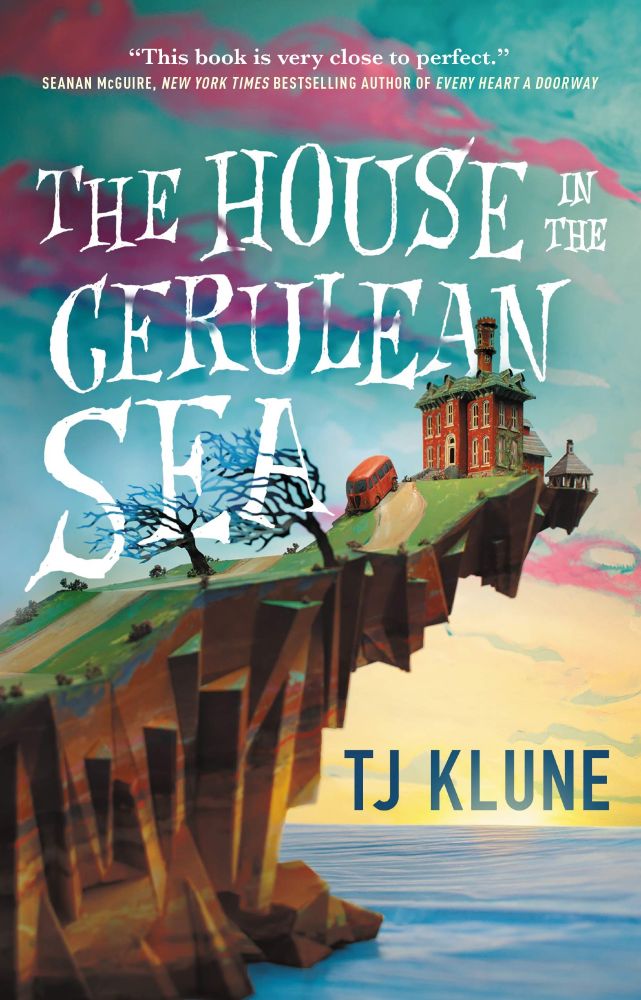
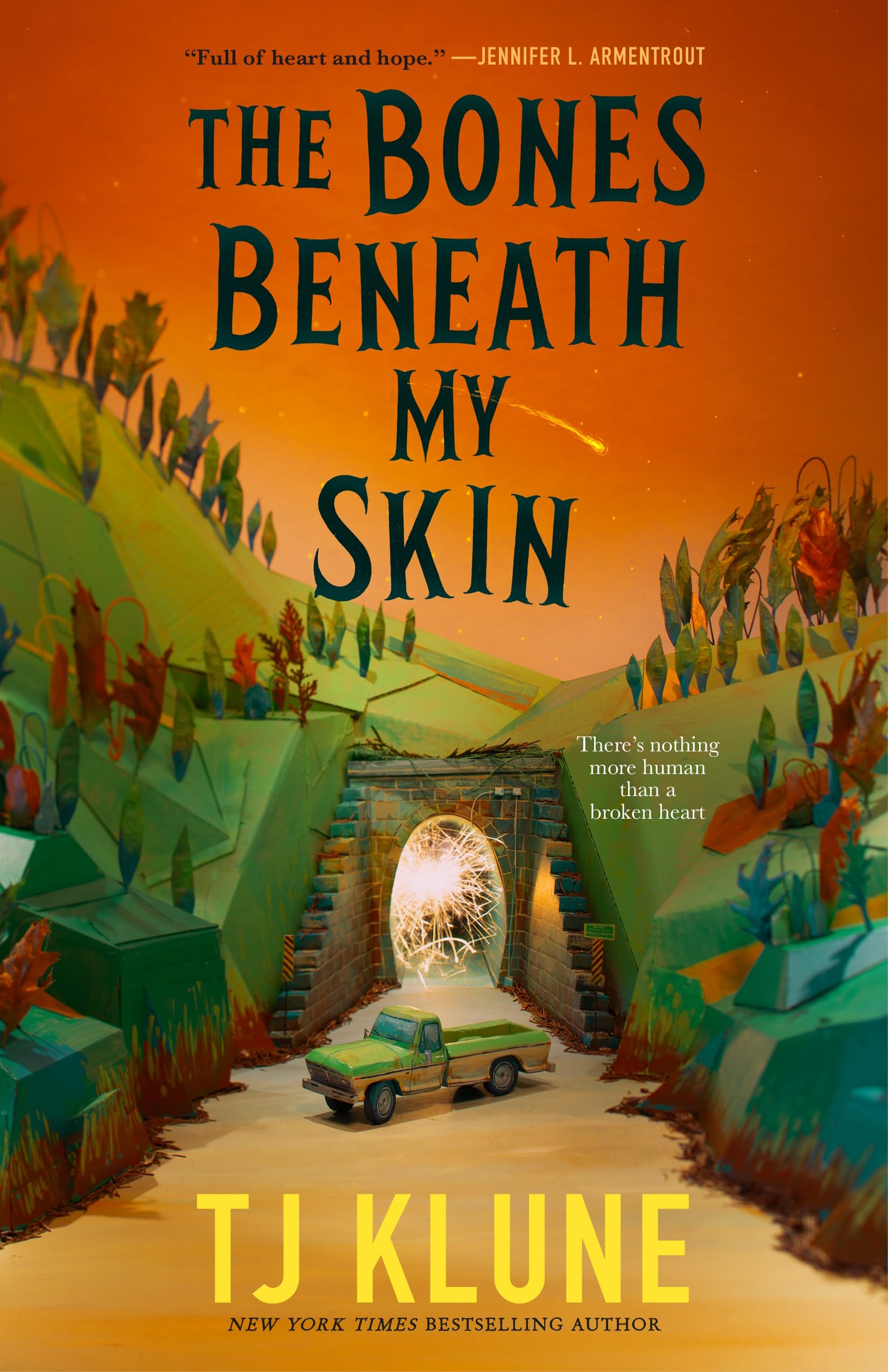
It’s well past time, I think, to declare TJ Klune one of my favorite authors. I have … eight books by him? Nine? Something like that, all of his adult novels, at least, and I’ve enjoyed all of them. In some ways, The Bones Beneath My Skin is one of his best books, up there with The House in the Cerulean Sea. It’s interestingly distinct from a lot of his other work, which usually has at least a little bit of the feel of a fairy tale about it, and one could make an argument that it’s his first science fiction novel. He calls it an “action movie” in the afterword, which I’m not completely convinced about but I see where it’s coming from.
At any rate, this book tells the story of Nate Cartwright, a reporter journalist (he never explains why he hates the word reporter so much, but damn, is he willing to be uppity about it) who in one fell swoop loses his family and his job at the Washington Post, and ends up at a family cabin deep in the woods in the middle of nowhere, where he is surprised to be greeted at gunpoint by a gut-shot, wounded Marine and a ten-year-old girl named Artemis Darth Vader. Shenanigans ensue. I don’t really want to spoil stuff all that much, to be honest, but it becomes quite clear really quickly that Artemis is not at all what she seems to be, and not just because she likes bacon more than any four normal people. (I burst out laughing when I randomly took the dust jacket off the book and discovered two pieces of bacon imprinted into the front cover. Bacon is a thing in this book.)
Klune’s strengths are on full display here– found family, great characters (Artemis is entirely unforgettable, although I can picture a reader she’s a bit much for) and a wry sense of humor. Artemis may be my favorite of all of his characters, although this book has some weaknesses, and it will be interesting to see whether the passage of a few months dulls the edges from the things I didn’t like about this book or brings them to the forefront. If I remember correctly I read Cerulean Sea similarly early in the year– February, maybe?– and it was still one of the best books I’d read that year when I got to The List. We shall see if history repeats itself.
But I want to talk about some of those weaknesses, because they’re interesting, so I’m going to put a little line here and then talk spoiler talk. Wander off now if you don’t want to see anything, but feel free to come back later.
This book was originally self-published, after Klune’s editor told him that it wasn’t great as a romance novel because there was “only one” sex scene. I contest the label of “romance novel” altogether; I don’t mind romance every now and again but while this book certainly has a romance subplot it is absolutely not part of that genre, but what I found interesting was that the book’s sole sex scene feels almost entirely out of place given the rest of the book. Maybe I’m off base here, but I feel like you can have a ten-year-old girl as a main character or a scene with explicit butt sex but maybe you shouldn’t have both. To be clear, the ten-year-old girl isn’t involved in the butt sex in any way, but still.
The book also pulls directly from the Comet Hale-Bopp/Heaven’s Gate mass suicide of 1997, to the point where it’s set at the same time, has a comet with a different name making an appearance (but the comet’s name is still hyphenated!) and there’s a mass suicide that is identical to Hale-Bopp right down to the silk coverings over the dead people’s faces and them all dying barefoot in bed. The entire subplot ties in to a character who is important to Artemis, but when I realized that he was literally just rewriting Heaven’s Gate and changing a couple of minor details, it almost killed the book for me.
It’s kind of ironic for me to say this, given that I’ve defended him in the past for pulling inspiration from tragic real events, but (to briefly recap that post) the influence of the Sixties Scoop on Cerulean Sea is so reworked and altered that many readers don’t notice it until it’s pointed out. This is not that– he has lifted the entire mass suicide and stuck it in his book. My problem isn’t with taking inspiration from real-world events, here; it’s that he’s doing so sloppily. There is absolutely no way anyone could have been alive and aware of the world in 1997 and not recognize the parallels here; they’re that glaring. And it throws you into oh no he didn’t mode in what should be one of the climactic events of the book, and the whole thing could have been done so so so much better, even if the main guy in the cult needed to be in the book somehow.
But again, in six months, who knows if this will still bug me when I think about this book. If I just remember how awesome Artemis is, you can expect this to show up at the end of the year, and one way or another it’s absolutely still a hit for Klune. I just wish he’d reworked parts of it a bit more before Tor reissued it.
Really, the phrase “bisexual nun” was all I needed.
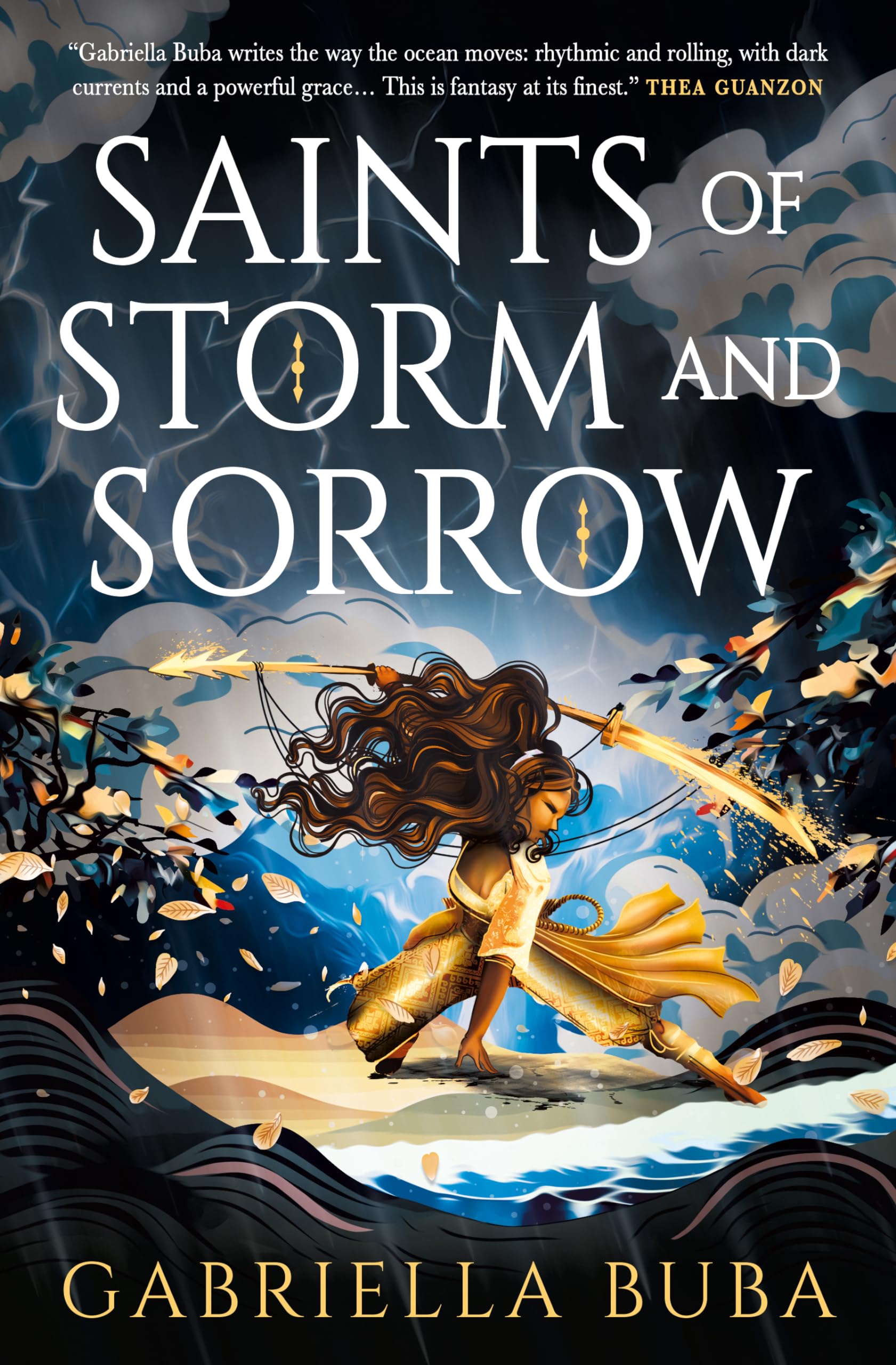
Here’s the thing about Gabriella Buba’s Saints of Storm and Sorrow: it’s one of those books where a lot of what I have to say about it is negative, but I’ve already pre-ordered the sequel, out this summer, and I’m genuinely looking forward to reading it. I lost some sleep to reading this book, and several times I had to force myself to put it down at the end of the night to go to bed. There’s something compelling and propulsive about Buba’s writing that ended up outweighing some of the things about this book that didn’t make sense or didn’t quite work, and I guess I just need you to keep that in mind while you’re reading this, because I want to talk about the weird stuff. I ended up four-starring this, but in a different mood I could have been talked into a three, and for most of the first half it was going to be a five. So one way or another it’s kind of all over the place, but the tl;dr to this whole post is that the book is well worth the time to read it even if there are some issues.
So here’s the thing. The main character, Lunurin, is a nun. She is also a priestess, quite possibly against her will, of a storm goddess called Aman Sinaya. Now, when I first read this in whatever blurb or online review I saw that caused me to order this, along with the phrase “bisexual nun” and the phrase “Filipino-inspired,” I assumed that this meant that this book wasn’t set on Earth.
And … technically, it isn’t? But it totally is. Lunurin is a Catholic nun. The bad guys are the Spaniards. They speak Spanish. They’re in the Philippines. I’m pretty sure the word “Catholic” never shows up, but … there is no attempt to be subtle here. Lunurin and her female love interest are both Catholic nuns, biracial and despised for being so, in a colonial atmosphere that is more or less identical to the Spaniards colonizing the Philippines. (Do you know any Filipinos? Ever notice how they all have Hispanic-sounding last names? There’s a reason for that.) And the book wants to get into the syncretism that happened whenever Catholicism ran into indigenous religion, which is a fascinating and complex subject, but if the colonized people can literally call down typhoons while being literally possessed by their gods, and Jesus … doesn’t do any of that? It kind of wreaks havoc on your worldbuilding. Christianity toppled, say, Norse religion, sure. But you know who the Norse didn’t have? Actual fucking Thor. And Lunurin can call down lightning by letting her hair down. And everyone just acts like Christianity is a reasonable alternative to that, just because the priests say so?
Nah.
I would kind of love for a book where Christian missionaries run into a religion that literally grants powers to its priesthood, but this isn’t that book and that’s not the story that Buba is interested in telling. She wants to start a book that is already past the colonization phase and so that’s what she gives us, and it’s not exactly the book’s fault that it sent my brain down all sorts of other pathways once I realized what was going on. There’s something to be said about having trouble accepting the basic premise, of course, but I’m a lifelong fantasy/sci-fi reader and suspending disbelief is something I’m good at. But I’m not going to pretend it wasn’t an issue.
Let’s see, what else? This is something that’s going to get fleshed out better in the sequels, I’m sure, but I never quite understood the relationships between any of the main characters. Two of them end up married, and I’m not sure either of them wanted it except one of them kinda did and the other sort of shrugs and rolls with it, and the nun female love interest is an absolute mess of a character, which is yet another complaint that may or may not represent a problem with the book. Messy people exist! But holy shit is Catalina a mess. She’s inconsistent, jealous and a religious fanatic (nun, remember) and there’s also a healthy degree of self-loathing going on as well as some internalized racial hatred, and … she’s realistic, in a lot of ways, I think, maybe? But that doesn’t automatically make her fun to read about.
There are a couple of explicit sex scenes that tonally really do not match the rest of the book, too, so be aware of that. This is not a romantasy by any stretch of the imagination, and I let that fool me into thinking that at no point would glistening cocks be involved. Or, well, one cock that glistens at least once. And, again, I’m not convinced that the people fucking actually like each other, or whether they’re trying to play each other, and it’s okay for the characters to not know each other’s motivations, and it’s okay for the characters to be inconsistent in their motivations, but I definitely don’t get them and I’m not convinced the author did either. The problem is that in this particular scenario complicated characters come off exactly the same as characters with no actual arc and no planning, and I genuinely can’t tell which one this is.
So yeah. Again, I’ve bought the sequel. Lunurin’s relationship with her actual goddess– as opposed to Jesus, who doesn’t seem to be real and doesn’t occupy a lot of her time despite the nunnery going on– is fascinating, and again, she doesn’t appear to like her very much, and while I have my problems with the setting as it currently exists, it’s got its positives just out of sheer originality. It may be that I’ll read book two and tap out for what I’m presuming will be a third book in the future (this may be a duology, I’m not sure) or I might shift into full-throated approval. We’ll see. But I’m giving this one a thumbs-up regardless, now that you’ve read all the caveats and quid pro quos and such.








 Welcome to infinitefreetime dot com